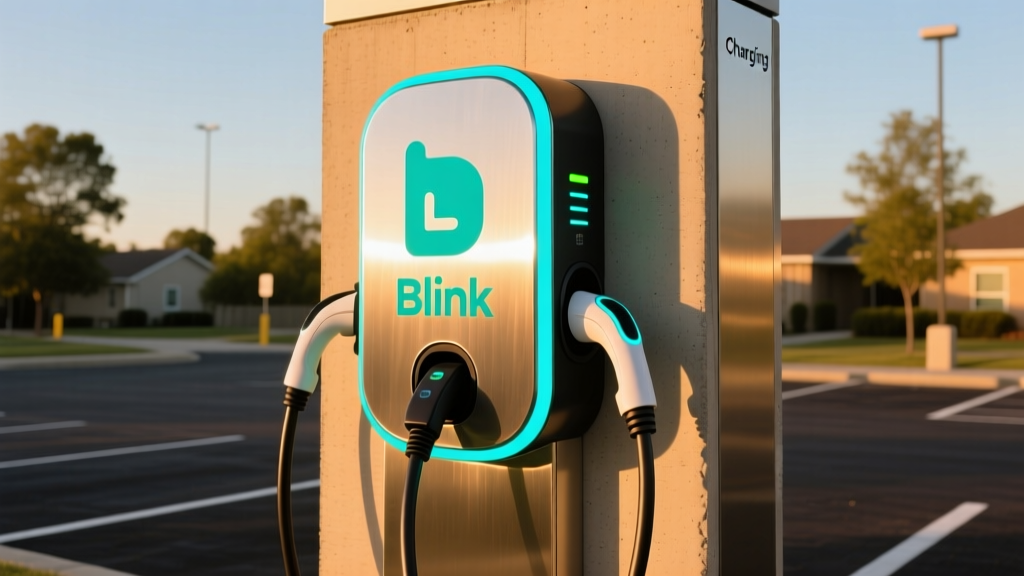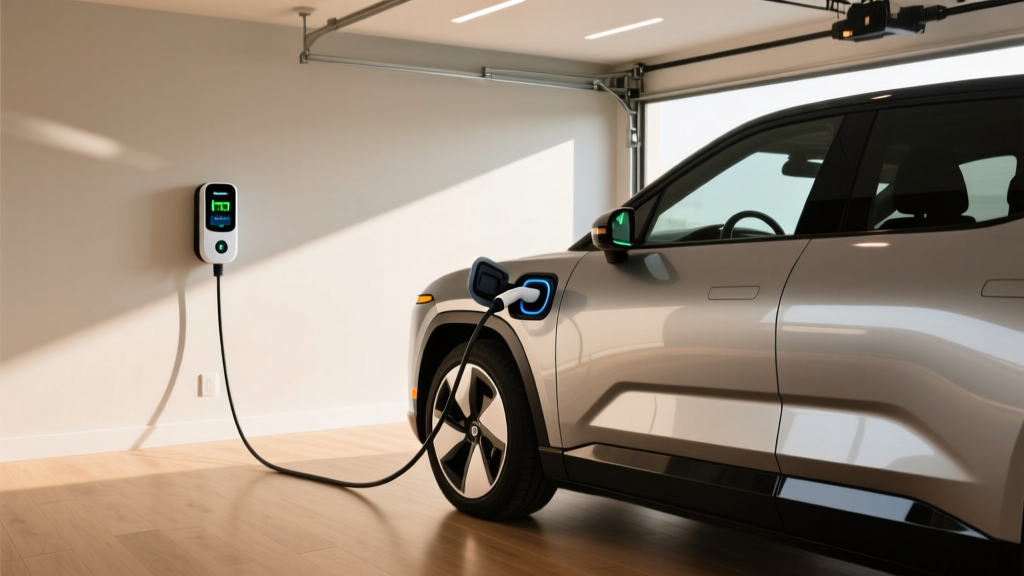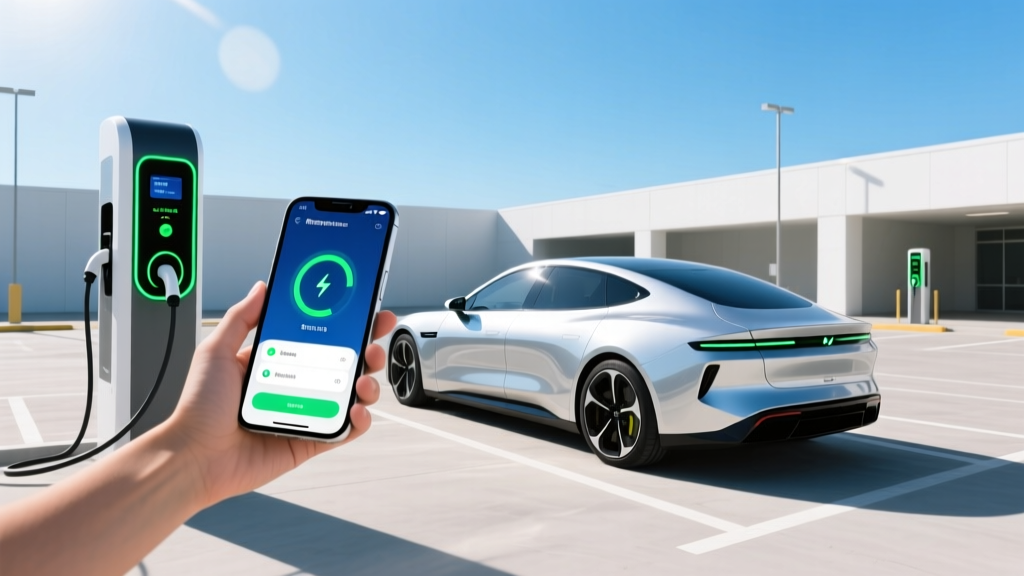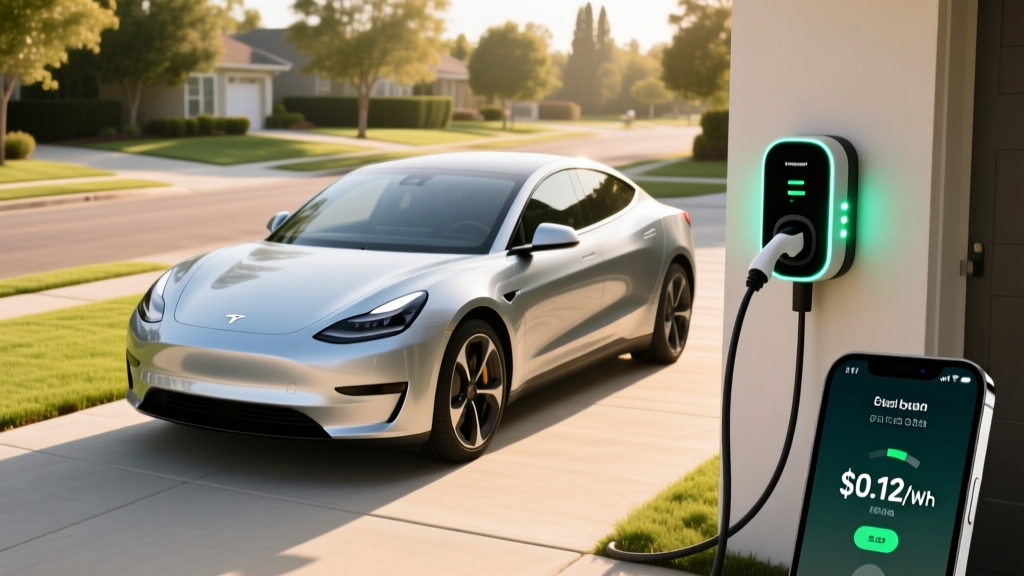
If you're researching the cost for charging electric car ownership, the numbers depend on three variables: where you charge, how fast you need it, and what your home's electrical panel can handle. A Level 2 home charger running off-peak electricity can cost as little as $0.04 per mile, while a DC fast charger on a road trip can push $0.15 to $0.25 per mile — comparable to or exceeding gasoline. This guide breaks down every layer: hardware, installation, electricity rates, and the connector ecosystem you'll navigate in 2026.
Understanding Charging Levels: Speed, Power, and Range Added
Before calculating cost, you need to understand what each charging level delivers. EV charging power is measured in kW (kilowatts) — that's the rate of energy flow. The energy stored in your battery is measured in kWh (kilowatt-hours) — that's the total capacity. Confusing the two is the most common EV literacy mistake. Think of kW as the speed of water flowing through a hose, and kWh as the total gallons in the bucket.
| Level | Voltage | Power (kW) | Miles of Range Per Hour | Typical 10–80% Time (75 kWh Battery) | Use Case |
|---|---|---|---|---|---|
| Level 1 | 120V AC | 1.2–1.9 kW | 3–5 mi/hr | ~31 hours | Overnight trickle, PHEV top-ups |
| Level 2 (Home/Public AC) | 240V AC | 3.3–19.2 kW | 12–75 mi/hr | ~4.5 hrs (7.2 kW) / ~2 hrs (11.5 kW) | Daily home charging, workplace, destinations |
| DC Fast Charging | 400–900V DC | 50–350 kW | 150–1,000+ mi/hr (peak) | ~18–45 min (varies by vehicle) | Road trips, quick top-ups |
Real-world charging speed note: DC fast chargers rarely sustain peak kW for the full session. A vehicle advertising "250 kW peak" may only hold that rate between 10–30% State of Charge (SoC), then taper to 150 kW, then drop further above 80%. The 10–80% time is the metric that matters — not the peak number on the spec sheet. Cold batteries also charge significantly slower; preconditioning (warming the battery before arrival) can cut 10–80% times by 30–50% in winter.
Home Charger Installation: Electrical Requirements and Cost Breakdown
Most EV owners install a Level 2 home charger on a dedicated 240V circuit. The most common setup is a 40-amp circuit delivering up to 32 amps of continuous charge (the National Electrical Code requires circuits rated at 125% of continuous load), yielding roughly 7.7 kW — enough to fully recharge a 75 kWh battery overnight in about 10 hours.
If your electrical panel has spare capacity (typically 200-amp service in modern homes), installation is straightforward. If you're in an older home with 100-amp service, or your panel is near capacity, you may need a panel upgrade to 200 amps — a significant added cost. Some jurisdictions now allow automated load-management devices that avoid panel upgrades by throttling charger draw when other appliances are running.
| Component | Low Estimate | High Estimate | Notes |
|---|---|---|---|
| Level 2 Charger (Hardware) | $250 | $700 | Smart Wi-Fi charger, 32–48A, 18–25 ft cable |
| Electrician Labor | $300 | $1,500 | Depends on run length from panel to garage/driveway |
| Electrical Permit | $50 | $300 | Varies by municipality |
| Panel Upgrade (if needed) | $1,500 | $4,000+ | 100A → 200A service upgrade; not always required |
| Conduit/Wiring Materials | $50 | $400 | Longer runs from panel increase cost |
| Total (no panel upgrade) | $650 | $2,900 | Most common scenario for 200A homes |
| Total (with panel upgrade) | $2,150 | $6,900+ | Older homes, high-load panels |
Federal incentive note: The IRS §30D alternative fuel vehicle refueling property credit can cover up to 30% of home charger hardware and installation costs (capped at $1,000), but it's subject to income limits, census-tract eligibility (must be in a qualifying non-urban or low-income area), and prevailing-wage requirements for the installer. Check IRS guidelines and consult a tax professional before claiming.
How Much Does Charging Actually Cost? Home, Public, and DC Fast Rates
The cost per kWh of electricity varies dramatically depending on where and when you charge. Here's what real EV owners pay in 2026:
| Scenario | Typical $/kWh | Cost Per Mile (at 3 mi/kWh efficiency) | Annual Cost (12,000 mi/yr) |
|---|---|---|---|
| Home Off-Peak (Time-of-Use rate) | $0.08–$0.14 | $0.027–$0.047 | $320–$560 |
| Home Standard Rate (no TOU) | $0.13–$0.20 | $0.043–$0.067 | $520–$800 |
| Public Level 2 (workplace, shopping) | $0.20–$0.40 | $0.067–$0.133 | $800–$1,600 |
| DC Fast Charger (Electrify America, EVgo, Tesla Supercharger) | $0.30–$0.55 | $0.10–$0.183 | $1,200–$2,200 |
| Gasoline Comparison (28 MPG, $3.40/gal) | — | $0.121 | $1,457 |
The takeaway is clear: home charging on an off-peak rate is the cheapest way to fuel any vehicle on the road, at roughly one-quarter to one-third the cost per mile of gasoline. But exclusive reliance on DC fast charging can equal or exceed gas costs — which is why reliable home or workplace Level 2 access is the economic backbone of EV ownership.
Most EVs average 3–4 miles per kWh (the equivalent of around 100–130 MPGe). A 75 kWh battery charged from 10–80% at home on a $0.12/kWh rate costs about $6.30 and delivers roughly 150–180 real-world miles. The same charge at a $0.45/kWh DC fast charger costs $23.60.
Connector Compatibility: NACS, CCS, and CHAdeMO in 2026
The connector landscape has consolidated significantly. Tesla's North American Charging Standard (NACS) has been adopted by Ford, GM, Rivian, Hyundai, Kia, BMW, and most major automakers for new vehicles starting in the 2025–2026 model years. CCS1 (Combined Charging System) remains on many vehicles sold before 2025. CHAdeMO is effectively legacy, found on older Nissan Leaf and Mitsubishi models.
| Connector | Brands Using It (New Vehicles) | Network Access | Adapter Needed? |
|---|---|---|---|
| NACS (Tesla standard) | Tesla, Ford, GM, Rivian, Hyundai, Kia, BMW, Volvo, Polestar, others | Tesla Supercharger (native), growing Electrify America / EVgo NACS stalls | CCS→NACS adapter for older CCS vehicles accessing Superchargers |
| CCS1 | Legacy VW ID.4 (pre-2025), some Stellantis models, older BMW i4/iX | Electrify America, EVgo, ChargePoint DC network | NACS→CCS adapter to access Tesla Superchargers (where enabled) |
| CHAdeMO | Nissan Leaf (discontinued), Mitsubishi Outlander PHEV (older) | Limited; many networks have removed CHAdeMO connectors | No reliable adapter path to NACS/CCS DC charging |
For home Level 2 charging, the J1772 connector is the universal AC standard — NACS vehicles come with a J1772-to-NACS adapter in the box. When buying a home charger, confirm it has the connector your vehicle needs natively, or plan for the adapter.
Equipment Recommendations: Home Level 2 Chargers Worth Buying
ChargePoint Home Flex
- Power Output: Up to 12 kW (50A circuit) / configurable down to 16A
- Connector: J1772 (NACS adapter included with many EVs)
- Cable Length: 23 feet
- Smart Features: Wi-Fi, Alexa integration, scheduling for off-peak TOU rates, energy tracking via app
- Price: ~$550–$650
- Best For: Most EV owners wanting a reliable, app-connected charger with flexible amperage
Emporia Level 2 EV Charger
- Power Output: Up to 11.5 kW (48A circuit)
- Connector: J1772
- Cable Length: 24 feet
- Smart Features: Wi-Fi, integration with Emporia energy monitoring, solar-aware charging, TOU scheduling
- Price: ~$350–$400
- Best For: Budget-conscious buyers who want smart features and solar integration
Tesla Wall Connector (NACS)
- Power Output: Up to 11.5 kW (48A circuit / 60A breaker)
- Connector: NACS native (no adapter needed for Tesla, Ford, GM, Rivian, etc.)
- Cable Length: 24 feet
- Smart Features: Wi-Fi, over-the-air updates, load sharing between multiple Wall Connectors, power sharing with Tesla Powerwall
- Price: ~$425–$475
- Best For: NACS-equipped vehicles; ideal for Tesla owners and new-adopter NACS brands
Grizzl-E Smart
- Power Output: Up to 10 kW (40A circuit)
- Connector: J1772
- Cable Length: 24 feet
- Smart Features: Wi-Fi, OCPP-compatible, adjustable amperage via DIP switch, extreme cold rated (-40°F)
- Price: ~$450–$550
- Best For: Cold-climate owners needing rugged, outdoor-rated hardware
When selecting a charger, match the amperage to your vehicle's onboard charger capacity. Most EVs accept 7.2–11.5 kW on Level 2 (32–48 amps). Buying a 48A charger for a vehicle that only accepts 32A onboard won't charge faster — but it future-proofs for your next EV.
Safety, Electrical Code, and Installation Best Practices
EV charging draws significant continuous current for many hours. Proper installation isn't optional — it protects your home from fire risk and ensures your insurer won't deny a claim.
- Dedicated circuit: Your Level 2 charger must be on its own dedicated breaker — never shared with other appliances. A 40A charger requires a 50A breaker (per NEC 125% continuous-load rule).
- GFCI protection: The 2023 NEC (adopted by most states by 2026) requires GFCI protection for all EV charging outlets. Hardwired chargers with built-in ground-fault protection may satisfy this; plug-in units on NEMA 14-50 receptacles require a GFCI breaker, which can add $50–$150.
- Outdoor rating: If your charger is installed outside (driveway, carport), it must carry a NEMA 4 or NEMA 4X rating for weather resistance. All chargers listed above meet this standard.
- Permit and inspection: Most jurisdictions require an electrical permit for EV charger installation. The inspection ensures code compliance and is typically required for the §30D tax credit documentation. Never skip this step.
- Wire gauge: A licensed electrician will size wire correctly (typically 6 AWG copper for 50A circuits, 4 AWG for 60A). Undersized wire on a long run causes voltage drop, heat buildup, and fire risk.
Hire a licensed electrician — ideally one with EV charger installation experience. Get at least two quotes. Ask whether your panel has sufficient spare capacity or if a load calculation is needed. According to NHTSA safety guidance and the National Electrical Code, professional installation with permitting is the only way to ensure long-term safe operation.
Charging Time Examples: What to Expect With Common Battery Sizes
Charging time depends on battery capacity (kWh), the charger's power output (kW), and the vehicle's onboard charger limit (for Level 2). Here are realistic 10–80% times for common configurations:
| Battery Size | Level 1 (1.4 kW) | Level 2 (7.7 kW / 32A) | Level 2 (11.5 kW / 48A) | DC Fast (150 kW peak) | DC Fast (250+ kW peak) |
|---|---|---|---|---|---|
| 40 kWh (Nissan Leaf-class) | ~20 hrs | ~3.6 hrs | ~2.5 hrs | ~30 min | N/A (vehicle-limited) |
| 65 kWh (Hyundai Ioniq 6, Tesla Model 3 RWD) | ~33 hrs | ~5.9 hrs | ~4 hrs | ~28 min | ~20 min |
| 80 kWh (Ford F-150 Lightning, Rivian R1S) | ~40 hrs | ~7.3 hrs | ~4.9 hrs | ~32 min | ~22 min |
| 100 kWh (Lucid Air, Tesla Model S/X) | ~50 hrs | ~9.1 hrs | ~6.1 hrs | ~38 min | ~25 min |
For daily driving (30–50 miles), a 7.7 kW Level 2 charger replaces a full day's driving in about 1–2 hours. Most EV owners plug in when they get home and wake up fully charged — the "gas station" trip becomes a thing of the past for routine driving.
Frequently Asked Questions
How much does it cost to install a home EV charger?
A typical Level 2 home charger installation runs $650–$2,900 when your electrical panel has sufficient capacity. This includes $250–$700 for the charger hardware, $300–$1,500 for electrician labor, and $50–$300 for the permit. If your home needs a 100A-to-200A panel upgrade, add $1,500–$4,000+ to the total. The federal §30D credit can offset up to $1,000 (30%) of hardware and installation, subject to income and location eligibility.
How fast will each charging level add range?
Level 1 (120V) adds 3–5 miles of range per hour — suitable for plug-in hybrids or very low-mileage drivers. Level 2 (240V, 32A/7.7 kW) adds roughly 25–30 miles per hour, enough to fully recharge most EVs overnight. DC fast charging adds 150–1,000+ miles per hour at peak, but real sessions taper — expect 10–80% in 18–45 minutes depending on the vehicle and charger power.
Which connector/charger is compatible with my EV?
For 2025–2026 model-year vehicles, most new EVs use NACS (Tesla's connector). Older EVs (pre-2025) mostly use CCS1. Check your vehicle's charge port or the manufacturer's spec sheet. For home Level 2 charging, J1772 is the universal AC connector — NACS vehicles include a J1772-to-NACS adapter. If you drive a CCS vehicle and want Supercharger access, Ford and others offer CCS-to-NACS adapters (~$200).
How much does charging cost per mile vs gas?
Home charging on an off-peak rate ($0.10–$0.14/kWh) costs roughly $0.03–$0.05 per mile — about one-quarter the cost of gasoline at $3.40/gallon in a 28 MPG vehicle ($0.12/mile). Public DC fast charging at $0.35–$0.55/kWh costs $0.10–$0.18 per mile, which can equal or exceed gas. The economic advantage of EVs depends heavily on reliable home or workplace Level 2 access.
What electrical upgrades might I need?
If your home has 200-amp service and spare breaker slots, you likely need nothing beyond a new dedicated circuit. If you have 100-amp service (common in pre-1990 homes), or your panel is already near capacity with HVAC, electric range, and dryer loads, you may need a panel upgrade to 200A ($1,500–$4,000+) or an automated load-management device that throttles the charger when other appliances draw power. A licensed electrician will perform a load calculation to determine this — ask for one before committing to a charger amperage.
Can I use a regular 120V outlet to charge my EV?
Yes — this is Level 1 charging, and every EV ships with a mobile cord that plugs into a standard NEMA 5-15 outlet. You'll get 3–5 miles of range per hour, which is adequate for plug-in hybrids with 25–40 miles of electric range, or for BEV owners who drive less than 30 miles daily and can charge for 10+ hours overnight. For anything more, a 240V Level 2 installation is strongly recommended.