Why ConEdison Customers Should Care About the EV Charger Rebate Now
If you live in New York City or Westchester and drive—or plan to buy—an electric vehicle, home charging is the single biggest factor in whether EV ownership feels effortless or frustrating. The ConEd EV charger rebate program (formally part of Con Edison's EV Make-Ready and customer incentive initiatives) can offset a meaningful portion of your Level 2 home charger installation cost, which typically runs $1,200 to $3,500 before incentives. But rebate availability, eligibility rules, and stackable New York State incentives change frequently, and many buyers leave money on the table simply because they don't understand the process.
This guide breaks down exactly what Con Edison offers in 2026, what your real installation costs will look like, which chargers pair best with ConEd's time-of-use rates, and how home charging cost per mile stacks up against gasoline. We'll also cover the electrical gotchas—like panel upgrades—that can double your bill if you're not prepared.
Charging Levels Explained: How Fast Will Each Level Add Range?
Before discussing rebates, you need to understand the three charging levels available to EV owners. The critical distinction: kW (kilowatts) measures power—how fast energy flows into your car—while kWh (kilowatt-hours) measures energy—the total capacity of your battery. Think of kW as the width of a hose and kWh as the size of the bucket.
| Level | Voltage | Power (kW) | Miles of Range Added per Hour | Best Use Case |
|---|---|---|---|---|
| Level 1 | 120V (standard outlet) | 1.2–1.9 kW | 3–5 miles | Overnight top-ups for PHEVs or low-mileage drivers |
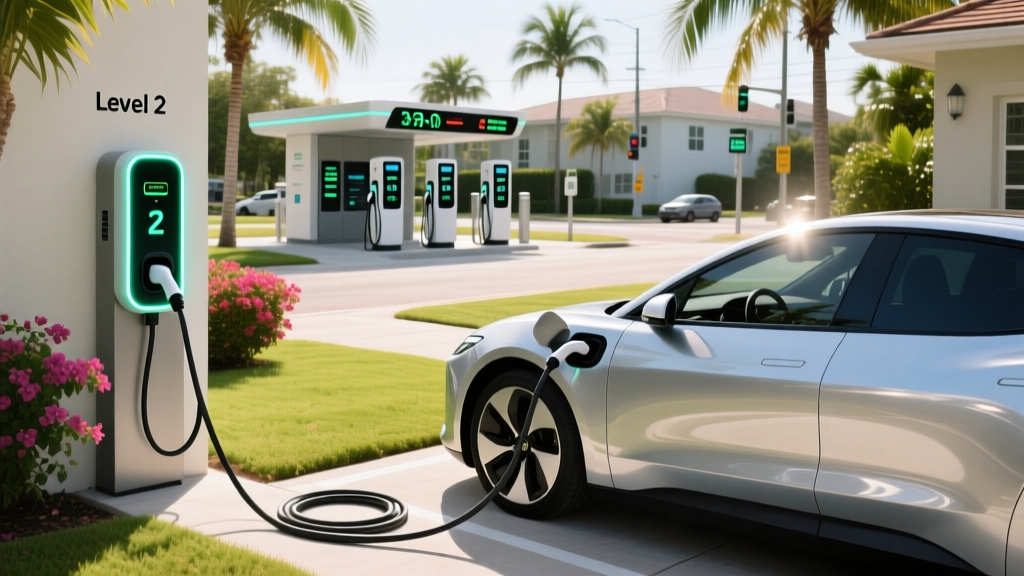
| Level 2 | 240V (dryer-style outlet or hardwired) | 7.2–19.2 kW | 20–60 miles | Daily home charging for all BEVs |
| DC Fast Charging | 400–800V DC | 50–350 kW | 150–1,000+ miles (equivalent rate) | Road trips; 10–80% in 15–35 minutes |
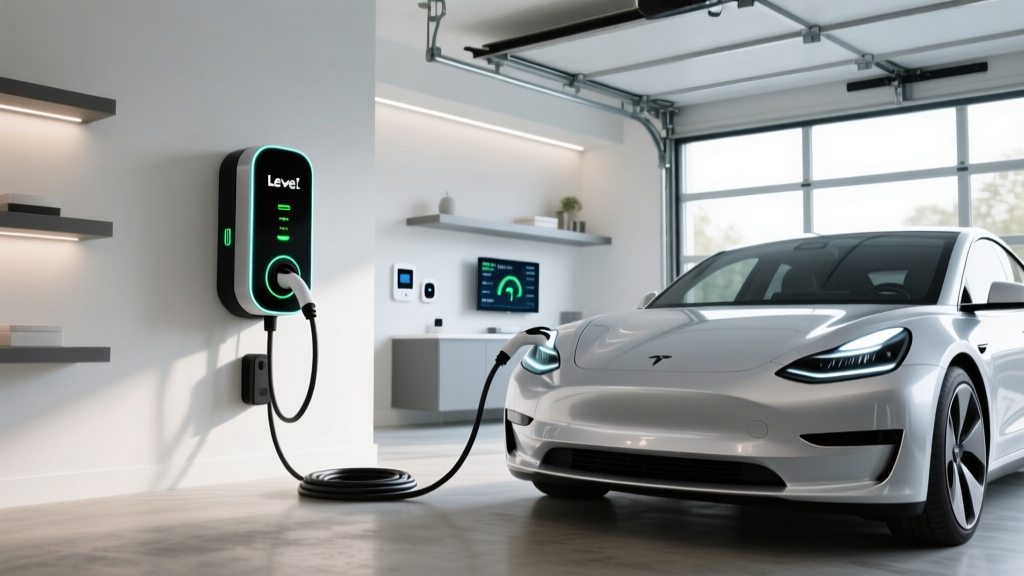
For most EV owners in ConEd territory, a Level 2 home charger rated at 11.5 kW (48 amps on a 60-amp circuit) is the practical sweet spot. It will fully replenish a 75 kWh battery (like a Tesla Model Y Long Range) in roughly 7–8 hours—perfect for overnight charging on ConEd's off-peak rates.
Real-World Charging Time Examples
Here's what a 10% to 80% charge looks like at various power levels for common battery sizes:
- Tesla Model Y (75 kWh battery, 11.5 kW Level 2): ~5 hours from 10–80%
- Hyundai Ioniq 5 (77.4 kWh, 10.9 kW Level 2): ~5.5 hours from 10–80%
- Ford F-150 Lightning Extended Range (131 kWh, 19.2 kW Level 2): ~6 hours from 10–80%
- Same Ioniq 5 on a 350 kW DC fast charger: ~18 minutes from 10–80% (peak rate tapers above 80%)
Note: DC fast charging speeds follow a charge curve—your car pulls peak kW only at low state of charge, then tapers significantly above 80% to protect battery health. That's why manufacturers quote 10–80% times rather than 0–100%.
ConEd EV Charger Rebate: What's Available in 2026?
Con Edison runs several programs that reduce the cost of home EV charging infrastructure. The key offerings as of early 2026 include:
- EV Make-Ready Program: ConEd covers the utility-side infrastructure upgrades (wiring from the transformer to your meter) needed to support EV charging in your area. This is not a direct customer rebate but reduces system-side costs that might otherwise be passed to you.
- Smart Charging Rebate: ConEd has offered customer incentives of up to $500–$1,000 for installing an eligible smart Level 2 charger that can participate in demand-response programs. Availability is subject to funding cycles.
- Time-of-Use (TOU) Rate Plans: While not a rebate, ConEd's EV-specific TOU rates let you charge at significantly reduced per-kWh prices during off-peak hours (typically overnight 12 AM–6 AM), effectively saving you hundreds annually versus standard residential rates.
Important: New York State's NYSERDA may offer additional incentives that stack with ConEd programs. Check Con Edison's official EV page and NYSERDA's Drive Clean Assist portal for current eligibility, as program funding and caps change throughout the year.
How Much Does It Cost to Install a Home EV Charger?
The total cost of a Level 2 home charger installation breaks into three components: the charger unit itself, the electrician's labor and materials, and permits. Here's a realistic breakdown for a typical ConEd customer in 2026:
| Component | Typical Range | Notes |
|---|---|---|
| Level 2 Charger (hardware) | $400–$750 | Smart Wi-Fi chargers with 25-ft cable, 40–48A |
| Electrician labor + materials | $600–$2,000 | Varies by run length from panel to garage/driveway |
| Permit (NYC/Westchester) | $100–$300 | Required for all new 240V circuits; inspection included |
| Panel upgrade (if needed) | $1,500–$4,000 | Required if your panel is 100A or has no spare breaker slots |
| Total (no panel upgrade) | $1,100–$3,050 | Most common scenario for modern homes |
| Total (with panel upgrade) | $2,600–$7,050 | Common in pre-1980 homes with 100A service |
What Electrical Upgrades Might You Need?
A Level 2 charger drawing 48 amps requires a dedicated 60-amp, 240-volt circuit. Your electrician will check two things during a site assessment:
- Panel capacity: Do you have 200-amp service with at least two open breaker slots? Homes with 100-amp panels often need a full service upgrade to safely add a 60A EV circuit alongside existing loads (HVAC, electric oven, dryer).
- Wire run distance: If your panel is in the basement and your parking spot is 80 feet away in a detached garage, the electrician needs heavier-gauge wire (6 AWG or 4 AWG copper) to prevent voltage drop, which adds $500–$1,200 in materials.
ConEd's Make-Ready program may cover the utility-side wiring (meter to transformer), but the customer-side wiring (meter to charger) is your responsibility—this is where the rebate helps offset costs.
Which Connector and Charger Is Compatible with My EV?
The connector landscape shifted dramatically in 2024–2025 when most major automakers adopted Tesla's North American Charging Standard (NACS). Here's the compatibility picture for 2026 model-year vehicles:
| Connector | Brands Using It (2026) | Adapter Needed? |
|---|---|---|
| NACS (Tesla-style) | Tesla, Ford, GM, Rivian, Hyundai, Kia, BMW, Volvo, Polestar, Nissan (new models) | No—for these brands. CCS vehicles need a CCS-to-NACS adapter (~$150–$250) |
| CCS1 | Legacy VW ID.4 (pre-2025), some Stellantis models, older BMW i4/iX | CCS vehicles can use NACS chargers with adapter |
| CHAdeMO | Nissan Leaf (discontinued), Mitsubishi Outlander PHEV (legacy) | Limited public infrastructure; adapters scarce |
For ConEd customers buying a new EV in 2026: If your vehicle has a NACS port, buy a NACS Level 2 charger. If your EV has CCS, you can either buy a CCS charger or a NACS charger with an adapter. Most charger manufacturers now offer dual-connector or configurable models.
Equipment Recommendations: Best Level 2 Chargers for ConEd Customers
ConEd's smart-charging programs reward chargers that can communicate with the utility for demand-response events (brief power reductions during grid peaks). Here are top picks that meet ConEd's compatibility requirements:
Emporia Vue Level 2 (Best Value)
- Power: 48 amps / 11.5 kW (hardwired) or 40A / 9.6 kW (NEMA 14-50 plug)
- Connector: NACS or J1772 (CCS adapter available)
- Cable length: 24 feet
- Smart features: Wi-Fi, app scheduling, energy monitoring, utility demand-response compatible
- Price: ~$400–$450
- Why it works for ConEd: Qualifies for most utility smart-charging programs; integrates with solar panels
ChargePoint Home Flex (Most Flexible)
- Power: Configurable 16–50 amps / up to 12 kW
- Connector: NACS or J1772 (swappable connector tips)
- Cable length: 23 feet
- Smart features: Wi-Fi, Alexa integration, detailed charging history, load-sharing for multi-charger setups
- Price: ~$550–$650
- Why it works for ConEd: Widely approved for utility rebate programs; adjustable amperage lets you match your circuit capacity
Tesla Wall Connector (Best for NACS Vehicles)
- Power: 48 amps / 11.5 kW
- Connector: NACS native (also works with any NACS-equipped Ford, GM, Hyundai, etc.)
- Cable length: 24 feet
- Smart features: Wi-Fi, OTA updates, power-sharing between multiple units, integrated cable management
- Price: ~$475
- Why it works for ConEd: Excellent build quality; works with all 2026 NACS vehicles, not just Teslas
How Much Does Charging Cost Per Mile vs. Gas?
This is where home charging in ConEd territory really pays off—especially if you use off-peak rates. Let's compare a representative EV (2026 Hyundai Ioniq 5, rated at 3.5 miles per kWh) against a comparable gas car (28 MPG combined) using current New York fuel and electricity prices.
| Scenario | Cost per kWh or Gallon | Cost per Mile | Annual Cost (12,000 mi) |
|---|---|---|---|
| Home charging (ConEd off-peak TOU rate) | ~$0.12/kWh | $0.034 | $408 |
| Home charging (ConEd standard residential rate) | ~$0.25/kWh | $0.071 | $852 |
| Public Level 2 (ChargePoint, EVgo) | ~$0.35–$0.45/kWh | $0.10–$0.13 | $1,200–$1,560 |
| DC Fast Charging (Electrify America, Tesla Supercharger) | ~$0.40–$0.55/kWh | $0.11–$0.16 | $1,320–$1,920 |
| Gasoline (NY metro, 28 MPG vehicle) | ~$3.60/gallon | $0.129 | $1,548 |
The bottom line: Charging at home on ConEd's off-peak TOU rate costs roughly 74% less per mile than gasoline. Even on the standard residential rate, you save about 45%. Public DC fast charging is the most expensive EV option—roughly comparable to gasoline—but most EV owners do 85–95% of their charging at home.
To maximize savings, schedule your charger (via its app) to begin charging after midnight when ConEd's off-peak rates apply. Many smart chargers also precondition your battery before departure, which improves efficiency in cold New York winters.
Safety and Code Requirements for Your Installation
New York State and NYC electrical codes require specific safety measures for EV charger installations. Your licensed electrician should address all of these:
- Dedicated circuit: Your Level 2 charger must have its own breaker—no sharing with other appliances. A 48A charger requires a 60A breaker (NEC rule: continuous loads can only use 80% of breaker capacity).
- GFCI protection: NEC 2020 and later require Ground Fault Circuit Interrupter protection for all EV charging outlets. Hardwired installations may have GFCI built into the charger unit. If you use a NEMA 14-50 receptacle, your electrician will install a GFCI breaker.
- Outdoor rating: If your charger is installed outdoors (common in NYC driveways and Westchester carports), the unit must carry a NEMA 4 or NEMA 4X rating for water and dust resistance. All three chargers recommended above meet this standard.
- Permit and inspection: NYC requires an electrical permit filed with the Department of Buildings; Westchester municipalities have their own permitting offices. The inspection ensures your installation meets NEC Article 625 (EV charging systems). Expect the permit to add $100–$300 and a 1–3 week timeline.
- Conduit and wire gauge: For runs over 50 feet, your electrician should use 4 AWG copper wire (rather than 6 AWG) to minimize voltage drop. All outdoor runs require weatherproof conduit.
Frequently Asked Questions
How do I apply for the ConEd EV charger rebate?
Visit Con Edison's EV programs page and review current offerings. Most rebate programs require you to purchase an eligible smart charger, have it installed by a licensed electrician, and submit proof of purchase and installation within a set window (typically 90 days). Some programs apply the rebate as a bill credit rather than a check.
Can I stack the ConEd rebate with the federal §30D tax credit?
The federal §30D credit applies to the vehicle, not the charger. However, the Alternative Fuel Vehicle Refueling Property Credit (IRC §30C) may cover up to 30% of home charger installation costs (max $1,000) if you live in an eligible census tract. Consult a tax professional and check IRS guidelines for your eligibility. This can stack with ConEd rebates.
Do I need a panel upgrade for a Level 2 charger?
You will likely need a panel upgrade if your home has 100-amp service, if your panel has no spare breaker slots, or if a load calculation shows your existing circuits (HVAC, electric oven, dryer) already consume most of your panel's capacity. Homes built after 2000 with 200A service usually have enough headroom. Budget $1,500–$4,000 for a panel upgrade if required.
Should I get a hardwired charger or a NEMA 14-50 plug?
Hardwired installations are preferred for 48A chargers because NEMA 14-50 receptacles are rated for 50A, and NEC continuous-load rules limit you to 40A on a plug-in setup. Hardwired units can deliver the full 48A (11.5 kW), charging about 20% faster. A plug offers portability if you move, but hardwired is the performance choice.
How does cold weather affect my charging speed and cost?
New York winters reduce EV range by 15–30% and slow charging speeds because the battery must warm before accepting full power. Most smart chargers and vehicles support preconditioning—warming the battery while still plugged in—so that when you begin your commute, the battery is at optimal temperature. This improves both range and regenerative braking efficiency. Schedule preconditioning via your charger's app during off-peak hours to keep costs low.
Is it worth installing a Level 2 charger if I only drive 20 miles a day?
Yes, especially with the ConEd rebate reducing your upfront cost. Even at 20 miles daily, Level 1 (120V) charging barely keeps up in winter when range drops and you use cabin heat. A Level 2 charger ensures you always start with a full battery, enables preconditioning, and provides the flexibility to recharge quickly after longer weekend trips. At off-peak rates, 20 miles of driving costs roughly $0.68 in electricity—far less than the $2.58 in gasoline a comparable car would burn.