Unlocking the ComEd Tesla Charger Rebate: Your 2026 Roadmap
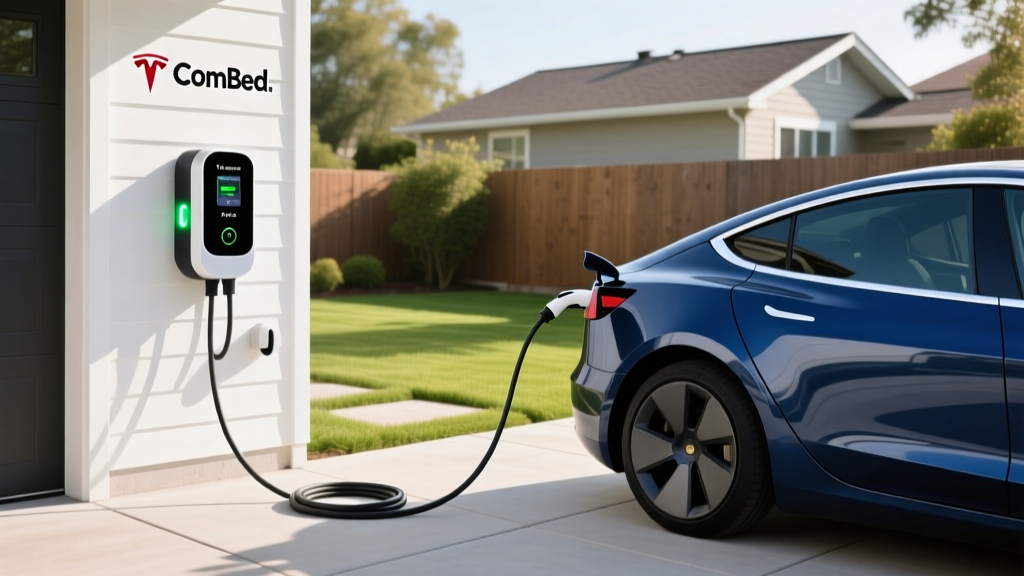
For Illinois residents in the ComEd service territory, the ComEd Tesla charger rebate (and broader EV smart-charging programs) represents one of the most effective ways to offset the upfront cost of a Level 2 home charging station. While the specific "Make Ready" rebate structures evolve year-to-year, the core incentive remains: ComEd offers financial support to customers who install Wi-Fi-enabled, networked chargers capable of participating in managed charging events. Whether you are plugging in a Tesla Model Y, a Ford F-150 Lightning, or a Hyundai Ioniq 5, understanding the intersection of utility incentives and hardware requirements is essential for a cost-effective installation.
Charging Speeds: Level 1, Level 2, and DC Fast Charging
Before applying for a rebate, you must understand the hardware you are installing. In the EV world, we measure power in kW (kilowatts) and energy capacity in kWh (kilowatt-hours). Think of kW as the speed of water flowing through a hose, and kWh as the size of the bucket you are filling.
| Level | Power / Voltage | Typical Speed (Miles/HR) | Best Use Case |
|---|---|---|---|
| Level 1 | 1.4 kW (120V / 12A) | 3 – 5 miles per hour | Overnight top-ups for PHEVs or low-mileage commuters. |
| Level 2 | 7.2 – 11.5 kW (240V / 30-48A) | 25 – 45 miles per hour | Daily home charging. Required for most ComEd rebates. |
| DC Fast | 50 – 350 kW (400-800V DC) | 150 – 1,000+ miles per hour | Road trips. Not eligible for standard home install rebates. |
How Much Does It Cost to Install a Home EV Charger?
The total cost of a Level 2 installation varies wildly based on your home's existing electrical infrastructure. While the ComEd rebate can offset several hundred dollars of the hardware or installation, you must budget for the "make-ready" work. In older Chicago-area homes, panel upgrades are a frequent reality.
| Cost Factor | Estimated Range | Notes |
|---|---|---|
| Level 2 Hardware (Smart Charger) | $400 – $750 | Must be Wi-Fi enabled for rebate eligibility. |
| Electrician Labor & Materials | $600 – $2,500 | Higher if the panel is far from the garage. |
| Permit & Inspection Fees | $100 – $350 | Required by local code; often required for rebate proof. |
| Electrical Panel Upgrade (200A) | $2,000 – $4,500 | Necessary if you have a 100A service or no breaker space. |
| Total (Without Panel Upgrade) | $1,100 – $3,600 | Before ComEd or Federal incentives. |
What Electrical Upgrades Might I Need?
A Level 2 charger like the Tesla Wall Connector (Gen 3 or 4) typically requires a 240V / 60A dedicated circuit to deliver its maximum 11.5 kW output. If you want to charge at a lower speed (e.g., 32A / 7.7 kW), you can use a 40A breaker. However, if your home's main service is only 100 Amps, adding a 60A continuous load may exceed your panel's capacity, triggering a mandatory service upgrade to 200A. Always have a licensed electrician perform a load calculation before purchasing equipment.
Connector Compatibility: NACS vs. CCS1
As of 2026, the North American Charging Standard (NACS)—originally developed by Tesla—has become the dominant connector for most new EVs. However, millions of vehicles on the road still use CCS1.
| Connector | Common Vehicles | Home Charger Strategy |
|---|---|---|
| NACS (Tesla) | Tesla (All), Ford (2025+), GM (2025+), Rivian, Hyundai (2026+) | Install a Tesla Wall Connector or NACS-equipped Emporia/JuiceBox. |
| CCS1 | VW ID.4 (pre-2025), BMW i4, older Ford/GM EVs | Use a CCS1 charger or a NACS-to-CCS adapter for Tesla units. |
| CHAdeMO | Nissan Leaf (Legacy) | Increasingly rare for home units; mostly found at public DC stations. |
Cost to Charge: $/kWh and Cost Per Mile vs. Gas
One of the primary benefits of the ComEd EV Rate is the ability to access off-peak electricity at significantly reduced rates. In 2026, charging on a standard residential rate might cost $0.16/kWh, while the managed EV rate can drop as low as $0.07/kWh overnight.
| Scenario | Energy Cost | Cost Per Mile (at 3 mi/kWh) |
|---|---|---|
| Home (ComEd EV Off-Peak) | $0.07 / kWh | $0.023 / mile |
| Home (Standard Residential) | $0.16 / kWh | $0.053 / mile |
| Public DC Fast (Electrify America) | $0.48 / kWh | $0.160 / mile |
| Gasoline (30 MPG @ $3.50/gal) | N/A | $0.116 / mile |
Equipment Recommendations for 2026
Tesla Wall Connector (Gen 4)
Power: 11.5 kW (48A)
Connector: NACS (Magic Dock in some public versions, NACS for home)
Features: Wi-Fi, OTA updates, Power-Share (load balancing).
Price: ~$450
Emporia Vue + Charger
Power: 9.6 kW (40A) or 11.5 kW (48A)
Connector: NACS or CCS1 options
Features: Deep energy monitoring, excellent app, rebate-qualified.
Price: ~$550
Charging Times for Common Battery Sizes
How long does it take to fill the "bucket"? Assuming a 10% to 80% charge (the standard daily recommendation for battery health) on an 11.5 kW Level 2 connection:
- Tesla Model Y (75 kWh battery): ~4.5 hours.
- Ford F-150 Lightning (131 kWh Extended): ~8 hours.
- Hyundai Ioniq 5 (84 kWh): ~5 hours.
Frequently Asked Questions (FAQ)
How do I apply for the ComEd Tesla charger rebate?
You must typically register your eligible smart charger with ComEd within 60 days of installation and provide proof of purchase and a signed contractor invoice. You may also need to enroll in the ComEd Residential EV Rate.
Is the Tesla Mobile Connector eligible for rebates?
Usually, no. Most utility rebates require a permanently mounted, hardwired, or 240V receptacle-connected smart charger that can be remotely managed by the utility for load-balancing events.
What if I rent my home?
ComEd occasionally offers "renter-friendly" incentives or community charging programs, but the hardware rebate is usually tied to a permanent installation at a property you own.