The ComEd EV Charger Rebate: What Illinois Drivers Need to Know
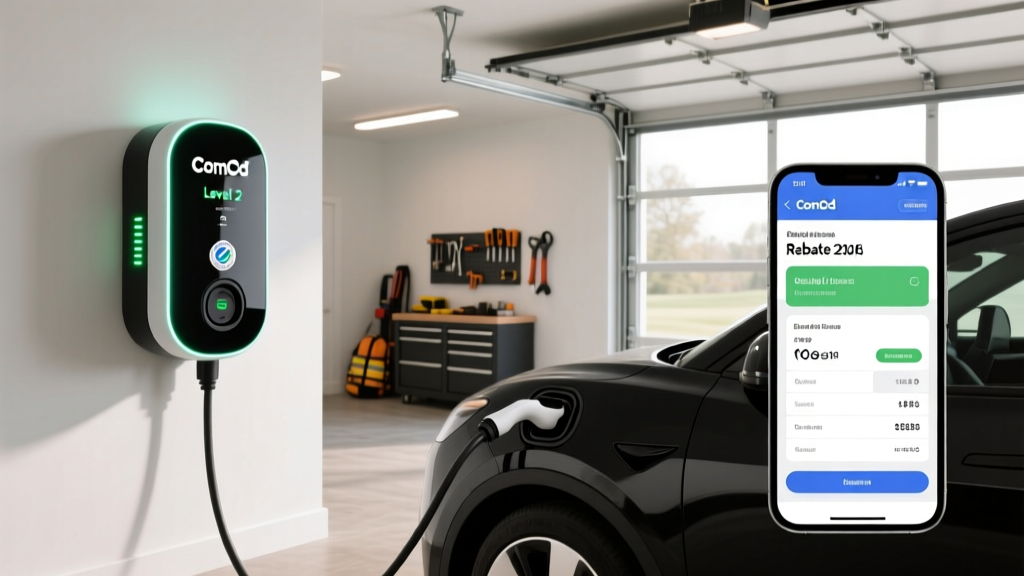
If you live in the ComEd service territory across northern Illinois and Chicago, one of the smartest first moves after buying an electric vehicle is filing for the ComEd rebate for EV charger installation. The utility's Residential EV Charging Rebate program has historically covered a significant portion of the costs associated with purchasing and installing a Level 2 home charging station — often up to $1,000 or more depending on the program year and whether electrical panel upgrades are needed. In 2026, the program continues to evolve alongside the ComEd EV rebates page, and stacking it with the federal IRS §30C alternative fuel vehicle refueling property credit (up to $1,000 for home charging equipment) can cut your out-of-pocket install cost dramatically.
But rebates only matter if the underlying installation is done right. This guide walks through the charging levels, real installation costs, connector compatibility, equipment we recommend, and the per-mile economics that make home Level 2 charging the financial backbone of EV ownership.
Charging Levels Explained: Speeds in kW and Miles Per Hour
EV charging is measured in kW (kilowatts), which is power — the rate at which energy flows into your battery. Your battery's capacity is measured in kWh (kilowatt-hours), which is energy — the total amount stored. Never confuse the two: a 19.2 kW charger fills a 77 kWh battery in roughly 4 hours from empty; a 1.4 kW outlet takes over two days.
| Level | Voltage | Power (kW) | Miles of Range Added Per Hour | Typical Use |
|---|---|---|---|---|
| Level 1 | 120V AC | 1.2 – 1.9 kW | 3 – 5 mi/hr | Overnight trickle, PHEVs, low-mileage drivers |
| Level 2 | 240V AC | 3.3 – 19.2 kW | 12 – 75 mi/hr | Home daily charging, workplace, destination |
| DC Fast (Level 3) | 400 – 900V DC | 50 – 350+ kW | 150 – 1,000+ mi/hr (peak) | Road trips, highway corridors, 10-80% in 18-45 min |
For a typical 2026 EV like the Hyundai Ioniq 5 (77.4 kWh usable battery, ~4.0 mi/kWh efficiency), a 48A / 11.5 kW Level 2 home charger adds roughly 46 miles of range per hour. That same car on a 350 kW DC fast charger can go from 10% to 80% in about 18 minutes under ideal battery temperatures, though the charge curve tapers sharply above 80% to protect cell longevity.
How Much Does It Cost to Install a Home EV Charger?
The honest answer depends on your home's electrical panel, the distance from the panel to the garage or driveway, and whether you need a service upgrade. Here is the realistic breakdown for a typical 48A Level 2 hardwired charger install in the ComEd territory in 2026:
| Component | Typical Range | Notes |
|---|---|---|
| Level 2 charger (hardware) | $400 – $750 | 48A hardwired Wi-Fi-enabled units |
| Electrician labor | $600 – $2,000 | Depends on run length, conduit, drywall work |
| Permit and inspection | $100 – $300 | Municipality-dependent; required for rebate |
| Panel upgrade (if needed) | $1,500 – $4,000 | 100A → 200A service for older homes |
| Total (no panel upgrade) | $1,100 – $3,050 | Most newer homes fall here |
| Total (with panel upgrade) | $2,600 – $7,050 | Homes built before 1990 often need this |
This is where the ComEd rebate meaningfully changes the math. Historically, ComEd has offered up to $1,000 toward the charger and installation for residential customers, and in some program years an additional amount for panel upgrades when tied to EV adoption. Combined with the federal §30C credit (30% of equipment and install up to $1,000 for homes in eligible census tracts), a $2,500 install can drop to well under $1,000 out of pocket. Always verify current program terms on ComEd's official site — incentive amounts and eligibility shift year to year.
Electrical Requirements: Voltage, Amperage, and Panel Upgrades
A proper 48A Level 2 charger requires a 240V dedicated circuit with a 60A breaker. The National Electrical Code (NEC) requires continuous loads to be sized at 80% of the breaker rating, so a 60A breaker supports a 48A continuous charge. If you opt for a 32A charger (7.7 kW), a 40A breaker suffices and puts less strain on older panels.
Panel upgrade reality check: Homes built before 1990 frequently have 100A service. Adding a 60A EV circuit to an already-loaded 100A panel (electric range, dryer, central AC) often requires upgrading to 200A service — a $2,000-$4,000 job performed by a licensed electrician and coordinated with ComEd for the meter drop. Skipping this and overloading an undersized panel is a fire risk and will fail inspection, which also voids your rebate eligibility.
Safety and code requirements to expect:
- Dedicated circuit — no sharing with other major appliances
- GFCI protection (required by NEC 2020+ for most 240V receptacles in garages)
- NEMA 14-50 receptacle or hardwired connection (hardwired avoids the GFCI breaker requirement and is more reliable long-term)
- NEMA 4 outdoor rating if the charger is mounted outside
- Proper conduit and wire gauge (6 AWG copper for 48A; 4 AWG for longer runs)
Connector Compatibility: NACS, CCS, and CHAdeMO in 2026
The connector landscape has consolidated dramatically. As of the 2025-2026 model years, the North American Charging Standard (NACS) — originally Tesla's proprietary connector — is the dominant plug on nearly all new EVs sold in North America. CCS1 remains on many 2021-2024 models still on the road, and CHAdeMO is effectively legacy (Nissan Leaf being the last major holdout, now discontinued in the U.S.).
| Connector | Brands Using It (2026) | Home Charger Notes |
|---|---|---|
| NACS (J3400) | Tesla, Ford, GM, Rivian, Hyundai, Kia, Volvo, Polestar, BMW, Mercedes, most others | Buy a NACS-terminated charger for new EVs |
| CCS1 | Older VW ID.4, Audi e-tron (pre-2025), some Stellantis models | Use a NACS-to-CCS adapter (~$150-$250) or CCS-terminated charger |
| CHAdeMO | Legacy Nissan Leaf, Mitsubishi Outlander PHEV (older) | Rarely available on new home chargers; adapters scarce |
If you own a CCS-equipped EV from model years 2022-2024 and plan to upgrade to a NACS vehicle later, buying a NACS-terminated Level 2 charger now and using a NACS-to-CCS adapter (from Tesla or Lectron) is the future-proof choice. Adapters are rated for the full 48A and do not meaningfully impact charging speed at Level 2.
Equipment Picks: Level 2 Chargers We Recommend in 2026
Below are three chargers that hit the right balance of power output, cable length, smart features, and value — all widely available and compatible with the ComEd rebate program's equipment requirements (UL-listed, Wi-Fi-enabled for load management).
Tesla Wall Connector (Gen 4)
- Power output: 11.5 kW (48A on 60A circuit) or up to 19.2 kW (80A on 100A circuit)
- Connector: NACS native; J1772 adapter included
- Cable length: 24 feet
- Smart features: Wi-Fi, OTA updates, Power Sharing for multi-unit installs, access control
- Price: ~$450 (hardware only)
- Best for: NACS vehicles, Tesla Powerwall integration, multi-charger garages
Emporia Level 2 EV Charger
- Power output: 11.5 kW (48A) or configurable down to 32A
- Connector: NACS or J1772 (select at purchase)
- Cable length: 24 feet
- Smart features: Wi-Fi, Emporia energy monitoring integration, scheduled charging, solar-aware charging
- Price: ~$400
- Best for: Budget-conscious buyers who want energy tracking and solar pairing
ChargePoint Home Flex
- Power output: Up to 12 kW (50A) configurable via dip switch
- Connector: NACS or J1772 (select at purchase; adapter included)
- Cable length: 23 feet
- Smart features: Wi-Fi, Alexa integration, detailed app analytics, utility demand-response compatible
- Price: ~$650
- Best for: Drivers wanting granular app data and utility program compatibility
Cost to Charge: Home vs. Public vs. Gas Per Mile
The financial case for EV ownership lives or dies on the cost-per-mile gap between home electricity and gasoline. In the ComEd territory, residential rates in 2026 average around $0.14-$0.17/kWh on standard plans, and significantly less on time-of-use (TOU) off-peak overnight rates — often $0.08-$0.10/kWh between 10 PM and 6 AM. ComEd has offered an EV Rate (Residential Real-Time Pricing or special EV TOU tariff) that rewards overnight charging.
| Scenario | Rate | Efficiency | Cost Per Mile |
|---|---|---|---|
| Home off-peak (ComEd TOU overnight) | $0.09/kWh | 3.5 mi/kWh | $0.026 |
| Home standard rate | $0.16/kWh | 3.5 mi/kWh | $0.046 |
| Public Level 2 (ChargePoint, EVgo L2) | $0.35/kWh | 3.5 mi/kWh | $0.10 |
| DC Fast Charging (Electrify America, Tesla Supercharger) | $0.48/kWh | 3.5 mi/kWh | $0.137 |
| Gasoline car (30 MPG combined, $3.40/gal) | $3.40/gal | 30 MPG | $0.113 |
The takeaway: charging at home on off-peak ComEd rates costs roughly one-quarter what gasoline costs per mile. Even DC fast charging on road trips is cost-competitive with gas in 2026. But relying exclusively on public DC fast charging erases most of the savings — another reason the ComEd rebate for a home charger is the highest-leverage investment an EV owner can make.
Charging Time Examples for Common Battery Sizes
Below are approximate 10-80% charge times for popular 2025-2026 EVs, illustrating the difference between Level 2 home charging and DC fast charging. All DC fast times assume optimal battery preconditioning and ambient temperatures above 50°F — cold batteries charge significantly slower.
| Vehicle (Battery kWh) | 48A Level 2 (11.5 kW) | 150 kW DC Fast | 350 kW DC Fast |
|---|---|---|---|
| Tesla Model Y LR (75 kWh usable) | ~4 hr 30 min | ~30 min | ~22 min |
| Hyundai Ioniq 5 (77.4 kWh) | ~4 hr 45 min | ~28 min | ~18 min |
| Ford F-150 Lightning Ext. Range (131 kWh) | ~8 hr | ~45 min | ~38 min |
| Chevrolet Equinox EV (85 kWh) | ~5 hr 15 min | ~32 min | ~25 min |
| Toyota bZ4X (71.4 kWh) | ~4 hr 20 min | ~35 min | N/A (150 kW peak) |
For most EV owners, overnight Level 2 charging at home means waking up to a full battery every morning. The 10-80% DC fast times matter primarily on road trips, where preconditioning the battery (a feature that warms the pack before you arrive at a charger) can shave 5-10 minutes off your stop.
Frequently Asked Questions
How do I apply for the ComEd rebate for an EV charger?
After installation by a licensed electrician, you submit the application through ComEd's rebate portal with your itemized invoice, equipment model/spec sheet, electrical permit, and proof of inspection. The rebate is typically issued as a check within 6-10 weeks. Apply within the program's deadline — usually within 90 days of installation. Verify current requirements at ComEd's EV rebate page before scheduling work.
Can I install a NEMA 14-50 outlet myself to save money?
No. ComEd requires the installation be performed by a licensed electrician with a pulled permit and passed inspection to qualify for the rebate. DIY work will fail the rebate application and may void your homeowner's insurance coverage for electrical fires. Hardwired installs are generally preferred over 14-50 receptacles because they avoid the NEC 2020 GFCI breaker requirement (which can cause nuisance trips) and provide a more reliable long-term connection.
What if my home only has 100A electrical service?
You have three options: (1) Upgrade to 200A service ($2,000-$4,000), which also increases your home's resale value. (2) Install a lower-amperage 32A (7.7 kW) charger on a 40A circuit, which is often sufficient for overnight charging of most EVs. (3) Use a smart panel monitor like the Emporia Vue or Span Drive that dynamically limits EV charging when other loads are active, avoiding the need for a service upgrade in some jurisdictions. Discuss options with your electrician and check whether ComEd's current rebate includes panel-upgrade incentives.
Does the federal §30C credit stack with the ComEd rebate?
Yes. The IRS §30C Alternative Fuel Vehicle Refueling Property Credit covers 30% of the cost of home EV charging equipment and installation (up to $1,000) for homes located in eligible census tracts — typically non-urban or low-income communities. This stacks with the ComEd rebate because one is a federal tax credit and the other is a utility incentive. Confirm your census tract eligibility and consult a tax professional, as IRS rules and tract designations are updated periodically.
How fast will a Level 2 charger add range compared to a regular outlet?
A standard 120V Level 1 outlet adds roughly 3-5 miles of range per hour — adequate only for plug-in hybrids with small batteries or EV drivers who travel under 30 miles daily. A 48A Level 2 charger at 11.5 kW adds 35-50 miles per hour depending on vehicle efficiency, meaning a depleted 300-mile-range EV fully recharges in 7-8 hours overnight. This is the practical minimum for battery-electric vehicles driven daily.
Is it worth enrolling in ComEd's time-of-use or EV rate plan?
If you charge primarily overnight at home, almost certainly yes. ComEd's EV-specific and TOU rate plans can cut your charging electricity cost nearly in half compared to the standard fixed rate by shifting your charging load to off-peak hours (typically 10 PM - 6 AM). Most smart Level 2 chargers (Tesla Wall Connector, ChargePoint Home Flex, Emporia) allow you to schedule charging windows in their apps to automatically exploit these lower rates. Contact ComEd or check their rate plan comparison tool before your first billing cycle.