Why the ComEd Level 2 Charger Rebate Matters for EV Owners
If you live in northern Illinois and drive an electric vehicle, the ComEd Level 2 charger rebate is one of the most practical incentives available to offset the cost of home charging infrastructure. Commonwealth Edison (ComEd) has offered rebate programs that can cover a significant portion of your Level 2 home charger purchase and installation — sometimes up to $1,000 or more depending on the program cycle and whether you qualify for income-based enhancements.
But a rebate alone doesn't answer the real questions: What charger should you buy? Will your electrical panel handle a 240V circuit? What does installation actually cost before the rebate kicks in? And how much will you save per mile compared to gasoline?
This guide breaks down everything you need to know — from electrical requirements and equipment picks to real charging speeds and cost-per-mile math — so you can plan your home charging setup with exact numbers, not guesswork.
Charging Levels Explained: Speeds in kW and Miles Per Hour
Before evaluating any rebate or charger purchase, you need to understand the three charging levels and what they deliver in practical terms. The critical distinction: kW (kilowatts) measures power — how fast energy flows into your battery. kWh (kilowatt-hours) measures energy — the total capacity of your battery. Think of kW as the flow rate of a hose and kWh as the size of the bucket.
| Level | Voltage | Power (kW) | Miles of Range Added Per Hour | Typical Use |
|---|---|---|---|---|
| Level 1 | 120V AC | 1.2–1.9 kW | 3–5 miles | Overnight trickle; PHEVs with small batteries |
| Level 2 | 240V AC | 3.3–19.2 kW | 12–75 miles | Daily home and workplace charging |
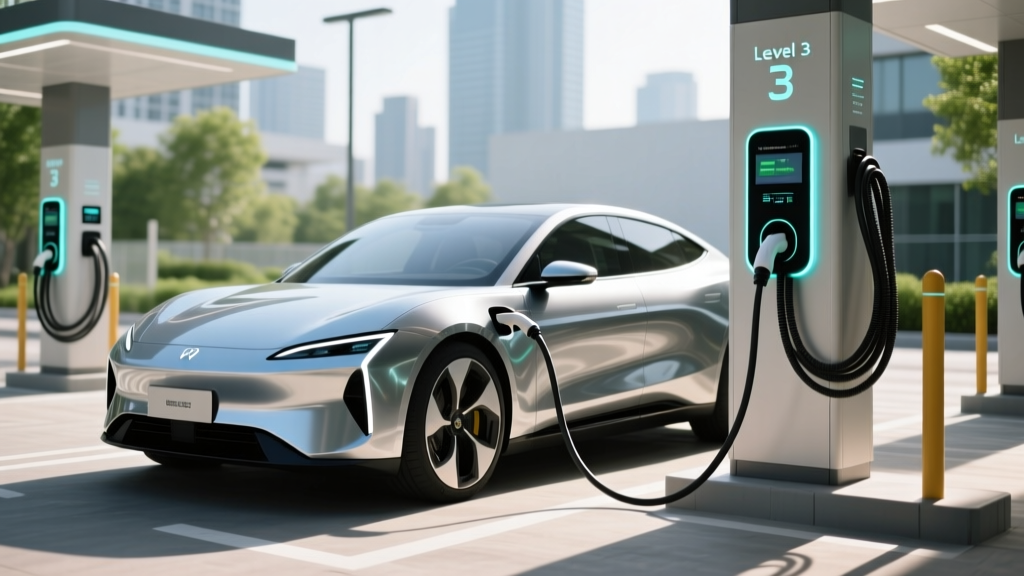
| DC Fast Charging | 400–800V DC | 50–350 kW | 150–1,200+ miles (theoretical) | Road trips; 10–80% in 15–40 min |
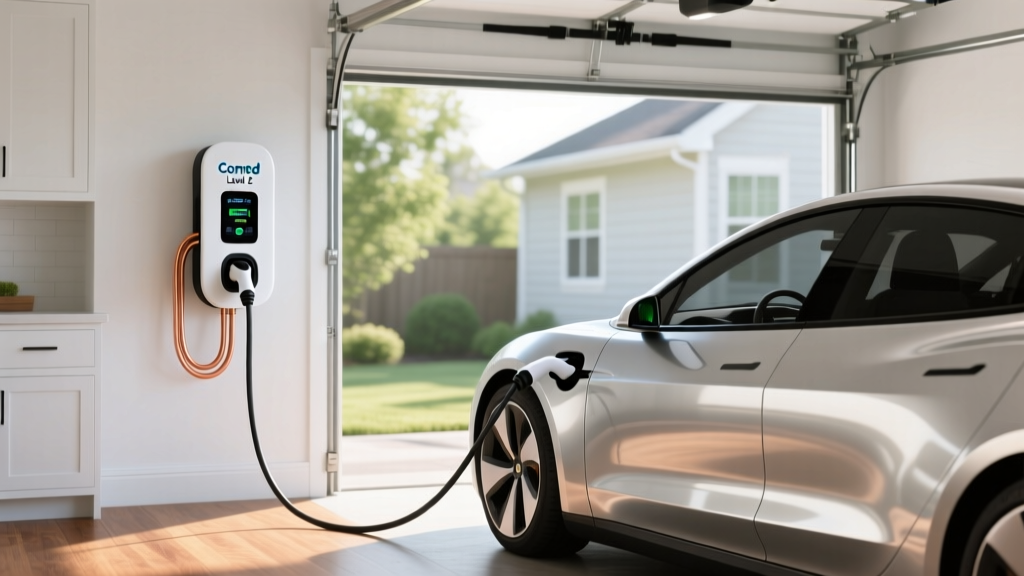
For most EV owners, Level 2 is the daily workhorse. A typical BEV with a 75–100 kWh battery (think Tesla Model Y Long Range at 75 kWh usable, or Ford F-150 Lightning Extended Range at 131 kWh usable) will fully recharge overnight on a 40A or 48A Level 2 circuit. Level 1 is adequate only for plug-in hybrids with 10–18 kWh batteries or as a backup option.
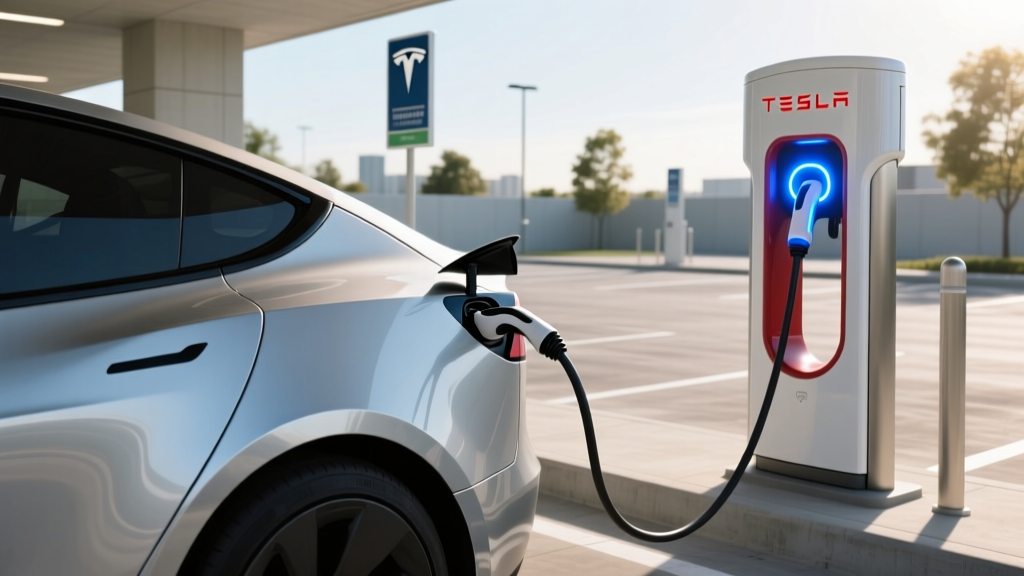
DC fast charging is essential for road trips but not designed for daily use — frequent DCFC sessions at high state of charge can accelerate battery degradation, and the per-kWh cost at public stations is typically 2–4x higher than home electricity rates.
Electrical Requirements: What Your Home Needs for a Level 2 Charger
Installing a Level 2 charger isn't simply plugging into an existing outlet. Here's what the electrical system demands:
Voltage and Amperage
Level 2 charging requires a dedicated 240V circuit — the same type of circuit your electric dryer or oven uses. The most common configurations:
- 40A circuit / 32A continuous (9.6 kW): The most popular residential setup, compatible with most chargers and sufficient for overnight charging of nearly any EV.
- 48A circuit / 40A continuous (11.5 kW): Needed to maximize charge rate on vehicles with larger onboard chargers (e.g., Tesla Model S/X, Ford F-150 Lightning).
- 60A circuit / 48A continuous (11.5–19.2 kW): Required for the fastest Level 2 speeds, but only if the vehicle's onboard charger supports it. Most EVs cap at 11.5 kW onboard.
The National Electrical Code (NEC) requires that continuous loads (like EV charging) not exceed 80% of the circuit breaker rating. So a 40A breaker supports 32A continuous charging, a 50A breaker supports 40A, and a 60A breaker supports 48A.
Panel Capacity and Upgrade Considerations
Your electrical panel must have enough spare capacity to add a 40A–60A double-pole breaker. Many older homes in the ComEd service area have 100A or 150A panels that may already be near capacity. A licensed electrician will perform a load calculation to determine if you need a panel upgrade.
Panel upgrades from 100A to 200A typically cost $1,500–$3,500 before permits — a significant addition to your installation budget. ComEd's rebate programs have historically focused on the charger and basic installation, so a panel upgrade may come out of pocket. Check the current program terms at ComEd's EV program page for exact coverage details.
Permits and Inspections
Illinois law and most local jurisdictions require an electrical permit for new 240V circuit installations. Permit fees typically range from $50–$200 depending on your municipality. The installation must pass inspection before the circuit is energized. Skip this step and you risk voiding homeowner's insurance coverage for any electrical fire related to the unpermitted work.
Home Charger Installation Cost Breakdown
Here's what a realistic Level 2 charger installation costs in the ComEd service territory, broken down by component:
| Component | Cost Range | Notes |
|---|---|---|
| Level 2 Charger (Equipment) | $350–$750 | Smart Wi-Fi-enabled, 40A–48A, 25ft cable |
| Electrician Labor (Standard Install) | $500–$1,500 | Panel to garage, short wire run (<50 ft) |
| Electrician Labor (Complex Install) | $1,500–$3,000 | Long wire runs, conduit, trenching, attic routing |
| Electrical Permit | $50–$200 | Varies by municipality |
| Panel Upgrade (If Needed) | $1,500–$3,500 | 100A → 200A service upgrade |
| Materials (Conduit, Wire, Breaker) | $100–$400 | Depends on wire gauge and run length |
| Total (Standard, No Panel Upgrade) | $950–$2,850 | Most common scenario |
| Total (With Panel Upgrade) | $2,450–$6,350 | Older homes with 100A panels |
The ComEd Level 2 charger rebate, when active, has historically offered up to $1,000 toward the combined cost of equipment and installation for residential customers. Income-qualified customers may receive enhanced rebates. Always verify current rebate amounts and eligibility on the official ComEd website or by calling their EV program line, as utility incentive programs are subject to funding cycles and regulatory approval.
Additionally, the federal §30D Alternative Fuel Vehicle Refueling Property Credit may cover up to 30% of home charger installation costs (capped at $1,000) if you live in an eligible census tract. Check the latest IRS guidance at irs.gov for current eligibility maps and filing requirements.
Connector Compatibility: NACS, CCS1, and CHAdeMO
The connector landscape has shifted dramatically. As of 2026, nearly all new EVs sold in North America use the NACS (North American Charging Standard) connector, originally developed by Tesla and now adopted industry-wide. Here's the compatibility breakdown:
| Connector | Brands Using It | Adapter Needed? |
|---|---|---|
| NACS (Tesla) | Tesla (all), Ford, GM, Rivian, Volvo, Polestar, Hyundai, Kia (2025+), BMW, Mercedes-Benz | No — native NACS port on 2025+ models |
| CCS1 | Older Ford/GM/Hyundai/Kia/VW models (pre-adoption), some legacy BEVs | NACS-to-CCS adapter for Tesla Superchargers |
| CHAdeMO | Nissan Leaf (legacy), Mitsubishi Outlander PHEV | Limited adapter options; network declining |
For new charger purchases in 2026: If you drive a current-model EV with NACS, buy a NACS-connector charger. If you still own a CCS1-equipped vehicle, buy a CCS1 charger or use a certified NACS-to-CCS adapter (Ford and GM provide these to owners). Most major charger manufacturers now offer both connector options.
When evaluating the ComEd rebate, confirm which charger models qualify. Utility rebate programs often maintain an approved equipment list, and not every charger on the market may be eligible.
Recommended Level 2 Chargers: Specs, Features, and Pricing
Here are three proven Level 2 chargers that deliver reliable performance, smart features, and broad vehicle compatibility — all commonly eligible for utility rebate programs:
ChargePoint Home Flex (NACS or CCS1)
- Power Output: Up to 12 kW (50A circuit / 40A continuous) — adjustable down to 16A for lower-capacity panels
- Cable Length: 23 feet
- Smart Features: Wi-Fi, app scheduling, energy tracking, Alexa integration, charge sharing between two units
- Price: ~$550–$650
- Best For: Flexible amperage settings for homes with limited panel capacity
Emporia Level 2 EV Charger
- Power Output: Up to 11.5 kW (48A continuous on 60A circuit)
- Cable Length: 24 feet
- Smart Features: Wi-Fi, app control, solar integration, energy monitoring, load management
- Price: ~$350–$450
- Best For: Budget-conscious buyers who want full smart features and solar pairing
Tesla Wall Connector (NACS native)
- Power Output: Up to 11.5 kW (48A continuous on 60A circuit)
- Cable Length: 24 feet
- Smart Features: Wi-Fi, over-the-air updates, Power Sharing with up to 6 units, load management
- Price: ~$425–$475
- Best For: Tesla owners and NACS-equipped EVs; cleanest integration with Tesla vehicles
All three chargers are UL-listed, rated for indoor and outdoor installation (NEMA 4 or equivalent weather resistance), and support hardwired installation — which is preferred over plug-in (NEMA 14-50) for safety and code compliance in many jurisdictions.
Charging Cost Per Mile: Home vs. Public vs. Gasoline
The economic case for home charging becomes clear when you compare real cost-per-mile figures. Here's the math using ComEd's typical residential rate structure and current public charging prices:
| Scenario | Rate | Efficiency | Cost Per Mile |
|---|---|---|---|
| Home (ComEd Standard Rate) | ~$0.13/kWh | 3.5 mi/kWh (avg BEV) | $0.037 |
| Home (ComEd Off-Peak/Time-of-Use) | ~$0.08/kWh | 3.5 mi/kWh | $0.023 |
| Public Level 2 (ChargePoint, EVgo) | $0.25–$0.40/kWh | 3.5 mi/kWh | $0.071–$0.114 |
| DC Fast Charging (Electrify America, Tesla) | $0.35–$0.55/kWh | 3.5 mi/kWh | $0.100–$0.157 |
| Gasoline Vehicle (30 MPG avg) | $3.50/gallon | 30 MPG | $0.117 |
| Gasoline Vehicle (22 MPG, truck/SUV) | $3.50/gallon | 22 MPG | $0.159 |
The takeaway: Home charging on ComEd's standard rate costs roughly $0.037/mile — about one-third the cost of a 30 MPG gas car. If you can shift charging to off-peak hours (typically 10 PM – 6 AM), you drop to just $0.023/mile, making your EV roughly 5x cheaper to "fuel" than a comparable gasoline vehicle.
Even at public DC fast charging rates, EVs are cost-competitive with gasoline for most vehicles — but relying on public DCFC exclusively erodes the economic advantage. The ComEd Level 2 charger rebate exists precisely to help you capture the home-charging savings.
Charging Time Examples: Real 10–80% Times for Common EVs
How long will a Level 2 charger actually take? Here are real-world estimates for popular EVs on a 48A (11.5 kW) Level 2 circuit, charging from 10% to 80% state of charge:
- Tesla Model Y Long Range (75 kWh usable): ~4.5 hours (10–80%)
- Ford Mustang Mach-E Extended Range (91 kWh usable): ~5.5 hours (10–80%)
- Hyundai Ioniq 5 Long Range (77.4 kWh usable): ~4.7 hours (10–80%)
- Chevrolet Equinox EV (85 kWh usable): ~5.2 hours (10–80%)
- Ford F-150 Lightning Extended Range (131 kWh usable): ~8 hours (10–80%)
- Toyota RAV4 Prime PHEV (18.1 kWh usable): ~1.2 hours (10–80%)
Level 2 charging doesn't experience the same dramatic taper above 80% that DC fast charging does — the charge rate stays relatively steady. However, most EV owners set a charge limit of 80% for daily driving (extending battery longevity) and only charge to 100% before long trips. An overnight session on Level 2 easily replenishes a day's driving for any BEV.
Safety, Code Compliance, and Installation Best Practices
Electrical safety isn't optional — especially with a continuous high-amperage load like EV charging. Here are the non-negotiable requirements:
- Dedicated circuit: Your Level 2 charger must have its own dedicated double-pole breaker. Never share the circuit with other appliances.
- GFCI protection: NEC 2020 and later require GFCI (Ground Fault Circuit Interrupter) protection for all EV charging outlets. Hardwired installations may have different requirements — your electrician will determine compliance based on local code amendments.
- Outdoor rating: If installing outdoors, the charger must carry a NEMA 4 (or IP54+) weather-resistance rating. All three chargers recommended above meet this standard.
- Wire gauge: A 40A circuit requires minimum 8 AWG copper wire; a 60A circuit requires minimum 6 AWG (or 4 AWG aluminum). Undersized wire creates a fire hazard.
- Hardwired vs. plug-in: Hardwired installations (no plug) are generally preferred for safety and are required by code in many jurisdictions for circuits above 40A. If using a NEMA 14-50 receptacle, ensure it's an industrial-grade outlet rated for daily plug/unplug cycles — cheap residential-grade 14-50 outlets are a known fire risk under continuous EV charging loads.
- Load management: If your panel is near capacity but you don't want to pay for an upgrade, consider a smart load-management system (like Emporia's or ChargePoint's) that dynamically reduces charger amperage when other household loads spike.
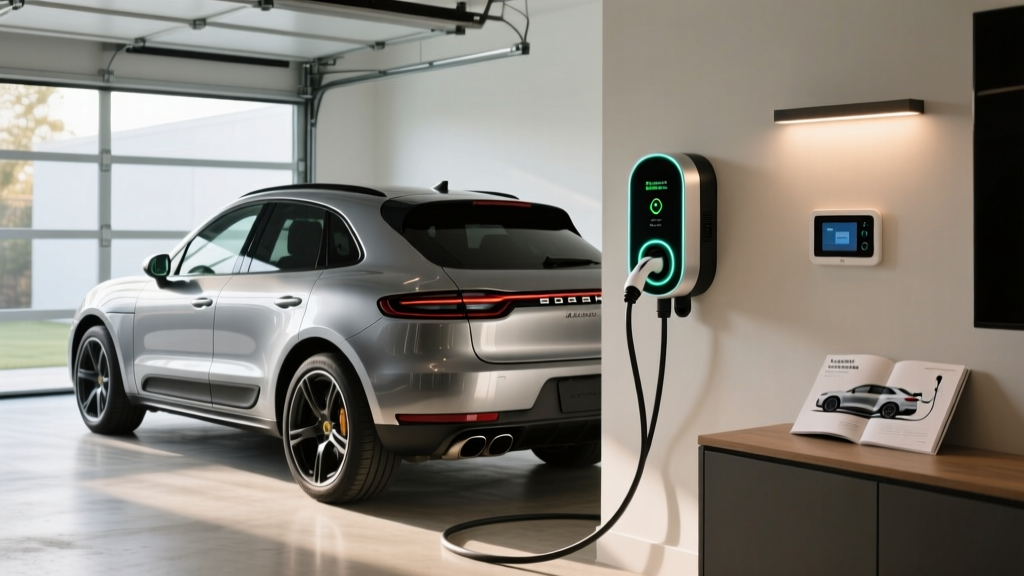
Always hire a licensed, insured electrician familiar with EV charger installations. Ask for references from other EV owners and confirm they'll pull the required permits. ComEd may require proof of professional installation to process your rebate.
Frequently Asked Questions
How much does it cost to install a home EV charger?
A standard Level 2 installation (40A circuit, short wire run, no panel upgrade) typically costs $950–$2,850 including equipment, electrician labor, and permits. If your home needs a panel upgrade from 100A to 200A service, total costs can reach $2,450–$6,350. The ComEd Level 2 charger rebate can offset up to $1,000 of these costs, and the federal §30D credit may cover an additional 30% (up to $1,000) if you're in an eligible census tract.
How fast will each charging level add range?
Level 1 (120V) adds 3–5 miles of range per hour. Level 2 (240V) adds 12–75 miles per hour depending on circuit amperage and the vehicle's onboard charger capacity. DC fast charging can add 150+ miles in 15–20 minutes at peak rates, but speed tapers significantly above 80% state of charge due to battery management protocols.
Which connector/charger is compatible with my EV?
For 2025 and newer models, most manufacturers have switched to NACS (Tesla's connector). This includes Ford, GM, Rivian, Hyundai, Kia, BMW, and Volvo. Older CCS1-equipped vehicles can use a NACS-to-CCS adapter for Tesla Supercharger access. Nissan Leaf and Mitsubishi PHEV owners still use CHAdeMO. Check your vehicle's charge port or owner's manual before ordering a charger.
How much does charging cost per mile vs. gas?
Home charging on ComEd's standard rate costs approximately $0.037/mile for an average BEV (3.5 mi/kWh at $0.13/kWh). Off-peak rates drop this to about $0.023/mile. A comparable 30 MPG gasoline vehicle at $3.50/gallon costs $0.117/mile — roughly 3–5x more expensive. Even public DC fast charging at $0.45/kWh ($0.129/mile) is competitive with gasoline for most vehicles.
What electrical upgrades might I need?
The most common upgrade is a panel upgrade from 100A to 200A service ($1,500–$3,500) if your existing panel lacks spare capacity for a new 40A–60A double-pole breaker. You may also need new conduit runs, a dedicated grounding electrode, or a sub-panel if the charger is far from your main panel (detached garage, for example). A licensed electrician's load calculation will determine exactly what's needed before work begins.
Is the ComEd Level 2 charger rebate still available?
Utility rebate programs are subject to funding cycles, regulatory approval, and periodic changes. Visit ComEd's official EV programs page or call their customer service to confirm current rebate availability, eligible equipment, and application deadlines for 2026. You'll typically need to purchase from an approved charger list and submit proof of professional installation.