If you live in northern Illinois and drive an electric vehicle, the ComEd EV charging rebate can knock a significant chunk off the cost of buying and installing a home Level 2 charger. But utility rebate programs are notorious for shifting eligibility rules, paperwork requirements, and fine print that can leave money on the table. This guide breaks down exactly what the ComEd rebate covers in 2026, how to qualify, and — just as importantly — what your total home charging setup will actually cost once you factor in equipment, electrician labor, permits, and any panel upgrades your house might need.
We'll also cover the fundamentals every EV owner needs: the difference between kW (power, or how fast energy flows into your car) and kWh (energy, or how much your battery holds), real charging speeds by level, connector compatibility across brands, and what you'll pay per mile to charge at home versus filling up a gas car.
What the ComEd EV Charging Rebate Covers in 2026
ComEd (Commonwealth Edison), the primary electric utility serving Chicago and much of northern Illinois, has offered residential EV charging incentives as part of Illinois' broader clean-energy push under the Climate and Equitable Jobs Act (CEJA). The program is designed to offset the upfront cost of purchasing and installing a qualified Level 2 home charging station.
Here's what you need to know about the current program structure:
- Rebate amount: ComEd has historically offered up to $1,000 toward the purchase and installation of a qualifying Level 2 (240V) smart charger for residential customers. Exact amounts and availability depend on current funding cycles — check ComEd's official rebate page for the live figure before purchasing equipment.
- Eligibility: You must be a ComEd residential customer, purchase a qualifying Wi-Fi-enabled smart charger (typically ENERGY STAR certified), and use a licensed electrician for installation.
- Time-of-Use rate enrollment: ComEd may require or incentivize enrollment in an EV-specific time-of-use (TOU) rate plan, which rewards off-peak charging with lower per-kWh prices. This is actually a benefit — charging overnight at off-peak rates is already the cheapest way to fuel an EV.
- Application timing: Most utility rebates require you to apply after purchase and installation, submitting receipts, electrician invoices, and equipment specs. Do not buy equipment before confirming it's on the qualifying list.
Charging Levels Explained: Speeds, Power, and Real-World Range Added
Before you pick a charger or apply for a rebate, you need to understand the three charging levels and what each delivers. The critical distinction: kW (kilowatts) measures power — how fast energy flows into your battery. kWh (kilowatt-hours) measures energy — the total capacity of your battery. A 75 kWh battery charged at 11.5 kW will take roughly 6.5 hours from empty to full (75 ÷ 11.5 = ~6.5 hours, before losses).
| Level | Voltage | Power (kW) | Miles of Range Added per Hour | Best For |
|---|---|---|---|---|
| Level 1 | 120V (standard outlet) | 1.0–1.9 kW | 3–5 miles/hr | Overnight top-ups, PHEVs, emergency backup |
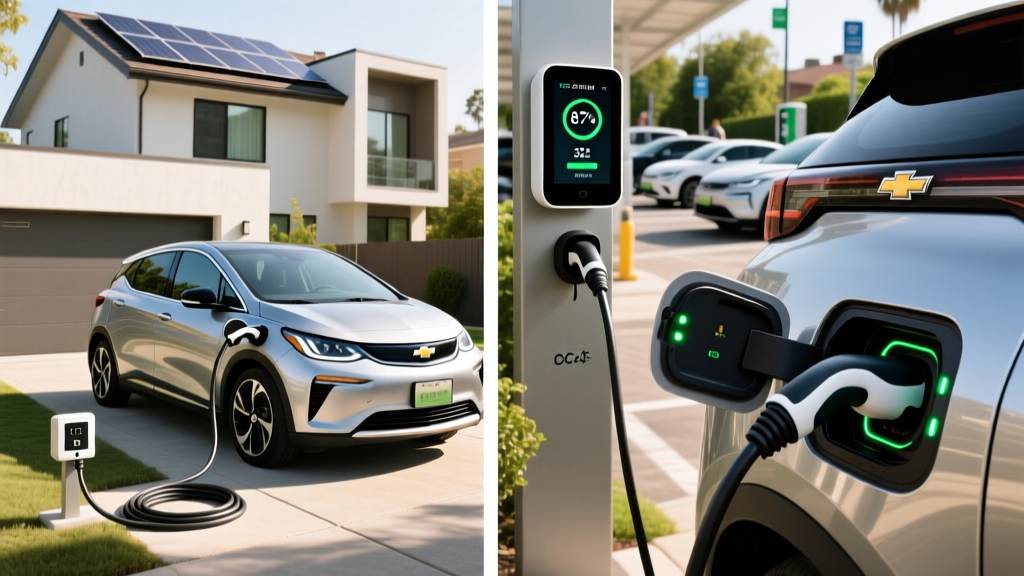
| Level 2 | 240V (dryer-style circuit) | 3.3–19.2 kW | 12–75 miles/hr | Daily home charging, most BEVs |
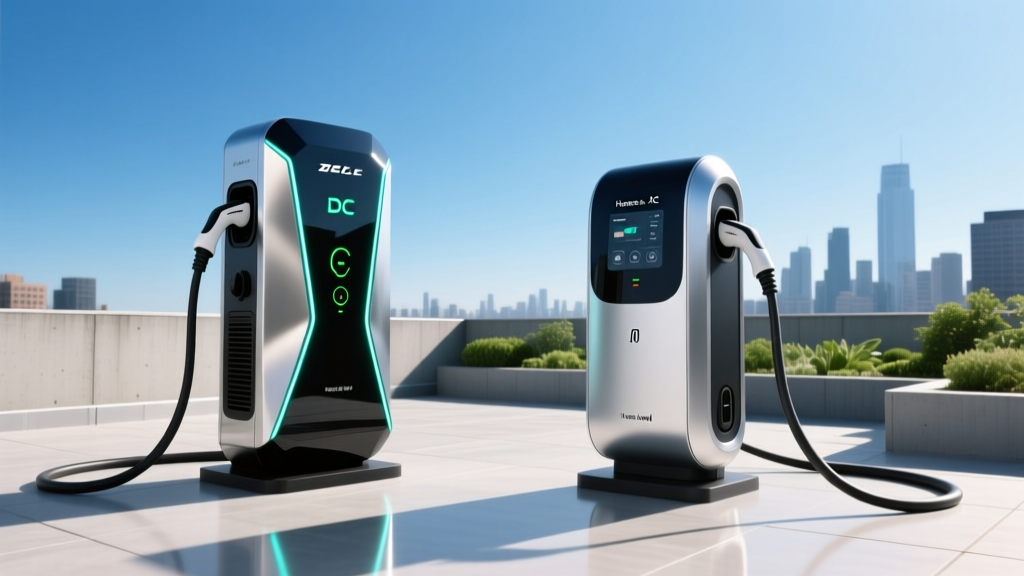
| DC Fast Charge | 400–800V DC | 50–350+ kW | 150–1,000+ miles/hr (peak) | Road trips, rapid top-ups on the go |
A few real-world benchmarks help put this in perspective:
- Tesla Model Y (75 kWh battery, ~310 EPA miles): On a 48A Level 2 charger (11.5 kW), expect a full charge in roughly 7 hours. A 10–80% session takes about 5 hours — adequate for overnight charging. On a 250 kW DC fast charger, 10–80% takes approximately 20–25 minutes.
- Ford Mustang Mach-E Extended Range (91 kWh usable, ~312 EPA miles): On a 40A Level 2 charger (9.6 kW), a full charge takes about 10 hours. DC fast charging at 150 kW peak yields 10–80% in roughly 38 minutes.
- Hyundai Ioniq 5 (77.4 kWh, ~303 EPA miles): With its 800V architecture, the Ioniq 5 is a DC fast-charging standout — 10–80% in about 18 minutes on a 350 kW charger. Level 2 at 11.5 kW fills the battery in roughly 7 hours.
Home Installation: Electrical Requirements, Panel Upgrades, and Total Cost
The ComEd rebate reduces your out-of-pocket, but your total cost depends heavily on your home's existing electrical infrastructure. Here's what determines the final number:
Electrical Requirements for a Level 2 Charger
A typical Level 2 home charger requires a 240-volt dedicated circuit, similar to what an electric dryer or oven uses. The most common configurations:
- 40-amp circuit / 32A continuous (7.7 kW): The minimum practical setup for most BEVs. Adds roughly 25–30 miles of range per hour. Sufficient for overnight charging on vehicles driven 40–80 miles daily.
- 50-amp circuit / 40A continuous (9.6 kW): The sweet spot for most homes. Adds ~30–37 miles/hr. Compatible with popular chargers like the ChargePoint Home Flex and Emporia Level 2.
- 60-amp circuit / 48A continuous (11.5 kW): Maximum for most residential single-phase service. Adds ~37–44 miles/hr. Requires a hardwired connection (no plug) on most chargers. Best for larger batteries (90+ kWh) or households with two EVs.
Panel upgrade reality: Most modern homes with 200-amp electrical service have enough spare capacity for a 40–60A Level 2 circuit. But older homes — common throughout Chicago's suburbs — may have 100A or 150A panels that are already near capacity. If your panel lacks room for a new double-pole breaker or your total load calculation exceeds 80% of panel capacity, you'll need a panel upgrade to 200A, which adds $1,500–$3,000+ to the project. A licensed electrician will perform a load calculation during the estimate visit.
Installation Cost Breakdown
| Component | Typical Range | Notes |
|---|---|---|
| Level 2 charger (hardware) | $350–$750 | Smart Wi-Fi chargers; basic models from ~$300 |
| Electrician labor (standard install) | $500–$1,500 | Depends on run length from panel to garage/driveway |
| Electrical permit | $50–$200 | Varies by municipality; required in most IL jurisdictions |
| Panel upgrade (if needed) | $1,500–$3,000+ | 100A→200A upgrade; not always required |
| Conduit/wiring materials | $100–$400 | Longer runs from panel to outlet add material cost |
| Total (no panel upgrade) | $1,000–$2,850 | Most common scenario |
| Total (with panel upgrade) | $2,500–$5,850+ | Older homes with 100A service |
| Less: ComEd rebate | –$500 to –$1,000 | Confirm current amount on ComEd's site |
| Net cost after rebate | $500–$4,850 | Wide range — get 2–3 electrician quotes |
Installation complexity drives labor cost. If your electrical panel is in the basement directly behind the garage wall where the charger mounts, expect the lower end of the range. If the panel is on the opposite side of the house and the electrician must run 60+ feet of conduit through finished walls or underground, costs climb quickly.
Which Connector Does Your EV Use? Compatibility Guide
The connector landscape shifted dramatically in 2023–2025 when nearly every major automaker adopted Tesla's North American Charging Standard (NACS) for future models. Here's where things stand in 2026:
| Connector Type | Brands Using It (Native) | Adapter Needed? |
|---|---|---|
| NACS (Tesla / J3400) | Tesla (all), Ford (2025+), GM (2025+), Rivian (2025+), Hyundai/Kia (2026+), Volvo/Polestar (2025+) | CCS→NACS adapter for older CCS vehicles at NACS chargers |
| CCS1 (Combo) | VW ID.4 (current gen), BMW iX/i4 (current gen), older Ford/GM/Hyundai/Kia models (pre-NACS switch) | NACS→CCS adapter available from Tesla and third parties |
| CHAdeMO | Nissan Leaf (discontinued 2025), Mitsubishi Outlander PHEV (older) | Limited future support; CHAdeMO stations declining |
For your home charger: Most Level 2 home chargers sold in 2026 ship with a NACS connector or offer both NACS and J1772 (the legacy Level 2 standard) options. If your EV still uses a J1772/CCS inlet, you can buy a J1772 home charger and use a NACS→J1772 adapter, or buy a NACS charger with a J1772 adapter included. Check your vehicle's charge port before ordering.
Level 2 Charger Recommendations: Best Picks for ComEd Rebate Eligibility
To qualify for most utility rebates including ComEd's, the charger typically must be ENERGY STAR certified and Wi-Fi-enabled (a "smart" charger that can participate in demand-response programs). Here are top picks that meet those criteria:
ChargePoint Home Flex
- Power: Up to 11.5 kW (48A) on a 60A circuit; adjustable down to 16A
- Connector: J1772 (NACS adapter available separately)
- Cable length: 23 feet
- Smart features: Wi-Fi, app scheduling, Alexa/Google integration, ENERGY STAR
- Price: ~$550–$650
Best for: Versatility — adjustable amperage fits any circuit size.
Emporia Level 2 EV Charger
- Power: Up to 11.5 kW (48A); configurable via app
- Connector: J1772 or NACS (select at purchase)
- Cable length: 24 feet
- Smart features: Wi-Fi, energy monitoring, solar integration, ENERGY STAR
- Price: ~$350–$450
Best for: Budget-conscious buyers who want smart features and energy tracking.
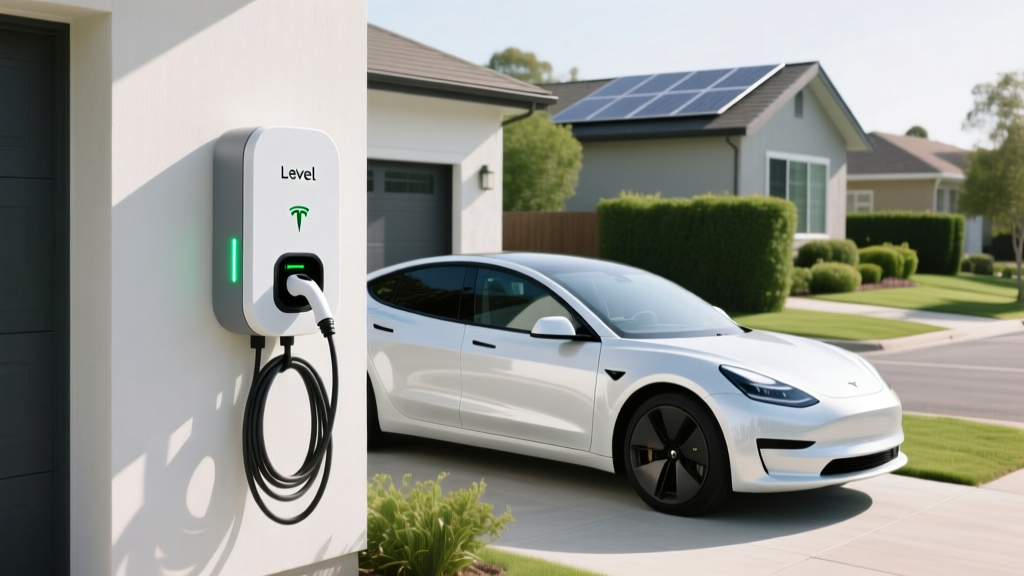
Tesla Wall Connector (Gen 4)
- Power: Up to 11.5 kW (48A)
- Connector: NACS native; includes J1772 adapter in box
- Cable length: 24 feet
- Smart features: Wi-Fi, OTA updates, power sharing (two units on one circuit), ENERGY STAR
- Price: ~$450–$500
Best for: Tesla owners or households with mixed NACS/J1772 vehicles.
Grizzl-E Smart
- Power: Up to 10 kW (40A)
- Connector: J1772 or NACS
- Cable length: 24 feet
- Smart features: Wi-Fi, OCPP protocol, load balancing, ENERGY STAR
- Price: ~$450–$550
Best for: Cold-climate durability — built and tested in Canada, rated to –40°F.
Cost Per Mile: Home Charging vs. Gas vs. Public DC Fast Charging
One of the strongest financial arguments for home EV charging is the per-mile fuel cost advantage. Here's how it breaks down in the ComEd service territory using 2026 average rates:
| Scenario | Rate / Price | Cost Per Mile (3 mi/kWh avg) |
|---|---|---|
| Home charging — ComEd off-peak (overnight TOU) | ~$0.07–$0.09/kWh | $0.023–$0.030/mile |
| Home charging — ComEd standard residential rate | ~$0.14–$0.16/kWh | $0.047–$0.053/mile |
| Public Level 2 (ChargePoint, EVgo, etc.) | ~$0.25–$0.40/kWh | $0.083–$0.133/mile |
| DC fast charging (Electrify America, Tesla Supercharger) | ~$0.35–$0.55/kWh | $0.117–$0.183/mile |
| Gas vehicle (28 MPG combined, $3.40/gal) | $3.40/gallon | $0.121/mile |
The bottom line: Charging at home on ComEd's off-peak TOU rate costs roughly $0.03 per mile — about one-quarter the cost of gasoline per mile. Even on the standard residential rate without TOU, home charging is roughly half the cost of gas. Public DC fast charging, however, can approach or exceed gas-car fuel costs, which is why home charging is the economic foundation of EV ownership.
For a driver covering 12,000 miles per year:
- Home off-peak charging: ~$300–$360/year in electricity
- Gas at 28 MPG and $3.40/gal: ~$1,457/year in fuel
- Annual savings: ~$1,100–$1,150
Those savings help pay back the charger installation cost within 1–3 years, especially with the ComEd rebate reducing your upfront investment.
Safety, Permits, and Electrical Code Requirements
A Level 2 charger installation is not a DIY project. Here's what proper, code-compliant installation requires in Illinois:
- Dedicated circuit: The charger must be on its own dedicated double-pole breaker — it cannot share a circuit with other appliances or outlets.
- GFCI protection: NEC 2020 and later (adopted in Illinois) requires GFCI (ground-fault circuit interrupter) protection for EV charging outlets. Hardwired chargers often have built-in GFCI; plug-in units on a NEMA 14-50 outlet require a GFCI breaker, which adds $50–$100 to the breaker cost.
- NEMA 14-50 vs. hardwired: A NEMA 14-50 outlet gives you flexibility to unplug and take the charger when you move, but requires a GFCI breaker. Hardwired installations skip the outlet and GFCI breaker requirement (many chargers have internal GFCI), and are required for circuits above 50A.
- Outdoor rating: If your charger mounts outside (driveway, exterior wall), it must carry a NEMA 4 or IP55+ weather resistance rating. All chargers listed above meet this standard.
- Permit and inspection: Most Illinois municipalities require an electrical permit for a new 240V circuit. The permit fee typically runs $50–$200, and the work must pass a municipal inspection. A licensed electrician will handle the permit application. Do not skip this step — unpermitted work can void home insurance claims and create safety hazards.
How to Claim the ComEd EV Charging Rebate: Step by Step
- Confirm eligibility: Visit ComEd's EV rebate page and verify the program is active, funded, and accepting applications. Note qualifying charger models.
- Choose a qualifying charger: Select an ENERGY STAR-certified smart charger from ComEd's approved list. Save the product page URL and model number.
- Get 2–3 electrician quotes: Ask for itemized estimates covering labor, materials, permit fees, and whether a panel upgrade is needed. Confirm the electrician is licensed and insured in Illinois.
- Purchase and install: Keep all receipts — charger purchase, electrician invoice, permit fee. Take photos of the installed unit and the electrical panel showing the new breaker.
- Submit your rebate application: ComEd's application typically requires proof of purchase, installation receipts, your ComEd account number, and the charger's make/model. Applications are usually submitted online within 60–90 days of installation.
- Enroll in TOU rate (if required/beneficial): If ComEd requires TOU enrollment for the rebate, or if you opt in voluntarily, set your charger's schedule to charge during off-peak hours (typically 10 PM – 6 AM) for the lowest per-kWh rate.
Frequently Asked Questions
How much does it cost to install a home EV charger in the ComEd service area?
Expect $1,000–$2,850 for a standard installation (charger + electrician + permit) if your electrical panel doesn't need an upgrade. Homes requiring a 200A panel upgrade may pay $2,500–$5,850+. The ComEd rebate can reduce your net cost by $500–$1,000.
How fast will each charging level add range to my EV?
Level 1 (120V) adds 3–5 miles of range per hour. Level 2 (240V) adds 12–75 miles per hour depending on the charger's kW output and your vehicle's onboard charger capacity. DC fast charging adds 150–1,000+ miles per hour at peak power, but sessions typically last only 15–40 minutes (10–80% SoC).
Which connector and charger is compatible with my EV?
Check your vehicle's charge port. Most 2025+ models from Tesla, Ford, GM, Rivian, Hyundai, and Kia use NACS. Older models and some current VW/BMW models use CCS1/J1772. For home Level 2 charging, you can use either a native-matching charger or an adapter. The Tesla Wall Connector includes a J1772 adapter, making it versatile for mixed-EV households.
How much does charging cost per mile compared to gas?
Home charging on ComEd's off-peak rate costs approximately $0.03/mile — about 75% less than a 28 MPG gas car at $3.40/gallon ($0.12/mile). Even standard-rate home charging at ~$0.05/mile is roughly 60% cheaper. Public DC fast charging at $0.35–$0.55/kWh can approach gas-car costs.
What electrical upgrades might my home need for a Level 2 charger?
If your home has 200A service and available breaker slots, you likely need no upgrades beyond the new 240V circuit. Homes with 100A or 150A panels, or panels already near capacity, may require a panel upgrade to 200A ($1,500–$3,000+). Your electrician will perform a load calculation to determine this during the estimate.
Can I install a Level 2 charger myself to save money?
No — and attempting to do so will likely disqualify you from the ComEd rebate, which requires installation by a licensed electrician. More importantly, a 240V/40–60A circuit drawing continuous load for hours poses serious fire and shock risks if improperly installed. Permits and inspections exist for good reason.
Does the ComEd rebate cover the charger hardware, installation, or both?
Historically, the ComEd rebate applies to the combined cost of the qualifying charger and its professional installation. Confirm the current program's specific terms on ComEd's website before purchasing, as utility incentive structures can change between funding cycles.