Understanding the ComEd EV Charger Rebate Program
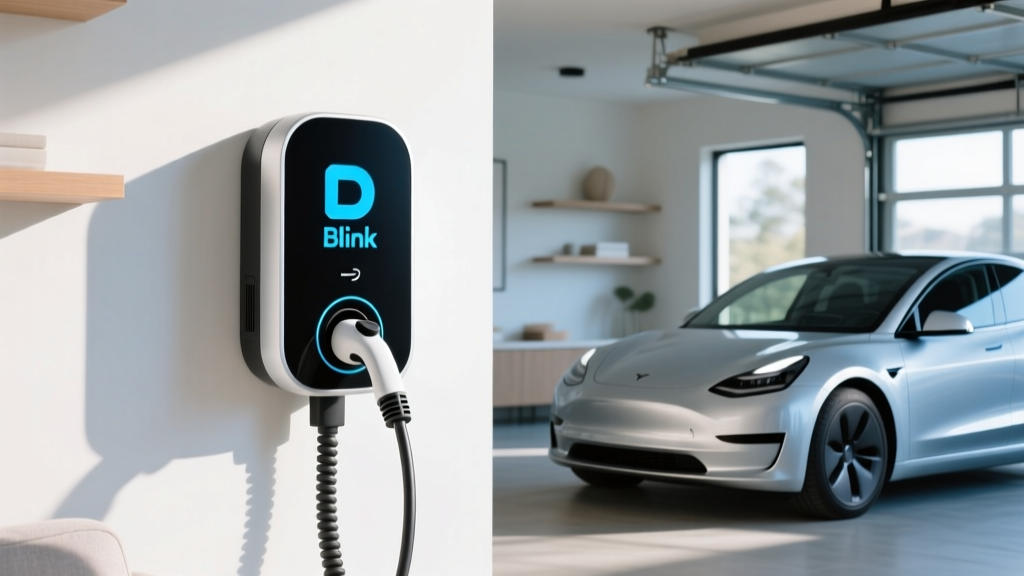
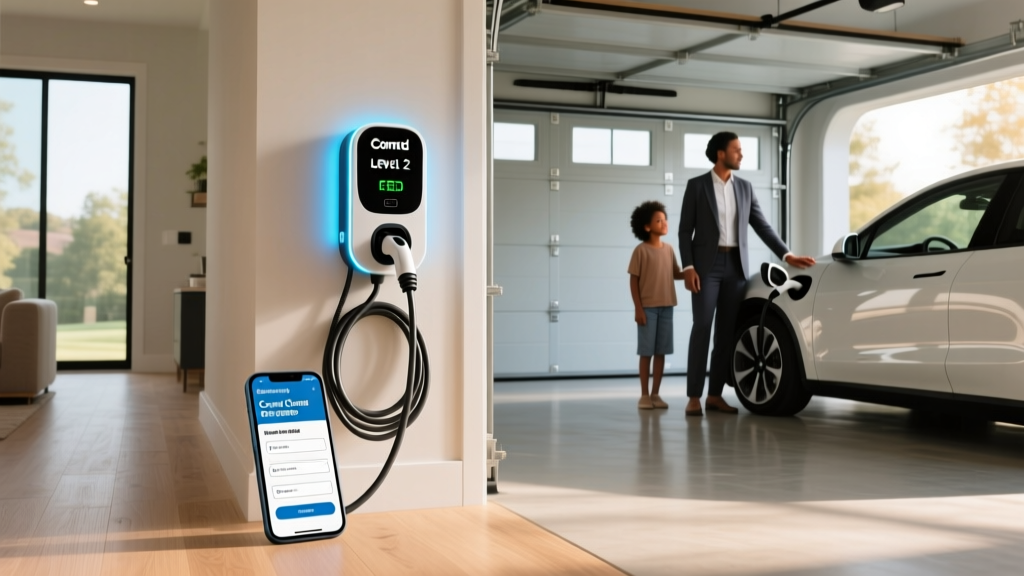
For Illinois EV owners and prospective buyers, the ComEd EV charger rebate application represents a significant opportunity to offset home charging infrastructure costs. As of 2026, ComEd offers rebates up to $1,000 for residential Level 2 charger installations, though program details and funding availability shift annually. This guide walks through the technical requirements, realistic installation costs, equipment choices, and the application mechanics so you can maximize your rebate while building a charging setup that actually serves your daily driving needs.
Before we dive into charger specs, let's clarify the most common EV terminology confusion. kW (kilowatts) measures power—the rate at which energy flows. kWh (kilowatt-hours) measures energy—the total amount stored in your battery or delivered over time. A 40A Level 2 charger delivers up to 9.6 kW of power. If you charge for one hour at that rate, you've added 9.6 kWh of energy to your battery. This distinction matters when calculating charging times and understanding your electricity bill.
Charging Levels Explained: Speed, Power, and Real-World Range Addition
Home charging typically involves Level 1 or Level 2 equipment. DC Fast Charging exists on public networks but isn't practical or cost-effective for daily home use. Here's how each level performs:
| Level | Voltage/Amps | Power (kW) | Miles Added Per Hour | 10-80% Time (60 kWh Battery) | Best Use Case |
|---|---|---|---|---|---|
| Level 1 | 120V / 12A | 1.4 kW | 3-5 miles | 30+ hours | Overnight trickle, PHEVs, low-mileage drivers |
| Level 2 | 240V / 32A | 7.7 kW | 25-30 miles | 5.5 hours | Daily home charging, most EVs |
| Level 2 | 240V / 40A | 9.6 kW | 30-35 miles | 4.5 hours | Faster home charging, larger batteries |
| Level 2 | 240V / 48A | 11.5 kW | 35-44 miles | 3.8 hours | High-capacity onboard chargers (Tesla, Rivian) |
| DC Fast | 400-800V DC | 50-350 kW | 150-1,000+ miles | 18-40 minutes | Road trips, public networks only |
Real-World Caveat: The miles-per-hour figures above assume average efficiency (3-4 miles per kWh). Actual range addition varies by vehicle. A 2026 Tesla Model Y (EPA 330 miles, ~82 kWh battery, 4.0 mi/kWh) gains about 30 miles per hour on a 9.6 kW charger. A heavier Ford F-150 Lightning (EPA 320 miles, ~131 kWh battery, 2.4 mi/kWh) gains only 23 miles per hour on the same charger.
How Much Does It Cost to Install a Home EV Charger?
The ComEd EV charger rebate application can offset a meaningful portion of your installation, but you need realistic expectations about total costs. Installation expenses break down into three categories: equipment, electrical labor, and potential panel upgrades.
| Component | Typical Cost Range | Notes |
|---|---|---|
| Level 2 Charger (Equipment) | $400 - $800 | 32A-48A smart chargers; hardwired or NEMA 14-50 plug |
| Electrician Labor | $800 - $2,000 | Running 240V circuit, mounting charger, permit pull |
| Permit & Inspection | $100 - $300 | Required by most Illinois municipalities |
| Panel Upgrade (if needed) | $1,500 - $3,500 | 100A to 200A service upgrade for older homes |
| Total (No Panel Upgrade) | $1,300 - $3,100 | Most common scenario for homes built after 1990 |
| Total (With Panel Upgrade) | $2,800 - $6,600 | Homes with 100A service or maxed-out panels |
Electrical Requirements and Panel Upgrade Reality
A 40A Level 2 charger requires a dedicated 50A circuit (NEC code mandates circuits be rated 125% of continuous load). This means 6-gauge copper wire and a 240V double-pole breaker. If your electrical panel has spare capacity and is rated for 200A service, installation is straightforward.
Panel Upgrade Triggers:
- Your home has 100A service (common in pre-1980 construction)
- Your panel is already near capacity (electric heat, AC, dryer, oven all drawing simultaneously)
- You're installing a 48A or higher charger that demands a 60A circuit
- Your panel is a recalled Federal Pacific or Zinsco unit (safety hazard regardless of EV charging)
ComEd's rebate typically covers up to $1,000 of installation costs, but this won't touch a full panel upgrade. Budget accordingly and get a licensed electrician's assessment before submitting your ComEd EV charger rebate application.
Which Connector and Charger Is Compatible with My EV?
The EV connector landscape has consolidated significantly by 2026, but you still need to match your charger to your vehicle's inlet. Here's the compatibility matrix:
| Connector Type | Brands Using It (2026) | Adapter Availability |
|---|---|---|
| NACS (Tesla) | Tesla (all models), Ford (2025+), GM (2025+), Rivian (2025+), Volvo, Polestar, Mercedes, BMW, Hyundai/Kia (2026 models) | CCS-to-NACS adapters available ($150-$300) for older CCS vehicles |
| CCS1 | Legacy VW ID.4, older Ford Mach-E, older Hyundai Ioniq 5, most 2023-2024 non-Tesla EVs | NACS-to-CCS adapters available; many owners upgrade vehicles instead |
| CHAdeMO | Nissan Leaf (all years), Mitsubishi Outlander PHEV (older) | Adapters exist but expensive ($400+); CHAdeMO infrastructure declining |
2026 Reality: NACS has won the connector war. If you're buying a new EV in 2026, it almost certainly has a NACS port. Buy a NACS-compatible Level 2 charger. If you own a 2023-2024 CCS vehicle, you can either buy a CCS charger or use a NACS-to-CCS adapter with a Tesla Wall Connector or other NACS unit.
Level 2 Charger Equipment Recommendations
Based on power output, reliability, smart features, and value, here are the top residential chargers for 2026:
Tesla Wall Connector (Gen 4)
- Power: Up to 48A (11.5 kW on 60A circuit)
- Connector: NACS native
- Cable Length: 24 feet
- Smart Features: Wi-Fi, OTA updates, load sharing, access control
- Price: $475
- Best For: Tesla owners and NACS-equipped 2025+ vehicles
ChargePoint Home Flex
- Power: Adjustable 16A-50A (up to 12 kW on 60A circuit)
- Connector: NACS or J1772 (configurable)
- Cable Length: 23 feet
- Smart Features: Wi-Fi, app scheduling, Alexa integration, energy tracking
- Price: $699
- Best For: Mixed fleets, older J1772 vehicles, flexibility
Emporia Vue Level 2 Charger
- Power: Up to 48A (11.5 kW)
- Connector: NACS or J1772
- Cable Length: 24 feet
- Smart Features: Wi-Fi, solar integration, real-time energy monitoring, V2H ready
- Price: $599
- Best For: Solar-equipped homes, energy-conscious users
Grizzl-E Smart
- Power: Up to 40A (9.6 kW)
- Connector: NACS or J1772
- Cable Length: 24 feet
- Smart Features: Wi-Fi, OCPP compatibility, rugged outdoor rating
- Price: $549
- Best For: Outdoor installations, extreme climates, budget-conscious buyers
Installation Tip: Hardwired chargers are more reliable and safer than plug-in NEMA 14-50 outlets. Receptacles can loosen over time, create heat, and require GFCI breakers (adding $100-$150). Hardwired connections eliminate these issues and are preferred by most electricians.
How Much Does Charging Cost Per Mile vs Gas?
One of the strongest EV ownership arguments is fuel cost savings, but the math depends on your electricity rate, charging behavior, and local gas prices. Here's a realistic comparison for Illinois drivers in 2026:
| Scenario | Rate ($/kWh) | Cost Per 300 Miles | Cost Per Mile | Annual Savings vs Gas* |
|---|---|---|---|---|
| Home Off-Peak (ComEd TOU) | $0.08 | $7.20 | $0.024 | $1,260 |
| Home Standard Rate | $0.14 | $12.60 | $0.042 | $1,080 |
| Public Level 2 (ChargePoint, EVgo) | $0.35 | $31.50 | $0.105 | $450 |
| DC Fast Charging (Electrify America) | $0.48 | $43.20 | $0.144 | $90 |
| Gas Car (28 MPG avg, $3.50/gal) | — | $37.50 | $0.125 | Baseline |
*Assumes 12,000 miles/year, 3.0 miles/kWh average EV efficiency, 28 MPG gas car baseline.
The Takeaway: Home charging on off-peak rates delivers massive savings—roughly $1,200 annually vs gas. But if you rely exclusively on DC fast charging, you're barely saving money. This is why the ComEd EV charger rebate application matters: home charging infrastructure unlocks the real economic benefit of EV ownership.
Safety, Code Compliance, and Installation Best Practices
EV charging involves sustained high-current draw—unlike a dryer that cycles on and off. This demands proper installation to prevent fire risk. Key requirements:
- Dedicated Circuit: Your charger needs its own breaker. Never share a circuit with other appliances.
- Wire Gauge: 6 AWG copper for 50A circuits, 4 AWG for 60A. Aluminum is cheaper but requires larger gauge.
- GFCI Protection: NEC 2020+ requires GFCI for outdoor receptacles. Hardwired installations are exempt in most jurisdictions.
- Outdoor Rating: If mounting outside, ensure NEMA 4 (weatherproof) rating. Most quality chargers meet this.
- Load Calculation: Your electrician must verify your panel can handle the continuous 40A-48A draw alongside existing loads.
ComEd requires professional installation by a licensed electrician for rebate eligibility. DIY installations void the rebate and your home insurance coverage in case of electrical fire.
Navigating the ComEd EV Charger Rebate Application Process
Here's the step-by-step workflow for submitting your ComEd EV charger rebate application in 2026:
- Pre-Approval (Optional but Recommended): Submit your EV purchase/lease documentation and planned charger model to ComEd before installation. This confirms eligibility and prevents surprises.
- Electrical Assessment: Hire a licensed electrician to evaluate your panel capacity and provide a detailed quote.
- Installation: Complete the Level 2 charger installation with your electrician. Ensure they pull required permits.
- Documentation: Collect itemized receipts showing equipment cost, labor, and permit fees separately. ComEd requires this breakdown.
- Application Submission: Submit your application via ComEd's online portal within 90 days of installation. Include proof of EV ownership/lease, installation receipts, and electrician license number.
- Inspection (if required): Some municipalities require post-installation inspection. ComEd may request proof of passing inspection.
- Rebate Receipt: Approved rebates typically arrive as a check or bill credit within 6-8 weeks.
Eligibility Requirements:
- Must be a ComEd residential customer
- Must own or lease a qualifying EV or PHEV (minimum 4 kWh battery)
- Charger must be Level 2 (240V) and on ComEd's approved equipment list
- Installation must be performed by a licensed electrician
- Income caps may apply for enhanced rebate tiers (check current program details)
FAQ: ComEd EV Charger Rebate and Home Charging
How much does it cost to install a home EV charger after the ComEd rebate?
Typical installations range from $1,300-$3,100 before rebates (assuming no panel upgrade). With a $1,000 ComEd rebate, you're looking at $300-$2,100 out-of-pocket. If you need a panel upgrade ($1,500-$3,500), the rebate covers a smaller percentage of total cost.
How fast will a Level 2 charger add range to my EV?
A 40A Level 2 charger (9.6 kW) adds 30-35 miles of range per hour for most EVs. A 48A charger (11.5 kW) adds 35-44 miles per hour, but only if your vehicle's onboard charger can accept that rate. Tesla Model Y and Rivian R1T can; many other EVs max out at 32A-40A acceptance.
Do I need a NACS or CCS charger for my 2026 EV?
Almost all 2026 EVs use NACS (Tesla's connector). If you own a 2023-2024 model with CCS, you can use a NACS-to-CCS adapter with a Tesla Wall Connector, or buy a CCS-native charger like the ChargePoint Home Flex configured for CCS.
What if my electrical panel can't handle a Level 2 charger?
You'll need a panel upgrade from 100A to 200A service, costing $1,500-$3,500. Some homeowners opt for a lower-amperage charger (24A-32A) that draws less current, but this still requires a dedicated circuit and may not solve a maxed-out panel.
How much does charging cost per mile compared to gas?
Home charging on ComEd's off-peak rate ($0.08/kWh) costs about $0.024 per mile—roughly 80% cheaper than a 28 MPG gas car at $3.50/gallon ($0.125/mile). Public DC fast charging ($0.48/kWh) costs $0.144 per mile, which is actually more expensive than gas.
Can I install the charger myself to save money?
Technically possible if you're experienced with 240V circuits, but it voids the ComEd rebate, violates most local codes, and creates fire/insurance risk. Professional installation is required for rebate eligibility.
How long does the ComEd rebate application take to process?
Expect 6-8 weeks from submission to rebate receipt, assuming complete documentation. Incomplete applications or missing permit documentation can delay processing by several weeks.
For the most current rebate amounts, eligibility rules, and approved equipment lists, visit ComEd's official EV program page. Federal tax incentives for EV purchases are governed by IRS §30D rules, which have separate income, MSRP, and battery sourcing requirements.