If you live in the ComEd service territory (northern Illinois and Chicago metro), one of the smartest ways to lower the barrier to home EV charging is the utility's rebate program. As of 2026, the ComEd EV charger rebate can cover a significant portion of a Level 2 home charger and, in some cases, the electrical work required to install it. But rebates only help if you understand what you're actually buying: the charger hardware, the electrical infrastructure, the ongoing cost to charge, and the real-world speeds you'll see.
This guide walks through every number you need — from kilowatts to kilowatt-hours, from panel upgrades to permits — so you can claim the ComEd rebate with confidence and set up a home charging system that actually matches your EV.
How the ComEd EV Charger Rebate Works in 2026
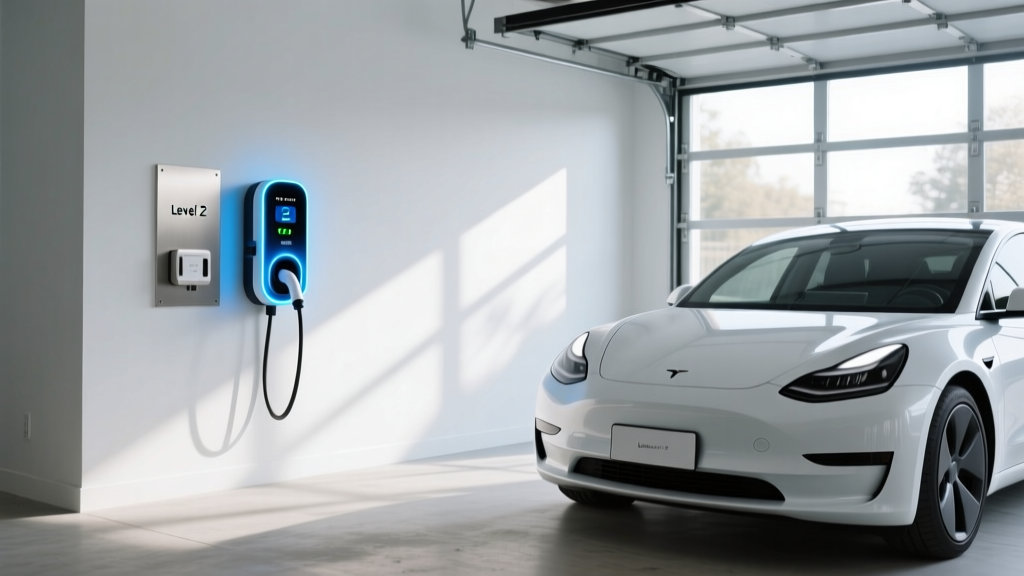
ComEd's residential EV rebate program is designed to offset the cost of purchasing and installing a Level 2 (240V) smart charger at your home. The program typically offers:
- Up to $1,000 toward the purchase of a qualifying Wi-Fi-enabled Level 2 charger
- Additional rebates (often $200–$500) for the electrical installation work when performed by a licensed, ComEd-qualified electrician
- Time-of-Use (TOU) rate enrollment incentives that reward you for charging during off-peak hours (typically overnight)
Eligibility requirements generally include being a ComEd residential customer, owning or leasing an EV or plug-in hybrid, installing a qualifying smart charger (Wi-Fi-enabled, UL-listed), and using a licensed electrician. Always verify current terms directly on the ComEd EV rebate page, as program caps and qualifying equipment lists update periodically.
Charging Levels Explained: Speeds in kW and Miles Per Hour
The single most important concept in EV charging is the difference between kW (kilowatts) — the rate at which energy flows — and kWh (kilowatt-hours) — the total energy stored in your battery. Think of kW as the speed of water flowing from a hose, and kWh as the size of the bucket. Never confuse them.
| Level | Voltage | Power (kW) | Miles of Range Per Hour | Typical Use |
|---|---|---|---|---|
| Level 1 | 120V (standard outlet) | 1.0–1.4 kW | 3–5 mi/hr | Overnight trickle; PHEVs, low-mileage drivers |
| Level 2 | 240V (dryer-style outlet or hardwired) | 7.2–19.2 kW | 25–65 mi/hr | Primary home charging; covers most daily needs |
| DC Fast Charging | 400V–800V+ (public stations) | 50–350 kW | 150–1,000+ mi/hr (peak) | Road trips; 10–80% in 18–40 minutes |
For most EV owners, a Level 2 home charger at 40A (9.6 kW) is the sweet spot. It adds roughly 30–35 miles of range per hour of charging, meaning a full overnight session (8–10 hours) easily replenishes 250+ miles — more than enough for daily driving and even longer weekend trips.
Charging Time Examples by Battery Size (10–80%)
| Battery Size (kWh usable) | Level 1 (1.4 kW) | Level 2 – 32A (7.7 kW) | Level 2 – 48A (11.5 kW) | DC Fast (150 kW peak) |
|---|---|---|---|---|
| 60 kWh (e.g., Tesla Model 3 RWD) | ~30 hours | ~5.5 hours | ~3.7 hours | ~25–30 min |
| 82 kWh (e.g., Ford Mustang Mach-E Extended Range) | ~41 hours | ~7.5 hours | ~5 hours | ~30–38 min |
| 100 kWh (e.g., Rivian R1T, F-150 Lightning Extended) | ~50 hours | ~9 hours | ~6 hours | ~38–45 min |
Home Installation: Electrical Requirements, Panel Upgrades, and Costs
This is where most EV buyers get sticker shock. The charger itself might cost $400–$700, but the electrical work can rival or exceed that, especially in older homes. Here's exactly what's involved.
Electrical Requirements for Level 2 Charging
- Voltage: 240V (same as an electric dryer or oven)
- Amperage: 32A, 40A, or 48A circuits are most common
- Circuit breaker: Must be rated at 125% of the charger's continuous draw. A 40A charger requires a 50A breaker; a 48A charger requires a 60A breaker
- Wiring: Typically 6 AWG copper for 40A/50A circuits; 4 AWG for 60A circuits
- Connection: NEMA 14-50 outlet (plug-in) or hardwired (often required for 48A+ chargers and preferred for outdoor installs)
Do You Need a Panel Upgrade?
This is the make-or-break cost question. Most modern homes with a 200A electrical panel have enough spare capacity for a 40A or 48A EV circuit. But homes with older 100A or 150A panels, or panels already near capacity (electric heat, hot tub, large kitchen loads), may need an upgrade.
- 100A panel: Almost certainly needs an upgrade to 200A. Cost: $1,500–$3,500+
- 150A panel: May work if other loads are low; a load calculation by your electrician determines this
- 200A panel: Usually sufficient. A load calculation confirms spare capacity
If a full panel upgrade isn't feasible, some utilities and electricians offer smart load management devices (like the Emporia Smart Load Center or Span panel) that dynamically share capacity between the EV charger and other home circuits, avoiding an upgrade.
Install Cost Breakdown
| Component | Simple Install (panel nearby, no upgrade) | Complex Install (long wire run, sub-panel) | Panel Upgrade Required |
|---|---|---|---|
| Level 2 Charger (40A–48A) | $400–$700 | $400–$700 | $400–$700 |
| Electrician labor | $300–$600 | $800–$1,500 | $500–$1,000 |
| Permit & inspection | $50–$150 | $50–$200 | $100–$250 |
| Wiring & conduit materials | $50–$150 | $200–$500 | $100–$300 |
| Panel upgrade (if needed) | — | — | $1,500–$3,500 |
| Total estimated cost | $800–$1,600 | $1,450–$2,900 | $2,600–$5,750 |
| After ComEd rebate (est.) | $0–$600 | $450–$1,900 | $1,600–$4,750 |
The "after rebate" row assumes a combined ComEd rebate of approximately $1,000–$1,200 applied to equipment and installation. Your actual rebate amount depends on current program terms — always confirm before purchasing.
Connector Compatibility: NACS, CCS1, and CHAdeMO
The connector landscape has shifted dramatically. As of 2026, the North American Charging Standard (NACS) — originally Tesla's proprietary connector — has become the dominant standard. Here's where each connector stands:
| Connector | Brands Using It (New Vehicles) | Home Charger Availability | Adapter Options |
|---|---|---|---|
| NACS (Tesla) | Tesla, Ford, GM, Rivian, Volvo, Polestar, Hyundai/Kia (2025+), most major OEMs | Widely available — Tesla Wall Connector, ChargePoint, Emporia, Grizzl-E | CCS-to-NACS adapters available from Tesla and third parties |
| CCS1 | Legacy models (pre-2025 VW, BMW, some Hyundai/Kia, Stellantis) | Still available but declining — ChargePoint, JuiceBox, Wallbox | NACS-to-CCS adapters available for public charging |
| CHAdeMO | Nissan Leaf (discontinued), Mitsubishi Outlander PHEV (legacy) | Limited; most charger makers have dropped CHAdeMO connectors | Very limited adapter support |
For 2026 buyers: If you're purchasing a new EV, it almost certainly has a NACS port. Buy a NACS home charger. If you own an older CCS1 vehicle, most NACS chargers now include or offer a CCS1 adapter — just confirm before purchasing.
Cost to Charge: Home vs. Public vs. Gas Per Mile
The economics of EV charging depend heavily on where and when you plug in. Here's a realistic comparison using 2026 electricity rates in the ComEd territory and current gas prices.
| Scenario | Rate ($/kWh) | Vehicle Efficiency | Cost Per Mile |
|---|---|---|---|
| Home – ComEd off-peak (overnight TOU) | $0.07–$0.09/kWh | 3.0 mi/kWh (e.g., Tesla Model 3, Hyundai Ioniq 6) | $0.023–$0.030 |
| Home – ComEd standard rate | $0.13–$0.16/kWh | 3.0 mi/kWh | $0.043–$0.053 |
| Public Level 2 (ChargePoint, etc.) | $0.20–$0.35/kWh | 3.0 mi/kWh | $0.067–$0.117 |
| DC Fast Charging (Electrify America, Tesla Supercharger) | $0.35–$0.55/kWh | 3.0 mi/kWh | $0.117–$0.183 |
| Gasoline vehicle (30 MPG combined, $3.40/gal) | $3.40/gallon | 30 MPG | $0.113 |
The takeaway is stark: home off-peak charging is roughly 4–5× cheaper per mile than gasoline, and even standard-rate home charging beats gas by 2×. Public DC fast charging, however, can cost as much as or more than gas — it's a road-trip convenience, not a daily strategy.
For a driver covering 12,000 miles/year in an efficient EV charged primarily at home on ComEd's off-peak TOU rate, annual "fuel" cost lands around $280–$360. A comparable 30 MPG gas car at $3.40/gallon spends roughly $1,360/year. That's over $1,000 in annual fuel savings — enough to pay off a home charger installation within the first year or two, especially after the ComEd rebate.
Best Level 2 Home Chargers for ComEd Rebate Eligibility (2026 Picks)
To qualify for the ComEd EV charger rebate, your charger typically must be Wi-Fi-enabled (smart/connected), UL-listed, and Energy Star certified. Here are top picks that meet those criteria, organized by use case:
Best Overall: ChargePoint Home Flex
- Power: Up to 11.5 kW (48A) on a 60A circuit
- Connector: NACS or J1772 (configurable)
- Cable length: 23 feet
- Smart features: Wi-Fi, app scheduling, TOU optimization, Alexa integration
- Price: ~$550–$650
- ComEd eligible: Yes (Wi-Fi smart charger)
Best Value: Emporia Level 2 EV Charger
- Power: Up to 11.5 kW (48A)
- Connector: NACS or J1772
- Cable length: 24 feet
- Smart features: Wi-Fi, real-time energy monitoring, solar integration, TOU scheduling
- Price: ~$399–$450
- ComEd eligible: Yes
Best for Tesla Owners: Tesla Wall Connector
- Power: Up to 11.5 kW (48A)
- Connector: NACS (native Tesla); J1772 adapter available
- Cable length: 24 feet
- Smart features: Wi-Fi, OTA updates, power sharing (multiple units on one circuit), access control
- Price: ~$450–$500
- ComEd eligible: Yes (Wi-Fi enabled)
Best for Outdoor/Tough Installs: Grizzl-E Smart
- Power: Up to 10 kW (40A)
- Connector: NACS or J1772
- Cable length: 24 feet
- Smart features: Wi-Fi, app control, adjustable amperage (16A–40A)
- Price: ~$499–$549
- ComEd eligible: Yes
- Bonus: IP67-rated, -40°F to +122°F operating range — ideal for Chicago winters
Safety, Code, and Permit Requirements
Illinois and most ComEd municipalities require a permit and inspection for any new 240V circuit. Skipping this step risks voiding your homeowner's insurance, failing a future home inspection, and forfeiting the ComEd rebate (which typically requires proof of permitted installation).
Key Code and Safety Requirements
- Dedicated circuit: The EV charger must be on its own dedicated breaker — no sharing with other outlets or appliances
- GFCI protection: NEC 2020+ requires GFCI protection for all 240V EV receptacles (outlet-based installs). Hardwired installations may have different requirements depending on local code
- Outdoor rating: If your charger is installed outside (garage exterior, driveway post), both the charger and any outlet must be rated for outdoor use (NEMA 4 or IP-rated enclosure)
- Load calculation: Your electrician must perform a NEC Article 220 load calculation to confirm your panel can handle the new circuit without overloading
- Wire gauge: Must match the breaker rating — undersized wire is a fire hazard and will fail inspection
Step-by-Step: How to Claim the ComEd EV Charger Rebate
- Verify eligibility: Confirm you're a ComEd residential customer and check the current qualifying charger list on ComEd's website
- Get a load calculation: Hire a licensed electrician to assess your panel capacity and provide an installation quote
- Purchase a qualifying charger: Buy a Wi-Fi-enabled, UL-listed Level 2 charger from the ComEd-eligible list
- Schedule installation: Use a licensed electrician who will pull the required permit
- Pass inspection: Your local electrical inspector verifies the work meets NEC code
- Submit rebate application: Upload your charger receipt, electrician invoice, permit/inspection proof, and EV registration to ComEd's rebate portal
- Enroll in TOU rates: Sign up for ComEd's EV time-of-use rate to maximize off-peak savings
- File IRS Form 8911: Claim the federal 30% refueling property credit (up to $1,000) at tax time — consult a tax professional for eligibility
Frequently Asked Questions
How much does it cost to install a home EV charger with the ComEd rebate?
Without a panel upgrade, a straightforward Level 2 install typically costs $800–$1,600 all-in (charger + electrician + permit). With the ComEd rebate (approximately $1,000–$1,200 combined), many homeowners pay out of pocket between $0 and $600 for a simple install. Complex installs with long wire runs or sub-panels cost more, and panel upgrades can push total costs to $2,600–$5,750 before rebates.
How fast will each charging level add range?
Level 1 (120V) adds about 3–5 miles of range per hour — fine for plug-in hybrids with small batteries but impractical for full EVs. Level 2 (240V, 40A) adds roughly 30–35 miles per hour, which is ideal for overnight home charging. DC fast charging (public) can add 150–250+ miles in 20–30 minutes but is meant for road trips, not daily use.
Which connector is compatible with my EV?
If your EV is a 2025 or newer model from Tesla, Ford, GM, Rivian, Hyundai, Kia, or Volvo, it uses the NACS connector. Older models (pre-2025 non-Tesla) typically use CCS1. The Nissan Leaf uses CHAdeMO. Check your vehicle's charge port or owner's manual. For home charging, buy a charger that matches your vehicle's native connector to avoid adapter hassle.
How much does charging cost per mile compared to gas?
On ComEd's off-peak TOU rate (~$0.08/kWh), charging an efficient EV costs roughly $0.025–$0.030 per mile. A 30 MPG gas car at $3.40/gallon costs about $0.113 per mile. That's roughly a 4× savings for home EV charging. Even standard-rate home charging ($0.14/kWh) comes in around $0.047/mile — still less than half the cost of gas.
What electrical upgrades might I need?
The most common upgrade is a panel upgrade from 100A to 200A, needed in older homes with limited electrical capacity. This costs $1,500–$3,500+. You may also need a new dedicated 240V circuit run from your panel to the garage or driveway (longer wire runs = higher cost). Some homes benefit from a smart load management device that avoids a panel upgrade by dynamically sharing power between the charger and other circuits.
Does the ComEd rebate cover the electrical work, or just the charger?
ComEd's program typically offers separate rebates for both the charger equipment and the installation labor. The exact amounts vary by program year. Check the current terms on ComEd's website before starting your project, and confirm that your electrician's quote itemizes equipment and labor separately — you'll need both receipts for the rebate application.
Can I install a Level 2 charger in a condo or apartment building?
It's possible but more complex. You'll need HOA or building management approval, access to a dedicated electrical circuit (or a shared system with sub-metering), and possibly a make-ready infrastructure upgrade for the building. ComEd also offers multi-dwelling unit (MDU) and workplace EV charging rebates that can offset shared infrastructure costs.