Why the ComEd Charger Rebate Matters for EV Owners in Northern Illinois
If you own an electric vehicle in the ComEd service territory — covering Chicago, Rockford, and much of northern Illinois — the utility's EV charging programs can meaningfully reduce what you pay to install a Level 2 home charger. With a full home charging setup typically running between $800 and $2,500 (and up to $4,000+ if your electrical panel needs an upgrade), any rebate or rate optimization directly affects your total cost of ownership.
ComEd has historically offered incentives through its EV Smart Charging programs, including rebates on Level 2 charging equipment, discounted off-peak charging rates, and in some cases, make-ready support for the electrical work between your panel and the charger location. These programs evolve year to year, so verifying current terms on ComEd's official EV page is essential before purchasing equipment.
This guide walks through exactly how the ComEd charger rebate and associated rate plans work, what a home Level 2 installation actually costs, which chargers to consider, and how charging at home compares to gas on a per-mile basis.
Understanding EV Charging Levels: Speeds in kW and Miles Per Hour
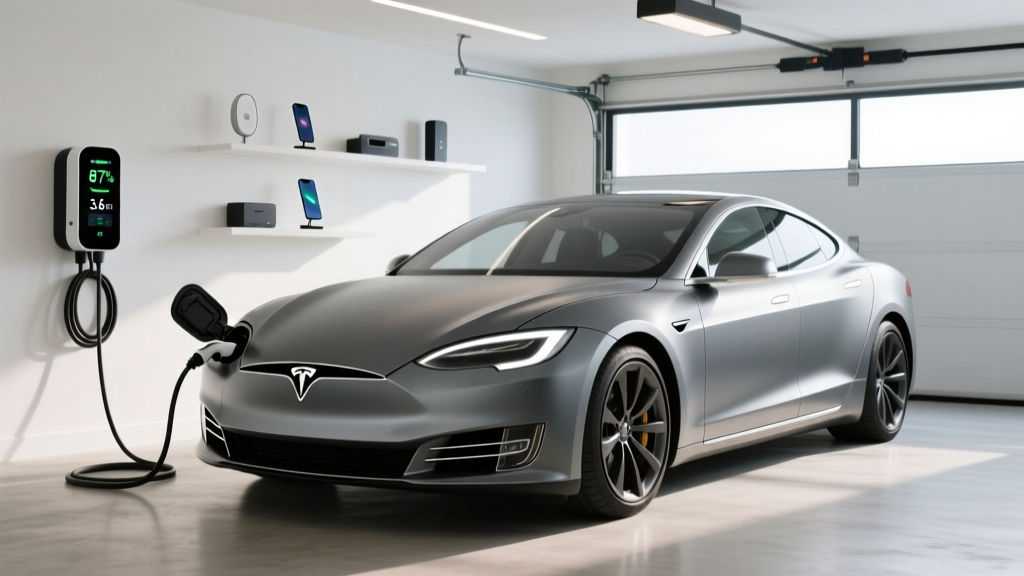
Before evaluating rebates, you need clarity on the three charging levels and what they deliver in real terms. The distinction between kW (power — the rate of energy flow) and kWh (energy — the battery's capacity) is the single most important EV literacy point. Think of kW as how fast water flows from a hose; kWh is how big the bucket is.
| Level | Voltage | Power (kW) | Miles of Range Added Per Hour | Best For |
|---|---|---|---|---|
| Level 1 | 120V (standard outlet) | 1.0–1.4 kW | 3–5 mi/hr | Overnight top-ups for PHEVs or low-mileage BEV drivers |
| Level 2 | 240V (dryer-style outlet or hardwire) | 3.3–19.2 kW | 12–75 mi/hr (varies by vehicle acceptance rate) | Daily home charging — the standard for BEV owners |
| DC Fast Charging | 400–800V DC | 50–350 kW | 150–1,000+ mi/hr (peak) | Road trips, rapid top-ups; not for daily home use |
Real-world context: A typical BEV like the 2026 Hyundai Ioniq 5 (84 kWh usable battery, ~305 miles EPA range) charging on a 48-amp (11.5 kW) Level 2 circuit adds roughly 35–40 miles of range per hour. That same vehicle on a 350 kW DC fast charger can go from 10–80% in about 18 minutes, though charging speed tapers significantly above 80% State of Charge to protect battery health — a phenomenon called the charge curve taper.
For most EV owners, Level 2 at home is the primary charging method. It's fast enough to fully replenish any BEV overnight, and it's where the ComEd charger rebate applies.
How Much Does It Cost to Install a Home EV Charger?
Home Level 2 installation costs depend on three variables: the charger hardware, the electrical work required, and whether your home's panel can support a new dedicated 240V circuit. Here's a realistic breakdown based on typical electrician quotes in the Chicago/northern Illinois market:
| Component | Typical Range | Notes |
|---|---|---|
| Level 2 Charger (hardware) | $300–$700 | Smart Wi-Fi-enabled 32A–48A units |
| Electrician labor | $400–$1,500 | Depends on run length from panel to garage/driveway |
| Permit and inspection | $50–$200 | Required by most Illinois municipalities |
| Panel upgrade (if needed) | $1,500–$3,500 | Older 100A panels may need upgrade to 200A |
| Total (no panel upgrade) | $750–$2,400 | Most homes with 200A service |
| Total (with panel upgrade) | $2,250–$5,900 | Homes built before ~1990 with 100A panels |
The panel upgrade gotcha: If your home has a 100-amp electrical panel — common in houses built before the 1990s — adding a 40-amp or 50-amp dedicated EV circuit may push your total load beyond the panel's capacity. An electrician will perform a load calculation per NEC Article 220 to determine this. If an upgrade is required, budget $1,500–$3,500 for a 200A panel swap. This is the single biggest cost surprise for new EV owners.
How the ComEd Charger Rebate Reduces Your Cost
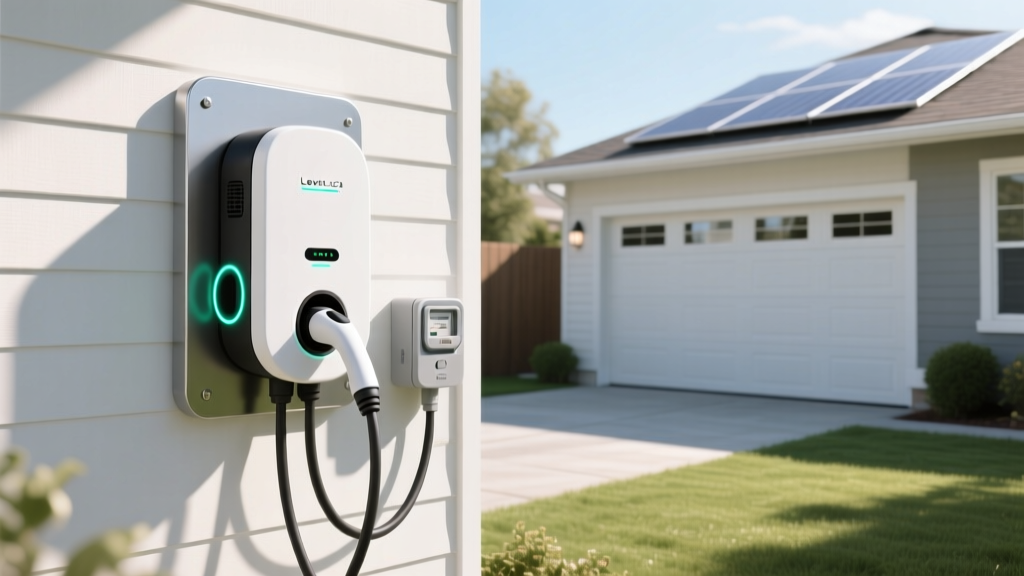
ComEd's EV programs have included rebates of up to $300–$500 on qualifying smart Level 2 chargers, and in some program years, additional incentives for the electrical installation itself. Combined with the federal §30C Alternative Fuel Vehicle Refueling Property Credit — which covers up to 30% of charger hardware and installation costs (max $1,000 for residential) if you live in an eligible census tract — your out-of-pocket cost can drop significantly. Check current eligibility at IRS.gov §30C.
Additionally, ComEd's time-of-use rate plans (like the Residential EV Rate) offer substantially lower per-kWh pricing during off-peak overnight hours — often around $0.06–$0.08/kWh versus the standard rate of ~$0.11–$0.14/kWh. Enrolling in these rates is effectively an ongoing "rebate" that compounds monthly.
Electrical Requirements: Voltage, Amperage, and What Your Home Needs
A Level 2 charger requires a 240-volt dedicated circuit, similar to what an electric dryer or oven uses. The amperage of that circuit determines your charging speed:
- 32-amp circuit (7.7 kW): Requires a 40-amp breaker (NEC requires circuits to be rated at 125% of continuous load). Adds ~23–28 mi/hr for most EVs.
- 40-amp circuit (9.6 kW): Requires a 50-amp breaker. Adds ~28–35 mi/hr. The most common home setup.
- 48-amp circuit (11.5 kW): Requires a 60-amp breaker. Adds ~35–42 mi/hr. Requires hardwired installation (no plug).
- 64-amp circuit (15.2 kW): Requires an 80-amp breaker. Only useful if your EV's onboard charger can accept 15+ kW (most cannot — the 2026 Ford F-150 Lightning and some Lucid models can).
Safety and code considerations:
- The circuit must be dedicated — no sharing with other appliances.
- Outdoor installations require a charger with a NEMA 4 or NEMA 4X weather rating.
- Many jurisdictions require a GFCI breaker for outdoor circuits, though some charger manufacturers recommend against it due to nuisance tripping — your electrician will advise based on local code.
- If using a NEMA 14-50 receptacle (plug-in style), it should be installed with the ground pin orientation specified by your charger manufacturer.
- All work should be permitted and inspected — unpermitted installations can void home insurance claims and create fire risk.
Which Connector and Charger Is Compatible with My EV?
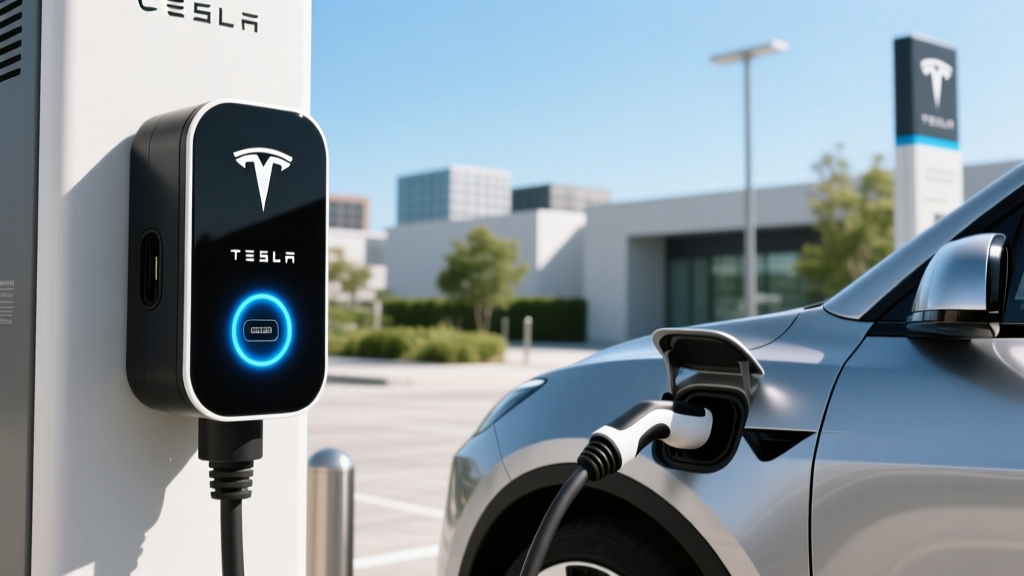
The connector landscape has shifted dramatically. As of 2026, the North American Charging Standard (NACS, also known as the Tesla connector) has become the dominant standard, with most legacy CCS1 vehicles now able to access Tesla Superchargers via adapter.
| Connector | Brands Using It (Native) | Home Charger Compatibility | Notes |
|---|---|---|---|
| NACS (Tesla) | Tesla (all), Ford, GM, Rivian, Volvo, Polestar, Hyundai/Kia (2025+) | Tesla Wall Connector, ChargePoint Home Flex (NACS), Emporia Vue | Now the dominant North American standard |
| CCS1 | VW ID.4 (pre-2025), older BMW i4/iX, some Stellantis models | ChargePoint Home Flex (CCS), Enel X JuiceBox | Requires NACS-to-CCS adapter for Tesla Superchargers |
| CHAdeMO | Nissan Leaf (legacy) | Rare for home; mostly public DCFC | Declining standard; no new vehicles use it |
| J1772 | All non-Tesla EVs (Level 1/2 AC charging) | Universal for AC Level 2 (with adapter for NACS vehicles) | Being phased out in favor of NACS for new vehicles |
Key takeaway: If you're buying a new EV in 2026, it almost certainly has a NACS port or will ship with a J1772-to-NACS adapter. For home charging, purchasing a NACS-equipped Level 2 charger (or a J1772 charger with a NACS adapter) ensures compatibility with the widest range of current and future EVs.
Recommended Home Level 2 Chargers: Power, Features, and Price
These chargers are well-suited for ComEd customers seeking rebate-eligible smart chargers. All support Wi-Fi scheduling for off-peak rate optimization.
Tesla Wall Connector (Gen 4)
- Power: 48A (11.5 kW) on a 60A circuit
- Connector: NACS native
- Cable length: 24 feet
- Smart features: Wi-Fi, firmware updates, power sharing (multiple units), access control
- Price: ~$475
- Best for: Tesla, Ford, GM, Rivian, and all NACS-equipped vehicles
ChargePoint Home Flex
- Power: Configurable 16A–50A (3.8–12.0 kW)
- Connector: Available in NACS or J1772 (with adapter)
- Cable length: 23 feet
- Smart features: Wi-Fi, app scheduling, Alexa integration, energy tracking, ComEd rate-plan integration
- Price: ~$550–$650
- Best for: Flexibility across connector types; strong utility integration
Emporia Level 2 EV Charger
- Power: 48A (11.5 kW) on a 60A circuit
- Connector: J1772 (NACS adapter included)
- Cable length: 24 feet
- Smart features: Wi-Fi, solar integration, energy dashboard, scheduled charging, load management
- Price: ~$400
- Best for: Budget-conscious buyers who want smart features and solar pairing
Enel X JuiceBox 48
- Power: 48A (11.5 kW) on a 60A circuit
- Connector: J1772 (NACS adapter available)
- Cable length: 25 feet
- Smart features: Wi-Fi, app scheduling, energy reporting, utility demand-response compatible
- Price: ~$500
- Best for: Reliable mid-range option with robust app
Cost to Charge: Home vs. Public vs. Gas — Per Mile Breakdown
Charging cost depends on your electricity rate and your vehicle's efficiency (measured in kWh per 100 miles). Here's how common scenarios compare for a vehicle averaging 30 kWh/100 mi (typical for a mid-size crossover EV like the Ioniq 5 or Tesla Model Y):
| Scenario | Rate / Price | Cost Per Mile | Annual Cost (12,000 mi) |
|---|---|---|---|
| Home — ComEd off-peak EV rate | $0.07/kWh | $0.021 | $252 |
| Home — ComEd standard rate | $0.13/kWh | $0.039 | $468 |
| Public Level 2 (ChargePoint, etc.) | $0.25/kWh | $0.075 | $900 |
| DC Fast Charging (Electrify America, Tesla) | $0.38/kWh | $0.114 | $1,368 |
| Gasoline vehicle (28 MPG combined) | $3.40/gallon | $0.121 | $1,457 |
The math is clear: Home charging on ComEd's off-peak EV rate costs roughly one-sixth what gasoline costs per mile. Even on the standard rate, home charging is about one-third the cost of gas. This is where the ComEd charger rebate pays ongoing dividends — by enabling fast, convenient home charging, you minimize reliance on expensive public DC fast chargers.
Charging time examples for common battery sizes (Level 2, 48A / 11.5 kW):
- 60 kWh battery (e.g., Chevrolet Equinox EV): 10–80% in approximately 3.5 hours
- 77 kWh battery (e.g., Tesla Model Y Long Range): 10–80% in approximately 4.5 hours
- 84 kWh battery (e.g., Hyundai Ioniq 5): 10–80% in approximately 5 hours
- 100 kWh battery (e.g., Ford F-150 Lightning Extended Range): 10–80% in approximately 6 hours
All of these easily complete overnight. The key advantage of Level 2 at home: your car is always "full" every morning, eliminating the weekly gas station stop entirely.
Maximizing ComEd Savings: Off-Peak Rates and Smart Charging
The ComEd Residential EV Rate or Time-of-Use (TOU) plan is the real financial lever. Here's how to optimize:
- Schedule charging between 10 PM and 6 AM when off-peak rates apply. Every smart charger listed above supports scheduled charging via its app.
- Precondition your EV while plugged in. Heating or cooling the cabin while on shore power uses grid electricity rather than battery energy, preserving range — especially important during Chicago winters when cold-weather range loss can reach 20–30%.
- Monitor your ComEd usage dashboard to confirm you're actually hitting off-peak windows. Some rate plans have seasonal variations.
- Check for demand-response programs. ComEd has occasionally offered programs that provide bill credits for allowing the utility to briefly pause your charging during peak grid events. These can add $50–$100 in annual credits.
For the latest program details and enrollment, visit ComEd's EV programs page directly, as rebate amounts and rate structures are updated periodically.
Frequently Asked Questions
How much does it cost to install a home EV charger with the ComEd rebate?
Without a panel upgrade, expect $750–$2,400 total. A ComEd charger rebate of $300–$500 (depending on current program terms) plus the federal §30C credit of up to $1,000 can reduce your net cost to $250–$1,100 in favorable scenarios. Homes needing a panel upgrade should budget $2,250–$5,900 before incentives.
How fast will each charging level add range to my EV?
Level 1 (120V): 3–5 miles per hour. Level 2 (240V, 48A): 35–42 miles per hour for most EVs. DC Fast Charging (150–350 kW): 150–1,000+ miles per hour at peak, though the charge curve tapers above 80% SoC. Level 2 at home is the practical sweet spot — fast enough to fully charge any BEV overnight.
Which connector do I need for my home charger?
If you drive a 2025+ Tesla, Ford, GM, Rivian, Hyundai, Kia, or Volvo EV, you likely have a NACS port and should buy a NACS-equipped charger like the Tesla Wall Connector. If you drive an older CCS1 vehicle, a ChargePoint Home Flex in J1772 configuration (with a NACS adapter for future-proofing) works well. CHAdeMO (Nissan Leaf) is a legacy standard with declining infrastructure.
How much does EV charging cost per mile compared to gas?
On ComEd's off-peak EV rate (~$0.07/kWh), charging costs about $0.021 per mile for a vehicle averaging 30 kWh/100 mi. A comparable gasoline vehicle at 28 MPG and $3.40/gallon costs $0.121 per mile — roughly 6x more. Over 12,000 miles annually, that's a savings of ~$1,200 per year.
What electrical upgrades might I need for a Level 2 charger?
You'll need a dedicated 240V circuit (40A–60A breaker) run from your panel to the charger location. If your home has a 100-amp panel — common in pre-1990 construction — a panel upgrade to 200A may be required ($1,500–$3,500). A licensed electrician will perform a NEC Article 220 load calculation to determine if your existing panel has sufficient headroom. Always get a permit and inspection.
Is the ComEd charger rebate available in 2026?
ComEd's EV incentive programs are subject to annual updates and funding availability. As of this writing, ComEd has maintained EV charging incentives as part of its broader electrification initiatives. Verify current rebate amounts, eligible charger models, and enrollment requirements on the official ComEd EV page before purchasing equipment.