If you're still wringing out a supercharged Ecotec in a 2005 Chevrolet Cobalt SS, you already understand forced induction, boost curves, and the smell of premium fuel. Transitioning to an electric vehicle means swapping psi for kilowatts and learning a new vocabulary — but the payoff is instant torque, fewer moving parts, and fuel costs that drop by half or more. This guide translates everything a former gas-car enthusiast needs to know about charging an EV at home, in public, and on the road.
Charging Levels Explained: kW, Miles Per Hour, and Real-World Speeds
The single most important distinction in EV charging is between kW (kilowatts), which measures power — the rate at which energy flows — and kWh (kilowatt-hours), which measures energy — the total amount stored in your battery. Think of kW like water pressure in a hose and kWh like the bucket you're filling. A higher kW fills the bucket faster, but the bucket size (your battery's usable kWh capacity) determines how far you can drive.
| Level | Voltage | Power (kW) | Miles of Range Added Per Hour | Best For |
|---|---|---|---|---|
| Level 1 (120V) | 120V AC | 1.2–1.9 kW | 3–5 mi/hr | Overnight top-ups, PHEVs, low-mileage drivers |
| Level 2 (240V) | 240V AC | 3.3–19.2 kW | 12–75 mi/hr | Daily home charging, most EV owners |
| DC Fast Charging | 400–800V DC | 50–350 kW | 150–1,000+ mi/hr (peak) | Road trips, rapid top-ups |
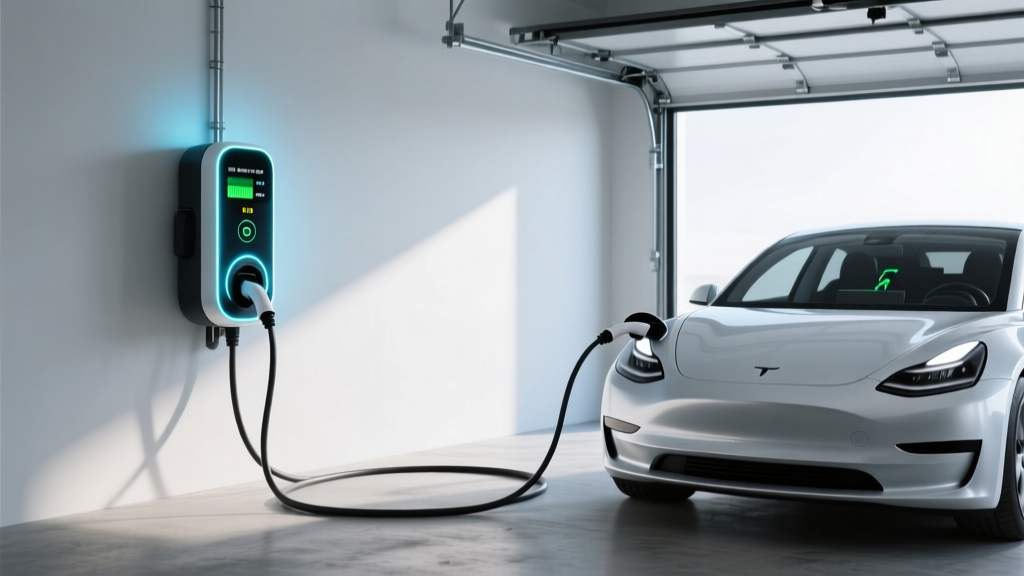
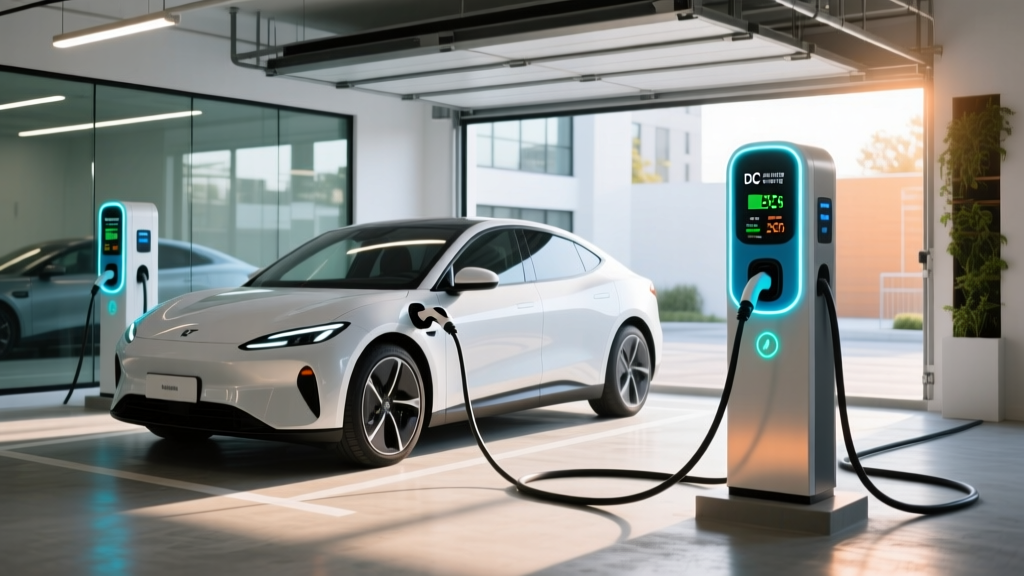
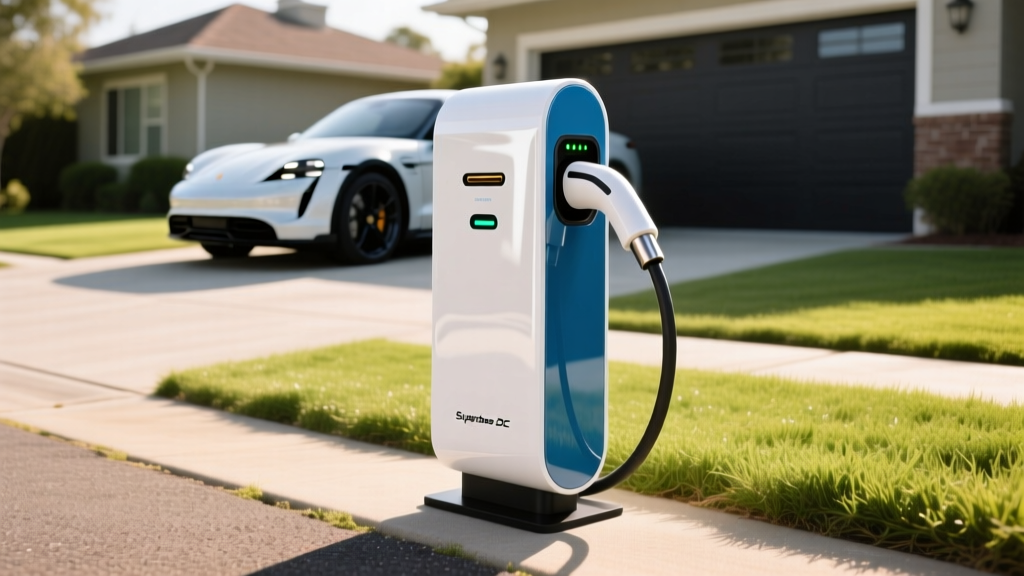
Level 1 charging uses a standard household outlet. It's fine for a plug-in hybrid with a 15 kWh battery, but a full-size BEV with an 80 kWh pack could take 40+ hours from empty. Level 2 is the home-charging standard — it's what most EV owners install and rely on for 90% of their charging. DC fast charging bypasses the car's onboard charger and sends direct current straight to the battery, enabling 10–80% charges in as little as 18 minutes on vehicles that support 250+ kW peak rates.
How Fast Will Each Level Add Range? Charging Time Examples
Charging speed depends on your battery size and the vehicle's maximum charge acceptance rate. Here are realistic 10–80% charging times for common battery capacities:
| Battery Size (usable kWh) | Example Vehicles | Level 1 (1.4 kW) | Level 2 (11.5 kW / 48A) | DC Fast (150 kW peak) | DC Fast (250 kW peak) |
|---|---|---|---|---|---|
| 60 kWh | Tesla Model 3 RWD, Chevy Equinox EV | ~30 hrs | ~4.5 hrs | ~25 min | ~20 min |
| 75 kWh | Tesla Model Y LR, Hyundai Ioniq 5 | ~37 hrs | ~5.5 hrs | ~30 min | ~18 min |
| 85 kWh | Ford F-150 Lightning Ext., Rivian R1S | ~42 hrs | ~6.5 hrs | ~35 min | ~28 min |
| 100 kWh | Tesla Model S, GMC Sierra EV | ~50 hrs | ~7.5 hrs | ~42 min | ~32 min |
For daily driving of 30–40 miles, even a Level 2 charger at 7.7 kW (32A) will fully replenish overnight. DC fast charging is reserved for road trips — and remember, charging from 80–100% at a DC fast charger is painfully slow and wastes money. Plan to charge to 80% and go.
Home Charger Installation: Electrical Requirements, Costs, and Panel Upgrades
Installing a Level 2 home charger isn't just plugging in a bigger appliance. It requires a dedicated circuit, proper wire gauge, and often a permit. Here's what you need to know.
Electrical Requirements
- Voltage: 240V (same as an electric dryer or oven)
- Amperage: Most home chargers run at 32A or 48A, requiring a 40A or 60A dedicated breaker respectively (NEC requires circuits rated at 125% of continuous load)
- Wire gauge: 6 AWG copper for 48A circuits; 8 AWG for 32A circuits (your electrician will confirm based on run length)
- Outlet type: NEMA 14-50 (50A receptacle) is the most common for plug-in chargers; hardwired installations use a junction box
- GFCI protection: Required by NEC 2020+ for outdoor receptacles; many hardwired chargers include built-in ground-fault protection
Do You Need a Panel Upgrade?
This is the question that can turn a $600 installation into a $3,000+ project. Most homes built after 2000 have a 200A main panel, which typically has enough spare capacity for a 40–60A EV circuit. Older homes — especially those with 100A service — may need a panel upgrade to 200A before adding an EV charger.
Your electrician will perform a load calculation (per NEC Article 220) that tallies your existing loads: HVAC, electric range, water heater, dryer, and lighting. If the total approaches your panel's rated capacity, an upgrade is required. Some utilities offer rebates for panel upgrades tied to EV adoption.
| Component | Simple Install (panel nearby, no upgrade) | Complex Install (long wire run, subpanel) | Panel Upgrade Required |
|---|---|---|---|
| Level 2 Charger (equipment) | $350–$700 | $350–$700 | $350–$700 |
| Electrician labor | $300–$600 | $600–$1,500 | $800–$1,500 |
| Permit & inspection | $50–$200 | $50–$200 | $50–$200 |
| Panel upgrade (if needed) | — | — | $1,500–$3,500 |
| Wire & conduit materials | $50–$150 | $150–$500 | $100–$300 |
| Total Range | $750–$1,650 | $1,150–$2,900 | $2,800–$6,200 |
Always hire a licensed electrician and pull a permit. Unpermitted work can void your homeowner's insurance and cause issues at resale. Some utilities and states offer rebates of $250–$1,000 for home charger installation — check AFDC's state incentive database for current programs.
Which Connector Is Compatible with Your EV?
The connector landscape has consolidated significantly since the early 2020s. As of 2026, nearly all new EVs sold in North America use the NACS (North American Charging Standard) connector, originally developed by Tesla and now adopted by Ford, GM, Hyundai, Kia, Rivian, and most other manufacturers. CCS1 (Combined Charging System) is still found on older models and some remaining inventory, while CHAdeMO is effectively legacy.
| Connector | Brands Using It | Notes |
|---|---|---|
| NACS (Tesla) | Tesla, Ford, GM, Hyundai, Kia, Rivian, Volvo, Polestar, BMW, Mercedes, Nissan (new models) | Standard on virtually all new EVs from 2025 onward |
| CCS1 | Older VW ID.4, BMW i4 (pre-2025), some Stellantis models | Adapters available to use NACS Superchargers |
| CHAdeMO | Nissan Leaf (legacy), Mitsubishi Outlander PHEV (older) | Declining infrastructure; avoid for new purchases |
Adapter needs: If you own a CCS-equipped vehicle, most manufacturers now sell or include a NACS-to-CCS adapter ($100–$250) that enables access to Tesla Supercharger stalls. If your vehicle has NACS, you can find CCS adapters for use at Electrify America and other CCS-only networks, though these are less common and more expensive ($200–$400).
Cost to Charge: Per-Mile Economics vs. Your Old Gas Car
If you're coming from a 2005 Cobalt SS Supercharged that averaged 24 MPG combined on premium fuel, the cost savings from EV charging will be dramatic — but they vary significantly based on where and when you charge.
| Scenario | Rate | Cost Per Mile (at 3.5 mi/kWh efficiency) | Annual Cost (12,000 mi) |
|---|---|---|---|
| Home Level 2 — off-peak utility rate | $0.08–$0.12/kWh | $0.023–$0.034 | $275–$410 |
| Home Level 2 — standard residential rate | $0.14–$0.18/kWh | $0.040–$0.051 | $480–$615 |
| Public Level 2 (ChargePoint, EVgo L2) | $0.25–$0.40/kWh | $0.071–$0.114 | $855–$1,370 |
| DC Fast Charging (Electrify America, Tesla) | $0.35–$0.55/kWh | $0.100–$0.157 | $1,200–$1,885 |
| 2005 Cobalt SS (premium fuel, 24 MPG) | $4.10/gal (premium avg.) | $0.171 | $2,050 |
| Average new gas car (30 MPG, regular) | $3.40/gal | $0.113 | $1,360 |
Even at standard residential rates, home charging costs roughly one-quarter to one-third of what you spent on premium fuel for the Cobalt SS. The savings narrow if you rely exclusively on DC fast charging, which can approach the per-mile cost of an efficient gas car — but most EV owners do 85–95% of their charging at home.
According to fueleconomy.gov, the average EV achieves 3–4 miles per kWh. Efficiency drops in cold weather (by 15–30% below freezing) and at sustained highway speeds above 70 mph, so real-world costs may be higher than the table suggests in winter or on road trips.
Equipment Recommendations: Best Home Level 2 Chargers for 2026
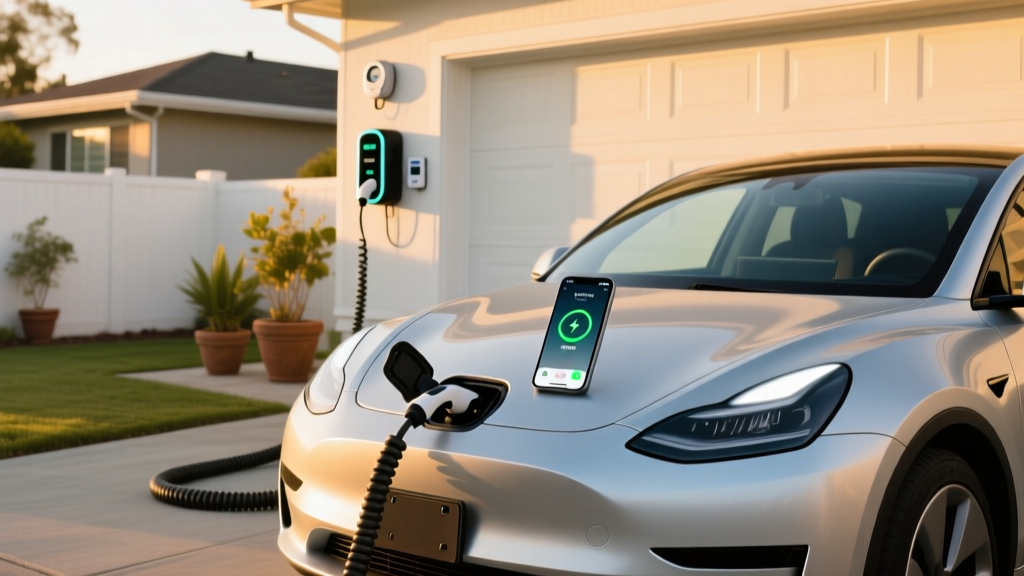
Not all Level 2 chargers are equal. The key specs that matter are maximum power output (kW), amperage, cable length, connector type, and smart features like Wi-Fi scheduling and utility demand-response integration.
Top Picks for Home Level 2 Chargers
ChargePoint Home Flex (NACS)
- Power: Up to 12 kW (50A) — configurable down to 16A for lower-capacity panels
- Connector: NACS (also available in J1772 for older EVs)
- Cable length: 23 feet
- Smart features: Wi-Fi, app scheduling, Alexa integration, utility demand-response
- Price: $599–$699
- Best for: Flexible amperage settings for older electrical panels
Tesla Wall Connector (NACS)
- Power: Up to 11.5 kW (48A)
- Connector: NACS native; includes J1772 adapter in box
- Cable length: 24 feet
- Smart features: Wi-Fi, over-the-air updates, power sharing (link multiple units on one circuit), load management
- Price: $475
- Best for: Tesla and NACS-equipped vehicles; excellent value
Emporia Vue Smart Charger (NACS)
- Power: Up to 11.5 kW (48A)
- Connector: NACS
- Cable length: 24 feet
- Smart features: Full energy monitoring integration with Emporia Vue panel monitor, solar-aware scheduling, TOU rate optimization
- Price: $399–$449
- Best for: Homes with solar panels or whole-home energy monitoring
Grizzl-E Smart (NACS)
- Power: Up to 10 kW (40A)
- Connector: NACS (J1772 version also available)
- Cable length: 24 feet
- Smart features: Wi-Fi, OCPP compatibility, adjustable amperage via DIP switches
- Price: $449–$549
- Best for: Cold-climate durability (rated to -40°F), Canadian-built
All of these chargers are UL-listed (or ETL-listed), which is essential for passing inspection and maintaining insurance coverage. Avoid unbranded chargers from online marketplaces that lack proper safety certifications.
Safety, Code, and Installation Best Practices
EV charging involves sustained high-current draw for hours at a time — far more stress on wiring than intermittent appliances. Follow these guidelines:
- Dedicated circuit: Your EV charger must be on its own dedicated breaker. Do not share a circuit with other loads.
- GFCI protection: Required for outdoor outlets per NEC 2020+. Hardwired chargers typically include internal GFCI protection. If using a NEMA 14-50 receptacle outdoors, your electrician should install a GFCI breaker.
- Outdoor rating: If your charger is installed outside, it must be rated for outdoor use (NEMA 4 or IP65). All the chargers recommended above carry outdoor ratings.
- Cable management: Use a holster or cable reel to keep the cord off the ground and prevent tripping hazards or damage from vehicles.
- Permit and inspection: Most jurisdictions require an electrical permit for a new 240V circuit. The inspection ensures proper wire gauge, breaker sizing, grounding, and GFCI compliance. Skipping this step risks fire, insurance denial, and resale complications.
- Surge protection: Consider a whole-panel surge protective device (SPD), especially in areas with frequent lightning. EV chargers contain sensitive electronics that can be damaged by voltage spikes.
The NHTSA's EV safety resources provide additional guidance on electrical safety standards for electric vehicles and charging equipment.
Public Charging Networks: What to Expect Away from Home
While home charging handles daily needs, public charging covers road trips and apartment-dweller top-ups. The major networks in 2026:
- Tesla Supercharger (now open to all NACS vehicles): Over 30,000 stalls in the US, including V4 cabinets delivering up to 350 kW. Generally the most reliable network. Pricing averages $0.30–$0.45/kWh.
- Electrify America: ~4,500 CCS and NACS chargers nationwide, up to 350 kW. Pricing: $0.43–$0.55/kWh for guest rates; lower with subscription plans.
- EVgo: ~3,500 public DC fast chargers, increasingly adding NACS connectors. Pricing: $0.35–$0.50/kWh; subscription plans available.
- ChargePoint: Primarily Level 2 destination charging (workplaces, retail), with some DC fast locations. Pricing varies by site.
Plan road trips using PlugShare or your vehicle's built-in route planner, which will precondition the battery for optimal charging speed at each stop. Preconditioning warms the battery to its ideal temperature range (typically 85–105°F internally), enabling faster charge acceptance. Without it, a cold battery may accept only a fraction of the charger's peak kW.
Frequently Asked Questions
How much does it cost to install a home EV charger?
A straightforward Level 2 installation with a nearby 200A panel typically costs $750–$1,650 including equipment, labor, and permit. If your panel needs upgrading from 100A to 200A, expect $2,800–$6,200 total. Always get at least two quotes from licensed electricians.
How fast will each charging level add range?
Level 1 (120V) adds 3–5 miles per hour. Level 2 (240V, 48A) adds roughly 30–40 miles per hour for a typical EV. DC fast charging at 150+ kW can add 150–250+ miles in a 20-minute session, though the rate tapers significantly above 80% state of charge.
Which connector/charger is compatible with my EV?
If you're buying a new EV in 2026, it almost certainly uses the NACS connector. Older EVs (pre-2025) may have CCS1. The Nissan Leaf uses CHAdeMO. Check your vehicle's charge port or owner's manual. Adapters exist to cross-connect between standards, but native compatibility is always preferred for reliability and speed.
How much does charging cost per mile vs. gas?
Home charging at standard residential rates ($0.14–$0.18/kWh) costs roughly $0.04–$0.05 per mile — about one-quarter the cost of fueling a performance gas car like the Cobalt SS at $0.17 per mile. Even public DC fast charging at $0.10–$0.16 per mile is competitive with or cheaper than gasoline.
What electrical upgrades might I need?
If your home has a 200A panel with spare capacity, you likely need only a new dedicated 40–60A breaker and wiring run. Homes with 100A service, older wiring (aluminum or knob-and-tube), or panels already near capacity will need a panel upgrade ($1,500–$3,500) before adding an EV circuit. An electrician's load calculation will determine this definitively.
Can I use my dryer outlet for EV charging?
A NEMA 14-50 outlet is shared by some dryers and EV chargers, but you cannot safely use both simultaneously on the same circuit. If your dryer outlet is in the garage and the dryer is elsewhere, some EV owners use a smart splitter (e.g., NeoCharge) that alternates between the two loads. However, a dedicated circuit is always the safer, code-compliant approach.
Does fast charging damage my battery?
Modern battery management systems (BMS) protect against damage by tapering charge rates as the battery warms and approaches full capacity. Occasional DC fast charging has minimal impact on long-term battery health. However, exclusively using DC fast charging and regularly charging to 100% can accelerate degradation. For daily use, Level 2 charging to 80% is ideal for NMC batteries; LFP batteries can be charged to 100% regularly without concern.