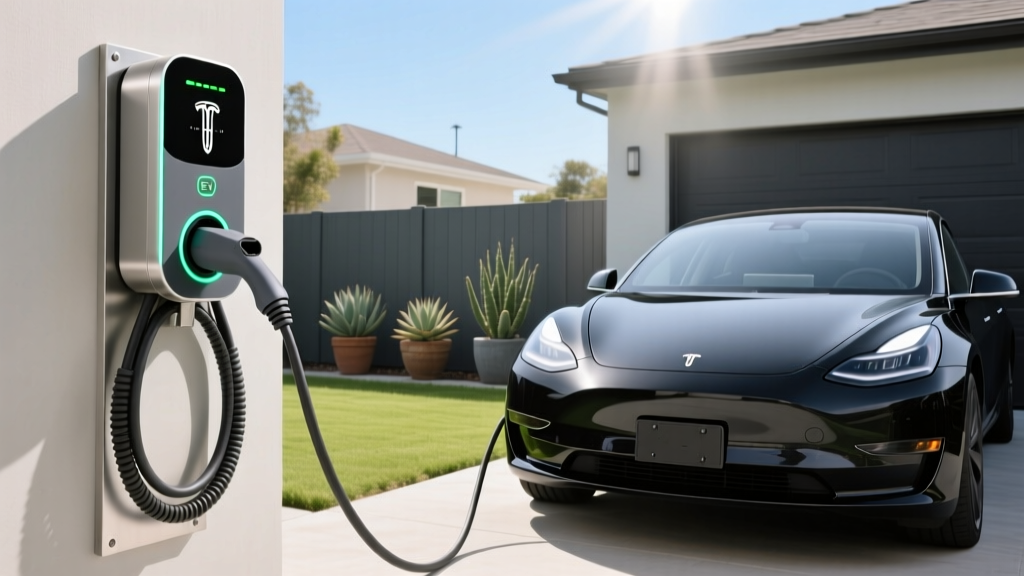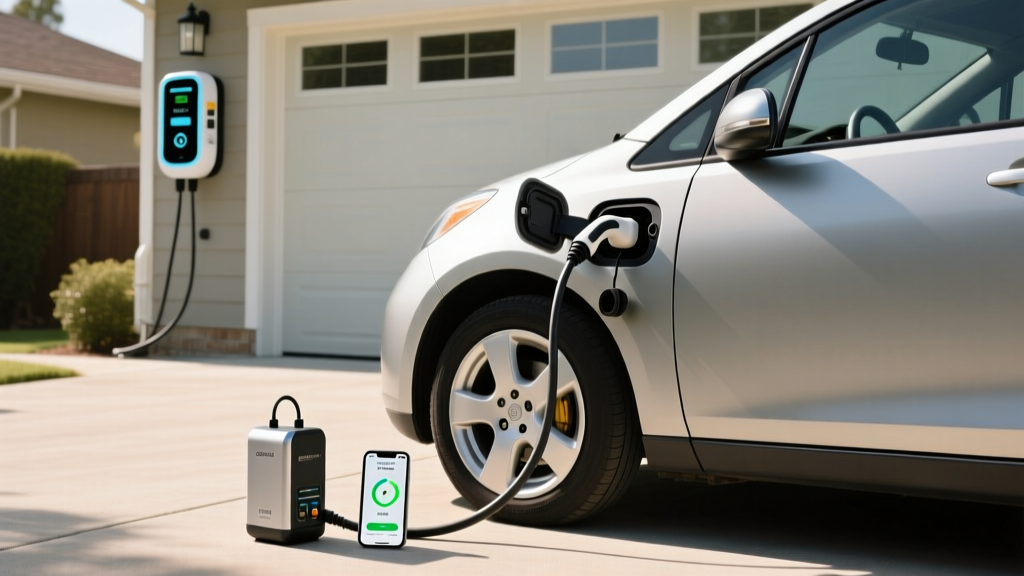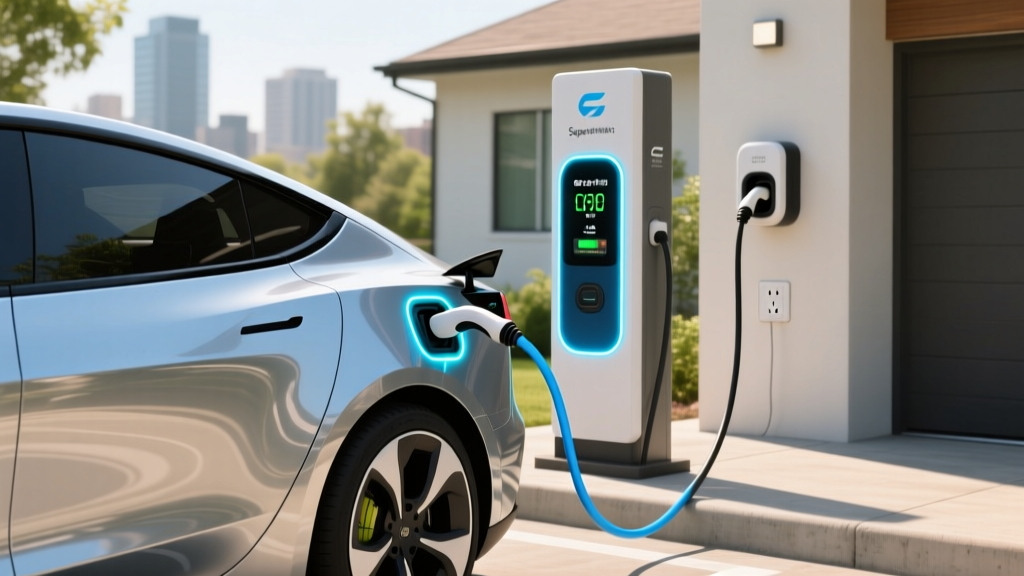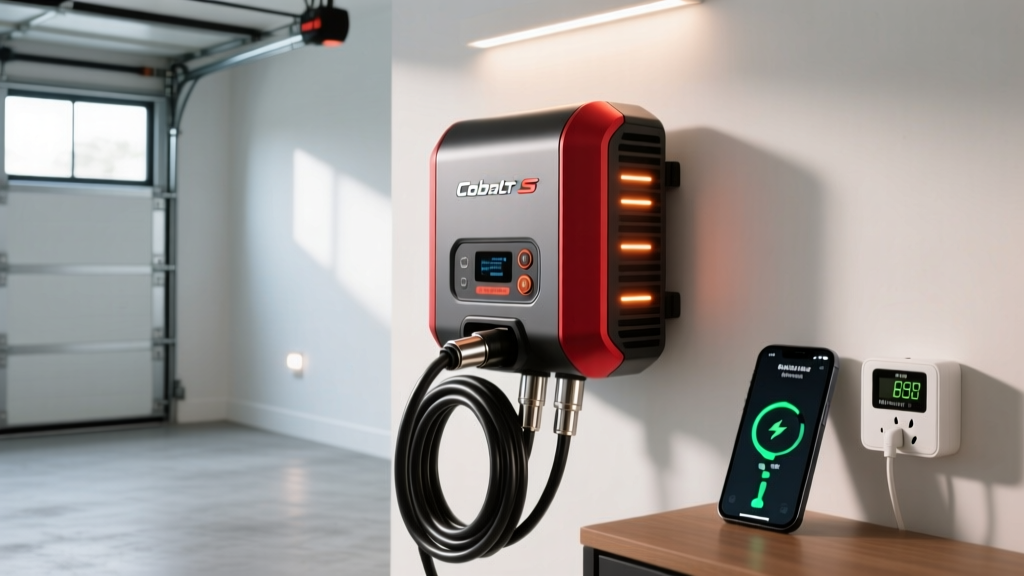
If you've landed here searching for a Cobalt SS supercharger, you're likely dealing with one of two very different worlds — and this guide will sort out both. The Chevrolet Cobalt SS (produced 2005–2010) is a turbocharged or supercharged compact sport coupe that Chevy enthusiasts still love. But in 2026, the word "supercharger" also triggers thoughts of Tesla's DC fast-charging network. Whether you're maintaining a classic Cobalt SS or comparing its fuel costs to a modern EV's charging costs, this guide covers the numbers that matter.
Below, we'll walk through EV charging levels, home installation costs, connector standards, and a direct cost-per-mile comparison between a supercharged Cobalt SS and today's electric vehicles. If you're cross-shopping a used performance car against an EV, this is your decision framework.
EV Charging Levels Explained: kW Speeds and Range Per Hour
Before comparing any vehicle's fueling cost, you need to understand the three charging levels available to EV owners in 2026. The critical distinction: kW (kilowatts) measures power — how fast energy flows into the battery. kWh (kilowatt-hours) measures energy — the battery's total capacity. Think of kW as the hose diameter and kWh as the tank size.
| Level | Voltage / Amps | Max Power (kW) | Miles of Range Added Per Hour | Typical Use Case |
|---|---|---|---|---|
| Level 1 | 120V / 12A | 1.4 kW | 3–5 mi/hr | Overnight top-ups, PHEVs, low-mileage drivers |
| Level 2 | 240V / 32–48A | 7.7–11.5 kW | 25–44 mi/hr | Daily home charging, most EV owners' primary method |
| DC Fast Charge | 400–800V DC | 50–350 kW | 150–1,200+ mi/hr (peak) | Road trips, highway corridors, 10–80% in 18–40 min |
For context, a modern EV like the 2026 Hyundai Ioniq 5 (84 kWh usable battery, EPA 303 mi range) charges from 10–80% in about 18 minutes at a 350 kW DC fast charger — though sustained rates taper significantly above 80% State of Charge (SoC). A Level 2 home charger at 11.5 kW will fully recharge that same battery in roughly 7.5 hours, which is ideal for overnight sessions.
Home EV Charger Installation: Electrical Requirements and Costs
Installing a Level 2 home charger is the single biggest infrastructure decision an EV buyer makes. Here's what's involved electrically and financially.
Electrical Requirements
A Level 2 charger requires a dedicated 240V circuit, similar to what powers an electric dryer or oven. Common configurations:
- 32A circuit (7.7 kW): Requires a 40A breaker (NEC requires 125% headroom for continuous loads). Sufficient for most daily driving under 40 miles.
- 40A circuit (9.6 kW): Requires a 50A breaker. The sweet spot for most EV owners — adds ~35 miles per hour of charging.
- 48A circuit (11.5 kW): Requires a 60A breaker. Best for large-battery EVs (100+ kWh) or households with two EVs sharing one charger via load management.
Panel Upgrade Reality
Many older homes (pre-2000) have 100A or 125A main electrical panels. Adding a 50A EV circuit to an already-loaded panel may require a panel upgrade to 200A, which is a significant added cost. Have a licensed electrician perform a load calculation before committing to a charger amperage.
| Cost Component | Low End | High End | Notes |
|---|---|---|---|
| Level 2 Charger Equipment | $300 | $750 | Smart Wi-Fi chargers, 32–48A, NACS or J1772 connector |
| Electrician Labor | $400 | $1,500 | Depends on run length from panel to garage/carport |
| Permit & Inspection | $50 | $300 | Required in most jurisdictions; varies by municipality |
| Panel Upgrade (if needed) | $1,500 | $4,000 | 100A → 200A upgrade; not always required |
| Total (no panel upgrade) | $750 | $2,550 | Most homeowners fall in $1,200–$1,800 range |
| Total (with panel upgrade) | $2,250 | $6,550 | Common in homes built before 2000 |
The federal residential clean energy credit does not cover EV charger equipment for most taxpayers after 2023 (the Alternative Fuel Vehicle Refueling Property Credit, §30C, was modified and is subject to census-tract eligibility). Check irs.gov and your state incentive database for current availability.
Connector Compatibility: NACS, CCS1, CHAdeMO, and the Cobalt SS
The Cobalt SS, being a gasoline vehicle, uses no EV charging connector. But if you're comparing ownership costs between a supercharged Cobalt and a modern EV, connector compatibility matters for the EV side. Here's the 2026 landscape:
| Connector | Brands Using It (2026) | Max DC Fast Rate | Adapter Needed? |
|---|---|---|---|
| NACS (Tesla / North American Charging Standard) | Tesla, Ford, GM, Rivian, Volvo, Polestar, Fisker | Up to 350 kW | CCS-to-NACS adapters available for legacy CCS vehicles |
| CCS1 (Combined Charging System) | Hyundai, Kia, Volkswagen, BMW, Mercedes, Stellantis | Up to 350 kW | NACS-to-CCS adapters for Tesla Supercharger access |
| CHAdeMO | Nissan Leaf (legacy); essentially discontinued for new models | Up to 100 kW | Limited infrastructure; not recommended for new buyers |
As of 2026, the vast majority of new EVs sold in North America ship with the NACS port or have confirmed CCS-to-NACS adapter support for Tesla Supercharger access. If you're buying a used EV from 2022–2024, verify which connector it has and whether the manufacturer provides a Supercharger adapter.
Cost Per Mile: Cobalt SS Supercharged vs. EV Charging
This is where the Cobalt SS supercharger conversation gets practical. The 2008–2010 Cobalt SS with the 2.0L turbocharged Ecotec engine (the supercharged 2005–2007 models used a 2.4L LE5 or 2.0L LSJ) delivers roughly 22 MPG city / 30 MPG highway per fueleconomy.gov. Enthusiast-tuned examples with aftermarket supercharger kits often see 18–22 MPG combined under spirited driving.
| Scenario | Energy Cost | Efficiency | Cost Per Mile |
|---|---|---|---|
| Cobalt SS (supercharged, 20 MPG combined) | $3.40/gal (2026 avg regular) | 20 MPG | $0.170/mi |
| EV — Home Level 2 (off-peak, $0.13/kWh) | $0.13/kWh | 3.5 mi/kWh (avg EV) | $0.037/mi |
| EV — Home Level 2 (peak, $0.22/kWh) | $0.22/kWh | 3.5 mi/kWh | $0.063/mi |
| EV — Public DC Fast ($0.48/kWh avg) | $0.48/kWh | 3.5 mi/kWh | $0.137/mi |
| EV — Tesla Supercharger ($0.35/kWh avg) | $0.35/kWh | 3.5 mi/kWh | $0.100/mi |
At 15,000 miles per year, the Cobalt SS at $0.17/mi costs $2,550/year in fuel. An EV charged primarily at home off-peak costs roughly $555/year — a nearly $2,000 annual savings. Even exclusive DC fast charging at public rates ($0.48/kWh) yields $2,055/year, still below the Cobalt SS.
Choose a modern EV if: You commute 30+ miles daily; you have garage or carport access for Level 2 charging; you want sub-$0.05/mi fueling; you value ADAS features (Level 2 driver-assist like BlueCruise or Toyota Safety Sense 3.0); or you're buying new and want warranty coverage.
Charging Time Examples by Battery Size
How long a charge session takes depends on battery capacity (kWh), charger power (kW), and the vehicle's charge curve. Here are representative 10–80% times for common 2026 EV battery sizes:
- 40 kWh battery (e.g., base Nissan Leaf-equivalent): 10–80% in ~25 min at 50 kW DC; ~3.5 hours at 7.7 kW Level 2
- 65 kWh battery (e.g., Tesla Model 3 RWD, Chevy Equinox EV): 10–80% in ~22 min at 150 kW DC; ~5.5 hours at 11.5 kW Level 2
- 84 kWh battery (e.g., Hyundai Ioniq 5, Kia EV6): 10–80% in ~18 min at 250+ kW DC; ~7 hours at 11.5 kW Level 2
- 100+ kWh battery (e.g., Ford F-150 Lightning Extended, GMC Sierra EV): 10–80% in ~35 min at 350 kW DC; ~9 hours at 11.5 kW Level 2
For comparison, refueling a Cobalt SS's 16-gallon tank takes about 3 minutes at any gas station — but at $3.40/gallon, that $54 fill-up covers roughly 320 miles. An 84 kWh EV charged at home for $0.13/kWh costs $10.92 for 290+ miles of range.
Recommended Level 2 Home Chargers for 2026
ChargePoint Home Flex (NACS or J1772)
- Power Output: Up to 12 kW (50A circuit) / 9.6 kW (40A circuit)
- Connector: NACS or J1772 (select at purchase)
- Cable Length: 23 ft
- Smart Features: Wi-Fi, app scheduling, Alexa integration, energy reporting, load sharing with second unit
- Price: ~$549 (NACS version)
- Best For: Most EV owners; flexible amperage lets you match your panel capacity
WallConnector (Tesla, NACS native)
- Power Output: Up to 11.5 kW (48A / 60A circuit)
- Connector: NACS native
- Cable Length: 24 ft
- Smart Features: Wi-Fi, over-the-air updates, power sharing between multiple units, Tesla app integration
- Price: ~$475
- Best For: Tesla owners or NACS-equipped GM/Ford/Rivian drivers who want a clean, integrated experience
Emporia Vue Level 2 Charger
- Power Output: Up to 11.5 kW (48A)
- Connector: J1772 (CCS vehicles) or NACS adapter
- Cable Length: 24 ft
- Smart Features: Wi-Fi, integration with Emporia home energy monitor, solar-aware scheduling, load management
- Price: ~$399
- Best For: Budget-conscious buyers with solar panels or home energy monitoring
Safety, Code, and Installation Best Practices
EV charging involves sustained high-current draw — longer and hotter than most household appliances. Cutting corners here creates fire risk. Follow these non-negotiable standards:
- Dedicated circuit: Your Level 2 charger must have its own breaker — never share a circuit with other appliances. NEC Article 625 governs EV charging installations.
- GFCI protection: The 2023 NEC update requires GFCI protection for outdoor EV receptacles (14-50 or 6-50 outlets). Hardwired installations may be exempt in some jurisdictions but are generally safer.
- Outdoor rating: If your charger is mounted outside, ensure it carries a NEMA 4 or IP65 rating for weather resistance.
- Hardwired vs. plug: Hardwired chargers (no plug) avoid the NEC GFCI nuisance-trip issues that plague some 14-50 receptacle installations and allow higher amperage (48A+ requires hardwire per most manufacturers).
- Permit and inspection: Always pull an electrical permit. An uninspected, unpermitted install can void homeowner's insurance coverage in the event of an electrical fire.
For the final electrical specification — wire gauge, conduit type, breaker sizing — always defer to a licensed electrician who has performed a load calculation on your specific panel. Online guides can inform your conversation, but they cannot replace a site assessment.
Frequently Asked Questions
How much does it cost to install a home EV charger?
Most homeowners pay between $1,200 and $1,800 for a complete Level 2 installation (charger + electrician + permit) when no panel upgrade is needed. If your home requires a 200A panel upgrade, expect $2,250–$6,550 total. The charger unit itself costs $300–$750.
How fast will each charging level add range?
Level 1 (120V) adds 3–5 miles per hour. Level 2 (240V, 32–48A) adds 25–44 miles per hour depending on amperage and vehicle efficiency. DC fast charging adds 150–1,200+ miles per hour at peak rates, though real sessions deliver a 10–80% charge in 18–40 minutes depending on battery size and charger power.
Which connector or charger is compatible with my EV?
For 2026 models: Tesla, Ford, GM, Rivian, and Volvo/Polestar use NACS. Hyundai, Kia, VW, BMW, and Mercedes use CCS1. Nissan Leaf (legacy) uses CHAdeMO. Check your vehicle's charge port or owner's manual. Adapters are widely available for cross-compatibility, particularly CCS-to-NACS for Supercharger access.
How much does charging cost per mile vs gas?
Home charging at off-peak rates ($0.13/kWh) costs roughly $0.037 per mile for an average EV. A supercharged Cobalt SS at 20 MPG with $3.40/gallon gas costs $0.17 per mile — about 4.6× more per mile. Even public DC fast charging at $0.48/kWh ($0.137/mi) beats gasoline on a per-mile basis.
What electrical upgrades might I need?
Homes built before 2000 with 100A or 125A panels may need a 200A panel upgrade ($1,500–$4,000) to safely add a 40–50A EV circuit. Homes with 200A panels usually have sufficient capacity. A licensed electrician must perform a NEC load calculation to determine your specific needs — factors include existing appliance loads (electric range, dryer, HVAC), panel age, and available breaker slots.
Does the Cobalt SS have anything to do with EV superchargers?
No. The Chevy Cobalt SS uses a mechanical supercharger (2005–2007 LSJ 2.0L) or turbocharger (2008–2010 LNF 2.0L) — these are forced-induction devices that compress intake air to increase engine power. A Tesla Supercharger is a DC fast-charging station that delivers high-voltage direct current to an EV battery. The shared name is coincidental, and this guide addresses both for anyone cross-shopping these very different vehicles.