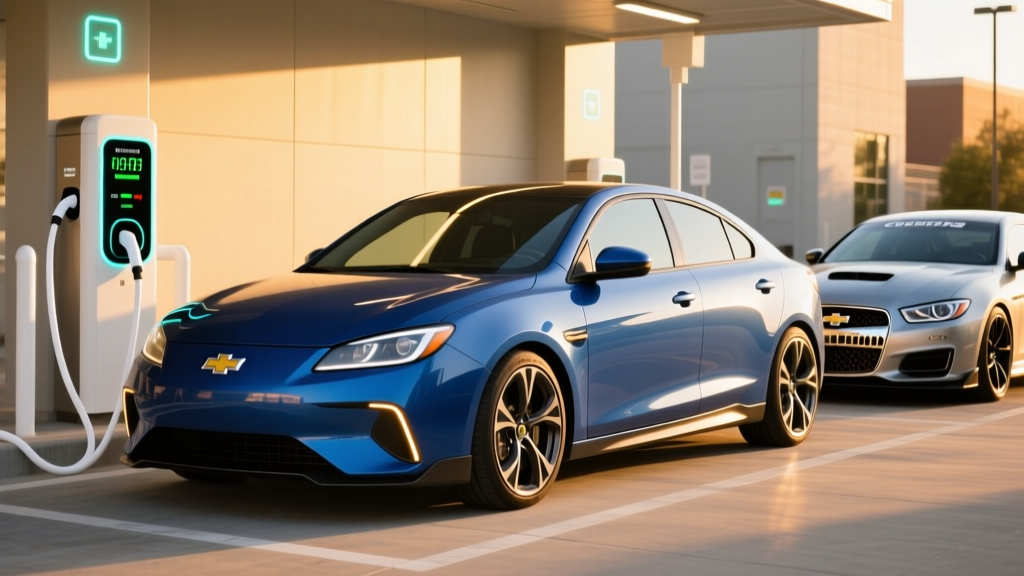
If you've spent years wringing every last psi out of a supercharged 2.0L Ecotec in a 2006 Chevrolet Cobalt SS, the jump to an electric vehicle is going to feel like a different universe. No blower whine, no 5-speed manual, no $3.50/gallon fill-ups — just instant torque, silent acceleration, and a new vocabulary: kilowatts, kilowatt-hours, charge curves, and NACS connectors.
This guide is written specifically for enthusiasts making the transition from a legendary compact sport coupe like the 2006 Cobalt SS Supercharged (or any gas car) to a modern EV. We'll cover exactly what charging at home requires, what it costs, how fast you'll add range, and how the per-mile economics stack up against the premium fuel your Cobalt demanded.
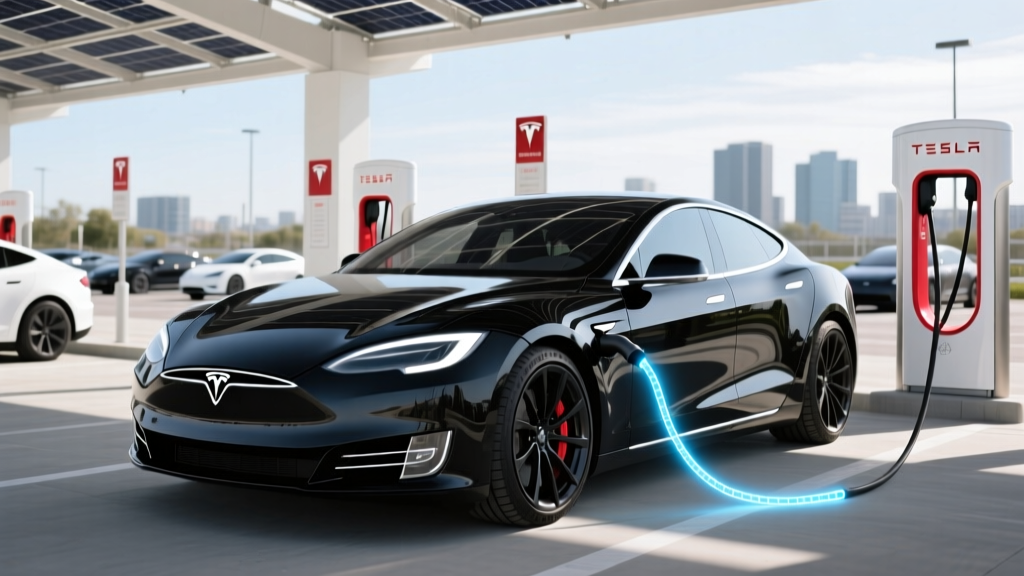
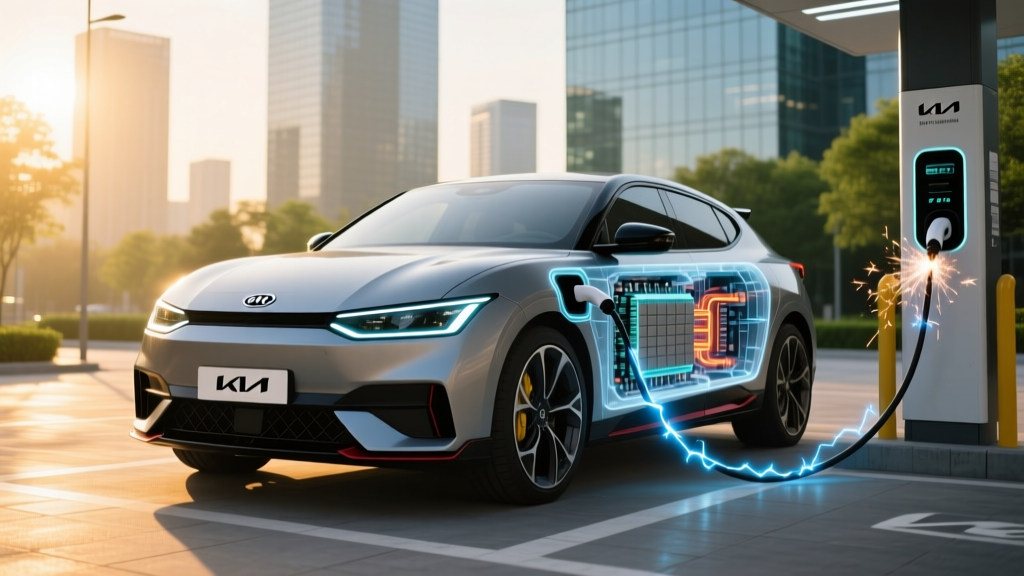
The Charging Hierarchy: Level 1, Level 2, and DC Fast Charging Explained
Before anything else, let's nail down the single most important distinction in EV literacy: kW (kilowatts) measures power — the rate of energy delivery. kWh (kilowatt-hours) measures energy — the total capacity of your battery. Think of kW as the flow rate of a hose and kWh as the size of the bucket you're filling. Confusing them is the #1 mistake new EV owners make.
EV charging comes in three tiers, each with different hardware requirements and real-world speeds:
| Level | Voltage / Amps | Power (kW) | Miles of Range Added per Hour | Typical Use Case |
|---|---|---|---|---|
| Level 1 (120V) | 120V / 12-16A | 1.4 – 1.9 kW | 3 – 5 mi/hr | Overnight top-ups, PHEVs, emergencies |
| Level 2 (240V) | 240V / 32-48A | 7.7 – 11.5 kW | 25 – 44 mi/hr | Daily home charging (primary method) |
| DC Fast Charge | 400-800V DC | 50 – 350 kW | 150 – 1,200+ mi/hr (peak) | Road trips, quick top-ups on the go |
A few critical nuances that spec sheets don't always highlight:
- DC fast charging speed is not sustained. A vehicle advertising a 250 kW peak charge rate might only hold that speed from 10-30% State of Charge (SoC), then taper significantly. A realistic 10-80% session on a 250 kW-capable vehicle like the Hyundai Ioniq 5 (84 kWh battery) takes roughly 18 minutes at a capable charger, not the 3 minutes you'd calculate from peak rate alone.
- Level 2 is where 90%+ of EV charging actually happens. If you can install a 240V home charger, you'll rarely need anything else for daily driving.
- Level 1 is viable for PHEVs with small batteries (10-18 kWh) but painfully slow for full BEVs with 60-100 kWh packs — a full charge could take 40-60+ hours.
Home Charger Installation: Electrical Requirements, Costs, and the Panel-Upgrade Reality
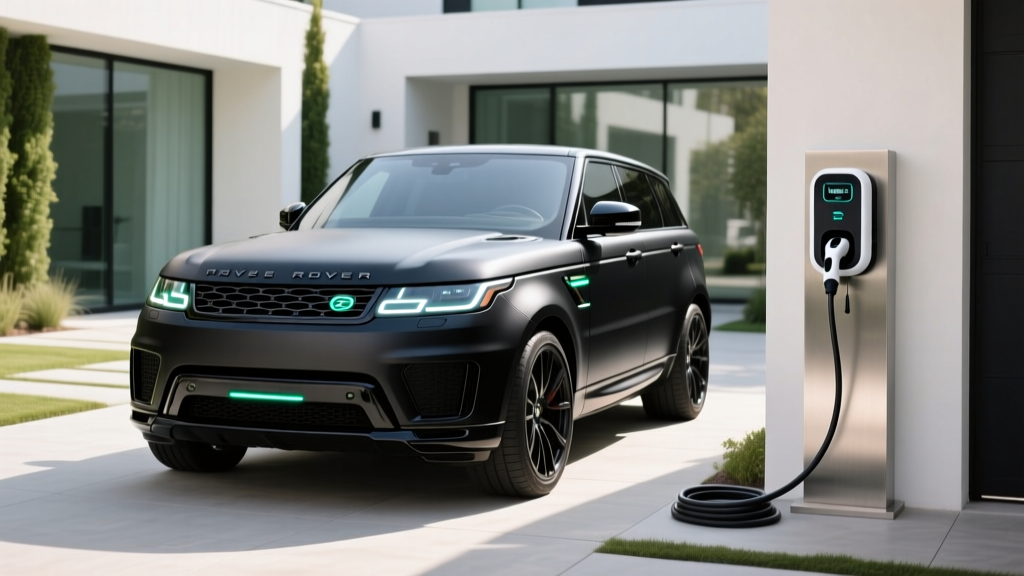
Here's where owning a home built in the same era as your 2006 Cobalt SS matters. Most homes built before 2010 have 100A or 150A electrical panels. A Level 2 EV charger on a dedicated 48A circuit draws a continuous 11.5 kW — that's a significant load that older panels may not support without an upgrade.
What a Level 2 Installation Actually Requires
- Dedicated 240V circuit: Typically 40A or 50A breaker (a 40A breaker supports a 32A charger; a 50A breaker supports a 40A charger — NEC code requires circuits rated at 125% of continuous load).
- Wire gauge: 6 AWG copper for 50A circuits, 8 AWG for 40A — run through conduit if exposed.
- NEMA 14-50 outlet or hardwired connection: Hardwired is increasingly preferred because it eliminates the outlet as a failure point, qualifies for higher amperage, and avoids the NEC 2017+ requirement for GFCI breakers on receptacles (which can nuisance-trip with EV chargers).
- Permit: Most jurisdictions require an electrical permit for a new 240V circuit. Your electrician typically pulls this. Expect an inspection afterward.
Installation Cost Breakdown
| Cost Component | Simple Install (Panel Adjacent) | Complex Install (Long Run / Panel Upgrade) |
|---|---|---|
| Level 2 Charger Equipment | $350 – $700 | $350 – $700 |
| Electrician Labor (2-4 hrs simple / 6-12 hrs complex) | $400 – $1,000 | $1,500 – $3,500 |
| Materials (wire, conduit, breaker, outlet/hardwire kit) | $100 – $300 | $300 – $800 |
| Electrical Permit | $50 – $150 | $50 – $200 |
| Panel Upgrade (100A → 200A), if needed | N/A | $1,500 – $3,500 |
| Total Estimated Cost | $900 – $2,150 | $3,700 – $8,700 |
The U.S. Department of Energy notes that installation costs vary widely based on local labor rates, the distance from your panel to the charging location, and whether your panel has spare capacity. A licensed electrician should perform a load calculation before quoting — don't accept a ballpark estimate over the phone.
Connector Compatibility: NACS, CCS1, CHAdeMO, and What You Actually Need
The connector landscape in 2026 has largely consolidated around the North American Charging Standard (NACS), which Tesla opened to the industry in late 2022. Here's where things stand:
| Connector | Description | Brands Using It (Native) | Adapter Needed? |
|---|---|---|---|
| NACS (J3400) | Compact, lightweight; AC + DC in one port | Tesla, Ford, GM, Rivian, Volvo, Polestar, BMW, Hyundai/Kia (2025+), most new EVs | None for Tesla Superchargers; CCS stations require NACS-to-CCS adapter |
| CCS1 (Combined Charging System) | Bulkier; AC + DC combo plug | VW, Audi, older Hyundai/Kia, some Stellantis models | CCS-to-NACS adapter needed for Tesla Superchargers |
| CHAdeMO | Legacy DC-only connector | Nissan Leaf (discontinued), Mitsubishi Outlander PHEV (older) | Limited future support; CHAdeMO stations declining |
For home Level 2 charging, all EVs use the same J1772 AC connector standard — or NACS, which now carries AC through the same port. If you buy a NACS-equipped home charger, it will work natively with Tesla and all new NACS-adopting brands. For CCS vehicles, a simple J1772-to-CCS adapter (typically included with the car) handles it.
For public DC fast charging, Tesla Superchargers now welcome non-Tesla NACS vehicles. Electrify America, EVgo, and ChargePoint stations primarily use CCS1, so NACS vehicles need an adapter (usually provided by the automaker). Always check your vehicle's included accessories.
Level 2 Charger Equipment Recommendations for 2026
Not all home chargers are equal. Here are four well-regarded options across price points, with the specs that actually matter:
Emporia Vue EV Charger
- Power: 48A / 11.5 kW (hardwired) or 40A / 9.6 kW (NEMA 14-50)
- Connector: J1772 (NACS version available)
- Cable: 24 ft
- Smart features: Wi-Fi, scheduling, solar integration, energy monitoring
- Price: ~$399
- Best for: Budget-conscious buyers wanting full smart features
ChargePoint Home Flex
- Power: Up to 50A / 12 kW (adjustable via DIP switches)
- Connector: J1772 (NACS adapter included)
- Cable: 23 ft
- Smart features: Wi-Fi, app scheduling, Alexa integration, utility demand-response
- Price: ~$549
- Best for: Flexibility across circuit sizes and utility programs
Tesla Wall Connector (Gen 4)
- Power: 48A / 11.5 kW
- Connector: NACS native
- Cable: 24 ft
- Smart features: Wi-Fi, OTA updates, power sharing (multiple units on one circuit)
- Price: ~$475
- Best for: Tesla owners; NACS-adopting brand owners
Grizzl-E Smart
- Power: 40A / 9.6 kW
- Connector: J1772 (NACS version available)
- Cable: 24 ft
- Smart features: OCPP-compatible, adjustable amperage, rugged outdoor build
- Price: ~$449
- Best for: Outdoor installs in harsh climates (rated to -40°F)
- Dedicated circuit: Never share the EV charger circuit with other appliances.
- GFCI protection: NEC 2020+ requires GFCI for receptacle-based (NEMA 14-50) installations. Hardwired installations avoid this requirement and reduce nuisance tripping.
- Outdoor rating: If your charger is mounted outside, it must be rated for wet locations (NEMA 4 or IP65 minimum).
- UL/ETL listing: Only use chargers that are UL-listed or ETL-listed. Avoid unbranded imports from marketplace sellers — they may lack proper safety certifications and can void insurance coverage.
Charging Cost Per Mile: EV vs. the Gas Station
Your 2006 Cobalt SS Supercharged was EPA-rated around 22 city / 29 highway mpg on premium fuel. At $4.00/gallon premium (a reasonable 2026 national average), that's roughly $0.15 – $0.18 per mile in fuel cost. Let's see how EV charging compares across scenarios:
| Scenario | Rate ($/kWh) | Vehicle Efficiency (kWh/mi) | Cost Per Mile | vs. Cobalt SS (Premium) |
|---|---|---|---|---|
| Home, off-peak utility rate | $0.08 – $0.14 | 0.28 (e.g., Tesla Model 3) | $0.02 – $0.04 | ~75-85% cheaper |
| Home, standard residential rate | $0.14 – $0.20 | 0.32 (e.g., Ford F-150 Lightning) | $0.04 – $0.06 | ~65-75% cheaper |
| Public Level 2 (ChargePoint, etc.) | $0.25 – $0.49 | 0.30 | $0.08 – $0.15 | ~15-50% cheaper |
| DC Fast Charge (Electrify America, EVgo) | $0.35 – $0.65 | 0.30 | $0.11 – $0.20 | Roughly equal to slightly more |
The takeaway: home charging is where the economics are transformative. Charging at home on off-peak rates, you'll spend roughly $500-$700/year on electricity to drive 15,000 miles — compared to $2,250-$2,700/year on premium fuel in the Cobalt SS. That's a $1,500-$2,000 annual savings before factoring in reduced maintenance (no oil changes, no supercharger belt replacements, no spark plugs, far less brake wear thanks to regenerative braking).
However, if you rely exclusively on DC fast charging at $0.50-$0.65/kWh, the cost advantage shrinks dramatically — and can even exceed gas costs for less efficient EVs. This is why home charging access is the single biggest determinant of EV ownership satisfaction.
Charging Time Examples: How Long Does It Actually Take?
Charge times depend on battery size (kWh), the charger's power output (kW), the vehicle's onboard charger capacity (for Level 2), and the charge curve (for DC fast charging). Here are realistic scenarios:
| Battery Size | Example Vehicles | Level 1 (1.4 kW) | Level 2 (11.5 kW / 48A) | DC Fast 10-80% |
|---|---|---|---|---|
| ~60 kWh | Chevrolet Equinox EV, base Model 3 RWD | ~43 hrs (0-100%) | ~5.5 hrs (0-100%) | ~20-25 min (150 kW peak) |
| ~75 kWh | Tesla Model Y LR, Hyundai Ioniq 6 | ~54 hrs | ~7 hrs | ~18-22 min (250 kW peak) |
| ~85-100 kWh | F-150 Lightning Ext., Rivian R1S, Ioniq 5 N | ~60-72 hrs | ~8-9 hrs | ~20-30 min (250-350 kW peak) |
For context: if you install an 11.5 kW Level 2 home charger and plug in every night when you get home (say, at 60% SoC), you'll add roughly 40-50 kWh overnight in 4-5 hours — enough to fully replenish a daily commute of 100-150 miles. You'll wake up to a full battery every morning, something your Cobalt SS could never offer without a midnight gas station run.
Federal Tax Credits and Incentives for Home Charging
The IRS §30C Alternative Fuel Vehicle Refueling Property Credit covers up to 30% of home EV charger equipment and installation costs, capped at $1,000. This is separate from the §30D new-vehicle credit. Key eligibility points:
- The charger must be installed at your primary residence in the United States.
- The property must be placed in service during the tax year.
- The credit is non-refundable (it reduces your tax liability to zero but won't generate a refund beyond that).
- Eligibility may be subject to census-tract requirements for certain installations — check irs.gov for current-year guidance or consult a tax professional.
Many utilities also offer rebates of $200-$500 for purchasing a smart Level 2 charger, and some (like PG&E, ConEdison, and Xcel Energy) offer additional incentives for off-peak charging enrollment. Check with your local utility before purchasing equipment.
Making the Transition: What Cobalt SS Owners Should Know
The 2006 Cobalt SS Supercharged produced 205 hp and 200 lb-ft of torque from its Eaton M62 supercharged 2.0L four-cylinder. It weighed about 2,900 lbs and could hit 60 mph in roughly 6.5 seconds. It was a scrappy, tossable, analog driver's car.
Modern EVs are a different kind of fast. A Tesla Model 3 Performance (2026) delivers 510 hp, 546 lb-ft, and a 3.1-second 0-60 — while seating five, offering 315 miles of EPA range, and costing pennies per mile to fuel. A Hyundai Ioniq 5 N produces 641 hp in N Grin Boost mode and can lap a track with legitimate thermal management. The thrills are different — less mechanical engagement, more brutal linear acceleration — but they're real.
The infrastructure side requires planning that your Cobalt never demanded. Budget $1,500-$3,000 for a straightforward home charger install (more if your panel needs upgrading), choose a UL-listed charger matched to your vehicle's connector, and set up off-peak charging schedules through your utility. Do that, and you'll spend less time and money "fueling" than you ever did with the supercharged Ecotec.
Frequently Asked Questions
How much does it cost to install a home EV charger?
A simple Level 2 installation with the panel nearby typically costs $900-$2,150 including equipment, labor, materials, and permit. Complex installations requiring long wire runs or a panel upgrade (100A to 200A) can range from $3,700-$8,700. Always get a load calculation from a licensed electrician before committing.
How fast will each charging level add range?
Level 1 (120V) adds 3-5 miles of range per hour. Level 2 (240V, 48A) adds 25-44 miles per hour depending on vehicle efficiency. DC fast charging can add 150-1,200+ miles per hour at peak, but speeds taper significantly above 50-60% SoC, so realistic 10-80% sessions take 18-30 minutes.
Which connector/charger is compatible with my EV?
For 2026 model-year vehicles: Tesla, Ford, GM, Rivian, BMW, Volvo/Polestar, and most Hyundai/Kia models use NACS. Volkswagen, Audi, and some older models use CCS1. The Nissan Leaf used CHAdeMO (now discontinued). For home Level 2 charging, all vehicles accept J1772 or NACS AC charging. Check your vehicle's port before purchasing a charger.
How much does charging cost per mile vs. gas?
Home charging on off-peak rates costs $0.02-$0.06 per mile — 65-85% less than premium gasoline at $4.00/gallon in a 25 mpg car. Public DC fast charging at $0.50-$0.65/kWh costs $0.11-$0.20 per mile, roughly equal to or slightly above gas. Home charging access is the key to EV cost savings.
What electrical upgrades might I need?
If your home has a 100A electrical panel, you'll likely need a 200A panel upgrade ($1,500-$3,500) to support a 48A EV charger. Homes with 150A+ panels usually have sufficient capacity. Your electrician should perform a NEC Article 220 load calculation to determine if your panel can handle the additional continuous load. Smart load-management devices can sometimes avoid a full upgrade.