If you grew up idolizing the 2005–2010 Chevrolet Cobalt SS Supercharged — that punchy 2.0L supercharged (and later turbocharged) Ecotec that cranked out 205–260 hp from a compact coupe — you already understand the thrill of instant torque. Modern battery-electric vehicles deliver that same rush, but the "refueling" equation has completely changed. Instead of a quick stop at the pump, EV ownership revolves around kW (power), kWh (energy), and choosing the right home charging setup. This guide breaks down everything you need to know about charging a 2026 EV at home and on the road, with real numbers and honest cost breakdowns.
Why the Cobalt SS Supercharged Mindset Still Applies to EV Charging
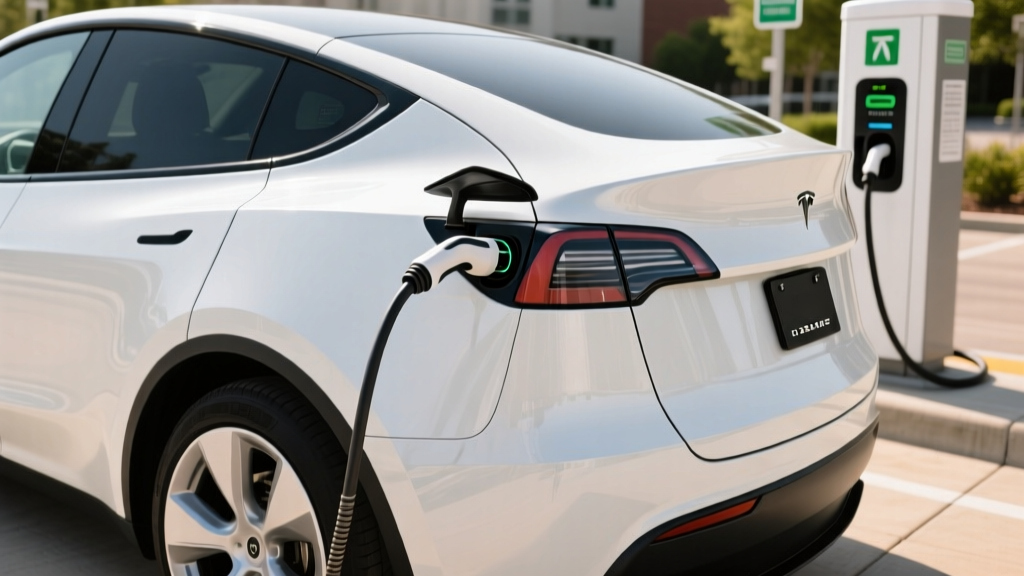
The Cobalt SS Supercharged was all about extracting maximum performance from a small, efficient package. That philosophy maps directly onto modern EV charging: you want the fastest practical charge rate (kW) from the smallest practical infrastructure investment. Where the old Cobalt SS needed premium fuel and a supercharger belt, a 2026 EV like the Hyundai Ioniq 5 (84 kWh usable battery, NMC chemistry) or Tesla Model 3 (75 kWh, LFP on Standard Range) needs a properly sized Level 2 circuit and the right connector.
The critical distinction every EV owner must internalize: kW (kilowatts) measures power — how fast energy flows. kWh (kilowatt-hours) measures energy — how much the battery holds. A 19.2 kW Level 2 charger doesn't deliver 19.2 kWh instantly; it adds 19.2 kWh per hour of charging. Confusing these two is the single most common mistake new EV buyers make.
Charging Levels Explained: Speeds, Power, and Real-World Range Added
Every EV sold in the US charges across one or more of three tiers. Here's how they stack up for 2026 vehicles:
| Level | Voltage / Amperage | Max Power (kW) | Miles of Range Added Per Hour | Best Use Case |
|---|---|---|---|---|
| Level 1 (120V) | 120V / 12–16A | 1.4–1.9 kW | 3–5 mi/hr | Overnight top-ups, PHEVs, emergency |
| Level 2 (240V) | 240V / 32–80A | 7.7–19.2 kW | 25–60 mi/hr | Daily home charging, workplace |
| DC Fast Charge | 400–800V DC | 50–350 kW | 150–1,200 mi/hr (peak) | Road trips, highway corridors |
A few real-world notes: those "miles per hour" figures assume a vehicle efficiency around 3.0–3.5 mi/kWh (typical for a 2026 sedan like the Tesla Model 3 or Hyundai Ioniq 6). Larger, less efficient vehicles like the Rivian R1T or Ford F-150 Lightning will see fewer miles per hour at the same kW rate. And DC fast charging never sustains peak kW for the full session — charge curves taper sharply above 80% State of Charge (SoC) to protect the battery. A charger rated at 350 kW may only deliver 50–80 kW average across a 10–80% session.
How Much Does It Cost to Install a Home EV Charger?
This is where the Cobalt SS Supercharged comparison ends — you could fill that car's 16-gallon tank for $40 in 2006. Installing a dedicated Level 2 home charger in 2026 is a more significant upfront investment, but it pays for itself within 1–3 years of fuel savings for most drivers. Here's the honest breakdown:
| Component | Typical Cost Range | Notes |
|---|---|---|
| Level 2 EVSE (charger unit) | $350–$800 | 32A–48A smart chargers; hardwired or NEMA 14-50 plug |
| Electrician labor (standard install) | $500–$1,500 | Run from panel to garage/carport, ~20–50 ft conduit |
| Electrical permit | $50–$200 | Required in most US jurisdictions; inspection included |
| Panel upgrade (if needed) | $1,500–$4,000 | Upgrading from 100A to 200A service; common in older homes |
| Utility make-ready rebate | -$200 to -$1,000 | Many utilities offset infrastructure cost |
| Total (no panel upgrade) | $900–$2,500 | Most homes with 200A service and nearby panel |
| Total (with panel upgrade) | $2,400–$6,500 | Homes with 100A service or distant panel |
Panel upgrade reality check: If your home has a 100-amp electrical panel — common in houses built before the 1990s — adding a 40A or 48A dedicated EV circuit may push your total load beyond code limits. A licensed electrician will perform a load calculation per NEC Article 220. Don't skip this step: an undersized panel is a fire risk, not a cost shortcut. Some utilities and states offer rebates specifically for panel upgrades tied to EV adoption; check AFDC's state incentive database for your area.
Which Connector Is Compatible With My EV?
The connector landscape shifted dramatically between 2023 and 2026. Here's where things stand for new vehicles:
| Connector | Brands Using It (2026 Models) | Notes |
|---|---|---|
| NACS (North American Charging Standard / Tesla) | Tesla, Ford, GM, Rivian, Volvo, Polestar, Mercedes, Nissan (new models), Honda (new models) | Now the dominant standard; native Tesla Supercharger access |
| CCS1 (Combined Charging System) | Hyundai, Kia, BMW, VW, Stellantis, legacy models from Ford/GM pre-2025 | Still widely available; adapters to NACS available |
| CHAdeMO | Nissan Leaf (legacy only — discontinued) | Effectively retired; avoid for new purchases |
If you're buying a 2026 EV, you'll almost certainly get NACS or CCS1. For home Level 2 charging, both use the same J1772-derived protocol — the physical plug shape differs, but any Level 2 EVSE with the matching connector will work. For DC fast charging, NACS vehicles access Tesla Superchargers natively and can use CCS stations with a simple adapter (typically $150–$250). CCS vehicles can access NACS Superchargers using a Tesla-approved adapter (Ford and GM include these with many 2025–2026 models).
Level 2 Charger Equipment Recommendations for 2026
Based on sustained reliability, smart features, and value, these are the chargers I'd install in my own garage:
ChargePoint Home Flex (NACS or CCS)
- Power output: Up to 12 kW (50A on 240V, adjustable down to 16A)
- Cable length: 23 feet
- Smart features: Wi-Fi, scheduled charging, energy tracking, Alexa integration
- Price: ~$550 (NACS) / ~$500 (J1772/CCS with adapter)
- Best for: Most homes; flexible amperage avoids panel overload
Tesla Wall Connector (NACS native)
- Power output: Up to 11.5 kW (48A on 240V)
- Cable length: 24 feet
- Smart features: Wi-Fi, OTA updates, Power Sharing (link multiple units), load management
- Price: ~$475
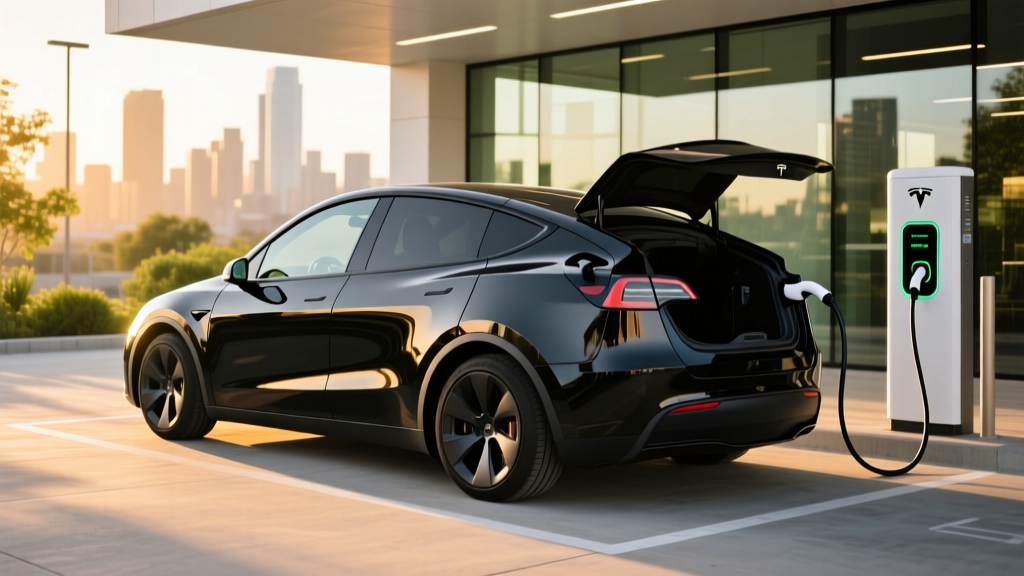
- Best for: Tesla owners and NACS-adopting brands (Ford, GM, Rivian)
Emporia Vue Level 2 (J1772 / CCS with adapter)
- Power output: Up to 11.5 kW (48A on 240V)
- Cable length: 24 feet
- Smart features: Whole-home energy monitoring integration, solar-aware scheduling, 200A circuit monitoring
- Price: ~$400
- Best for: Budget-conscious buyers, solar homes, Emporia ecosystem users
Grizzl-E Smart (NACS or J1772)
- Power output: Up to 10 kW (40A on 240V)
- Cable length: 24 feet
- Smart features: OCPP-compatible, adjustable amperage, extreme cold rated (-40°F)
- Price: ~$450
- Best for: Cold climates, outdoor installs, Canadian/Northern US owners
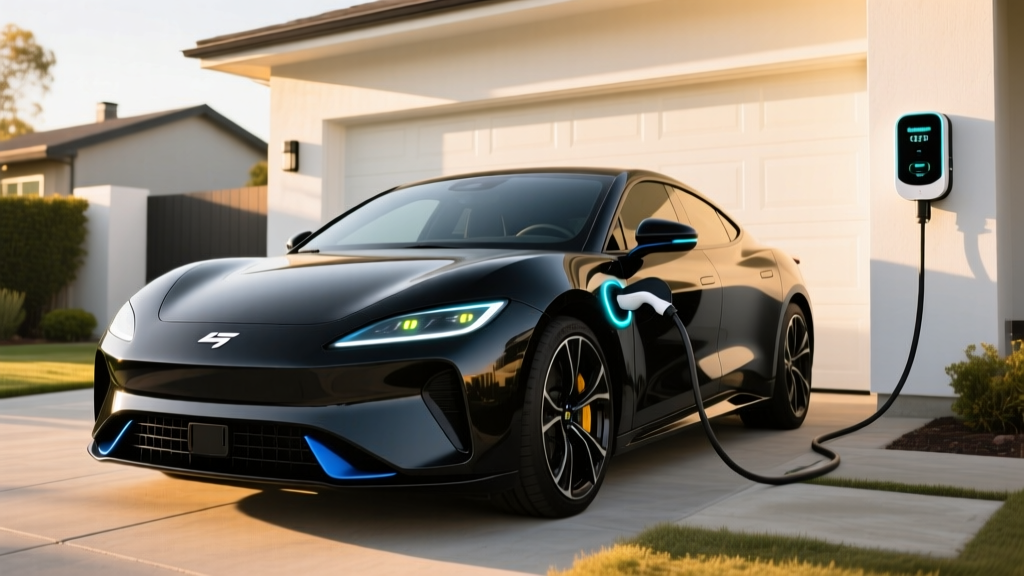
For homes with a 200A panel and a 50A breaker available, a 40A or 48A charger is ideal — it adds roughly 30–40 miles of range per hour, meaning a 10–80% charge on a 75 kWh battery (like the 2026 Tesla Model 3 Long Range) completes in about 5–6 hours overnight. For homes with limited panel capacity, a 32A charger (7.7 kW) still delivers ~25 miles per hour and is plenty for daily driving under 60 miles.
How Much Does Charging Cost Per Mile vs. Gas?
This is where the EV ownership math gets compelling — and where your old Cobalt SS Supercharged, rated at roughly 22 mpg combined, would cost significantly more per mile in 2026.
| Scenario | Cost per kWh | Vehicle Efficiency | Cost per Mile |
|---|---|---|---|
| Home Level 2 (national avg. residential) | $0.16/kWh | 3.2 mi/kWh | $0.050/mi |
| Home Level 2 (off-peak time-of-use rate) | $0.09/kWh | 3.2 mi/kWh | $0.028/mi |
| Public Level 2 (network like ChargePoint/EVgo) | $0.30/kWh | 3.2 mi/kWh | $0.094/mi |
| DC Fast Charge (Electrify America / Tesla) | $0.42/kWh | 3.2 mi/kWh | $0.131/mi |
| Gas car (22 mpg, $3.50/gallon — Cobalt SS era) | — | 22 mpg | $0.159/mi |
| Gas car (30 mpg, $3.50/gallon — modern efficient ICE) | — | 30 mpg | $0.117/mi |
At the national average residential electricity rate of roughly $0.16/kWh (per EIA data), home EV charging costs about one-third what a 22 mpg gas car costs per mile. With an off-peak utility rate — available from most major utilities for overnight charging — the savings widen to roughly one-fifth the cost. Even DC fast charging on road trips, the most expensive scenario, remains competitive with a 30 mpg gas vehicle.
Charging Time Examples: What 10–80% Actually Takes
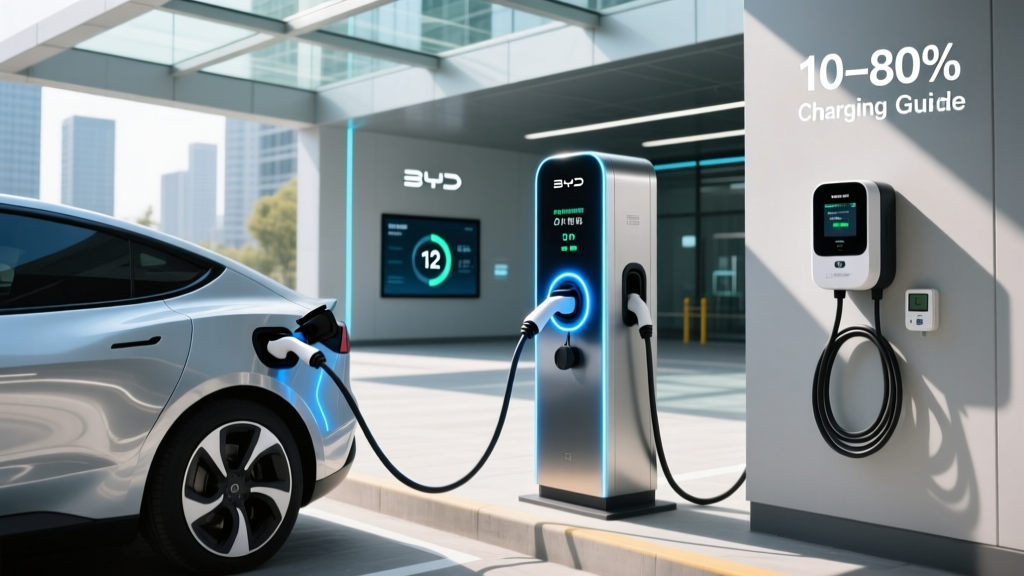
Real charging sessions don't run from 0% to 100% — most drivers charge between 10% and 80% to preserve battery health and avoid the steep charge-curve taper that kicks in above 80%. Here's what to expect with common 2026 battery sizes:
| Vehicle Example | Battery (kWh usable) | Max DC Fast kW | 10–80% Time (DC Fast) | 10–80% Time (Level 2, 11.5 kW) |
|---|---|---|---|---|
| 2026 Tesla Model 3 Long Range | 75 kWh (LFP) | 250 kW | ~25 min | ~4.5 hours |
| 2026 Hyundai Ioniq 5 | 84 kWh (NMC) | 240 kW (800V) | ~18 min | ~5.5 hours |
| 2026 Chevrolet Equinox EV | 85 kWh (NMC) | 150 kW | ~35 min | ~5.5 hours |
| 2026 Ford F-150 Lightning (Std Range) | 98 kWh (NMC) | 150 kW | ~45 min | ~6.5 hours |
Note the Hyundai Ioniq 5's 800V architecture enables its ~18-minute 10–80% time — a genuine road-trip advantage. Vehicles limited to 400V systems (most non-Hyundai/Kia/Porsche models) can't sustain peak kW as long, so real-world sessions take 5–15 minutes longer even at chargers rated for 350 kW. For home Level 2, the math is simpler: divide your usable kWh by your charger's kW output, then multiply by 0.7 (the 10–80% window). A 75 kWh battery on an 11.5 kW charger: 75 ÷ 11.5 × 0.7 ≈ 4.5 hours.
Safety, Code, and Installation Best Practices
A Level 2 EV charger draws sustained high current for hours — this is not the same as plugging in a dryer for a 45-minute cycle. The NEC (National Electrical Code) treats EVSE as a continuous load, meaning the circuit must be rated at 125% of the charger's maximum draw. A 48A charger requires a 60A breaker. A 40A charger requires a 50A breaker. Never undersize the circuit.
Critical Safety Requirements
- Dedicated circuit: Your EV charger must have its own breaker — no sharing with other appliances.
- GFCI protection: NEC 2023/2026 requires GFCI for all EVSE installations (indoor and outdoor). Quality EVSE units have built-in ground-fault protection; confirm your unit is UL-listed (not just "UL-recognized" components).
- Outdoor rating: If your charger is exposed to weather, it must be NEMA 4-rated (rain, snow, dust). Indoor-only units are NEMA 2 or NEMA 3R at best.
- Hardwired vs. plug: Hardwired installations (no plug) are preferred for circuits above 40A and avoid the NEC requirement for GFCI breakers on receptacles. A NEMA 14-50 receptacle is fine for 32A–40A chargers and offers portability.
- Permit and inspection: Skipping the permit risks voiding your homeowner's insurance if an electrical fire occurs. Budget $50–$200 and 1–2 weeks for inspection.
For homes with solar panels, consider a smart charger with solar-diversion capability (the Emporia Vue or Zappi) — it routes excess solar production to your EV instead of exporting to the grid at low utility buyback rates. This can drop your effective charging cost to near zero during sunny months.
Frequently Asked Questions
Can I charge my EV on a regular 120V outlet?
Yes, but slowly. Level 1 (120V/12A) adds roughly 3–5 miles of range per hour. For a PHEV with 30 miles of electric range, an overnight session fully replenishes the battery. For a full EV with 250+ miles of range, Level 1 is emergency-only — expect 30–40 hours for a 10–80% charge. It's fine for drivers who commute under 20 miles daily and can charge 10+ hours nightly.
Do I need a Tesla Wall Connector if I own a non-Tesla NACS vehicle?
Not necessarily. The Tesla Wall Connector works with any NACS-equipped vehicle (Ford Mustang Mach-E 2025+, GM Equinox EV, Rivian R1T/R1S with NACS port, etc.). But the ChargePoint Home Flex in NACS configuration offers identical performance with broader app ecosystem support. Choose based on price, cable length preference, and whether you want Tesla's Power Sharing feature for multi-charger garages.
What if my electrical panel is full — no room for a new breaker?
Options include: (1) a panel upgrade to a larger service (200A or 400A), (2) tandem/slim breakers if your panel supports them and you have compatible slots, (3) a smart load-management device like the Emporia VUE with automatic EV circuit shedding when other loads spike, or (4) a lower-amperage charger (16A/3.8 kW) that fits within existing capacity. A licensed electrician can assess which option meets NEC requirements for your home.
Is DC fast charging bad for my battery?
Occasional DC fast charging (road trips, 1–2 times per week) has minimal impact on modern battery health. Daily DC fast charging accelerates degradation modestly — studies show roughly 2–5% additional capacity loss over 100,000 miles compared to Level 2-only charging. Battery thermal management systems in 2026 vehicles (liquid cooling with active preconditioning) mitigate most heat-related damage. For daily use, Level 2 at home remains the optimal balance of speed and longevity.
Does the federal §30D tax credit apply to home charger installation?
Yes — the Alternative Fuel Vehicle Refueling Property Credit (IRC §30C, separate from the vehicle purchase credit under §30D) covers 30% of home EVSE equipment and installation costs, up to $1,000. This credit is subject to income caps and census-tract eligibility requirements. Consult a tax professional and verify current-year IRS rules, as credit parameters can shift annually.