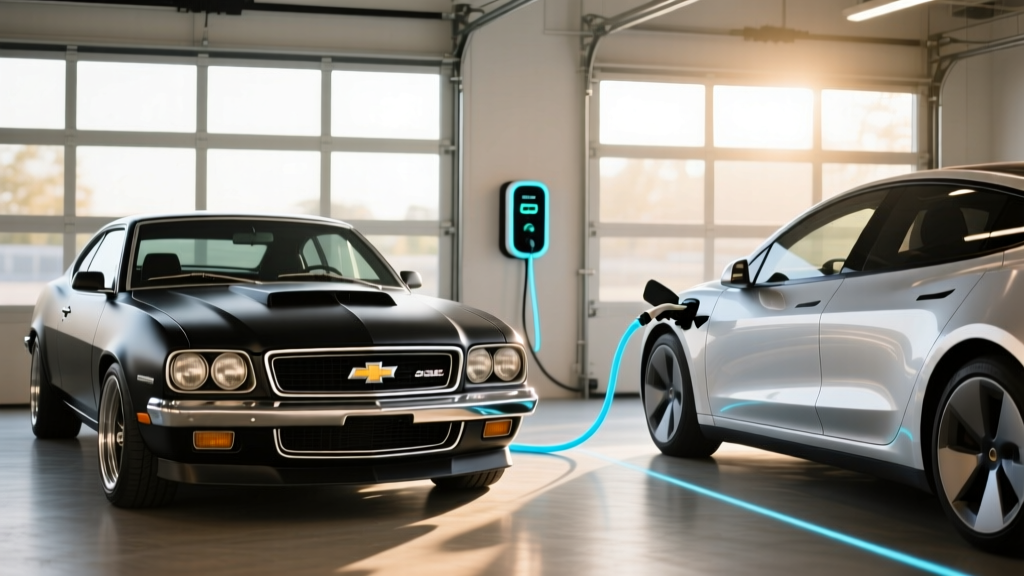
If you've owned or lusted after a 2007 Chevrolet Cobalt SS Supercharged, you already know the math at the pump hurts. That Eaton M62 supercharged 2.0L Ecotec pushed 205 horsepower and a fun 0-60 in roughly 6.1 seconds, but the EPA rated it at just 22 city / 30 highway / 25 combined MPG on premium fuel. In 2026, with premium gas averaging around $4.10 per gallon nationally, that nostalgia costs roughly $0.16 per mile just in fuel. The question many Cobalt SS owners are asking now: does home EV charging beat the supercharger — the engine kind, not the Tesla kind?
This guide breaks down exactly what it costs to install a Level 2 home charger, what you'll pay per mile to charge an EV versus fueling that Cobalt SS Supercharged, which connectors and equipment you need in 2026, and the electrical realities older homes face. Whether you're parking the Cobalt on weekends or replacing it entirely, the charging economics below are spec-driven and sourced.
The Three Charging Levels: Speeds That Actually Matter
Before comparing costs, you need to understand what each charging level delivers in real-world terms. The most common mistake new EV buyers make is confusing kW (kilowatts), which measures power or charge rate, with kWh (kilowatt-hours), which measures energy stored in the battery. Think of kW as how fast water flows from a hose, and kWh as the size of the bucket you're filling.
| Level | Voltage | Power (kW) | Miles of Range Added Per Hour | Typical Use Case |
|---|---|---|---|---|
| Level 1 | 120V | 1.0–1.4 kW | 3–5 miles/hr | Overnight trickle, PHEVs, low daily mileage |
| Level 2 | 240V | 7.2–19.2 kW | 25–70 miles/hr | Home daily charging, workplace, hotels |
| DC Fast Charge | 400–800V DC | 50–350 kW | 150–1,200+ miles/hr (peak) | Road trips, highway corridors, quick top-ups |
A critical nuance: DC fast charging speeds are peak rates, not sustained. A vehicle rated for 250 kW peak might only sustain that rate between 10-40% State of Charge (SoC), then taper significantly above 80% to protect the battery. This is called the charge curve, and it's why a "10-80% in 18 minutes" spec is more useful than a peak kW number alone.
- 60 kWh battery (e.g., base Nissan Leaf, older Bolt) on a 150 kW DCFC: ~28 minutes (peak taper applies)
- 77 kWh battery (e.g., Tesla Model Y LR) on a 250 kW Supercharger: ~18-22 minutes
- 100 kWh battery (e.g., F-150 Lightning Extended) on a 350 kW CCS station: ~25-32 minutes
- Home Level 2 at 11.5 kW (48A): 0-100% on a 77 kWh battery in ~7 hours (overnight)
How Much Does It Cost to Install a Home EV Charger?
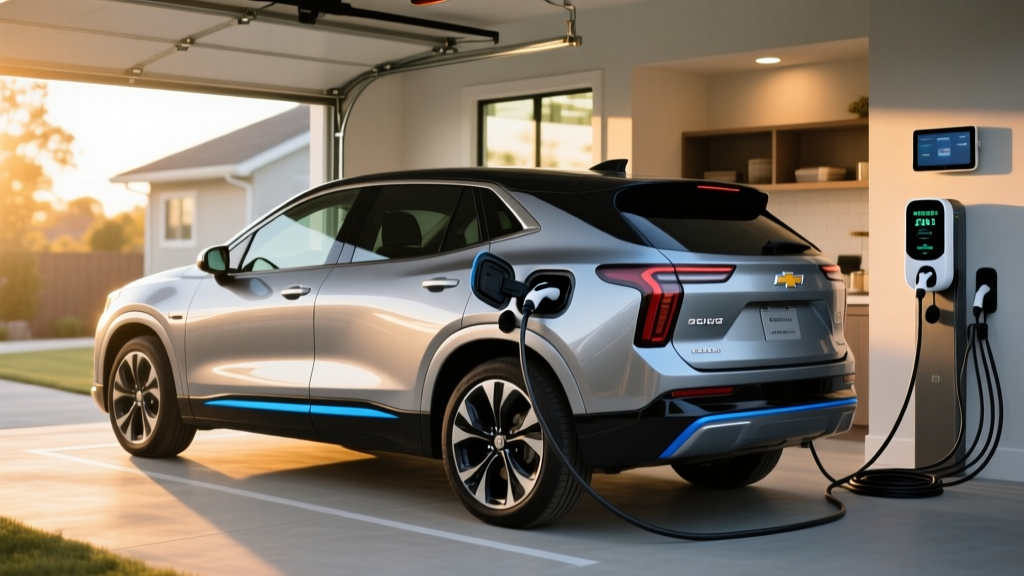
This is where the Cobalt SS Supercharged owner's advantage shows: you already have a garage. But the electrical infrastructure for a Level 2 EV charger is a different animal than a standard 120V outlet. Here's what a proper 240V Level 2 installation actually requires and costs in 2026.
Electrical Requirements
A Level 2 charger delivering 11.5 kW requires a 240V, 60-amp dedicated circuit (the charger itself draws 48 amps continuously; the National Electrical Code requires the circuit breaker to be rated at 125% of continuous load, hence 60A). Lower-power Level 2 units at 7.2 kW need a 40A circuit (32A continuous draw).
Most homes built after 1990 have a 200-amp main electrical panel, which can typically accommodate a 60A EV circuit. However, if your panel is already near capacity — running electric range, dryer, HVAC, and water heater — you may need a panel upgrade to 200A or even 400A, or a smart load-management device like the Span panel or a charger with built-in load sharing.
| Component | Low Estimate | High Estimate | Notes |
|---|---|---|---|
| Level 2 EVSE equipment (hardwired, 48A/11.5 kW) | $400 | $750 | Smart chargers with Wi-Fi/app at higher end |
| Electrician labor (run 6 AWG wire, mount, connect) | $500 | $2,000 | Varies by run length from panel to garage |
| Permit and inspection | $50 | $250 | Required by most jurisdictions; varies by locality |
| Panel upgrade (if needed — 200A to 400A) | $2,000 | $5,000 | Not always needed; depends on existing panel load |
| Total (no panel upgrade) | $950 | $3,000 | Most common scenario for 200A-panel homes |
| Total (with panel upgrade) | $2,950 | $8,000 | Older homes or high-load panels |
For reference, the IRS Residential Clean Energy Credit (IRC §25C) covers 30% of EVSE equipment and installation costs, up to $1,000 annually, through 2032. That can knock $300-$900 off your out-of-pocket depending on your install cost. Always confirm current-year eligibility with a tax professional — rules and caps change.
Charging Cost Per Mile: EV vs. the Cobalt SS Supercharged
Here's where the rubber meets the road. The 2007 Cobalt SS Supercharged gets 25 MPG combined on premium fuel. Let's compare that to a representative modern EV — say, a 2025 Hyundai Ioniq 5 (Long Range RWD, EPA-rated 303 miles, 77.4 kWh battery, 3.6 miles/kWh efficiency) — across three charging scenarios.
| Scenario | Rate | Cobalt SS (25 MPG, Premium) | Ioniq 5 (3.6 mi/kWh) |
|---|---|---|---|
| Home charging (off-peak utility rate) | $0.13/kWh | — | $0.036/mile |
| Home charging (average US residential) | $0.17/kWh | — | $0.047/mile |
| Public Level 2 (ChargePoint, EVgo L2) | $0.35/kWh | — | $0.097/mile |
| DC Fast Charging (Electrify America, Tesla SC) | $0.48/kWh | — | $0.133/mile |
| Premium gasoline (national avg 2026) | $4.10/gallon | $0.164/mile | — |
The numbers are stark. Charging at home on off-peak rates, the Ioniq 5 costs 78% less per mile than fueling the Cobalt SS Supercharged. Even at DC fast-charging rates on road trips, the EV is still roughly 19% cheaper per mile. Over 15,000 miles per year, the home-charging savings alone add up to approximately $1,920 annually compared to premium fuel in the Cobalt.
According to fueleconomy.gov, the 2007 Cobalt SS Supercharged's annual fuel cost is estimated at $2,650 at 15,000 miles/year. A comparable EV charged at the US average residential rate runs roughly $700-$800/year for the same mileage.
Connector Compatibility: NACS, CCS1, and CHAdeMO in 2026
If you're transitioning from a Cobalt SS Supercharged to an EV, the connector landscape has simplified considerably since the North American Charging Standard (NACS) — originally Tesla's proprietary connector — became the industry standard. Here's where things stand in 2026:
| Connector | Brands Using It (2026) | Public Network Availability |
|---|---|---|
| NACS (J3400) | Tesla (all), Ford, GM, Rivian, Hyundai/Kia (new models), Volvo/Polestar, Nissan (new Ariya refresh) | Tesla Supercharger (open to all NACS), Electrify America, EVgo adding NACS |
| CCS1 | VW/ID.4 (carryover), BMW (carryover), some Stellantis models, older Hyundai/Kia | Electrify America, EVgo, ChargePoint DC — CCS widely available |
| CHAdeMO | Legacy Nissan Leaf only (discontinued for new sales) | Declining; some Electrify America and EVgo stations retain one CHAdeMO cable |
Adapter needs: If you buy a CCS-equipped EV (like a 2024-2025 VW ID.4) and want to use Tesla Superchargers, you'll need a CCS-to-NACS adapter (~$150-$250). Ford, GM, and Rivian owners with native NACS ports can access both Superchargers and CCS networks using a NACS-to-CCS adapter. Most new 2026 models ship with NACS natively, making adapters less necessary each year.
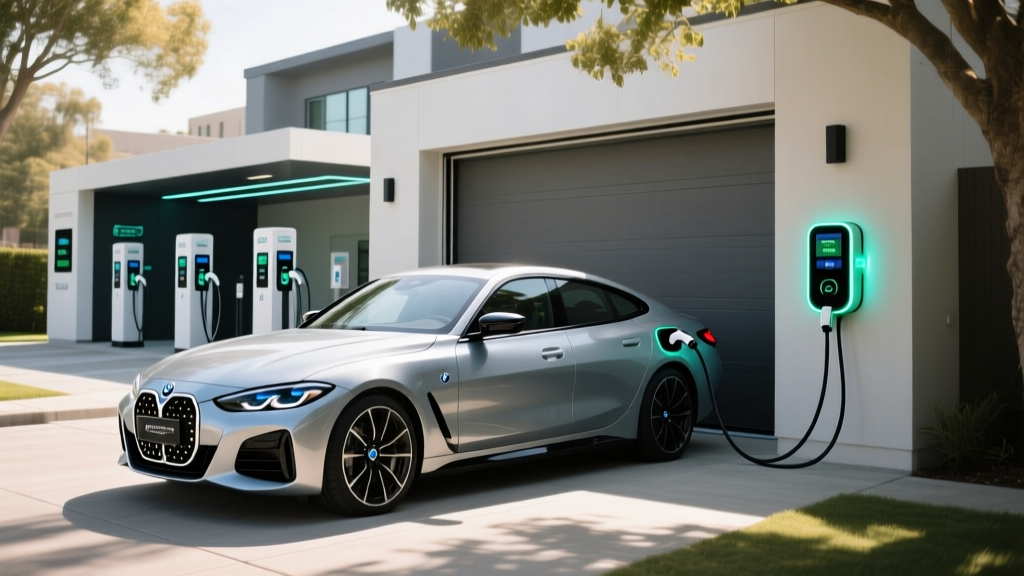
For home Level 2 charging, the J1772 connector is universal across all non-Tesla EVs, and Tesla provides a J1772 adapter with every vehicle. Most home chargers ship with a J1772 plug; Tesla Wall Connectors ship with NACS but include J1772 adapters.
Equipment Recommendations: Home Chargers That Deliver
Not all Level 2 chargers are equal. Below are three 2026-tested recommendations spanning budget, smart features, and premium build. All are UL-listed and compatible with NEMA 14-50 outlets or hardwired installation.
Budget Pick: Emporia Vue Level 2 EV Charger
- Power output: 48A / 11.5 kW (on 60A circuit)
- Connector: J1772 (NACS adapter available)
- Cable length: 24 feet
- Smart features: Wi-Fi, Emporia app, solar integration, energy monitoring, scheduled charging
- Price: ~$399
- Best for: Budget-conscious buyers who want full smart features and energy tracking
Best Overall: ChargePoint Home Flex (2nd Gen)
- Power output: Up to 50A / 12 kW (adjustable via dip switches for 16A-50A)
- Connector: J1772 (NACS version available)
- Cable length: 23 feet
- Smart features: Wi-Fi, ChargePoint app, Alexa/Google Home, utility demand-response programs, flexible amperage
- Price: ~$549
- Best for: Most homeowners; adjustable amperage means it works on 20A to 60A circuits without buying a different unit
Premium Pick: Tesla Wall Connector (Gen 4)
- Power output: 48A / 11.5 kW (on 60A circuit)
- Connector: NACS native (J1772 adapter included)
- Cable length: 24 feet
- Smart features: Wi-Fi, Tesla app, over-the-air updates, Powerwall integration, load sharing between multiple units, sleek glass faceplate
- Price: ~$495
- Best for: Tesla owners or NACS-native EV buyers who want the cleanest garage aesthetic
A note on hardwired vs. plug-in: Hardwired units (no plug, wired directly to a junction box) can deliver full 48A and avoid the NEMA 14-50 receptacle, which some jurisdictions require GFCI breakers on — adding cost and potential nuisance trips. Per NEC Article 625, hardwired EVSE installations have different code requirements than plug-in. Ask your licensed electrician which approach fits your panel and local code.
Safety, Code, and the Panel-Upgrade Reality
Every Level 2 installation should meet these baseline safety requirements:
- Dedicated circuit: The EV charger must be on its own breaker — never shared with a dryer, range, or HVAC
- GFCI protection: Required for plug-in (NEMA 14-50) installations in garages per NEC 2020+; hardwired units may be exempt depending on jurisdiction
- Outdoor rating: If mounting outside, the EVSE must carry a NEMA 4 or IP55+ rating for weather resistance
- Wire gauge: 6 AWG copper for 48A continuous draw; 4 AWG for longer runs (over 100 feet) to reduce voltage drop
- Permit and inspection: Required in most US jurisdictions; skipping it risks insurance claim denial and code violations
The panel-upgrade gotcha: Homes built before 1980 often have 100A or 150A main panels. Adding a 60A EV circuit to a 100A panel that's already serving electric heat, a dryer, and a range is a code violation and a fire risk. A licensed electrician will perform a load calculation (NEC Article 220) to determine if your panel can handle the added draw. If it can't, budget $2,000-$5,000 for a panel upgrade — or consider a smart load-management system like the Span Drive panel or a charger with integrated load sharing (e.g., the Tesla Wall Connector can share a circuit with a second unit or reduce output dynamically based on household draw).
Charging Time Examples for Common EV Battery Sizes
Whether you're eyeing a compact EV or a full-size truck, here's what charging times look like across the three levels for popular battery capacities in 2026:
| Battery Size (kWh) | Example Vehicles | Level 1 (1.4 kW) | Level 2 (11.5 kW) | DC Fast (150 kW avg.) | DC Fast (350 kW peak) |
|---|---|---|---|---|---|
| 40 kWh | Nissan Leaf S | ~20 hours | ~2.5 hours | ~20 min | N/A (50 kW max) |
| 62 kWh | Chevy Equinox EV, Leaf SV+ | ~31 hours | ~3.8 hours | ~25 min | ~20 min |
| 77 kWh | Tesla Model Y LR, Ioniq 5 | ~39 hours | ~4.7 hours | ~28 min | ~18 min |
| 100 kWh | F-150 Lightning Ext., Rivian R1S | ~50 hours | ~6.1 hours | ~38 min | ~25 min |
| 131 kWh | F-150 Lightning Max, Hummer EV | ~66 hours | ~8 hours | ~50 min | ~35 min |
For daily driving of 30-50 miles, any Level 2 home charger replenishes your overnight usage in 2-4 hours — well within a typical overnight window. Level 1 works only for PHEVs with small batteries (10-20 kWh) or BEV owners with very short commutes and 12+ hour parking windows.
The Cobalt SS Supercharged vs. EV: A Practical Ownership Decision
The 2007 Cobalt SS Supercharged remains a cult classic — lightweight, tunable, and genuinely fun on a back road. But the ownership economics have shifted dramatically. Between premium fuel at $0.164/mile, increasing insurance costs for aging sport-compacts, and the scarcity of replacement supercharger components, the total cost of ownership keeps climbing.
A modern EV charged at home on off-peak electricity runs at $0.036/mile — roughly $1,920 less per year over 15,000 miles. That $950-$3,000 home charger installation pays for itself in under two years of fuel savings alone. And with the IRS §30D federal tax credit offering up to $7,500 on qualifying new EVs (subject to MSRP caps, buyer income limits, and battery-sourcing requirements that vary by model year), the purchase-price gap continues to narrow.
Keep the Cobalt SS Supercharged for weekend cruises and car shows. But for daily commuting, the math strongly favors an EV with a proper home Level 2 setup.
How much does it cost to install a home EV charger?
A typical Level 2 home installation (48A/11.5 kW hardwired charger) costs $950-$3,000 including equipment, electrician labor, and permit — assuming your existing 200A panel has capacity. If a panel upgrade is needed, add $2,000-$5,000. The IRS §25C Residential Clean Energy Credit covers 30% of installation costs up to $1,000.
How fast will each charging level add range?
Level 1 (120V) adds 3-5 miles of range per hour. Level 2 (240V, 48A) adds 25-40 miles per hour depending on vehicle efficiency. DC fast charging adds 150-1,200+ miles per hour at peak rates, though real-world sessions average 20-40 minutes for a 10-80% charge due to charge-curve tapering above 80% SoC.
Which connector/charger is compatible with my EV?
In 2026, most new EVs use NACS (J3400). CCS1 is still found on VW, BMW, and carryover models. CHAdeMO is effectively legacy-only (Nissan Leaf). For home Level 2, J1772 is universal for non-Tesla; Tesla uses NACS and includes a J1772 adapter. Check your vehicle's charge port before purchasing a home charger.
How much does charging cost per mile vs gas?
At the US average residential electricity rate of $0.17/kWh, an efficient EV (3.6 mi/kWh) costs about $0.047/mile. The 2007 Cobalt SS Supercharged at 25 MPG on premium ($4.10/gallon) costs $0.164/mile — roughly 3.5x more. Even public DC fast charging at $0.48/kWh ($0.133/mile) undercuts premium gasoline.
What electrical upgrades might I need?
The most common upgrade is running a new 240V dedicated circuit from your panel to the garage (6 AWG wire, 60A breaker). Older homes with 100A or 150A panels may need a full panel upgrade to 200A or 400A ($2,000-$5,000). A licensed electrician will perform a load calculation to determine if your existing panel can support the added circuit. Smart load-management devices can sometimes avoid a panel upgrade entirely.