If you spent the last decade wringing every ounce of boost out of a 2007 Chevrolet Cobalt SS Supercharged — that 2.0L LSJ Ecotec making 205 hp and 200 lb-ft of torque — you already understand the relationship between energy input and performance output. You just measured it in gallons per hour and boost psi instead of kilowatts and state of charge. Transitioning to an electric vehicle means rethinking how you "refuel," but the physics are straightforward once you separate the marketing gloss from the numbers.
This guide walks through every charging scenario you'll encounter as a new EV owner in 2026: what each level delivers, what your home electrical panel actually needs, which connector your car uses, what you'll pay per mile, and which hardware is worth the money. No hype — just the data you need to plan an install and budget your daily driving.
Understanding kW vs. kWh: The Single Most Important Distinction
Before we touch a charger, let's eliminate the most common confusion in EV ownership:
- kW (kilowatt) = power, or the rate at which energy flows. Think of it like water pressure in a hose. A 150 kW DC fast charger pushes energy into the battery quickly.
- kWh (kilowatt-hour) = energy, or the total amount stored. Think of it as gallons in a tank. A 75 kWh battery holds 75 kWh of usable energy.
Your old Cobalt SS had a 13.2-gallon tank. An EV with a 75 kWh battery is the electrical equivalent. Charging speed (kW) determines how fast you refill that "tank." Never use the two interchangeably — it's the difference between horsepower and fuel capacity.
The Three Charging Levels: Speeds, Use Cases, and Range Added
Every EV sold in the U.S. charges at one of three levels. Here is what each delivers in real terms, based on an average efficiency of 3.0 miles per kWh (typical for a midsize crossover like the Hyundai Ioniq 5 or Tesla Model Y).
| Level | Voltage / Amperage | Power (kW) | Miles of Range Added per Hour | Best For |
|---|---|---|---|---|
| Level 1 | 120V / 12A | ~1.4 kW | 3–5 mi/hr | Overnight top-offs, PHEVs, low-mileage commutes |
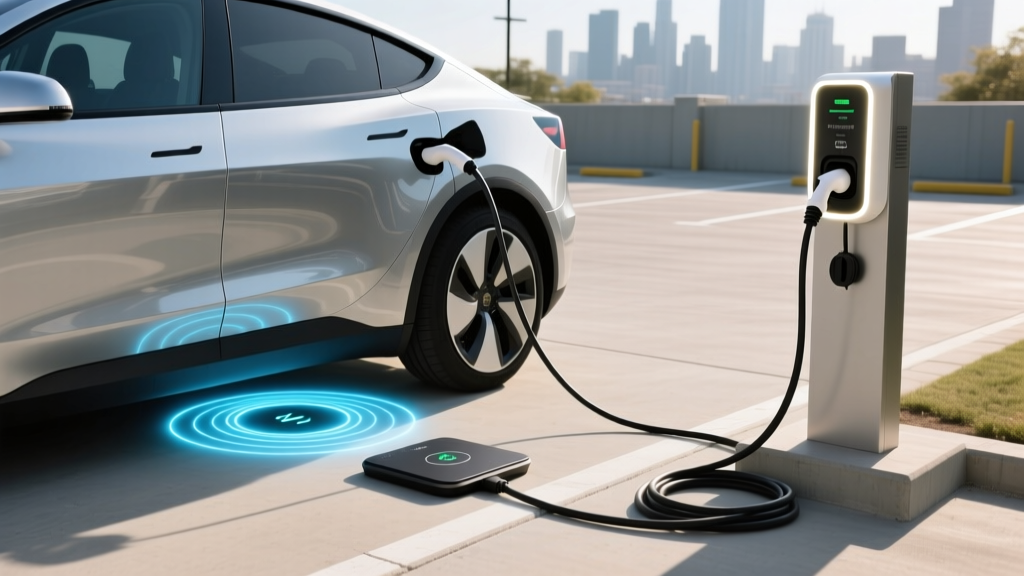
| Level 2 (Home/Public) | 240V / 32–48A | 7.7–11.5 kW | 23–35 mi/hr | Daily home charging, workplace, destination charging |
| DC Fast Charging | 400–800V DC | 50–350 kW | 150–700+ mi/hr (peak) | Road trips, highway corridors, rapid top-ups |
Real-world caveat: DC fast chargers advertise a peak kW, but charging speed follows a curve. A vehicle rated for 240 kW peak may sustain that rate only between 10–40% state of charge, then taper significantly above 80%. That's why manufacturers quote 10–80% charge times rather than 0–100%. Expect a 240 kW-capable vehicle to take roughly 18–22 minutes from 10–80%, not the 10 minutes that raw division would suggest.
Home Level 2 Installation: Electrical Requirements, Costs, and Panel Gotchas
The single biggest variable in EV ownership cost isn't the car — it's whether your home electrical panel can support a Level 2 charger without an upgrade. Here's the breakdown.
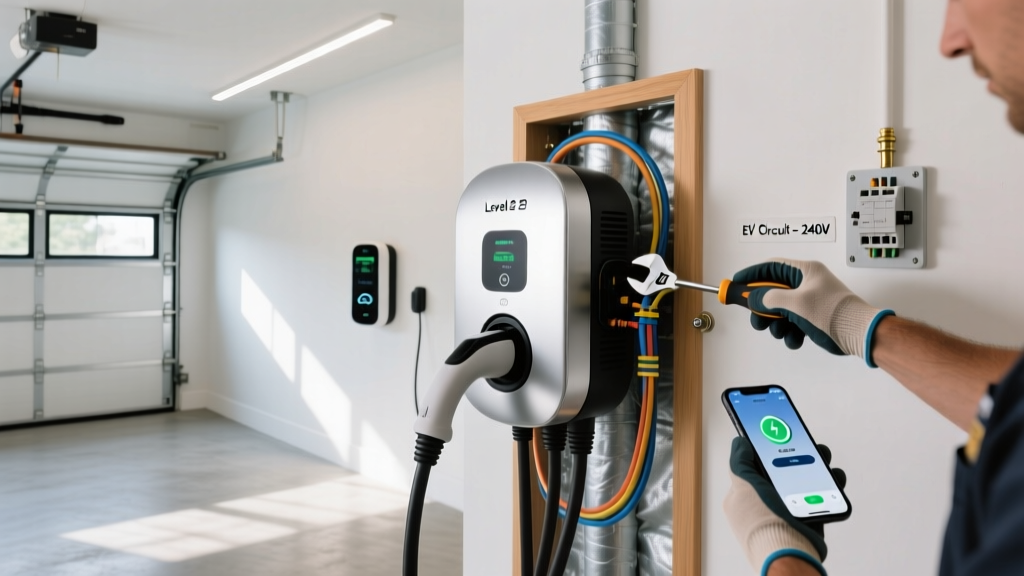
What a Level 2 Circuit Requires
- Voltage: 240V (same as your electric dryer or oven)
- Amperage: 40A circuit for a 32A charger, or 60A circuit for a 48A charger (the National Electrical Code requires the circuit to be rated at 125% of the continuous load)
- Dedicated circuit: The charger must have its own breaker — no sharing with other appliances
- Wire gauge: Typically 6 AWG copper for 48A; 8 AWG for 32A (your electrician will confirm based on run length)
- GFCI protection: Required by NEC 2023/2026 for EV outlets in garages and outdoor locations
- Permit: Most jurisdictions require an electrical permit and inspection for a new 240V circuit
Installation Cost Breakdown
| Component | Simple Install (Panel Adjacent) | Complex Install (Long Run / Panel Upgrade) |
|---|---|---|
| Level 2 Charger (Equipment) | $350–$650 | $350–$650 |
| Electrician Labor | $300–$600 | $800–$1,500 |
| Permit & Inspection | $50–$150 | $100–$300 |
| Electrical Panel Upgrade (100A → 200A) | $0 (not needed) | $1,500–$3,500 |
| Conduit, Wire, Misc. | $50–$150 | $200–$600 |
| Total Estimated Range | $750–$1,550 | $2,950–$6,550 |
The panel-upgrade reality: If you live in an older home (pre-2000) with a 100-amp service panel that's already near capacity — running electric heat, a dryer, an electric range, and central A/C — adding a 48A EV circuit may push you over the load calculation. A licensed electrician will perform a load calculation per NEC Article 220 before quoting. Don't skip this step. Budget an extra $1,500–$3,500 and 1–3 weeks if a panel upgrade is needed.
Utility rebates: Many utilities offer $250–$1,000 rebates for Level 2 installations, sometimes covering the charger itself. Check your local utility's EV program page before purchasing equipment — some require pre-approval or specific charger models.
Connector Compatibility: NACS, CCS1, and CHAdeMO Explained
As of the 2026 model year, the North American connector landscape has consolidated significantly, but you still need to know what your vehicle uses — especially for public DC fast charging.
| Connector | Brands Using It (Native) | Public DC Network Access |
|---|---|---|
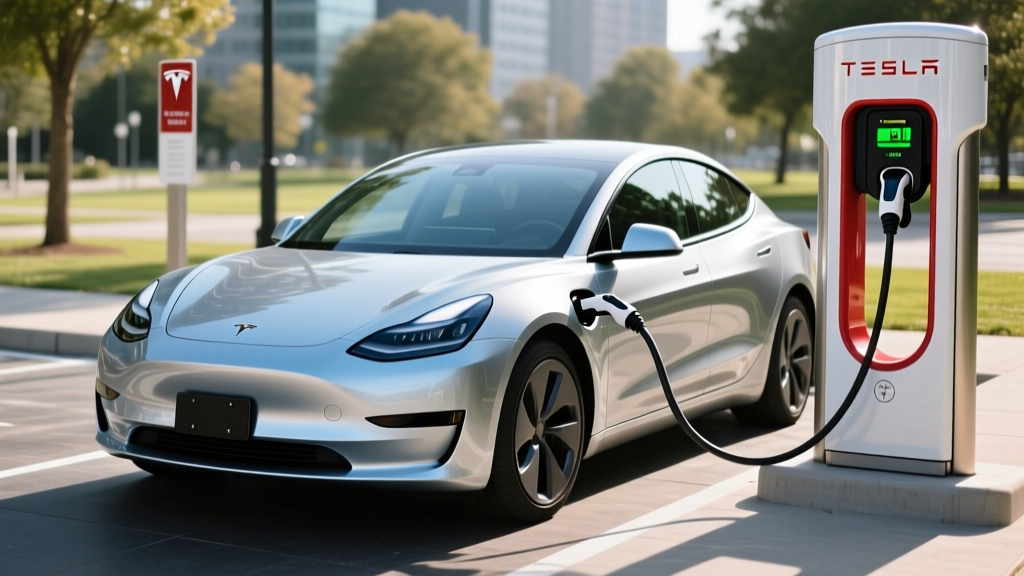
| NACS (Tesla / SAE J3400) | Tesla (all), Ford, GM, Rivian, Volvo, Polestar, Mercedes-Benz, BMW, Hyundai/Kia (2025+), Toyota, Subaru | Tesla Supercharger network (17,000+ stalls), plus growing Electrify America, EVgo NACS stalls |
| CCS1 | VW, Audi, older Hyundai/Kia (pre-2025), Stellantis, some legacy models | Electrify America, EVgo, ChargePoint DC, Ionity (EU) |
| CHAdeMO | Nissan Leaf (discontinued 2025), Mitsubishi Outlander PHEV (older) | Limited and shrinking — avoid for new purchases |
Adapter needs: If you buy a CCS1-equipped EV (e.g., a used 2024 VW ID.4), you can access Tesla Superchargers using a NACS-to-CCS adapter. Tesla sells an official adapter (~$200), and third-party options from Lectron and A2Z exist. Confirm your vehicle's software supports Supercharger routing before relying on an adapter. Most 2025+ models ship with NACS natively, making adapters unnecessary for new buyers.
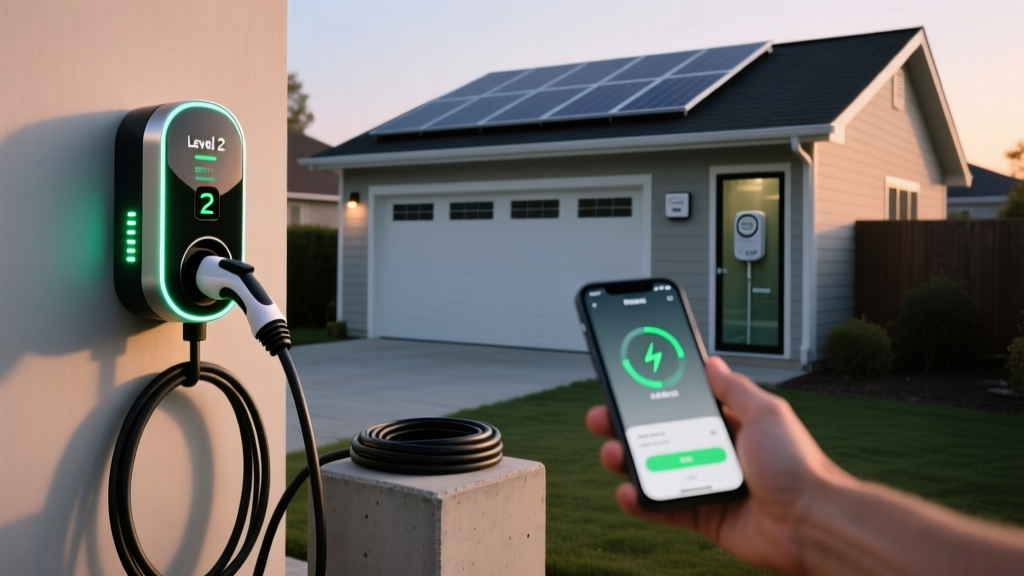
Level 2 (home) note: All Level 2 home chargers use a J3400 (NACS) or J1772 connector. Most new chargers ship with NACS, and J1772-to-NACS adapters are inexpensive ($30–$60). For home use, connector type matters far less than amperage and cable length.
Cost to Charge: Per-Mile Math vs. Your Old Cobalt SS
Let's make this personal. Your 2007 Cobalt SS Supercharged averaged about 25 MPG combined (if you were gentle with the right foot — realistically closer to 22). At $3.40/gallon (2026 national average), you were paying roughly $0.136 per mile for fuel.
Here's how EV charging compares across scenarios, assuming an EV efficiency of 3.0 mi/kWh (28 kWh/100mi):
| Scenario | Rate ($/kWh) | Cost per Mile | Annual Cost (12,000 mi) |
|---|---|---|---|
| Home Level 2 (national avg. electricity) | $0.16/kWh | $0.053 | $640 |
| Home Level 2 (off-peak / time-of-use) | $0.09/kWh | $0.030 | $360 |
| Public Level 2 (ChargePoint, etc.) | $0.25–$0.35/kWh | $0.083–$0.117 | $1,000–$1,400 |
| DC Fast Charging (Electrify America / Tesla) | $0.35–$0.55/kWh | $0.117–$0.183 | $1,400–$2,200 |
| 2007 Cobalt SS Supercharged (25 MPG, $3.40/gal) | N/A | $0.136 | $1,632 |
The takeaway: Charging at home on off-peak rates is roughly 4–5× cheaper per mile than fueling the Cobalt SS. Even exclusive DC fast charging is roughly cost-neutral with gas. The savings are maximized when 80%+ of your charging happens at home. If you live in an apartment without charging access and rely entirely on public DC fast chargers at $0.50/kWh, the economic advantage shrinks — plan accordingly.
For the latest electricity rates and EV efficiency data, the U.S. Department of Energy's fueleconomy.gov provides per-model kWh/100mi figures and annual fuel-cost estimates.
Charging Time Examples: What to Expect with Common Battery Sizes
Here's how long a 10–80% charge takes for representative battery sizes at each level. These assume the vehicle can accept the full rated power (many older or smaller-battery EVs cannot).
| Battery (kWh Usable) | Example Vehicles | Level 2 (11.5 kW) | DC Fast (Peak kW) | 10–80% DC Time |
|---|---|---|---|---|
| 58 kWh | VW ID.4 (Standard) | ~5.5 hours | 135 kW | ~30 min |
| 77 kWh | Ford Mustang Mach-E (Extended) | ~7 hours | 150 kW | ~35 min |
| 84 kWh | Hyundai Ioniq 5 (Long Range) | ~7.5 hours | 240 kW | ~18 min |
| 100 kWh | Tesla Model S / GMC Sierra EV | ~9 hours | 250–350 kW | ~20–25 min |
Charge-curve reality check: Those DC fast times assume you arrive at a low state of charge (10–15%) and the battery is preconditioned (warmed to optimal temperature). If you plug in at 40% SoC on a cold battery, peak power may be 40–60% lower. Most modern EVs precondition the battery automatically when you navigate to a charger — always use the vehicle's built-in navigation for DC stops to enable this feature.
Equipment Recommendations: Level 2 Chargers Worth Buying in 2026
Here are four proven Level 2 home chargers, selected for reliability, connector flexibility, and smart features. All are hardwired or NEMA 14-50 plug compatible.
Emporia Vue EV Charger
- Power: 48A (11.5 kW on 60A circuit)
- Connector: NACS (J3400)
- Cable: 24 ft
- Smart features: Wi-Fi, scheduling, energy monitoring, solar integration
- Price: ~$399
- Best for: Budget-conscious buyers who want full smart features and energy tracking
ChargePoint Home Flex
- Power: Up to 50A (12 kW on 60A circuit)
- Connector: NACS or J1772 (configurable)
- Cable: 23 ft
- Smart features: Wi-Fi, app scheduling, Alexa, utility demand-response
- Price: ~$599
- Best for: Flexibility across connector types; robust app ecosystem
Tesla Wall Connector
- Power: 48A (11.5 kW on 60A circuit)
- Connector: NACS native
- Cable: 24 ft
- Smart features: Wi-Fi, OTA updates, power sharing (multiple units on one circuit), Tesla app
- Price: ~$475
- Best for: Tesla owners or households with multiple NACS vehicles
Grizzl-E Smart
- Power: 40A (9.6 kW on 50A circuit)
- Connector: NACS or J1772
- Cable: 24 ft
- Smart features: Wi-Fi, OCPP support, adjustable amperage
- Price: ~$449
- Best for: Outdoor installs (-40°C rated), Canadian/Alaskan climates, rugged build
What to avoid: Cheap, no-name Amazon chargers without UL or ETL certification. A Level 2 charger will run for 6–10 hours at a time on a dedicated circuit — safety certification matters. Look for UL 2594 or UL-listed markings. The NHTSA and your local building inspector will expect certified equipment.
Safety, Code, and Practical Install Tips
- Always use a licensed electrician. DIY 240V work voids insurance claims if a fire occurs and will fail inspection in most jurisdictions.
- Hardwired vs. plug: Hardwired installations (no NEMA 14-50 outlet) are preferred for 48A+ chargers because NEC 2023 requires GFCI breakers on 14-50 receptacles, which can cause nuisance tripping. Hardwired units bypass this requirement.
- Outdoor rating: If your charger is mounted outside, confirm it carries a NEMA 4 (weatherproof) rating. Most quality chargers are rated for outdoor use, but the connector holster should shield the plug from rain and snow.
- Cable management: A 24-foot cable is heavy. Install a hook or retractable reel to keep it off the garage floor and prevent tripping.
- Load management: If your panel is tight but you don't want to upgrade, some chargers (Emporia, Tesla Wall Connector with power sharing) support software-based load management that throttles charging when household demand is high. This is a legitimate alternative to a panel upgrade in some cases.
Frequently Asked Questions
How much does it cost to install a home EV charger?
A straightforward Level 2 install with the panel nearby typically runs $750–$1,550 total (charger, electrician, permit, materials). If your panel needs an upgrade from 100A to 200A, or the charger is far from the panel requiring a long conduit run, expect $2,950–$6,550. Always get a load calculation from a licensed electrician before committing.
How fast will each charging level add range?
Level 1 (120V) adds 3–5 miles per hour — enough for PHEVs or very short commutes. Level 2 (240V, 48A) adds 23–35 miles per hour, fully recharging most EVs overnight. DC fast charging adds 150–700+ miles per hour at peak, but real-world 10–80% sessions take 18–35 minutes depending on battery size, peak kW, and temperature.
Which connector is compatible with my EV?
For 2026 models, most new EVs use the NACS (J3400) connector — Tesla, Ford, GM, Hyundai, Kia, Rivian, Volvo, BMW, Mercedes, Toyota, and Subaru. Volkswagen and some Stellantis models still use CCS1. CHAdeMO is effectively discontinued. For home Level 2 charging, any modern NACS or J1772 charger will work with an inexpensive adapter if needed.
How much does EV charging cost per mile vs. gas?
Home charging at national average electricity rates ($0.16/kWh) costs about $0.053 per mile for a typical EV — roughly 60% less than a 25 MPG gas car at $3.40/gallon ($0.136/mile). Off-peak home rates ($0.09/kWh) drop it to $0.03/mile. Exclusive DC fast charging at $0.48/kWh roughly matches gas costs at $0.16/mile.
What electrical upgrades might I need?
The most common upgrade is a panel increase from 100A to 200A service ($1,500–$3,500). You may also need a new breaker slot, upgraded service entrance wire, or a sub-panel if your main panel is full. Homes built after 2005 with 200A service rarely need upgrades. A licensed electrician will determine this with an NEC Article 220 load calculation — insist on one before accepting a quote.
Do I qualify for a federal tax credit on charger installation?
The federal Alternative Fuel Vehicle Refueling Property Credit (IRC §30C) covers up to 30% of home charger equipment and installation costs, capped at $1,000. However, eligibility is restricted to census tracts classified as low-income or non-urban. Check the IRS §30C page and consult a tax professional — eligibility rules are location-specific and subject to change.