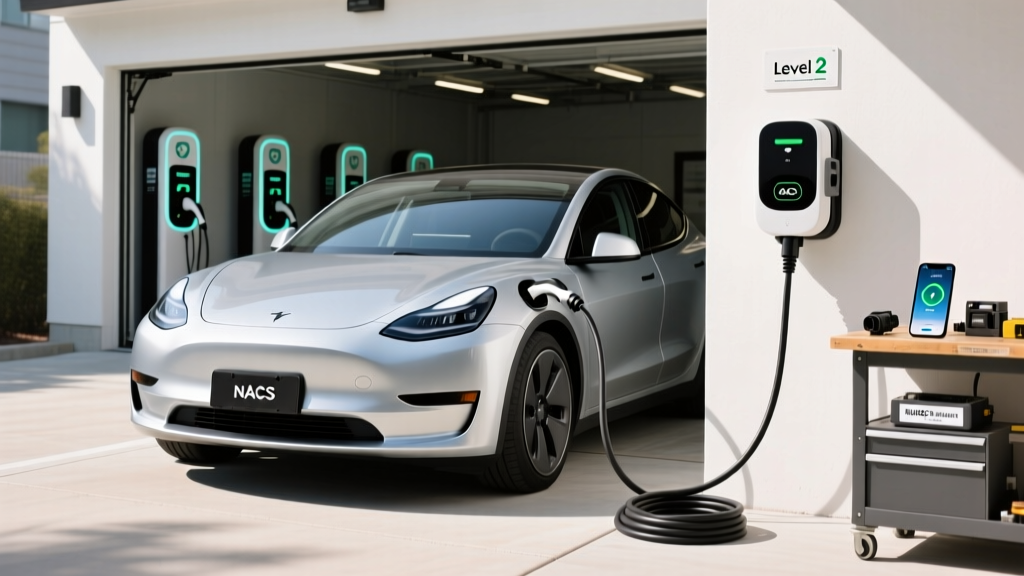
If you have been shopping for a home Level 2 EV charger for any length of time, you have almost certainly encountered the name ClipperCreek. Based in California and manufacturing in the United States since the early days of the Nissan Leaf, ClipperCreek has built a reputation for reliability that borders on the boring — and in the world of high-voltage electrical equipment, boring is exactly what you want. But in 2026, the home charging market is crowded with smart chargers offering Wi-Fi scheduling, load balancing, and sleek designs. So where does a Clipper Creek electric car charger fit in a landscape now dominated by NACS connectors, 48-amp circuits, and utility demand-response programs?
This guide breaks down the current ClipperCreek lineup, compares it against key competitors, and walks through the real costs of getting one installed in your garage — including the panel upgrades and permits that catch many first-time EV owners off guard.
Understanding EV Charging Levels: What Speed Do You Actually Need?
Before evaluating any specific charger, it is essential to understand the three charging levels available to EV owners. The distinction between kW (kilowatts, a measure of power or charge rate) and kWh (kilowatt-hours, a measure of energy or battery capacity) is the single most important piece of EV literacy. A 40-amp Level 2 charger delivering 9.6 kW of power will add roughly 9.6 kWh of energy to your battery in one hour of charging. Here is how the three levels break down:
| Level | Voltage | Max Power (kW) | Miles of Range Added per Hour | Typical Use Case |
|---|---|---|---|---|
| Level 1 | 120V AC | 1.2–1.9 kW | 3–5 miles | Overnight trickle; PHEVs with small batteries |
| Level 2 | 240V AC | 3.3–19.2 kW | 12–75 miles | Daily home charging; destination charging |
| DC Fast Charge | 400–800V DC | 50–350+ kW | 150–1,000+ miles (equivalent) | Road trips; rapid top-ups on highways |
For most EV owners with a battery between 60 and 100 kWh, a Level 2 home charger in the 7.7 to 11.5 kW range is the practical sweet spot. It will fully replenish a depleted battery overnight (8–12 hours) while staying within the electrical capacity of most residential panels. DC fast charging is for road trips — you will not install a 150 kW DC charger in your garage, and you should not rely on it as your daily charging method due to battery degradation concerns and higher per-kWh costs.
The ClipperCreek Lineup: HCS-40, HCS-60, and HCS-80 Compared
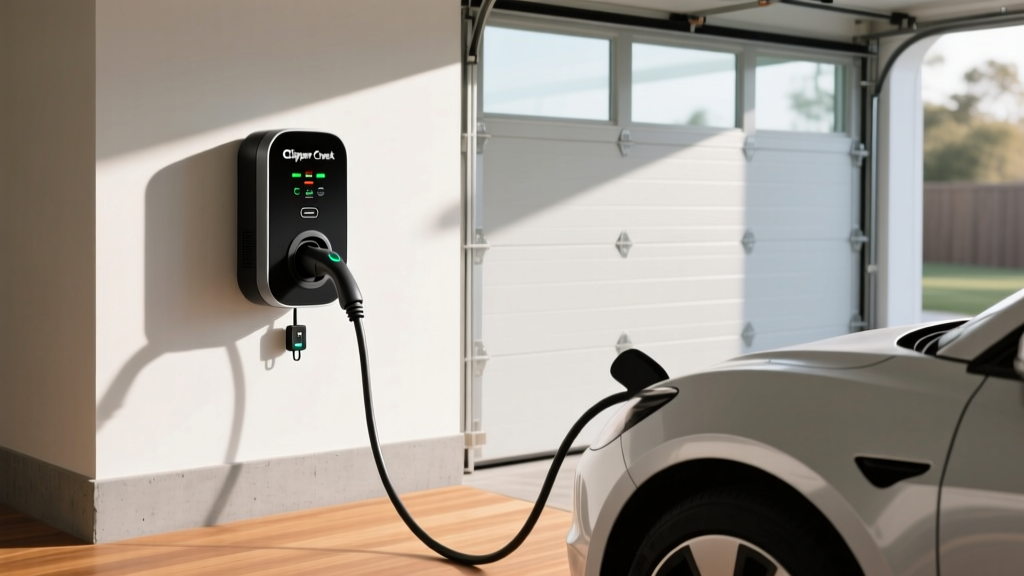
ClipperCreek's current residential lineup centers on the HCS (Hardwired Charging Station) series, available in three amperage tiers. All models share the same rugged, industrial-grade enclosure, a 25-foot cable, and a straightforward plug-and-charge operation with no mandatory app or Wi-Fi connection. Here is how they stack up:
| Model | Amperage | Power Output (kW) at 240V | Connection | Connector | Approx. Price |
|---|---|---|---|---|---|
| HCS-40 | 32A | 7.7 kW | Hardwired or NEMA 14-50 plug | NACS or J1772 (with NACS adapter included on newer units) | $469–$519 |
| HCS-60 | 48A | 11.5 kW | Hardwired (60A circuit required) | NACS or J1772 | $569–$639 |
| HCS-80 | 64A | 15.3 kW | Hardwired (80A circuit required) | NACS or J1772 | $699–$769 |
The HCS-40 is the volume seller and the right choice for most homes. It requires a 40-amp dedicated circuit (National Electrical Code requires circuits to be rated at 125% of the continuous load, so a 32A charger needs a 40A breaker). The NEMA 14-50 plug version offers portability — you can take it when you move — but hardwired installations are generally preferred for permanent setups because they eliminate a potential point of failure and are required by code in many jurisdictions for circuits above 50 amps.
The HCS-60 makes sense if you drive a high-capacity EV like the Ford F-150 Lightning (extended-range 131 kWh battery), the Rivian R1T, or the Chevrolet Silverado EV, where 7.7 kW would require 17+ hours for a full charge. At 11.5 kW, the HCS-60 cuts that to roughly 11–12 hours. It requires a hardwired connection on a 60-amp dedicated circuit.
The HCS-80 is a niche product for homes with 200-amp or larger electrical panels and vehicles that can accept over 11.5 kW on Level 2 (many EVs cap their onboard chargers at 11.5 kW regardless of the charger's capability). Check your vehicle's maximum AC charge rate before investing in an 80-amp circuit.
- Tesla Model 3 Long Range (75 kWh battery): ~5.5 hours on HCS-40 (7.7 kW); ~3.7 hours on HCS-60 (11.5 kW)
- Hyundai Ioniq 5 (77.4 kWh battery): ~5.7 hours on HCS-40; ~3.8 hours on HCS-60
- Ford F-150 Lightning Extended Range (131 kWh battery): ~9.6 hours on HCS-40; ~6.4 hours on HCS-60
Note: These times assume a full 10–80% charge at sustained peak power. In practice, Level 2 charging maintains near-constant power throughout the session (unlike DC fast charging, which tapers significantly above 80%), so these estimates are reliable for overnight planning.
How Much Does It Cost to Install a Home EV Charger?
The charger itself is often the cheapest part of a home charging setup. The real cost variable is electrical work, which depends entirely on your home's existing panel capacity, the distance from the panel to the charger location, and local code requirements. Here is a realistic breakdown based on 2026 national averages:
| Component | Simple Install (panel nearby, no upgrade) | Moderate Install (50–80 ft run, conduit) | Complex Install (panel upgrade needed) |
|---|---|---|---|
| ClipperCreek HCS-40 equipment | $469–$519 | $469–$519 | $469–$519 |
| Electrician labor (licensed) | $300–$600 | $800–$1,500 | $1,200–$2,000 |
| Materials (conduit, wire, breaker) | $100–$200 | $200–$500 | $300–$600 |
| Permit fee (local jurisdiction) | $50–$150 | $50–$150 | $50–$150 |
| Electrical panel upgrade (if needed) | $0 | $0 | $1,500–$3,500 |
| Total estimated cost | $919–$1,469 | $1,519–$2,669 | $3,519–$6,769 |
The panel upgrade gotcha: Many homes built before 2000 have 100-amp or even 60-amp electrical panels. Adding a 40-amp or 60-amp dedicated circuit for an EV charger may push your panel beyond its safe capacity, especially if you also run central air, an electric dryer, and an electric oven. A licensed electrician will perform a load calculation per NEC Article 220 to determine if your panel can handle the additional draw. If it cannot, a panel upgrade to 200 amps typically costs $1,500–$3,500 depending on your region and utility connection requirements.
Some homeowners opt for a smart load-management system (such as the Emporia VUE or a utility-managed device) as an alternative to a panel upgrade. These systems monitor your home's total electrical draw in real time and throttle the EV charger when other high-draw appliances are running. This can defer or eliminate the need for a panel upgrade, though it means your charger may not always deliver its full rated power. Consult a licensed electrician to evaluate whether this approach meets code in your jurisdiction.
Connector Compatibility: NACS, CCS1, and the Adapter Landscape
The connector landscape has shifted dramatically since 2023, when Ford, GM, Rivian, and nearly every other major automaker committed to adopting the North American Charging Standard (NACS), originally developed by Tesla. As of the 2026 model year, the situation is:
| Connector | Brands Using It Natively | Adapter Needed? |
|---|---|---|
| NACS (Tesla-style) | Tesla (all models), Ford (2025+), GM (2025+), Rivian (2025+), Hyundai/Kia (2026+), Volvo/Polestar | None for these brands |
| CCS1 (Combo) | Volkswagen ID.4 (2025 and earlier), BMW i4/iX (2025 and earlier), some Stellantis models | NACS-to-CCS adapter for Tesla Superchargers; CCS-to-NACS for ClipperCreek NACS units |
| CHAdeMO | Nissan Leaf (legacy, no new models since 2025) | No adapter widely available; CHAdeMO is effectively discontinued for new vehicles |
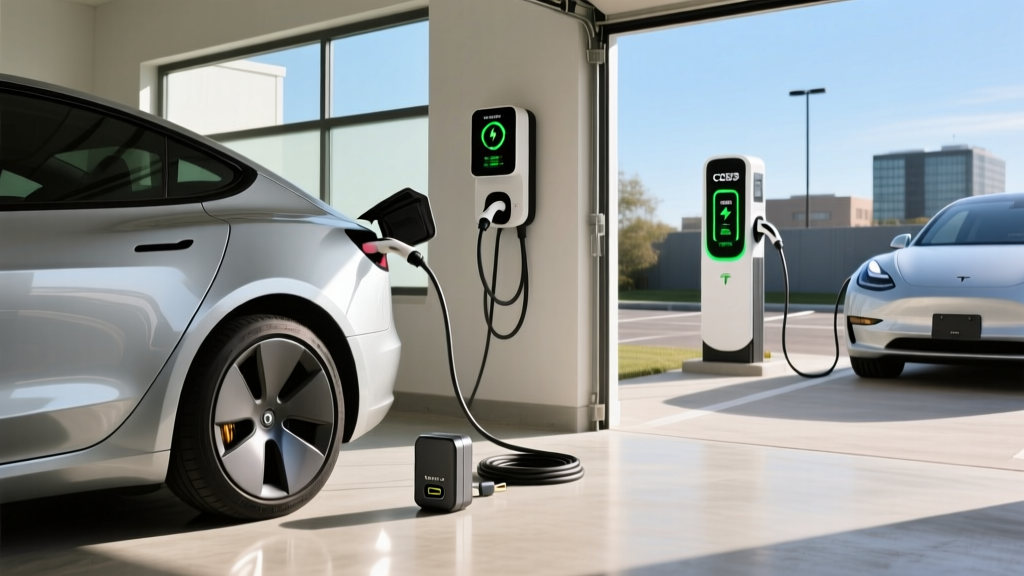
ClipperCreek now ships most HCS units with a NACS connector as standard, reflecting the market shift. If you own a vehicle with a CCS1 port (most non-Tesla EVs from 2022–2024), you can either order a ClipperCreek unit with a J1772 connector (which is the AC portion of CCS1) or use a NACS-to-J1772 adapter. These adapters typically cost $100–$200 from reputable suppliers. For DC fast charging on the road, Ford and GM provide NACS-to-CCS adapters for their vehicles to access Tesla Supercharger networks.
Key point: The connector on a Level 2 home charger is an AC connector. NACS and J1772 both deliver AC power to your vehicle's onboard charger, which converts it to DC for the battery. The NACS connector is physically smaller and lighter than J1772, which is one reason automakers adopted it. Electrically, both can deliver the same power on a given circuit.
Charging Cost: Home Electricity vs. Gas vs. Public DC Fast Charging
One of the strongest economic arguments for home charging is the cost per mile. Electricity rates vary enormously by region and time of day, but even at higher rates, home charging typically undercuts gasoline on a per-mile basis. Here is a comparison using 2026 average figures:
| Scenario | Rate / Price | Vehicle Efficiency | Cost Per Mile |
|---|---|---|---|
| Home charging (off-peak, national avg) | $0.13/kWh | 3.5 miles/kWh (28.5 kWh/100mi) | $0.037 |
| Home charging (California peak) | $0.35/kWh | 3.5 miles/kWh | $0.10 |
| Public Level 2 (network charging) | $0.30–$0.49/kWh | 3.5 miles/kWh | $0.086–$0.14 |
| DC Fast Charging (Electrify America, EVgo) | $0.40–$0.65/kWh | 3.0 miles/kWh (highway) | $0.13–$0.22 |
| Gasoline vehicle (30 MPG combined) | $3.40/gallon (2026 avg) | 30 MPG | $0.113 |
| Gasoline vehicle (22 MPG combined, truck/SUV) | $3.40/gallon | 22 MPG | $0.155 |
At off-peak residential rates, home EV charging costs roughly one-third what gasoline costs per mile. Even at California's peak residential rates, an EV charged at home is competitive with a 30 MPG gas car. Public DC fast charging, however, can exceed the cost of gasoline — which is why it should be treated as a road-trip convenience, not a daily charging strategy.
Many utilities now offer time-of-use (TOU) rates specifically designed for EV owners, with deeply discounted overnight rates (sometimes as low as $0.05–$0.08/kWh). ClipperCreek's basic HCS units do not have built-in scheduling, but you can achieve the same result through your vehicle's built-in charge scheduling (most EVs allow you to set a charge window) or by using a smart electrical panel system. If scheduled charging is a priority, competitors like the ChargePoint Home Flex or Emporia Level 2 charger offer native Wi-Fi scheduling through their apps.
ClipperCreek vs. ChargePoint Home Flex vs. Wallbox Pulsar Plus
ClipperCreek's main competitors in the residential Level 2 space are the ChargePoint Home Flex and the Wallbox Pulsar Plus. Each has distinct trade-offs:
ClipperCreek HCS-40
- Power: 7.7 kW (32A)
- Cable length: 25 feet
- Smart features: None (plug-and-charge)
- Wi-Fi/App: No
- Enclosure: NEMA 4 rated (indoor/outdoor)
- Warranty: 3 years
- Price: ~$469–$519
- Best for: Reliability-first buyers who do not need scheduling or energy monitoring
ChargePoint Home Flex
- Power: Up to 12 kW (50A, adjustable)
- Cable length: 23 feet
- Smart features: Wi-Fi scheduling, energy tracking, Alexa integration
- Wi-Fi/App: Yes (ChargePoint app)
- Enclosure: NEMA 4 rated
- Warranty: 3 years
- Price: ~$599–$699
- Best for: Buyers who want app-based scheduling and utility demand-response integration
Wallbox Pulsar Plus
- Power: Up to 11.5 kW (48A)
- Cable length: 25 feet
- Smart features: Wi-Fi/Bluetooth scheduling, load sharing (for multi-charger setups), solar integration
- Wi-Fi/App: Yes (myWallbox app)
- Enclosure: NEMA 4 rated
- Warranty: 3 years
- Price: ~$549–$649
- Best for: Solar-panel owners and multi-EV households
ClipperCreek wins on simplicity and proven long-term durability. Their units have fewer electronic components to fail — no Wi-Fi radio, no touchscreen, no firmware updates. The trade-off is that you lose remote scheduling, energy-use monitoring, and utility demand-response program compatibility. If your utility offers financial incentives for smart-charger participation (common in California, New York, and parts of Texas), a smart charger like the ChargePoint Home Flex may pay for itself through utility rebates and off-peak optimization.
Safety, Electrical Code, and Installation Requirements
Installing a 240-volt, 40-amp or higher circuit is not a DIY project. The National Electrical Code (NEC) and most local jurisdictions require a licensed electrician and a permit for EV charger installations. Here is what a proper installation involves:
- Dedicated circuit: Your EV charger must have its own dedicated breaker — it cannot share a circuit with other outlets or appliances. For the HCS-40, this means a dedicated 40-amp, 240-volt breaker. For the HCS-60, a dedicated 60-amp breaker.
- Wire gauge: A 40-amp circuit requires at minimum 8 AWG copper wire; a 60-amp circuit requires 6 AWG; an 80-amp circuit requires 4 AWG. Longer wire runs may require larger gauge to prevent voltage drop.
- GFCI protection: The 2020 NEC (and subsequent editions) requires GFCI protection for outlets used for EV charging. Hardwired installations may be exempt from this requirement in some jurisdictions, which is one reason electricians often prefer hardwiring. Confirm with your local building department.
- Outdoor rating: If your charger is installed outdoors (carport, driveway), it must be rated for outdoor use. All ClipperCreek HCS units carry a NEMA 4 rating, meaning they are protected against rain, splashing water, and ice formation — suitable for outdoor installation in any US climate.
- Permit and inspection: Most jurisdictions require an electrical permit ($50–$150) and a post-installation inspection. Skipping the permit may void your homeowner's insurance coverage in the event of an electrical fire. Your electrician typically handles the permit application.
According to NHTSA and the National Fire Protection Association, properly installed EV chargers carry an extremely low fire risk. The primary safety concern is improper installation — undersized wire, shared circuits, or unpermitted work. Always use a licensed, insured electrician and insist on a permit.
Federal and Utility Incentives for Home Charger Installation
The federal Alternative Fuel Vehicle Refueling Property Credit (IRS Form 8911) covers 30% of the cost of home EV charging equipment and installation, up to a maximum credit of $1,000. This credit applies to both the charger hardware and the electrical work. However, there are important caveats per current IRS rules:
- The credit is non-refundable — it can reduce your federal tax liability to zero but will not generate a refund beyond that.
- The property must be installed at your principal residence.
- Eligibility may be restricted to census tracts that are not classified as "urban areas" or that meet certain low-income community criteria, depending on current-year IRS guidance. Check the latest IRS instructions before claiming.
- Many states and utilities offer additional rebates. For example, some California utilities offer $500–$1,500 rebates for smart charger installation, and some New York programs cover up to $1,000 of installation costs. Check your utility's website or the Alternative Fuels Data Center for state-specific programs.
Frequently Asked Questions
How fast will a ClipperCreek HCS-40 charge my EV?
The HCS-40 delivers 7.7 kW at 240 volts. For an average EV with 3.5 miles of range per kWh (such as a Tesla Model 3 or Hyundai Ioniq 5), this adds approximately 27 miles of range per hour of charging. A 60 kWh battery (roughly 220 miles of range) would charge from 10% to 80% in about 5.5 hours. Larger batteries like the Ford F-150 Lightning's 131 kWh pack will take 9–10 hours for the same 10–80% session.
Do I need a smart charger, or is a basic ClipperCreek unit sufficient?
If your utility offers time-of-use rates and your EV has built-in charge scheduling (most 2022+ models do), a basic ClipperCreek unit is sufficient — you set the charge window in your car's settings, and the car controls when charging begins. A smart charger adds value if you want energy-use monitoring, remote start/stop, or participation in utility demand-response programs that offer bill credits.
Can I install a ClipperCreek charger outdoors?
Yes. All HCS models carry a NEMA 4 rating, which protects against rain, sleet, snow, and hose-directed water. The enclosure is designed for both indoor and outdoor installation. In extreme cold climates (below -20°F), the cable can become stiff, but the unit itself is rated for operation down to -22°F (-30°C).
Will a ClipperCreek charger work with my Tesla or my Ford with a NACS port?
Yes. ClipperCreek now offers HCS units with native NACS connectors, which are compatible with all Tesla vehicles and 2025+ Ford, GM, Rivian, and other NACS-equipped vehicles. If you have a CCS1-equipped vehicle (most 2022–2024 non-Tesla EVs), order the J1772 version or use a NACS-to-J1772 adapter.
What electrical upgrades might I need for a home charger?
The most common upgrade is a panel capacity increase from 100A to 200A, which costs $1,500–$3,500. You may also need to upgrade your utility service drop if your home has an older 100A or 60A service entrance. In some cases, your utility may need to upgrade the transformer serving your home, particularly in older neighborhoods. Your electrician's load calculation will identify these needs before work begins.
Is a ClipperCreek charger eligible for the federal tax credit?
The charger hardware and installation costs may qualify for the 30% Alternative Fuel Vehicle Refueling Property Credit (up to $1,000), subject to IRS eligibility rules including location-based restrictions. This is separate from the §30D vehicle purchase credit. Consult a tax professional and review the current-year IRS Form 8911 instructions before claiming.