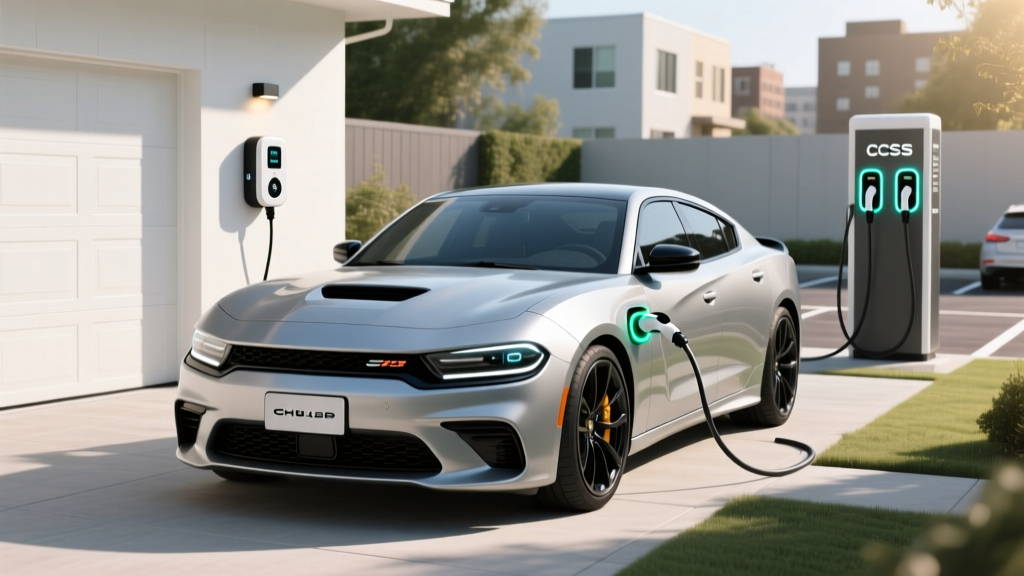
The Chrysler Shelby Charger nameplate carries serious muscle-car heritage, and as Stellantis pushes deeper into electrification under its Dare Forward 2030 strategy, the prospect of a Shelby-badged performance EV has generated intense search interest. Whether you are preparing for an announced Chrysler Shelby Charger EV or evaluating high-performance electric coupes in the same segment, understanding the charging ecosystem — from home Level 2 installation to DC fast-charging realities — is essential before you sign a purchase order.
This guide breaks down every charging variable that will affect your ownership experience: charging levels and real-world speeds, home installation costs and electrical requirements, connector compatibility as the industry shifts to NACS, per-mile charging costs versus gasoline, and the specific equipment we recommend for a performance EV with a large battery pack.
Charging Levels Explained: How Fast Will Each Level Add Range?
Before we talk chargers, let's clarify the single most important distinction in EV literacy: kW (kilowatts) measures power — the rate of energy delivery, like water pressure from a hose. kWh (kilowatt-hours) measures energy — the total amount stored in the battery, like gallons in a tank. A 100 kWh battery charged at 10 kW takes roughly 10 hours; at 100 kW it takes roughly one hour (minus taper losses above 80% SoC).
Here is how the three charging levels translate to real-world range recovery for a performance EV with a large battery (approximately 90–100 kWh usable):
| Charging Level | Voltage / Power | Typical kW Output | Miles of Range Added Per Hour | Best Use Case |
|---|---|---|---|---|
| Level 1 (Standard Outlet) | 120V / 1.4–1.9 kW | 1.4–1.9 kW | 3–5 miles/hr | Emergency top-up, PHEVs, overnight trickle |
| Level 2 (Home / Workplace) | 240V / 7.2–19.2 kW | 7.2–19.2 kW | 20–60 miles/hr | Daily home charging, destination charging |
| DC Fast Charging | 400V–800V / 50–350 kW | 50–350 kW (peak) | 150–600+ miles/hr (peak) | Road trips, rapid top-ups |
For a performance EV like a potential Shelby Charger — likely equipped with a 90–100 kWh battery to support 300+ miles of EPA range — Level 1 is essentially impractical for daily use. Level 2 at home is where 85% or more of your charging will happen, and DC fast charging handles road trips.
Home Level 2 Installation: Electrical Requirements and Real Costs
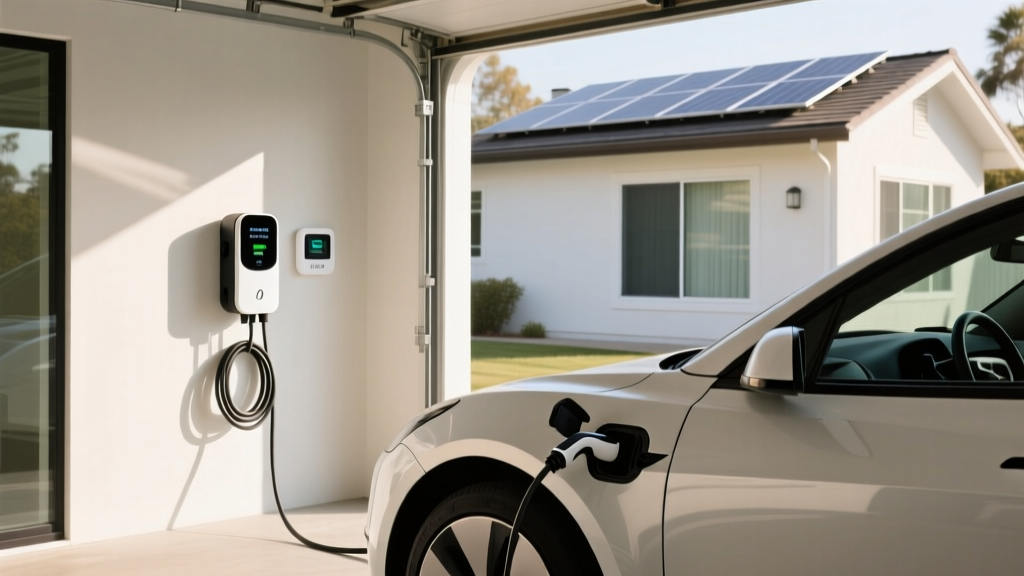
A Level 2 home charger requires a dedicated 240-volt circuit, similar to what powers an electric dryer or oven. The most common setup for EV owners is a 40-amp or 48-amp circuit supporting continuous draw at 32A or 40A respectively (the National Electrical Code requires circuits to be rated at 125% of continuous load).
What Your Electrical Panel Needs
Most modern homes with a 200-amp service panel can accommodate a 40A or 50A dedicated EV circuit without a panel upgrade. However, older homes with 100-amp service, or homes already running multiple high-draw appliances (electric range, dryer, HVAC, water heater), may need a panel upgrade to 200A — a significant added cost.
Here is a realistic cost breakdown based on 2025–2026 electrician pricing data:
| Cost Component | Low End | High End | Notes |
|---|---|---|---|
| Level 2 Charger Equipment | $300 | $750 | Hardwired or NEMA 14-50 plug; smart vs. basic |
| Electrician Labor (standard install) | $400 | $1,200 | Depends on run length from panel to garage |
| Permit & Inspection | $50 | $300 | Varies by municipality |
| Electrical Panel Upgrade (if needed) | $1,500 | $4,000 | 100A → 200A service upgrade |
| Total (no panel upgrade) | $750 | $2,250 | Most common scenario |
| Total (with panel upgrade) | $2,250 | $6,250 | Older homes |
Key considerations that affect your final bill:
- Distance from panel to charger: A 10-foot run through an interior wall costs far less than a 60-foot run through a finished ceiling and across a detached garage.
- Hardwired vs. plug-in: Hardwired units (directly connected to the circuit) support higher amperage (48A+) and eliminate the need for a NEMA 14-50 receptacle, but are less portable. A 14-50 outlet gives flexibility but adds ~$75–$150 in parts.
- GFCI breaker requirement: The 2020 NEC and later require GFCI protection for EV outlets in garages — your electrician should include this in the quote.
- Outdoor rating: If your charger mounts outside, ensure the unit carries a NEMA 4 or IP65 weather rating.
Connector Compatibility: NACS vs. CCS vs. CHAdeMO in 2026
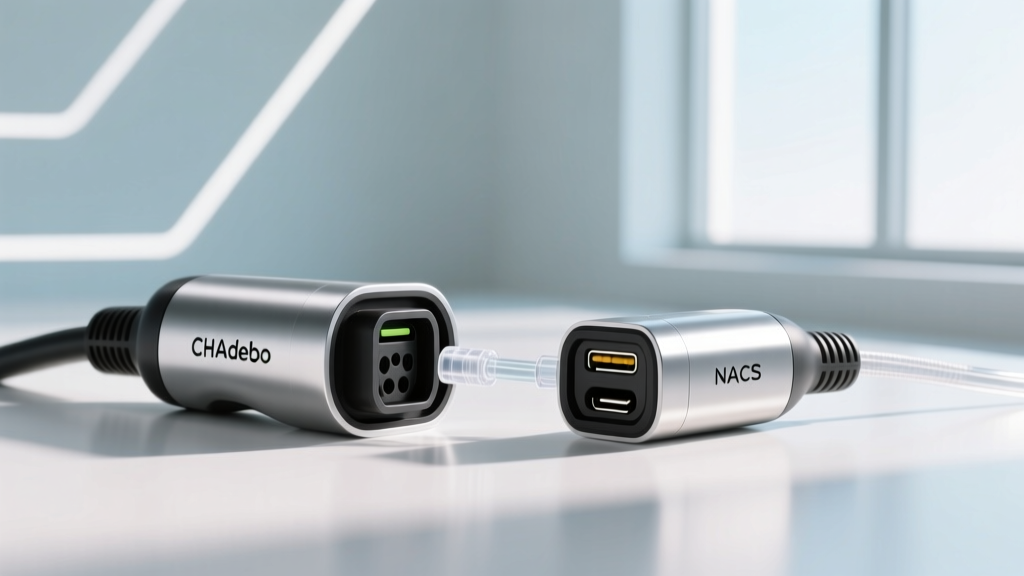
The connector landscape has shifted dramatically. Following Ford, GM, Rivian, Volvo, and others adopting the North American Charging Standard (NACS) — originally developed by Tesla — most new EVs sold in the US for the 2025–2026 model years feature a native NACS charge port. Stellantis, Chrysler's parent company, has committed to NACS adoption across its EV lineup.
Here is the current connector landscape:
| Connector Standard | Brands Using It (2026 Models) | DC Fast Charging Availability | Adapter Needed? |
|---|---|---|---|
| NACS (Tesla / J3400) | Tesla, Ford, GM, Rivian, Volvo, Polestar, most Stellantis EVs | Tesla Supercharger network (20,000+ stalls), growing third-party NACS stations | No, if native NACS port; CCS-to-NACS adapters available for legacy stations |
| CCS1 (Combined Charging System) | Hyundai, Kia, BMW, VW, some legacy models | Electrify America, EVgo, ChargePoint DC stations | NACS-to-CCS adapters for Supercharger access |
| CHAdeMO | Nissan Leaf (legacy), Mitsubishi | Declining; few new installations | Limited adapter availability |
If the Chrysler Shelby Charger EV follows Stellantis's stated NACS roadmap, expect a native NACS port — giving direct access to the Tesla Supercharger network, which remains the most reliable DC fast-charging infrastructure in the US. For any CCS-equipped stations you encounter, a NACS-to-CCS adapter ($100–$200) covers that gap.
Cost to Charge: Per-Mile Economics vs. Gasoline
The cost advantage of electric charging depends heavily on where and when you plug in. Here are realistic 2026 scenarios for a performance EV averaging 3.0 miles per kWh (approximately 33 kWh/100mi, typical for a high-output AWD sedan):
| Charging Scenario | Rate ($/kWh) | Cost Per 100 Miles | Cost Per Mile |
|---|---|---|---|
| Home Level 2 — Off-Peak TOU Rate | $0.08–$0.12 | $2.64–$3.96 | $0.026–$0.040 |
| Home Level 2 — Standard Residential Rate | $0.14–$0.18 | $4.62–$5.94 | $0.046–$0.059 |
| Public Level 2 (workplace, mall) | $0.20–$0.35 | $6.60–$11.55 | $0.066–$0.116 |
| DC Fast Charging (Electrify America, EVgo) | $0.35–$0.55 | $11.55–$18.15 | $0.116–$0.182 |
| Tesla Supercharger (varies by location) | $0.25–$0.40 | $8.25–$13.20 | $0.083–$0.132 |
| Gasoline Comparison (25 MPG, $3.50/gal) | — | $14.00 | $0.140 |
The takeaway: home charging on an off-peak time-of-use plan delivers fuel costs at roughly one-quarter to one-third the price of gasoline. Exclusive reliance on DC fast charging narrows the gap considerably — and in some markets, public DC rates can exceed gasoline cost per mile. This is why home Level 2 access remains the single most important factor in EV ownership satisfaction.
Charging Time Examples for a Large Performance EV Battery
Assuming a 95 kWh usable battery (consistent with performance EV platforms in this segment), here are realistic charge times. Note that DC fast charging follows a charge curve: peak kW is only sustained at low state of charge (SoC), tapering significantly above 80%. The "10–80%" metric is the industry standard because charging past 80% slows dramatically to protect battery health.
- Level 1 (120V, 1.4 kW): 0–100% in ~68 hours. Essentially unusable for a large battery.
- Level 2 (240V, 11.5 kW / 48A): 0–100% in ~8.3 hours. Ideal overnight charge — wake up to a full battery every morning.
- Level 2 (240V, 7.7 kW / 32A): 0–100% in ~12.3 hours. Adequate for daily replenishment of 200–250 miles of driving.
- DC Fast (250 kW peak, e.g., Tesla V3 Supercharger): 10–80% in ~22–28 minutes (assuming 800V architecture and strong charge-curve management).
- DC Fast (350 kW peak, e.g., Electrify America 350): 10–80% in ~18–22 minutes (if the vehicle's battery management system supports this rate).
- DC Fast (50 kW legacy station): 10–80% in ~75–90 minutes. Functional but painfully slow by modern standards.
Equipment Recommendations: Our Top Level 2 Chargers for 2026
For a high-performance EV with a large battery, you want a charger that maximizes overnight throughput (48A if your panel supports it), offers smart scheduling for off-peak rates, and carries a robust build quality. Here are our picks:
ChargePoint Home Flex
- Power Output: Up to 12 kW (50A, adjustable down to 16A)
- Connector: NACS or J1772 (select at purchase)
- Cable Length: 23 feet
- Smart Features: Wi-Fi, app scheduling, Alexa integration, energy tracking, utility TOU optimization
- Installation: Hardwired or NEMA 14-50 plug
- Price: ~$550–$650
- Best For: Versatility — adjustable amperage lets you match your circuit capacity without buying a different unit
Wall Connector (Tesla, 3rd Gen)
- Power Output: Up to 11.5 kW (48A)
- Connector: NACS native
- Cable Length: 24 feet
- Smart Features: Wi-Fi, over-the-air updates, Power Sharing (link multiple units on one circuit), access control
- Installation: Hardwired only
- Price: ~$425–$475
- Best For: NACS-equipped vehicles; best value for 48A output; clean integrated design
Emporia Level 2 EV Charger
- Power Output: Up to 11.5 kW (48A)
- Connector: J1772 (NACS adapter included with some bundles)
- Cable Length: 24 feet
- Smart Features: Wi-Fi, real-time energy monitoring, solar integration, scheduled charging, load management
- Installation: Hardwired or NEMA 14-50
- Price: ~$350–$400
- Best For: Budget-conscious buyers who still want smart features and 48A; excellent app with granular data
Grizzl-E Smart
- Power Output: Up to 10 kW (40A)
- Connector: J1772 or NACS (select at purchase)
- Cable Length: 24 feet
- Smart Features: OCPP-compatible, app scheduling, load sharing
- Installation: Hardwired or NEMA 14-50
- Price: ~$450–$550
- Best For: Extreme durability — IP67 rated, -40°F operating range, Canadian-built, 3-year warranty
Safety, Code Compliance, and Installation Best Practices
EV charging installation is regulated by the National Electrical Code (NEC) and enforced through local building departments. Key requirements to verify with your licensed electrician:
- Dedicated circuit: Your EV charger must have its own dedicated breaker — no sharing with other appliances.
- GFCI protection: Required for receptacle-based (plug-in) installations in garages and outdoor locations per NEC 2020 and later.
- Wire gauge: 6 AWG copper for 50A circuits; 8 AWG for 40A circuits. Aluminum wire requires upsizing.
- Outdoor installations: Charger must carry NEMA 4 (or IP65+) rating; conduit must be rated for wet locations.
- Permit and inspection: Most jurisdictions require an electrical permit and a post-installation inspection. Skipping this can void homeowner's insurance claims related to electrical fires.
- Utility notification: Some utilities require notification before adding a large continuous load; they may also offer rebates or TOU rate plans that significantly reduce charging cost.
Never use an extension cord or adapter to plug a Level 2 charger into an undersized outlet. The continuous high-current draw of EV charging (hours at full amperage) creates thermal stress that standard household wiring is not designed to handle.
Frequently Asked Questions
How much does it cost to install a home EV charger?
Expect $750–$2,250 for a standard Level 2 installation (equipment, electrician labor, and permit) if your electrical panel has adequate capacity. If your home needs a 100A-to-200A panel upgrade, add $1,500–$4,000. Always get at least two quotes from licensed electricians — prices vary significantly based on wire run length and local labor rates.
How fast will each charging level add range?
Level 1 (120V) adds 3–5 miles of range per hour. Level 2 (240V, 48A) adds 35–50 miles per hour depending on vehicle efficiency. DC fast charging adds 150–600+ miles per hour at peak rates, but real sessions taper — expect a 10–80% session to take 18–30 minutes at a modern 250–350 kW station.
Which connector and charger is compatible with my EV?
For 2026 model-year EVs from Stellantis (including any Chrysler Shelby Charger EV), expect a native NACS connector based on the company's announced adoption roadmap. This gives direct access to Tesla Superchargers. If your EV uses CCS1, a NACS-to-CCS adapter enables Supercharger access. CHAdeMO is essentially legacy — avoid it on new purchases.
How much does charging cost per mile compared to gas?
Home charging on off-peak rates costs roughly $0.03–$0.04 per mile for a performance EV — about one-quarter the cost of gasoline at $3.50/gallon and 25 MPG. Public DC fast charging costs $0.08–$0.18 per mile, which narrows or eliminates the savings. Maximizing home charging is the key to EV economics.
What electrical upgrades might I need for a home charger?
The most common upgrade is adding a 240V/50A dedicated circuit from your existing panel. If your home has 100-amp service or your panel is already near capacity (multiple electric appliances, HVAC, hot tub), you may need a panel upgrade to 200A — a $1,500–$4,000 job. Your electrician will perform a load calculation to determine this during the initial assessment.
Does the federal tax credit cover home charger installation?
The IRS Residential Clean Energy Credit (IRC §25C) previously offered a 30% credit (up to $1,000) for qualified home EV charger equipment and installation. This credit has undergone changes — check current IRS guidance or consult a tax professional for 2026 eligibility, as rules around qualifying equipment, income limits, and credit amounts are subject to legislative updates.
Can I charge a high-performance EV on a standard 120V outlet?
Technically yes, but practically no. A 95 kWh battery would take 60+ hours on Level 1 — that's nearly three full days. Level 1 is fine for plug-in hybrids with small batteries (10–20 kWh) or as an emergency trickle, but any BEV with a large pack needs Level 2 for viable daily ownership.