If you've been researching BYD, NIO, Zeekr, or other Chinese electric vehicles entering global markets, one question dominates: how does Chinese EV range translate to real-world driving and charging infrastructure? Many Chinese-market EVs quote WLTP or CLTC range figures that differ significantly from US EPA testing, and their charging compatibility varies depending on the region where you drive them. This guide bridges the gap between advertised range, real-world expectations, and the practical charging setup you need to keep these vehicles moving.
How Chinese EV Range Translates in Real-World Driving
Chinese automakers frequently publish range under the CLTC (China Light-Duty Vehicle Test Cycle) standard, which tends to produce higher numbers than the US EPA or European WLTP cycles. A BYD Seal listed at 570 km CLTC, for example, might deliver closer to 340 miles EPA — a gap of roughly 20-25%. When you factor in highway driving (steady 70+ mph), cold-weather battery resistance, and HVAC load, expect another 15-25% reduction from the EPA figure.
- CLTC 570 km (~354 mi) → EPA equivalent ~340 mi → Real-world highway/cold ~260-290 mi
- CLTC 700 km (~435 mi) → EPA equivalent ~380 mi → Real-world highway/cold ~290-330 mi
- CLTC 450 km (~280 mi) → EPA equivalent ~240 mi → Real-world highway/cold ~185-210 mi
Always plan trips around the real-world adjusted figure, not the CLTC sticker.
Battery chemistry also affects range behavior. Most Chinese EVs like BYD's lineup use LFP (lithium iron phosphate) cells — branded as "Blade Battery" — which trade some energy density for longevity and safety. LFP batteries tolerate regular 100% charging better than NMC chemistry, but they lose more range in cold weather (often 30-35% below 32°F) and can show less accurate state-of-charge readings near the top and bottom of the gauge. NIO and Zeekr models more commonly use NMC chemistry, which offers better cold-weather retention but benefits from staying between 20-80% for daily use.
Charging Levels Explained: Speeds and Range Added
Regardless of whether your EV is Chinese-market or not, charging falls into three tiers. The distinction between kW (power, or charge rate) and kWh (energy, or battery capacity) is essential — think of kW as how fast water flows from a hose, and kWh as the size of the tank you're filling.
| Level | Voltage | Power (kW) | Miles of Range Added per Hour | Best Use Case |
|---|---|---|---|---|
| Level 1 | 120V | 1.0–1.4 kW | 3–5 mi/hr | Overnight top-up, PHEVs, emergencies |
| Level 2 | 240V | 7.2–19.2 kW | 22–65 mi/hr | Daily home charging, workplaces |
| DC Fast Charge | 400–800V DC | 50–350 kW | 150–1,200+ mi/hr (peak) | Road trips, rapid top-ups |
Charging Time Examples for Common Chinese EV Battery Sizes
Here's what charge times look like for typical battery capacities found in BYD, NIO, and Zeekr models, charging from 10% to 80% state of charge:
- 60 kWh battery (e.g., BYD Atto 3 / Yuan Plus): Level 2 at 11 kW ≈ 4 hours; DC fast at 80 kW peak ≈ 35–40 minutes
- 82 kWh battery (e.g., BYD Seal): Level 2 at 11 kW ≈ 5.5 hours; DC fast at 150 kW peak ≈ 30–35 minutes
- 100 kWh battery (e.g., NIO ET7 / Zeekr 001): Level 2 at 11 kW ≈ 6.5 hours; DC fast at 200+ kW peak ≈ 25–30 minutes (on 800V architecture)
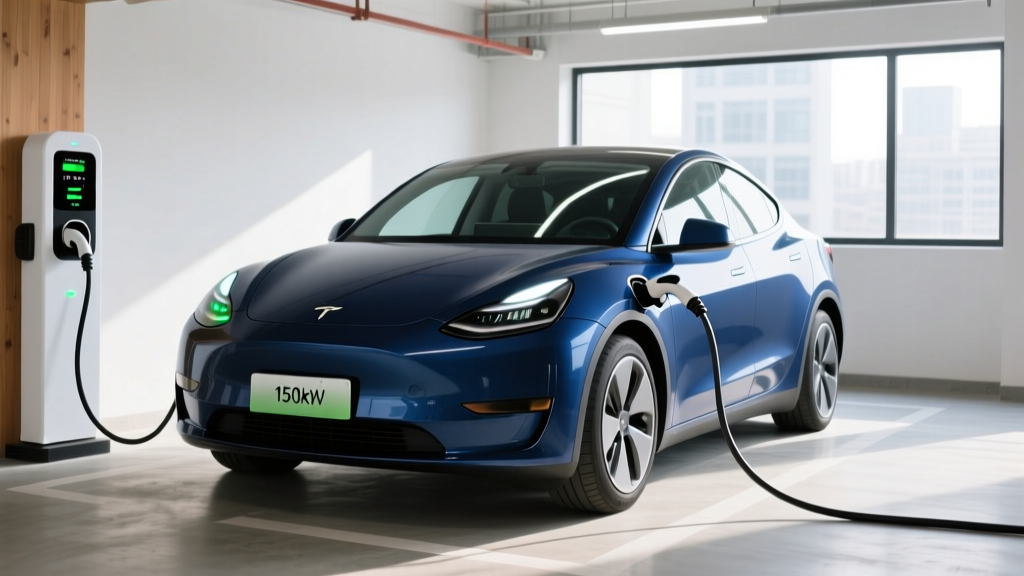
Charge curve reality check: No EV sustains its peak kW rate for the full session. A vehicle rated for 150 kW DC fast charging may hold that rate only between 10-50% SoC, then taper to 80 kW through 70%, and drop to 40 kW or below past 80%. That's why 10-80% times are the standard metric — charging past 80% is painfully slow and generally unnecessary unless you need every mile for a long trip.
Home Charger Installation: Requirements, Costs, and Electrical Upgrades
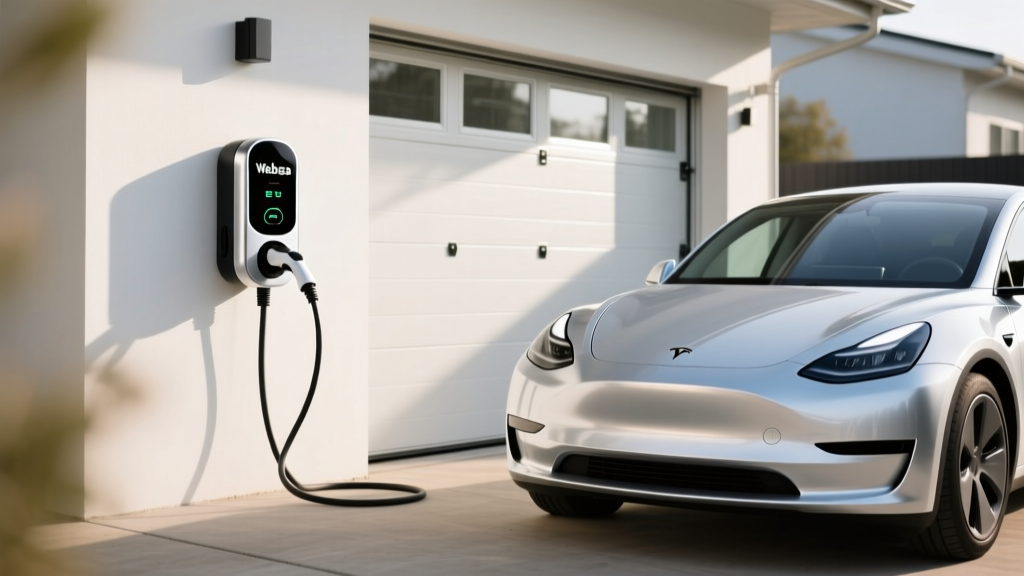
Installing a Level 2 home charger is the single most impactful upgrade for EV ownership. For Chinese EVs with larger batteries (80+ kWh), a capable Level 2 unit is practically mandatory — Level 1 charging at 1.4 kW would take over 60 hours to fill a 100 kWh pack.
Electrical Requirements
A typical Level 2 installation requires:
- 240V dedicated circuit (same voltage as an electric dryer or oven)
- 40A to 60A breaker, depending on charger amperage (NEC code requires the circuit to be rated at 125% of continuous load, so a 32A charger needs a 40A breaker, and a 48A charger needs a 60A breaker)
- NEMA 14-50 outlet (for plug-in chargers) or hardwired connection (for higher-amperage units or where local code requires it)
- GFCI protection — required by NEC 2020+ for EV receptacles in garages
Panel Upgrade Reality
This is where many homeowners encounter surprise costs. If your home has a 100A main electrical panel — common in houses built before the 1990s — adding a 40-60A EV circuit may exceed your panel's capacity, especially if you already run electric heat, an electric dryer, and an electric oven. A licensed electrician will perform a load calculation to determine whether your panel can handle the added draw.
If an upgrade is needed, moving to a 200A panel typically costs $1,500–$3,500 depending on your utility's requirements, the distance from the meter to the panel, and whether a new service drop is needed. In some cases, a smart electrical panel or automatic load-management device (like the Sense energy monitor paired with a compatible charger) can avoid a full panel upgrade by dynamically reducing charger amperage when other appliances are running.
| Component | Low Estimate | High Estimate | Notes |
|---|---|---|---|
| Level 2 Charger (Equipment) | $300 | $750 | 32A–48A smart chargers |
| Electrician Labor | $400 | $1,500 | Depends on run length, conduit, drywall repair |
| Electrical Permit | $50 | $200 | Varies by municipality |
| Panel Upgrade (if needed) | $1,500 | $3,500 | 100A → 200A service upgrade |
| Total (no panel upgrade) | $750 | $2,450 | |
| Total (with panel upgrade) | $2,250 | $5,950 |
Always hire a licensed electrician and pull a permit — unpermitted EV charger installations can void home insurance claims and cause issues during a home sale.
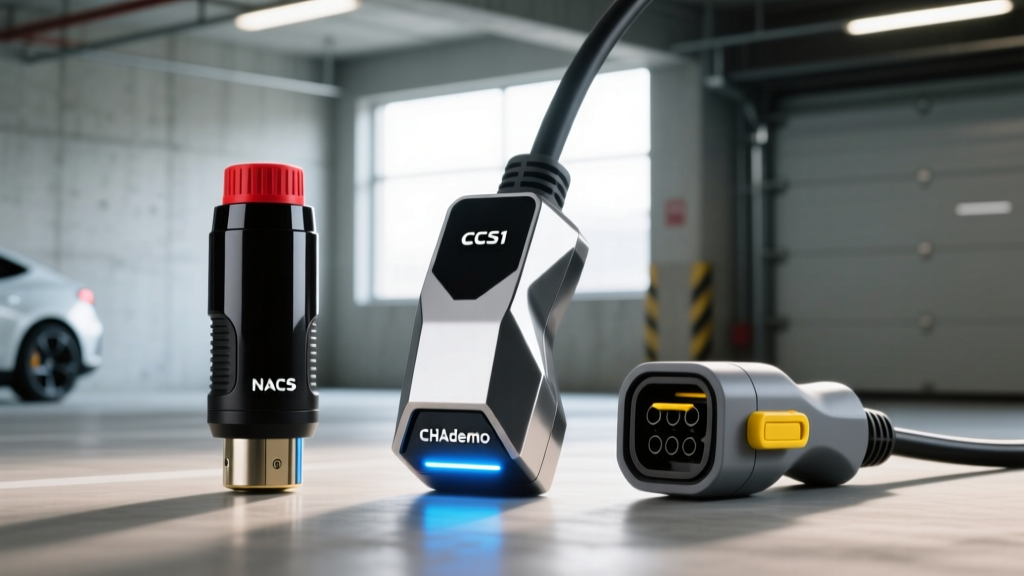
Connector Compatibility: NACS, CCS1, CHAdeMO, and Chinese Standards
This is where owning a Chinese-market EV outside China gets complicated. China uses the GB/T charging standard — a connector physically different from North America's NACS/CCS1 or Europe's CCS2. If you're importing a Chinese-market EV or driving one in a market where it's sold with local adaptations, connector compatibility is a primary concern.
| Connector | Region | DC Fast Charge Capable | Common Brands Using It |
|---|---|---|---|
| NACS (J3400) | North America (Tesla + most OEMs by 2025-2026) | Yes (up to 350+ kW) | Tesla, Ford, GM, Rivian, Hyundai, BMW, others |
| CCS1 | North America (legacy non-Tesla) | Yes (up to 350 kW) | Older VW, BMW, Hyundai, Kia models |
| CCS2 | Europe, Australia | Yes (up to 350+ kW) | Most European-market EVs |
| GB/T | China | Yes (up to 250 kW standard, 600 kW ChaoJi) | BYD, NIO, XPeng, Zeekr (China-market) |
| CHAdeMO | Japan (legacy), declining | Yes (up to 400 kW) | Nissan Leaf (older), Mitsubishi |
Adapter situation for Chinese EVs: If you own a Chinese-market vehicle with a GB/T port in a region using NACS or CCS1, you'll need a GB/T-to-NACS or GB/T-to-CCS adapter. As of 2026, these adapters exist but are expensive ($300–$600), add bulk, and may not support the full DC fast-charge rate of the vehicle. Some Chinese EVs sold internationally (like BYD models in Europe, Southeast Asia, or Latin America) ship with the region's native connector — CCS2 in Europe, for example — so the GB/T issue only applies to direct imports or gray-market vehicles.
For home Level 2 charging, Chinese EVs exported to North America or Europe typically use the local AC standard (Type 1/J1772 in North America, Type 2 in Europe), so home charging is straightforward. The connector complication is primarily a DC fast-charging issue on road trips.
Cost to Charge: Home vs. Public vs. Gas Comparison
One of the strongest arguments for EVs — including Chinese models — is fuel cost savings, but the gap narrows significantly when you rely on public DC fast charging instead of home Level 2.
| Charging Scenario | Rate ($/kWh) | Vehicle Efficiency (kWh/100mi) | Cost per Mile |
|---|---|---|---|
| Home Level 2 (off-peak utility rate) | $0.08–$0.14 | 28–35 kWh | $0.022–$0.049 |
| Home Level 2 (standard residential rate) | $0.13–$0.20 | 28–35 kWh | $0.036–$0.070 |
| Public Level 2 (workplace/mall) | $0.20–$0.35 | 28–35 kWh | $0.056–$0.123 |
| DC Fast Charging (Electrify America / EVgo) | $0.35–$0.55 | 28–35 kWh | $0.098–$0.193 |
| Tesla Supercharger (NACS vehicles) | $0.25–$0.40 | 26–32 kWh | $0.065–$0.128 |
| Gasoline (25 MPG combined, $3.40/gal) | — | — | $0.136 |
The takeaway: Home charging at off-peak rates delivers a 60-80% cost advantage over gasoline per mile. But exclusive reliance on DC fast charging can actually cost more than gas, particularly for less efficient vehicles. Chinese EVs with larger, heavier bodies (like the Zeekr 001 at ~33 kWh/100mi) will sit at the higher end of these ranges. Plan your ownership around reliable home charging to capture the real savings.
Recommended Level 2 Chargers for Home Use
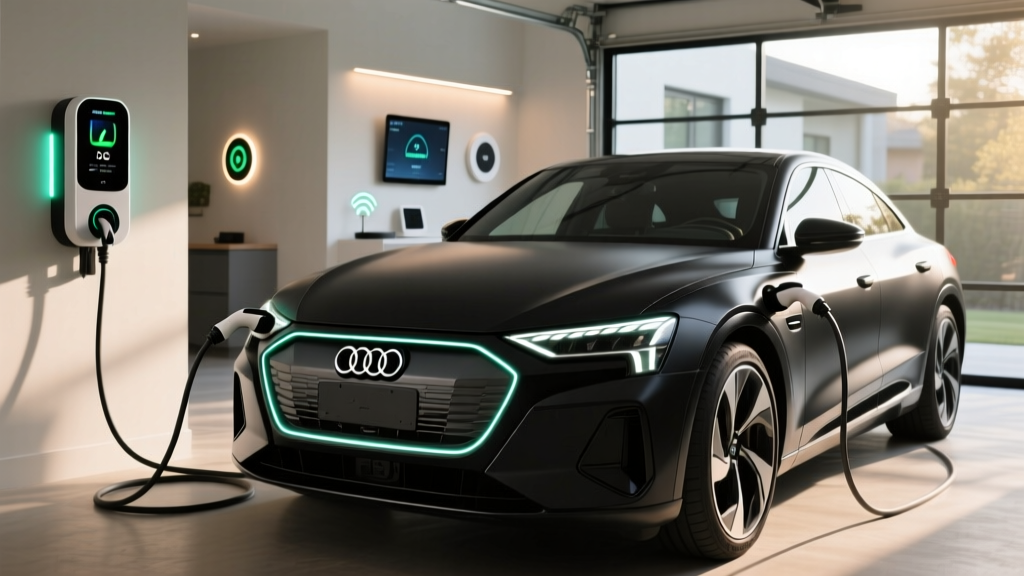
Whether you're charging a BYD, NIO, Zeekr, or any other EV with a J1772/NACS AC port, these Level 2 units cover the spectrum of power, features, and budget:
Emporia Level 2 EV Charger
- Power: 48A / 11.5 kW (hardwired) or 40A / 9.6 kW (NEMA 14-50 plug)
- Connector: J1772 (NACS adapter available)
- Cable length: 24 ft
- Smart features: Wi-Fi, app scheduling, energy monitoring, solar integration
- Price: ~$350–$400
- Best for: Budget-conscious buyers who want 48A output and solar-aware charging
ChargePoint Home Flex
- Power: Up to 50A / 12 kW (adjustable via DIP switches, NEMA 14-50 or hardwired)
- Connector: J1772 (NACS version available)
- Cable length: 23 ft
- Smart features: Wi-Fi, app, Alexa, scheduled charging, utility demand-response programs
- Price: ~$550–$650
- Best for: Flexible amperage settings for homes with limited panel capacity
Wallbox Pulsar Plus
- Power: 40A / 9.6 kW (NEMA 14-50) or 48A / 11.5 kW (hardwired)
- Connector: J1772
- Cable length: 25 ft
- Smart features: Wi-Fi + Bluetooth, app, Power Sharing for two chargers on one circuit
- Price: ~$450–$550
- Best for: Two-EV households needing load-sharing on a single 60A circuit
Grizzl-E Smart
- Power: 40A / 9.6 kW (NEMA 14-50) or up to 48A hardwired
- Connector: J1772
- Cable length: 24 ft
- Smart features: OCPP-compatible, app, adjustable amperage, extreme cold rated (-40°C)
- Price: ~$400–$500
- Best for: Cold-climate garages and outdoor installs — built in Canada, rugged housing
All of these chargers deliver enough power to fully replenish a 60-100 kWh Chinese EV battery overnight (typically 6-10 hours from 10% to 100% at Level 2). For the largest batteries, prioritize 48A units to keep charge times reasonable.
Safety, Code, and Outdoor Installation Considerations
EV charging involves sustained high-current draw — often 6-10 continuous hours — which stresses electrical connections in ways that intermittent appliances don't. Safety and code compliance aren't optional extras.
- Dedicated circuit: Your EV charger must be on its own dedicated breaker — never shared with other outlets or appliances.
- GFCI protection: NEC 2020 and later requires GFCI protection for 125V and 250V receptacles used for EV charging. Hardwired chargers may not require a separate GFCI breaker (the charger itself often includes ground-fault protection), but check your local code.
- Outdoor rating: If your charger is installed outdoors or in an unenclosed carport, it must carry a NEMA 4 (weatherproof) rating. All four chargers recommended above meet this standard.
- Cable management: Avoid running charging cables across driveways or walkways — it's a trip hazard and accelerates cable wear. Consider a retractable cable organizer or wall-mounted holster.
- Torque specifications: A common cause of EV charger fires is improperly torqued terminal connections. A quality electrician will use a torque screwdriver to spec — this is not a DIY shortcut area.
Frequently Asked Questions
How much does it cost to install a home EV charger?
Expect $750–$2,450 for a standard Level 2 installation (equipment, electrician labor, and permit) if your electrical panel has sufficient capacity. If a panel upgrade from 100A to 200A is required, add $1,500–$3,500, bringing the total to $2,250–$5,950. Always get multiple quotes and verify the electrician is licensed and pulling a permit.
How fast will each charging level add range?
Level 1 (120V) adds roughly 3–5 miles of range per hour — adequate for PHEVs with small batteries but impractical for full EVs. Level 2 (240V) at 40A adds about 30–35 miles per hour, and at 48A adds about 35–42 miles per hour depending on vehicle efficiency. DC fast charging can add 150–300+ miles in 20–30 minutes, but only during the peak portion of the charge curve (typically 10–50% SoC).
Which connector and charger is compatible with my Chinese EV?
If your Chinese EV was purchased new in North America or Europe, it likely has the regional standard connector (NACS or J1772 for AC, CCS1 or NACS for DC). If it's a direct import with a GB/T port, you'll need a GB/T adapter for both AC and DC charging, and DC fast-charging options will be limited. Check the vehicle's charge port physically and consult the owner's manual before purchasing charging equipment.
How much does charging cost per mile compared to gas?
At home off-peak rates ($0.08–$0.14/kWh), EV charging costs $0.02–$0.05 per mile — roughly 70-80% less than gasoline at $3.40/gallon and 25 MPG ($0.136/mile). Public DC fast charging at $0.35–$0.55/kWh costs $0.10–$0.19 per mile, which can exceed gasoline costs. Home charging access is the key variable in EV economics.
What electrical upgrades might I need for a home charger?
The most common upgrade is a panel capacity increase from 100A to 200A, needed when your home's existing electrical load (HVAC, electric range, dryer, water heater) already consumes most of your panel's capacity. Less common but possible: upgrading the utility service drop (the wire from the pole to your meter), replacing an outdated fuse box with a breaker panel, or adding a sub-panel in a detached garage. A licensed electrician's load calculation will determine exactly what's required. Per the National Electrical Code, your EV circuit must be sized at 125% of the charger's rated continuous draw.
Does cold weather affect Chinese EV range and charging speed?
Yes, significantly. LFP batteries — common in BYD and many Chinese EVs — can lose 30-35% of their range in sub-freezing temperatures, compared to roughly 20-25% for NMC chemistry. Cold batteries also charge more slowly; DC fast charging in winter may peak at 50-70% of the rated kW until the battery warms up. If your vehicle has a battery preconditioning feature (most modern EVs do), activate it before arriving at a DC fast charger to minimize this effect. Source: fueleconomy.gov EV technology overview.
Can I use a Tesla Supercharger with a Chinese EV?
Only if your vehicle has a NACS (J3400) charge port or you use a CCS-to-NACS adapter. As of 2026, Tesla has opened its Supercharger network to non-Tesla vehicles with NACS or CCS1 connectors at select stations via the Tesla app. However, GB/T-equipped Chinese EVs cannot use Superchargers without a multi-stage adapter, which is expensive and may not be supported at all locations.