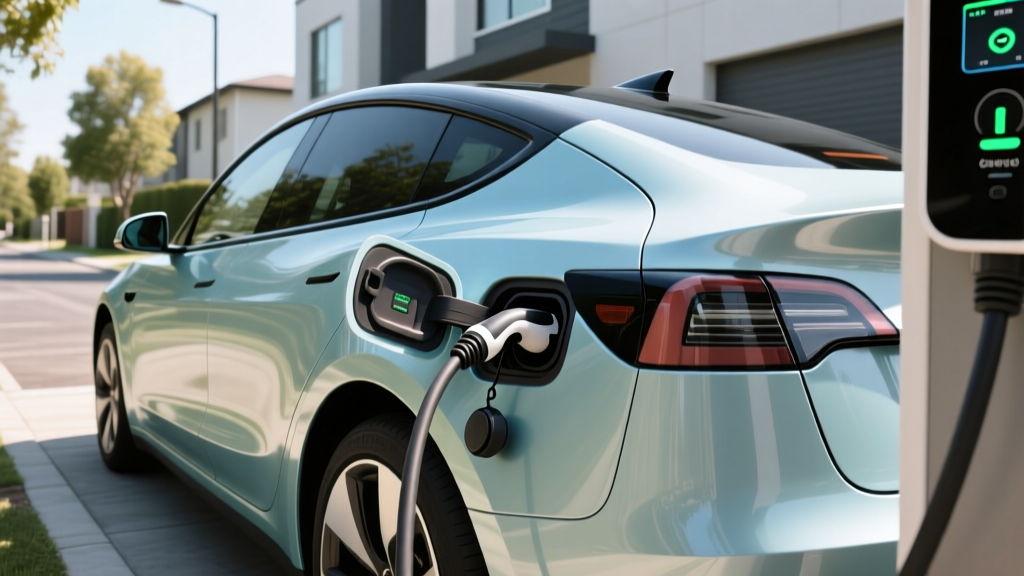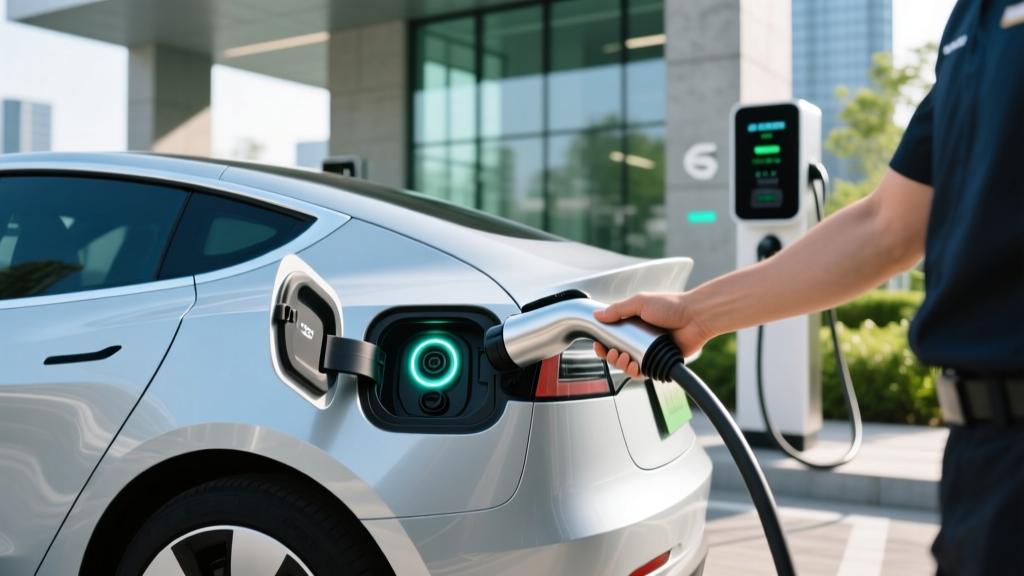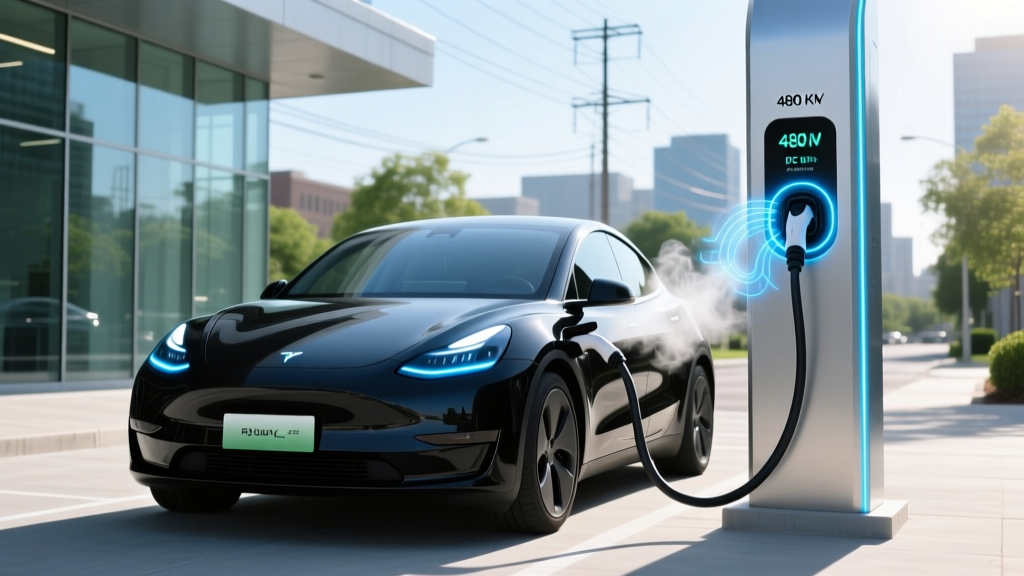
While most US DC fast chargers top out at 150–350 kW, China has deployed public charging stations delivering 480 kW to 600 kW per stall — enough to add roughly 180 miles of range in under 10 minutes on compatible vehicles. Companies like XPeng, NIO, Zeekr, and Huawei-backed networks have built thousands of these ultrafast stations across China's major highway corridors, creating the world's most aggressive public charging infrastructure.
For US-based EV owners and shoppers, China's ultrafast charging rollout is both a benchmark and a preview. The vehicles sold in China that exploit these speeds — often with 800-volt battery architectures — are beginning to influence the platforms that reach American roads. Here's what China's EV ultrafast charging ecosystem looks like, how it compares to US networks, and what it means for your next EV purchase.
What Is Ultrafast Charging? Understanding the kW Hierarchy
Before comparing China and the US, let's ground the terminology. Charging power is measured in kW (kilowatts) — the rate at which energy flows into the battery. Battery capacity is measured in kWh (kilowatt-hours) — the total energy stored. Confusing these two is the most common EV literacy mistake; they are not interchangeable.
Here is how the three charging levels break down in practical terms:
| Level | Voltage | Power (kW) | Miles of Range/Hour | Typical Use Case |
|---|---|---|---|---|
| Level 1 | 120V AC | 1.0–1.9 kW | 3–5 mi/hr | Overnight trickle, emergency |
| Level 2 | 240V AC | 3.3–19.2 kW | 12–75 mi/hr | Home daily charging, workplace |
| DC Fast (US typical) | 400–800V DC | 50–350 kW | 150–1,200 mi/hr (peak) | Road trips, public stations |
| DC Ultrafast (China) | 800–900V DC | 480–600 kW | 1,500–2,000+ mi/hr (peak) | China highway corridors |
The "miles per hour" figures at DC fast and ultrafast speeds represent peak rates — the maximum speed at a low state of charge (SoC). In reality, charging follows a charge curve: power ramps up quickly from 10–30% SoC, sustains near peak through roughly 50–60%, then tapers significantly above 80% to protect battery chemistry. A station rated at 480 kW will not deliver 480 kW for the entire session.
China's Ultrafast Charging Networks: Who's Building What
Several Chinese automakers and technology companies have deployed ultrafast charging networks at a pace that outstrips anything in North America or Europe:
- XPeng — Operates over 1,000 stations with 480 kW S4 supercharging stalls, capable of adding 400 km (249 miles) of range in 5 minutes on XPeng's 800V SiC (silicon carbide) platform vehicles like the G6 and G9.
- NIO — Known for battery swap stations (3-minute swaps), NIO also deploys ultrafast DC chargers rated at 500 kW+ at its power swap and charging hubs.
- Zeekr (Geely) — Zeekr's V3 ultrafast chargers deliver up to 600 kW using liquid-cooled cables. The Zeekr 007 sedan, built on an 800V architecture, can accept peak rates approaching 500 kW.
- Huawei / AITO — Huawei's all-liquid-cooled ultrafast chargers, deployed at select PetroChina and Sinopec stations, deliver up to 600 kW.
- BYD — While BYD focuses on its massive vehicle lineup, it has begun deploying dual-gun ultrafast chargers that split 480 kW across two vehicles or deliver full power to one.
These networks benefit from China's centralized infrastructure planning and high-density urban corridors. A driver on the Beijing–Shanghai expressway encounters ultrafast chargers every 50–100 km in many segments.
How Does the US Compare? Current DC Fast Charging Infrastructure
The US public DC fast charging landscape in 2026 is anchored by a few major networks:
- Tesla Supercharger — The largest and most reliable US network. V4 Supercharger stalls deliver up to 250 kW (V3) or 350 kW (newer V4 cabinets). Tesla has opened the network to non-Tesla EVs via NACS adapters. As of early 2026, the network exceeds 30,000 stalls in North America.
- Electrify America — Offers 150 kW and 350 kW CCS chargers. Reliability has improved but still trails Tesla. EA stations are common along interstate corridors and in Walmart parking lots.
- EVgo — Operates a mix of 50 kW, 100 kW, and 350 kW stalls, often co-located with retail partners.
- IONNA — The joint venture between seven automakers (BMW, GM, Honda, Hyundai, Kia, Mercedes-Benz, Stellantis) is deploying 350 kW chargers at new stations across the US, with a target of 30,000 stalls by 2030.
The US ceiling for public DC charging is currently 350 kW — the maximum most CCS1 and NACS-equipped vehicles can accept. No US network has deployed 480 kW+ stations at scale, primarily because very few vehicles sold in the US can accept that rate.
Why Can't US EVs Charge at 480–600 kW Yet?
The limitation isn't just the charging station — it's the vehicle. To accept ultrafast charging above 350 kW, an EV needs:
- An 800V (or higher) battery architecture — Higher voltage allows more power at lower current, reducing heat and cable thickness. Most US-market EVs still use 400V systems. Notable 800V exceptions include the Hyundai Ioniq 5/6, Kia EV6/EV9 GT, Porsche Taycan, Audi e-tron GT, Lucid Air, and the Chevrolet Silverado EV.
- Silicon carbide (SiC) inverters and power electronics — SiC handles higher voltages and temperatures more efficiently than traditional silicon IGBTs.
- Advanced thermal management — Charging at 500 kW generates enormous heat in the battery cells. Liquid cooling of both the battery pack and the charge cable is mandatory.
- Cell chemistry designed for high C-rates — The battery cells must accept charge at 4C to 6C rates (meaning a full charge in 15–10 minutes) without accelerating degradation. LFP (lithium iron phosphate) cells generally charge slower than NMC (nickel manganese cobalt) at high rates.
Chinese automakers like XPeng and Zeekr have optimized all four factors, partly because China's CATL and BYD supply the world's most advanced battery cells at the lowest cost. US-market vehicles are catching up — the upcoming Porsche Cayenne EV and next-generation Hyundai/Kia platforms are targeting 400+ kW acceptance — but widespread 480 kW capability is likely a 2028–2030 reality for mainstream US models.
Connector Compatibility: NACS, CCS1, and the Adapter Landscape
China's ultrafast chargers primarily use the GB/T connector standard, which is unique to the Chinese market. This is one reason China's charging ecosystem doesn't directly translate to US drivers. Here's how connectors break down globally:
| Connector | Region | Max Power (DC) | US Compatibility (2026) |
|---|---|---|---|
| NACS (Tesla) | North America | Up to 350 kW (current) | Native on Tesla; adapter available for Ford, GM, Rivian, Hyundai, others |
| CCS1 | North America (legacy) | Up to 350 kW | Native on VW, BMW, some Hyundai/Kia; NACS adapter needed for Tesla stations |
| CHAdeMO | Japan (legacy) | Up to 100 kW (most US stations) | Nissan Leaf; network shrinking as CCS/NACS dominates |
| GB/T | China | Up to 600 kW | Not available in US; no adapter pathway |
| CCS2 | Europe | Up to 400 kW | Not used in US |
For US EV buyers in 2026, the practical takeaway is clear: NACS is the dominant connector. Ford, GM, Rivian, Volvo, Polestar, Hyundai, and Kia have adopted or committed to NACS. If you're buying a new EV, confirm whether it ships with a native NACS port or requires a CCS-to-NACS adapter for Supercharger access.
What Would 480 kW Ultrafast Charging Mean for Your Charging Time?
Let's model the theoretical impact. If a US-market EV with a 100 kWh battery and an 800V architecture could sustain 480 kW peak charging:
| Scenario | Peak kW | Average Sustained kW (est.) | 10–80% Time | Miles Added (at 3 mi/kWh) |
|---|---|---|---|---|
| Current US best (350 kW station, 800V vehicle) | 250 kW | ~180 kW | ~22 minutes | ~210 miles |
| China ultrafast (480 kW station, 800V vehicle rated for 480 kW) | 480 kW | ~340 kW | ~12 minutes | ~210 miles |
| China ultrafast (600 kW station, next-gen 900V vehicle) | 600 kW | ~420 kW | ~10 minutes | ~210 miles |
The difference between 22 minutes and 12 minutes for a 10–80% charge is substantial for road-trip usability — it brings EV refueling time into the range of a quick gas station stop. But again, this requires both the station and the vehicle to support these rates.
US Home Charging: What You Actually Need
While China's ultrafast public charging is impressive, the reality for US EV owners is that 80–90% of charging happens at home on Level 2 equipment. Here's what a home installation requires:
Electrical Requirements
A typical Level 2 home charger requires a 240V dedicated circuit — the same voltage as an electric dryer or oven. Common configurations:
- 40A circuit / 32A continuous — Delivers 7.7 kW. Suitable for most EVs; adds ~25–30 miles of range per hour.
- 50A circuit / 40A continuous — Delivers 9.6 kW. Adds ~30–38 miles per hour.
- 60A circuit / 48A continuous — Delivers 11.5 kW. Adds ~38–45 miles per hour. Requires thicker gauge wire.
The National Electrical Code (NEC) requires that continuous loads (like EV charging) use no more than 80% of a circuit's rated capacity. A 40A breaker supports 32A of continuous draw.
Panel Upgrade Considerations
Many older homes have 100A or 150A electrical panels that may not have capacity for a dedicated 40–60A EV circuit, especially if the home already has electric heating, an electric dryer, and an electric oven. A panel upgrade to 200A typically costs $1,500–$3,000 and may be required before installing a Level 2 charger.
| Component | Low End | High End | Notes |
|---|---|---|---|
| Level 2 Charger (hardware) | $350 | $700 | 32A–48A smart chargers; Wi-Fi enabled |
| Electrician labor (240V circuit run) | $500 | $2,000 | Depends on panel-to-garage distance, wall/ceiling routing |
| Permit and inspection | $50 | $300 | Varies by municipality; some jurisdictions waive for EV |
| Panel upgrade (if needed) | $1,500 | $3,000 | 100A→200A upgrade; not required for all homes |
| Total (no panel upgrade) | $900 | $3,000 | Most common scenario for newer homes |
| Total (with panel upgrade) | $2,400 | $6,000 | Older homes with 100A panels |
Safety and Code Requirements
- Dedicated circuit: The EV charger must have its own breaker — it cannot share a circuit with other appliances.
- GFCI protection: NEC 2020 and later requires GFCI (ground fault circuit interrupter) protection for outdoor receptacles used for EV charging. Many hardwired chargers have built-in GFCI.
- Outdoor rating: If the charger is installed outside (carport, driveway), it must carry a NEMA 4 or IP65 weather resistance rating.
- Hardwired vs. plug: Hardwired installations (no plug) avoid the NEC GFCI requirement for receptacles and are generally preferred for 48A+ circuits. A NEMA 14-50 receptacle is standard for plug-in units at 40A.
Recommended Level 2 Home Chargers (2026)
While China's ultrafast public chargers grab headlines, the charger you'll use most is the one on your garage wall. Here are proven options:
ChargePoint Home Flex
- Power: Up to 11.5 kW (48A) on a 60A circuit; configurable down to 16A
- Connector: NACS (native) or J1772 (with NACS adapter included)
- Cable length: 23 feet
- Smart features: Wi-Fi, app scheduling, Alexa integration, energy tracking
- Price: ~$550 (hardware only)
- Best for: Flexibility across amperages; good app ecosystem
Emporia Level 2 EV Charger
- Power: Up to 11.5 kW (48A)
- Connector: NACS (native, 2025+ models) or J1772
- Cable length: 24 feet
- Smart features: Wi-Fi, energy monitoring, solar integration (pairs with Emporia Vue panel monitor)
- Price: ~$400 (hardware only)
- Best for: Budget-conscious buyers; solar-home integration
Wall Connector (Tesla)
- Power: Up to 11.5 kW (48A)
- Connector: NACS native; includes J1772 adapter for non-Tesla EVs
- Cable length: 24 feet
- Smart features: Wi-Fi, over-the-air updates, Power-Share (load balancing between two connectors on one circuit)
- Price: ~$475 (hardware only)
- Best for: Tesla owners or multi-EV households with NACS vehicles
Grizzl-E Smart
- Power: Up to 9.6 kW (40A)
- Connector: J1772 or NACS (configurable at purchase)
- Cable length: 24 feet
- Smart features: Wi-Fi, OCPP protocol support, extreme cold rating (-40°F)
- Price: ~$450
- Best for: Cold-climate durability; Canadian-built
Charging Cost: Home vs. Public DC Fast vs. Gas
One of the strongest arguments for EV ownership is per-mile energy cost — but the gap narrows significantly when you rely on public DC fast charging instead of home Level 2.
| Scenario | Rate | Vehicle Efficiency | Cost Per Mile |
|---|---|---|---|
| Home Level 2 (off-peak utility rate) | $0.09/kWh | 3.0 mi/kWh | $0.030 |
| Home Level 2 (national avg residential) | $0.16/kWh | 3.0 mi/kWh | $0.053 |
| Public Level 2 (network pricing) | $0.25/kWh | 3.0 mi/kWh | $0.083 |
| DC Fast (Tesla Supercharger avg) | $0.30/kWh | 3.0 mi/kWh | $0.100 |
| DC Fast (Electrify America / EVgo) | $0.43/kWh | 3.0 mi/kWh | $0.143 |
| Gasoline (28 MPG combined, $3.40/gal) | $3.40/gal | 28 MPG | $0.121 |
At home on off-peak rates, an EV costs roughly $0.03/mile — about one-quarter the cost of gasoline. But on the most expensive public DC fast networks, EV charging can actually exceed the per-mile cost of a fuel-efficient gas car. This is why home charging access remains the single most important factor in EV ownership economics.
What China's Ultrafast Charging Means for US EV Buyers
China's 480–600 kW charging infrastructure demonstrates what's technically possible when automakers, battery suppliers, and government infrastructure policy align. The practical implications for US drivers:
- 800V is the future: Vehicles with 800V architectures (Hyundai/Kia E-GMP, Porsche/J1 platform, GM Ultium trucks) will charge noticeably faster on existing 350 kW US stations than 400V vehicles. Prioritize 800V when shopping.
- US networks will follow: As more 800V vehicles reach the US market, expect Electrify America, IONNA, and Tesla to deploy 400+ kW stations by 2028–2030.
- Battery chemistry matters: LFP batteries (common in standard-range Teslas and Chinese-market EVs) generally charge slower at high C-rates than NMC. If ultrafast public charging is a priority, NMC or advanced cell chemistries may be preferable.
- Home charging still dominates: Regardless of how fast public chargers get, the cheapest and most convenient charging will always be at home on Level 2. Invest in a quality home installation first.
Frequently Asked Questions
How much does it cost to install a home EV charger?
A typical Level 2 home installation costs $900–$3,000 when no panel upgrade is needed (charger hardware + electrician labor + permit). If your home requires a panel upgrade from 100A to 200A service, total costs can reach $2,400–$6,000. Always get a quote from a licensed electrician who will assess your panel capacity, circuit run distance, and local code requirements.
How fast will each charging level add range?
Level 1 (120V) adds 3–5 miles per hour. Level 2 (240V, 40A) adds roughly 25–30 miles per hour. DC fast charging at 150–350 kW can add 150–1,200 miles per hour at peak — but peak rates are sustained for only a portion of the session, and real-world 10–80% sessions typically take 18–40 minutes depending on vehicle architecture and battery size.
Which connector/charger is compatible with my EV?
In 2026, most new EVs sold in the US ship with a native NACS port or offer a CCS-to-NACS adapter. Tesla vehicles use NACS natively. Ford, GM, Rivian, Hyundai, and Kia have adopted NACS. If you own a CCS-equipped EV (e.g., older VW ID.4, BMW i4), you'll need an adapter to access Tesla Superchargers. CHAdeMO is limited to the Nissan Leaf and is being phased out. Check your vehicle's charge port and consult the EPA's fueleconomy.gov for your specific model's connector type.
How much does charging cost per mile vs gas?
Home charging on off-peak utility rates costs approximately $0.03/mile — about 75% less than gasoline at $3.40/gal in a 28 MPG vehicle ($0.12/mile). Public DC fast charging at $0.30–$0.43/kWh costs $0.10–$0.14/mile, which is comparable to or slightly more than gasoline. The savings case for EVs depends heavily on consistent home charging access.
What electrical upgrades might I need?
If your home has a 200A electrical panel with available breaker slots and spare capacity, you likely need only a dedicated 40–60A circuit run to your garage or parking spot. Homes with 100A or 150A panels, especially those with existing high-draw appliances (electric heat, dryer, oven), may need a panel upgrade to 200A — a $1,500–$3,000 job. A licensed electrician will perform a load calculation per NEC Article 220 to determine if your panel can support the additional circuit.
Will China's ultrafast chargers ever come to the US?
Not directly — China uses the GB/T connector standard, which is incompatible with US vehicles. However, the technology and lessons from China's 480–600 kW deployments will influence US networks. As more 800V+ vehicles reach the US market, expect domestic networks to begin deploying 400+ kW chargers by the end of the decade. The IONNA joint venture and Tesla's next-generation Supercharger cabinets are the most likely candidates for US ultrafast charging.