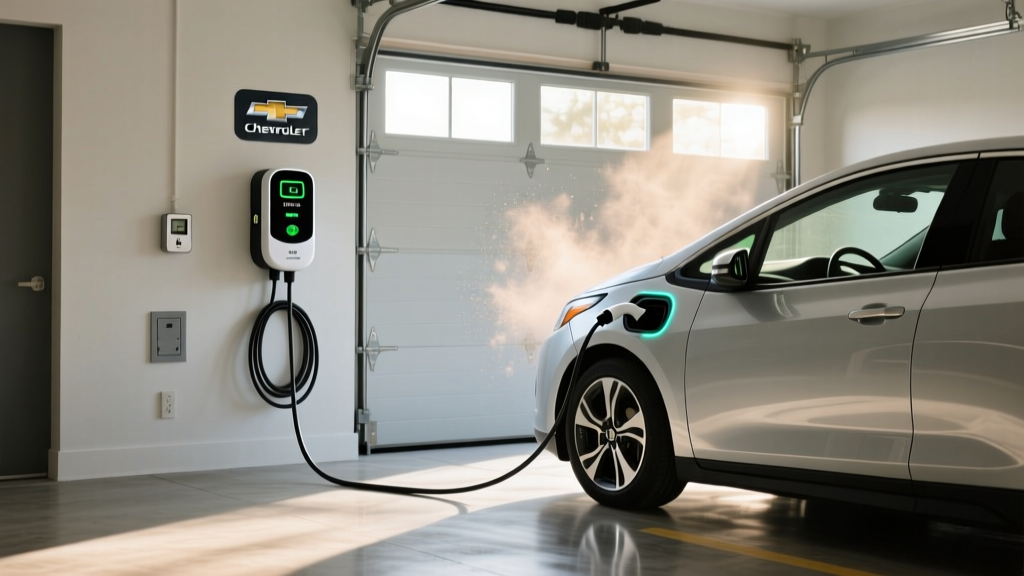
The Chevrolet Volt remains one of the most popular plug-in hybrids ever sold in the United States, with over 150,000 units delivered between 2011 and 2019. Even in 2026, thousands of Volt owners rely on its electric-only range for daily commuting while keeping the gas engine as a backup. But the Chevy Volt's electric range — and how quickly you can replenish it — depends heavily on your charging setup.
This guide breaks down exactly how many electric miles you can expect from each Volt generation, how Level 1 and Level 2 charging affect your daily usability, what a home charger installation actually costs, and how the Volt's per-mile charging cost compares to gas.
Chevy Volt Electric Range by Generation: What the EPA Says
The Volt was produced across two distinct generations, each with a different battery size and electric-only range. Because the Volt is a plug-in hybrid (PHEV), it carries both a battery pack and a gasoline range-extender engine. Here are the official EPA figures from fueleconomy.gov:
| Generation | Model Years | Battery (kWh usable) | EPA Electric Range | EPA Combined MPGe | Gas-Only MPG | Total Range (mi) |
|---|---|---|---|---|---|---|
| Gen 1 | 2011–2015 | 10.3–10.9 kWh | 35–38 miles | 93–98 MPGe | 37 MPG | ~380 |
| Gen 2 | 2016–2019 | 14.0 kWh | 53 miles | 106 MPGe | 42 MPG | ~420 |
Charging Levels Explained: How Fast Can a Volt Recharge?
The Chevy Volt uses a J1772 connector for AC charging (Level 1 and Level 2). It does not support DC fast charging — a common point of confusion for new PHEV owners. The Volt's onboard charger limits how much AC power it can accept, which directly determines your charging speed.
| Level | Voltage / Amperage | Max Power (kW) | Miles of Range Added per Hour | Full Charge Time (Gen 2, 14 kWh) | Full Charge Time (Gen 1, ~10.5 kWh) |
|---|---|---|---|---|---|
| Level 1 | 120V / 12A | 1.4 kW | ~4 miles/hr | ~12–13 hours | ~9–10 hours |
| Level 2 (Gen 1) | 240V / 15A | 3.6 kW | ~12 miles/hr | N/A (Gen 1 onboard limit) | ~4–4.5 hours |
| Level 2 (Gen 2) | 240V / 30A | 7.2 kW | ~22 miles/hr | ~4.5 hours | N/A |
| DC Fast | N/A | N/A | N/A | The Volt does not support DC fast charging | |
Key distinction — kW vs kWh: Kilowatts (kW) measure the rate of energy flow (like water pressure in a hose). Kilowatt-hours (kWh) measure the total amount of energy stored (like gallons in a tank). The Gen 2 Volt has a 14 kWh battery and can accept charging at up to 7.2 kW. A 40-amp Level 2 charger can deliver up to 9.6 kW, but the Volt will only draw its 7.2 kW maximum — the excess capacity is unused but harmless.
For Volt owners, Level 1 charging (the cord that plugs into a standard 120V outlet) works fine if you drive under 40 miles per day and can charge overnight. Level 2 is a significant upgrade: it fully replenishes the Gen 2 battery in roughly 4.5 hours instead of 13, meaning you can top off during a workday or between errands.
Home Charger Installation: Electrical Requirements & Costs
Installing a dedicated Level 2 home charger is the single biggest upgrade most Volt owners can make. Here is what the process involves and what it costs.
Electrical Requirements
A Level 2 charger for the Gen 2 Volt requires a 240V circuit. While the Volt only draws 7.2 kW (30 amps), most installers recommend a 40-amp or 50-amp circuit to future-proof for a potential BEV upgrade. A 40-amp circuit uses a NEMA 14-50 outlet or a hardwired connection; a 50-amp circuit uses a NEMA 14-50 or hardwired 50A setup.
- Gen 1 Volt: 240V / 20-amp minimum circuit (3.6 kW onboard charger)
- Gen 2 Volt: 240V / 40-amp minimum circuit (7.2 kW onboard charger)
- Future-proofing: 240V / 50-amp or 60-amp circuit supports up to 11.5 kW for future BEVs
Installation Cost Breakdown
| Component | Low Estimate | High Estimate | Notes |
|---|---|---|---|
| Level 2 charger (hardware) | $300 | $700 | Smart Wi-Fi chargers cost more |
| Electrician labor | $400 | $1,500 | Depends on run length, wall type |
| Electrical permit | $50 | $200 | Varies by municipality |
| Panel upgrade (if needed) | $1,500 | $4,000 | Required if panel is at capacity or under 100A |
| Total (no panel upgrade) | $750 | $2,400 | Most common scenario |
| Total (with panel upgrade) | $2,250 | $6,400 | Older homes with 100A or less |
Safety and Code Considerations
Per the National Electrical Code (NEC), EV charger installations require:
- A dedicated circuit — the charger circuit cannot share a breaker with other appliances
- GFCI protection for outdoor installations (NEC 2023 and later require this for all EV receptacles)
- An outdoor-rated (NEMA 4) charger enclosure if installed outside
- Proper wire gauge — 6 AWG copper for 50A circuits, 8 AWG for 40A
- A permit and inspection — skipping this risks insurance claim denials and code violations
Connector Compatibility: What Fits the Chevy Volt?
The Volt uses the J1772 connector standard for all AC charging. Since the Volt cannot use DC fast charging, you will never need a CCS1, CHAdeMO, or NACS connector for this vehicle. However, understanding the broader connector landscape matters if you plan to own a BEV in the future or share a charger with another EV in your household.
| Connector | Type | Used By | Volt Compatible? |
|---|---|---|---|
| J1772 | AC (Level 1 & 2) | All non-Tesla EVs/PHEVs sold in North America (2011–2024) | Yes — native |
| NACS (Tesla) | AC + DC | Tesla (all years); Ford, GM, Rivian, others from 2025+ | No (adapter available for AC) |
| CCS1 | DC Fast | Most non-Tesla BEVs (2018–2024) | No — Volt has no DC inlet |
| CHAdeMO | DC Fast | Nissan Leaf, Mitsubishi (legacy) | No — Volt has no DC inlet |
If you install a J1772 Level 2 charger at home, it will work with the Volt and virtually every other non-Tesla EV or PHEV on the road. If you install a Tesla Wall Connector (NACS), you would need a NACS-to-J1772 adapter (~$150–$250) to charge the Volt. For Volt-only households, a J1772 charger is the simpler choice.
Cost to Charge the Volt: Per-Mile Comparison vs Gas
One of the strongest arguments for maximizing the Volt's electric range is the per-mile fuel cost. Here is how charging costs compare across scenarios, using the Gen 2 Volt's 14 kWh battery and 53-mile electric range.
| Scenario | Rate ($/kWh) | Full Charge Cost | Cost per Electric Mile |
|---|---|---|---|
| Home (off-peak utility rate) | $0.09 | $1.26 | $0.024 |
| Home (average US rate) | $0.16 | $2.24 | $0.042 |
| Public Level 2 (ChargePoint, etc.) | $0.30 | $4.20 | $0.079 |
| Gasoline (Volt as hybrid, 42 MPG) | $3.40/gal | N/A | $0.081 |
At off-peak home rates, the Volt costs roughly 2.4 cents per electric mile — about one-third the cost of driving it on gasoline. Even at average residential rates, electric driving is roughly half the cost of gas. Public Level 2 charging approaches gas-equivalent costs, which is why home charging is the economic sweet spot for PHEV owners.
For a commuter driving 15,000 miles per year with 10,000 of those on electricity (realistic for a Gen 2 Volt with 53 miles of range), the annual fuel savings versus gas-only driving range from $400 to $800 depending on local electricity and gas prices.
Recommended Level 2 Chargers for the Chevy Volt
Since the Volt maxes out at 7.2 kW (Gen 2) or 3.6 kW (Gen 1), you do not need the most powerful charger on the market. However, investing in a 40A or 48A unit provides headroom for future vehicles. Here are three strong options available in 2026:
Emporia Level 2 Smart Charger
- Power: 48A / 11.5 kW max (Volt will draw 7.2 kW)
- Connector: J1772
- Cable length: 24 ft
- Smart features: Wi-Fi, scheduling, energy monitoring via app
- Price: ~$350–$400
- Best for: Budget-conscious Volt owners wanting smart scheduling for off-peak rates
ChargePoint Home Flex
- Power: Configurable 16A–50A / up to 12 kW (Volt draws 7.2 kW)
- Connector: J1772
- Cable length: 23 ft
- Smart features: Wi-Fi, Alexa integration, detailed session history
- Price: ~$550–$650
- Best for: Multi-EV households wanting adjustable amperage
Grizzl-E Smart
- Power: 40A / 9.6 kW max (Volt draws 7.2 kW)
- Connector: J1772
- Cable length: 24 ft
- Smart features: Wi-Fi, OCPP compatibility, outdoor-rated (NEMA 4)
- Price: ~$450–$550
- Best for: Outdoor installations in harsh climates
All three chargers will fully charge a Gen 2 Volt in approximately 4–5 hours. The Volt's 3.6 kW Gen 1 onboard charger means Gen 1 owners will see 9–10 hour charge times regardless of which Level 2 unit they install — the bottleneck is the car, not the charger.
Frequently Asked Questions
How much does it cost to install a home EV charger for a Chevy Volt?
Most Volt owners spend between $750 and $2,400 for a complete Level 2 installation (charger, electrician, permit) when no panel upgrade is needed. If your home requires an electrical panel upgrade from 100A to 200A service, add $1,500–$4,000. Always get a load calculation from a licensed electrician before committing.
How fast will each charging level add range to my Volt?
Level 1 (120V) adds roughly 4 miles of electric range per hour. Level 2 at 240V adds approximately 12 miles per hour for Gen 1 Volts and 22 miles per hour for Gen 2 Volts. The Volt does not support DC fast charging.
Which connector and charger is compatible with my Chevy Volt?
The Volt uses the J1772 connector for all charging. Any Level 1 or Level 2 charger with a J1772 plug will work. You do not need CCS1, CHAdeMO, or NACS compatibility. If you install a Tesla Wall Connector (NACS), a NACS-to-J1772 adapter is required.
How much does charging the Volt cost per mile compared to gas?
At the US average residential electricity rate of ~$0.16/kWh, the Gen 2 Volt costs approximately $0.042 per electric mile. On gasoline at $3.40/gallon and 42 MPG, it costs $0.081 per mile. Home charging is roughly half the cost of gas per mile.
What electrical upgrades might I need for a Volt home charger?
At minimum, you need a dedicated 240V circuit (20A for Gen 1, 40A recommended for Gen 2 and future-proofing). Older homes with 100A panels may require a full panel upgrade to 200A, which costs $1,500–$4,000. Your electrician will determine this via a NEC Article 220 load calculation.
Does the Chevy Volt battery degrade over time?
Yes. GM's PHEV battery management system uses a substantial buffer (the Volt only uses about 60–65% of its gross battery capacity) to slow degradation. Most Gen 2 Volts tested at 8–10 years old retain 85–92% of original electric range. The GM battery warranty covered 8 years/100,000 miles for capacity below 60% of original — though most 2011–2015 Gen 1 models have now aged beyond this coverage window.
Can I charge my Volt at public DC fast chargers?
No. The Chevrolet Volt does not have a DC fast charging inlet. It can only accept AC power through its J1772 port at Level 1 or Level 2 speeds. Plugging into a DC fast station (CCS or CHAdeMO) is physically impossible without an adapter that does not exist for this vehicle.