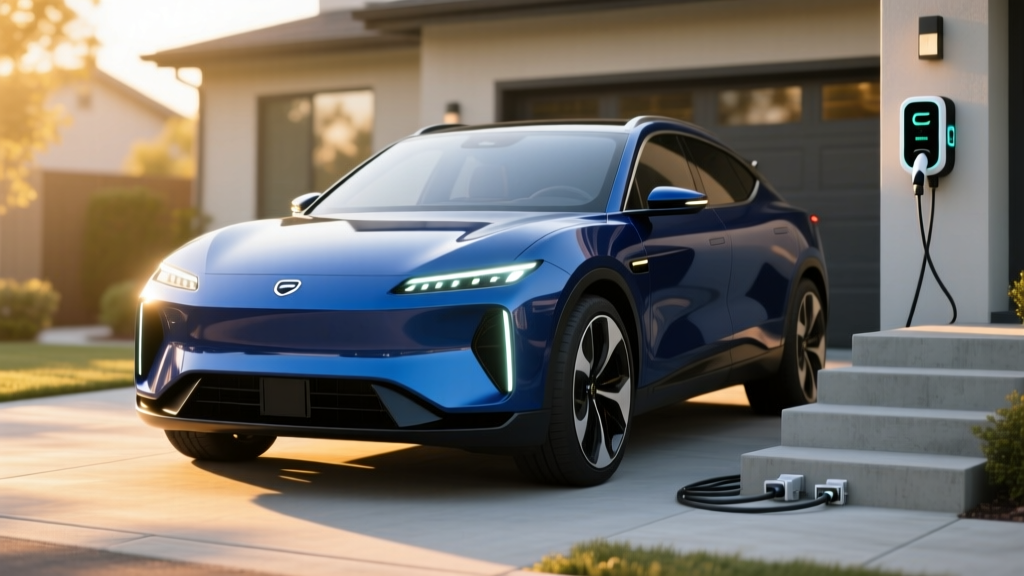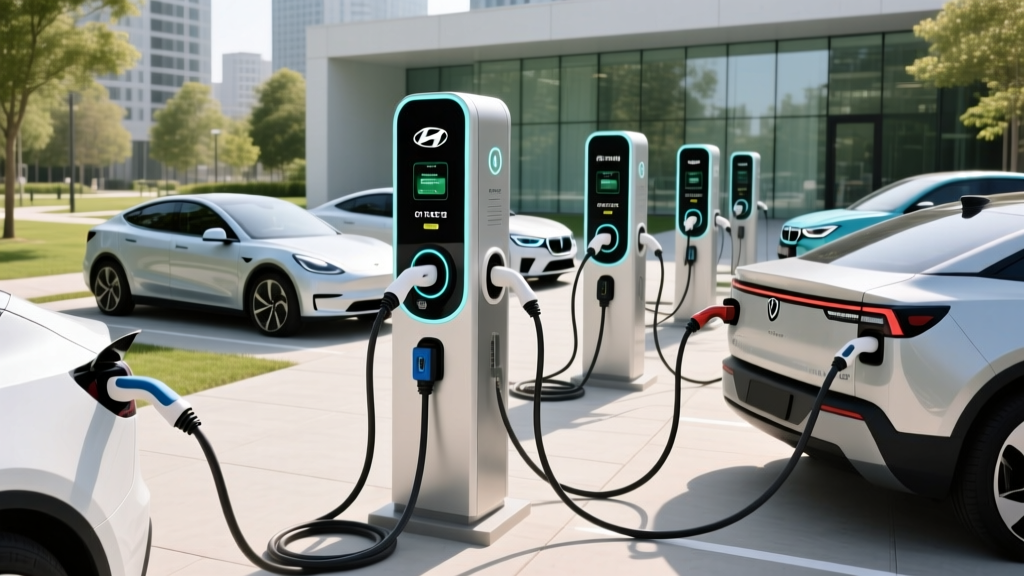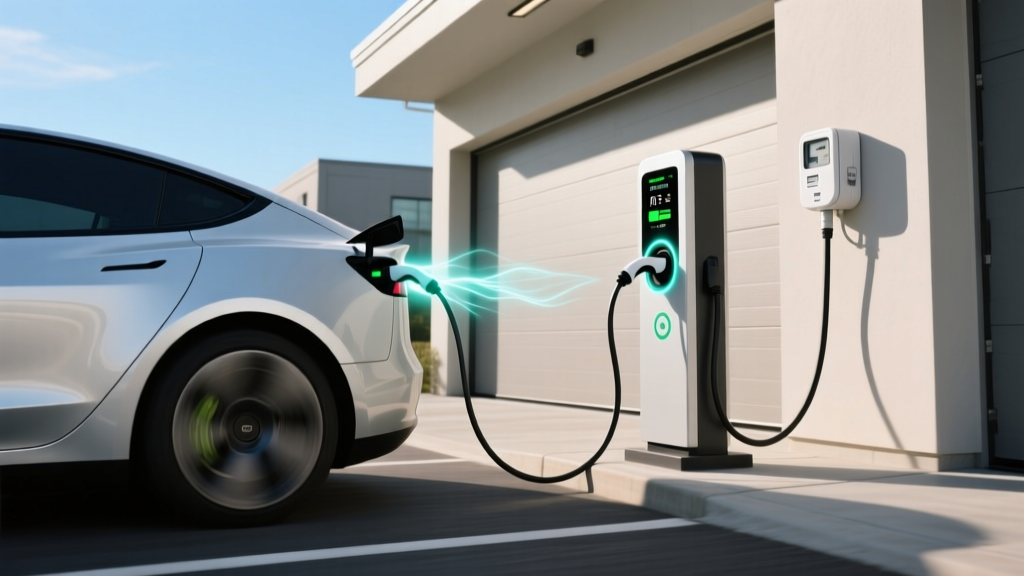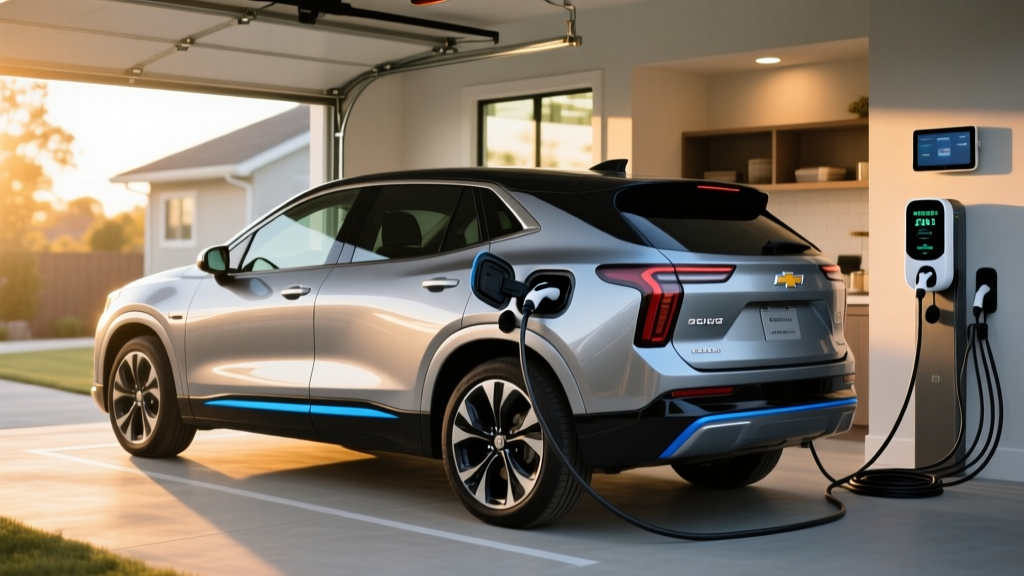
When General Motors claimed a world-record range for the Chevy Silverado EV—pushing past 450 miles on a single charge in real-world hypermiling conditions—it wasn't just a marketing stunt. The Silverado EV's massive Ultium battery pack (up to 200+ kWh usable on the 4WT trim) fundamentally changes the home-charging calculus. A battery this large can take over 24 hours on a standard Level 2 home charger, meaning infrastructure planning isn't optional—it's essential.
This guide breaks down exactly what it takes to charge a Chevy Silverado EV at home, what you'll pay at public DC fast chargers, and which equipment actually moves the needle on a 200 kWh pack. If you're shopping for an electric truck with class-leading range, the charging setup matters as much as the truck itself.
Understanding the Silverado EV's Battery and What 'World Record Range' Means
The 2025–2026 Chevy Silverado EV 4WT and RST trims feature GM's largest Ultium battery configuration. The 4WT fleet-oriented trim carries an estimated 200+ kWh usable battery, while the RST First Edition targets an EPA-estimated 440 miles of range. The "world record range" claim stems from controlled efficiency testing where drivers optimized speed, climate, and terrain to exceed the EPA sticker—a useful data point for understanding the pack's energy density, but not a daily-driving expectation.
EPA-estimated: up to 440 miles (RST trim, optimal config)
Real-world highway (70 mph, moderate climate): ~340–380 miles
Cold weather (below 30°F, highway): ~280–320 miles
Towing (5,000+ lb trailer): ~200–250 miles
Source: fueleconomy.gov and manufacturer estimates. Actual range varies with driving style, payload, and temperature.
For charging purposes, what matters is the raw kWh number: replenishing 80% of a 200 kWh pack means pushing 160 kWh of energy into the vehicle. That's roughly 5x the energy in a Tesla Model Y's battery, and your charging hardware needs to match.
Charging Levels Explained: Speeds, kW, and Miles Per Hour
Before choosing equipment, understand the three charging tiers available to Silverado EV owners. Power is measured in kilowatts (kW)—the rate of energy delivery. Energy stored is measured in kilowatt-hours (kWh)—the total capacity. Confusing these is the most common EV literacy mistake; think of kW as the speed of water flowing through a hose, and kWh as the size of the bucket.
| Level | Voltage / Amperage | Max Power (kW) | Miles Added/Hour | 10–80% Time (200 kWh Pack) |
|---|---|---|---|---|
| Level 1 (120V outlet) | 120V / 12A | ~1.4 kW | ~3–5 mi/hr | ~80+ hours |
| Level 2 (240V home) | 240V / 40–80A | 9.6–19.2 kW | ~25–55 mi/hr | ~10–20 hours |
| DC Fast Charging | 400–800V DC | Up to 350 kW (Silverado EV peak ~200+ kW) | ~500–900 mi/hr (peak) | ~35–50 min (10–80%) |
The Silverado EV's onboard charger (the hardware inside the truck that converts AC to DC for Level 2 charging) supports up to 19.2 kW on higher trims—among the highest in any production EV. This means a properly equipped home charger at 80 amps/19.2 kW can add roughly 50–55 miles of range per hour, making overnight replenishment viable even for this massive pack.
On DC fast charging, GM has confirmed the Silverado EV can accept over 350 kW on compatible chargers, though real-world charge curves taper significantly above 80% state of charge. Expect 10–80% in roughly 35–50 minutes at a 350 kW station, but plan for 50–70 minutes at the more common 150 kW chargers found along most highway corridors.
Home Charger Installation: Electrical Requirements and Real Costs
Charging a 200+ kWh battery at home demands a serious electrical circuit. Here's what a Silverado EV owner actually needs:
Minimum viable setup: A 240V/48A dedicated circuit (NEMA 14-50 outlet or hardwired), delivering 11.5 kW. This adds ~30 miles of range per hour—enough to recover 200–250 miles overnight (8–10 hours).
Optimal setup for the Silverado EV: A 240V/80A dedicated circuit (hardwired, no plug), delivering the full 19.2 kW the truck's onboard charger can accept. This adds ~50–55 miles per hour and can recover 400+ miles in an 8-hour overnight session.
Electrical panel reality check: Most homes built before 2010 have 100A or 150A main panels. Adding an 80A EV circuit to a 150A panel is often impossible without a panel upgrade to 200A or even 400A service. A licensed electrician will perform a load calculation per NEC Article 220 to determine if your panel can handle the draw. Don't skip this step—an overloaded panel is a fire hazard and a code violation.
| Component | 48A / 11.5 kW Setup | 80A / 19.2 kW Setup |
|---|---|---|
| Level 2 Charger (Equipment) | $400–$700 | $600–$1,200 |
| Electrician Labor (run circuit, mount, connect) | $500–$1,500 | $800–$2,500 |
| Permit & Inspection | $50–$250 | $100–$350 |
| Panel Upgrade (if needed: 100A→200A or 200A→400A) | $1,500–$3,500 | $2,000–$5,000 |
| Total (No Panel Upgrade) | $950–$2,450 | $1,500–$4,050 |
| Total (With Panel Upgrade) | $2,450–$5,950 | $3,500–$9,050 |
The federal government offers a 30% tax credit (up to $1,000) on home EV charging equipment and installation costs under the Alternative Fuel Vehicle Refueling Property Credit. Check IRS guidelines for current eligibility, as the credit has census-tract-based geographic restrictions.
Connector Compatibility: NACS, CCS, and the Silverado EV
The 2025–2026 Chevy Silverado EV ships with the CCS1 (Combined Charging System) connector standard for North America. However, GM has committed to transitioning its EV lineup to the NACS (North American Charging Standard, developed by Tesla) connector beginning with 2025–2026 model-year vehicles, and Silverado EV owners will have access to Tesla Superchargers via adapter.
| Connector | Used By | Silverado EV Status | Adapter Needed? |
|---|---|---|---|
| CCS1 | GM, Ford (pre-2025), VW, Hyundai, most non-Tesla | Native on early Silverado EV builds | No (for CCS stations) |
| NACS (Tesla) | Tesla, Ford (2025+), GM (2025+), Rivian, others | Native on later builds; adapter for early units | Yes, CCS-to-NACS adapter (~$200–$250) for Supercharger access on CCS-equipped trucks |
| CHAdeMO | Nissan Leaf (legacy), Mitsubishi | Not compatible | N/A — network is being phased out |
Practical advice: If your Silverado EV has a CCS1 port, purchase a GM-approved CCS-to-NACS adapter to unlock the Tesla Supercharger network—currently the most reliable DC fast-charging infrastructure in North America with over 30,000 stalls. For home Level 2 charging, connector type matters less; most home chargers use a J1772 plug (the AC standard) that fits all non-Tesla EVs, and Tesla Wall Connectors now ship with a "Magic Dock" or universal connector option.
Charging Cost: Per-Mile Economics vs. Gas Silverado
The financial case for the Silverado EV hinges on charging costs versus the gas Silverado 1500's fuel economy. Here's how the numbers break down across common charging scenarios:
| Scenario | $/kWh | Cost for 200 kWh (Full Pack) | Cost/Mile (440-mi range) |
|---|---|---|---|
| Home (off-peak utility rate) | $0.08–$0.14 | $16–$28 | $0.036–$0.064 |
| Home (standard residential rate) | $0.14–$0.20 | $28–$40 | $0.064–$0.091 |
| Public Level 2 (workplace, shopping) | $0.20–$0.35 | $40–$70 | $0.091–$0.159 |
| DC Fast Charging (Electrify America, EVgo) | $0.35–$0.55 | $70–$110 | $0.159–$0.250 |
Gas comparison: A 2025 gas Silverado 1500 with the 5.3L V8 averages roughly 19 MPG combined. At $3.50/gallon, that's $0.184 per mile. The Silverado EV charged at home undercuts gas by 60–80%. Even exclusive DC fast charging barely breaks even with gas—making home charging the economic linchpin of EV truck ownership.
For Silverado EV owners who tow frequently, the cost advantage narrows considerably. Towing can cut range to 200–250 miles, raising per-mile costs and increasing reliance on expensive DC fast charging on the road.
Recommended Home Chargers for the Silverado EV
Not all Level 2 chargers can deliver the 19.2 kW the Silverado EV can accept. Here are proven units matched to this truck's capabilities:
Best Overall: ChargePoint Home Flex
- Power Output: Up to 12 kW (50A) / configurable down to 16A
- Connector: J1772 (fits Silverado EV natively)
- Cable Length: 23 feet
- Smart Features: Wi-Fi, app scheduling, utility rate optimization, Alexa integration
- Price: ~$550–$650
- Why for Silverado EV: Reliable, well-supported app, NEMA 14-50 plug makes it portable. Doesn't hit 19.2 kW but covers overnight needs for most owners.
Max Power Pick: FLO Home X80 or Grizzl-E Smart
- Power Output: Up to 19.2 kW (80A hardwired)
- Connector: J1772
- Cable Length: 24 feet (Grizzl-E) / 25 feet (FLO)
- Smart Features: FLO: app + load sharing. Grizzl-E: basic smart, extreme cold rated (-40°F)
- Price: $700–$1,000
- Why for Silverado EV: Unlocks the truck's full 19.2 kW onboard charger. Essential if you need 400+ miles recovered overnight. Requires 100A breaker and 80A continuous circuit—panel upgrade likely.
Tesla Wall Connector (Universal)
- Power Output: Up to 11.5 kW (48A) on non-Tesla mode
- Connector: NACS with built-in Magic Dock (J1772 adapter)
- Cable Length: 24 feet
- Smart Features: Wi-Fi, OTA updates, power sharing between multiple units
- Price: ~$450–$550
- Why for Silverado EV: Future-proof if your truck has NACS or you plan to use the Supercharger network. Clean install, excellent build quality.
Budget Pick: Emporia Vue Level 2
- Power Output: Up to 11.5 kW (48A)
- Connector: J1772
- Cable Length: 24 feet
- Smart Features: App control, energy monitoring, solar integration
- Price: ~$350–$400
- Why for Silverado EV: Best value for a 48A charger. Solid overnight option, though slower than an 80A setup.
Safety, Electrical Code, and Installation Best Practices
A Silverado EV charging at 19.2 kW draws 80 amps continuously for hours—this is one of the largest sustained electrical loads in a residential setting. Safety isn't negotiable.
- Dedicated circuit: The EV charger must be on its own dedicated breaker—never shared with other appliances. An 80A charger requires a 100A breaker (NEC requires breakers rated at 125% of continuous load).
- GFCI protection: The 2023 National Electrical Code (NEC 625.54) requires GFCI protection for all EV receptacles. Hardwired chargers may be exempt depending on local interpretation—confirm with your inspector.
- Outdoor rating: If your charger is installed outdoors (garage-less homes), ensure the unit carries a NEMA 4 or NEMA 4X rating for weather resistance. The Grizzl-E and FLO units are rated for extreme outdoor conditions.
- Wire gauge: An 80A continuous circuit typically requires 2 AWG copper wire or 1/0 AWG aluminum, run in conduit. Your electrician will size this based on run length and local code.
- Permit and inspection: Every jurisdiction requires a permit for EV charger installation. Skipping the permit voids homeowner's insurance coverage for electrical fires and creates a liability issue at resale. Budget $50–$350 for permits and expect a 1–2 week inspection timeline.
- Load management: If your panel is near capacity but you don't want a full upgrade, consider a smart load-management system (like the Emporia VUE with automatic load shedding) that throttles charger amperage when other appliances activate.
Frequently Asked Questions
How much does it cost to install a home EV charger for the Chevy Silverado EV?
Expect $1,500–$4,050 for a full 80A/19.2 kW installation if your electrical panel has capacity. If you need a panel upgrade from 100A or 150A to 200A+, add $2,000–$5,000. A simpler 48A/11.5 kW setup on an existing 200A panel typically runs $950–$2,450 total (equipment, electrician, and permit).
How fast will each charging level add range to the Silverado EV?
Level 1 (120V wall outlet): approximately 3–5 miles per hour—essentially unusable for a 200+ kWh pack. Level 2 at 48A (11.5 kW): ~30 miles per hour. Level 2 at 80A (19.2 kW): ~50–55 miles per hour. DC fast charging at 350 kW: up to 200+ miles in 15 minutes at peak, tapering above 80% SoC.
Which connector and charger is compatible with my Silverado EV?
Early 2025 Silverado EV models ship with CCS1. Later builds and 2026+ models are transitioning to NACS. For home Level 2 charging, any J1772-equipped charger works with CCS1 trucks; NACS trucks need a Tesla Wall Connector with Magic Dock or a NACS-compatible home unit. For DC fast charging, get a CCS-to-NACS adapter (~$200–$250) to access Tesla Superchargers if your truck has a CCS port.
How much does charging the Silverado EV cost per mile compared to a gas Silverado?
Charging at home on off-peak rates ($0.10/kWh) costs roughly $0.04–$0.05 per mile. A gas Silverado 1500 at 19 MPG and $3.50/gallon costs about $0.18 per mile. Home charging saves 70–75% per mile. However, exclusive DC fast charging ($0.45/kWh) costs ~$0.20/mile—roughly equal to gas, eliminating the cost advantage on road trips.
What electrical upgrades might I need for a Silverado EV home charger?
The most common upgrade is a main electrical panel replacement. Homes with 100A or 150A service will likely need a 200A or 400A panel to support an 80A EV circuit alongside normal household loads. Other potential upgrades include: a new meter socket (if utility requires it for 400A service), trenching for a new service lateral (in older homes), and a dedicated 100A breaker slot. Your electrician's load calculation (per NEC Article 220) determines the exact requirement. Budget $2,000–$5,000 for a panel upgrade, plus 2–6 weeks for utility coordination.
Can I charge the Silverado EV with solar panels?
Yes, but realistically, solar offsets cost rather than directly powers the truck in real time. A typical 10 kW residential solar array produces roughly 40–50 kWh per day in good conditions—enough to add ~100–120 miles of Silverado EV range daily. Pair solar with a smart charger (like the Emporia or FLO) that can prioritize solar-export charging to maximize self-consumption.
The Chevy Silverado EV's world record range is an engineering milestone, but it demands equally serious charging infrastructure. Budget for a proper 240V/80A home installation, plan for panel capacity, and lean on home charging to keep per-mile costs a fraction of gas. For the latest Silverado EV specs and trim availability, check Chevrolet's official Silverado EV page.