The Chevy Silverado EV grabbed headlines with a hypermiling range record that pushed well past 1,000 miles on a single charge — a stunt that proved the truck’s massive Ultium battery can go the distance when driven with extreme efficiency. But for real owners hauling trailers, commuting in cold weather, or towing on the highway, the question isn’t how far it can go in perfect conditions. It’s how fast and cheaply you can refill a battery that large when you actually need it.
With usable battery capacities approaching 200 kWh on the Silverado EV 4WT and a 24-module Ultium pack on the RST, charging logistics matter more than on almost any other EV on the road. This guide breaks down exactly what it takes to charge a Silverado EV at home and on public DC fast chargers — including install costs, connector compatibility, real charge times, and the electrical upgrades your garage may need.
How the Chevy Silverado EV Range Record Shapes Charging Needs
In late 2024, a stock Silverado EV 4WT completed a documented drive exceeding 1,059 miles on a single charge by maintaining speeds around 20-25 mph and minimizing climate use. While that Chevrolet-documented run demonstrated the efficiency ceiling of the Ultium platform, real-world EPA range for the Silverado EV 4WT sits at approximately 460 miles, and the RST First Edition at around 440 miles. Expect highway driving at 70 mph to yield roughly 320-370 miles, and cold-weather towing to cut that further.
• 4WT Work Truck: EPA ~460 mi | Real highway ~340-370 mi | Cold/towing ~250-300 mi
• RST First Edition: EPA ~440 mi | Real highway ~320-350 mi | Cold/towing ~240-290 mi
• Battery: ~200 kWh usable (4WT), NMC chemistry, liquid-cooled
That massive battery means charging times are longer than a compact EV — but the Silverado EV also supports up to 350 kW DC fast charging on capable stations, which is essential context for planning your charging setup.
Charging Levels Explained: kW, Speeds, and Miles Per Hour
Before choosing equipment, understand the three charging tiers and how they apply to a truck with a ~200 kWh battery. Remember: kW (kilowatts) measures power — how fast energy flows. kWh (kilowatt-hours) measures energy — the battery's total capacity. A higher kW charger refills kWh faster.
| Level | Voltage / Amps | Max Power (kW) | Miles Added/Hour | Silverado EV 0-100% (est.) |
|---|---|---|---|---|
| Level 1 (120V outlet) | 120V / 12A | ~1.4 kW | ~3-4 mi/hr | ~6-8 days |
| Level 2 (240V home) | 240V / 40-48A | 9.6-11.5 kW | ~25-32 mi/hr | ~18-22 hours |
| Level 2 (240V / 80A) | 240V / 80A | 19.2 kW | ~50-55 mi/hr | ~10-12 hours |
| DC Fast (public) | 400-800V DC | up to 350 kW | ~800+ mi/hr (peak) | 10-80% in ~30-40 min |
Key insight for Silverado EV owners: Level 1 is essentially useless for daily use on a 200 kWh battery — you'd gain maybe 35 miles overnight. Level 2 at 11.5 kW is the practical home minimum, adding ~200 miles overnight. For road trips, DC fast charging at 350 kW stations is where the Silverado EV's architecture shines, though expect the charge curve to taper significantly above 80% state of charge.
Home Charger Installation: Electrical Requirements and Costs
Installing a Level 2 home charger for the Silverado EV isn't as simple as plugging into a dryer outlet. The truck's large battery rewards higher-amperage circuits, but your home's electrical panel must support the load.
Electrical Panel and Circuit Requirements
A 48-amp Level 2 charger requires a dedicated 60-amp circuit (EV chargers are considered continuous loads under NEC Article 625, meaning the circuit must be rated at 125% of the charger's max draw). An 80-amp charger like the ChargePoint Home Flex at max setting needs a 100-amp dedicated circuit.
Homes built after 2000 typically have 200-amp main panels with enough spare capacity. Older homes with 100-amp or 150-amp service may need a panel upgrade ($1,500-$3,500) or a secondary sub-panel. A licensed electrician will perform a load calculation per NEC 220 to verify capacity.
Installation Cost Breakdown
| Item | Simple Install (near panel) | Complex Install (long run / upgrade) |
|---|---|---|
| Level 2 charger (hardware) | $400-$750 | $500-$900 |
| Electrician labor (2-6 hrs @ $85-$150/hr) | $200-$400 | $500-$1,200 |
| Electrical permit | $50-$150 | $100-$250 |
| Conduit, wiring (6 AWG for 48A; 4 AWG for 60A+) | $50-$150 | $200-$600 |
| Panel upgrade (if needed) | $0 | $1,500-$3,500 |
| Total range | $700-$1,450 | $2,800-$6,450 |
Federal incentive: The IRS §30D-adjacent Residential Clean Energy Credit (25C) covers 30% of home charger hardware and installation costs, up to $1,000 per year. Confirm eligibility with a tax professional — income and census-tract restrictions apply.
Connector Compatibility: NACS, CCS, and the Silverado EV
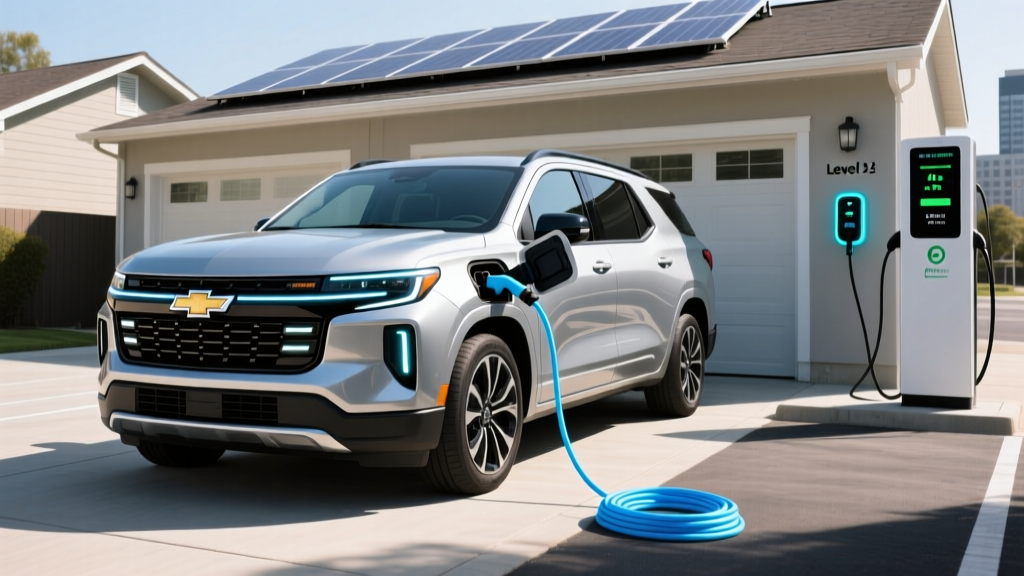
GM committed to the North American Charging Standard (NACS) for its EVs starting with 2025 models. The 2025-2026 Chevy Silverado EV ships with a native NACS charge port, giving it direct access to Tesla Supercharger stations (now opened to non-Tesla EVs) without an adapter.
| Connector | Silverado EV Native? | Network Access | Adapter Needed? |
|---|---|---|---|
| NACS (Tesla-style) | Yes (2025+ models) | Tesla Supercharger, EVgo, Electrify America (newer stalls) | No |
| CCS1 | No (native NACS) | Electrify America, EVgo, ChargePoint (legacy stalls) | Yes — NACS-to-CCS adapter (~$200-$300) |
| CHAdeMO | No | Declining network (mostly legacy Nissan Leaf stations) | Not practical — no widely available adapter |
| J1772 (Level 2 AC) | Via included adapter | All public Level 2 stations, home chargers | NACS-to-J1772 adapter (usually included) |
Practical takeaway: For home Level 2 charging, most NACS-compatible home chargers (like the Tesla Wall Connector or ChargePoint Home Flex with NACS plug) connect directly. For public DC fast charging, the Silverado EV's native NACS port opens up the largest fast-charging network in North America — over 25,000 Tesla Superchargers — plus growing NACS-equipped stalls on other networks.
Real Charging Times: What to Expect With the Silverado EV's Battery
The Silverado EV's Ultium battery accepts up to 350 kW on DC fast chargers, but sustained rates depend on state of charge, battery temperature, and station capability. Here's what real charge sessions look like:
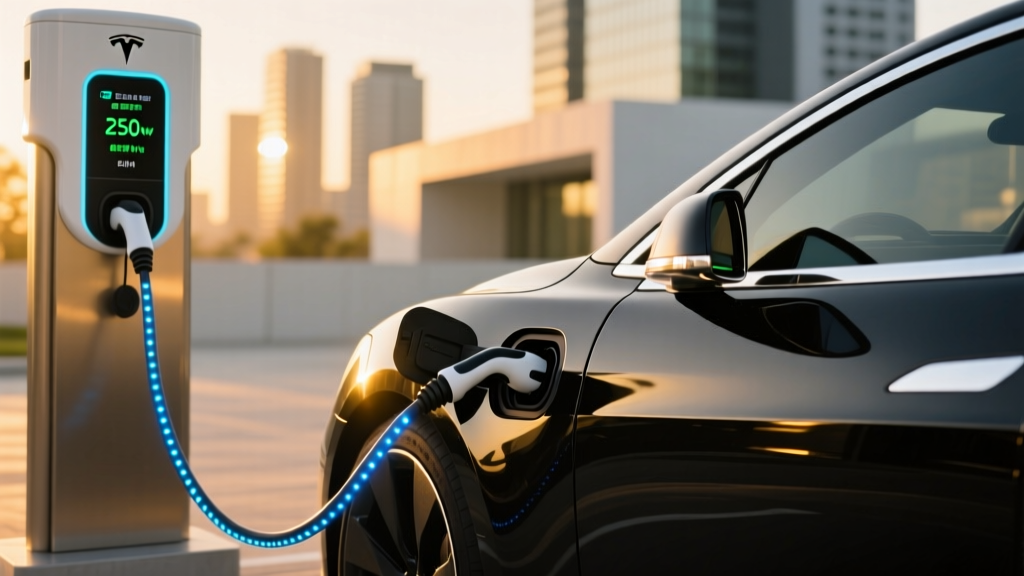
• 350 kW station (e.g., Electrify America 350, Tesla V4 Supercharger): 10-80% in approximately 30-40 minutes. Peak rate of ~350 kW sustained to ~30% SoC, tapering to ~150 kW by 60%, and ~80 kW by 75%.
• 150 kW station (common EA/EVgo stalls): 10-80% in approximately 55-70 minutes. Truck can accept full 150 kW through most of the curve.
• 50 kW station (older CHAdeMO/CCS stalls): 10-80% in approximately 2.5-3 hours. Not recommended for road trips.
Level 2 Home Charging (overnight)
• 11.5 kW (48A): Adds ~200 miles in 8 hours — sufficient for daily commuting recovery.
• 19.2 kW (80A): Adds ~340 miles in 8 hours — ideal for heavy-use days or commercial fleet duty cycles.
Preconditioning matters. When navigating to a DC fast charger using the Silverado EV's built-in navigation, the battery thermal management system pre-warms or pre-cools the pack to optimize charge acceptance. Skipping preconditioning in cold weather can add 10-15 minutes to your 10-80% session and reduce peak kW.
Cost to Charge: Home vs. Public vs. Gas Comparison
The Silverado EV's efficiency averages roughly 2.0-2.3 kWh per mile in mixed driving (approximately 1.5-1.7 kWh/mile in hypermiling conditions like the range record, and 2.5+ kWh/mile when towing). Using 2.2 kWh/mile as a realistic daily average:
| Scenario | $/kWh | Cost Per Mile | Cost for 400-mi Trip |
|---|---|---|---|
| Home (off-peak utility rate) | $0.08-$0.14 | $0.18-$0.31 | $70-$124 |
| Home (peak / standard rate) | $0.15-$0.22 | $0.33-$0.48 | $132-$194 |
| Public Level 2 (ChargePoint, etc.) | $0.25-$0.49 | $0.55-$1.08 | $220-$432 |
| DC Fast (Tesla Supercharger avg) | $0.28-$0.42 | $0.62-$0.92 | $248-$370 |
| Gas truck comparison (Silverado 1500 5.3L V8, 17 MPG, $3.40/gal) | — | $0.20/mi | $80 |
Home charging on off-peak rates is the clear winner — roughly matching or beating a gas Silverado 1500 on cost per mile. DC fast charging on road trips costs significantly more, sometimes exceeding gas on a per-mile basis. This is why home charging infrastructure is non-negotiable for Silverado EV ownership economics.
Recommended Home Chargers for the Silverado EV
Given the truck's large battery, prioritize chargers that deliver at least 48 amps (11.5 kW) and ideally support 80 amps (19.2 kW) if your electrical panel allows it.
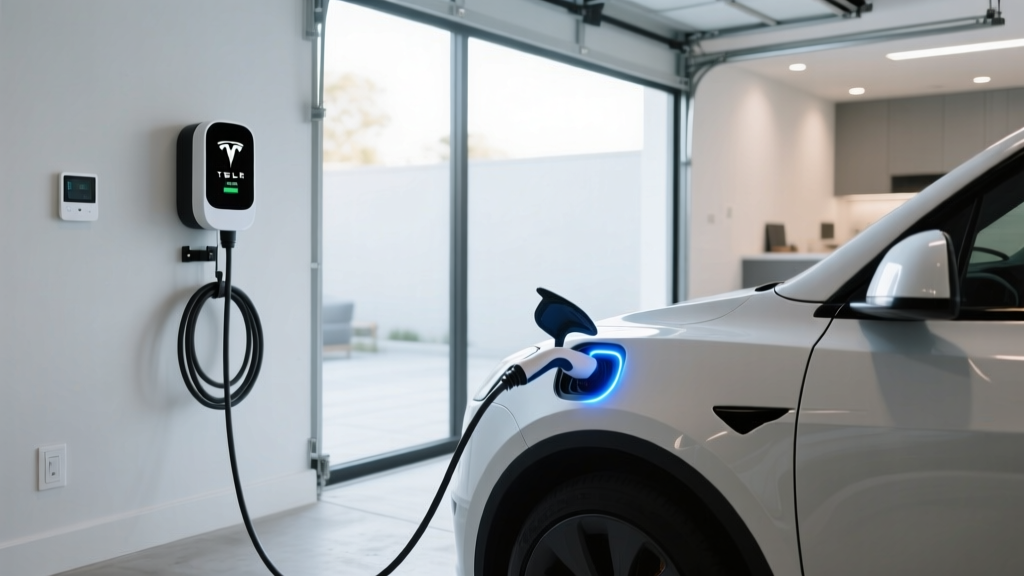
Tesla Wall Connector (NACS)
- Power: Up to 11.5 kW (48A) on 60A circuit
- Connector: Native NACS — plugs directly into Silverado EV
- Cable: 24 ft
- Smart features: Wi-Fi, OTA updates, power sharing between units, Tesla app scheduling
- Price: ~$475
- Best for: Simple, reliable NACS charging at moderate cost
ChargePoint Home Flex (NACS)
- Power: Up to 19.2 kW (80A) on 100A circuit, configurable down to 16A
- Connector: Available with native NACS plug (2025+ models)
- Cable: 23 ft
- Smart features: Wi-Fi, Alexa, ChargePoint app, detailed energy reporting, flexible amperage
- Price: ~$699
- Best for: Maximum home charging speed for the Silverado EV's large battery
Emporia Level 2 Smart Charger
- Power: Up to 11.5 kW (48A) on 60A circuit
- Connector: J1772 (NACS adapter needed) or NACS version available
- Cable: 24 ft
- Smart features: Wi-Fi, energy monitoring, solar integration, scheduling, works with Emporia Vue panel monitor
- Price: ~$399
- Best for: Budget-conscious owners with solar or energy monitoring needs
Grizzl-E Smart (United Chargers)
- Power: Up to 10 kW (40A) on 50A circuit
- Connector: J1772 or NACS (select at purchase)
- Cable: 24 ft
- Smart features: Wi-Fi, OCPP protocol, adjustable amperage, extreme cold rated (-40°F)
- Price: ~$449
- Best for: Cold-climate durability and outdoor installations
For Silverado EV owners who drive 100+ miles daily or use the truck commercially, the ChargePoint Home Flex at 80A is the strongest pick — it can recover a full day's use in roughly 5-6 hours. For lighter-duty use, the Tesla Wall Connector at 48A handles overnight replenishment reliably at lower cost.
Safety, Permits, and Code Compliance
EV charger installation is regulated electrical work. Skipping permits or cutting corners on code compliance creates fire risk and may void your homeowner's insurance coverage.
- Dedicated circuit required: NEC Article 625 mandates that EVSE (Electric Vehicle Supply Equipment) operates on its own dedicated breaker — no sharing with other appliances.
- GFCI protection: Outdoor installations require a GFCI breaker. Most modern EV chargers have built-in ground-fault protection, but your local jurisdiction may still require a GFCI breaker at the panel.
- Outdoor rating: If mounting outdoors, the charger must carry a NEMA 4 or NEMA 4X rating for weather resistance. All four chargers recommended above are outdoor-rated.
- Permit and inspection: Most jurisdictions require an electrical permit ($50-$250) and a post-installation inspection. Your electrician typically handles this. Unpermitted work can cause issues during home sale or insurance claims.
- Wire gauge: 48A chargers need 6 AWG copper wire; 80A chargers need 4 AWG or 3 AWG depending on run length. Undersized wire causes voltage drop and heat buildup.
- Cable management: Use a wall-mounted holster or retractable reel to keep the cable off the garage floor and prevent trip hazards and cord damage.
Frequently Asked Questions
How much does it cost to install a home EV charger for the Chevy Silverado EV?
A straightforward installation (charger mounted near the electrical panel, no panel upgrade) typically costs $700-$1,450 including equipment, labor, and permits. Complex installations requiring long conduit runs, trenching, or a panel upgrade can reach $2,800-$6,450. The 30% federal tax credit (up to $1,000) can offset a portion of this cost.
How fast will each charging level add range to the Silverado EV?
Level 1 (120V) adds roughly 3-4 miles per hour — impractical for a 200 kWh battery. Level 2 at 48A (11.5 kW) adds approximately 25-32 miles per hour. Level 2 at 80A (19.2 kW) adds roughly 50-55 miles per hour. DC fast charging at a 350 kW station can add over 200 miles in 20 minutes during the peak portion of the charge curve.
Which connector and charger is compatible with my Silverado EV?
The 2025-2026 Chevy Silverado EV uses a native NACS charge port. For home charging, choose a charger with a NACS plug (Tesla Wall Connector, ChargePoint Home Flex NACS edition) or use the included NACS-to-J1772 adapter with any J1772 charger. For public DC fast charging, the NACS port provides direct access to Tesla Superchargers and expanding NACS-equipped stations on other networks.
How much does charging the Silverado EV cost per mile compared to gas?
At home on off-peak electricity ($0.10/kWh), the Silverado EV costs approximately $0.22 per mile — competitive with or cheaper than a gas Silverado 1500 at roughly $0.20 per mile (17 MPG, $3.40/gallon). On DC fast chargers at $0.35/kWh, the cost rises to about $0.77 per mile, which exceeds gasoline. Home charging is essential for cost savings.
What electrical upgrades might I need for a Silverado EV home charger?
A 48A charger needs a dedicated 60A circuit; an 80A charger needs a 100A circuit. If your home has a 200A main panel with adequate spare capacity, no upgrade is needed. Homes with 100A or 150A service, or panels already near capacity, may require a panel upgrade ($1,500-$3,500) or the installation of a secondary sub-panel. Your electrician will perform a NEC 220 load calculation to determine this before installation.
Does the Silverado EV range record mean I'll get 1,000 miles per charge?
No. The 1,000+ mile range record was achieved under hypermiling conditions — speeds of 20-25 mph, minimal climate control use, and ideal temperatures. Real-world EPA range is approximately 440-460 miles depending on trim, and highway driving at 70 mph with climate control yields roughly 320-370 miles. Towing can reduce range to 200-280 miles depending on trailer weight and conditions.