Why Charging Strategy Defines Your Chevy Electric Vehicle Range
The EPA-estimated range on a Chevy Equinox EV (up to 319 miles) or Silverado EV (up to 440 miles) is only a starting point. Your actual Chevy electric vehicle range depends heavily on how, where, and when you charge. Battery chemistry, charging speed, ambient temperature, and charge-curve taper all determine how many usable miles you'll see on a full battery — and how quickly you can replenish them on the road.
This guide breaks down the charging infrastructure every Chevy EV owner needs to understand: home Level 2 installation, public DC fast charging, connector standards, and real cost comparisons. We'll give you exact numbers — kW, kWh, minutes, and dollars — so you can plan with confidence.
The 2025/2026 Chevy Equinox EV 3RS has an EPA-estimated range of 319 miles. In real-world highway driving at 70 mph, expect roughly 260–280 miles. In sub-30°F cold weather without preconditioning, that can drop to 220–240 miles. The Silverado EV 4WT with its ~200 kWh Ultium battery (EPA 440 mi) holds up better in cold due to its larger thermal mass, but still loses 15–25% in deep winter. Always plan trips around 80% of the EPA sticker for safety margin.
Charging Levels Explained: Speeds, Power, and Miles Per Hour
Before we talk installation, let's define the three charging levels and what they deliver. Power is measured in kW (kilowatts) — that's the rate of energy flow. Energy is measured in kWh (kilowatt-hours) — that's the battery's total capacity. A 85 kWh battery charged at 11.5 kW takes roughly 7.4 hours from 0 to 100%. Never confuse the two.
| Level | Voltage | Max Power (kW) | Miles of Range Added Per Hour | Best Use Case |
|---|---|---|---|---|
| Level 1 | 120V AC | 1.4–1.9 kW | 3–5 miles/hr | Overnight top-up, PHEVs, emergencies |
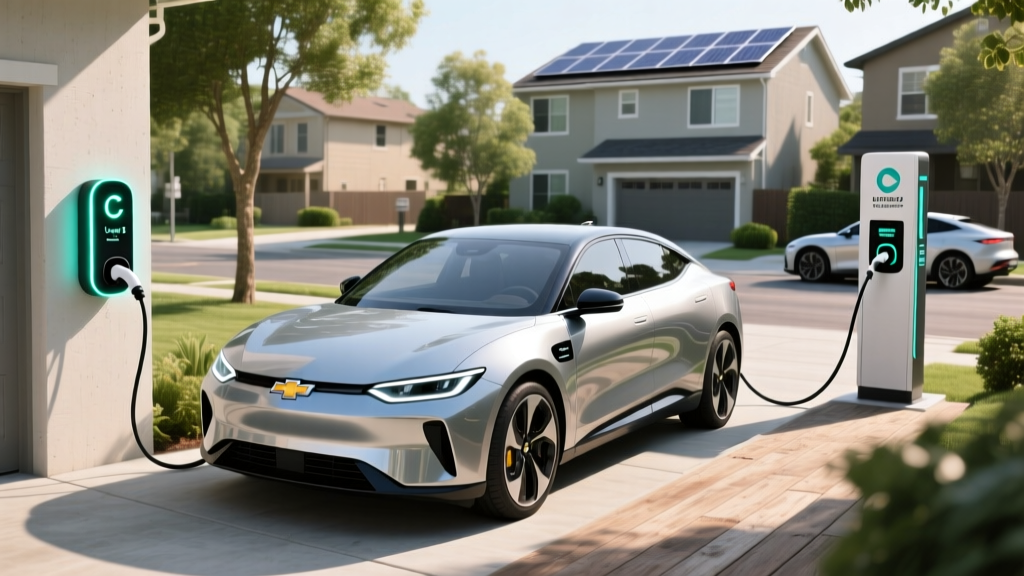
| Level 2 | 240V AC | 7.2–19.2 kW | 20–60 miles/hr | Daily home charging, workplace |
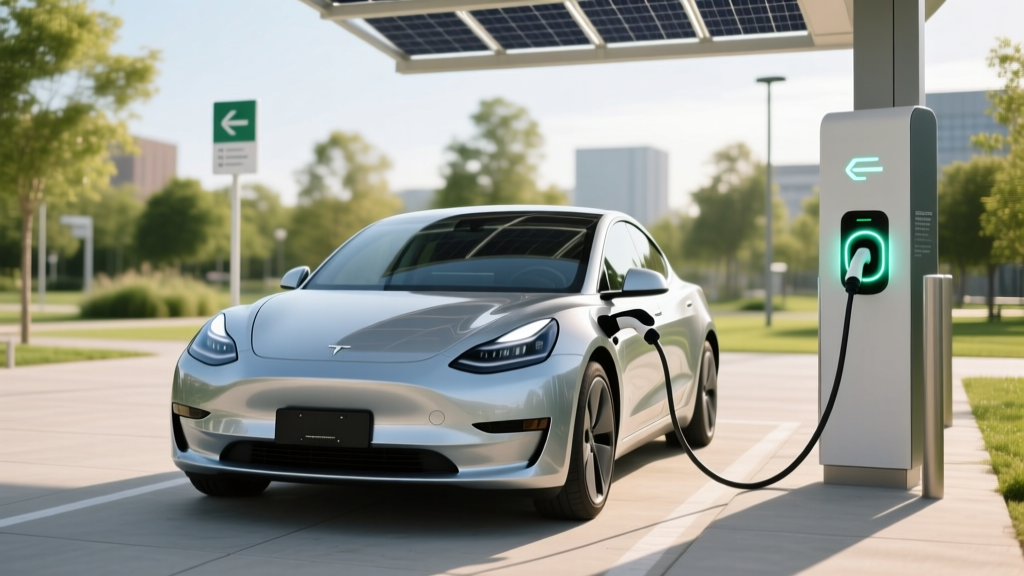
| DC Fast Charge | 400–800V DC | 50–350+ kW | 150–400+ miles/hr (peak) | Road trips, rapid replenishment |
For a Chevy Equinox EV with an ~85 kWh usable battery, Level 2 at 11.5 kW (48A) adds roughly 35 miles of range per hour and fully charges in about 7.5 hours. DC fast charging at the Equinox's peak rate of 150 kW can take it from 10–80% in approximately 30 minutes, though the charge curve tapers significantly above 80% — that last 20% can take as long as the first 60%.
Home Level 2 Charger Installation: Requirements, Costs, and Panel Upgrades
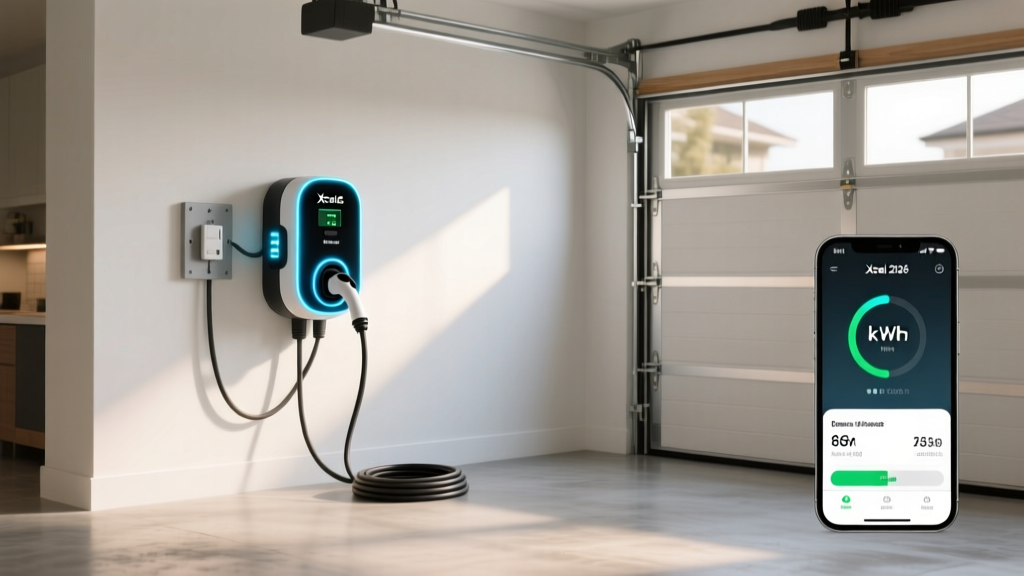
Installing a Level 2 home charger is the single highest-impact upgrade for preserving your Chevy electric vehicle range daily. Most Chevy EVs accept up to 11.5 kW on Level 2 AC (48 amps on a 60-amp dedicated circuit), though some trims and the Silverado EV support up to 19.2 kW (80 amps on a 100-amp circuit).
Electrical Requirements
- Circuit: Dedicated 240V circuit — 60A breaker for 48A continuous charging, or 100A breaker for 80A charging (Silverado EV max).
- Wire gauge: 6 AWG copper for 60A; 2 AWG copper for 100A runs under 50 feet. Longer runs may require upsizing to mitigate voltage drop.
- Panel capacity: Your electrical panel must have enough spare amperage. A 200A service panel with existing loads near 160A may not accommodate a new 60A circuit without a load calculation or panel upgrade.
- GFCI protection: NEC 2023 and later require GFCI protection for EV receptacles (NEMA 14-50). Hardwired chargers often bypass this requirement — another reason many electricians prefer hardwired installs.
- Permit: Most jurisdictions require an electrical permit and inspection. Costs vary from $50 to $250 depending on locality.
Installation Cost Breakdown
| Component | Typical Cost Range | Notes |
|---|---|---|
| Level 2 Charger (Equipment) | $400 – $750 | Smart Wi-Fi-enabled, 48A, 24-ft cable |
| Electrician Labor (standard install) | $600 – $1,500 | Panel to garage, <50 ft run, drywall patching |
| Electrical Permit & Inspection | $50 – $250 | Varies by municipality |
| Panel Upgrade (if needed) | $1,500 – $3,500 | 200A to 200A replacement or 200A to 400A service upgrade |
| Total (no panel upgrade) | $1,050 – $2,500 | Most homes with 200A service |
| Total (with panel upgrade) | $2,550 – $6,000 | Older homes with 100A or maxed-out 200A panels |
Many homes built before 2000 have 100A or 150A service. Adding a 60A EV circuit may exceed your panel's load capacity. A licensed electrician must perform a NEC Article 220 load calculation before installation. Budget for a possible panel upgrade — it's the single biggest variable in home charging cost. Some utilities offer rebates of $250–$1,000 for panel upgrades tied to EV adoption; check with your local provider.
Connector Compatibility: NACS, CCS1, and What Chevy Uses in 2025–2026
General Motors transitioned its North American EV lineup to the NACS (North American Charging Standard) connector — the Tesla-designed plug — beginning with the 2025 model year. This is a major shift from the CCS1 connector used on the 2022–2024 Bolt EV and Bolt EUV.
| Chevy EV Model | Model Year | Native Connector | Public DC Network Access | Adapter Needed? |
|---|---|---|---|---|
| Bolt EV / EUV | 2022–2024 | CCS1 | Electrify America, EVgo, ChargePoint | CCS1-to-NACS adapter for Tesla Superchargers (when available from GM) |
| Equinox EV | 2024–2026 | NACS | Tesla Supercharger + all NACS networks | NACS-to-CCS adapter for legacy CCS stations |
| Blazer EV | 2024–2026 | NACS | Tesla Supercharger + all NACS networks | NACS-to-CCS adapter for legacy CCS stations |
| Silverado EV | 2024–2026 | NACS | Tesla Supercharger + all NACS networks | NACS-to-CCS adapter for legacy CCS stations |
If you own a 2025+ Chevy EV with NACS, you get native access to the Tesla Supercharger network — the largest and most reliable DC fast-charging network in North America with over 25,000 stalls. However, Electrify America, EVgo, and other networks are also adding NACS cables. For the transition period, GM provides or sells a NACS-to-CCS adapter so you can still use legacy CCS stations.
Charging Cost Per Mile: Home Electricity vs. Gasoline
One of the strongest arguments for a Chevy EV is fuel cost savings — but only if you charge smartly. Here's how the economics break down across different scenarios.
| Scenario | Rate ($/kWh) | Efficiency (kWh/100 mi) | Cost Per Mile | Equivalent Gas Price (at 25 MPG) |
|---|---|---|---|---|
| Home, off-peak utility rate | $0.08–$0.12 | 30 (Equinox EV) | $0.024–$0.036 | $0.60–$0.90/gal |
| Home, average blended rate | $0.14–$0.18 | 30 | $0.042–$0.054 | $1.05–$1.35/gal |
| Public Level 2 (ChargePoint, etc.) | $0.20–$0.35 | 30 | $0.060–$0.105 | $1.50–$2.63/gal |
| DC Fast Charge (EA, EVgo, Tesla) | $0.30–$0.55 | 30 | $0.090–$0.165 | $2.25–$4.13/gal |
| Gasoline baseline (25 MPG avg) | $3.40/gal | — | $0.136 | — |
At home on off-peak rates, a Chevy Equinox EV costs roughly $0.03 per mile to fuel — equivalent to paying $0.75 per gallon of gas. Even on DC fast chargers at $0.45/kWh, you're paying roughly the equivalent of $3.50/gallon gas, which is near parity. The savings are dramatic for home-charging-dominant owners: a driver covering 12,000 miles per year saves approximately $1,200–$1,600 annually versus a 25 MPG gas vehicle at $3.40/gallon.
Equipment Recommendations: Best Level 2 Chargers for Chevy EVs
Here are three proven Level 2 chargers well-suited to Chevy's NACS-equipped EVs, selected for reliability, power output, cable length, and smart features.
Emporia Level 2 EV Charger
- Power: 48A / 11.5 kW (hardwired) or 40A / 9.6 kW (NEMA 14-50 plug)
- Connector: NACS native (2025+ version); J1772 with adapter available
- Cable: 24 feet
- Smart features: Wi-Fi, energy monitoring via Emporia Vue integration, scheduled charging, solar-aware charging
- Price: ~$399 (hardwired) / ~$449 (plug-in)
- Best for: Budget-conscious owners who want energy monitoring and solar integration
ChargePoint Home Flex
- Power: Up to 50A / 12 kW (adjustable 16A–50A via dip switches)
- Connector: NACS native (2025+ models); J1772 standard with NACS adapter included
- Cable: 23 feet
- Smart features: Wi-Fi, ChargePoint app scheduling, Alexa integration, flexible amperage to match panel capacity
- Price: ~$599–$699
- Best for: Owners with limited panel capacity who need adjustable amperage
Tesla Wall Connector (NACS)
- Power: 48A / 11.5 kW (hardwired, 60A circuit)
- Connector: NACS native
- Cable: 24 feet
- Smart features: Wi-Fi, over-the-air updates, power-sharing between two units on one circuit, load management
- Price: ~$475
- Best for: Chevy NACS owners wanting a proven, high-quality charger; works seamlessly with NACS-equipped Equinox, Blazer, and Silverado EVs
Safety, Electrical Code, and Outdoor Installation Considerations
EV charging draws sustained high current for hours — this is not like running a dryer for 45 minutes. Safety and code compliance are non-negotiable.
- Dedicated circuit: Your EV charger must be on its own dedicated circuit. Sharing with other appliances is a code violation and a fire risk.
- Hardwired vs. plug-in: Hardwired installations (no plug) are generally preferred for 48A+ chargers. They avoid the NEC GFCI requirement on receptacles, reduce connection points that can overheat, and allow higher amperage. A NEMA 14-50 plug is convenient for portability but requires a GFCI breaker ($100–$150 extra) and is limited to 40A continuous.
- Outdoor rating: If your charger is mounted outside or in an unsealed garage, ensure it carries a NEMA 4 or IP65 rating. All three chargers recommended above are outdoor-rated.
- Thermal monitoring: Quality chargers include thermal sensors that reduce power if the unit or connector overheats. This protects both the equipment and your home's wiring.
- UL listing: Only install UL-listed or ETL-listed equipment. Cheap, uncertified chargers from online marketplaces may lack critical safety protections.
- Load management: If your panel is near capacity but you don't want to upgrade, consider a smart load-management system (like the Emporia VUE with automatic load shedding) that monitors your home's total draw and throttles the EV charger when other appliances kick on.
DC Fast Charging on the Road: Chevy EV Charge Speeds
For road trips, DC fast charging speed determines how long you're stuck at a rest stop. Here are the peak DC charge rates for current Chevy EVs and what to expect in practice:
| Model | Battery (usable kWh) | Peak DC Rate (kW) | 10–80% Time | Charging Architecture |
|---|---|---|---|---|
| Equinox EV | ~85 kWh | 150 kW | ~30 minutes | 400V Ultium |
| Blazer EV | ~102 kWh | 190 kW | ~28 minutes | 400V Ultium |
| Silverado EV 4WT | ~200 kWh | 350 kW | ~25 minutes | 800V Ultium |
| Bolt EV (2022–2024) | ~65 kWh | 55 kW | ~60 minutes | 400V |
Note the charge curve taper: a Silverado EV may peak at 350 kW below 30% SoC, but drops to ~150 kW by 60% and ~50 kW above 85%. This is why manufacturers quote 10–80% times rather than 0–100%. For road-trip planning, target charging stops that bring you from ~15% to ~80% — that's the sweet spot where the charge curve is fastest. According to fueleconomy.gov, driving at steady highway speeds with moderate climate control use yields the most predictable range and charging behavior.
Frequently Asked Questions
How much does it cost to install a home EV charger?
A typical Level 2 home charger installation costs $1,050–$2,500 if your electrical panel has sufficient capacity. This includes the charger ($400–$750), electrician labor ($600–$1,500), and permit ($50–$250). If you need a panel upgrade from 100A or 150A to 200A service, add $1,500–$3,500. Always get a load calculation from a licensed electrician before committing.
How fast will each charging level add range to my Chevy EV?
Level 1 (120V) adds about 3–5 miles per hour — only practical for PHEVs or emergency trickle charging. Level 2 (240V at 48A/11.5 kW) adds roughly 35 miles per hour to an Equinox EV, fully charging overnight. DC fast charging at 150 kW (Equinox EV peak) adds roughly 150–200 miles in 20 minutes, tapering above 80%.
Which connector and charger is compatible with my Chevy EV?
2025 and newer Chevy Equinox, Blazer, and Silverado EVs use the NACS connector natively. Older Bolt EV/EUV models (2022–2024) use CCS1. For NACS vehicles, you can charge at Tesla Superchargers without an adapter. For legacy CCS stations, you'll need a GM-supplied NACS-to-CCS adapter. For home Level 2, a NACS-equipped Tesla Wall Connector or ChargePoint Home Flex works directly.
How much does charging cost per mile compared to gas?
Home charging at average residential rates ($0.12–$0.18/kWh) costs $0.03–$0.05 per mile in a Chevy Equinox EV (rated at ~30 kWh/100 mi per fueleconomy.gov). A comparable gas vehicle at 25 MPG and $3.40/gallon costs $0.136 per mile. Home charging saves $1,000–$1,600 per year for a 12,000-mile driver. Public DC fast charging at $0.40–$0.55/kWh approaches gas parity.
What electrical upgrades might I need for a home charger?
The most common upgrade is a panel replacement if your existing service is 100A or if your 200A panel is near its load limit. A 60A dedicated circuit for a 48A charger requires two available breaker slots and sufficient spare capacity after a NEC load calculation. Older homes may also need updated grounding, a new meter socket, or utility service-drop upgrades. Budget $1,500–$3,500 for a panel upgrade if needed. Check with your utility — some offer rebates or time-of-use rate plans that offset installation cost.
Does fast charging degrade my Chevy's battery faster?
DC fast charging generates more heat than Level 2, and heat is the primary driver of lithium-ion degradation. However, GM's Ultium battery platform includes active liquid thermal management that preconditioning and regulates temperature during fast charging. For daily use, Level 2 home charging is ideal. Reserve DC fast charging for road trips. GM's battery warranty covers 8 years/100,000 miles with a capacity retention threshold — typically 70% of original capacity. Following the manufacturer's charging recommendations and avoiding routinely charging to 100% on NMC cells will maximize longevity.