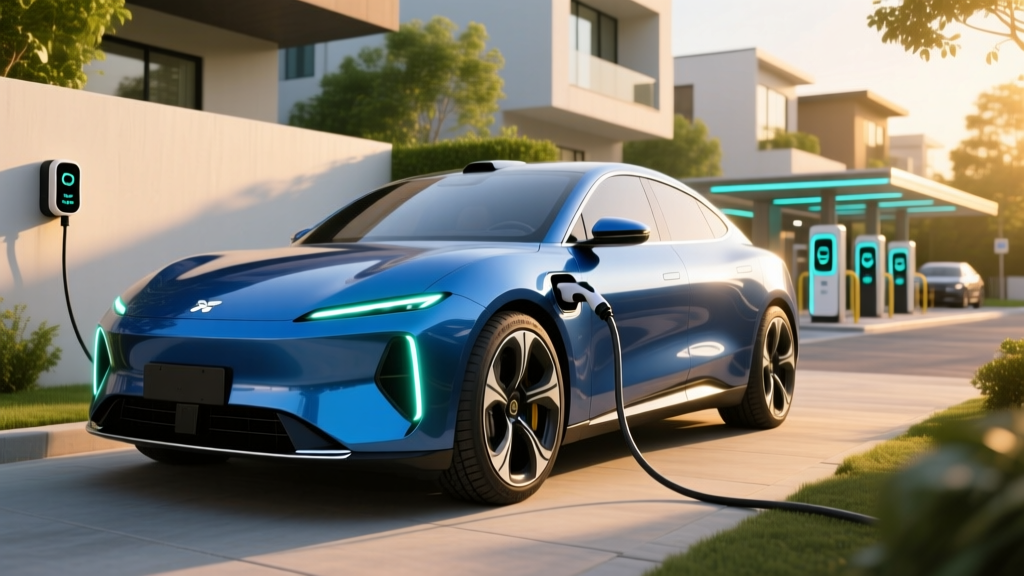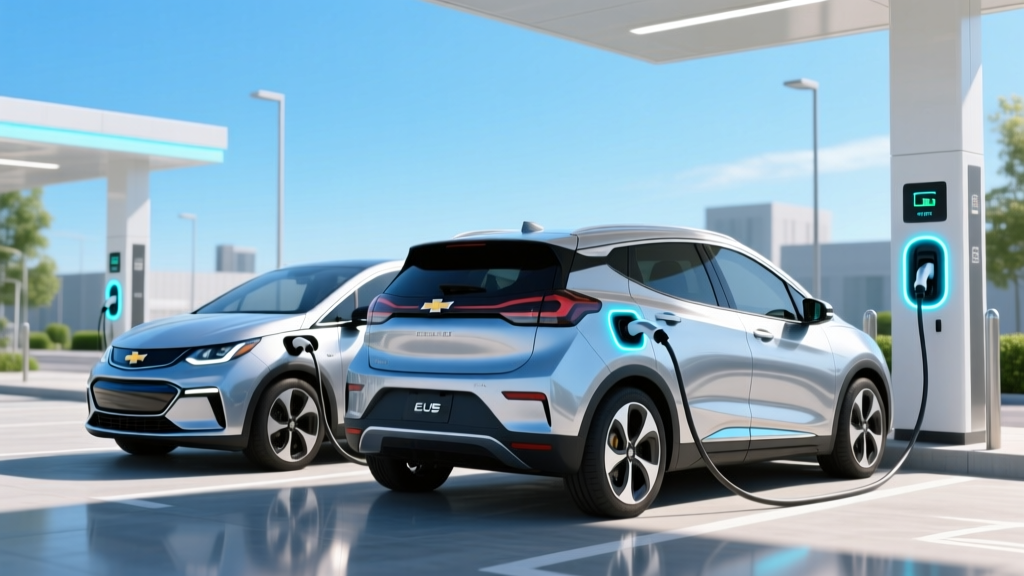
If you own or are shopping for a Chevrolet Bolt EV or Bolt EUV, you already know these are among the most value-packed electric vehicles on the road. The 2025 Bolt EV carries an EPA-estimated 259 miles of range from its 65 kWh (usable) lithium-ion NMC battery, while the longer-wheelbase Bolt EUV delivers 247 miles EPA. But the range of Chevy Bolt models in real-world driving depends heavily on how you charge, when you charge, and whether your charging setup is optimized for the vehicle's capabilities.
This guide walks through every charging scenario Bolt owners face — from a standard 120V wall outlet to DC fast charging on a road trip — with exact numbers for speeds, costs, and installation requirements.
Real-World Range of Chevy Bolt EV and EUV: What to Expect
Bolt EV: EPA 259 mi | Expect ~230–245 mi mixed driving, ~200–215 mi sustained highway (70+ mph), ~175–195 mi in freezing weather
Bolt EUV: EPA 247 mi | Expect ~220–235 mi mixed, ~190–205 mi highway, ~170–185 mi in freezing weather
Source: fueleconomy.gov
The Bolt's 65 kWh battery pack paired with its relatively efficient powertrain (114 MPGe combined for the EV, 115 MPGe for the EUV) means roughly 3.5 to 4.0 miles per kWh in moderate conditions. Highway speeds, cold temperatures, and aggressive acceleration all reduce that figure. Understanding this baseline helps you calculate how much range each charging session actually adds.
A critical spec often overlooked: the Bolt EV and EUV support a peak DC fast-charge rate of only 55 kW. This is the vehicle's most significant charging limitation and the reason we recommend most Bolt owners prioritize a strong Level 2 home setup over reliance on public DC fast chargers.
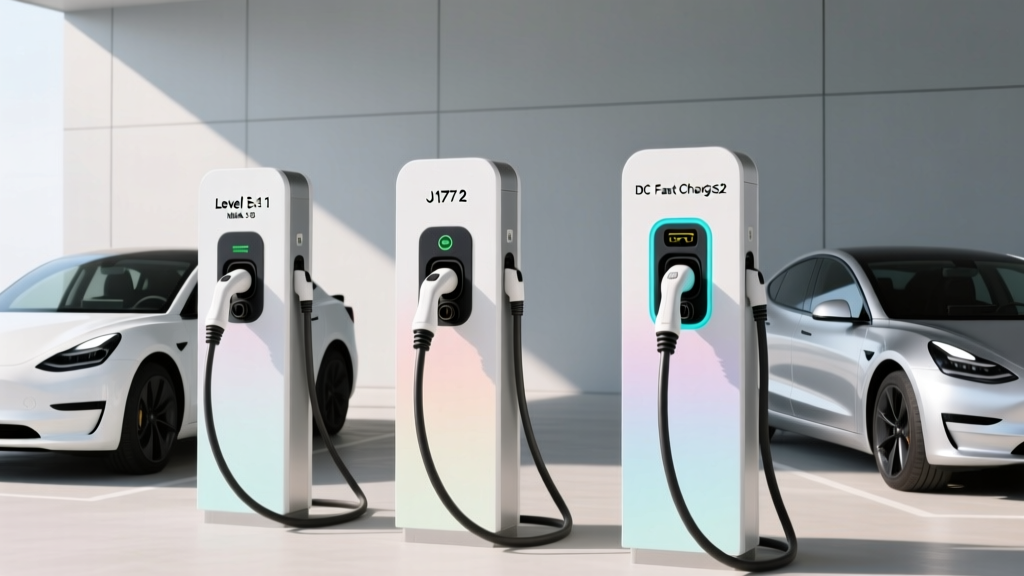
Charging Levels Explained: Speeds in kW and Miles Per Hour
Before comparing chargers, it is essential to understand the difference between kW (kilowatts) and kWh (kilowatt-hours). kW measures power — the rate at which energy flows into your battery, like water pressure from a hose. kWh measures energy — the total amount stored, like gallons in a tank. A 55 kW charger delivers energy at 55 kilowatts; a 65 kWh battery stores 65 kilowatt-hours of energy.
| Level | Voltage | Max Power (kW) | Miles of Range Added Per Hour | Typical Use Case |
|---|---|---|---|---|
| Level 1 (120V) | 120V AC | ~1.4 kW | ~4 mi/hr | Overnight top-off, emergency |
| Level 2 (240V) | 240V AC | ~11.5 kW (Bolt's onboard charger max) | ~34–39 mi/hr | Daily home charging |
| DC Fast Charge | 400V+ DC | 55 kW peak | ~150–190 mi/hr (at peak) | Road trips, quick top-ups |
The Bolt's onboard AC charger is rated at 11.5 kW, which is excellent for a vehicle in this price segment. That means a 48-amp Level 2 circuit can fully utilize the Bolt's acceptance rate, adding roughly 39 miles of range per hour of charging. From a near-empty state, a full Level 2 charge takes approximately 7 hours — easily achievable overnight.
On DC fast charging, the 55 kW peak is modest by 2026 standards (many competitors now accept 150–250 kW). A 10–80% DC fast charge takes approximately 45–50 minutes for the Bolt. The charge curve tapers significantly above 60% state of charge, meaning the last 20% can take nearly as long as the first 50%. For road trips, plan stops around the 20–80% sweet spot where the Bolt accepts its peak rate.
Home Level 2 Charger Installation: Costs, Electrical Requirements, and Upgrades
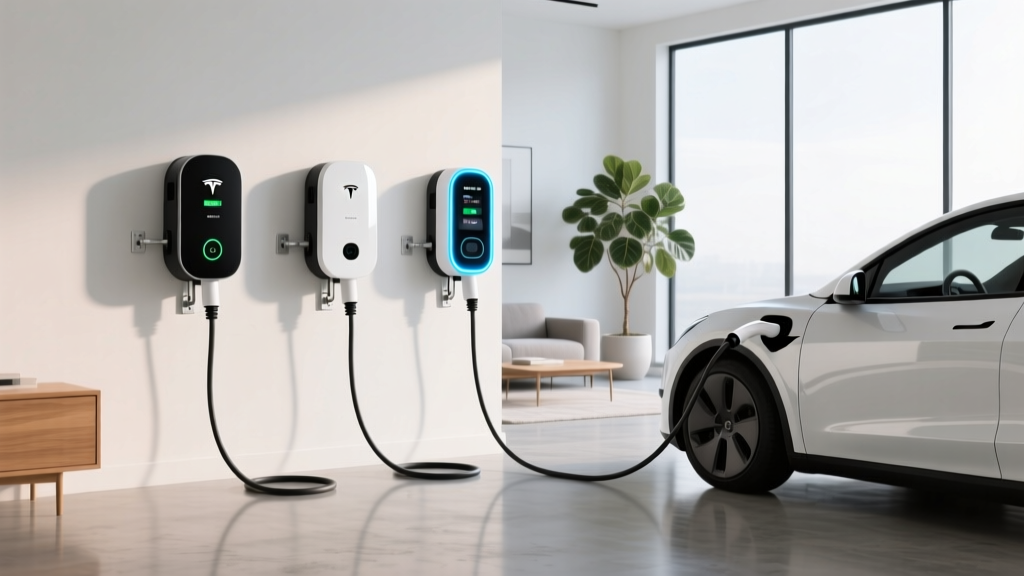
A Level 2 home charger is the single most impactful upgrade for Bolt owners. Here is what the installation actually involves and costs.
Electrical Requirements
To deliver the Bolt's full 11.5 kW AC charging capability, you need a 240V, 60-amp dedicated circuit (which supports a 48-amp continuous charger load, per National Electrical Code's 80% rule for continuous loads). A 40-amp circuit with a 32-amp charger will deliver approximately 7.7 kW — adequate for most overnight charging but leaving some capability on the table.
Installation Cost Breakdown
| Component | Low Estimate | High Estimate | Notes |
|---|---|---|---|
| Level 2 Charger Equipment | $350 | $750 | 40A–48A smart chargers |
| Electrician Labor | $500 | $2,000 | Depends on run length, conduit, and panel proximity |
| Electrical Permit | $50 | $300 | Varies by municipality |
| Panel Upgrade (if needed) | $1,500 | $4,000 | 100A to 200A service upgrade for older homes |
| Total (no panel upgrade) | $900 | $3,050 | |
| Total (with panel upgrade) | $2,400 | $7,050 |
Homes built after 2000 typically have 200-amp electrical panels with sufficient spare capacity for a 60-amp EV circuit. Older homes with 100-amp service may require a panel upgrade — a significant added cost but one that increases your home's overall electrical capacity. Always have a licensed electrician perform a load calculation before installation.
Some utilities offer rebates of $250–$1,000 for Level 2 charger installation, and certain states provide additional incentives. Check with your local utility before scheduling work.
Connector Compatibility: NACS, CCS1, and Adapter Requirements
The connector landscape has shifted dramatically. Here is where the Bolt stands in 2026.
| Connector | Standard on Bolt? | Adapter Needed? | Network Access |
|---|---|---|---|
| CCS1 (Combined Charging System) | Yes (factory-equipped) | No | Electrify America, EVgo, ChargePoint DC |
| NACS (Tesla / North American Charging Standard) | No (not factory-equipped) | Yes — CCS-to-NACS adapter (~$200–$300) | Tesla Supercharger network (15,000+ stalls) |
| CHAdeMO | No | Not practical | Largely deprecated in North America |
The Bolt EV and EUV were built with CCS1 ports. For access to the Tesla Supercharger network — the most reliable DC fast-charging network in North America — Bolt owners need a CCS-to-NACS adapter. General Motors has indicated compatibility with approved adapters, but always verify adapter certification before purchasing. At 55 kW peak, the Bolt will not take full advantage of Supercharger V3/V4 speeds (250–350 kW), but the network's reliability and coverage make the adapter a worthwhile investment for road-trippers.
For home Level 2 charging, the Bolt uses a standard J1772 connector, which is universal across all non-Tesla Level 2 chargers. If you purchase a NACS-equipped home charger (increasingly common in 2026), you will need a NACS-to-J1772 adapter for the Bolt.
Cost to Charge: Per-Mile Economics vs. Gasoline
One of the strongest arguments for the Bolt is its low operating cost. Here is how charging expenses compare across scenarios.
| Scenario | Rate ($/kWh) | Full Charge Cost (0–100%) | Cost Per Mile (at 3.7 mi/kWh) |
|---|---|---|---|
| Home Off-Peak (utility TOU rate) | $0.08–$0.12 | $5.20–$7.80 | $0.022–$0.032 |
| Home Standard Rate | $0.14–$0.18 | $9.10–$11.70 | $0.038–$0.049 |
| Public Level 2 (ChargePoint, etc.) | $0.25–$0.40 | $16.25–$26.00 | $0.068–$0.108 |
| DC Fast Charge (Electrify America) | $0.35–$0.55 | $22.75–$35.75 | $0.095–$0.151 |
Compare this to a gasoline vehicle averaging 30 MPG at $3.40/gallon: $0.113 per mile. Even at standard residential electricity rates, the Bolt charges at roughly one-third to one-half the per-mile cost of a comparable gas car. Off-peak home charging drops that to roughly one-quarter the cost — approximately $650–$800 in annual fuel savings for a driver covering 12,000 miles per year.
To maximize savings, enroll in your utility's time-of-use (TOU) plan and schedule charging for overnight off-peak hours (typically 11 PM – 6 AM). Most smart Level 2 chargers support scheduled charging through their companion apps.
Recommended Level 2 Chargers for the Chevy Bolt
These chargers pair well with the Bolt's 11.5 kW onboard charger and represent strong value in 2026.
Power: 48A (11.5 kW) | Connector: J1772
Cable: 24 ft | Smart Features: Wi-Fi, scheduling, energy monitoring, load management
Price: ~$399
Best value pick — delivers the Bolt's maximum AC charge rate at a budget price with robust app controls.
Power: Up to 50A (12 kW) | Connector: J1772
Cable: 23 ft | Smart Features: Wi-Fi, Alexa integration, scheduling, detailed session data
Price: ~$549
Reliable mid-range option with excellent app ecosystem and flexible amperage settings.
Power: 40A (9.6 kW) | Connector: J1772
Cable: 24 ft | Smart Features: Wi-Fi, OCPP compatibility, built-in GFCI
Price: ~$449
Canadian-built, rugged outdoor rating (NEMA 4), ideal for garage-less installations.
Power: 48A (11.5 kW) | Connector: J1772
Cable: 25 ft | Smart Features: Wi-Fi + Bluetooth, Power Sharing for dual installs
Price: ~$599
Compact form factor with power-sharing capability for two-EV households.
For Bolt owners, the Emporia Vue offers the best combination of price and capability. Its 48-amp output matches the Bolt's 11.5 kW onboard charger exactly, and the load-management feature can prevent panel overload in homes with limited electrical capacity — potentially avoiding a costly panel upgrade.
Safety, Electrical Code, and Installation Best Practices
EV charging involves sustained high-current draw over many hours — a fundamentally different load profile than most household appliances. Proper installation is non-negotiable.
- Dedicated circuit: Your Level 2 charger must have its own dedicated circuit — never share with other appliances. A 48-amp charger requires a 60-amp breaker.
- GFCI protection: The 2023 NEC update requires GFCI protection for EV charging outlets in garages. Hardwired chargers often have built-in GFCI, which can simplify compliance.
- Outdoor rating: If your charger is installed outdoors, it must carry a NEMA 4 (or IP65+) weather resistance rating. All four chargers recommended above meet this standard.
- Hardwired vs. plug-in: Hardwired installations (no plug) are generally preferred for 48-amp and above chargers. A NEMA 14-50 outlet works for 40-amp chargers and offers portability, but the outlet itself must be installed to code with proper torque specifications — a known failure point when done incorrectly.
- Permit and inspection: Most jurisdictions require an electrical permit and post-installation inspection for EV charger circuits. Skipping this step can void homeowner's insurance coverage for electrical fires.
Frequently Asked Questions
How much does it cost to install a home EV charger for my Chevy Bolt?
Expect $900–$3,050 for a standard installation (equipment, electrician labor, and permit) if your electrical panel has sufficient capacity. If your home requires a panel upgrade from 100A to 200A service, add $1,500–$4,000. The total range is approximately $900–$7,050 depending on your home's electrical infrastructure. Get at least two quotes from licensed electricians.
How fast will each charging level add range to my Bolt?
Level 1 (120V) adds roughly 4 miles per hour — about 40 miles overnight. Level 2 (240V, 48A) adds 34–39 miles per hour, fully recharging the Bolt's 65 kWh battery in approximately 7 hours. DC fast charging at 55 kW peak adds roughly 150–190 miles per hour at peak rate, but a 10–80% session takes 45–50 minutes due to the charge curve taper.
Which connector and charger are compatible with my Chevy Bolt EV or EUV?
The Bolt uses a CCS1 connector for DC fast charging and a J1772 connector for AC Level 1 and Level 2 charging. Any J1772-equipped Level 2 charger will work at home. For Tesla Supercharger access, you will need an approved CCS-to-NACS adapter. CHAdeMO is not supported and is largely discontinued in North America.
How much does charging a Chevy Bolt cost per mile compared to gas?
At home off-peak rates ($0.08–$0.12/kWh), the Bolt costs approximately $0.022–$0.032 per mile. At standard residential rates, $0.038–$0.049 per mile. A comparable gasoline vehicle at 30 MPG and $3.40/gallon costs $0.113 per mile. Home charging saves $650–$800 annually for a 12,000-mile driver. Public DC fast charging ($0.35–$0.55/kWh) costs $0.095–$0.151 per mile — sometimes approaching gas costs, which is why home charging is so important for the economics.
What electrical upgrades might I need for a Bolt home charger?
If your home has a 200-amp electrical panel with adequate spare breaker slots, you likely need no upgrade beyond the dedicated 60-amp circuit. Homes with 100-amp service, older panels (e.g., Federal Pacific or Zinsco — known hazards), or panels already near capacity will likely need a panel upgrade to 200A service, costing $1,500–$4,000. A licensed electrician's load calculation is the definitive answer. Some utilities offer smart-panel solutions (e.g., Span) that can manage loads without a full upgrade.
Does the Chevy Bolt qualify for the federal EV tax credit?
Under current IRS §30D rules, the Bolt EV and EUV may qualify for up to $7,500 in federal tax credits, but eligibility depends on your taxable income (caps at $150,000 single / $300,000 joint), the vehicle's MSRP (must be under $55,000 for cars), battery component and critical mineral sourcing requirements, and whether you elect point-of-sale transfer. Rules change frequently — consult IRS.gov and a tax professional before relying on credit eligibility in your purchase decision.