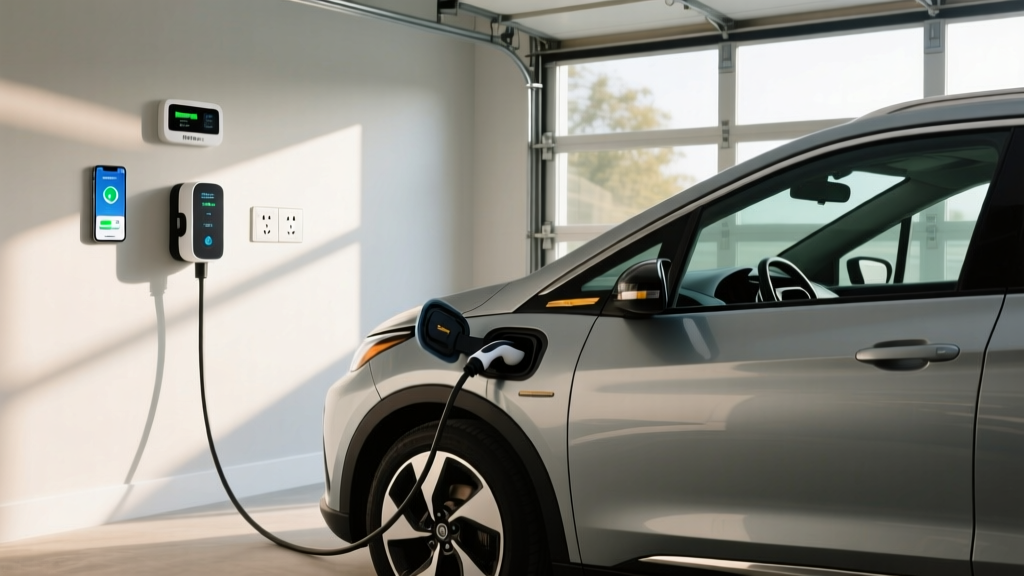
If you own or are considering a Chevrolet Bolt EV, you already know it punches well above its weight in value and efficiency. With an EPA-estimated 259 miles of range from its 65 kWh (usable) lithium-ion NMC battery pack, the Bolt EV remains one of the most affordable long-range electric vehicles on the market. But here's what many new EV owners discover: how you charge matters just as much as the battery capacity when it comes to preserving real-world range and long-term battery health.
This guide covers everything you need to know about charging the Chevy Bolt EV — from maximizing daily range to selecting the right home charger, understanding public DC fast-charging limitations, and calculating your true cost per mile. Whether you're plugging into a standard 120V outlet or installing a dedicated 240V Level 2 station, the right setup protects both your Bolt's range and your wallet.
Understanding Charging Levels: How Fast Can You Replenish Bolt EV Range?
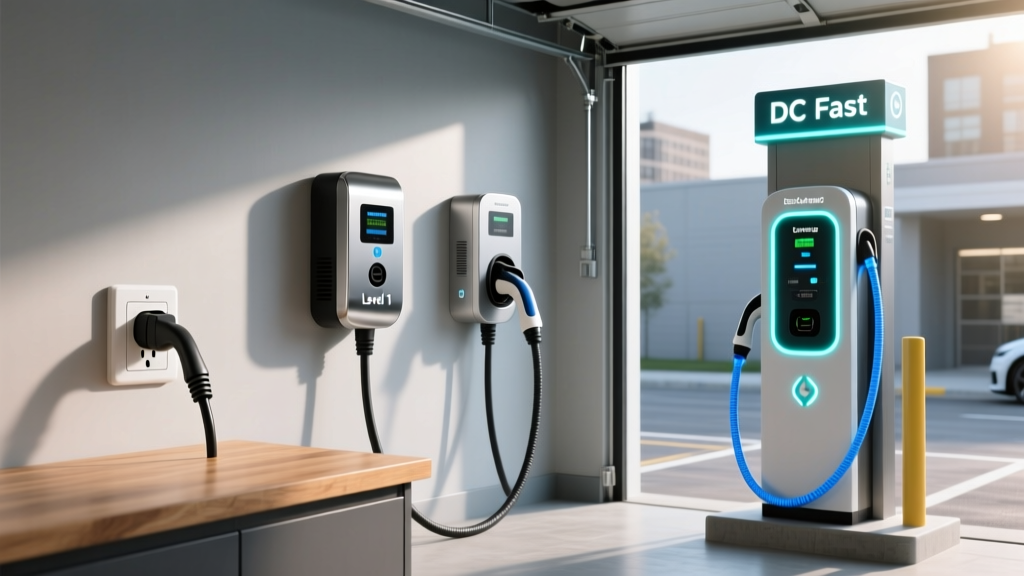
Before selecting equipment, you need to understand the three charging tiers available to Bolt EV owners. The distinction between kW (kilowatts — the rate of power delivery) and kWh (kilowatt-hours — the energy stored in your battery) is critical. Think of kW as the speed of water flowing through a hose, and kWh as the total volume of the tank you're filling. Your Bolt's 65 kWh battery needs to be refilled at a rate determined by the charger's kW output.
| Level | Power (kW) | Miles of Range Added per Hour | Full Charge Time (0–100%) | Best Use Case |
|---|---|---|---|---|
| Level 1 (120V AC) | 1.0–1.4 kW | 3–5 miles/hr | ~55–65 hours | Overnight top-up, low daily mileage |
| Level 2 (240V AC) | 7.2–11.5 kW | 25–39 miles/hr | ~7–9 hours | Daily home charging, full overnight refill |
| DC Fast Charge | Up to 55 kW (peak) | ~100+ miles in 30 min | 10–80% in ~45 min | Road trips, emergency top-ups |
The Chevy Bolt EV's onboard charger accepts up to 11.5 kW on Level 2 (48 amps), which is competitive for its class. However, its DC fast-charging capability tops out at approximately 55 kW peak — a notable limitation compared to newer EVs charging at 150–250 kW. On a 55 kW DCFC station, expect a 10–80% charge in roughly 45 minutes, with the charge rate tapering significantly above 80% state of charge (SoC) to protect battery longevity.
Home Charger Installation: Electrical Requirements, Costs, and Panel Upgrades
Installing a Level 2 home charger is the single most impactful upgrade for Bolt EV owners who want to wake up to a full 259-mile range every morning. But the total cost goes well beyond the charger unit itself.
Electrical Requirements for Level 2 Charging
To deliver the Bolt EV's maximum 11.5 kW Level 2 rate, you need a 240V circuit rated at 60 amps (the charger draws 48 amps continuously, and the National Electrical Code requires circuits to be rated at 125% of continuous load). If you're willing to accept a slightly slower 7.7 kW charge rate, a 240V/40A circuit (32A continuous draw) will suffice and is easier to install in older homes.
Does Your Electrical Panel Need an Upgrade?
Many homes built before 2000 have 100-amp or 150-amp main panels that may not have capacity for an additional 40–60 amp dedicated circuit. Signs you may need a panel upgrade:
- Your main panel is 100A or less
- Few or no open breaker slots remain
- You already run high-draw appliances (electric range, dryer, HVAC) on a smaller panel
- Your electrician's load calculation shows you're near capacity
A panel upgrade from 100A to 200A typically costs $1,500–$3,500 and is the single biggest variable in your installation budget. Always get a licensed electrician to perform a load calculation before committing to a charger amperage.
| Component | Low Estimate | High Estimate | Notes |
|---|---|---|---|
| Level 2 Charger Unit (hardwired or NEMA 14-50) | $350 | $750 | Smart Wi-Fi chargers cost more |
| Electrician Labor (run 240V circuit, mount unit) | $400 | $1,500 | Depends on run length from panel |
| Permit & Inspection | $50 | $250 | Varies by municipality |
| Electrical Panel Upgrade (if needed) | $1,500 | $3,500 | 100A → 200A; not always required |
| Total (no panel upgrade) | $800 | $2,500 | Most common scenario |
| Total (with panel upgrade) | $2,300 | $6,000 | Older homes with 100A service |
The IRS Residential Clean Energy Credit (IRC §25D) offers a 30% tax credit on home EV charger equipment and installation costs (up to $1,000), which can offset a meaningful portion of your investment. Consult a tax professional to confirm eligibility for your specific situation.
Connector Compatibility: CCS1, NACS, and the Bolt EV's Charging Port
The Chevy Bolt EV uses the CCS1 (Combined Charging System) connector for both Level 2 AC charging (the upper J1772 portion) and DC fast charging (the lower CCS pins). This is the standard adopted by most non-Tesla automakers, though the industry is actively shifting toward Tesla's NACS connector.
| Connector | Used By | Bolt EV Compatible? | Adapter Needed? |
|---|---|---|---|
| J1772 (AC Level 1/2) | All non-Tesla EVs | Yes — native | No |
| CCS1 (DC Fast) | GM, Ford, VW, Hyundai, most non-Tesla | Yes — native | No |
| NACS (Tesla) | Tesla; Ford, GM, others starting 2025+ | With adapter | Yes — CCS-to-NACS adapter (~$200–$300) |
| CHAdeMO | Nissan Leaf, Mitsubishi (legacy) | No | N/A — standard is phasing out |
Key takeaway for Bolt EV owners: GM has announced that future models will adopt NACS, but the existing Bolt EV retains CCS1 natively. If you want to access Tesla Supercharger stations — which now offer CCS compatibility via Magic Dock adapters at select locations or through a purchased CCS-to-NACS adapter — you can, but expect slightly slower charge rates than native CCS stations due to adapter overhead. For home charging, any J1772 Level 2 charger works directly with the Bolt EV.
Cost to Charge: How Much Does Bolt EV Range Actually Cost Per Mile?
One of the strongest arguments for the Bolt EV is its low operating cost. With an EPA-rated efficiency of 120 MPGe combined (approximately 28 kWh/100 miles), the Bolt is one of the most energy-efficient EVs available. Here's what that translates to in real dollars:
| Scenario | Rate | Cost per Full Charge (65 kWh) | Cost per Mile |
|---|---|---|---|
| Home — Off-Peak Utility Rate | $0.09/kWh | $5.85 | $0.025/mile |
| Home — Average US Residential | $0.17/kWh | $11.05 | $0.047/mile |
| Public Level 2 (ChargePoint, etc.) | $0.25–$0.39/kWh | $16.25–$25.35 | $0.07–$0.11/mile |
| DC Fast Charging (Electrify America, EVgo) | $0.35–$0.55/kWh | $22.75–$35.75 | $0.10–$0.15/mile |
| Gasoline Car (30 MPG, $3.40/gal) | $3.40/gallon | — | $0.113/mile |
Even at public DC fast-charging rates, the Bolt EV can be cheaper per mile than a 30 MPG gasoline car. At home on off-peak utility rates, you're paying roughly one-quarter what a gas car costs per mile. According to fueleconomy.gov, the Bolt EV's annual fuel cost is estimated at approximately $550–$650 based on 15,000 miles of driving and average electricity rates — compared to $1,700+ for a comparable gasoline compact.
Recommended Level 2 Home Chargers for the Chevy Bolt EV
Since the Bolt EV's onboard charger maxes out at 11.5 kW (48A), you'll want a Level 2 unit that can deliver at least that much to take full advantage. Here are proven, well-reviewed options for 2026:
Emporia Vue Level 2 Charger
- Power Output: 48A / 11.5 kW (240V)
- Connector: J1772 (NACS version available)
- Cable Length: 24 ft
- Smart Features: Wi-Fi, app scheduling, energy monitoring, solar integration
- Price: ~$399
- Verdict: Best value smart charger; matches Bolt's max charge rate perfectly
ChargePoint Home Flex
- Power Output: Up to 50A / 12 kW (configurable 16–50A)
- Connector: J1772
- Cable Length: 23 ft
- Smart Features: Wi-Fi, Alexa integration, app scheduling, flexible amperage
- Price: ~$599
- Verdict: Flexible amperage is ideal if your panel can't support a full 60A circuit
Grizzl-E Smart
- Power Output: 40A / 9.6 kW (240V)
- Connector: J1772
- Cable Length: 24 ft
- Smart Features: Wi-Fi, OCPP protocol, over-the-air updates
- Price: ~$449
- Verdict: Extremely durable, cold-weather rated to -40°F; great for garage or outdoor
Tesla Universal Wall Connector
- Power Output: 48A / 11.5 kW (240V)
- Connector: Built-in J1772 + NACS (Magic Dock style)
- Cable Length: 24 ft
- Smart Features: Wi-Fi, power sharing, access control
- Price: ~$599
- Verdict: Future-proof for households with both CCS and NACS vehicles
For Bolt EV owners specifically, the Emporia Vue or ChargePoint Home Flex are the top picks. The Emporia delivers the Bolt's maximum charge rate at the lowest price, while the ChargePoint's configurable amperage gives your electrician flexibility if your panel has limited headroom.
Safety, Electrical Code, and Installation Best Practices
EV charging draws significant current for extended periods — often 6–8 continuous hours. This makes proper installation non-negotiable for safety and insurance purposes.
Key Code Requirements
- Dedicated Circuit: Your Level 2 charger must be on its own dedicated breaker — never shared with other appliances.
- GFCI Protection: The 2023 NEC (and most 2026-adopted local codes) requires GFCI protection for outdoor EV charging receptacles. Hardwired installations may have different requirements depending on jurisdiction.
- Outdoor Rating: If mounting outdoors, ensure the charger carries a NEMA 4 or NEMA 4X rating for weather resistance. All units listed above meet this standard.
- Permit and Inspection: Most municipalities require an electrical permit for new 240V circuits. Skipping this can void homeowner's insurance coverage in the event of a fire.
- Wire Gauge: A 60A circuit requires 4 AWG copper wire; a 40A circuit requires 8 AWG. Your electrician will size appropriately.
Always hire a licensed electrician experienced with EV charger installations. The National Electrical Contractors Association (NECA) maintains a directory of qualified contractors. Ask specifically about their experience with EVSE (Electric Vehicle Supply Equipment) installations — it's a specialty that matters.
Public Charging Strategy: Maximizing Bolt EV Range on Road Trips
The Bolt EV's 55 kW DC fast-charge ceiling means road trips require more planning than in vehicles like the Hyundai Ioniq 5 (which charges at up to 240 kW). Here's how to optimize:
- Precondition the battery: The Bolt EV does not have active battery preconditioning for DC charging (unlike Tesla or Porsche). In cold weather, drive the car for 20–30 minutes before arriving at a DCFC station to warm the pack and improve charge acceptance.
- Charge between 10–80% SoC: The Bolt's charge curve tapers significantly above 80%. Charging from 80–100% on DCFC can take nearly as long as 10–80%. For road trips, hop between stations at 80% to save time.
- Use PlugShare or the EV network apps: Filter for CCS1-compatible stations with 50+ kW output. Networks like Electrify America, EVgo, and ChargePoint all support the Bolt natively.
- Plan around the real-world range: Use 200–220 miles as your effective highway range in planning, not the 259-mile EPA figure. This accounts for highway speeds, HVAC use, and a safety buffer.
Frequently Asked Questions
How much does it cost to install a home EV charger for the Chevy Bolt?
Most Bolt EV owners spend between $800 and $2,500 for a complete Level 2 installation (charger + electrician + permit) if their electrical panel has sufficient capacity. If a panel upgrade from 100A to 200A is needed, total costs range from $2,300 to $6,000. The IRS §25D credit can offset 30% of equipment and installation costs up to $1,000.
How fast will each charging level add range to my Bolt EV?
Level 1 (120V) adds approximately 3–5 miles per hour — enough for overnight top-ups if you drive less than 40 miles daily. Level 2 (240V) adds 25–39 miles per hour depending on amperage, fully recharging the Bolt overnight. DC fast charging can add roughly 100+ miles in 30 minutes but is limited to ~55 kW peak on the Bolt EV.
Which connector and charger are compatible with the Chevy Bolt EV?
The Bolt EV uses a CCS1 connector natively — the J1772 standard for AC Level 1 and Level 2, plus the CCS DC fast-charge pins. Any J1772 Level 2 home charger works. For Tesla Supercharger access, you'll need a CCS-to-NACS adapter. CHAdeMO stations are not compatible.
How much does charging the Bolt EV cost per mile compared to gas?
At average US residential electricity rates ($0.17/kWh), the Bolt EV costs approximately $0.047 per mile to fuel. A comparable 30 MPG gasoline car at $3.40/gallon costs about $0.113 per mile. Home charging on off-peak rates drops the Bolt's cost to roughly $0.025/mile — less than a quarter of the gas cost.
What electrical upgrades might I need before installing a Level 2 charger?
The most common upgrade is ensuring your main electrical panel has sufficient capacity (ideally 200A service) and available breaker slots for a dedicated 40–60A circuit. Homes with 100A panels, older wiring, or no open slots may need a panel upgrade ($1,500–$3,500). A licensed electrician's load calculation is the definitive answer for your home.
Does frequent DC fast charging degrade the Bolt EV battery faster?
Yes, but the effect is moderate. GM's battery management system includes thermal management and a usable-capacity buffer to mitigate degradation. Data from Bolt owners suggests approximately 5–8% capacity loss over 100,000 miles with mixed charging habits. The Bolt's battery warranty covers 8 years/100,000 miles with a minimum 60% capacity retention threshold. To maximize longevity, favor Level 2 home charging for daily use and reserve DCFC for road trips.
Does the Chevy Bolt EV qualify for the federal EV tax credit?
The Bolt EV previously qualified for the full §30D federal tax credit. However, eligibility depends on current-year battery sourcing and critical mineral requirements, buyer income caps ($150K single / $300K joint), and the vehicle's MSRP staying under the $55,000 cap. The Bolt's starting MSRP of approximately $28,785 (2026 model year, if available) clears the price cap easily. Verify current eligibility on the IRS clean vehicle credit page before purchasing, as sourcing rules change periodically.
Bottom Line: The Right Charging Setup Protects Your Bolt EV Range Investment
The Chevy Bolt EV's 259-mile EPA range and sub-$30,000 price make it one of the best values in electric transportation. But that value is maximized — and your battery's longevity protected — by investing in a proper Level 2 home charging setup. Budget $800–$2,500 for installation, choose a 48A smart charger like the Emporia Vue or ChargePoint Home Flex, and prioritize daily Level 2 charging over DC fast charging to keep your Bolt's battery healthy for years to come.
Your Bolt EV's range is only as reliable as your charging strategy. Plan for real-world conditions, install the right equipment, and you'll enjoy some of the lowest per-mile transportation costs available anywhere.