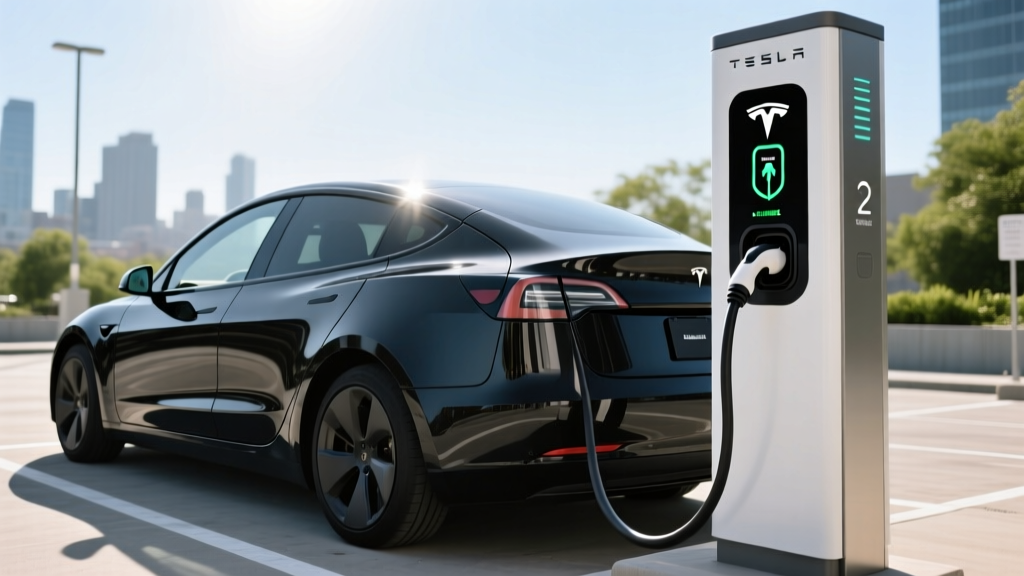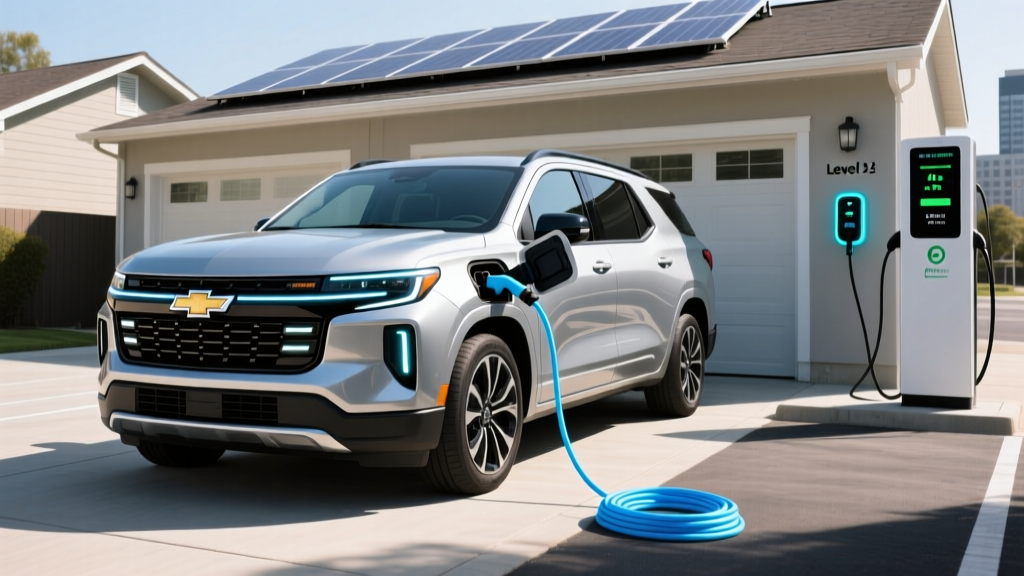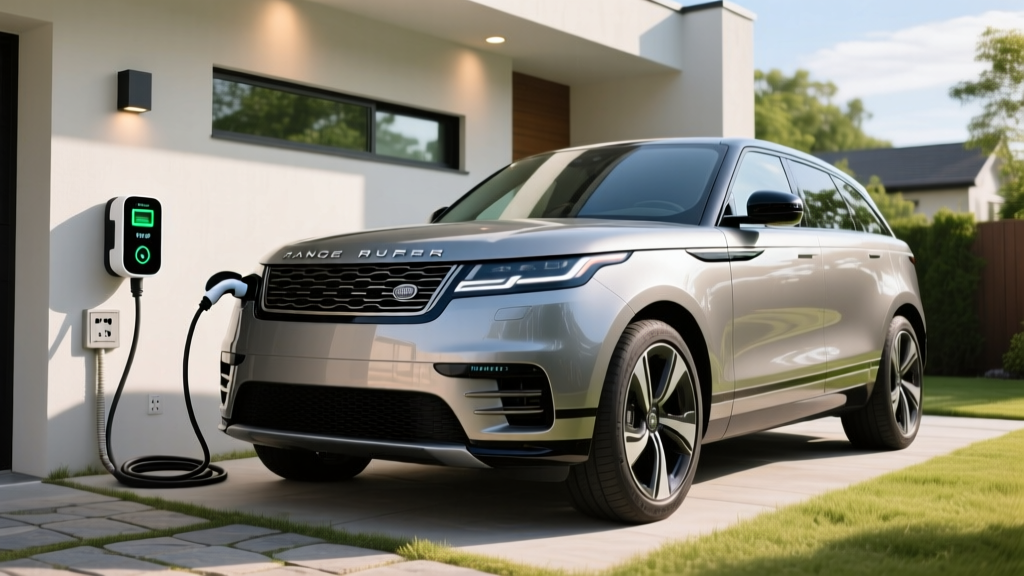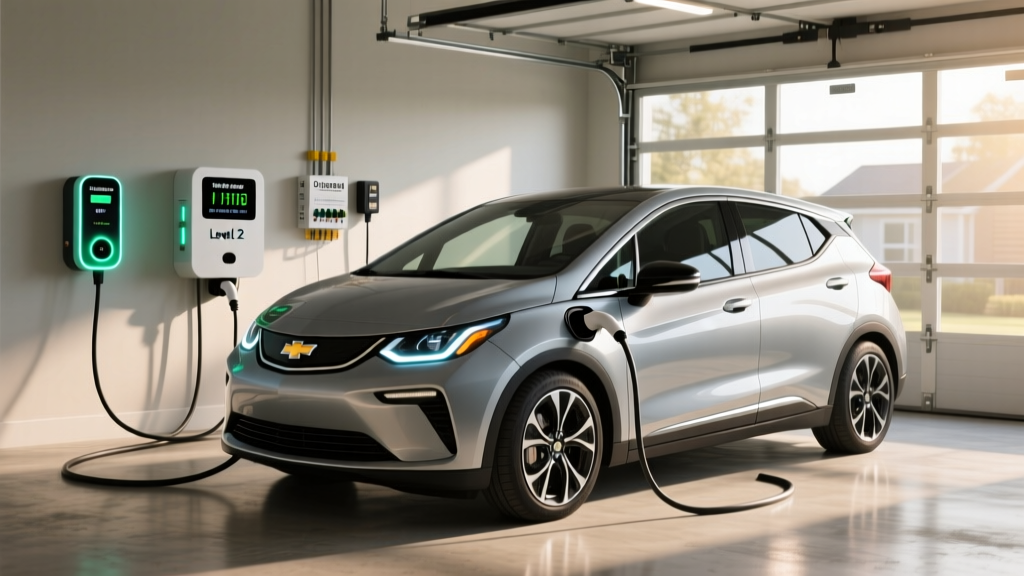
The 2023 Chevrolet Bolt EV remains one of the most affordable long-range electric vehicles on the used market, with an EPA-estimated 259 miles of range from its 65 kWh (usable) lithium-ion NMC battery pack. But owning a Bolt EV—or any EV—hinges on one critical question: how will you charge it? This guide breaks down exactly what the 2023 Chevy Bolt EV range looks like in real-world driving, how each charging level replenishes the pack, what a home Level 2 installation actually costs, and how charging expenses compare to gasoline.
EPA sticker: 259 miles (combined city/highway).
Real-world highway (70 mph, 75°F): expect ~220–235 miles.
Cold weather (30°F, mixed driving): expect ~180–200 miles due to cabin heating and reduced battery efficiency.
Source: fueleconomy.gov
Understanding the 2023 Chevy Bolt EV's Charging Architecture
Before plugging in, you need to understand the Bolt EV's onboard charging hardware. The 2023 Bolt EV comes with an 11.5 kW onboard charger for AC (Level 1 and Level 2) charging—a significant upgrade from the 7.2 kW unit in earlier model years. For DC fast charging, it uses the CCS1 connector and can accept a peak rate of roughly 55 kW. That peak rate is modest by 2026 standards, and the charge curve tapers steeply above 80% state of charge (SoC). A 10–80% DC fast charge takes approximately 45–50 minutes at a compatible station.
A critical literacy point: kW (kilowatts) measures power—the rate at which energy flows into the battery. kWh (kilowatt-hours) measures energy—the total capacity of the battery. Think of kW as the width of a hose and kWh as the size of the bucket. The Bolt EV's bucket is 65 kWh; the hose width varies by charging level.
Charging Levels Explained: Speeds, Times, and Range Added
Every EV owner uses a mix of charging levels. Here's how each one performs with the 2023 Bolt EV's 65 kWh battery:
| Level | Voltage / Amperage | Power (kW) | Miles of Range / Hour | 0–100% Time (Bolt EV) |
|---|---|---|---|---|
| Level 1 (120V outlet) | 120V / 12A | ~1.4 kW | ~4 mi/hr | ~60+ hours |
| Level 2 (240V home/public) | 240V / 48A | 11.5 kW (max onboard) | ~39 mi/hr | ~7 hours |
| DC Fast (CCS1) | 400V+ / variable | Up to ~55 kW peak | ~180 mi/hr (peak) | 10–80% in ~47 min |
For daily driving, Level 2 is the standard. Most Bolt EV owners drive 30–50 miles per day, meaning a Level 2 charger replenishes a full day's driving in roughly one hour. Level 1 is viable only as a trickle top-up for low-mileage drivers or as emergency backup. DC fast charging is for road trips, but the Bolt EV's ~55 kW peak means you'll spend more time at stations than you would in a vehicle with 150+ kW capability like the Hyundai Ioniq 5.
Home Level 2 Charger Installation: Costs, Electrical Requirements, and Gotchas
Installing a Level 2 home charger is the single most impactful upgrade for EV ownership. Here's what's involved for a 2023 Chevy Bolt EV setup.
Electrical Requirements
The Bolt EV's 11.5 kW onboard charger can accept up to 48 amps on a 240V circuit. To deliver this, you need a dedicated 60-amp breaker (EVSE continuous-load rules require the breaker to be rated at 125% of the continuous draw: 48A × 1.25 = 60A). If your electrical panel lacks capacity, a 40-amp circuit (delivering 32A / 7.7 kW) is a common fallback that still adds ~26 miles of range per hour—enough for most daily needs.
Panel Upgrade Reality
Homes with 100-amp main panels often lack headroom for a 60-amp EV circuit, especially if you're already running electric dryers, ranges, or HVAC. A panel upgrade to 200 amps typically costs $1,500–$3,500 depending on your utility and local codes. Some homeowners opt for a smart load-management device (like the Emporia Smart Load Center) that shares capacity between the EV charger and other appliances, avoiding a panel upgrade entirely.
Installation Cost Breakdown
| Item | Typical Cost Range | Notes |
|---|---|---|
| Level 2 EVSE (charger hardware) | $350 – $700 | 40A–48A smart charger, J1772 connector |
| Electrician labor (standard install) | $500 – $1,500 | Varies by run length, conduit, wall type |
| Electrical permit | $50 – $200 | Required in most jurisdictions |
| Panel upgrade (if needed) | $1,500 – $3,500 | 100A → 200A service upgrade |
| Total (no panel upgrade) | $900 – $2,400 | Most common scenario |
| Total (with panel upgrade) | $2,400 – $5,900 | Older homes with 100A service |
Always hire a licensed electrician and pull a permit. Unpermitted work can void homeowner's insurance coverage in the event of an electrical fire and may cause issues during a home sale.
Connector Compatibility: What Plugs Into the Bolt EV?
The 2023 Chevy Bolt EV uses the J1772 connector for Level 1 and Level 2 AC charging, and the CCS1 (Combined Charging System) connector for DC fast charging. This is the legacy standard shared by most non-Tesla EVs sold in North America through 2024.
| Connector | Use Case | Bolt EV Compatible? | Adapter Needed? |
|---|---|---|---|
| J1772 | Level 1 & Level 2 AC | Yes — native | No |
| CCS1 | DC Fast Charging | Yes — native | No |
| NACS (Tesla) | Tesla Superchargers & home | No — adapter required | Yes (CCS-to-NACS, ~$200–$300) |
| CHAdeMO | Legacy DC (Nissan Leaf) | No | N/A — not supported |
As of 2026, the North American Charging Standard (NACS) is becoming the dominant connector, with most automakers transitioning. Chevrolet has adopted NACS for newer models, but the 2023 Bolt EV was built with CCS1. If you want to access Tesla Supercharger stations (now open to non-Tesla EVs at many locations), you'll need a CCS-to-NACS adapter. GM has offered adapters through its dealer network; third-party options from brands like Lectron are also available. Verify adapter certification and maximum power rating before purchase.
Level 2 Charger Equipment Recommendations for the Bolt EV
Because the Bolt EV's onboard charger maxes out at 11.5 kW (48A), buying a 48A charger lets you use its full capability. Here are three proven options:
ChargePoint Home Flex
- Power: Up to 12 kW / 50A (configurable 16A–50A)
- Connector: J1772 (CCS-compatible)
- Cable: 23 ft
- Smart features: Wi-Fi, app scheduling, Alexa
- Price: ~$550
Emporia Level 2 EV Charger
- Power: Up to 11.5 kW / 48A
- Connector: J1772
- Cable: 24 ft
- Smart features: Wi-Fi, energy monitoring, solar integration
- Price: ~$400
Grizzl-E Smart
- Power: Up to 10 kW / 40A
- Connector: J1772
- Cable: 24 ft
- Smart features: OCPP, app control, outdoor-rated (NEMA 4)
- Price: ~$450
The ChargePoint Home Flex is the top pick for Bolt EV owners who want to use the full 11.5 kW onboard charger. The Emporia offers excellent value with built-in energy monitoring—useful for tracking charging costs. The Grizzl-E is a rugged, outdoor-rated option ideal for garage-less parking.
Cost to Charge: Home vs. Public vs. Gas
Charging economics depend heavily on where and when you plug in. The 2023 Bolt EV has a combined efficiency rating of 120 MPGe (approximately 28 kWh/100 miles), according to the EPA.
| Scenario | Rate ($/kWh) | Cost per 100 mi | Cost per Mile |
|---|---|---|---|
| Home off-peak (utility TOU rate) | $0.09 | $2.52 | $0.025 |
| Home standard rate | $0.16 | $4.48 | $0.045 |
| Public Level 2 (ChargePoint, EVgo) | $0.30 | $8.40 | $0.084 |
| DC Fast Charging (Electrify America) | $0.48 | $13.44 | $0.134 |
| Gasoline comparison (30 MPG @ $3.50/gal) | — | $11.67 | $0.117 |
Home charging on an off-peak rate is dramatically cheaper than gasoline—roughly 80% less per mile. Even public DC fast charging is comparable to or slightly above gas costs, which is why home charging access is the single biggest factor in EV ownership satisfaction. If you can install a Level 2 charger at home and take advantage of time-of-use (TOU) utility rates, the Bolt EV's already-low operating costs drop even further.
Safety, Electrical Code, and Installation Best Practices
A Level 2 EV charger is a high-draw, continuous-load appliance that runs for hours at a time. Proper installation is non-negotiable for safety and code compliance.
- Dedicated circuit: Your EVSE must have its own dedicated breaker—never share a circuit with other appliances.
- GFCI protection: NEC 2020 and later require GFCI (ground-fault circuit interrupter) protection for outdoor EV outlets. Many modern hardwired EVSEs have built-in GFCI.
- Outdoor rating: If installing outside, ensure the EVSE is rated NEMA 4 or NEMA 4X for weather resistance.
- Wire gauge: A 60A circuit typically requires 6 AWG copper wire; a 40A circuit uses 8 AWG. Your electrician will size this based on run length and local code.
- Permit and inspection: Most municipalities require an electrical permit and post-installation inspection. Skipping this risks insurance denial and code violations.
Frequently Asked Questions
How much does it cost to install a home EV charger for a Chevy Bolt EV?
Expect $900–$2,400 for a standard Level 2 installation (charger hardware + electrician + permit) if your panel has sufficient capacity. If a panel upgrade from 100A to 200A is required, total costs can reach $2,400–$5,900. Get at least three quotes from licensed electricians.
How fast will each charging level add range to the Bolt EV?
Level 1 (120V) adds about 4 miles per hour—too slow for daily use unless you drive under 30 miles. Level 2 (240V, 48A) adds roughly 39 miles per hour, fully replenishing the 65 kWh battery overnight in about 7 hours. DC fast charging peaks at ~55 kW, adding roughly 180 miles per hour at peak, but tapers significantly above 80% SoC.
Which connector and charger is compatible with my 2023 Bolt EV?
The 2023 Bolt EV uses J1772 for AC charging and CCS1 for DC fast charging natively. Any J1772 Level 2 charger works out of the box. To access Tesla Superchargers (where open to non-Tesla vehicles), you need a CCS-to-NACS adapter (~$200–$300). CHAdeMO is not supported.
How much does charging cost per mile vs. gas?
At home on off-peak rates (~$0.09/kWh), the Bolt EV costs roughly $0.025 per mile to fuel. A comparable 30 MPG gas car at $3.50/gallon costs about $0.117 per mile—nearly 5x more. Even public DC fast charging at $0.48/kWh ($0.134/mi) is competitive with gas, though home charging is where the real savings materialize.
What electrical upgrades might I need for a Level 2 charger?
You'll need a dedicated 240V circuit—typically 60A for a 48A charger or 40A for a 32A charger. Homes with older 100A main panels may need a service upgrade to 200A, especially if you have other high-draw electric appliances. A load-management device can sometimes avoid this expense by dynamically sharing panel capacity.
Does the 2023 Bolt EV qualify for any tax credits?
The 2023 Bolt EV was eligible for the full $7,500 federal §30D tax credit when new, subject to buyer income caps ($150K single / $300K joint) and MSRP limits ($55K for cars). As a used vehicle in 2026, it may qualify for the used clean vehicle credit of up to $4,000 (30% of sale price, capped at $4,000) if purchased from a dealer for $25,000 or less, subject to the same income limits. Consult a tax professional for eligibility confirmation.
The 2023 Chevy Bolt EV's 259-mile EPA range and low cost of entry make it a compelling used EV in 2026—but its value multiplies when paired with a proper home Level 2 charging setup. Budget $1,000–$2,500 for installation, choose a 48A J1772 charger to maximize the onboard charger, and take advantage of off-peak utility rates to drive for pennies per mile.