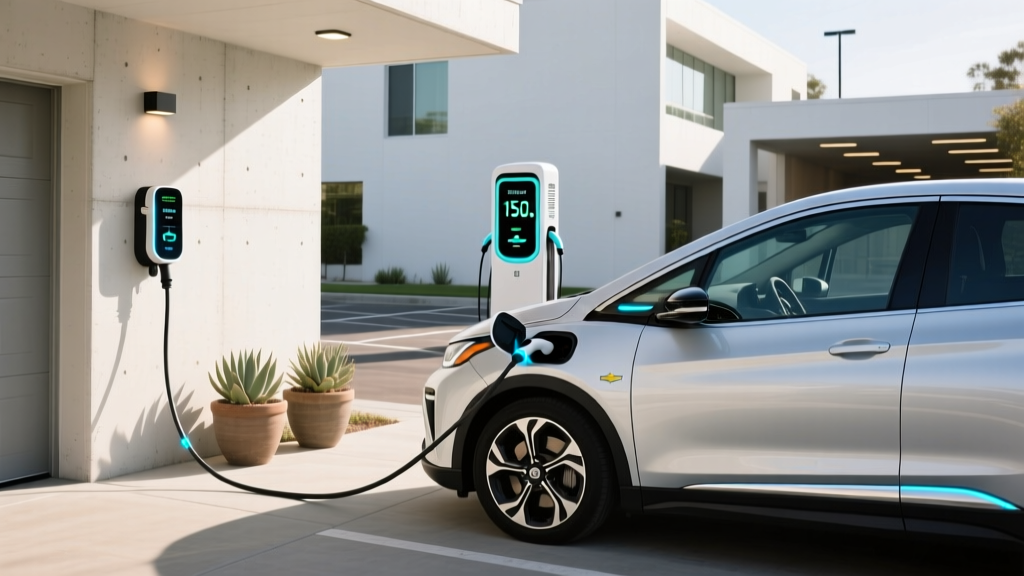
If you're researching the Chevy Bolt EV range 2027 model year, you're likely also weighing how and where you'll charge. The Bolt EV (and its larger sibling, the Bolt EUV) returned for the 2026 model year on GM's updated Ultium-adjacent platform with faster DC charging — a welcome fix over the previous generation's notoriously slow 55 kW peak. But range and charging are two sides of the same coin: a 250+ mile EPA sticker means little if your home electrical setup or local public infrastructure can't support convenient replenishment.
This guide covers everything a prospective or new Bolt EV owner needs to know about charging in 2026 — from Level 1 trickle charging on a standard outlet to Level 2 home installation to DC fast-charging on road trips — with exact numbers, real costs, and equipment picks.
Chevy Bolt EV Range 2027: What We Know So Far
As of early 2026, Chevrolet has not officially published final specs for a 2027 model year Bolt EV. The current-generation Bolt EV (reintroduced for 2026) carries over with the following preliminary figures based on the 2026 model:
- Battery: ~65 kWh usable capacity, NMC lithium-ion (Ultium-based pouch cells)
- EPA Range: 259 miles (estimated, pending official fueleconomy.gov certification for MY2027)
- Real-World Range: Expect ~220–240 miles at sustained highway speeds (70+ mph); ~180–200 miles in sub-freezing winter conditions
- Peak DC Fast Charge: ~150 kW (up from 55 kW on the pre-2026 Bolt)
- 10–80% DC Charge Time: ~28–32 minutes (estimated)
- Onboard AC Charger: 11.5 kW (Level 2)
- Efficiency: ~120 MPGe combined (estimated)
- Base MSRP: ~$28,000 (before incentives)
Charging Levels Explained: Speeds, kW, and Miles Per Hour
The single most important distinction in EV charging is kW (kilowatts), which measures the rate of energy delivery, versus kWh (kilowatt-hours), which measures the total energy capacity of the battery. Think of kW as the flow rate of a hose and kWh as the size of the bucket. The Bolt EV's ~65 kWh battery is the bucket; your charger's kW rating determines how fast it fills.
| Level | Voltage | Max Power (kW) | Miles of Range Added Per Hour | Typical Use Case |
|---|---|---|---|---|
| Level 1 | 120V AC | 1.2–1.9 kW | 3–5 miles/hr | Overnight top-up, low-mileage drivers, renters |
| Level 2 | 240V AC | 7.2–19.2 kW | 20–60 miles/hr | Home daily charging, workplace, shopping centers |
| DC Fast Charge | 400–800V DC | 50–350 kW | 150–800+ miles/hr (peak) | Road trips, highway corridors, quick top-ups |
For the Bolt EV with its 11.5 kW onboard AC charger, a Level 2 station delivering 48 amps (11.5 kW) will fully charge the ~65 kWh battery from 0–100% in roughly 6 hours. A 32-amp Level 2 charger (7.7 kW) extends that to about 8.5 hours — still easily overnight.
On DC fast charging, the Bolt's ~150 kW peak rate means a 10–80% session takes approximately 28–32 minutes. Note that peak rate is not sustained rate: the charge curve tapers significantly above 80% State of Charge (SoC) to protect battery health. Charging from 80–100% on DC can add another 20+ minutes — so on road trips, it's faster to charge to 80% and go.
Home Charger Installation: Electrical Requirements & Costs
Installing a Level 2 home charger is the single biggest ownership enabler for EV drivers. Here's what's involved for a Bolt EV setup:
Electrical Requirements
- Circuit: A dedicated 240V circuit, typically 40A or 50A (supporting 32A or 40A continuous charging, respectively)
- Breaker: 50A or 60A double-pole breaker in your main panel
- Wiring: 6 AWG copper (for 50A) or 4 AWG (for 60A), run through conduit if exposed
- Outlet vs. Hardwired: A NEMA 14-50 outlet offers portability (take your charger when you move); hardwired units are cleaner and may not require GFCI breakers in some jurisdictions
- Panel Capacity: Your electrical panel must have spare capacity. A 200A panel is standard in modern homes and usually sufficient. Older homes with 100A service may need a panel upgrade — a significant added cost.
Installation Cost Breakdown
| Component | Low End | High End | Notes |
|---|---|---|---|
| Level 2 Charger (Equipment) | $350 | $700 | 32A–48A smart chargers; Wi-Fi enabled |
| Electrician Labor | $500 | $2,000 | Depends on run length, wall type, conduit needs |
| Electrical Permit | $50 | $250 | Varies by municipality; required in most jurisdictions |
| Panel Upgrade (if needed) | $1,500 | $4,000 | 100A → 200A service upgrade; not always required |
| Utility Rebate | -$0 | -$500 | Some utilities offer charger or install rebates |
| Total (no panel upgrade) | $900 | $2,950 | Most typical installs fall in $1,200–$2,000 |
| Total (with panel upgrade) | $2,400 | $6,950 | Older homes with 100A service |
Connector Compatibility: NACS, CCS, and the Bolt EV
The 2026+ Chevy Bolt EV uses the NACS (North American Charging Standard) connector — the Tesla-designed plug now adopted by GM and most major automakers. This is a significant shift from the previous-generation Bolt, which used CCS1.
| Connector | Type | Used By | Notes |
|---|---|---|---|
| NACS (J3400) | AC + DC combo | Tesla (all), GM (2025+), Ford (2025+), Rivian (2025+), others | Smaller, lighter plug; access to Tesla Supercharger network |
| CCS1 | AC + DC combo | Older GM, VW ID.4 (pre-2025), Hyundai/Kia (pre-2025), BMW | Being phased out in North America; adapters available |
| CHAdeMO | DC only | Nissan Leaf (legacy), Mitsubishi Outlander PHEV | Declining infrastructure; not compatible without adapter |
Adapter Needs for Bolt EV Owners
If you own a 2026+ Bolt EV with NACS, you'll have native access to:
- Tesla Superchargers (15,000+ stalls in North America) — no adapter required
- GM-approved networks via the myChevrolet app (Electrify America, EVgo, Pilot/Flying J)
- Legacy CCS1 stations — you may need a NACS-to-CCS adapter (~$200–$300) for older Electrify America or ChargePoint stalls that haven't been retrofitted
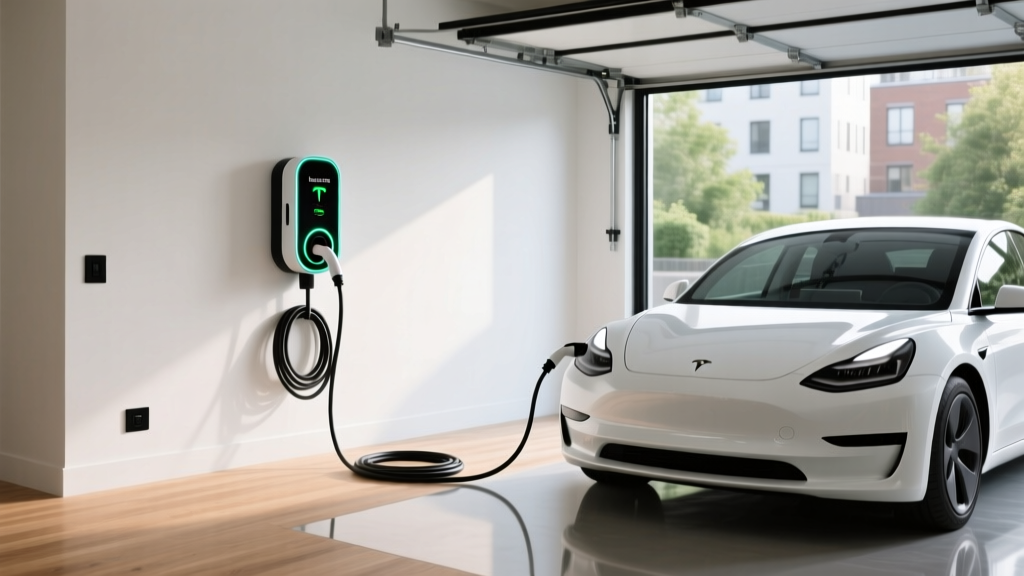
For home Level 2 charging, NACS-equipped chargers are now widely available from Tesla (Wall Connector), ChargePoint, and Emporia. If you already own a CCS1 home charger from a previous EV, a CCS-to-NACS adapter will work for Level 2 AC charging.
Cost to Charge: Home vs. Public vs. Gas
Charging economics depend heavily on where and when you plug in. Here's a realistic cost comparison for the Bolt EV:
| Scenario | Electricity/Fuel Cost | Cost Per Mile (Bolt EV at 3.0 mi/kWh) | Cost Per Mile (Gas car at 30 MPG) |
|---|---|---|---|
| Home (off-peak utility rate) | $0.10/kWh | $0.033 | $0.117 (at $3.50/gal) |
| Home (average US rate) | $0.16/kWh | $0.053 | $0.117 |
| Home (high-cost state, e.g. CA) | $0.30/kWh | $0.100 | $0.117 |
| Public Level 2 (typical) | $0.25–$0.40/kWh | $0.083–$0.133 | $0.117 |
| DC Fast Charging (typical) | $0.35–$0.55/kWh | $0.117–$0.183 | $0.117 |
The takeaway: home charging is dramatically cheaper than gas, saving $0.06–$0.08 per mile in average scenarios — that's $900–$1,200 annually for a 15,000-mile driver. Public DC fast charging, however, can match or exceed gasoline costs per mile. The economics strongly favor home or workplace Level 2 charging as your primary strategy, with DC fast charging reserved for road trips.
Equipment Picks: Best Level 2 Chargers for the Bolt EV
With the Bolt EV's 11.5 kW onboard charger, you'll want a Level 2 unit that can deliver at least 40A (9.6 kW) to take full advantage. Here are top picks available in 2026:
Tesla Wall Connector
- Power Output: Up to 11.5 kW (48A)
- Connector: NACS native
- Cable Length: 24 ft
- Smart Features: Wi-Fi, OTA updates, power sharing between units, access control
- Price: ~$475
- Verdict: Best value for NACS-equipped EVs; no adapter needed for Bolt EV
ChargePoint Home Flex
- Power Output: Up to 12 kW (50A) — configurable via DIP switches
- Connector: NACS or CCS1 (choose at purchase)
- Cable Length: 23 ft
- Smart Features: Wi-Fi, app scheduling, Alexa integration, energy tracking
- Price: ~$550–$600
- Verdict: Flexible amperage lets you match your circuit; excellent app
Emporia Vue Smart Charger
- Power Output: Up to 11.5 kW (48A)
- Connector: NACS or J1772
- Cable Length: 24 ft
- Smart Features: Integrates with Emporia energy monitor, solar-aware scheduling, load management
- Price: ~$400
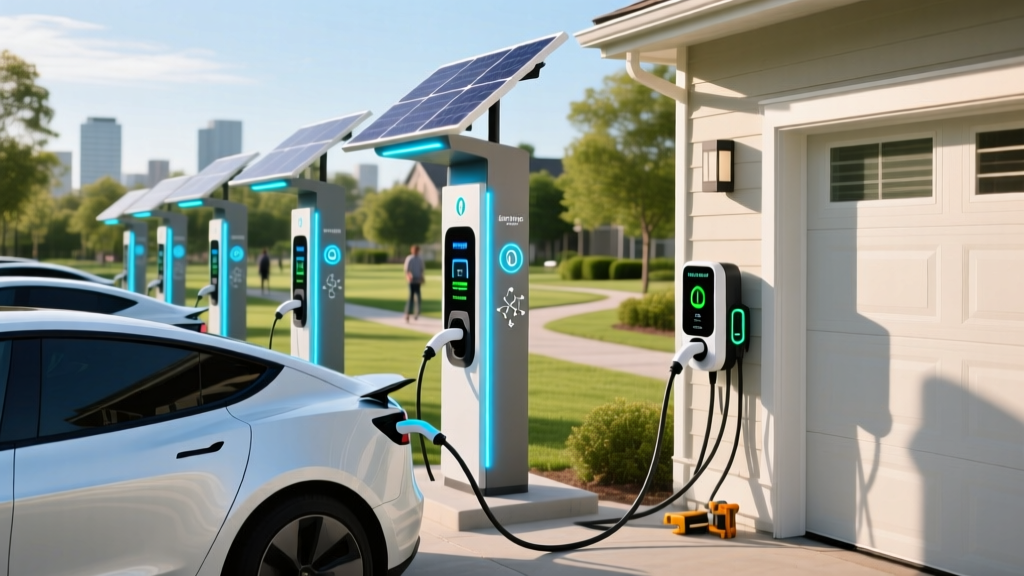
- Verdict: Budget pick with advanced energy monitoring; great for solar homes
Grizzl-E Smart
- Power Output: Up to 10 kW (40A)
- Connector: NACS or J1772
- Cable Length: 24 ft
- Smart Features: OCPP-compatible, adjustable amperage, extreme cold rated (-40°F)
- Price: ~$450
- Verdict: Rugged, cold-climate tested; slightly lower amperage but solid build
Safety, Permits, and Code Considerations
EV charging involves sustained high-current draw — far more demanding on your home wiring than a dryer or oven that cycles on and off. Key safety and code points:
- Dedicated Circuit: Your EV charger must be on its own dedicated circuit — never shared with other appliances. The NEC (National Electrical Code) requires this for continuous loads.
- Continuous Load Rule: EV charging is classified as a continuous load (3+ hours). The circuit must be rated at 125% of the charger's max draw — a 40A charger needs a 50A breaker.
- GFCI Protection: The 2023 NEC update requires GFCI protection for outlets used for EV charging in garages. Hardwired installations may be exempt in some jurisdictions — ask your electrician.
- Outdoor Rating: If installing outdoors, ensure your charger carries a NEMA 4 or IP65 rating. All picks above are outdoor-rated.
- Permit Required: Most municipalities require an electrical permit for new 240V circuits. The permit ensures an inspector verifies the work — protecting your home insurance coverage. Typical cost: $50–$250.
- Utility Notification: Some utilities require you to notify them before adding an EV charger, especially if you want a TOU rate plan or a separate meter.
Frequently Asked Questions
How much does it cost to install a home EV charger for the Chevy Bolt EV?
A typical Level 2 installation with a 50A circuit, no panel upgrade, and a ~25-foot wire run costs $1,200–$2,000 all-in (equipment + electrician + permit). If your home needs a panel upgrade from 100A to 200A service, add $1,500–$4,000. Always get 2–3 quotes from licensed electricians and verify they have EV charger installation experience.
How fast will each charging level add range to the Bolt EV?
Level 1 (120V): approximately 4 miles per hour. Level 2 (240V, 48A): approximately 37 miles per hour, fully charging the ~65 kWh battery in about 6 hours. DC Fast Charging (~150 kW peak): 10–80% in roughly 28–32 minutes, adding approximately 180 miles of range in that window.
Which connector and charger is compatible with my Bolt EV?
The 2026+ Chevy Bolt EV uses the NACS connector natively. This means direct compatibility with Tesla Wall Connectors, Tesla Superchargers, and any NACS-equipped public station. For legacy CCS1 public chargers, a NACS-to-CCS adapter may be needed. For home charging, purchase a NACS-connector Level 2 charger.
How much does charging the Bolt EV cost per mile vs. gasoline?
At the US average residential electricity rate of ~$0.16/kWh, the Bolt EV costs approximately $0.053 per mile to charge at home. A comparable 30 MPG gas car at $3.50/gallon costs $0.117 per mile. That's a savings of roughly $0.064/mile, or $960 per year for a 15,000-mile driver. Public DC fast charging at $0.45/kWh raises the cost to ~$0.15/mile — more expensive than gas.
What electrical upgrades might I need for a home charger?
The most common upgrade is a panel capacity increase — if your home has 100A service and high existing loads (central A/C, electric range, dryer), adding a 40–50A EV circuit may exceed your panel's capacity. Other potential needs: running new conduit from the panel to the garage or driveway, upgrading from a 100A to 200A main breaker, or installing a sub-panel if your main panel is full. A licensed electrician's load calculation will determine exactly what's required. Check the National Electrical Code for current requirements.
Does the Bolt EV qualify for the federal EV tax credit?
The federal §30D tax credit offers up to $7,500 for qualifying new EVs, but eligibility depends on multiple factors: buyer income caps ($150K single / $300K joint AGI), MSRP caps ($55,000 for cars), battery component and critical mineral sourcing requirements, and point-of-sale transfer availability. Rules change frequently — always verify current eligibility on IRS.gov and consult a tax professional before relying on the credit in your purchase decision.
Can I charge my Bolt EV on a regular 120V outlet?
Yes — Level 1 charging on a standard 120V household outlet adds about 3–5 miles of range per hour. If you drive fewer than 40 miles per day and can charge overnight (10–12 hours), Level 1 may be sufficient. However, it's impractical for replenishing a depleted battery (a full 0–100% charge would take 40+ hours). Most EV owners find Level 2 essential for daily convenience.
How does cold weather affect Bolt EV charging and range?
In temperatures below 32°F, expect 20–35% range reduction due to battery chemistry limitations and cabin heating demands. DC fast charging also slows in cold weather because the battery must be warmed (preconditioned) before accepting peak charge rates. The Bolt EV's battery thermal management system handles this automatically, but a cold-soaked battery at a DC fast charger may initially accept only 30–50 kW before ramping up. Preconditioning — warming the battery while still plugged in at home using the myChevrolet app's departure scheduling — preserves range and improves charging speed.