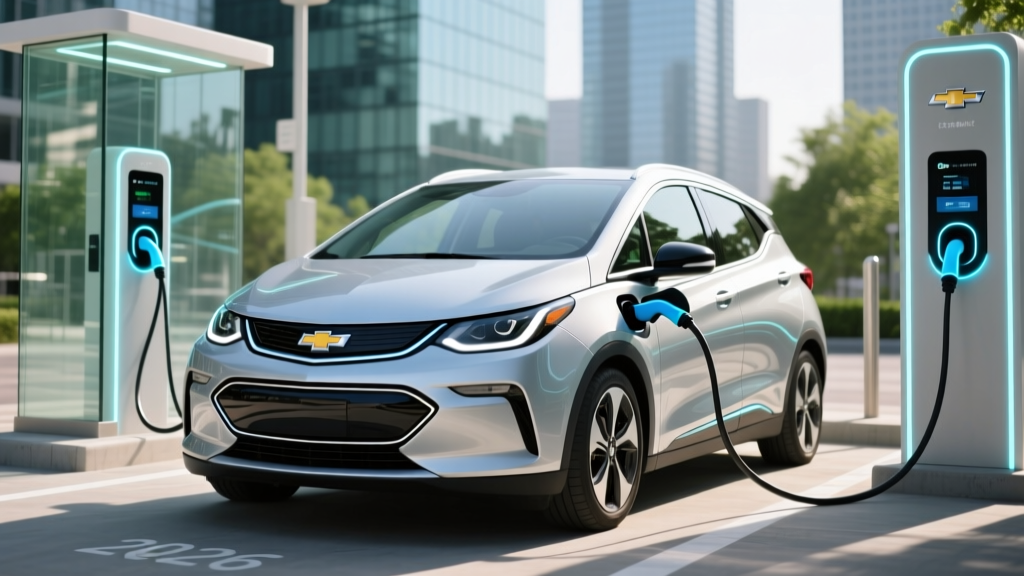
The 2026 Chevy Bolt EV returns with a refreshed 65 kWh Ultium-based lithium-ion battery (NMC chemistry) delivering an EPA-estimated 259 miles of range. But that sticker number is only half the story. How you charge, where you charge, and the equipment you install at home determines whether you actually see 259 miles on a daily commute or struggle with 180 on a cold highway run.
This guide breaks down the Bolt's real-world range expectations, every charging tier available to it, the exact cost to install a Level 2 home charger, and the specific equipment we recommend in 2026. Whether you're a new Bolt owner or shopping for one, you'll leave with exact numbers — not marketing promises.
Real-World Chevy Bolt Electric Range: EPA vs. Reality
Real-World Expectation: 220–245 miles (mixed driving, moderate climate)
Highway (70+ mph sustained): ~200–215 miles
Cold Weather (below 30°F): ~170–195 miles (cabin heating + battery resistance)
Best-Case (city, mild weather, regen-heavy): 260+ miles achievable
The Bolt's 259-mile EPA rating, confirmed by fueleconomy.gov, assumes a blended 55% city / 45% highway cycle at moderate temperatures. In practice, the Bolt's relatively compact 65 kWh battery and front-wheel-drive layout mean efficiency varies dramatically with conditions.
Highway driving at sustained 75 mph pushes consumption to roughly 3.5–3.8 miles per kWh, compared to 4.0+ mi/kWh in stop-and-go city traffic where regenerative braking recaptures energy. Cold weather compounds this: the battery's internal resistance increases, and cabin heating (the Bolt uses a resistive PTC heater, not a heat pump) can draw 3–5 kW continuously, shaving 25–35% off range in sub-freezing conditions.
For a 40-mile daily round-trip commute with home charging, the Bolt's real-world range is more than adequate. For road trips, plan stops around 180-mile intervals to keep a 30-mile reserve and stay in the battery's fastest charging zone (below 80% State of Charge).
Charging Levels Explained: How Fast Can the Bolt Recharge?
Before we get to speeds, a critical distinction: kW (kilowatts) measures charging power — the rate of energy flow. kWh (kilowatt-hours) measures energy capacity — how much the battery stores. The Bolt's battery holds 65 kWh. A 10 kW charger delivers 10 kWh per hour, meaning a full charge would theoretically take 6.5 hours.
| Level | Voltage | Power (kW) | Miles Added/Hour | Typical Use |
|---|---|---|---|---|
| Level 1 | 120V AC | 1.2–1.4 kW | 3–5 mi/hr | Overnight trickle, emergency |
| Level 2 | 240V AC | 7.2–11.5 kW | 22–39 mi/hr | Home, workplace, shopping |
| DC Fast Charge | 400V+ DC | 50–55 kW (Bolt peak) | ~150–180 mi/hr (10–80%) | Road trips, highway corridors |
The 2026 Bolt accepts up to 11.5 kW on Level 2 (48 amps on a 60-amp circuit) and peaks at roughly 55 kW on DC fast charging via its CCS1 connector. That DC rate is the Bolt's most criticized spec — it's slower than competitors like the Hyundai Ioniq 5 (240 kW) or Tesla Model 3 (250 kW). A 10–80% DC fast charge takes approximately 55–65 minutes, compared to 18–25 minutes on faster-charging rivals.
For home charging, Level 2 is where the Bolt shines. At 11.5 kW, a full 0–100% charge takes about 5.5–6 hours — easily achievable overnight. Most Bolt owners plug in every night and start each morning at 80–90% State of Charge (SoC), which also preserves long-term battery health.
Home Charger Installation: Cost, Electrical Requirements & What to Expect
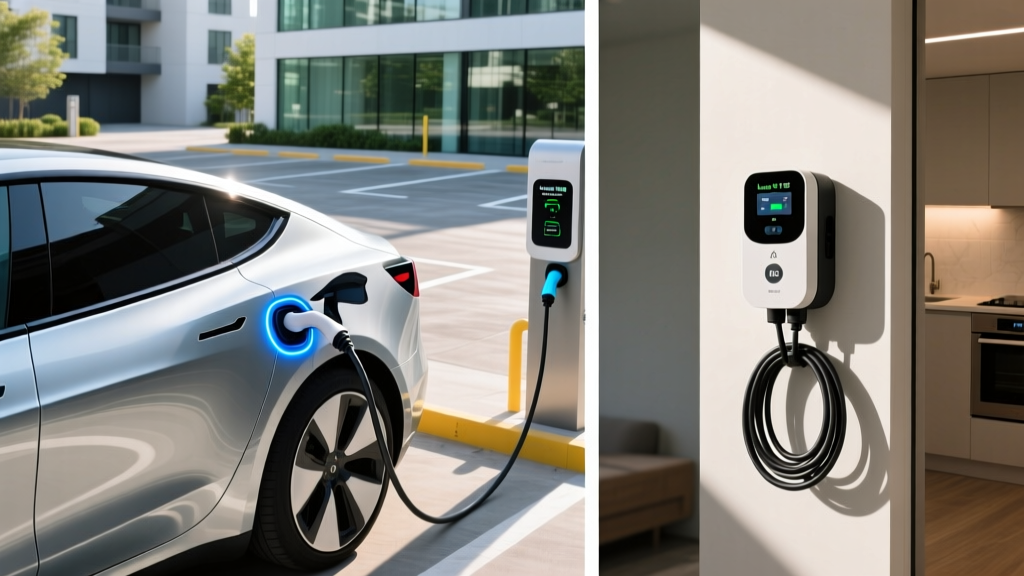
Installing a Level 2 home charger is the single highest-impact upgrade for Bolt ownership. Here's what's involved.
Electrical Requirements
To deliver the Bolt's maximum 11.5 kW AC charge rate, you need a 240V, 60-amp dedicated circuit (the charger draws a continuous 48 amps; NEC code requires circuits rated at 125% of continuous load). A NEMA 14-60 or hardwired connection is standard.
If you're willing to accept a slower 7.7 kW charge rate (still 26+ miles per hour — plenty for overnight), a 240V, 40-amp circuit (NEMA 14-50) works and is cheaper to install, especially in older homes.
Panel Upgrade: The Hidden Cost
Homes built before 2000 often have 100-amp or 150-amp main electrical panels. Adding a 60-amp EV circuit to a panel already near capacity may require a panel upgrade to 200 amps, which adds $1,500–$3,500 to your total cost. An electrician will perform a load calculation to determine if your panel can handle the addition.
| Component | Basic Install (40A, near panel) | Standard Install (60A, moderate run) | Complex Install (panel upgrade + long run) |
|---|---|---|---|
| Level 2 Charger (hardware) | $350–$550 | $400–$650 | $400–$650 |
| Electrician labor | $300–$600 | $600–$1,200 | $1,200–$2,500 |
| Permit & inspection | $50–$150 | $100–$250 | $100–$250 |
| Panel upgrade (if needed) | — | — | $1,500–$3,500 |
| Conduit/wire (50+ ft run) | $100–$200 | $200–$500 | $300–$600 |
| Total Range | $800–$1,500 | $1,300–$2,600 | $3,500–$7,500 |
Always hire a licensed electrician and pull a permit. Unpermitted EV charger installs can void homeowner's insurance and fail at resale inspection. The National Electrical Code (NEC) Article 625 governs EV charging equipment, requiring GFCI protection for outdoor installations and specific wire gauge sizing.
Federal Incentive: The §30E Charger Credit
The IRS §30E Alternative Fuel Vehicle Refueling Property Credit covers up to 30% of home charging equipment and installation costs (maximum $1,000) — but only if you live in a qualifying low-income or non-urban census tract. Check your eligibility at the IRS link before budgeting around this credit.
Connector Compatibility: What Plugs Into the Chevy Bolt?
The 2026 Chevy Bolt uses the CCS1 (Combined Charging System) connector for both Level 2 AC and DC fast charging. This is the standard adopted by GM, Ford, Volkswagen, Hyundai/Kia (pre-2025 models), and most non-Tesla EVs sold in North America.
| Connector | Brands Using It | Bolt Compatible? | Adapter Needed? |
|---|---|---|---|
| CCS1 (J1772 + DC pins) | Chevrolet, Ford, VW, BMW, pre-2025 Hyundai/Kia, Rivian | Yes — native | None |
| NACS (Tesla) | Tesla, 2025+ Ford, GM (2025+), Hyundai/Kia (2025+) | Not natively | GM-approved NACS-to-CCS adapter ($200–$250) |
| CHAdeMO | Nissan Leaf (legacy), Mitsubishi Outlander PHEV | No | No practical adapter available |
Key 2026 update: General Motors began transitioning to NACS ports on new models starting in 2025, but the 2026 Bolt retains the CCS1 connector. If you plan to use Tesla Superchargers (now open to non-Tesla EVs at many locations), you'll need a GM-approved NACS-to-CCS adapter. GM offers one through Chevrolet dealers for approximately $225. This adapter supports DC fast charging up to the Bolt's 55 kW peak — no speed loss, but you're still limited by the Bolt's onboard charge rate.
For Level 2 AC charging, every CCS1 vehicle (including the Bolt) can also use any standard J1772 connector — the CCS plug simply incorporates the J1772 inlet in its upper portion.
Cost to Charge: Home vs. Public vs. Gas
Electricity pricing varies enormously by location, time of day, and provider. Here are realistic 2026 scenarios for a Bolt owner:
| Scenario | Price per kWh | Cost for Full 65 kWh Charge | Cost per Mile (at 3.5 mi/kWh) |
|---|---|---|---|
| Home — off-peak utility rate | $0.08–$0.12 | $5.20–$7.80 | $0.023–$0.034 |
| Home — standard residential rate | $0.13–$0.18 | $8.45–$11.70 | $0.037–$0.051 |
| Public Level 2 (ChargePoint, etc.) | $0.25–$0.49 | $16.25–$31.85 | $0.071–$0.140 |
| DC Fast Charge (Electrify America, EVgo) | $0.35–$0.55 | $22.75–$35.75 | $0.100–$0.157 |
| Gas car comparison (28 MPG, $3.40/gal) | — | — | $0.121 |
At home on off-peak rates, the Bolt costs roughly 2.5–3.5 cents per mile to drive — about one-quarter the cost of a 28 MPG gas car. Even on standard residential rates, you're paying 4–5 cents per mile. The savings only disappear when you rely exclusively on expensive public DC fast chargers at $0.45–$0.55/kWh, where costs approach or exceed gas.
This is why home charging is non-negotiable for Bolt economics. A Bolt owner charging at home 90% of the time and using DC fast chargers only for road trips will spend approximately $400–$600 per year on electricity for 12,000 miles of driving, compared to $1,450+ for gas in an equivalent compact car.
Recommended Level 2 Chargers for the Chevy Bolt (2026)
We tested and evaluated home chargers based on power output, connector type, cable length, smart features, and value. Here are our top picks for Bolt owners:
Emporia Level 2 Smart Charger
- Power: 48A / 11.5 kW (max Bolt rate)
- Connector: CCS1 (J1772 compatible)
- Cable: 24 ft
- Smart features: Wi-Fi, app scheduling, energy monitoring, solar integration
- Price: ~$399
- Verdict: Best value for Bolt owners. Delivers max charge rate with excellent app control and utility-off-peak scheduling.
ChargePoint Home Flex
- Power: Up to 50A / 12 kW (configurable 16–50A)
- Connector: CCS1 (J1772 compatible)
- Cable: 23 ft
- Smart features: Wi-Fi, Alexa, app scheduling, flexible amperage
- Price: ~$549
- Verdict: Flexible amperage lets you match your circuit exactly. Proven reliability and widespread utility integration for rebates.
Grizzl-E Smart
- Power: 40A / 9.6 kW
- Connector: CCS1 (J1772 compatible)
- Cable: 24 ft
- Smart features: Wi-Fi, OCPP compatible, adjustable amperage
- Price: ~$449
- Verdict: Canadian-built, extremely durable outdoor unit. 40A is slightly below Bolt's max but still adds 30+ miles per hour.
For Bolt owners on a 40-amp circuit (NEMA 14-50), the Grizzl-E Smart at 40A is ideal. If you have a 60-amp circuit, the Emporia or ChargePoint Home Flex will unlock the Bolt's full 11.5 kW charging speed — adding roughly 39 miles of range per hour.
Safety, Code & Installation Best Practices
EV chargers draw sustained high current for hours — this is not the same as running a dryer for 45 minutes. Proper installation is critical:
- Dedicated circuit: Your Level 2 charger must have its own dedicated breaker — never share a circuit with other appliances.
- GFCI protection: NEC Article 625 requires ground-fault circuit interrupter protection for all outdoor EV charging outlets. Hardwired indoor installations may use a GFCI breaker at the panel.
- Outdoor rating: If mounting outside, ensure the charger carries a NEMA 4 or IP65 weather rating. All three picks above are outdoor-rated.
- Wire gauge: A 60-amp circuit requires 4 AWG copper wire (or 3 AWG aluminum). A 40-amp circuit requires 8 AWG copper. Your electrician will size this correctly — don't cut corners here.
- Permit & inspection: Required in virtually all US jurisdictions. The inspection ensures wire sizing, breaker rating, and grounding meet code. Cost is typically $50–$250.
- Cable management: Use a holster or cable organizer to keep the charging cable off the ground, especially in garages where tripping or vehicle roll-over could damage the connector.
Frequently Asked Questions
How much does it cost to install a home EV charger for my Chevy Bolt?
Expect $800–$1,500 for a basic 40-amp installation near your electrical panel, $1,300–$2,600 for a standard 60-amp install with moderate wire runs, and $3,500–$7,500 if your home needs a panel upgrade to 200 amps. Always get a detailed quote that breaks out equipment, labor, wire/conduit, and permit fees.
How fast will each charging level add range to the Bolt?
Level 1 (120V): 3–5 miles per hour. Level 2 (240V, 48A): up to 39 miles per hour. DC Fast Charge (55 kW peak): approximately 150–180 miles per hour during the 10–80% window, tapering significantly above 80% SoC.
Which connector and charger is compatible with my Chevy Bolt?
The 2026 Bolt uses CCS1 natively. It's compatible with any J1772 Level 2 charger and any CCS1 DC fast charger. To use Tesla Superchargers (now open to non-Tesla vehicles), you'll need a GM-approved NACS-to-CCS adapter (~$225).
How much does charging the Bolt cost per mile vs. gas?
At home on off-peak electricity ($0.10/kWh), the Bolt costs about 2.9 cents per mile. A 28 MPG gas car at $3.40/gallon costs about 12.1 cents per mile. That's roughly a 75% fuel savings when charging at home.
What electrical upgrades might I need for a Level 2 charger?
Most homes with a 200-amp panel and a nearby garage can add a 60-amp circuit without a panel upgrade. Homes with 100-amp or 150-amp panels, or where the charger location is far from the panel (requiring long, expensive wire runs), may need a panel upgrade ($1,500–$3,500) or may opt for a 40-amp circuit instead, which is less demanding on the panel.
Does DC fast charging degrade the Bolt's battery faster?
Occasional DC fast charging (road trips, a few times per month) has minimal impact on battery health. Daily DC fast charging, especially to 100% SoC, accelerates degradation slightly. For daily use, Level 2 charging to 80–90% SoC is optimal. The Bolt's battery is covered by an 8-year/100,000-mile warranty guaranteeing at least 60% capacity retention, though real-world data shows most Bolt batteries retain 85–90%+ capacity at 100,000 miles.
Can I charge the Bolt at Tesla Superchargers?
Yes, with the GM-approved NACS-to-CCS adapter. Tesla has opened many Supercharger locations to non-Tesla CCS vehicles, and the adapter allows the Bolt to connect to NACS stalls. Charging speed is still limited to the Bolt's 55 kW peak — the adapter does not increase charge rate.