The Chevrolet Bolt EV and Bolt EUV remain two of the most value-packed electric vehicles on the road, but their charging story is more nuanced than the spec sheet suggests. Whether you're evaluating a used Bolt, optimizing your daily charging routine, or planning a home charger installation, understanding the real Chevy Bolt charge time across every charging level is essential to making the most of its 65 kWh battery pack.
This guide covers exactly how long charging takes at each level, what equipment you need, what it costs to install and operate, and which upgrades your electrical panel might require. We'll also address the Bolt's well-documented DC fast-charging limitation and how to work around it on road trips.
Chevy Bolt Battery and Charging Specs at a Glance
Before breaking down charge times, here are the core numbers that govern how the Bolt charges. The current-generation Bolt EV and Bolt EUV share the same battery architecture and charging hardware.
| Specification | Chevy Bolt EV / EUV |
|---|---|
| Usable battery capacity | 65 kWh (NMC lithium-ion) |
| EPA range (Bolt EV) | 259 miles |
| EPA range (Bolt EUV) | 247 miles |
| Onboard charger (Level 2 AC) | 11.5 kW max |
| DC fast-charge peak rate | ~55 kW (CCS1) |
| Charge port connector | CCS1 (AC) / CCS1 (DC) |
| 10–80% DC fast charge | ~70 minutes (estimated) |
| Efficiency (Bolt EV, combined) | 120 MPGe / 28 kWh/100 mi |
Charging Levels Explained: How Fast Each Adds Range to the Bolt
EV charging is measured in kilowatts (kW), which represents the rate of power delivery. The battery stores energy measured in kilowatt-hours (kWh) — the total amount of energy. Think of kW as the flow rate of a hose and kWh as the size of the bucket. Here's what each level delivers to the Bolt's 65 kWh pack.
| Charging Level | Voltage / Power | Delivery to Bolt | Miles of Range per Hour | 0–100% Full Charge Time |
|---|---|---|---|---|
| Level 1 (120V household outlet) | 120V / 1.4 kW | ~1.4 kW | ~4 miles/hr | ~48–52 hours |
| Level 2 (240V home/public) | 240V / up to 11.5 kW | 11.5 kW (Bolt's max) | ~39 miles/hr | ~6.5–7 hours |
| DC Fast Charging | 400V+ / up to 55 kW | ~55 kW peak, tapering | ~150 miles/hr (at peak) | 10–80% in ~70 min |
Level 1: The Emergency Trickle
Every Bolt ships with a dual-level charging cord that plugs into a standard 120V outlet. At roughly 1.4 kW, you'll recover about 4 miles of range per hour — or approximately 50 miles overnight in 12 hours. This is viable only if your daily driving stays under 30–40 miles and you can consistently plug in for 10+ hours. For Bolt owners with short commutes and garage access, Level 1 can actually suffice as a primary charging method, but it leaves no margin for longer trips or cold-weather range loss.
Level 2: The Daily Workhorse
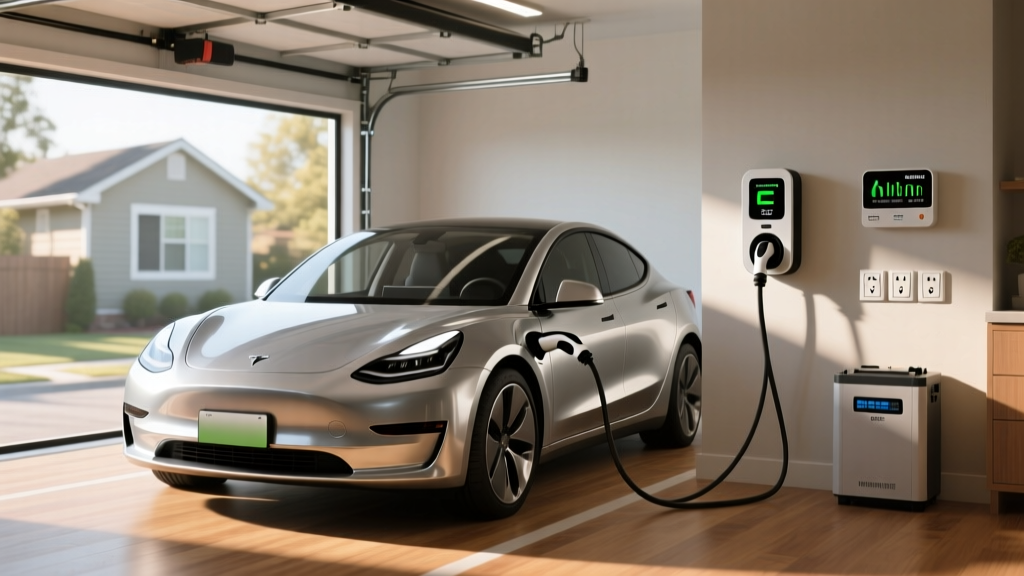
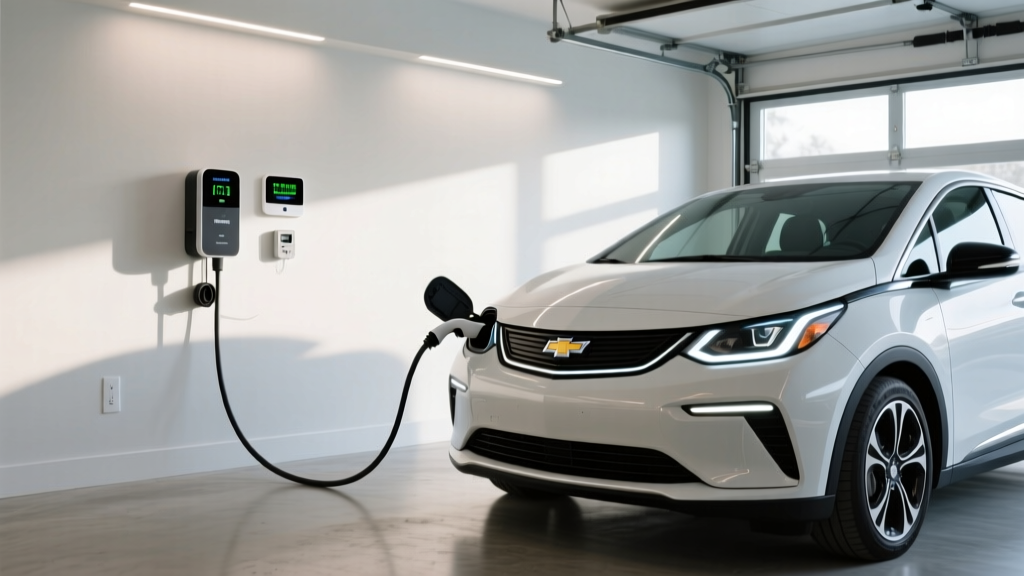
The Bolt's 11.5 kW onboard charger is among the best in its class — many competing compact EVs cap out at 7.2 kW. With a 48-amp Level 2 home charger on a 240V circuit, you can replenish the full 65 kWh battery in about 6.5 hours. This means an overnight charge from 20% to 100% finishes well before morning. Level 2 is the recommended standard for Bolt ownership.
DC Fast Charging: The Bolt's Known Weakness
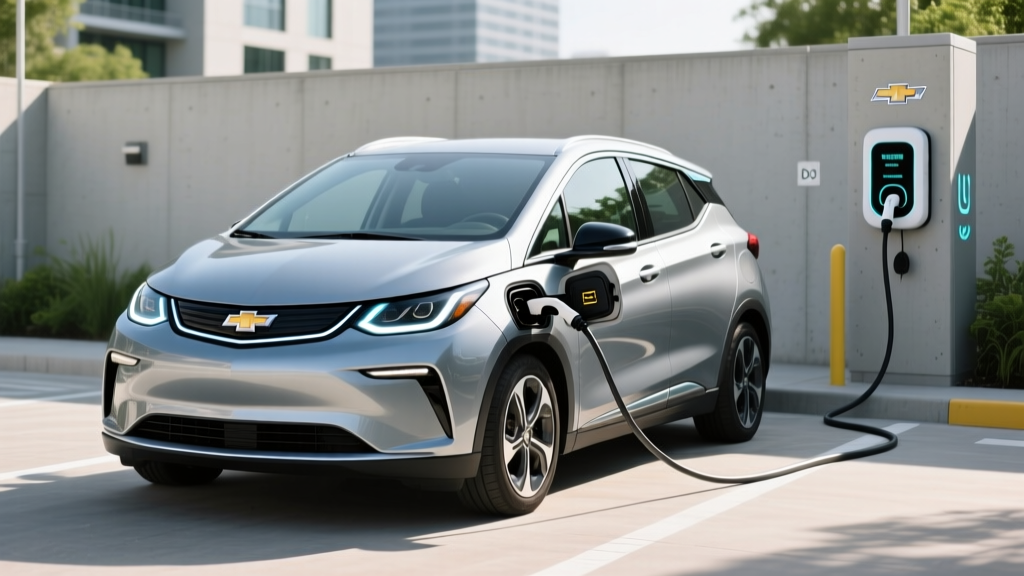
Here's where the Bolt's charge time becomes a pain point. The Bolt's CCS1 DC fast-charging hardware peaks at approximately 55 kW — significantly slower than modern competitors that accept 150–250 kW. On a road trip, a 10–80% charge takes roughly 70 minutes, compared to 18–25 minutes in vehicles like the Hyundai Ioniq 5 or Tesla Model 3.
The charge curve also tapers aggressively above 60% state of charge (SoC). You'll see close to 55 kW between 10–40%, dropping to roughly 38–40 kW through the 50–70% range, and falling below 20 kW above 80%. For road-trip planning, budget roughly 90 minutes per stop if you need to charge past 80%.
Home Charger Installation: Costs, Electrical Requirements, and Upgrades
Installing a Level 2 home charger is the single biggest ownership upgrade a Bolt driver can make. Here's what the electrical work actually involves and what you'll pay.
Electrical Requirements for a 48-Amp Level 2 Charger
- Circuit: Dedicated 60-amp breaker (NEC requires circuits rated at 125% of continuous load — 48A × 1.25 = 60A)
- Voltage: 240V split-phase (same as an electric dryer or oven)
- Wire gauge: 6 AWG copper (THHN/THWN in conduit) or 4 AWG aluminum
- Outlet option: NEMA 14-50 receptacle (for plug-in chargers) or hardwired connection
- Panel capacity: Your main panel must have sufficient spare amperage and two adjacent breaker slots
Installation Cost Breakdown
| Cost Component | Low Estimate | High Estimate | Notes |
|---|---|---|---|
| Level 2 charger (equipment) | $350 | $700 | 48A smart charger, 25 ft cable |
| Electrician labor | $500 | $1,500 | Varies by run length, conduit, wall material |
| Electrical permit | $50 | $200 | Required in most jurisdictions |
| Panel upgrade (if needed) | $1,500 | $3,500 | 100A→200A service upgrade for older homes |
| Total (no panel upgrade) | $900 | $2,400 | Typical scenario for modern homes |
| Total (with panel upgrade) | $2,400 | $5,900 | Common for pre-1990 homes with 100A service |
Homes built after 2000 typically have 200-amp panels with enough spare capacity for a 60-amp EV circuit. Homes built before 1990 often have 100-amp or 150-amp panels that are already near capacity — adding a 60-amp continuous load may require a service upgrade. A licensed electrician can perform a load calculation to determine whether your panel can handle the circuit. Some utilities and states offer rebates of $250–$1,000 for charger installation or panel upgrades; check your local utility's EV program.
Connector Compatibility: CCS1, NACS, and What Bolt Owners Need to Know
The Chevrolet Bolt EV and EUV use the CCS1 (Combined Charging System) connector for both AC Level 2 and DC fast charging. This is the standard shared by most legacy non-Tesla EVs sold in North America through 2024.
| Connector Standard | Bolt Compatibility | Adapter Needed? | Networks Available |
|---|---|---|---|
| CCS1 | Native (built-in) | No | Electrify America, EVgo, ChargePoint, most non-Tesla DC stations |
| NACS (Tesla) | With adapter | Yes — CCS1-to-NACS adapter | Tesla Supercharger network (V2 and V3 stalls with Magic Dock; V4 with adapter) |
| CHAdeMO | Not compatible | N/A | Phased out in North America; no Bolt adapter exists |
Tesla Supercharger Access for the Bolt
General Motors has secured Supercharger access for Bolt owners using a GM-approved CCS1-to-NACS adapter (available through GM dealerships and authorized retailers, typically $200–$250). With this adapter, Bolt owners can charge at Tesla V3 Superchargers (250 kW stalls) — though the Bolt's 55 kW DC ceiling means you'll still charge at 55 kW maximum regardless of the station's capability. Tesla's Magic Dock-equipped stalls also allow CCS1 vehicles to plug in directly without an adapter, though these stalls are still limited in number.
For Level 2 public charging, the Bolt uses the standard J1772 connector (the top portion of the CCS1 plug). No adapter is needed for any public Level 2 station in North America, including Tesla Destination Chargers equipped with J1772 connectors.
Charging Cost: Per-Mile Economics vs. Gasoline
One of the Bolt's strongest ownership arguments is its low cost per mile. With a combined efficiency of 28 kWh per 100 miles (per EPA data), the math heavily favors home charging over gasoline.
| Charging Scenario | Cost per kWh | Cost per 100 Miles | Cost per Mile |
|---|---|---|---|
| Home (national avg. residential) | $0.16 | $4.48 | $0.045 |
| Home (off-peak utility rate) | $0.08 | $2.24 | $0.022 |
| Public Level 2 (avg.) | $0.30 | $8.40 | $0.084 |
| DC Fast Charging (avg.) | $0.40 | $11.20 | $0.112 |
| Gasoline car (30 MPG, $3.40/gal) | — | $11.33 | $0.113 |
At home off-peak rates, the Bolt costs roughly 2.2 cents per mile to fuel — about one-fifth the cost of a 30 MPG gasoline car. Even at DC fast-charging prices, the Bolt is cost-competitive with gasoline on a per-mile basis. Over 15,000 annual miles, home charging saves approximately $1,000–$1,500 per year compared to a comparable gas vehicle.
Recommended Level 2 Chargers for the Chevy Bolt
Since the Bolt accepts up to 11.5 kW on Level 2, pairing it with a 48-amp charger maximizes its onboard charger capability. Here are three proven options.
Emporia Vue Level 2 Smart Charger
- Power output: 48A / 11.5 kW (240V)
- Connector: J1772 (CCS1 compatible)
- Cable length: 24 ft
- Smart features: Wi-Fi, app scheduling, solar integration, energy monitoring
- Price: ~$399
- Best for: Bolt owners with solar panels or time-of-use rate optimization
ChargePoint Home Flex
- Power output: Up to 50A / 12 kW (configurable, 48A recommended for Bolt)
- Connector: J1772 (CCS1 compatible)
- Cable length: 23 ft
- Smart features: Wi-Fi, Alexa, app scheduling, flexible amperage
- Price: ~$549
- Best for: Flexible amperage adjustment for homes with limited panel capacity
Grizzl-E Smart
- Power output: 40A / 9.6 kW (240V)
- Connector: J1772 (CCS1 compatible)
- Cable length: 24 ft
- Smart features: OCPP-compatible, app control, extreme cold rated (-40°F)
- Price: ~$449
- Best for: Cold-climate Bolt owners; rugged outdoor installation
Note: The Grizzl-E delivers 9.6 kW (40A) rather than the Bolt's full 11.5 kW capability. You'll add roughly 33 miles per hour instead of 39 — a minor difference for overnight charging, but worth noting if you want maximum speed.
Safety and Electrical Code Considerations
A Level 2 EV charger draws continuous high current for hours, making proper installation critical. Key requirements under the National Electrical Code (NEC Article 625):
- Dedicated circuit: The EV charger must have its own breaker — no sharing with other appliances or outlets.
- GFCI protection: NEC 2020 and later requires ground-fault circuit interrupter protection for all EV charging outlets (hardwired units often have built-in GFCI).
- Outdoor rating: If installing outdoors, the charger must carry a NEMA 4 (weatherproof) rating. All three chargers recommended above are rated for outdoor use.
- Strain relief and cable management: Wall-mounted cord organizers prevent connector damage and tripping hazards.
- Permit and inspection: Most jurisdictions require an electrical permit and post-installation inspection. Skipping this can void homeowner's insurance coverage for electrical fires.
Always hire a licensed electrician for the installation. DIY 240V work carries serious arc-flash and fire risk, and improper wiring may not be covered by insurance.
Frequently Asked Questions
How much does it cost to install a home EV charger for a Chevy Bolt?
A typical Level 2 installation with a 60-amp dedicated circuit costs between $900 and $2,400, including the charger ($350–$700), electrician labor ($500–$1,500), and permits ($50–$200). If your home requires a panel upgrade from 100A to 200A service, add $1,500–$3,500 to the total.
How fast will each charging level add range to the Bolt?
Level 1 (120V) adds approximately 4 miles per hour. Level 2 (240V, 48A) adds approximately 39 miles per hour — enough to fully recharge the Bolt overnight. DC fast charging can add up to 150 miles per hour at peak, but the Bolt's 55 kW ceiling and aggressive taper mean real-world road-trip stops take 60–90 minutes for a meaningful charge.
Which connector does the Chevy Bolt use, and do I need an adapter?
The Bolt uses the CCS1 connector natively for both AC and DC charging. No adapter is needed for any public Level 2 or Electrify America / EVgo DC station. To use Tesla Superchargers, you'll need a GM-approved CCS1-to-NACS adapter (~$200–$250).
How much does charging the Bolt cost per mile compared to gas?
At the national average residential electricity rate ($0.16/kWh), the Bolt costs about 4.5 cents per mile to charge at home. Off-peak utility rates can drop this to about 2.2 cents per mile. A comparable 30 MPG gas car at $3.40/gallon costs about 11.3 cents per mile — roughly 2.5× to 5× more expensive.
What electrical upgrades might my home need for a Level 2 charger?
If your home has a 200-amp electrical panel (standard in most homes built after 2000), you likely have sufficient capacity. Homes with 100-amp or 150-amp panels — common in pre-1990 construction — may need a service upgrade ($1,500–$3,500) to safely add a 60-amp EV circuit. A licensed electrician can perform a load calculation to confirm.
Can the Chevy Bolt charge faster with a software update or new hardware?
No. The Bolt's 55 kW DC fast-charging limit is a hardware constraint tied to the battery pack's thermal management system and the CCS1 inlet's electrical design. No software update or aftermarket modification can increase this rate. GM's newer Ultium-platform vehicles (Equinox EV, Blazer EV) accept significantly higher DC charge rates.
Is the federal tax credit available for home charger installation?
The IRS §30C Alternative Fuel Vehicle Refueling Property Credit offers up to 30% of the cost of home EV charging equipment (capped at $1,000) — but only if you live in a qualifying census tract (generally low-income or non-urban areas). Check IRS guidance and consult a tax professional to confirm your eligibility.
The Chevy Bolt's charging profile is a study in contrasts: outstanding Level 2 speed thanks to its 11.5 kW onboard charger, but a frustratingly slow DC fast-charging rate that limits road-trip convenience. For daily driving and overnight home charging, the Bolt is among the most practical and affordable EVs to own — just plan your road trips around its 70-minute fast-charge stops.