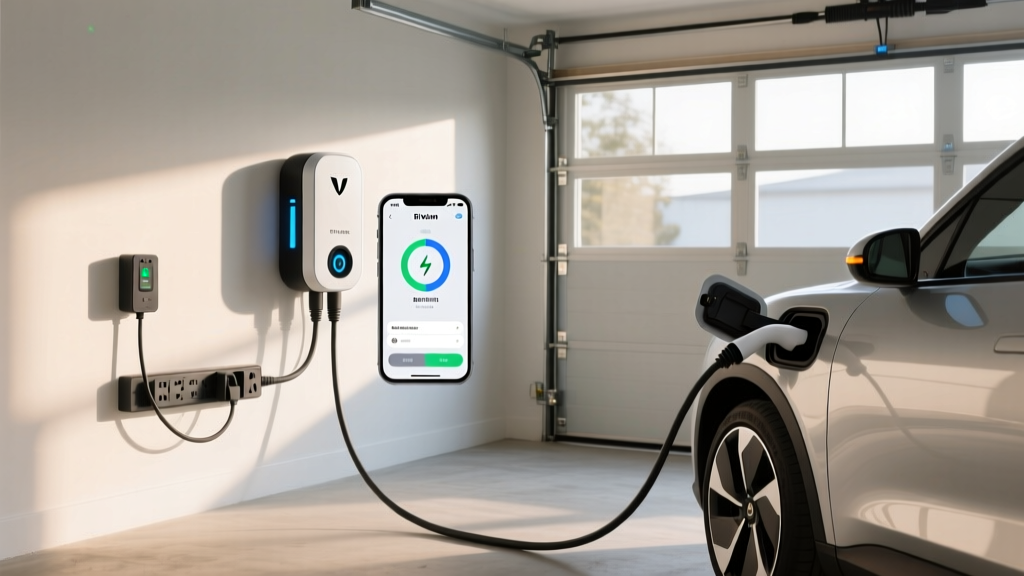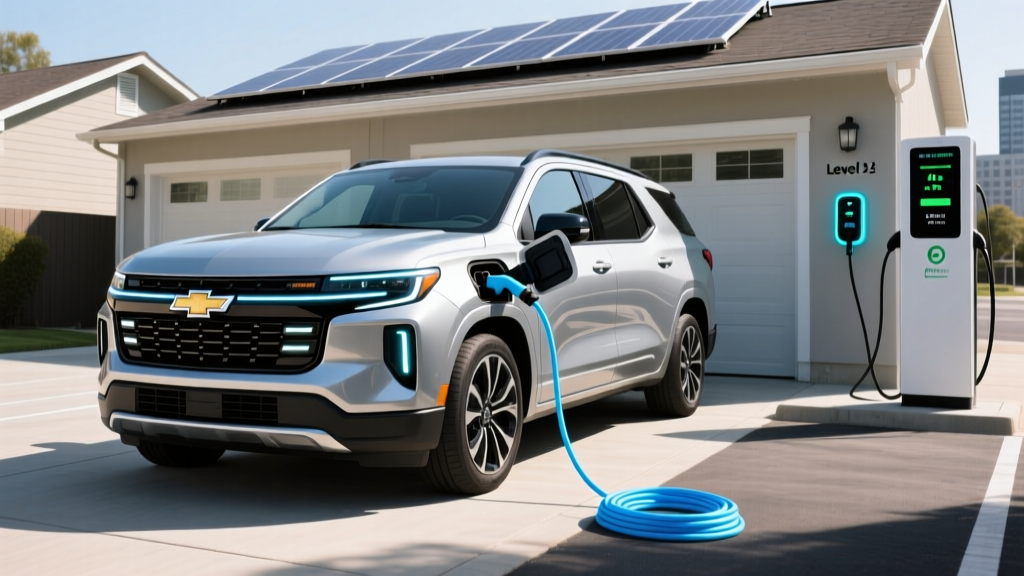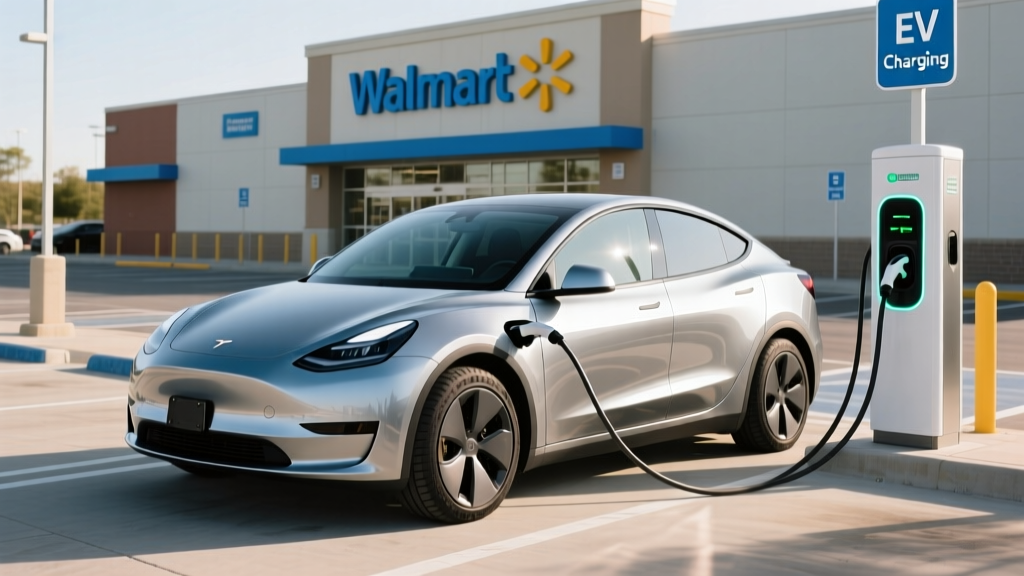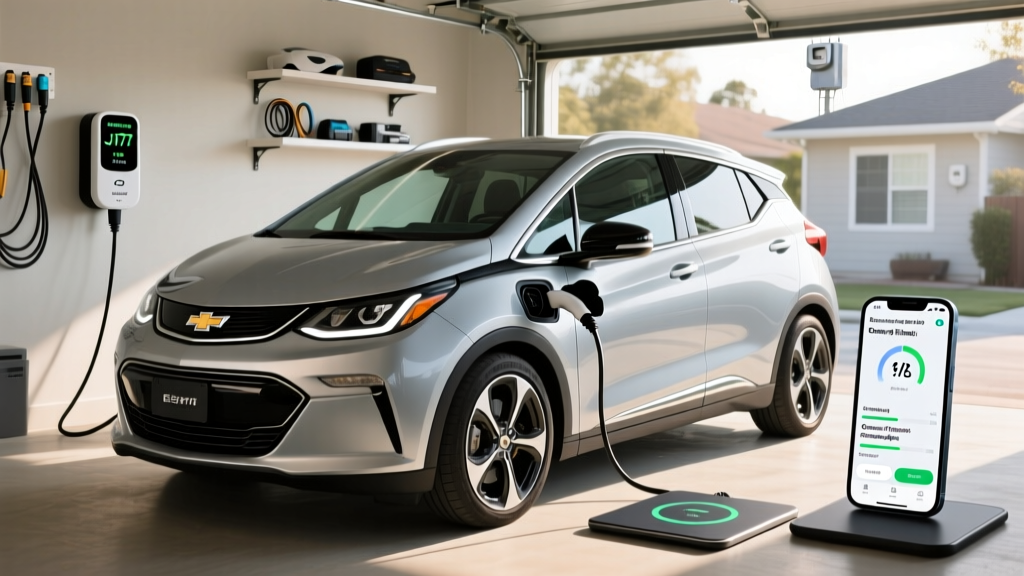
The next-generation Chevrolet Bolt is shaping up to be one of the most anticipated affordable EVs on the market. With the 2027 model year expected to bring a new Ultium-based platform, improved battery chemistry, and faster charging, buyers are searching for details on the Chevy Bolt 2027 range and what it takes to charge one at home. This guide covers everything you need to know about charging infrastructure, installation costs, connector types, and real-world ownership economics — so you can plan your setup before the car even hits dealer lots.
Chevy Bolt 2027 Range: What We Know
EPA estimate (projected): ~255–290 miles depending on trim and battery configuration.
Real-world expectation: Plan for ~220–250 miles on highway trips at 70+ mph, and ~180–210 miles in sustained cold weather (below 30°F). These figures assume a ~65 kWh usable Ultium LFP or NMC pack, consistent with GM's stated next-gen Bolt platform goals.
Note: The 2027 Bolt has been announced but final EPA certification is pending. Specs are preliminary as of mid-2026. Verify at fueleconomy.gov once published.
Understanding EV Charging Levels: What Adds Range to a Bolt
Before budgeting for equipment, you need to understand the three charging levels and what each delivers in practical terms. Power is measured in kW (kilowatts) — that's the rate of energy delivery. Energy stored in the battery is measured in kWh (kilowatt-hours) — that's the total capacity. Think of kW as the speed of water flowing from a hose, and kWh as the size of the bucket.
| Level | Voltage | Max Power (kW) | Miles of Range Added Per Hour | Best For |
|---|---|---|---|---|
| Level 1 (120V) | 120V AC | 1.2–1.4 kW | 3–5 mi/hr | Overnight trickle, PHEVs, emergency |
| Level 2 (240V) | 240V AC | 3.3–19.2 kW | 12–75 mi/hr | Daily home charging, overnight full charge |
| DC Fast Charge | 400–800V DC | 50–350 kW | 150–300+ mi in 20 min | Road trips, quick top-ups |
For a next-gen Bolt with a ~65 kWh battery, Level 1 charging from empty would take roughly 50+ hours — impractical for daily use. Level 2 at 11.5 kW (48A) would fully replenish the pack in about 6–7 hours, making it the realistic standard for home charging. DC fast charging is where road-trip viability lives: if GM delivers the promised ~150 kW peak charge rate on the Ultium platform, a 10–80% session should take approximately 25–30 minutes.
Home Charger Installation: Electrical Requirements and Costs
Installing a Level 2 home charger is the single most impactful upgrade for EV ownership. But costs vary widely based on your home's electrical panel, the distance from panel to charger location, and local permit fees.
Electrical Requirements
A typical Level 2 charger for the Bolt runs on a 240V circuit at 40A to 48A, requiring a dedicated 50A or 60A breaker. The National Electrical Code (NEC) requires that continuous loads (like EV charging) not exceed 80% of the circuit rating — so a 48A charger needs a 60A breaker.
Panel capacity check: Most modern homes with a 200A main panel can accommodate a 50–60A EV circuit. Older homes with 100A or 150A service may need a panel upgrade ($1,500–$3,500) or a load-management device that throttles charging when other major appliances are running.
| Component | Typical Cost Range | Notes |
|---|---|---|
| Level 2 Charger (hardware) | $350–$750 | 40A–48A, 240V, NACS or J1772 |
| Electrician labor (standard install) | $500–$1,500 | Panel to garage, <50 ft run |
| Electrician labor (complex run) | $1,500–$3,000 | Long conduit runs, trenching, wall penetration |
| Permit fees | $50–$250 | Varies by municipality |
| Panel upgrade (if needed) | $1,500–$3,500 | 100A→200A service upgrade |
| Total (no panel upgrade) | $900–$2,500 | Most homes with 200A service |
| Total (with panel upgrade) | $2,400–$6,250 | Older homes with 100A/150A panels |
Always hire a licensed electrician and pull a permit. Unpermitted work can void homeowner's insurance and create fire risk. The National Electrical Contractors Association maintains a directory of certified EV installer electricians.
Connector Compatibility: NACS, CCS1, and What the 2027 Bolt Uses
GM was one of the first legacy automakers to commit to the North American Charging Standard (NACS) — the connector originally developed by Tesla. The outgoing Bolt EV used CCS1, but the next-generation Bolt on the Ultium platform is expected to ship with a native NACS port, granting direct access to the Tesla Supercharger network without an adapter.
| Connector | Used By | DC Fast Charge? | Adapter Needed for Bolt 2027? |
|---|---|---|---|
| NACS (Tesla) | Tesla, GM, Ford, Rivian, Volvo, others | Yes (up to 350 kW) | No — expected native port |
| CCS1 | Hyundai, Kia, VW, BMW, most legacy brands | Yes (up to 350 kW) | Yes — NACS-to-CCS adapter (~$200) |
| CHAdeMO | Nissan Leaf (legacy) | Yes (up to 100 kW) | Not recommended — network declining |
| J1772 | All EVs (Level 2 AC only) | No — AC only | No — NACS includes J1772 signaling or use adapter |
If you already own a CCS1-equipped home charger, a NACS-to-CCS adapter (such as the Lectron or A2Z adapter, ~$150–$250) will let you charge a NACS-equipped Bolt at home. For public DC fast charging, the native NACS port means plug-and-play access to over 20,000 Tesla Superchargers — currently the most reliable DC network in the US.
Charging Cost Per Mile: EV vs Gas
One of the strongest ownership arguments for the Bolt is fuel cost. Here's how charging scenarios break down in real dollars, compared to a 30 MPG gasoline compact car at $3.40/gallon.
| Charging Scenario | Rate ($/kWh) | Cost for 65 kWh Fill | Cost Per Mile (~255 mi range) |
|---|---|---|---|
| Home off-peak (utility time-of-use) | $0.08–$0.12 | $5.20–$7.80 | $0.02–$0.03 |
| Home standard rate | $0.13–$0.18 | $8.45–$11.70 | $0.03–$0.05 |
| Public Level 2 (ChargePoint, EVgo) | $0.25–$0.39 | $16.25–$25.35 | $0.06–$0.10 |
| DC Fast Charge (Electrify America, EA) | $0.35–$0.55 | $22.75–$35.75 | $0.09–$0.14 |
| Tesla Supercharger (where available) | $0.25–$0.40 | $16.25–$26.00 | $0.06–$0.10 |
| Gasoline car (30 MPG, $3.40/gal) | — | — | $0.11/mi |
At home off-peak rates, the Bolt costs roughly $0.02–$0.03 per mile — about one-quarter the cost of gasoline. Even on DC fast chargers during road trips, you'll often break even or save versus gas, especially on networks with membership pricing. Over 12,000 miles per year, home charging saves approximately $900–$1,100 annually versus a 30 MPG gas car.
Equipment Recommendations: Best Level 2 Chargers for the Bolt
Not all Level 2 chargers are equal. Here are three proven options that pair well with a next-gen NACS-equipped Bolt, spanning budget to premium.
Emporia Vue Smart Charger (Budget Pick)
- Power: 48A / 11.5 kW (240V, hardwired)
- Connector: J1772 (NACS adapter available) or native NACS version
- Cable length: 24 ft
- Smart features: Wi-Fi, app scheduling, solar integration, energy monitoring
- Price: ~$399
- Best for: Budget-conscious buyers who want smart scheduling and solar pairing
ChargePoint Home Flex (Versatile Pick)
- Power: Up to 50A / 12 kW (adjustable 16A–50A)
- Connector: J1772 or NACS (select at purchase)
- Cable length: 23 ft
- Smart features: Wi-Fi, Alexa integration, app scheduling, amperage flexibility
- Price: ~$599
- Best for: Homes with varied circuit capacity; adjustable amperage avoids panel upgrades
Tesla Wall Connector (NACS Native Pick)
- Power: Up to 48A / 11.5 kW (240V, hardwired)
- Connector: NACS native
- Cable length: 24 ft
- Smart features: Wi-Fi, OTA updates, power sharing (multiple units on one circuit)
- Price: ~$475
- Best for: NACS-native EVs like the 2027 Bolt; cleanest integration with Supercharger network
All three chargers are UL-listed and NEMA 4-rated for outdoor installation. Hardwired units are preferred over plug-in (NEMA 14-50) for reliability and code compliance in many jurisdictions — check with your electrician.
Charging Time Examples: 10–80% Sessions for the Bolt
EV batteries charge fastest between 10% and 80% State of Charge (SoC). Above 80%, the charge curve tapers significantly to protect battery health — this is normal and applies to all lithium-ion packs.
- Level 1 (120V, 1.4 kW): 10–80% (~45 kWh) takes ~32 hours. Only viable for emergency top-ups or very low daily mileage.
- Level 2 (240V, 11.5 kW / 48A): 10–80% in ~4–5 hours. Ideal overnight charge — plug in at 10 PM, full by morning.
- DC Fast Charge (~150 kW peak, projected): 10–80% in ~25–30 minutes (preconditioned battery). Peak rate is sustained roughly from 10–50% SoC, then tapers to ~80–100 kW through 80%.
Cold-weather note: Below 40°F, DC fast charging speeds drop significantly unless the battery is preconditioned. GM's Ultium platform includes active thermal management — use the navigation-based preconditioning feature to warm the battery before arriving at a charger. Without preconditioning, expect 10–80% times to stretch to 40–50 minutes in freezing conditions.
Safety and Code Considerations
EV charging involves sustained high-current draw that your home's wiring may not have experienced before. Key safety requirements:
- Dedicated circuit: Your Level 2 charger must have its own dedicated breaker — it cannot share a circuit with other appliances.
- GFCI protection: NEC 2020 and later require GFCI protection for outdoor receptacles used for EV charging. Hardwired installations may have different requirements depending on local code.
- Outdoor rating: If mounting outdoors, the charger must be rated NEMA 4 or NEMA 4X (weatherproof). All three recommended chargers above meet this standard.
- Wire gauge: A 60A circuit requires 6 AWG copper wire (or 4 AWG aluminum). Your electrician will size this correctly — do not attempt DIY wiring for a 240V circuit.
- Permit and inspection: Most jurisdictions require an electrical permit and post-installation inspection. This protects you and ensures insurance coverage in the event of an electrical fire.
Federal Tax Credit for Home Charging Equipment
The IRS §30D and 25C credits may cover a portion of your home charging installation. Under current rules, the Alternative Fuel Vehicle Refueling Property Credit (IRC §30C) provides up to 30% of the cost of home charging equipment and installation, capped at $1,000, for installations at your primary residence. Eligibility depends on census-tract criteria and current IRS guidance — consult a tax professional to confirm your qualification.
The Bolt itself may qualify for the $7,500 federal EV tax credit under §30D, subject to MSRP caps (under $55,000 for sedans/hatchbacks), buyer income limits ($150K single / $300K joint), and critical-mineral/battery-sourcing requirements. GM's Ultium batteries are assembled in the US, which historically has positioned them favorably — but always verify current eligibility on the DOE/EPA fueleconomy.gov tax credit page.
Frequently Asked Questions
How much does it cost to install a home EV charger?
Most homeowners with a 200A electrical panel pay $900–$2,500 total for a Level 2 charger installation (equipment, electrician labor, and permit). If your home has an older 100A or 150A panel, a panel upgrade adds $1,500–$3,500, bringing the total to $2,400–$6,250.
How fast will each charging level add range?
Level 1 (120V) adds 3–5 miles per hour. Level 2 (240V, 48A) adds approximately 30–40 miles per hour on a Bolt-class vehicle. DC fast charging can add 150+ miles in 20 minutes, depending on peak kW and battery preconditioning.
Which connector/charger is compatible with my EV?
The 2027 Chevy Bolt is expected to use a native NACS connector, compatible with Tesla Superchargers and all NACS-equipped public stations. If you have a J1772 or CCS1 home charger, adapters are available for ~$150–$250.
How much does charging cost per mile vs gas?
Home charging at off-peak rates costs approximately $0.02–$0.03 per mile. A comparable 30 MPG gas car at $3.40/gallon costs $0.11 per mile. That's roughly $900–$1,100 in annual fuel savings for a driver covering 12,000 miles per year.
What electrical upgrades might I need?
If your home has a 200A panel with available capacity, you likely need only a new 50A or 60A dedicated breaker and a wire run to your charger location. Homes with 100A or 150A service may need a full panel upgrade ($1,500–$3,500) or a load-management device that dynamically reduces charging amperage when other appliances are active.
Will the 2027 Bolt charge faster than the old Bolt EV?
Yes — significantly. The outgoing Bolt EV/EUV was limited to ~55 kW DC fast charging (CCS1), resulting in 10–80% times of roughly 55–60 minutes. The Ultium-based next-gen Bolt is projected to support ~150 kW peak DC charging via NACS, cutting 10–80% to approximately 25–30 minutes with a preconditioned battery.