The 2017 Chevy Bolt EV: Range Reality and Why Your Charging Setup Matters
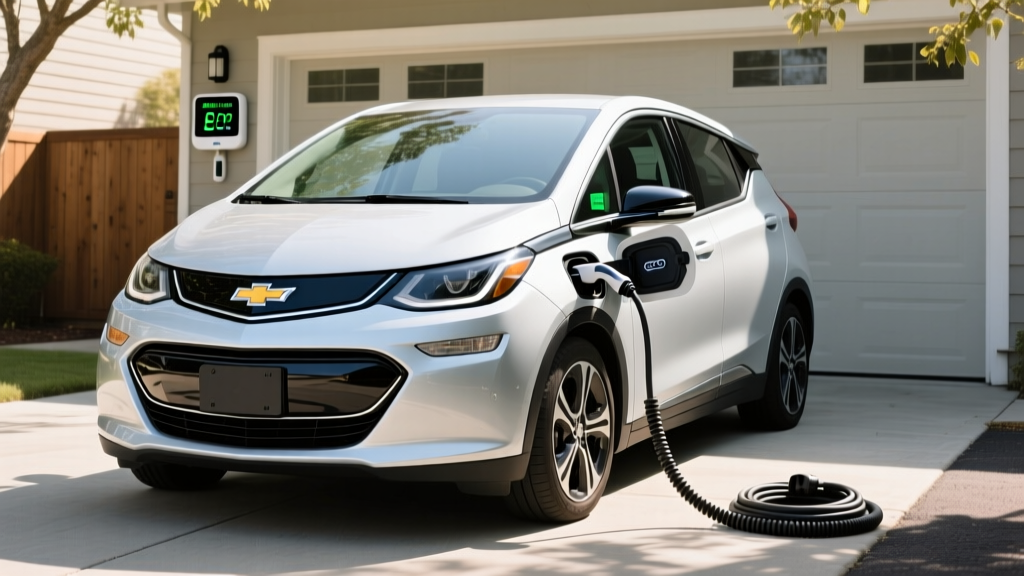
The 2017 Chevrolet Bolt EV was a watershed moment for affordable long-range electric vehicles. With an EPA-estimated 238 miles of range from its 60 kWh lithium-ion (NMC) battery pack, it undercut every competitor on price-per-mile-of-range when it launched. But nearly a decade later, owners and used-EV shoppers need to understand two things: what real-world range looks like from that original EPA sticker, and how to charge the Bolt efficiently at home and on the road.
EPA sticker: 238 miles
Real-world highway (70 mph, moderate temps): ~200–215 miles
Cold weather (below 32°F, cabin heat on): ~155–180 miles
City/regenerative driving (mild temps): ~230–250 miles (can exceed EPA)
The Bolt's NMC battery has likely experienced 8–15% degradation by now depending on charging habits and climate. A 2017 model may show 200–215 miles at 100% SoC on the dashboard when new-range was 238.
Charging infrastructure is the variable you control. Whether you're plugging into a standard 120V outlet overnight or installing a dedicated 240V Level 2 station, your setup determines how quickly the Bolt's 60 kWh pack refills — and how much you pay per mile. This guide breaks down every charging option, installation cost, connector detail, and per-mile cost for the 2017 Bolt EV.
Charging Levels Explained: How Fast Each Level Adds Range to Your Bolt
Before comparing hardware, you need to understand the three charging tiers. The critical distinction: kW (kilowatts) measures power — the rate at which energy flows into your battery. kWh (kilowatt-hours) measures energy — the total capacity of the battery itself. The Bolt's 60 kWh battery is the tank size; the kW rating of your charger is how fast the pump fills it.
| Level | Voltage / Amps | Max Power (kW) | Miles of Range Added Per Hour | Full Charge Time (0–100%) |
|---|---|---|---|---|
| Level 1 (120V household) | 120V / 12A | ~1.4 kW | ~4 mi/hr | ~60 hours |
| Level 2 (240V home/public) | 240V / 32A (Bolt's onboard limit) | 7.7 kW (Bolt max) | ~25 mi/hr | ~9 hours |
| DC Fast Charging (CCS1) | 400V+ DC | ~55 kW peak (Bolt max) | ~160 mi/hr (at peak) | ~70 min (10–80%) |
The 2017 Bolt EV has a critical limitation that many first-time owners discover too late: its onboard charger caps Level 2 AC charging at 7.7 kW (32 amps). Even if you install a 48-amp (11.5 kW) home charger, the Bolt will only draw 7.7 kW. This means overspecifying your charger won't hurt anything — and it future-proofs for your next EV — but don't expect faster charging from a bigger unit on this car.
On DC fast charging, the Bolt peaks around 55 kW at low states of charge, tapering significantly above 80% SoC. A 10–80% session takes approximately 70 minutes at a 50+ kW CCS1 station. That's slower than modern EVs (the 2024 Hyundai Ioniq 5 hits 240 kW peak), but it's adequate for road-trip stops if you plan around meal breaks.
Connector Compatibility: What Plugs Into the 2017 Bolt EV?
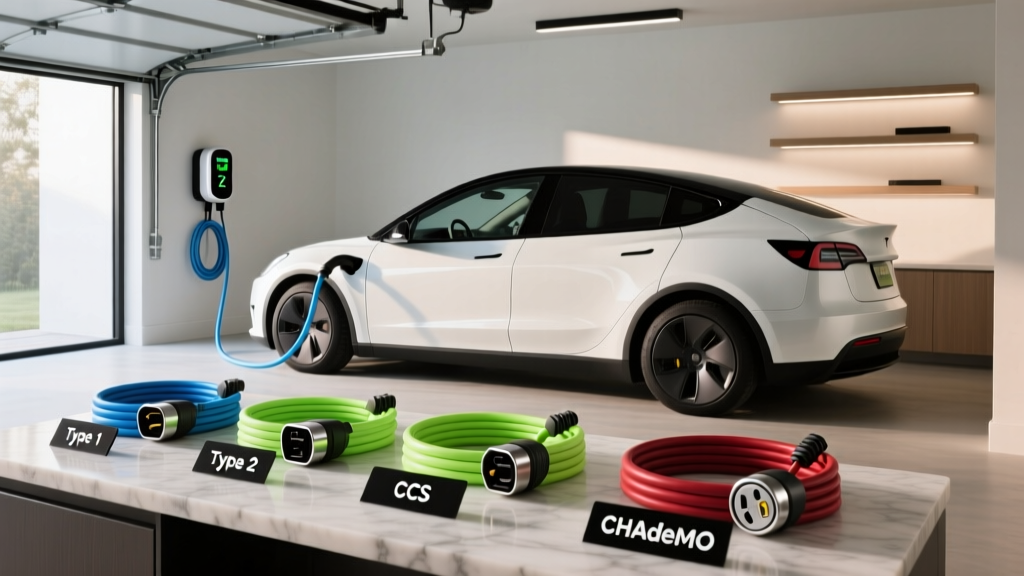
The 2017 Bolt uses the CCS1 (Combined Charging System Combo 1) connector for both AC Level 2 and DC fast charging. For Level 1, it uses the standard J1772 connector (the upper portion of the CCS1 plug). Here's how the Bolt fits into the broader connector landscape:
| Connector Type | Used By | Bolt 2017 Compatible? | Adapter Needed? |
|---|---|---|---|
| J1772 (AC Level 1/2) | All non-Tesla EVs (2011–present) | ✅ Yes — native | No |
| CCS1 (DC Fast) | GM, Ford, VW, Hyundai, BMW, most non-Tesla | ✅ Yes — native | No |
| NACS / Tesla (AC + DC) | Tesla vehicles; Ford/GM/Rivian starting 2025+ | ⚠️ With adapter | Yes — CCS1-to-NACS adapter (~$200–$250) for Supercharger access |
| CHAdeMO (DC Fast) | Nissan Leaf, Mitsubishi (legacy) | ❌ No | N/A — no practical adapter exists |
The Tesla Supercharger question: As of 2025, GM began enabling Supercharger access for newer Ultium-based EVs. The 2017 Bolt EV, however, is not on GM's native NACS compatibility list. You can use a third-party CCS1-to-NACS adapter (such as those from Lectron or A2Z) to access Tesla V2 and V3 Superchargers, but charge speeds will still be limited by the Bolt's ~55 kW DC fast-charge ceiling. Always verify adapter compatibility and safety certifications before purchasing.
Home Charger Installation: Electrical Requirements and Costs
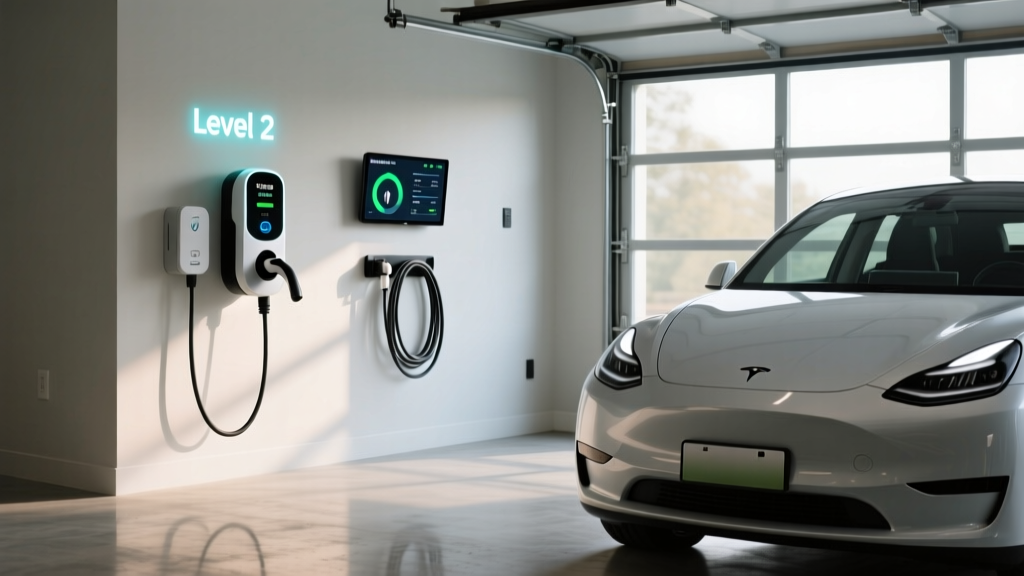
Installing a Level 2 home charger is the single best upgrade for any Bolt EV owner. But the total cost involves more than just the charging unit. Here's what your electrician will assess:
Electrical Requirements for the 2017 Bolt
- Circuit: Dedicated 40-amp, 240V circuit (for a 32-amp charger — NEC requires circuits rated 125% above continuous load)
- Wire: 8 AWG copper (or 6 AWG aluminum) for a 40A circuit; 6 AWG copper for a 50A circuit if future-proofing
- Outlet vs. hardwired: NEMA 14-50 outlet offers portability; hardwired units allow higher amperage and avoid GFCI breaker nuisance trips
- Panel capacity: Your main panel needs at least 40A of spare capacity. A 200-amp panel serving a home with gas appliances usually has room. A 100-amp panel in an older home may not.
Panel Upgrade: The Hidden Cost
Many homes built before 2000 have 100-amp or 125-amp electrical panels. Adding a 40-amp EV circuit to a panel already near capacity requires a panel upgrade to 200 amps, which adds $1,500–$3,500 to your project. Signs you may need an upgrade:
- Breakers already tripping under normal load
- No open slots in your panel
- Your load calculation (per NEC Article 220) exceeds 80% of panel rating with the EV circuit added
- Your utility service drop is rated below 200A
| Component | Low Estimate | High Estimate | Notes |
|---|---|---|---|
| Level 2 charger unit (32–48A) | $350 | $700 | Smart Wi-Fi units cost more |
| Electrician labor (2–6 hours) | $300 | $1,200 | Varies by run length, conduit, wall type |
| Materials (wire, conduit, breaker) | $100 | $400 | Longer runs = more wire cost |
| Electrical permit | $50 | $200 | Required in most jurisdictions |
| Panel upgrade (if needed) | $1,500 | $3,500 | 100A → 200A service upgrade |
| TOTAL (no panel upgrade) | $800 | $2,500 | Most common scenario |
| TOTAL (with panel upgrade) | $2,300 | $6,000 | Older homes with 100A panels |
Federal incentive: The IRS Residential Clean Energy Credit (25C) covers 30% of home EV charger equipment and installation costs, up to $1,000, for equipment placed in service through 2032. This applies to Level 2 chargers. Check IRS Publication 5694 for eligibility details, as the credit is nonrefundable and subject to annual limits.
Level 2 Charger Recommendations for the 2017 Bolt EV
Since the Bolt caps at 7.7 kW (32A), any 32A or 40A charger will fully utilize its onboard charger. We recommend 40A or 48A units for future-proofing — they cost little more and prepare you for your next EV. Here are three proven options:
Emporia Level 2 EV Charger
Power: 48A (11.5 kW) / hardwired or 40A (9.6 kW) NEMA 14-50
Cable: 24 ft
Smart features: Wi-Fi, app scheduling, energy monitoring, solar integration
Price: ~$399
Best for: Budget-conscious buyers wanting smart features. Excellent energy tracking pairs well with time-of-use utility rates. The Bolt will draw its 7.7 kW max here.
ChargePoint Home Flex
Power: Configurable 16A–50A (up to 12 kW) / NEMA 14-50 or hardwired
Cable: 23 ft
Smart features: Wi-Fi, Alexa/Google Home, app scheduling, flexible amperage setting
Price: ~$649
Best for: Flexibility. You can set it to 40A for the Bolt now and reconfigure to 50A for a future EV without replacing hardware. UL-listed, widely available.
Tesla Wall Connector (with J1772 adapter)
Power: 48A (11.5 kW) / hardwired
Cable: 24 ft
Smart features: Wi-Fi, firmware updates, power sharing between two units, load management
Price: ~$450 (charger) + ~$30 (Tesla J1772 adapter for non-Tesla EVs)
Best for: Multi-EV households or those planning to switch to a NACS-equipped vehicle. Requires the Tesla J1772 adapter for the Bolt's CCS1/J1772 inlet. Robust build quality.
Important: All three units supply more than the Bolt's 7.7 kW ceiling. The car's onboard charger governs the actual draw — you'll charge at ~7.7 kW / ~25 miles of range per hour regardless of which unit you choose. The advantage of a 48A unit is solely future-proofing.
Cost to Charge the Bolt EV: Per-Mile Economics vs. Gasoline
The 2017 Bolt EV achieves an EPA-rated 119 MPGe combined (approximately 28 kWh per 100 miles, or 3.57 mi/kWh). That efficiency figure is the basis for every cost calculation below.
| Scenario | Rate ($/kWh) | Cost per Mile | Cost for Full 60 kWh Charge |
|---|---|---|---|
| Home — off-peak utility rate | $0.10/kWh | $0.028/mi | $6.00 |
| Home — average US rate | $0.16/kWh | $0.045/mi | $9.60 |
| Public Level 2 (workplace, retail) | $0.25/kWh | $0.070/mi | $15.00 |
| DC Fast Charging (Electrify America, etc.) | $0.40/kWh | $0.112/mi | $24.00 |
| Gasoline equivalent (28 MPG at $3.50/gal) | — | $0.125/mi | — |
The numbers are clear: home charging is where the Bolt saves you the most money. At off-peak rates, you're paying less than 3 cents per mile — roughly one-quarter the cost of gasoline in a comparable compact car. Even at public DC fast-charging rates, the Bolt is competitive with gas. But habitual reliance on expensive public DC fast chargers ($0.40–$0.55/kWh at some networks) can erase most of the fuel-cost advantage.
Annual fuel savings estimate: Driving 12,000 miles/year with home charging at $0.16/kWh costs ~$540. The equivalent gas car at 28 MPG and $3.50/gallon costs ~$1,500. That's approximately $960 in annual fuel savings — or $4,800 over five years. Source: fueleconomy.gov comparison tool.
Safety, Code, and Installation Best Practices
A Level 2 charger draws significant current for hours at a time — this is classified as a continuous load under the National Electrical Code (NEC Article 210.20). Key safety requirements:
- Dedicated circuit: Your EV charger must be on its own breaker — not shared with other appliances or outlets.
- 125% rule: A 32A charger requires a 40A breaker and circuit. A 48A charger requires a 60A breaker. Never undersize.
- GFCI protection: NEC 2020+ requires GFCI protection for 240V receptacles in garages. Hardwired chargers are typically exempt from this requirement, which is why many electricians recommend hardwiring to avoid nuisance trips.
- Outdoor rating: If your charger is installed outside, the unit must carry a NEMA 4 or NEMA 4X rating for weather resistance. All three units recommended above are outdoor-rated.
- Permit and inspection: Most municipalities require a permit for new 240V circuits. The inspection verifies wire gauge, breaker sizing, grounding, and proper mounting. Don't skip this — it protects you and is required for insurance claims and the 25C tax credit.
- Cable management: Use a holster or hook rated for the cable weight. A 24-ft EV cable left on a garage floor is a tripping hazard and can be damaged by vehicles.
DC Fast Charging on the Road: What Bolt Owners Should Know
The 2017 Bolt's ~55 kW DC fast-charge ceiling means you'll want to plan road trips around CCS1 stations with at least 50 kW output. Networks like Electrify America, EVgo, and ChargePoint all operate CCS1-equipped stations compatible with the Bolt natively.
Charging curve reality: The Bolt's charge rate is not a flat 55 kW from start to finish. Expect roughly:
- 10–40% SoC: ~45–55 kW (fastest portion)
- 40–65% SoC: ~38–45 kW (moderate taper)
- 65–80% SoC: ~25–35 kW (significant taper)
- 80–100% SoC: ~10–15 kW (very slow — avoid unless necessary)
This is why the industry standard metric is 10–80% charge time, which for the Bolt is approximately 70 minutes. Charging beyond 80% on DC is inefficient and generates excess heat in the battery pack — it's better to charge to 80% and drive on.
Preconditioning note: Unlike newer GM Ultium vehicles, the 2017 Bolt does not have active battery preconditioning for DC fast charging. In cold weather (below 40°F), your first DC fast-charge session of the day will be noticeably slower until the battery warms through use. Plan accordingly — the first stop on a winter road trip may take 90+ minutes for 10–80%.
Frequently Asked Questions
How much does it cost to install a home EV charger for the 2017 Bolt?
Expect $800–$2,500 for a standard installation (charger + electrician + permit + materials) if your electrical panel has sufficient capacity. If your home needs a panel upgrade from 100A to 200A, add $1,500–$3,500. The IRS 25C credit covers 30% of costs up to $1,000, potentially saving you $240–$750.
How fast will each charging level add range to the Bolt?
Level 1 (120V): approximately 4 miles per hour. Level 2 (240V, 32A): approximately 25 miles per hour. DC fast charging (55 kW peak): up to 160 miles per hour at peak, but tapering significantly above 50% SoC. A full Level 2 charge from empty takes about 9 hours.
Which connector and charger is compatible with the 2017 Bolt EV?
The Bolt uses CCS1 for DC fast charging and J1772 for AC Level 1/2 charging. Any J1772/CCS1 home charger or public station will work natively. For Tesla Supercharger access, you need a third-party CCS1-to-NACS adapter (~$200–$250). CHAdeMO stations are not compatible.
How much does charging the Bolt cost per mile compared to gas?
At the US average home electricity rate ($0.16/kWh), the Bolt costs about $0.045 per mile. A comparable 28-MPG gas car at $3.50/gallon costs $0.125 per mile. That's nearly a 3:1 savings ratio for home charging. DC fast charging at $0.40/kWh brings the cost to ~$0.112/mile — still below gas.
What electrical upgrades might my home need for a Level 2 charger?
The most common upgrade is a panel replacement from 100A to 200A service, needed in older homes with limited spare capacity. You may also need a new conduit run from the panel to the garage, a subpanel if your garage is detached, or a smart load-management device if your utility requires it. A licensed electrician will perform a NEC Article 220 load calculation to determine your exact needs.
Is the 2017 Bolt's battery warranty still active?
GM covers the Bolt's battery for 8 years/100,000 miles against defects and capacity loss below 60% of original capacity. For a 2017 model, the warranty expired in 2025 by time (or earlier if the car exceeded 100,000 miles). However, GM issued a recall-related battery replacement program for 2017–2019 Bolts following the 2021 fire recall — if your Bolt received a replacement battery module under that recall, it carries its own warranty. Check your VIN at nhtsa.gov/recalls.
Can I charge the Bolt at Tesla Superchargers?
Not natively. The 2017 Bolt uses CCS1, while Tesla Superchargers use the NACS connector. A CCS1-to-NACS adapter from a reputable manufacturer (Lectron, A2Z EV) enables access to V2 and V3 Superchargers, but you'll still be limited by the Bolt's ~55 kW DC charge ceiling. Verify that the adapter is UL-recognized or independently tested before use.