If you've spent years wringing every ounce of performance out of a Chevrolet Cobalt SS Supercharged — that 2.0L Ecotec with its Eaton M62 blower pushing 205 horsepower and 20 mpg combined — you already know what enthusiasm for a machine feels like. The instant torque, the mechanical whine, the engagement. But with gasoline hovering near or above $3.50/gallon in most US markets in 2026, and modern EVs now delivering 0-60 times that would embarrass that Cobalt's 6.2-second sprint, a growing number of performance-minded drivers are asking: what does EV ownership actually look like day to day?
This guide is written for that exact transition. We'll break down home charging installation, public charging realities, connector standards, equipment picks, and the real math on cost-per-mile versus what you're paying to feed that supercharged four-cylinder today.
Charging Levels Explained: Speeds, Power, and What They Mean in Practice
Before we talk equipment, we need to clear up the single most common point of confusion in EV ownership: kW (kilowatts) measures power — how fast energy flows, while kWh (kilowatt-hours) measures energy — the total capacity of the battery. Think of kW as the flow rate of a hose, and kWh as the size of the bucket you're filling. This distinction matters for every charger spec you'll read.
| Level | Voltage | Typical Power (kW) | Miles of Range Added per Hour | Best Use Case |
|---|---|---|---|---|
| Level 1 | 120V AC | 1.2–1.9 kW | 3–5 mi/hr | Overnight top-ups, PHEVs, low-mileage drivers |
| Level 2 | 240V AC | 7.2–19.2 kW | 25–70 mi/hr | Daily home charging, workplace, destinations |
| DC Fast Charge | 400–800V DC | 50–350 kW | 150–1,200+ mi/hr (peak) | Road trips, quick top-ups away from home |
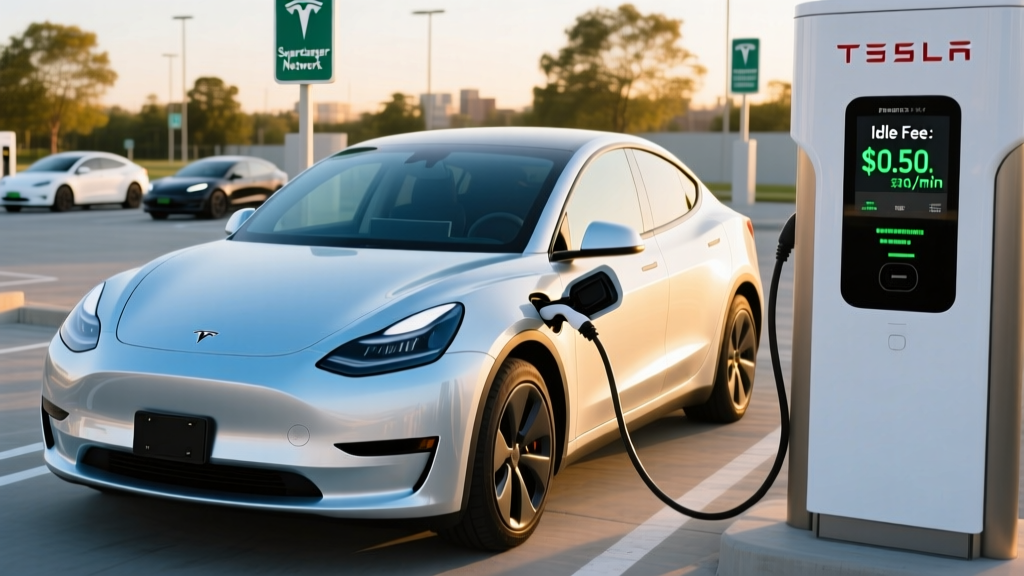
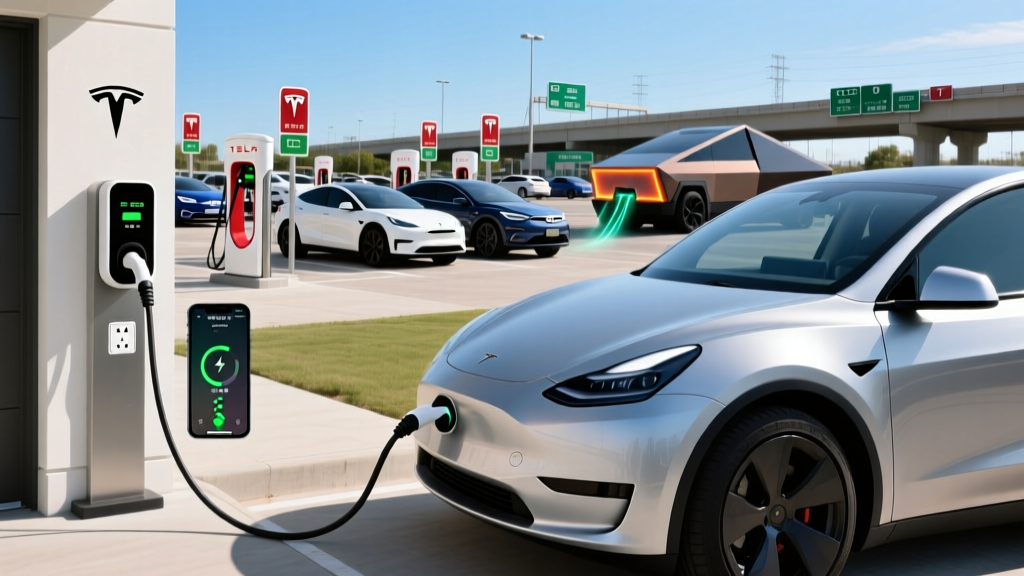
For a driver accustomed to the Cobalt SS Supercharged's 14.5-gallon tank and ~290-mile range, a Level 2 home charger is your new "filling station." Plug in at night, wake up with a full battery every morning. DC fast charging is your road-trip solution — and modern 2026 EVs like the Hyundai Ioniq 5 N or Tesla Model 3 Performance can add 200+ miles in under 15 minutes at a 250–350 kW station.
Home EV Charger Installation: Costs, Electrical Requirements, and Panel Gotchas
Here's where the transition from a gasoline car gets real. Installing a Level 2 home charger requires a dedicated 240V circuit — the same voltage your electric dryer or oven uses. Most installations call for a 240V/40A or 240V/48A circuit on a NEMA 14-50 outlet or hardwired connection, depending on the charger and local code.
What Your Electrical Panel Needs to Handle
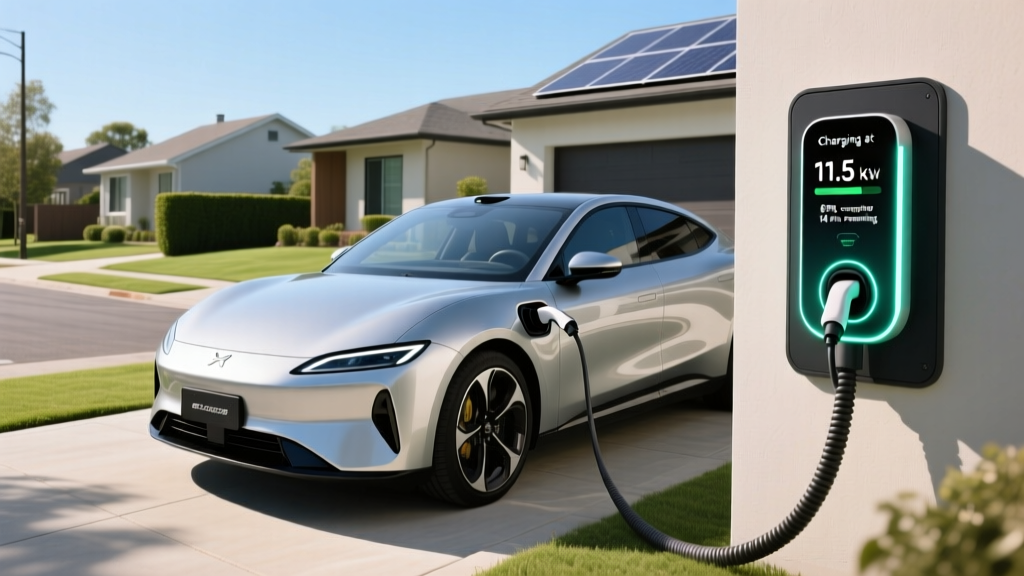
A 48A charger draws about 11.5 kW continuously. Per the National Electrical Code (NEC), continuous loads must be sized at 125% of the breaker rating, meaning a 48A charger needs a 60A breaker. If your home has a 100A service panel (common in homes built before 1990), adding a 60A EV circuit may max out your panel's capacity — especially if you already run electric heat, a dryer, and an electric range.
A licensed electrician will perform a load calculation to determine if your panel can handle the addition. If not, a panel upgrade from 100A to 200A typically costs $1,500–$3,000 depending on your region and utility requirements. This is the single biggest surprise cost for EV adopters in older homes.
| Component | Typical Cost Range | Notes |
|---|---|---|
| Level 2 Charger (Equipment) | $350 – $750 | Smart Wi-Fi chargers; basic models from $250 |
| Electrician Labor | $500 – $2,000 | Depends on run length from panel to garage/carport |
| Permit & Inspection | $50 – $300 | Required in most jurisdictions; varies by municipality |
| Electrical Materials (conduit, wire, outlet) | $100 – $400 | Longer runs = more copper and conduit |
| Panel Upgrade (if needed) | $1,500 – $3,000 | 100A → 200A service; not always required |
| Total (no panel upgrade) | $1,000 – $3,150 | Most homes with 200A service fall in this range |
| Total (with panel upgrade) | $2,500 – $6,150 | Older homes or those near panel capacity |
Connector Compatibility: NACS, CCS1, CHAdeMO — and What You Need to Know
The connector landscape in North America has consolidated dramatically since 2023. Here's where things stand in 2026:
| Connector | Brands Using It (2026 Models) | Public Network Availability |
|---|---|---|
| NACS (Tesla/J3400) | Tesla, Ford, GM, Rivian, Volvo, Polestar, Hyundai/Kia (2025+), most new models | Tesla Supercharger network (20,000+ stalls); growing third-party NACS stations |
| CCS1 | Legacy VW ID.4, older BMW i4, some 2023–2024 models still on road | Electrify America, EVgo, ChargePoint; many adding NACS cables |
| CHAdeMO | Discontinued for new vehicles (last: Nissan Leaf, Mitsubishi Outlander PHEV) | Limited and shrinking; avoid relying on this |
For 2026 buyers: If you're purchasing a new EV, it almost certainly comes with a NACS charge port. If you own a 2023–2024 CCS1 vehicle, Tesla now sells a CCS-to-NACS adapter (~$250) that unlocks Supercharger access. For home Level 2 charging, most chargers come with a J1772 connector (the AC standard), and NACS-equipped EVs include a J1772-to-NACS adapter in the trunk.
Cost to Charge: EV Electricity vs. Gasoline for a Cobalt SS Supercharged Driver
Let's do the math that matters. Your Cobalt SS Supercharged gets roughly 20 mpg combined (per fueleconomy.gov). At $3.50/gallon, you're paying about $0.175 per mile in fuel alone.
| Scenario | Rate | Cost per Mile (at 3.5 mi/kWh) | Annual Cost (12,000 mi) |
|---|---|---|---|
| Cobalt SS Supercharged (20 mpg, $3.50/gal) | $3.50/gallon | $0.175/mi | $2,100 |
| Home Level 2, Off-Peak Utility Rate | $0.09/kWh | $0.026/mi | $312 |
| Home Level 2, Standard Rate | $0.16/kWh | $0.046/mi | $552 |
| Public Level 2 (ChargePoint, etc.) | $0.35/kWh | $0.100/mi | $1,200 |
| DC Fast Charge (Electrify America) | $0.48/kWh | $0.137/mi | $1,644 |
Even if you charged exclusively at the most expensive DC fast chargers, you'd still save roughly $450/year compared to fueling the Cobalt SS. Charge at home on off-peak rates — which most EV owners do 85–90% of the time — and you're saving $1,700+ per year. Over a 5-year ownership period, that's $8,500+ back in your pocket.
Equipment Recommendations: Best Home Level 2 Chargers for 2026
Here are four chargers we recommend based on reliability, smart features, and value. All output figures are in kW (power delivery rate), and all are compatible with any EV using the appropriate adapter.
ChargePoint Home Flex
- Power Output: Up to 12 kW (50A / 240V)
- Connector: J1772 (NACS adapter included with most new EVs)
- Cable Length: 23 feet
- Smart Features: Wi-Fi, scheduling, Alexa, energy tracking
- Price: ~$550
Best for: Most homes with a 60A breaker available. Flexible amperage dip-switch lets you set 16A–50A to match your circuit.
Tesla Wall Connector
- Power Output: Up to 11.5 kW (48A / 240V)
- Connector: NACS native (J1772 adapter available)
- Cable Length: 24 feet
- Smart Features: Wi-Fi, OTA updates, Power Sharing (multiple units on one circuit)
- Price: ~$475
Best for: Tesla owners or NACS-equipped 2025+ vehicles. Sleek design, excellent reliability record.
Grizzl-E Smart
- Power Output: Up to 10 kW (40A / 240V)
- Connector: J1772
- Cable Length: 24 feet
- Smart Features: Wi-Fi, OCPP protocol, adjustable amperage
- Price: ~$449
Best for: Budget-conscious buyers who still want smart scheduling. Built in Canada, rated for -40°F outdoor use.
Emporia Level 2 Charger
- Power Output: Up to 11.5 kW (48A / 240V)
- Connector: J1772
- Cable Length: 24 feet
- Smart Features: Wi-Fi, detailed energy monitoring, solar integration
- Price: ~$399
Best for: Homes with solar panels or those wanting granular energy data. Best value-per-kW on the market.
Charging Times for Common 2026 EV Battery Sizes
How long does charging actually take? Here are real-world estimates for popular 2026 EVs, using both Level 2 home charging and DC fast charging. Times are 10–80% state of charge, which is the practical range most drivers use (charging above 80% slows dramatically to protect battery health).
| Vehicle (2026) | Battery (kWh) | Level 2 at 11.5 kW (Home) | DC Fast at 250 kW | DC Fast at 150 kW |
|---|---|---|---|---|
| Tesla Model 3 (Long Range) | 79 kWh usable | ~4.8 hours | ~22 minutes | ~32 minutes |
| Hyundai Ioniq 5 | 77.4 kWh usable | ~4.7 hours | ~18 minutes (800V) | ~30 minutes |
| Ford Mustang Mach-E (ER) | 91 kWh usable | ~5.5 hours | ~28 minutes | ~40 minutes |
| Chevrolet Equinox EV | 85 kWh usable | ~5.2 hours | ~25 minutes | ~36 minutes |
For context: your Cobalt SS Supercharged took about 3 minutes to fill at a gas pump. Level 2 home charging is a paradigm shift — you don't "stop to charge," you charge while you sleep, work, or eat dinner. The mental model is closer to charging your phone overnight than visiting a gas station.
Safety, Code Compliance, and What Your Electrician Will Require
A Level 2 charger installation is a permanent electrical modification to your home. Here's what proper installation requires per the NEC and most local building codes:
- Dedicated circuit: The charger must have its own breaker — no sharing with other appliances.
- GFCI protection: Required for outdoor installations and in garages per NEC 2023/2026 updates. Some chargers have built-in GFCI; your electrician will verify compliance.
- Outdoor rating: If mounting outside, the charger must carry a NEMA 4 (weatherproof) rating. All four chargers recommended above are outdoor-rated.
- Permit and inspection: Most municipalities require an electrical permit ($50–$300) and a post-installation inspection. Do not skip this — it's required for insurance coverage and the §30C tax credit.
- Wire gauge: A 60A circuit requires 6 AWG copper wire; a 50A circuit uses 6 AWG or 8 AWG depending on run length. Your electrician handles this calculation.
- Load management: Some utilities and smart panels (like Span or Emporia Vue) can dynamically limit charger draw during peak demand, avoiding a panel upgrade entirely.
Frequently Asked Questions: From Cobalt SS to EV Charging
How much does it cost to install a home EV charger?
Most homes with a 200A electrical panel spend $1,000–$3,150 total (equipment + electrician + permit + materials). Homes needing a panel upgrade from 100A to 200A should budget $2,500–$6,150. The IRS §30C credit may cover 30% of costs up to $1,000, depending on your census tract.
How fast will each charging level add range?
Level 1 (120V) adds 3–5 miles per hour — adequate only for PHEVs or very low daily mileage. Level 2 (240V, 40–48A) adds 25–45 miles per hour, fully recharging most EVs overnight. DC fast charging at 150–350 kW adds 150–1,200+ miles per hour at peak, though sustained rates taper above 50% SoC.
Which connector/charger is compatible with my EV?
If you buy a 2025 or newer EV, it almost certainly has a NACS charge port. Home Level 2 chargers use J1772 connectors (AC standard), and your EV will include a J1772-to-NACS adapter. For DC fast charging, NACS vehicles use Tesla Superchargers and a growing number of third-party NACS stations. Older CCS1 vehicles can use a CCS-to-NACS adapter (~$250) for Supercharger access.
How much does charging cost per mile vs gas?
At home on average US electricity rates ($0.16/kWh), an efficient EV costs about $0.046/mile — compared to $0.175/mile for a 20 mpg Cobalt SS Supercharged at $3.50/gallon. That's roughly a 74% reduction in fuel cost per mile. Even exclusive DC fast charging at $0.48/kWh ($0.137/mile) still saves 22%.
What electrical upgrades might I need?
The most common upgrade is a panel replacement from 100A to 200A service ($1,500–$3,000) if your existing panel can't accommodate a new 60A breaker. Some homes also need a longer wire run from the panel to the garage, which adds copper and conduit costs. Smart load-management devices can sometimes avoid a panel upgrade by dynamically limiting charger draw.
Will my EV lose range in cold weather like the Cobalt SS lost power in summer heat?
Yes, but differently. EVs lose 15–30% of range in sub-freezing temperatures because battery chemistry slows and cabin heating draws significant energy. A 2026 EV with a heat pump (standard on most Hyundai/Kia, Tesla, and Ford models) mitigates this to about 10–20% loss. Preconditioning the battery while plugged in — a feature all modern EVs support — recovers much of this loss by warming the pack before you drive.
The jump from a supercharged gasoline performance car to an EV isn't just about swapping fuel types — it's a fundamentally different ownership rhythm. But with a properly installed Level 2 home charger, the daily experience is arguably more convenient than any gas station visit: plug in, walk away, wake up "full." The Cobalt SS Supercharged will always have its place in enthusiast history, but the math and the infrastructure in 2026 make a compelling case for what comes next.