The Real Story on Chevrolet Bolt Fast Charging in 2026
The Chevrolet Bolt EV and Bolt EUV remain some of the most affordable long-range electric vehicles on the market, but their fast-charging architecture is the single biggest ownership caveat buyers need to understand. With the refreshed 2026 Bolt lineup now featuring the North American Charging Standard (NACS) port natively, Chevrolet has addressed the most common complaint about the previous generation: reliance on the CCS1 connector and limited DC fast-charge speeds.
This guide breaks down exactly how fast a Chevrolet Bolt charges at every level — from a standard wall outlet to a 150 kW DC fast charger — what you'll spend on home charging installation, and how the Bolt's charging costs compare to filling a gas tank. Whether you own a 2022-2025 Bolt with CCS1 or are shopping for the updated 2026 model with NACS, the numbers below will set your expectations accurately.
Battery: 65 kWh usable (NMC lithium-ion) | EPA Range: 259 miles (EV), 247 miles (EUV)
Max DC Fast Charge Rate: 115 kW (peak) | 10-80% DCFC Time: ~30 minutes
Level 2 AC Charge Rate: 11.5 kW (48A) | 0-100% L2 Time: ~6.5 hours
Base MSRP: ~$28,900 (1LT) | Federal Tax Credit: Up to $7,500 (§30D, subject to income/MSRP/sourcing rules)
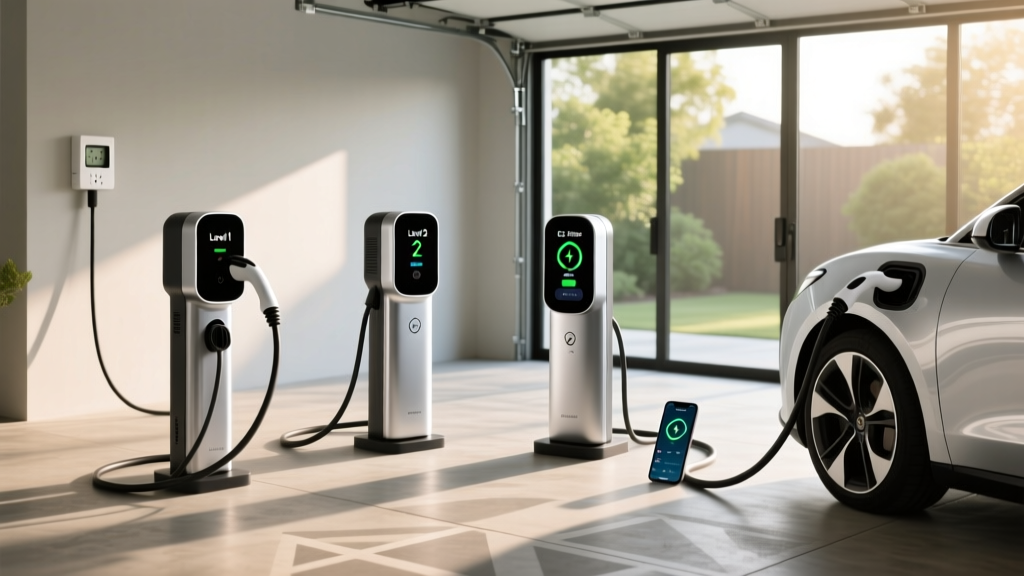
Charging Levels Explained: How Fast Will Each Add Range?
Understanding the three charging levels is essential before you invest in equipment or plan a road trip. The critical distinction: kW (kilowatts) measures power — how fast energy flows into the battery — while kWh (kilowatt-hours) measures energy — the total capacity of the battery itself. Think of kW as the width of a hose and kWh as the size of the bucket.
| Level | Voltage / Amperage | Power (kW) | Miles of Range Added Per Hour | Full Charge Time (0-100%) |
|---|---|---|---|---|
| Level 1 (Standard Outlet) | 120V / 12A | 1.4 kW | ~4 miles/hr | ~60+ hours |
| Level 2 (Home / Public AC) | 240V / 48A | 11.5 kW | ~34 miles/hr | ~6.5 hours |
| DC Fast Charging | 400V+ / up to 300A | Up to 115 kW (peak) | ~200+ miles/hr (at peak) | 10-80% in ~30 min |
Real-world caveat: The Bolt's DC fast-charging curve is not flat. It peaks near 115 kW only between roughly 10-30% State of Charge (SoC), then tapers progressively. From 50-80%, expect sustained rates closer to 55-65 kW. This is why manufacturers quote 10-80% times rather than 0-100% — the final 20% can take as long as the first 70%.
For daily driving, Level 2 at home is the practical standard. Most Bolt owners plug in overnight and wake up to a full battery. Level 1 is a viable backup or solution for drivers covering under 30 miles daily. DC fast charging is for road trips and should not be your primary charging method — frequent exclusive use of DCFC can accelerate battery degradation over time.
Home Charger Installation: Costs, Electrical Requirements, and Panel Upgrades
Installing a Level 2 home charger for your Chevrolet Bolt is the single most impactful upgrade you can make for daily EV ownership. The Bolt's onboard charger accepts up to 11.5 kW (48 amps), meaning you'll want a 240-volt circuit rated for at least 60 amps to deliver that full rate safely (EVSE standards require the circuit to be rated at 125% of continuous load).
Electrical requirements for maximum Bolt Level 2 charging:
- 240V dedicated circuit
- 60-amp breaker (to deliver 48A continuous)
- Hardwired EVSE or NEMA 14-50 outlet (50A circuit / 40A continuous if using a plug-in unit)
- Copper wiring: 6 AWG for 60A, 8 AWG for 50A
If you opt for a NEMA 14-50 receptacle (the most common plug-in approach), you'll be limited to 40 amps continuous / 9.6 kW. That still adds roughly 28 miles of range per hour — enough to fully recharge a Bolt overnight. A hardwired 48A unit gives you the full 11.5 kW but requires a professional electrician and is not portable.
What Electrical Upgrades Might You Need?
Homes built before 2000 often have 100-amp electrical panels that may not support an additional 60-amp circuit alongside existing loads like electric dryers, ranges, and HVAC. Here's what to expect:
| Component | Simple Install (Panel Has Capacity) | Complex Install (Panel Upgrade Needed) |
|---|---|---|
| EVSE Equipment (Level 2 charger) | $350 – $700 | $350 – $700 |
| Electrical Permit | $50 – $200 | $100 – $300 |
| Electrician Labor (240V run) | $500 – $1,500 | $800 – $2,000 |
| Panel Upgrade (100A → 200A) | N/A | $1,500 – $3,500 |
| Conduit, Wiring, Misc. | $100 – $400 | $200 – $600 |
| Total Estimated Cost | $1,000 – $2,800 | $2,950 – $7,100 |
Key insight: Before purchasing any charger, have a licensed electrician perform a load calculation on your panel. Many utilities offer free or discounted energy audits that include this assessment. Some newer smart panels and load-management devices (like the Emporia VUE with smart splitter) can avoid a full panel upgrade by dynamically sharing capacity between your EVSE and other large appliances.
Always pull a permit for EVSE installation. Unpermitted electrical work can void home insurance coverage and create problems during a future home sale. Most jurisdictions require a licensed electrician to perform the work and schedule an inspection.
Connector Compatibility: NACS, CCS1, and Adapter Options for Every Bolt Year
The connector on your Chevrolet Bolt depends entirely on the model year, and this has major implications for which public chargers you can use.
| Model Year | Native Port | Tesla Supercharger Access | CCS1 Public Networks | Adapter Needed? |
|---|---|---|---|---|
| 2017-2025 Bolt EV/EUV | CCS1 (J1772 + DC pins) | Via Tesla CCS adapter (~$250) or Magic Dock at select stations | Native — plug and charge | Tesla adapter for Superchargers |
| 2026 Bolt EV/EUV (refreshed) | NACS (native) | Native — plug and charge at all Superchargers | Via NACS-to-CCS adapter (~$200-$300) | CCS adapter for EA/BP Pulse/EVgo CCS stalls |
For 2017-2025 Bolt owners: Your CCS1 port works natively at Electrify America, EVgo, ChargePoint, and most non-Tesla DC fast networks. To access Tesla Superchargers — which represent the largest and most reliable DC fast-charging network in the U.S. — you'll need a Tesla-approved CCS-to-NACS adapter. Tesla's Magic Dock (a built-in CCS adapter at select Supercharger stalls) is available at some locations but not universally deployed.
For 2026 Bolt buyers: The native NACS port gives you seamless Supercharger access. However, as non-Tesla networks transition to NACS through 2026 and beyond, CCS1 stalls are becoming less common. Carry a NACS-to-CCS adapter if you frequently use Electrify America or regional networks that haven't completed the transition.
For Level 2 AC charging, the 2017-2025 Bolt uses a J1772 inlet (the top portion of the CCS1 connector), while the 2026 Bolt uses NACS for AC as well. Most public Level 2 stations still provide J1772 connectors, so 2026 Bolt owners may need a J1772-to-NACS adapter for older public AC chargers.
Level 2 Charger Equipment Recommendations for the Bolt
Below are three well-regarded Level 2 chargers matched to the Bolt's 11.5 kW onboard charger capability. All are UL-listed and suitable for indoor or outdoor installation.
Power Output: 11.5 kW (48A) | Connector: J1772 (NACS version available) | Cable: 24 ft
Smart Features: Energy monitoring, solar integration, scheduled charging, load management
Price: ~$400 | Best For: Bolt owners wanting full 11.5 kW with smart home integration
Power Output: Up to 12 kW (50A hardwired) / 9.6 kW (40A plug-in) | Connector: J1772 | Cable: 23 ft
Smart Features: Wi-Fi, app scheduling, Alexa integration, energy reports
Price: ~$550-$650 | Best For: Reliable plug-and-play with strong app ecosystem
Power Output: 11.5 kW (48A) | Connector: NACS (J1772 adapter included for 2026 Bolt compatibility) | Cable: 24 ft
Smart Features: Wi-Fi updates, power sharing between units, access control
Price: ~$475 | Best For: 2026 Bolt owners with NACS port; dual-EV households
Important note: If your Bolt is a 2017-2025 model with J1772/CCS1, any J1772 Level 2 charger works natively. The Tesla Wall Connector ships with a NACS plug, so pre-2026 Bolt owners would need the Tesla J1772 adapter accessory or should choose the Emporia or ChargePoint instead.
Charging Cost Per Mile: Bolt vs. Gasoline Vehicle
One of the strongest arguments for the Chevrolet Bolt is its low operating cost. Here's a realistic comparison using 2026 electricity and fuel prices. The Bolt averages approximately 2.9 miles per kWh (roughly 115 MPGe combined per EPA data on fueleconomy.gov).
| Charging/Fueling Scenario | Cost per Unit | Bolt Cost Per Mile | Gas Vehicle Cost Per Mile ($3.50/gal) |
|---|---|---|---|
| Home Level 2 (off-peak utility rate) | $0.10/kWh | $0.034 | $0.117 |
| Home Level 2 (average U.S. residential) | $0.17/kWh | $0.059 | $0.117 |
| Public Level 2 (network pricing) | $0.28/kWh | $0.097 | $0.117 |
| DC Fast Charging (public, peak) | $0.42/kWh | $0.145 | $0.117 |
The takeaway: Charging at home on off-peak rates makes the Bolt roughly 70% cheaper to fuel than a 30 MPG gas car. Even on average residential rates, you'll save about 50%. However, exclusive reliance on DC fast charging at peak public rates can actually cost more per mile than gasoline — this is why home charging access is so critical to EV economics.
Many utilities offer time-of-use (TOU) plans that drop rates to $0.07-$0.12/kWh overnight. If your utility offers an EV-specific rate plan, enroll immediately. The Bolt's scheduled charging feature (via the MyChevrolet app or your EVSE's app) lets you set charging to begin at 11 PM or midnight automatically.
DC Fast Charging on the Road: What to Expect from the Bolt
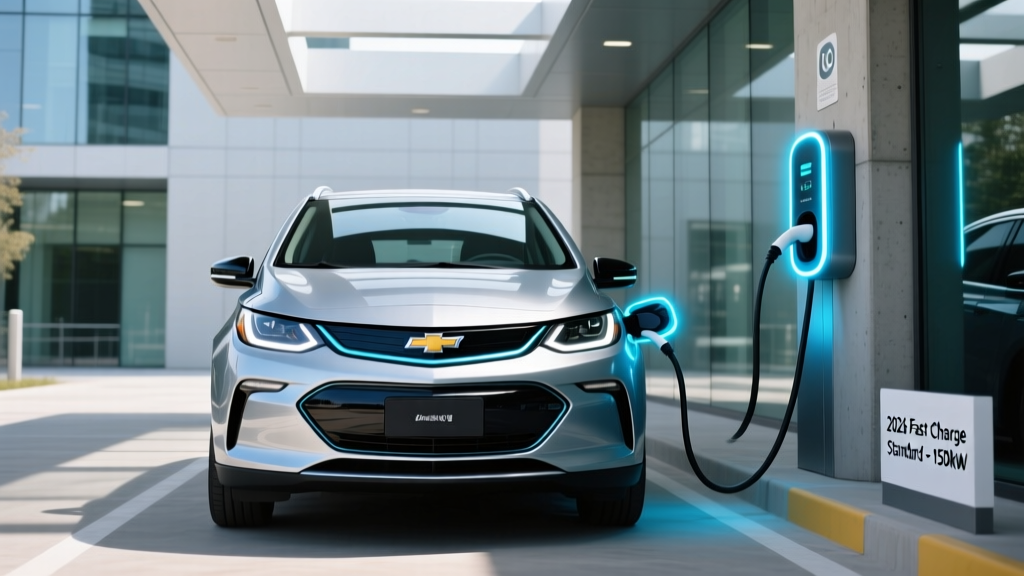
The Chevrolet Bolt's DC fast-charging performance has historically been its weakest specification relative to competitors. Here's an honest breakdown of what 2026 Bolt owners can expect at a public DC fast charger:
- 10-80% charge time: Approximately 30 minutes on a 150+ kW charger
- Peak rate: ~115 kW (maintained roughly 10-30% SoC)
- Sustained rate (30-60% SoC): ~80-90 kW
- Tapered rate (60-80% SoC): ~55-65 kW
- Above 80% SoC: Drops below 30 kW — avoid charging past 80% on road trips unless necessary
Preconditioning tip: The 2026 Bolt includes battery preconditioning when you navigate to a DC fast charger via the built-in navigation or connected app. This warms the battery to optimal temperature before you arrive, enabling faster peak charge rates — especially important in cold weather. If you're using a third-party app to find chargers, preconditioning may not activate automatically, so initiate it manually when possible.
On a 300-mile road trip from, say, Chicago to St. Louis, expect one 25-30 minute DC fast-charge stop to go from 15% to 75% SoC, adding approximately 155 miles of range. This is competitive enough for most highway travel, though vehicles with 200+ kW charge capabilities (Hyundai Ioniq 5, Kia EV6, Tesla Model 3) complete the same stop in 18-20 minutes.
Safety, Code Compliance, and Best Practices
EV charging involves sustained high-current electrical loads — safety is not optional. Follow these guidelines:
- Dedicated circuit: Your Level 2 EVSE must be on its own dedicated breaker. Never share a circuit with other appliances.
- GFCI protection: NEC 2023/2026 requires GFCI protection for all EVSE outlets. Hardwired units typically include built-in ground-fault protection.
- Outdoor rating: If installing outdoors, ensure the EVSE is rated NEMA 4 (weatherproof). All three chargers recommended above carry outdoor ratings.
- Cable management: Use a holster or cable organizer to prevent tripping hazards and protect the connector from ground moisture and debris.
- Annual inspection: Check your plug and receptacle annually for discoloration, melting, or loose fit — signs of thermal stress that require immediate electrician attention.
For the latest National Electrical Code requirements specific to EVSE, consult NFPA's NEC resources and always hire a licensed electrician familiar with EV charging installations in your jurisdiction.
Frequently Asked Questions About Chevrolet Bolt Fast Charging
How much does it cost to install a home EV charger for a Chevrolet Bolt?
A straightforward Level 2 installation with an existing 200-amp panel and short wiring runs typically costs $1,000-$2,800 including equipment, permit, and electrician labor. If your home needs a panel upgrade from 100A to 200A, add $1,500-$3,500, bringing the total to roughly $3,000-$7,100. Always get a load calculation from a licensed electrician before purchasing equipment.
Can I charge a 2026 Chevrolet Bolt at Tesla Superchargers?
Yes. The 2026 Bolt EV and EUV come with a native NACS port, making them compatible with all Tesla Supercharger stations without an adapter. For pre-2026 Bolt models with CCS1, a Tesla-approved CCS-to-NACS adapter (~$250) is required.
How long does it take to charge a Chevy Bolt from 10% to 80% on DC fast charging?
Approximately 30 minutes on a 150 kW or higher DC fast charger. The Bolt peaks at ~115 kW but tapers significantly above 50% SoC. Plan road-trip stops around 25-30 minutes to reach 75-80%.
Is it bad to DC fast charge my Bolt every day?
Exclusive reliance on DC fast charging can accelerate battery degradation over time due to sustained high temperatures and high C-rates. For daily use, Level 2 home charging is strongly recommended. Occasional DCFC on road trips has negligible impact. The Bolt's battery management system includes active thermal management to mitigate heat, but physics favors slower charging for long-term battery health.
What is the federal tax credit situation for the 2026 Chevrolet Bolt?
The 2026 Bolt may qualify for up to $7,500 under IRS §30D, but eligibility depends on your taxable income (capped at $150,000 single / $300,000 joint), the vehicle's MSRP (must be under $55,000 for cars), and battery component/critical mineral sourcing requirements that tighten annually. The credit can be transferred to the dealer as a point-of-sale discount. Verify current eligibility on IRS.gov's clean vehicle credit page and consult a tax professional for your specific situation.
Does the Bolt's battery warranty cover degradation?
Chevrolet covers the Bolt's battery for 8 years / 100,000 miles against defects and excessive capacity loss (typically defined as dropping below 60-70% of original capacity, per warranty terms). The Bolt's NMC battery has shown strong longevity in real-world data, with most high-mileage examples retaining 85-90%+ capacity after 100,000 miles.