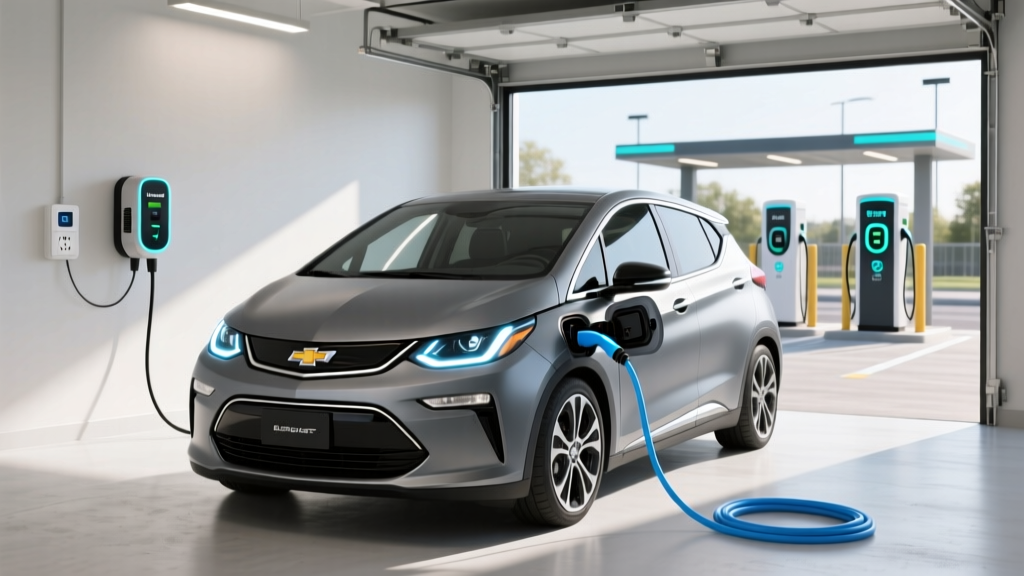
The Chevrolet Bolt EV and Bolt EUV remain two of the most value-packed electric vehicles on the road, but their charging story is more nuanced than the spec sheet suggests. Whether you own a 2023 Bolt EV with its 65 kWh battery or are considering a used model now that production has ended, understanding Chevrolet Bolt charging in practical terms — real-world speeds, home installation requirements, and public network compatibility — is essential for daily satisfaction.
This guide breaks down every charging scenario Bolt owners face, from a standard 120V wall outlet to DC fast chargers, with exact numbers for times, costs, and electrical requirements.
Chevrolet Bolt Battery and Charging Specs at a Glance
Before connecting to any charger, it helps to know exactly what you're filling. Both the Bolt EV and Bolt EUV share the same battery and onboard charger hardware across their final production years (2022–2023).
| Spec | Bolt EV (2022–2023) | Bolt EUV (2022–2023) |
|---|---|---|
| Battery capacity (usable) | 65 kWh | 65 kWh |
| Battery chemistry | NMC (nickel manganese cobalt) | NMC |
| EPA range | 259 miles | 247 miles |
| Onboard charger (Level 2) | 11.5 kW max | 11.5 kW max |
| DC fast charge max | ~55 kW peak | ~55 kW peak |
| Connector | CCS1 (J1772 + DC pins) | CCS1 |
| Battery warranty | 8 years / 100,000 miles | 8 years / 100,000 miles |
Charging Levels Explained: How Fast Will Each Add Range?
The single most important distinction in EV charging is kW (kilowatts) versus kWh (kilowatt-hours). A kW measures the rate of power delivery — think of it as the width of the hose. A kWh measures total energy stored — the size of the bucket. The Bolt's bucket holds 65 kWh. How quickly you fill it depends on the kW rate of your charger.
| Level | Voltage | Power (kW) | Miles of Range Added Per Hour | Full 0–100% Time (65 kWh) |
|---|---|---|---|---|
| Level 1 (standard outlet) | 120V | ~1.2–1.4 kW | ~4–5 miles | ~48–54 hours |
| Level 2 (home/public AC) | 240V | Up to 11.5 kW | ~35–39 miles | ~6–7 hours |
| DC Fast Charging | 400V+ | Up to ~55 kW peak | ~150–190 miles (at peak) | 10–80% in ~45–55 min |
Level 1: The Emergency Trickle
Every Bolt ships with a dual-level charging cord that can plug into a standard 120V household outlet. At roughly 1.2 kW, you'll gain about 4 miles of range per hour of charging. An overnight session (10 hours) nets approximately 40 miles — enough for short commutes, but impractical as a primary strategy if you drive more than 30 miles daily. Level 1 is best treated as a backup or supplement.
Level 2: The Daily Workhorse
A 240V Level 2 station is where Bolt owners will do 90%+ of their charging. The Bolt's onboard charger accepts up to 11.5 kW, which means a 48-amp circuit (delivering 11.5 kW continuously) will fill the battery from empty in roughly 6 to 7 hours. If your home charger or public station maxes at 7.7 kW (32 amps), plan on about 9 hours for a full charge — still perfectly adequate for overnight replenishment.
DC Fast Charging: Road Trips and Top-Ups
The Bolt's DC fast charging capability is its most debated spec. At a peak of approximately 55 kW, it is significantly slower than rivals like the Hyundai Ioniq 5 (240 kW) or Tesla Model 3 (250 kW). A 10% to 80% session takes roughly 45 to 55 minutes at a capable CCS station. The charge curve holds near peak rate until about 50–55% state of charge, then tapers progressively. Above 80%, speeds drop sharply to protect battery longevity — a universal EV behavior, but more pronounced at the Bolt's lower peak rate.
For road trips, plan stops around 150–170 miles apart to keep charging sessions in the 30–40 minute range, staying within the battery's faster-charging window.
Home Charger Installation: Requirements, Costs, and Upgrades
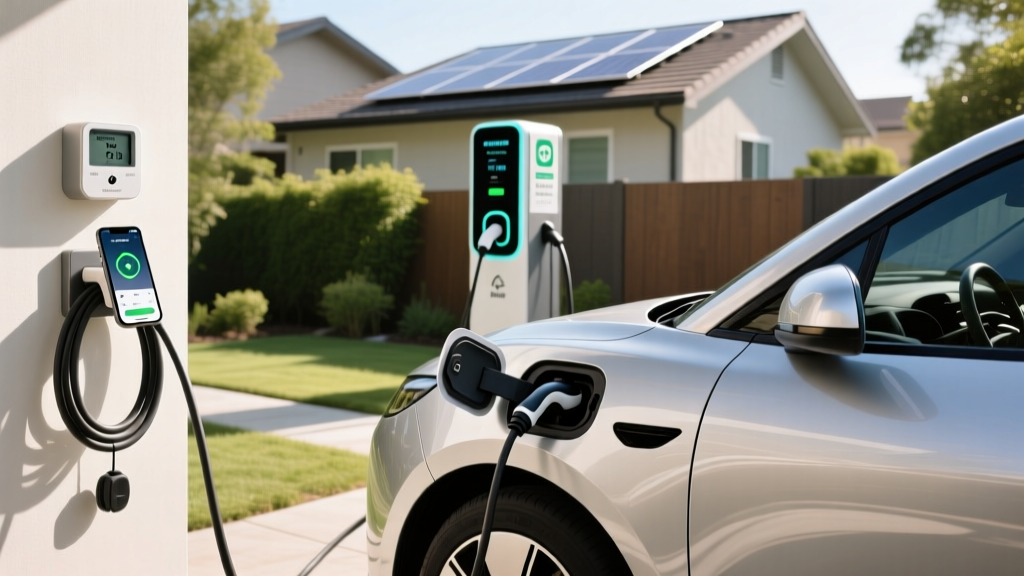
Installing a Level 2 home charger is the single biggest quality-of-life upgrade a Bolt owner can make. Here's what it actually takes.
Electrical Requirements
To deliver the Bolt's maximum 11.5 kW, you need a dedicated 240V circuit rated at 60 amps (the National Electrical Code requires circuits to be rated 125% above continuous load, so a 48-amp charger needs a 60-amp breaker). If you opt for a lower-output charger — say, 32 amps / 7.7 kW — a 40-amp circuit suffices, which is easier for older panels to accommodate.
Installation Cost Breakdown
| Component | Cost Range | Notes |
|---|---|---|
| Level 2 charger (equipment) | $300–$700 | Varies by brand, power output, smart features |
| Electrician labor (standard install) | $500–$1,500 | Depends on run length from panel to garage |
| Permit and inspection | $50–$250 | Required by most jurisdictions |
| Electrical panel upgrade (if needed) | $1,500–$3,500 | Common in homes with 100A service or full panels |
| Total (no panel upgrade) | $850–$2,450 | Typical scenario for modern homes with 200A service |
| Total (with panel upgrade) | $2,350–$5,950 | Older homes or those with maxed-out panels |
Will You Need a Panel Upgrade?
This is the question that separates a $1,200 installation from a $4,500 one. If your home has a 200-amp electrical panel with available breaker slots and sufficient remaining capacity (an electrician performs a load calculation), a 60-amp circuit addition is straightforward. Homes with 100-amp service, older wiring, or panels already near capacity will likely need a service upgrade to 200 amps before adding a Level 2 charger.
Always hire a licensed electrician to perform a load calculation before committing to equipment. The National Electrical Contractors Association maintains a directory of qualified professionals.
Safety and Code Considerations
- Dedicated circuit: Your Level 2 charger must have its own dedicated breaker — never shared with other appliances.
- GFCI protection: NEC 2020 and later requires GFCI protection for EV charging outlets. Hardwired units may have this built in; receptacle-based installs need a GFCI breaker.
- Outdoor rating: If your charger is mounted outside or in an open carport, ensure the unit carries a NEMA 4 or IP65 weather rating.
- Cable management: Choose a cable length (18–25 feet is typical) that reaches your charge port without stretching across walkways.
Connector Compatibility: CCS1, NACS, and Adapter Options
The Chevrolet Bolt uses the CCS1 (Combined Charging System) connector, which combines the J1772 AC plug with two additional DC fast-charge pins below it. This was the dominant North American standard until Tesla's NACS connector gained widespread industry adoption beginning in 2024.
| Connector Type | Used By | Bolt Compatible? | Adapter Needed? |
|---|---|---|---|
| CCS1 | Chevrolet, Ford (pre-2025), Hyundai, Kia, VW, BMW, most non-Tesla | Yes — native | None |
| NACS (Tesla) | Tesla (all), Ford (2025+), GM (2025+), Rivian, others adopting | With adapter | CCS1-to-NACS adapter for Tesla Superchargers |
| CHAdeMO | Nissan Leaf, Mitsubishi (legacy) | No | Not applicable |
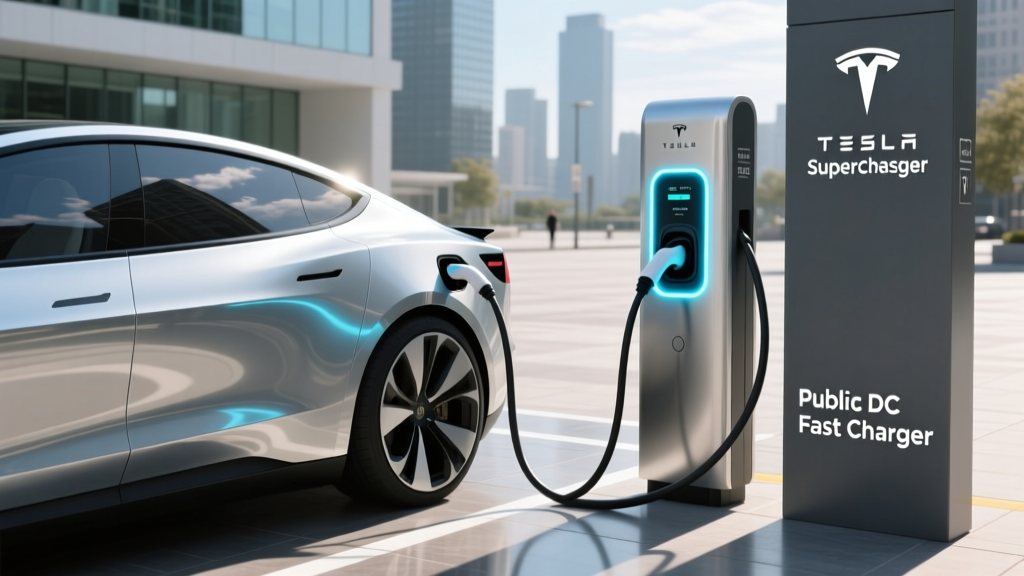
Accessing Tesla Superchargers with a Bolt
General Motors has transitioned to NACS for its 2025+ models, but the Bolt (discontinued after 2023) retains its native CCS1 port. To access Tesla Supercharger stations — now the largest fast-charging network in North America — Bolt owners need a CCS1-to-NACS adapter. Several third-party adapters are available in the $150–$250 range. Check that any adapter you purchase is rated for the Bolt's ~55 kW DC fast-charge peak and carries UL or equivalent safety certification.
GM has indicated it will offer an official adapter for legacy GM EVs; check with your local Chevrolet dealer for availability and compatibility confirmation before purchasing.
Cost to Charge: Home vs. Public vs. Gas
One of the strongest arguments for Bolt ownership is fuel cost savings. Here's how the numbers break down across charging scenarios.
| Scenario | Rate | Cost for Full 65 kWh Charge | Cost Per Mile (259-mi range) |
|---|---|---|---|
| Home (off-peak utility rate) | $0.08–$0.12/kWh | $5.20–$7.80 | $0.02–$0.03/mile |
| Home (average US residential) | $0.16/kWh | $10.40 | $0.04/mile |
| Public Level 2 (network) | $0.25–$0.40/kWh | $16.25–$26.00 | $0.06–$0.10/mile |
| DC fast charging (public) | $0.35–$0.55/kWh | $22.75–$35.75 | $0.09–$0.14/mile |
| Gasoline car (30 MPG, $3.50/gal) | — | $30.33 equivalent | $0.12/mile |
According to the EPA's fueleconomy.gov, the Bolt EV achieves 120 MPGe combined, making it one of the most efficient EVs available. At typical residential electricity rates, home charging costs roughly one-quarter to one-third what gasoline costs per mile.
Even at public DC fast-charging rates, the Bolt undercuts a 30 MPG gas car on cost per mile. The savings widen dramatically for owners who charge primarily at home on off-peak utility rates — potentially saving $1,000–$1,500 per year versus a comparable gas vehicle at 12,000 miles driven annually.
Recommended Home Chargers for the Chevrolet Bolt
The Bolt's 11.5 kW onboard charger means you can take full advantage of a 48-amp Level 2 station. Here are proven options across budget tiers:
Emporia Vue Level 2 Charger
- Power output: 48 amps / 11.5 kW (240V)
- Connector: J1772 (CCS1 compatible)
- Cable length: 24 feet
- Smart features: Wi-Fi, app scheduling, energy monitoring, solar integration
- Price: ~$350–$400
- Best for: Budget-conscious owners wanting full 11.5 kW output with smart scheduling
ChargePoint Home Flex
- Power output: Configurable 16–50 amps / up to 12 kW (240V)
- Connector: J1772 (CCS1 compatible)
- Cable length: 23 feet
- Smart features: Wi-Fi, app control, Alexa integration, flexible amperage settings
- Price: ~$550–$700
- Best for: Owners who may need to adjust amperage to match their circuit capacity
Grizzl-E Smart
- Power output: 40 amps / 9.6 kW (240V)
- Connector: J1772 (CCS1 compatible)
- Cable length: 24 feet
- Smart features: OCPP-compatible, app scheduling, firmware updates
- Price: ~$400–$500
- Best for: Cold-climate owners — rated to -40°F, built in Canada, rugged enclosure
Any of these chargers will fully charge a Bolt overnight. The Emporia and ChargePoint can deliver the full 11.5 kW the Bolt accepts; the Grizzl-E tops out at 9.6 kW, adding roughly one extra hour to a full charge but offering superior durability in extreme temperatures.
Public Charging Networks: Where Can Bolt Owners Charge?
The Bolt's CCS1 connector is compatible with every major public charging network in the United States except native Tesla Superchargers (which require the adapter discussed above).
- Electrify America: CCS1 native. Bolt can access all stations, though you'll only draw ~55 kW at stalls rated for 150 kW or 350 kW.
- EVgo: CCS1 native. Extensive urban network; speeds limited by the Bolt's peak rate.
- ChargePoint: CCS1 native. Largest network by station count; mix of Level 2 and DC fast.
- Tesla Supercharger: Requires CCS1-to-NACS adapter. Confirm adapter compatibility and check that the specific Supercharger stall has been enabled for non-Tesla vehicles via the Tesla app.
For real-time station availability and trip planning, PlugShare and A Better Route Planner (ABRP) are indispensable tools. ABRP lets you input the Bolt's specific battery and charging curve to generate realistic road-trip itineraries with charging stops.
Frequently Asked Questions
How much does it cost to install a home EV charger for my Chevrolet Bolt?
A typical Level 2 home charger installation costs between $850 and $2,450 when no electrical panel upgrade is needed. This includes the charger ($300–$700), electrician labor ($500–$1,500), and permits ($50–$250). If your home requires a panel upgrade from 100A to 200A service, add $1,500–$3,500. Always get a load calculation from a licensed electrician first.
How fast will each charging level add range to my Bolt?
Level 1 (120V) adds roughly 4–5 miles per hour. Level 2 (240V at 11.5 kW) adds approximately 35–39 miles per hour, fully recharging the 65 kWh battery in about 6–7 hours. DC fast charging at the Bolt's ~55 kW peak can add roughly 150–190 miles in 30 minutes under ideal conditions, though a 10–80% session takes approximately 45–55 minutes.
Which connector does the Chevrolet Bolt use?
The Bolt uses CCS1 (Combined Charging System), which includes the J1772 connector for AC charging and two additional DC pins for fast charging. It is natively compatible with Electrify America, EVgo, ChargePoint, and most non-Tesla public networks. Accessing Tesla Superchargers requires a CCS1-to-NACS adapter.
How much does charging cost per mile compared to gas?
At the US average residential electricity rate of ~$0.16/kWh, home charging a Bolt costs about $0.04 per mile. A comparable 30 MPG gas car at $3.50/gallon costs about $0.12 per mile. Home charging saves roughly 65–70% per mile driven. Even public DC fast charging at $0.45/kWh ($0.11/mile) is competitive with gasoline.
What electrical upgrades might I need for a Level 2 charger?
The most common upgrade is a panel capacity increase. If your home has a 100-amp service or your panel is near capacity, you'll likely need a 200-amp upgrade ($1,500–$3,500). You may also need a new breaker slot, upgraded wiring from the panel to the garage (especially for long runs over 50 feet), and a GFCI breaker per current NEC requirements. A licensed electrician can assess your specific situation.
Can I charge my Bolt at Tesla Superchargers?
Yes, but only with a CCS1-to-NACS adapter ($150–$250). Not all Supercharger stalls are enabled for non-Tesla vehicles — check the Tesla app or PlugShare for station-specific compatibility. Charging speed will still be limited by the Bolt's ~55 kW peak, regardless of the Supercharger's higher capacity.
Why does the Bolt's DC fast charging seem slow compared to other EVs?
The Bolt's ~55 kW peak DC rate is limited by its battery thermal management system and cell chemistry. Unlike vehicles with active battery preconditioning and higher C-rate cells (like the Ioniq 5 or Model 3), the Bolt was engineered to prioritize cost efficiency and daily-driving range over road-trip charging speed. For the vast majority of owners who charge at home overnight, this limitation has minimal daily impact.