If you're searching for "cheap supercharged cars," you're likely asking one of two things: which electric vehicles offer the fastest charging speeds at the lowest price, or how much it actually costs to use DC fast chargers (often called "superchargers") on a regular basis. Both questions matter, because a $30,000 EV with 250 kW peak charging capability can cost more to fuel on the road than a $60,000 EV charged at home on off-peak electricity. This guide breaks down the real economics of fast charging—covering home installation, public DC fast-charging networks, equipment costs, and per-mile fueling comparisons—so you can find the cheapest way to keep an EV charged and ready.
What "Supercharged" Actually Means for EVs
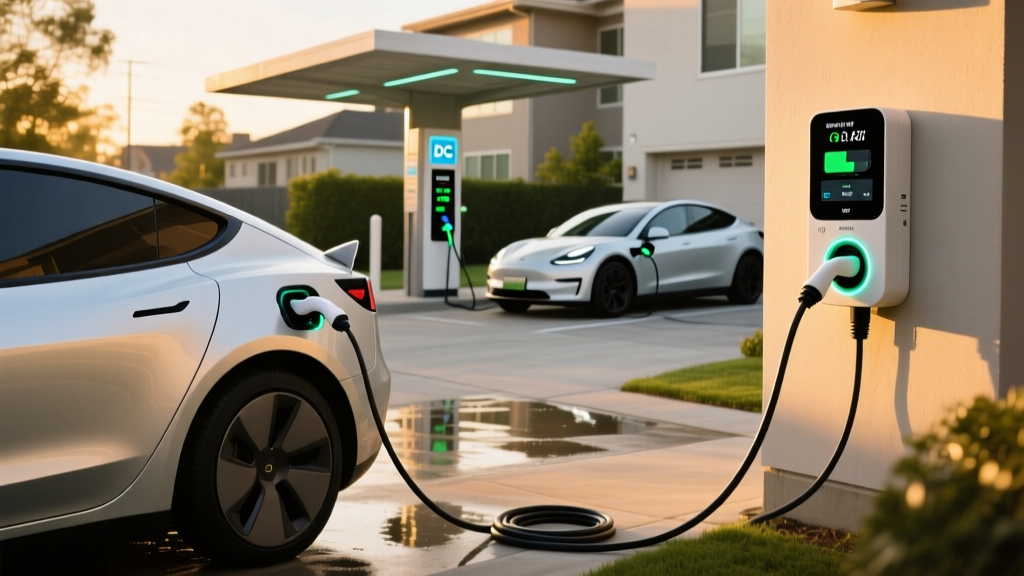
In EV terminology, "supercharged" typically refers to DC fast charging—the highest-power charging method available to consumer electric vehicles. Unlike Tesla's trademarked "Supercharger" network (now opening to other brands via the Tesla Supercharger network with NACS connectors), the term has become shorthand for any high-speed public charging experience. DC fast chargers deliver direct current at high power—typically 50 kW to 350 kW—directly to the vehicle's battery management system, bypassing the onboard AC-to-DC converter. This is what enables a 10–80% charge in 18 to 40 minutes, depending on the vehicle's maximum acceptance rate and battery chemistry.
The critical distinction for buyers: kW (kilowatts) measures the rate of power delivery—how fast energy flows into your battery. kWh (kilowatt-hours) measures total energy capacity—how much your battery holds. A 75 kWh battery charged at 150 kW doesn't fill in 30 minutes because the charge curve tapers significantly above 80% State of Charge to protect cell health.
Charging Levels Explained: Speed, Power, and Real-World Range Added
Every EV owner uses a mix of three charging levels. Understanding the kW-to-miles-per-hour relationship is essential for planning both daily routines and road trips.
| Level | Voltage / Amperage | Max Power (kW) | Miles of Range Added per Hour | Best Use Case |
|---|---|---|---|---|
| Level 1 (120V AC) | 120V / 12A | ~1.4 kW | 3–5 mi/hr | Overnight top-ups, PHEVs, emergency backup |
| Level 2 (240V AC) | 240V / 32A–48A | 7.7–11.5 kW | 25–44 mi/hr | Daily home charging, workplace, destinations |
| DC Fast Charging | 200–800V DC | 50–350 kW | 150–1,000+ mi/hr (peak) | Road trips, rapid top-ups, fleet operations |
For context, a 2026 Hyundai Ioniq 5 (84 kWh usable battery, EPA 310 miles) charging at a 350 kW DC fast charger peaks at roughly 240 kW and adds approximately 200 miles in 18 minutes (10–80%). That same vehicle on a 48-amp Level 2 home charger adds about 32 miles per hour, requiring roughly 9 hours for a full 10–100% charge. Level 1 is practical only for plug-in hybrids with smaller batteries (e.g., a Toyota RAV4 Prime with 18.1 kWh gaining full charge overnight) or as a low-cost BEV backup.
How Much Does It Cost to Install a Home EV Charger?
Home Level 2 charging is where "cheap supercharged cars" become genuinely cheap to own. Most EV owners do 80–90% of their charging at home, and the total installation cost depends heavily on your home's electrical panel capacity, the distance from panel to charger location, and local permit fees.
| Cost Component | Low-End Estimate | High-End Estimate | Notes |
|---|---|---|---|
| Level 2 EVSE Equipment (smart charger) | $350 | $700 | 32A–48A, Wi-Fi-enabled, NACS or J1772 |
| Electrician Labor (240V circuit, 50A breaker) | $600 | $1,500 | Varies by run distance, wall type, conduit |
| Electrical Permit | $50 | $250 | Required in most US jurisdictions |
| Panel Upgrade (100A → 200A service) | $1,500 | $4,000 | Needed for older homes near capacity; not always required |
| Total (no panel upgrade) | $1,000 | $2,450 | Typical for modern 200A-panel homes |
| Total (with panel upgrade) | $2,500 | $6,450 | Common in pre-1990 homes with 100A service |
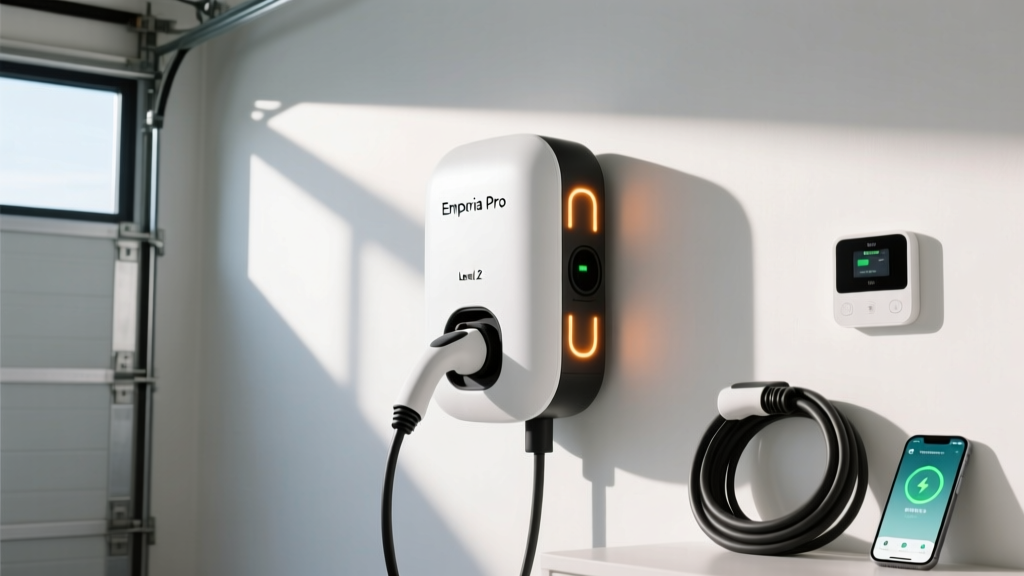
The key variable most buyers overlook is panel headroom. A 48-amp Level 2 charger draws 40 amps continuously, which requires a 50-amp dedicated breaker. Per the National Electrical Code (NEC), continuous loads must be on a circuit rated at 125% of the draw. If your 200-amp panel is already near capacity with HVAC, an electric range, and a dryer, an electrician may recommend a panel upgrade or a load-management device like the Emporia Smart Load Manager, which dynamically reduces charger draw when other appliances activate.
Charging Cost Per Mile: Home vs. Public DC Fast vs. Gas
The phrase "cheap supercharged cars" only holds true if you're charging at home. Public DC fast-charging costs have risen considerably, and the gap between home electricity and public fast-charging rates is the single largest variable in EV ownership economics.
| Charging Scenario | Rate ($/kWh) | Cost to Add 200 Miles* | Cost Per Mile |
|---|---|---|---|
| Home off-peak (utility time-of-use) | $0.08–$0.12 | $5.60–$8.40 | $0.028–$0.042 |
| Home standard rate (national avg.) | $0.16 | $11.20 | $0.056 |
| Public Level 2 (ChargePoint, workplace) | $0.25–$0.49 | $17.50–$34.30 | $0.088–$0.172 |
| DC Fast (Electrify America, EVgo) | $0.43–$0.64 | $30.10–$44.80 | $0.151–$0.224 |
| Tesla Supercharger (avg. national) | $0.30–$0.45 | $21.00–$31.50 | $0.105–$0.158 |
| Gasoline vehicle (30 MPG, $3.40/gal) | — | $22.67 | $0.113 |
*Based on an EV averaging 3.5 miles/kWh (e.g., Tesla Model Y, Hyundai Ioniq 5). Efficiency varies by vehicle, temperature, and driving style. Source: fueleconomy.gov.
The takeaway: home off-peak charging makes any EV dramatically cheaper to fuel than a gas car—roughly one-quarter the per-mile cost. But exclusive reliance on DC fast charging can push your per-mile fuel cost above that of a 30 MPG gasoline vehicle. This is why "cheap supercharged cars" are only cheap if you have reliable home or workplace Level 2 access. For apartment dwellers without charging access, a plug-in hybrid (PHEV) or a fuel-efficient HEV may be the more economical choice.
10–80% Charging Times: What to Expect from Popular EVs
EV manufacturers advertise peak DC fast-charging rates (e.g., "up to 350 kW"), but sustained charging speed is what matters. Every lithium-ion battery tapers its acceptance rate as State of Charge rises—typically dropping sharply above 80% to protect cell longevity. Here are real-world 10–80% charge times for common 2025–2026 EVs on appropriately rated DC fast chargers:
- Hyundai Ioniq 5 (84 kWh, NMC) — 350 kW charger: ~18 minutes peak, average ~150 kW sustained
- Tesla Model Y Long Range (75 kWh, NMC) — 250 kW Supercharger: ~25 minutes, average ~115 kW sustained
- Ford F-150 Lightning Extended Range (131 kWh, NMC) — 150 kW charger: ~41 minutes, average ~110 kW sustained
- Chevrolet Equinox EV (85 kWh, NMC) — 150 kW charger: ~30 minutes, average ~115 kW sustained
- Tesla Model 3 Standard Range (60 kWh, LFP) — 170 kW Supercharger: ~25 minutes, average ~95 kW sustained
LFP (lithium iron phosphate) batteries, found in standard-range Tesla models and some BYD vehicles, tolerate higher States of Charge better than NMC chemistries and can be charged to 100% regularly without degradation concerns. However, their charge curves taper earlier, meaning the final 80–100% top-up can take nearly as long as 10–80%. For road-trip planning, always plan to charge to 80% and drive on—the math overwhelmingly favors shorter, more frequent stops.
Connector Compatibility: NACS, CCS1, and CHAdeMO
The North American charging connector landscape consolidated significantly by 2026. Tesla's North American Charging Standard (NACS) has been adopted by nearly every major automaker for new vehicles starting with 2025 model-year production. Here's what you need to know about compatibility:
| Connector | Brands Using It (Native) | DC Fast-Charger Network Access | Adapter Needed? |
|---|---|---|---|
| NACS (Tesla standard) | Tesla, Ford, GM, Rivian, Volvo, Polestar, Nissan (2025+), Honda (2025+), BMW, Hyundai (select) | Tesla Superchargers + growing NACS Electrify America/ChargePoint stalls | CCS-to-NACS adapters available (~$200–$250) for older CCS vehicles |
| CCS1 | Hyundai, Kia, Volkswagen, BMW (older), Stellantis, legacy models | Electrify America, EVgo, ChargePoint DC, Ionity (EU) | NACS-to-CCS adapters for Tesla Supercharger access (Ford/GM provided) |
| CHAdeMO | Nissan Leaf (legacy), Mitsubishi Outlander PHEV (legacy) | Declining network support; limited new installations | No practical adapter to NACS/CCS; network access shrinking |
If you're buying a 2026 EV, NACS-native vehicles offer the broadest fast-charging network access thanks to Tesla's 20,000+ Supercharger stalls across North America. CCS1 vehicles retain access to Electrify America and other networks, and Ford and GM provide complimentary NACS adapters for Supercharger access. CHAdeMO is effectively a legacy standard—functional for existing Leaf owners but not recommended for new purchases. For home Level 2 charging, all non-Tesla vehicles use the J1772 connector, while Tesla uses a proprietary connector (or NACS for 2025+ models); most home chargers ship with J1772 and include or offer a Tesla adapter.
Best Home EV Chargers for 2026: Equipment Recommendations
Choosing a Level 2 home charger comes down to amperage (which determines charging speed), cable length (for parking flexibility), smart features (scheduling, load management), and connector compatibility. Here are four proven options across price points:
Emporia Level 2 Smart Charger — Best Value
- Power Output: 48 amps (11.5 kW on 240V)
- Connector: J1772 (NACS adapter included)
- Cable Length: 24 feet
- Smart Features: Wi-Fi, app scheduling, solar integration, load management with Emporia Vue panel monitor
- Price: ~$399
ChargePoint Home Flex — Best for Flexibility
- Power Output: Configurable 16A–50A (up to 12 kW)
- Connector: J1772 (NACS adapter available)
- Cable Length: 23 feet
- Smart Features: Wi-Fi, app-based amperage adjustment (set to match your circuit), Alexa integration, energy tracking
- Price: ~$549
Tesla Wall Connector — Best for NACS Vehicles
- Power Output: 48 amps (11.5 kW on 240V)
- Connector: NACS native (J1772 adapter included for non-Tesla EVs)
- Cable Length: 24 feet
- Smart Features: Wi-Fi, over-the-air updates, power sharing (link up to 6 units on one circuit), vehicle-specific access control
- Price: ~$425
Grizzl-E Smart — Most Durable / Cold-Weather Pick
- Power Output: 40 amps (9.6 kW on 240V)
- Connector: J1772 (NACS adapter available)
- Cable Length: 24 feet
- Smart Features: OCPP-compatible, app scheduling, extreme-temperature rated (-40°F to +122°F)
- Price: ~$499
For any of these chargers, ensure your electrician installs a NEMA 14-50 outlet (for plug-in models) or hardwires the unit directly. Hardwired installations eliminate the outlet as a failure point and are required for some utility rebate programs. All installations must include a dedicated circuit with GFCI protection per NEC Article 625, and outdoor-rated units must carry a NEMA 4 or IP65 weatherproof rating.
Safety, Code, and Electrical Upgrade Considerations
Beyond cost, electrical safety and code compliance are non-negotiable. Key requirements for any Level 2 home installation:
- Dedicated circuit: Your EV charger must have its own breaker—no shared circuits with dryers, ovens, or HVAC.
- GFCI protection: NEC 2023 and later require ground-fault circuit interrupter protection for all EV supply equipment, including hardwired units in many jurisdictions.
- Wire gauge: 6 AWG copper for 50-amp circuits; 4 AWG for 60-amp circuits. Aluminum wire requires upsizing.
- Outdoor rating: If mounted outside, the EVSE must carry a NEMA 4 (splash-proof) or NEMA 4X (corrosion-resistant) rating.
- Load calculation: Your electrician should perform a NEC Article 220 load calculation to verify your panel can support the added continuous load. If not, options include a panel upgrade, a load-management device, or downgrading to a 32-amp charger on a 40-amp circuit.
The U.S. Department of Energy recommends getting at least two quotes from licensed electricians and confirming they have specific EV charger installation experience. Some utilities offer rebates of $250–$1,000 for Level 2 installations, and the federal Alternative Fuel Vehicle Refueling Property Credit (IRC §30C) provides up to $1,000 (30% of equipment and installation costs) for home charger installations in eligible census tracts—check irs.gov for current eligibility maps.
Frequently Asked Questions
How much does it cost to install a home EV charger?
A typical Level 2 home charger installation costs $1,000–$2,450 when your electrical panel has sufficient capacity. This includes the charger ($350–$700), electrician labor ($600–$1,500), and permits ($50–$250). If your home needs a panel upgrade from 100A to 200A service, add $1,500–$4,000. Homes built after 2000 with 200A panels rarely need upgrades.
How fast will each charging level add range?
Level 1 (120V) adds 3–5 miles per hour. Level 2 (240V, 48A) adds 30–44 miles per hour depending on vehicle efficiency. DC fast charging adds 150–1,000+ miles per hour at peak, but sessions are measured in minutes (10–80% in 18–41 minutes for most 2026 EVs) because the charge curve tapers significantly above 80%.
Which connector/charger is compatible with my EV?
For 2026 models: Tesla, Ford, GM, Rivian, Volvo, and most new Hyundai/Kia/Honda vehicles use NACS. Older CCS1 vehicles (2023 and earlier Hyundai, VW, BMW) use CCS and may need a $200–$250 adapter for Tesla Supercharger access. The Nissan Leaf uses CHAdeMO (legacy). For home Level 2, J1772 is the universal standard; NACS home chargers include J1772 adapters.
How much does charging cost per mile vs. gas?
Home off-peak charging costs $0.03–$0.04 per mile—roughly one-quarter the cost of gasoline at $3.40/gallon and 30 MPG ($0.11/mile). Standard home rates average $0.05–$0.06/mile. Public DC fast charging at $0.43–$0.64/kWh costs $0.15–$0.22 per mile, which can exceed gasoline costs. The economic case for EVs depends heavily on consistent home or workplace charging access.
What electrical upgrades might I need?
The most common upgrade is a panel capacity increase from 100A to 200A service ($1,500–$4,000), needed primarily in pre-1990 homes. Other potential upgrades include replacing a fuse box with a breaker panel, running new conduit for long wire runs (50+ feet from panel to garage), or installing a load-management device ($200–$400) if your panel is near capacity but you want to avoid a full upgrade.
Are cheap EVs with fast charging actually practical?
Yes—if you can charge at home. A 2026 Chevrolet Equinox EV LT (base ~$33,000, EPA 319 miles, 150 kW DC fast charging) charged at home on off-peak electricity costs roughly $0.04/mile to fuel. The same vehicle relying exclusively on DC fast charging costs $0.18+/mile. The vehicle's purchase price matters less than your charging access. Before buying any EV, confirm you can install Level 2 at home or have reliable workplace charging within your daily routine.