The Real Charging Time of Electric Cars: What the Numbers Actually Mean
The single most misunderstood spec in EV ownership is charging speed. Automakers advertise a peak kW figure, but the charging time of electric cars in the real world depends on battery size (kWh), charger output (kW), ambient temperature, and where you are on the charge curve. A 150 kW peak rate doesn't mean you're pulling 150 kW the entire session — most EVs taper significantly above 60% state of charge (SoC).
Before we get into times, let's lock down the critical distinction: kW (kilowatts) is power — the rate at which energy flows. kWh (kilowatt-hours) is energy — the total capacity of your battery. Think of kW as the width of a hose and kWh as the size of the bucket. A 77 kWh battery charged at a sustained 11 kW takes roughly 7 hours. That same battery on a 150 kW DC fast charger can reach 80% in about 25 minutes — but only if the car can sustain that rate and the battery is preconditioned.
This guide breaks down every charging level, real installation costs, connector compatibility, and the actual cost-per-mile versus gasoline. All figures reflect 2026 pricing and model-year specifications.
Charging Levels Explained: Speeds, Miles Per Hour, and Real-World Times
There are three tiers of EV charging available to consumers. Each serves a different use case, and understanding the miles-per-hour metric is more practical than raw kW numbers because it normalizes across vehicles with different efficiencies.
| Level | Voltage | Power (kW) | Miles of Range Added/Hour | Best For |
|---|---|---|---|---|
| Level 1 | 120V AC | 1.0–1.4 kW | 3–5 mi/hr | Overnight top-up, PHEVs, low-mileage commuters |
| Level 2 | 240V AC | 3.3–19.2 kW | 12–75 mi/hr | Daily home charging, workplace, destination |
| DC Fast (Level 3) | 400–900V DC | 50–350+ kW | 150–1,000+ mi/hr (peak) | Road trips, rapid top-ups, commercial fleets |
A few realities that spec sheets gloss over:
- Level 1 is viable for PHEVs with small batteries (10–20 kWh) — a Toyota RAV4 Prime's 18.1 kWh battery recharges overnight on a standard outlet. For a 77 kWh BEV like a Tesla Model Y, Level 1 adds roughly 40 miles over 10 hours. That's not enough for most drivers.
- Level 2 is the home standard. Most EVs accept 7.2–11.5 kW on Level 2. A 48-amp circuit delivering 11.5 kW adds about 44 miles per hour to a vehicle rated at 3.8 mi/kWh — enough to fully replenish most EVs overnight.
- DC fast charging peaks early and tapers hard. A Hyundai Ioniq 5 peaks at roughly 240 kW on a 350 kW charger but sustains that rate only from ~10–55% SoC. Above 80%, the rate drops to 50–80 kW. That's why the industry standard metric is 10–80% time.
Charging Time Examples: How Long Does It Take to Charge Popular EVs?
Below are approximate charging times for several common 2026 battery sizes and vehicle types, assuming optimal battery temperature (preconditioned) and a charger capable of delivering the vehicle's maximum accepted rate.
| Vehicle (Example) | Usable Battery (kWh) | Level 2 (11.5 kW) 0–100% | DC Fast 10–80% (Peak kW) |
|---|---|---|---|
| Chevrolet Equinox EV (2LT) | 85 kWh (NMC) | ~8.5 hours | ~32 min (150 kW peak) |
| Tesla Model Y Long Range | 75 kWh (NMC) | ~7.5 hours | ~25 min (250 kW peak) |
| Hyundai Ioniq 5 Long Range RWD | 77.4 kWh (NMC) | ~7.8 hours | ~18 min (240 kW peak) |
| Ford F-150 Lightning Ext. Range | 131 kWh (NMC) | ~12.5 hours | ~41 min (150 kW peak) |
| Toyota RAV4 Prime (PHEV) | 18.1 kWh (NMC) | ~2.5 hours | N/A (no DC fast) |
Home Charger Installation: Electrical Requirements and True Costs
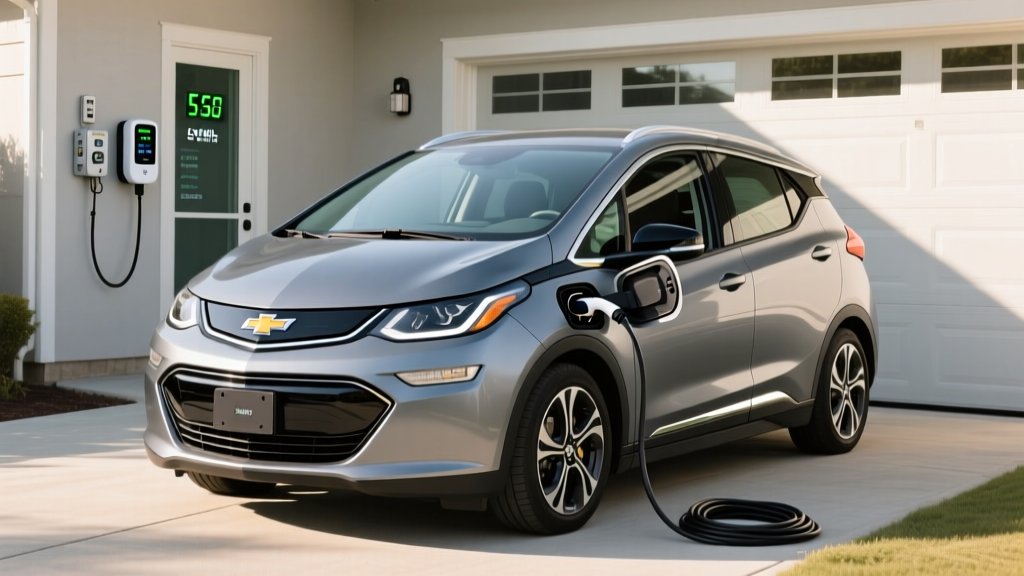
Installing a Level 2 home charger is the single highest-impact upgrade for EV ownership. You wake up every morning with a full battery, and your "fueling" cost drops to $0.10–$0.18 per kWh in most markets. But the installation cost varies enormously depending on your electrical panel, the distance from panel to charger location, and local permit requirements.
Electrical Requirements
A typical Level 2 charger requires a 240V dedicated circuit on a NEMA 14-50 receptacle or hardwired connection. Circuit amperage must be 125% of the charger's continuous draw — so a 48-amp charger requires a 60-amp breaker. Key specs:
- Minimum viable: 240V / 24A (5.8 kW) on a 30-amp breaker — adequate for PHEVs and low-mileage BEV drivers
- Standard recommendation: 240V / 48A (11.5 kW) on a 60-amp breaker — covers nearly all current EVs
- High-power option: 240V / 80A (19.2 kW) on a 100-amp breaker — needed only for vehicles like the Hummer EV or future 800V platforms accepting high AC rates
Panel Upgrade: The Hidden Cost
Homes built before 2000 often have 100-amp or 150-amp main panels. Adding a 60-amp EV circuit may exceed available capacity, especially if you already run electric range, dryer, and HVAC. A panel upgrade to 200 amps typically costs $1,800–$3,500 including permit and utility coordination. Homes with 200-amp panels usually have sufficient headroom, but an electrician must perform a load calculation per NEC Article 220.
| Component | Simple Install (Panel Adjacent) | Complex Install (Long Run / Panel Upgrade) |
|---|---|---|
| Level 2 Charger Equipment | $350–$700 | $350–$700 |
| Electrical Labor | $400–$900 | $1,500–$4,000 |
| Permit & Inspection | $50–$200 | $100–$300 |
| Panel Upgrade (if needed) | $0 | $1,800–$3,500 |
| Conduit, Wire, Misc. | $100–$300 | $400–$1,200 |
| Total Estimated Cost | $900–$2,100 | $4,150–$9,700 |
The IRS §30C Alternative Fuel Vehicle Refueling Property Credit covers 30% of home charging equipment and installation costs, up to $1,000, for installations in eligible census tracts. Check your eligibility before scheduling work — the credit has location-based requirements tied to low-income or non-urban census tracts.
Connector Compatibility: NACS, CCS1, CHAdeMO, and Adapters
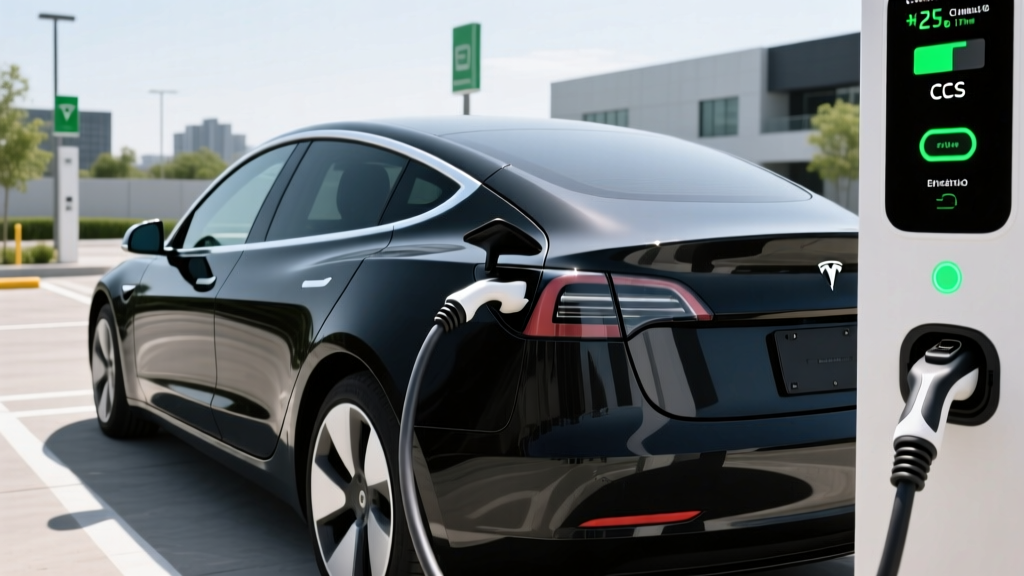
The North American EV market has converged on NACS (North American Charging Standard, originally Tesla's proprietary connector) as the dominant standard. As of 2026, nearly all new EVs from major manufacturers ship with NACS charge ports, and CCS1 is being phased out on new vehicles. CHAdeMO remains only on legacy Nissan Leaf models.
| Connector | Brands Using It (Native Port) | Adapter Needed For |
|---|---|---|
| NACS (J3400) | Tesla, Ford, GM, Rivian, Hyundai/Kia (2025+), Volvo/Polestar, BMW, Mercedes, Nissan (Ariya+) | Access to legacy CCS chargers (CCS→NACS adapter, ~$200–$250) |
| CCS1 | Legacy models: VW ID.4 (pre-2025), older Hyundai/Kia, older BMW i4/iX | Access to Tesla Superchargers (NACS→CCS adapter, ~$200–$250) |
| CHAdeMO | Nissan Leaf (all years), Mitsubishi Outlander PHEV (legacy) | No adapter available for NACS/CCS; network shrinking |
If you're buying a 2025+ model-year EV, you'll almost certainly get a NACS port natively. If you own a CCS1-equipped vehicle, adapters from manufacturers like Tesla's official CCS-to-NACS adapter or third-party options from Lectron and A2Z allow access to the Supercharger network — critical, since Superchargers represent the most reliable DC fast-charging network in North America per fueleconomy.gov and JD Power reliability surveys.
Cost to Charge: Per-Mile Economics vs. Gasoline
The financial case for EV ownership hinges on charging cost versus gasoline. But the cost-per-mile varies dramatically depending on where and when you charge. Here's how the numbers break down for a mid-size EV averaging 3.5 miles per kWh (roughly 285 Wh/mile — typical for a Tesla Model Y or Hyundai Ioniq 5).
| Charging Scenario | Price per kWh | Cost Per Mile (3.5 mi/kWh) | Annual Cost (12,000 mi) |
|---|---|---|---|
| Home — Off-Peak Utility Rate | $0.10–$0.14 | $0.03–$0.04 | $360–$480 |
| Home — Standard Residential Rate | $0.15–$0.20 | $0.04–$0.06 | $480–$720 |
| Public Level 2 (ChargePoint, EVgo) | $0.25–$0.49 | $0.07–$0.14 | $840–$1,680 |
| DC Fast Charging (Electrify America, Tesla) | $0.35–$0.58 | $0.10–$0.17 | $1,200–$2,040 |
| Gasoline Vehicle (28 MPG, $3.30/gal) | $0.118/mile | $0.118 | $1,416 |
The takeaway: home charging on an off-peak rate is roughly one-quarter the per-mile cost of gasoline. Even public DC fast charging is often comparable to or slightly cheaper than gas on a per-mile basis. But if you rely exclusively on public DC fast chargers at $0.50+/kWh, your "fuel" cost can exceed that of an efficient hybrid. This is why home charging access is the single biggest determinant of EV ownership economics.
Recommended Home Chargers: Equipment Picks for 2026
Not all Level 2 chargers are equal. Key differentiators include power output, cable length, smart scheduling features (for time-of-use utility rates), connector type, and build quality. Below are four widely available options spanning budget to premium.
Emporia Level 2 Smart Charger
- Power Output: 48A / 11.5 kW (hardwired)
- Connector: J3400 (NACS) with J1772 adapter included
- Cable Length: 24 ft
- Smart Features: Wi-Fi, app scheduling, energy monitoring, solar integration
- Price: ~$399
- Best For: Budget-conscious buyers wanting smart features and energy tracking
ChargePoint Home Flex
- Power Output: Up to 50A / 12 kW (configurable, NEMA 14-50 or hardwired)
- Connector: J1772 (NACS adapter included with 2025+ models)
- Cable Length: 23 ft
- Smart Features: Wi-Fi, Alexa, scheduled charging, charge history
- Price: ~$649
- Best For: Flexibility across amperage settings; proven reliability
Tesla Wall Connector
- Power Output: 48A / 11.5 kW (hardwired, 60A circuit)
- Connector: NACS native (J1772 adapter included)
- Cable Length: 24 ft
- Smart Features: Wi-Fi, over-the-air updates, power sharing (multiple units on one circuit)
- Price: ~$475
- Best For: Tesla and NACS-native vehicle owners; clean integrated design
Grizzl-E Smart
- Power Output: 40A / 9.6 kW (NEMA 14-50) or 48A hardwired
- Connector: J1772 or NACS (select at purchase)
- Cable Length: 24 ft
- Smart Features: Wi-Fi, OCPP compatibility, adjustable amperage
- Price: ~$499
- Best For: Cold-climate durability (rated to -40°F); Canadian-built
Safety, Code, and Installation Best Practices
EV charging draws sustained high current for hours — unlike a dryer that cycles on and off. This makes proper installation critical. Key requirements per the 2023 National Electrical Code (NEC, adopted by most jurisdictions through 2026):
- Dedicated circuit: Your EV charger must have its own breaker — no shared circuits with other appliances.
- GFCI protection: NEC 2023 §625.54 requires ground-fault circuit interrupter protection for all receptacles used for EV charging. Hardwired installations may not require a GFCI breaker (the charger provides internal ground-fault protection), which avoids nuisance tripping common with GFCI breakers on high-draw circuits.
- Outdoor rating: If your charger is installed outdoors, it must carry a NEMA 4 (weatherproof) rating. All chargers listed above meet this standard.
- Permit and inspection: Most municipalities require an electrical permit and post-installation inspection. Skipping this can void homeowner's insurance coverage for electrical fires.
- Wire gauge: A 60-amp circuit requires 6 AWG copper wire (THHN in conduit) or 4 AWG for runs exceeding 100 feet to manage voltage drop. Your electrician will calculate this.
Always hire a licensed electrician — preferably one with EV charging installation experience. Ask for a load calculation before committing to a circuit size, and get at least two quotes. Some utilities offer rebates of $250–$500 for Level 2 charger installations, particularly if you enroll in a time-of-use rate plan.
Frequently Asked Questions
How much does it cost to install a home EV charger?
A straightforward Level 2 installation with the electrical panel nearby typically costs $900–$2,100 including equipment, labor, and permit. Complex installations requiring long wire runs or a panel upgrade to 200 amps can range from $4,150–$9,700. The IRS §30C credit can offset up to $1,000 (30%) for eligible installations in qualifying census tracts.
How fast will each charging level add range?
Level 1 (120V) adds 3–5 miles of range per hour. Level 2 (240V) adds 12–75 miles per hour depending on amperage and vehicle efficiency. DC fast charging adds 150–1,000+ miles per hour at peak rate, but sustained rates drop significantly above 60–80% SoC due to charge-curve taper.
Which connector/charger is compatible with my EV?
If your EV is a 2025+ model year from Tesla, Ford, GM, Rivian, Hyundai/Kia, Volvo, BMW, or Mercedes, it likely has a native NACS port. Older CCS1-equipped vehicles can access NACS chargers (including Tesla Superchargers) with a $200–$250 adapter. CHAdeMO vehicles (Nissan Leaf) have no adapter path to NACS or CCS and face a shrinking charging network.
How much does charging cost per mile vs gas?
Home charging on off-peak rates costs $0.03–$0.04 per mile — roughly one-quarter the cost of gasoline at $3.30/gallon in a 28 MPG vehicle ($0.12/mile). Public DC fast charging at $0.45/kWh costs $0.13/mile, comparable to gasoline. The savings advantage is greatest with home charging and smallest with exclusive reliance on public fast chargers.
What electrical upgrades might I need?
If your home has a 100-amp or 150-amp main panel and you already run electric appliances (range, dryer, HVAC), you may need a panel upgrade to 200 amps ($1,800–$3,500). Homes with existing 200-amp panels typically have sufficient capacity for a 48-amp EV circuit. An electrician will perform an NEC Article 220 load calculation to determine your available headroom. In some cases, a load-management device like the Emporia Smart Load Center can avoid a panel upgrade by dynamically sharing capacity between the EV charger and other circuits.