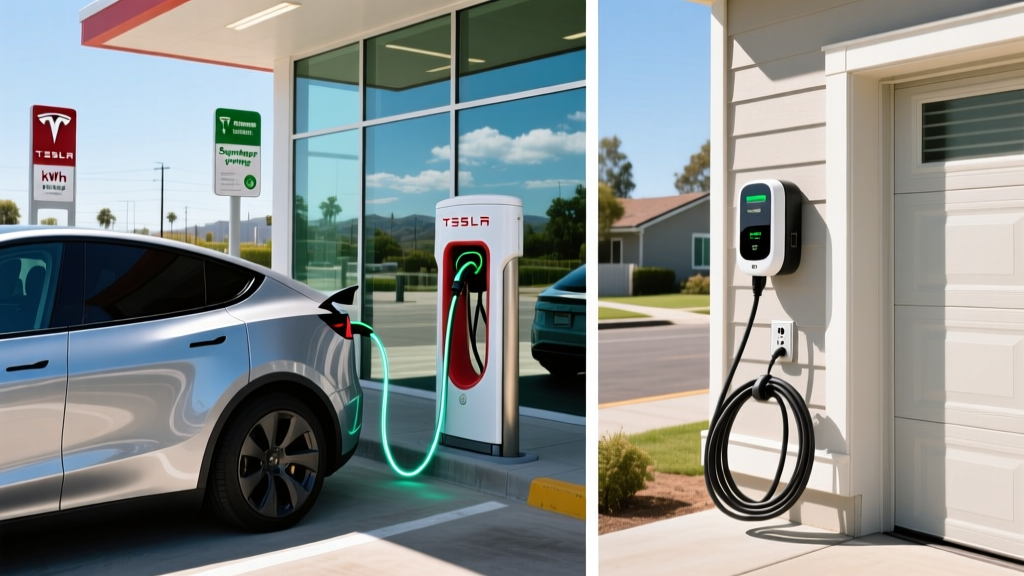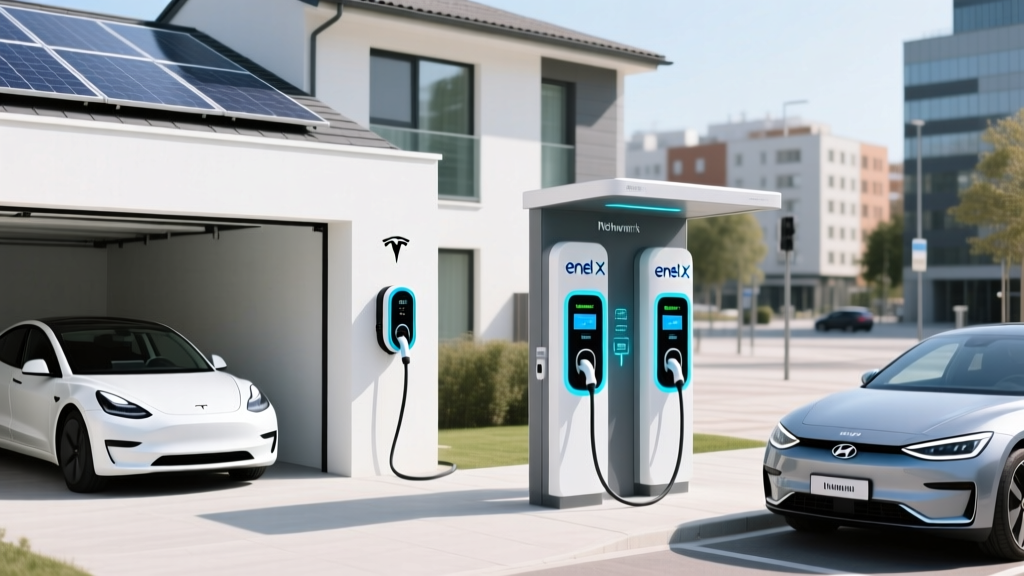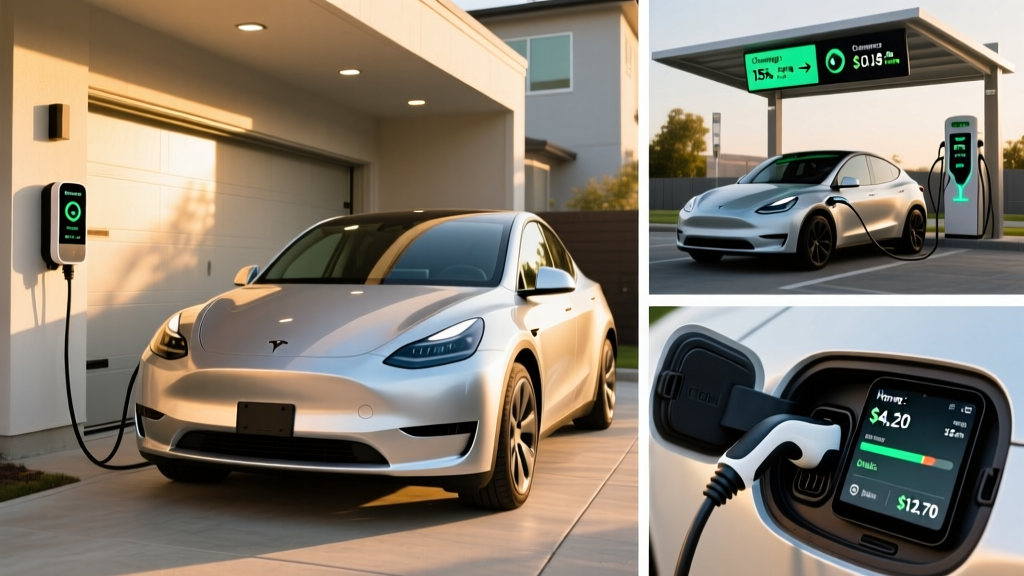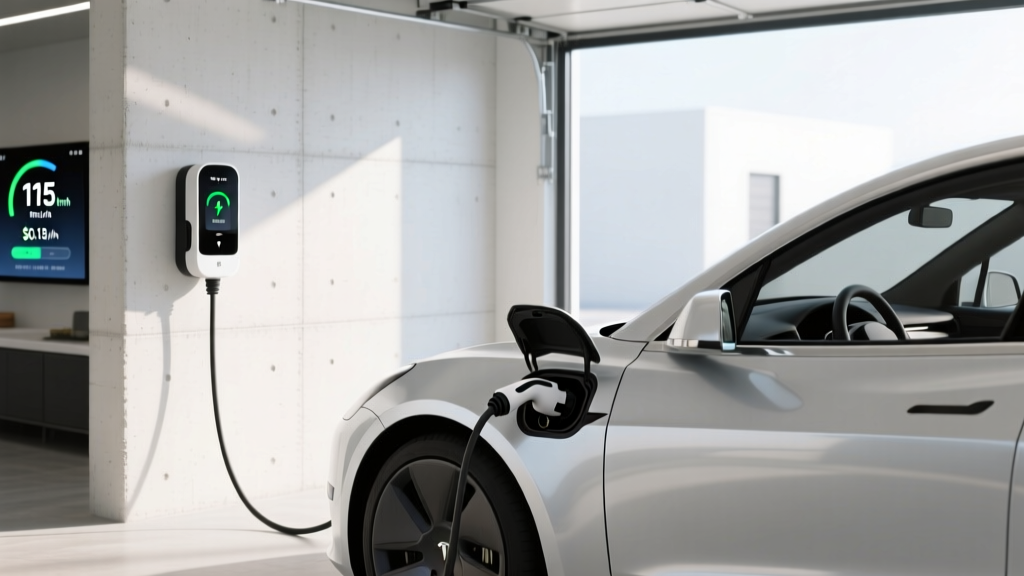
Owning a Tesla Model 3 means you'll do most of your charging at home, but understanding the full ecosystem — from Level 1 trickle charging to 250 kW Superchargers — is essential for planning road trips, budgeting electricity costs, and avoiding expensive electrical surprises. This guide covers every aspect of charging Tesla Model 3 vehicles, including the refreshed Highland-generation models sold through 2026, with exact numbers for range recovery, installation costs, and per-mile energy expenses.
Charging Levels Explained: How Fast Each Adds Range
Before plugging in, it's critical to understand the difference between kW (kilowatts) and kWh (kilowatt-hours). kW measures power — the rate at which electricity flows into your car. kWh measures energy — the total capacity of your battery. The Tesla Model 3 Rear-Wheel Drive has a usable battery of approximately 60 kWh (LFP chemistry), while the Long Range AWD holds roughly 79 kWh (NMC chemistry). Charging speed is always measured in kW; energy added is measured in kWh.
| Level | Voltage / Amps | Max Power (kW) | Miles of Range Added per Hour | Typical Use Case |
|---|---|---|---|---|
| Level 1 (120V) | 120V / 12A | ~1.4 kW | 3–5 mi/hr | Emergency / overnight trickle |
| Level 2 (240V) | 240V / 32–48A | 7.7–11.5 kW | 25–44 mi/hr | Daily home & workplace charging |
| DC Fast Charging | 400V+ DC | Up to 250 kW (V3 Supercharger) | Up to ~175 mi in 15 min | Road trips, highway travel |
Real-world note: The "miles per hour" figures above assume optimal conditions. In practice, Level 2 charging at 48A (11.5 kW) will add roughly 44 miles of range per hour to a Long Range Model 3, but actual recovery depends on battery temperature, state of charge, and whether the car is preconditioning. DC fast charging peaks at 250 kW only between roughly 10–30% state of charge, then tapers significantly — a 10–80% session on a V3 Supercharger takes approximately 25–30 minutes for the Long Range model and about 22–27 minutes for the RWD (LFP) variant, which can accept higher power longer due to LFP chemistry characteristics.
Home Charger Installation: Electrical Requirements and Costs
The Tesla Model 3's onboard charger accepts up to 11.5 kW (48A at 240V) on Long Range models and 7.7 kW (32A) on the RWD variant. To unlock these speeds, you need a dedicated 240V circuit with appropriate amperage. Here's what's involved:
Electrical Panel Requirements
Most homes built after the 1990s have a 200-amp electrical panel, which can usually support a 60-amp dedicated circuit for a 48A Level 2 charger (the National Electrical Code requires circuits to be rated at 125% of continuous load, so a 48A charger needs a 60A breaker). However, older homes with 100-amp panels or panels already near capacity may require a panel upgrade — a significant added cost.
Key requirements for a safe, code-compliant install:
- Dedicated circuit (not shared with other appliances)
- 60A breaker for 48A chargers; 40A breaker for 32A chargers
- GFCI protection (required by NEC 2020+ for EV outlets in garages)
- NEMA 14-50 outlet (if using a plug-in charger) or hardwired connection
- Outdoor-rated enclosure and conduit if installed outside
- Proper wire gauge: 6 AWG copper for 60A, 8 AWG for 40A
| Component | Simple Install (Panel Adjacent) | Complex Install (Long Run / Panel Upgrade) |
|---|---|---|
| Level 2 Charger Equipment | $350–$600 | $350–$600 |
| Electrician Labor (2–6 hours) | $500–$1,200 | $1,500–$3,500 |
| Permit & Inspection | $50–$200 | $100–$350 |
| Panel Upgrade (if needed) | $0 | $1,500–$4,000 |
| Conduit, Wire, Misc. Materials | $100–$300 | $300–$800 |
| Total Estimated Cost | $1,000–$2,300 | $3,750–$9,250 |
Always get at least two quotes from licensed electricians familiar with EV charger installations. Some utilities offer rebates of $250–$1,000 for home charger installs — check with your local provider before starting work. The federal Alternative Fuel Vehicle Refueling Property Credit (IRS Form 8911) may cover up to 30% of home charging equipment and installation costs (capped at $1,000), subject to income limits and census-tract eligibility.
Connector Compatibility: NACS, Adapters, and the Supercharger Network
Every Tesla Model 3 sold in North America comes equipped with the NACS (North American Charging Standard) connector — Tesla's proprietary plug, which was opened as a standard in late 2022 and has since been adopted by Ford, GM, Rivian, Hyundai, and most major automakers. This means your Model 3 plugs directly into any Tesla Supercharger or Destination Charger without adapters.
| Connector Type | Native Compatibility | Adapter Required? | Availability |
|---|---|---|---|
| NACS (Tesla) | Yes — native port | No | Tesla Superchargers, Destination Chargers, growing third-party networks |
| CCS1 | No | Yes — Tesla CCS Adapter (~$175) | Electrify America, EVgo, ChargePoint, and most non-Tesla DC networks |
| CHAdeMO | No | Yes — third-party adapter ($300–$400) | Largely legacy; mostly Nissan Leaf infrastructure |
| J1772 (Level 2) | Yes — included adapter | No (adapter comes with car) | Public Level 2 stations, workplaces, hotels |
Practical tip: Purchase Tesla's official CCS1 adapter if you plan to use Electrify America or other non-Tesla DC fast-charging networks. The Supercharger network remains the most reliable and extensive DC fast-charging infrastructure in the U.S., with over 30,000 stalls nationally, but the CCS adapter provides a useful backup for areas where Supercharger coverage is sparse. According to Tesla's Supercharger page, V3 stalls deliver up to 250 kW, while older V2 stalls peak at 150 kW.
Cost to Charge: Electricity vs. Gasoline Per Mile
One of the strongest ownership arguments for the Model 3 is the per-mile energy cost. Let's break it down with real numbers, using the Model 3 Long Range AWD's EPA efficiency of 25 kWh/100 miles (or roughly 4 miles per kWh).
| Charging Scenario | Cost per kWh | Cost per Mile (Model 3 LR) | Annual Cost (12,000 mi) |
|---|---|---|---|
| Home — Off-Peak Rate | $0.08–$0.12 | $0.020–$0.030 | $240–$360 |
| Home — Standard Rate | $0.13–$0.18 | $0.033–$0.045 | $390–$540 |
| Public Level 2 (ChargePoint, etc.) | $0.20–$0.35 | $0.050–$0.088 | $600–$1,050 |
| Tesla Supercharger (DC Fast) | $0.25–$0.40 | $0.063–$0.100 | $750–$1,200 |
| Non-Tesla DC Fast (EA, EVgo) | $0.35–$0.55 | $0.088–$0.138 | $1,050–$1,650 |
Gasoline comparison: A comparable gas sedan averaging 30 MPG at $3.40/gallon (2026 national average) costs approximately $0.113 per mile, or $1,360 annually for 12,000 miles. Home-charged Model 3 owners save $800–$1,100 per year in fuel costs alone. Even exclusive Supercharger users spend roughly the same or slightly less than gasoline — though the convenience gap narrows on road trips.
DC Fast Charging Times: 10–80% Session Breakdown
DC fast charging speed isn't a single number — it follows a charge curve that peaks at low states of charge and tapers as the battery fills. Here's what to expect with the Model 3 on various DC chargers:
| Charger Type | Peak Power | Model 3 RWD (60 kWh LFP) | Model 3 LR AWD (79 kWh NMC) |
|---|---|---|---|
| Tesla V3 Supercharger | 250 kW | ~22–27 minutes | ~25–30 minutes |
| Tesla V2 Supercharger | 150 kW | ~32–38 minutes | ~35–42 minutes |
| Electrify America 350 kW | ~150–170 kW (via CCS adapter) | ~30–36 minutes | ~34–40 minutes |
| 50 kW DC Charger (legacy) | 50 kW | ~65–75 minutes | ~80–95 minutes |
Charge curve reality: On a V3 Supercharger, the Model 3 Long Range peaks near 250 kW only between roughly 10–30% SoC. From 30–50%, power drops to approximately 150–180 kW. From 50–80%, it tapers further to 60–90 kW. This is why the 10–80% time is ~27 minutes rather than the theoretical ~17 minutes a sustained 250 kW rate would suggest. Always precondition your battery by navigating to a Supercharger in the Tesla navigation system — this warms the battery for optimal charge acceptance and can shave 5–10 minutes off your session.
Recommended Home Charging Equipment
Not all Level 2 chargers are equal. Here are the top picks for Tesla Model 3 owners in 2026, selected for reliability, power output, smart features, and value:
Tesla Wall Connector
- Power: Up to 11.5 kW (48A)
- Connector: NACS native
- Cable Length: 24 ft
- Smart Features: Wi-Fi, OTA updates, power sharing between units, load management
- Price: ~$475
- Best For: Tesla-only households wanting seamless integration
ChargePoint Home Flex
- Power: Up to 12 kW (50A) adjustable
- Connector: J1772 (NACS adapter included or use Tesla's J1772 adapter)
- Cable Length: 23 ft
- Smart Features: Wi-Fi, app scheduling, Alexa integration, amperage adjustable
- Price: ~$550–$700
- Best For: Multi-EV households or future-proofing for non-Tesla EVs
Emporia Vue Level 2 Charger
- Power: Up to 11.5 kW (48A)
- Connector: J1772 (use Tesla adapter)
- Cable Length: 24 ft
- Smart Features: Wi-Fi, solar integration, energy monitoring, load management
- Price: ~$400–$500
- Best For: Solar-panel owners wanting energy tracking
Grizzl-E Smart
- Power: Up to 10 kW (40A)
- Connector: J1772 (use Tesla adapter)
- Cable Length: 24 ft
- Smart Features: OCPP support, app control, extreme cold-rated (-40°F)
- Price: ~$450–$550
- Best For: Cold-climate and outdoor installations
For Tesla-only homes, the Tesla Wall Connector is the obvious pick: native NACS plug, full power, and the cleanest integration. If you anticipate owning a non-Tesla EV in the future (or already do), the ChargePoint Home Flex offers adjustable amperage and a universal J1772 connector. Note: all J1772 chargers work with the Model 3 using the J1772-to-NACS adapter included with every Tesla.
Frequently Asked Questions
How much does it cost to install a home EV charger for my Tesla Model 3?
A straightforward Level 2 installation (short wire run, adequate panel capacity) typically costs $1,000–$2,300 including equipment, electrician labor, and permits. Complex installations requiring long conduit runs, sub-panels, or a full 200A panel upgrade can reach $3,750–$9,250. Always get a site-specific quote from a licensed electrician.
How fast will each charging level add range to my Model 3?
Level 1 (120V) adds roughly 3–5 miles of range per hour — suitable only for topping off or emergencies. Level 2 (240V, 48A) adds 30–44 miles per hour, fully recharging a Long Range Model 3 in about 8–9 hours. DC fast charging at a V3 Supercharger adds up to 175 miles in 15 minutes under optimal conditions.
Which connector and charger is compatible with my Tesla Model 3?
The Model 3 uses the NACS connector natively, which plugs directly into all Tesla Superchargers and Destination Chargers. For non-Tesla networks (Electrify America, EVgo), you'll need the Tesla CCS1 adapter (~$175). The included J1772 adapter handles public Level 2 stations. CHAdeMO adapters exist but are rarely worth purchasing given the shrinking CHAdeMO network.
How much does charging a Tesla Model 3 cost per mile compared to gas?
Home charging at average residential rates ($0.13–$0.18/kWh) costs approximately $0.033–$0.045 per mile. A comparable gas sedan at 30 MPG and $3.40/gallon costs about $0.113 per mile. Home-charged Model 3 owners save roughly 60–70% on fuel costs annually.
What electrical upgrades might I need for a home charger?
If your home has a 200-amp panel with available capacity, you likely need only a dedicated 60-amp circuit with proper wire gauge and GFCI protection. Homes with 100-amp service, older wiring, or panels already near capacity (common with electric HVAC, dryers, and stoves) may require a panel upgrade to 200A or a "smart" load-management system that shares amperage between circuits. A licensed electrician can assess your panel during a site visit.
Does the Tesla Model 3 LFP battery charge differently than NMC?
Yes. The Rear-Wheel Drive Model 3 uses an LFP (lithium iron phosphate) battery, which Tesla recommends charging to 100% regularly — unlike the NMC battery in the Long Range, which benefits from daily charging limits of 80–90% for longevity. LFP batteries also maintain strong charge acceptance at higher states of charge, meaning DC fast charging tapers less aggressively above 80% compared to NMC.
Can I charge my Model 3 with solar panels?
Yes, though most residential solar arrays (5–10 kW) produce less power than a Level 2 charger draws (7.7–11.5 kW). You'll still pull from the grid during charging, but net metering or time-of-use plans can offset costs. Chargers like the Emporia Vue offer solar-aware scheduling that adjusts charge rate to match solar production.
Bottom line: Charging Tesla Model 3 vehicles at home via a 240V Level 2 setup delivers the best combination of convenience, cost savings, and battery health. Budget $1,000–$2,300 for a standard install, pair it with a Tesla Wall Connector or ChargePoint Home Flex, and you'll refuel for roughly $0.03–$0.04 per mile — a fraction of gasoline costs. For road trips, the Supercharger network's 250 kW V3 stalls deliver 10–80% charges in under 30 minutes with proper battery preconditioning. For official efficiency and range data, see the EPA's Model 3 page on fueleconomy.gov.