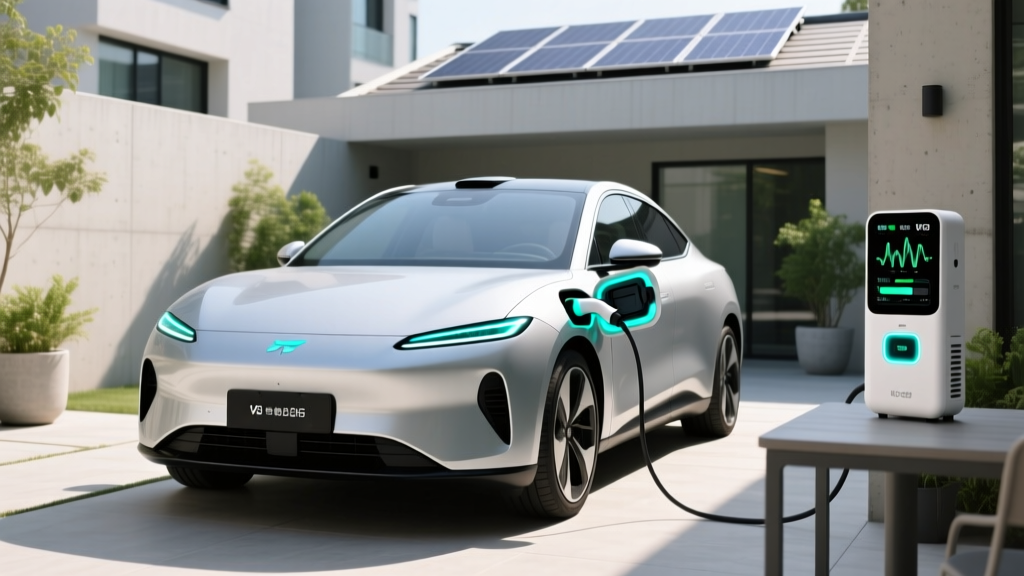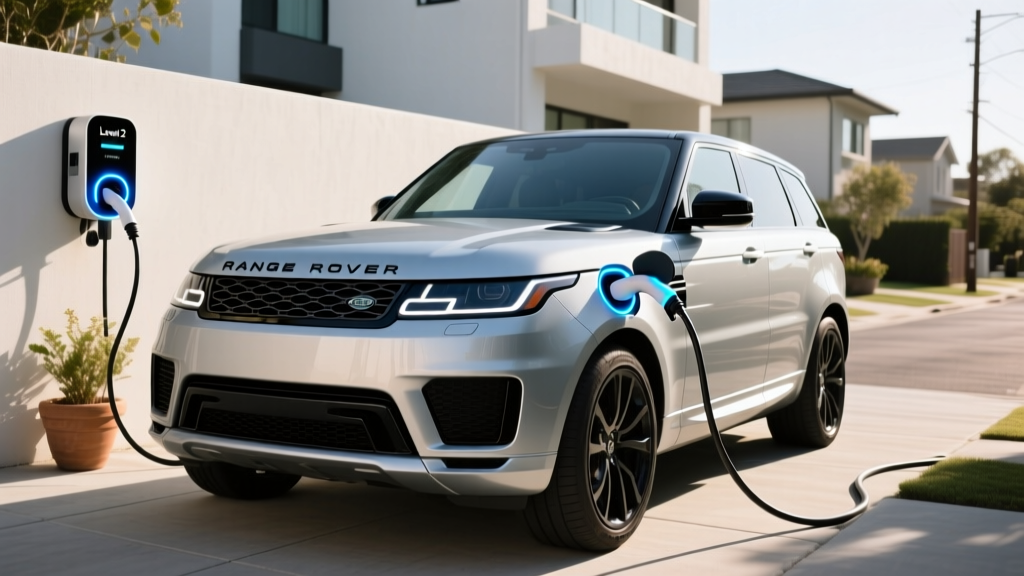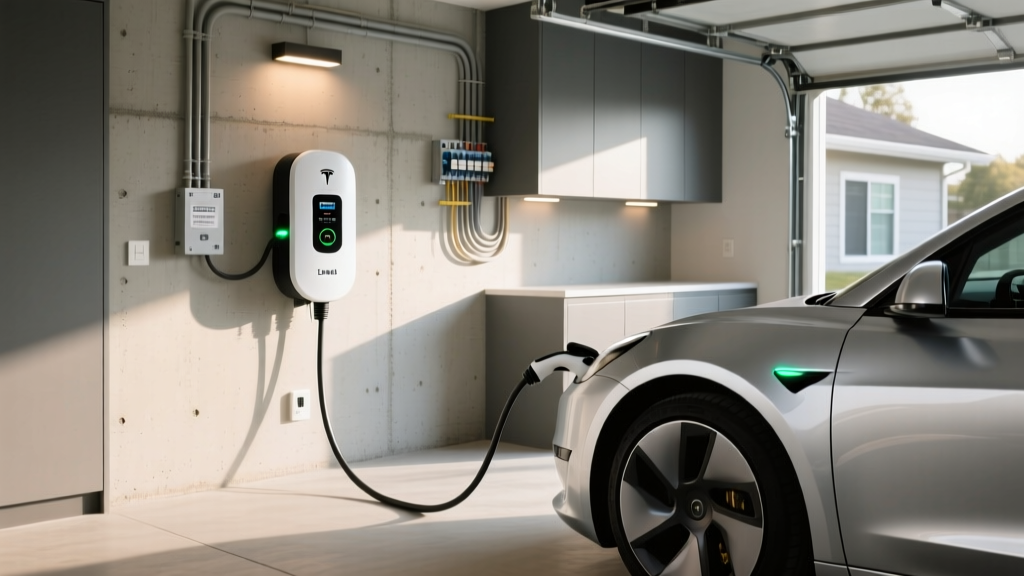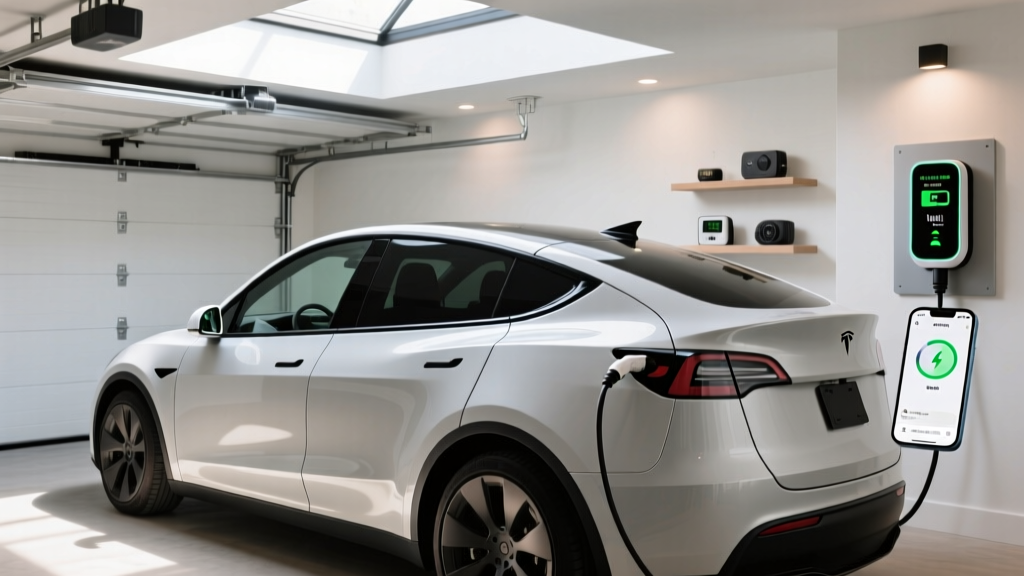
Why Home Charging Is the Backbone of Tesla Ownership
If you own or are considering a Tesla Model 3, Model Y, Model S, or Model X, the single most impactful decision you'll make isn't about which Supercharger route to take — it's how you set up charging at home. Over 80% of EV charging happens where the car sleeps. A properly configured home charger means waking up to a full battery every morning, avoiding public charger queues, and paying roughly a third of what you'd spend at a DC fast charger.
This guide breaks down exactly what's required for charging a Tesla car at home in 2026: the electrical specs, real costs, equipment options, and how your Tesla's North American Charging Standard (NACS) connector fits into the broader EV ecosystem.
Understanding Charging Levels: What Speed Do You Actually Need?
EV charging is measured in kilowatts (kW), which is the rate of power delivery — not to be confused with kilowatt-hours (kWh), which is the total energy stored in your battery. Think of kW as how fast water flows through a hose, and kWh as the size of the bucket. A Tesla Model Y Long Range has a ~75 kWh usable battery; how quickly you fill it depends entirely on your charger's kW output.
| Level | Voltage | Max Power (kW) | Miles of Range Per Hour | Best Use Case |
|---|---|---|---|---|
| Level 1 | 120V AC | 1.0–1.4 kW | 3–5 mi/hr | Overnight trickle, emergency top-up |
| Level 2 | 240V AC | 7.2–19.2 kW | 25–75 mi/hr | Daily home charging (recommended) |
| DC Fast | 400–800V DC | 50–250+ kW | 150–1,000+ mi/hr | Road trips, rapid top-ups |
Real-world context: A Tesla Model 3 Rear-Wheel Drive (EPA range 272 miles, ~57 kWh usable battery) charging on a standard 120V outlet gains roughly 4 miles per hour — meaning a full 10–80% charge takes over 8 hours. On a 48-amp Level 2 circuit (11.5 kW), that same 10–80% session completes in about 3.5 hours. At a 250 kW V3 Supercharger, Tesla quotes roughly 15 minutes for 10–80%.
Home Installation: Electrical Requirements and Real Costs
The most common question Tesla owners ask is: "How much will this actually cost to install?" The honest answer varies dramatically based on your home's electrical panel, the distance from the panel to your garage or driveway, and local permitting requirements.
What Your Electrician Will Assess
A Level 2 home charger requires a dedicated 240V circuit — the same voltage your electric dryer or oven uses. The amperage determines charging speed:
- 20A circuit: Delivers ~3.8 kW (16A continuous) — adequate for plug-in hybrids, slow for Teslas
- 40A circuit: Delivers ~7.7 kW (32A continuous) — adds ~30 miles per hour
- 50A circuit: Delivers ~9.6 kW (40A continuous) — adds ~37 miles per hour
- 60A circuit: Delivers ~11.5 kW (48A continuous) — the sweet spot for most Tesla owners, adding ~44 miles per hour
Electricians follow the 80% rule (NEC Article 210.20): continuous loads like EV charging can only use 80% of a circuit's rated capacity. A 60A breaker supports 48A of continuous charging.
Panel Capacity: The Hidden Cost Factor
Most modern homes have a 200-amp main electrical panel. Adding a 60A EV circuit consumes 30% of that capacity. If your panel is already heavily loaded (electric heat, hot tub, workshop equipment), your electrician may recommend a panel upgrade to 300A or 400A, or a load-management device that throttles charging when other high-draw appliances are active.
| Component | Low Estimate | High Estimate | Notes |
|---|---|---|---|
| Level 2 Charger (Equipment) | $400 | $700 | Tesla Wall Connector, ChargePoint, Emporia |
| Electrician Labor (simple install) | $500 | $1,200 | Panel within 20–30 ft of charger location |
| Electrician Labor (complex install) | $1,200 | $3,000 | Long conduit runs, trenching, garage subpanel |
| Electrical Permit | $50 | $300 | Varies by municipality; some jurisdictions waive for EV |
| Panel Upgrade (if needed) | $1,500 | $4,000 | 200A → 300A/400A upgrade; not always required |
| Total (no panel upgrade) | $950 | $2,200 | Most common scenario for newer homes |
| Total (with panel upgrade) | $2,450 | $6,200 | Older homes or heavy existing loads |
Always get at least two quotes from licensed electricians. Some utilities offer rebates of $250–$1,000 for home charger installations — check your local provider before committing.
Tesla's NACS Connector: Compatibility and the Adapter Landscape
Tesla vehicles use the North American Charging Standard (NACS) connector — a compact design that handles both AC Level 2 and DC fast charging through a single port. As of 2025–2026, nearly every major automaker (Ford, GM, Rivian, Hyundai, Kia, BMW, and others) has adopted NACS for their North American EVs, making it the de facto standard.
| Connector | Used By | Charging Types | Adapter Needed for Tesla? |
|---|---|---|---|
| NACS (Tesla) | All Teslas; Ford, GM, Rivian, Hyundai/Kia (2025+) | AC Level 2 + DC Fast | Native — no adapter |
| CCS1 (Combined Charging System) | VW ID.4, older Hyundai/Kia, BMW iX (pre-2025) | AC Level 2 + DC Fast | Tesla CCS Adapter (~$250) |
| CHAdeMO | Nissan Leaf (legacy) | DC Fast only | Third-party adapter; network declining |
| J1772 | All non-Tesla EVs (AC only) | AC Level 1 + Level 2 | Tesla J1772 Adapter (included with Tesla) |
For home charging specifically: If you only own Teslas, a NACS-native charger like the Tesla Wall Connector is the cleanest solution. If your household includes a non-Tesla EV with a CCS or J1772 port, consider a dual-connector charger or keep Tesla's included J1772 adapter in the car for public Level 2 stations.
Cost to Charge: Home Electricity vs. Gas vs. Public Charging
One of the strongest arguments for home charging is the cost advantage. Let's compare real numbers using a Tesla Model Y Long Range (EPA efficiency: ~28 kWh/100 miles, or roughly 3.6 miles per kWh).
| Scenario | Rate | Cost Per kWh | Cost Per Mile (Model Y) | Annual Cost (12,000 mi) |
|---|---|---|---|---|
| Home (national avg electricity) | Residential | $0.16/kWh | $0.045 | $540 |
| Home (off-peak TOU rate) | Time-of-use | $0.08–$0.10/kWh | $0.025–$0.028 | $300–$336 |
| Public Level 2 (network) | Commercial | $0.30–$0.50/kWh | $0.084–$0.14 | $1,008–$1,680 |
| DC Fast Charging (Supercharger) | Tesla network | $0.28–$0.40/kWh | $0.078–$0.112 | $936–$1,344 |
| Gas vehicle (25 MPG avg) | $3.40/gallon | — | $0.136 | $1,632 |
Charging at home on an off-peak rate plan saves roughly $1,100–$1,300 per year compared to a 25 MPG gas car, and $600–$1,000 per year compared to relying on public DC fast chargers. According to the U.S. Department of Energy, home charging consistently delivers the lowest per-mile cost of any fueling method.
Pro tip: Many utilities offer Time-of-Use (TOU) plans that drop electricity rates to $0.06–$0.10/kWh between 10 PM and 6 AM. Your Tesla's built-in Scheduled Charging feature can automatically start charging during these windows — no manual intervention needed.
Best Home Chargers for Tesla in 2026: Equipment Picks
Not all Level 2 chargers are equal. Here are the top options for Tesla owners, evaluated on power output, cable length, smart features, build quality, and price.
Tesla Wall Connector (Gen 3)
- Power: Up to 11.5 kW (48A) on a 60A circuit
- Connector: Native NACS — no adapter needed
- Cable Length: 24 feet
- Smart Features: Wi-Fi, OTA updates, Power Sharing (link multiple units on one circuit), access control
- Price: ~$475
- Verdict: The default choice for Tesla-only households. Clean integration, reliable firmware, and the Power Sharing feature lets you install two connectors on a single 60A circuit — ideal for two-car garages.
Emporia Vue Smart EV Charger
- Power: Up to 11.5 kW (48A) on a 60A circuit
- Connector: J1772 (use Tesla's included adapter) or NACS version available
- Cable Length: 24 feet
- Smart Features: Energy monitoring, solar integration, scheduling, load management
- Price: ~$399
- Verdict: Best value pick. Excellent energy tracking pairs well with home solar panels. The NACS variant eliminates the adapter hassle for Tesla owners.
ChargePoint Home Flex
- Power: Configurable up to 12 kW (50A) on a 60A circuit
- Connector: J1772 (NACS adapter required for Tesla) or NACS pigtail option
- Cable Length: 23 feet
- Smart Features: Alexa integration, scheduling, charging history, flexible amperage dip-switch settings
- Price: ~$699
- Verdict: Best for mixed-EV households. The adjustable amperage lets you match the charger to your circuit — set it to 32A on a 40A breaker or 48A on a 60A breaker without buying different hardware.
Safety, Permits, and Code Considerations
EV charging is a high-draw, long-duration electrical load. Cutting corners here risks fire, failed inspections, and voided home insurance. Here's what to get right:
- Dedicated circuit: Your Level 2 charger must have its own breaker — never share a circuit with other appliances. NEC 2023/2026 code requires this explicitly for continuous loads.
- GFCI protection: Outdoor installations require a GFCI (Ground Fault Circuit Interrupter) breaker. Some indoor installations in garages with floor drains may also require it depending on local code.
- Outdoor rating: If mounting outside, ensure the charger carries a NEMA 4 (weatherproof) rating. The Tesla Wall Connector and ChargePoint Home Flex both qualify.
- Permit and inspection: Nearly all jurisdictions require an electrical permit for a new 240V circuit. The inspection typically costs $50–$150 and ensures your installation meets NEC standards. Skipping the permit can cause problems during a future home sale.
- Wire gauge: A 60A circuit requires 6 AWG copper wire (or 4 AWG aluminum). Your electrician will size this correctly, but it's worth verifying.
For detailed code requirements, reference the National Electrical Code (NFPA 70) and consult your local building department.
Charging Time Examples: What to Expect With Your Tesla
Charging speed isn't linear. EVs charge fastest between 10–50% State of Charge (SoC), then progressively taper to protect the battery. Here's what real sessions look like across common Tesla models on a 48A (11.5 kW) Level 2 home charger:
- Tesla Model 3 RWD (~57 kWh usable): 10–80% in approximately 3.5 hours
- Tesla Model Y Long Range (~75 kWh usable): 10–80% in approximately 4.5 hours
- Tesla Model S Plaid (~95 kWh usable): 10–80% in approximately 5.5 hours
- Tesla Model X Long Range (~95 kWh usable): 10–80% in approximately 5.5 hours
For daily driving, most Tesla owners set their charge limit to 80% (recommended for NMC battery longevity) and plug in every night. Even the largest Tesla batteries replenish fully overnight on a Level 2 charger. Reserve 100% charges for road trip mornings.
Frequently Asked Questions
How much does it cost to install a home EV charger for a Tesla?
Expect $950–$2,200 for a standard installation (equipment + electrician + permit) in a home with adequate panel capacity. If your home needs a 200A-to-300A panel upgrade, total costs can reach $2,500–$6,200. Get multiple quotes and check for utility rebates in your area.
Can I charge my Tesla on a regular 120V outlet?
Yes, using Tesla's included Mobile Connector with the NEMA 5-15 adapter. However, Level 1 charging delivers only ~1.0–1.4 kW, adding roughly 3–5 miles of range per hour. A full charge from 10–80% can take 24+ hours. It's viable for plug-in hybrids or very low-mileage drivers, but most Tesla owners find it insufficient as a primary charging method.
Do I need a Tesla Wall Connector, or can I use a third-party charger?
Any Level 2 charger works with a Tesla — you'll just need the appropriate adapter if the charger has a J1772 connector (Tesla includes one with every vehicle). Third-party chargers like the Emporia Vue or ChargePoint Home Flex offer competitive features. The main advantage of the Tesla Wall Connector is native NACS compatibility (no adapter) and Power Sharing for multi-charger setups.
How much does charging a Tesla cost per mile compared to gas?
At the national average residential electricity rate of ~$0.16/kWh, a Tesla Model Y costs about $0.045 per mile to charge at home — roughly one-third the cost of a 25 MPG gas car at $3.40/gallon ($0.136/mile). On an off-peak TOU plan at $0.08/kWh, the cost drops to about $0.025/mile.
What electrical upgrades might my home need for a Tesla charger?
The most common upgrade is a panel capacity increase. If your existing 200A panel is near its load limit, adding a 60A EV circuit may require upgrading to 300A or 400A service ($1,500–$4,000). Alternatively, a smart load-management device (like the Emporia VUE with smart breaker) can dynamically reduce charging power when other appliances are running, avoiding the panel upgrade entirely.
Is there a tax credit for installing a home EV charger?
The federal Alternative Fuel Vehicle Refueling Property Credit (IRS Form 8911) offers up to 30% of the cost of home charging equipment and installation, capped at $1,000. However, eligibility depends on whether your home census tract qualifies as a "non-urban" or "low-income" area under current IRS guidance. Check the IRS website or consult a tax professional to confirm your eligibility before filing.