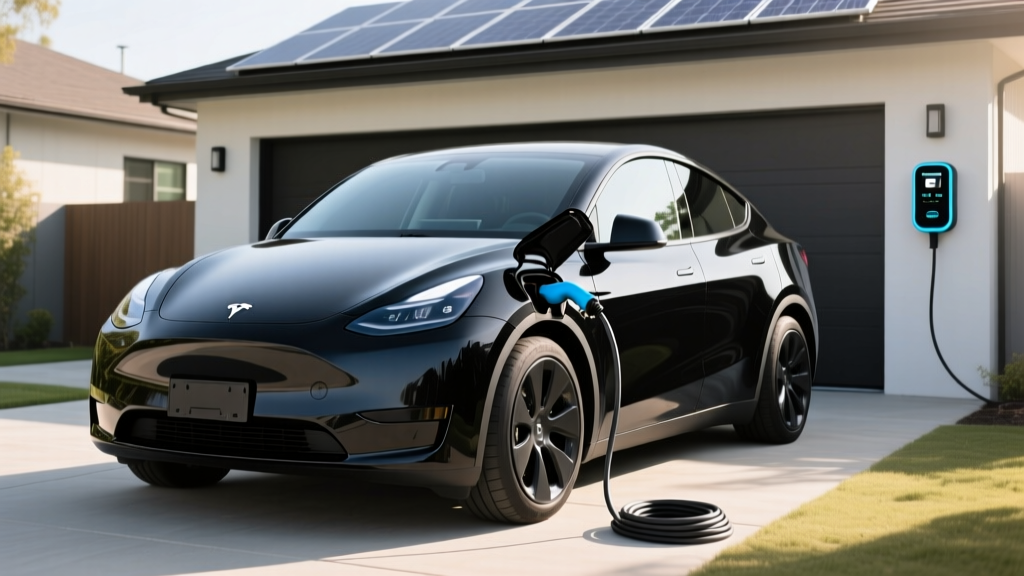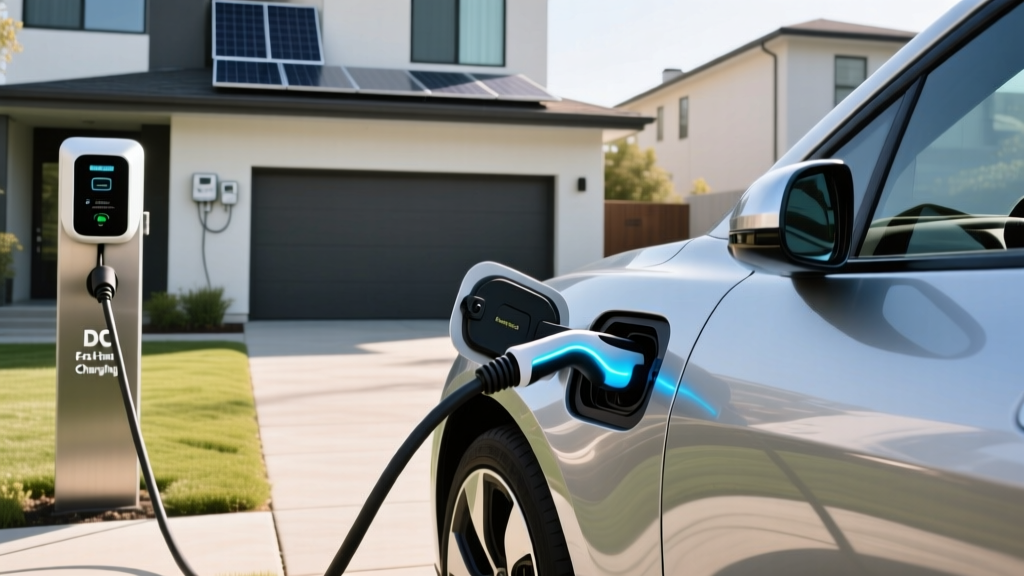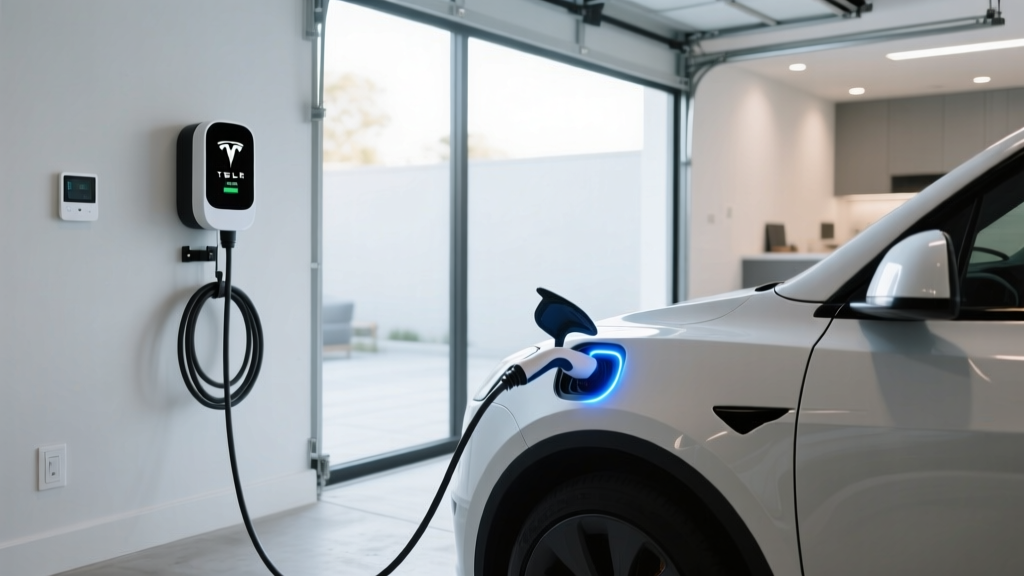
If you own or are considering a Tesla, charging at home is the single biggest quality-of-life upgrade you'll experience as an EV driver. The average Tesla owner does over 80% of their charging at home, waking up every morning to a full or near-full battery. But getting the right home charging setup involves real electrical decisions, real costs, and some terminology that trips up first-time EV buyers.
This guide breaks down exactly what's required for charging a Tesla at home — from the basic Level 1 cord that ships with the car to a hardwired Level 2 wall connector, the electrical panel capacity you'll need, and what you'll actually pay per mile compared to gasoline.
Charging Levels Explained: Speed, Power, and What Each Adds
Before you buy equipment or call an electrician, you need to understand the three charging levels. The critical distinction: kW (kilowatts) measures power — how fast energy flows into the battery. kWh (kilowatt-hours) measures energy — the total capacity of the battery. Think of kW as the flow rate of a hose and kWh as the size of the tank you're filling.
| Level | Voltage / Amps | Max Power (kW) | Miles of Range per Hour | Full Charge Time (75 kWh battery) | Best For |
|---|---|---|---|---|---|
| Level 1 (Standard outlet) | 120V / 12A | ~1.4 kW | 3–5 mi/hr | ~50–60 hours | Overnight top-ups, low daily mileage, PHEVs |
| Level 2 (240V dedicated circuit) | 240V / 32–48A | 7.7–11.5 kW | 25–44 mi/hr | ~7–10 hours | Daily home charging, full overnight replenishment |
| DC Fast Charging (Supercharger) | 400–800V DC | 150–250 kW | 170–200+ mi in 15 min | 10–80% in ~25–30 min | Road trips, rapid replenishment away from home |
For context, a Tesla Model 3 Long Range (2025) has a ~75 kWh usable battery and an EPA-rated range of 341 miles. If your daily commute is 40 miles round-trip, Level 1 can technically recover that overnight in about 10 hours — but you'll be running close to the edge on high-mileage days, and cold weather can reduce your effective range by 15–30%. Level 2 gives you real margin and flexibility.
How Much Does It Cost to Install a Home EV Charger?
The total cost of installing a Level 2 home charger for your Tesla breaks down into three components: the charger hardware, the electrician's labor and materials, and your local permit fee. The wide range in total cost comes down to one variable — whether your existing electrical panel can handle the new circuit.
| Component | Simple Install (Panel Has Capacity) | Complex Install (Panel Upgrade Needed) |
|---|---|---|
| Level 2 Charger (hardware) | $350–$650 | $350–$650 |
| Electrician labor + wiring (conduit, breaker, run) | $400–$1,000 | $800–$1,500 |
| Electrical panel upgrade (100A → 200A service) | $0 (not needed) | $1,500–$3,500 |
| Permit fee (municipal) | $50–$200 | $50–$200 |
| Total Estimated Cost | $800–$1,850 | $2,700–$5,850 |
When You'll Need a Panel Upgrade
Most homes built after the 1990s have a 200-amp electrical panel, which typically supports a 40A or 48A dedicated EV circuit alongside normal household loads. Older homes with 100-amp service — or homes already running high-draw appliances (electric range, dryer, HVAC, hot tub) — may not have the spare capacity. A licensed electrician will perform a load calculation per NEC Article 220 to determine if your panel can handle the added draw. If it can't, a panel upgrade to 200A or even 325A service becomes necessary, and that's where costs climb significantly.
Don't skip the permit. A permitted installation ensures your work is inspected and meets the National Electrical Code (NEC). Unpermitted work can void homeowner's insurance coverage if an electrical fire occurs, and it'll surface as a problem when you sell the home.
Electrical Requirements for Tesla Home Charging
Here's what your electrician needs to know about the circuit specifications for Tesla home charging:
- NEMA 14-50 outlet (240V / 50A circuit): Supports up to 40A continuous draw (NEC requires circuits be rated 125% above continuous load). This is the most common plug-in Level 2 setup. You'll need a 50A double-pole breaker and 6 AWG copper wire (or 4 AWG aluminum) for runs up to ~50 feet.
- Hardwired Wall Connector (240V / 60A circuit): The Tesla Gen 3 Wall Connector can be hardwired on a 60A circuit, delivering up to 48A continuous (11.5 kW). Hardwiring eliminates the outlet, which the NEC now requires GFCI protection for in many jurisdictions — a 50A GFCI breaker can add $100–$150 to your bill. Hardwired avoids this requirement in most areas.
- Dedicated circuit: Your EV charger must be on its own dedicated circuit — it cannot share with other outlets or appliances.
- Outdoor rating: If your charger is installed outside (carport, driveway), both the outlet and charger must be rated for outdoor/wet-location use (NEMA 3R or 4 enclosure rating).
Connector Compatibility: NACS, CCS, and Adapters
Tesla vehicles use the North American Charging Standard (NACS) connector — the smaller, lighter plug that has now been adopted by Ford, GM, Rivian, Volvo, Hyundai, and most major automakers for their 2025+ models. If you're charging a Tesla at home, every Tesla-branded charger is natively NACS — no adapter needed.
| Connector Type | Used By | Home Charger Availability | Adapter Needed for Tesla? |
|---|---|---|---|
| NACS (Tesla) | Tesla (all), Ford, GM, Rivian, Hyundai, Volvo (2025+) | Wide (Tesla, Emporia, ChargePoint, Wallbox) | No — native on all Teslas |
| CCS1 (J1772 + DC pins) | Most non-Tesla EVs pre-2025 | Wide (ChargePoint, Emporia, JuiceBox) | Yes — Tesla sells a CCS adapter (~$175); not needed for home Level 2 |
| CHAdeMO | Nissan Leaf, Mitsubishi (legacy) | Limited and declining | No adapter available for Tesla |
| J1772 (Level 2 AC) | All non-Tesla EVs (AC charging) | Wide | Tesla includes a J1772-to-NACS adapter with every vehicle |
For home Level 2 charging, the connector distinction matters less than you might think. All Level 2 home chargers deliver AC power, and the car's onboard charger converts it to DC for the battery. Tesla ships every vehicle with a J1772 adapter, so you can use a J1772-connector charger if needed. But the simplest, cleanest setup is a NACS-connector charger — plug it in directly, no adapter fumbling in the cold or rain.
Best Home Chargers for Tesla: Equipment Picks
These are the top Level 2 chargers compatible with Tesla's NACS connector as of 2025–2026, based on power output, build quality, smart features, and real-world reliability:
| Charger | Max Power | Max Amps | Cable Length | Smart Features | Price (MSRP) |
|---|---|---|---|---|---|
| Tesla Gen 3 Wall Connector | 11.5 kW | 48A (60A circuit) | 24 ft | Wi-Fi, OTA updates, load sharing, access control | $475 |
| Emporia Vue Smart EV Charger (NACS) | 11.5 kW | 48A (60A circuit) | 24 ft | Wi-Fi, energy monitoring, solar integration, scheduling | $399 |
| ChargePoint Home Flex (NACS version) | 12 kW | 50A (60A circuit) | 23 ft | Wi-Fi, app scheduling, Alexa, load management | $699 |
| Wallbox Pulsar Plus (NACS) | 11.5 kW | 48A (60A circuit) | 25 ft | Wi-Fi + Bluetooth, app control, Power Sharing, Eco-Smart | $599 |
Our pick for most Tesla owners: The Tesla Gen 3 Wall Connector. At $475, it delivers the maximum 48A / 11.5 kW your Tesla's onboard charger can accept, integrates seamlessly with the Tesla app, and supports load sharing if you want to install two units on a single circuit. The 24-foot cable reaches most garage and driveway configurations.
If you have solar panels and want to charge exclusively on excess solar production, the Emporia Vue Smart EV Charger offers native solar integration at $399 — a compelling value.
Note: Tesla's onboard charger in the Model 3 and Model Y accepts up to 11.5 kW (48A). Buying a charger rated above 48A (like the ChargePoint at 50A) won't charge your Tesla any faster — the car is the bottleneck, not the charger. However, it does future-proof for higher-capacity vehicles.
Cost to Charge a Tesla at Home vs. Gas
The economics of home charging are where EV ownership really pays off. Here's a realistic cost comparison using national averages:
| Scenario | Rate | Cost to Add 200 Miles | Cost Per Mile |
|---|---|---|---|
| Home charging (national avg. electricity) | $0.16/kWh | $8.40 (at 4.2 mi/kWh efficiency) | $0.042 |
| Home charging (off-peak / time-of-use rate) | $0.09/kWh | $4.73 | $0.024 |
| Home charging (California avg.) | $0.30/kWh | $15.75 | $0.079 |
| Tesla Supercharger (avg. public DC) | $0.35/kWh | $18.38 | $0.092 |
| Gasoline car (30 MPG combined) | $3.50/gallon | $23.33 | $0.117 |
| Gasoline car (25 MPG combined) | $3.50/gallon | $28.00 | $0.140 |
A Tesla Model 3 Long Range achieves approximately 4.2 miles per kWh (131 MPGe combined per the EPA). At the national average residential electricity rate of about $0.16/kWh, filling from 10% to 90% (~60 kWh, roughly 250 miles) costs about $9.60 at home. The equivalent gasoline fill-up for a 30 MPG car would cost roughly $29.
The key savings lever: Time-of-use (TOU) electricity plans. Many utilities offer off-peak rates between 10 PM and 6 AM that are 40–60% cheaper than peak rates. Schedule your Tesla to charge during these hours (built into the Tesla app's Scheduled Charging feature) and your per-mile cost drops to 2–3 cents. Over 15,000 miles of annual driving, that's a fuel savings of $1,200–$1,800 versus a 28 MPG gasoline car.
Charging Time Examples: What to Expect Overnight
Real-world charging times depend on your battery size, the circuit amperage, and the state of charge. Here are practical scenarios for popular Tesla models:
- Tesla Model 3 RWD (57.5 kWh battery, ~272 mi EPA): From 20% to 80% on a 48A / 11.5 kW Wall Connector takes roughly 3.5 hours. A full overnight charge (10% to 100%) takes about 5.5 hours — well within a single night.
- Tesla Model Y Long Range (75 kWh battery, ~320 mi EPA): 20% to 80% on 48A takes about 4.5 hours. Full overnight replenishment (10% to 100%) takes ~7 hours.
- Tesla Model S (100 kWh battery, ~402 mi EPA): 20% to 80% on 48A takes about 6 hours. If you arrive nearly empty (10%), plan for ~9 hours to reach full — still achievable overnight with a 48A circuit.
- Level 1 (120V / 12A) on any model: Expect roughly 3–5 miles of range per hour. A Model Y going from 20% to 80% would take approximately 4 days of continuous charging. Level 1 is viable only as an emergency backup or for very low daily mileage (<20 miles/day).
Do You Qualify for a Charger Tax Credit?
The federal Alternative Fuel Vehicle Refueling Property Credit (IRS Form 8911) covers 30% of home EV charger equipment and installation costs, up to a maximum of $1,000. However, there's a significant geographic restriction: the credit is only available for equipment installed in a census tract that qualifies as "low-income" or "non-urban" under the Inflation Reduction Act provisions.
Before counting on this credit, check your census tract eligibility on the IRS guidance page and confirm with a tax professional. Many suburban and urban homeowners will not qualify. Some states and utilities offer additional rebates for Level 2 charger installation — check your local utility's EV program page for specifics, as these vary widely by jurisdiction.
Frequently Asked Questions
Can I charge my Tesla with a regular 120V outlet?
Yes, using the Tesla Mobile Connector with the NEMA 5-15 adapter (included). However, Level 1 charging adds only 3–5 miles of range per hour (~1.4 kW). For a Model Y with a 75 kWh battery, a full charge would take over 50 hours. Level 1 is practical only as a backup or for drivers covering fewer than 20 miles daily.
Should I get a NEMA 14-50 outlet or hardwire my Tesla Wall Connector?
Hardwiring is generally preferred for new installations. It avoids the 2023 NEC GFCI breaker requirement for 240V receptacles (saving $100–$150 on a GFCI breaker and preventing nuisance trips), allows the full 48A continuous draw, and provides a cleaner, more permanent installation. A NEMA 14-50 outlet offers portability — you can take the charger with you if you move — but limits you to 40A continuous and requires the GFCI breaker in most jurisdictions.
Will charging a Tesla at home increase my electric bill significantly?
It depends on your rate structure and mileage. A driver covering 1,000 miles/month in a Model 3 Long Range (~4.2 mi/kWh) will use roughly 238 kWh/month for charging. At $0.16/kWh, that's about $38/month. If you're replacing a 28 MPG gas car at $3.50/gallon, you were spending ~$125/month on fuel — a net savings of ~$87/month even without off-peak rates.
Does Tesla's Mobile Connector work as a permanent home charger?
It can, but with limitations. The Tesla Mobile Connector on a NEMA 14-50 outlet delivers up to 32A (7.7 kW) — about 30% slower than a hardwired Wall Connector at 48A (11.5 kW). For moderate daily driving, 32A is sufficient. But if you frequently need fast overnight replenishment (large battery, high daily mileage, or cold-weather range loss), the Wall Connector's higher throughput is worth the investment.
How do I schedule my Tesla to charge during off-peak hours?
In the Tesla app or your car's touchscreen, navigate to Charging → Schedule. Set your desired departure time and enable "Off-Peak Hours" with your utility's specific off-peak window (e.g., 10 PM – 6 AM). The car will begin charging at the optimal time to reach your set charge limit by departure. You can also use your utility's smart thermostat or EV-specific rate plan to automate this further.
Can I install a Tesla charger myself?
Tesla strongly recommends using a licensed electrician, and most jurisdictions require a permit and inspection for new 240V circuits. DIY electrical work on a 50A or 60A circuit carries real fire risk if improperly sized wire, loose connections, or incorrect breaker ratings are used. A licensed electrician ensures code compliance, protects your home insurance coverage, and typically completes the job in 2–4 hours for a straightforward install.