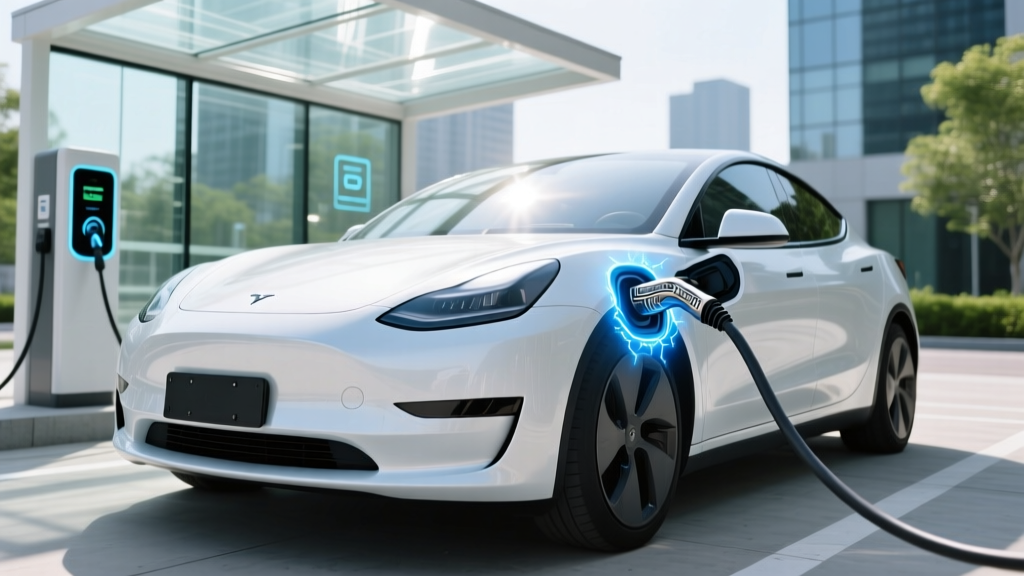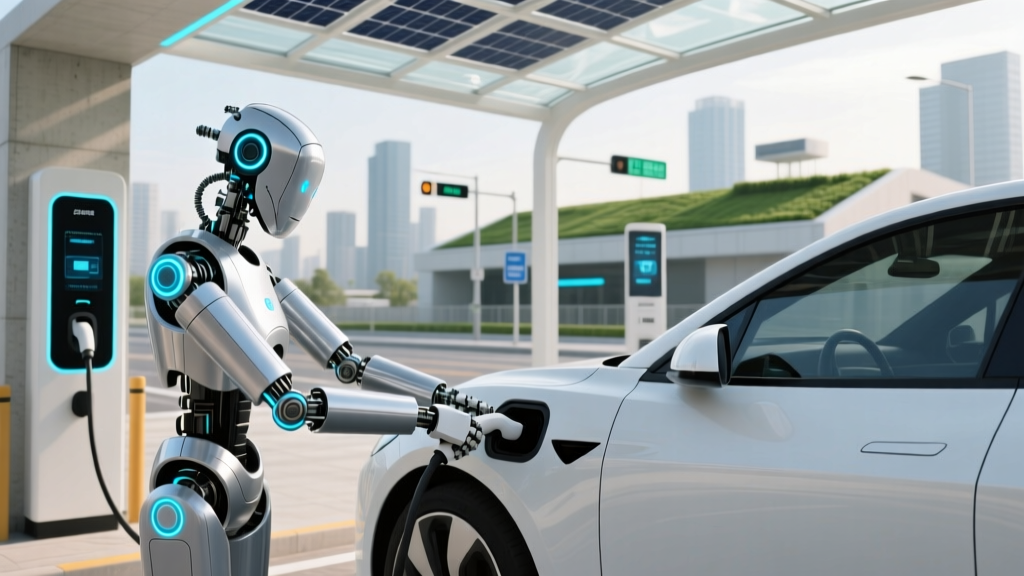
Walk into a cutting-edge EV depot in 2026 and you might see something that looks like science fiction: a robotic arm gliding out of a wall, locating your car's charge port via computer vision, and plugging itself in without you lifting a finger. The charging station robot — an autonomous or semi-autonomous system that physically connects a charging cable to an electric vehicle — has moved from auto-show concept to limited real-world deployment. But how do these systems actually work, where can you find them, and what do they mean for everyday EV owners still relying on home Level 2 and public DC fast chargers?
This guide covers the current state of robotic charging technology, then grounds you in the practical charging fundamentals every EV owner needs: charging levels and speeds, home installation costs, connector compatibility, and per-mile charging economics.
What Is a Charging Station Robot and Where Is It Deployed?
A charging station robot is an automated system — typically a articulated robotic arm or a mobile cart — that handles the physical connection between a charging cable and an EV's charge port. The goal: eliminate the need for a human to handle heavy DC fast-charging cables, enable accessibility for drivers with mobility limitations, and support fully driverless charging for autonomous fleet vehicles (robotaxis, delivery vans, autonomous trucks).
Several systems are active or in advanced pilot stages as of 2026:
- Tesla's Snake Charger / Robotic Arm: Originally teased as a concept, Tesla has deployed refined robotic charging arms at select Megacharger and Supercharger stations serving Semi trucks and Robotaxi fleet vehicles. The arm uses cameras and lidar to locate the NACS port and connect autonomously.
- Volkswagen Group (CARIAD) Charging Robot: VW demonstrated a mobile charging robot in underground garages that carries a battery pack to parked EVs. Pilot deployments exist in select European parking structures, with U.S. testing underway.
- Ziggy (EV Safe Charge): A mobile robotic charger that reserves a parking spot, rolls to the vehicle, and provides Level 2 or DC fast charging. Deployed in parking garages and fleet depots in California and Texas.
- Hyundai / Kia Robotic Charging: Hyundai demonstrated a robotic arm integrated into parking structures that communicates with the vehicle's AVP (Automated Valet Parking) system to park and charge without driver input.
Charging Levels Explained: Speeds, kW Ratings, and Miles Per Hour
Before evaluating any advanced charging technology, you need the fundamentals locked down. The single most important distinction in EV charging: kW (kilowatts) measures power — how fast energy flows — while kWh (kilowatt-hours) measures energy — how much the battery holds. Think of kW as the width of a hose and kWh as the size of the bucket.
| Level | Voltage / Amps | Power (kW) | Miles of Range Added Per Hour | Typical 10–80% Time (75 kWh Battery) | Best For |
|---|---|---|---|---|---|
| Level 1 | 120V / 12A | 1.4 kW | 3–5 mi/hr | ~40+ hours | Overnight trickle, PHEVs |
| Level 2 (Home/Public) | 240V / 32–48A | 7.7–11.5 kW | 25–44 mi/hr | ~7–9 hours | Daily home charging |
| DC Fast Charging | 400–800V DC | 50–350 kW | 150–1,000+ mi/hr (peak) | 18–45 minutes | Road trips, quick top-ups |
Real-world nuance: DC fast-charging speeds follow a charge curve — the peak kW rating only applies at low state of charge (typically 10–30% SoC). Above 80% SoC, charging slows dramatically to protect the battery. A station rated at 250 kW might deliver that peak for only 5–8 minutes before tapering to 100 kW, then 50 kW. Always look at 10–80% charge time, not peak kW, for a realistic comparison.
How Much Does It Cost to Install a Home EV Charger?
Home Level 2 charging is where 80%+ of all EV charging happens, according to fueleconomy.gov. A proper installation involves equipment, electrical work, permits, and — in older homes — a possible panel upgrade. Here's a realistic 2026 cost breakdown:
| Component | Low Estimate | High Estimate | Notes |
|---|---|---|---|
| Level 2 Charger (Equipment) | $300 | $750 | 32A–48A smart charger, NACS or J1772 |
| Electrician Labor | $400 | $1,500 | Depends on run length from panel to garage |
| Permit & Inspection | $50 | $250 | Required in most jurisdictions |
| Electrical Panel Upgrade (if needed) | $1,500 | $4,000 | 100A → 200A service; common in pre-2000 homes |
| Total (No Panel Upgrade) | $750 | $2,500 | Most homes with 200A service |
| Total (With Panel Upgrade) | $2,250 | $6,500 | Older homes, high-load panels |
Electrical Requirements for a Level 2 Home Charger
A 48-amp Level 2 charger requires a dedicated 60-amp, 240-volt circuit (the National Electrical Code requires circuits to be rated at 125% of the continuous load: 48A × 1.25 = 60A). Key requirements:
- Wire gauge: 6 AWG copper (THHN in conduit) for runs up to ~50 feet; 4 AWG for longer runs to minimize voltage drop.
- Breaker: 60A double-pole breaker in your main panel.
- GFCI protection: NEC 2023 and later require GFCI protection for EV charging outlets — your electrician will handle this via a GFCI breaker or the charger's internal protection.
- Outdoor rating: If your charger mounts outside, it must carry a NEMA 4 (weatherproof) rating. Most quality chargers (Wall Connector, ChargePoint Home Flex, Emporia) are NEMA 4 rated.
- Panel capacity check: Your electrician will perform a load calculation to ensure your panel can handle the additional 60A circuit alongside existing loads (HVAC, dryer, oven). Homes with 100A service almost always need an upgrade to 200A.
Which Connector Is Compatible with My EV?
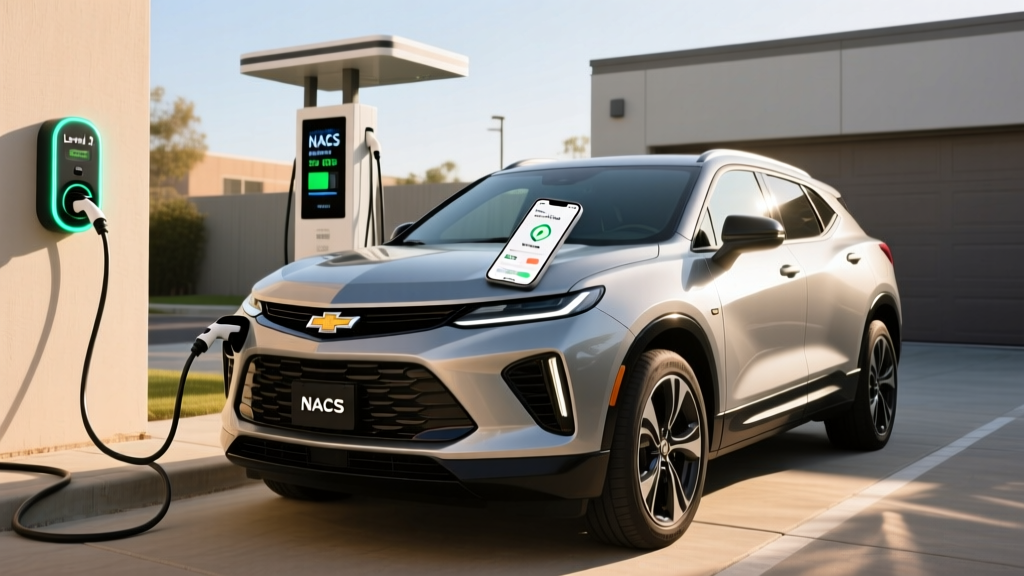
The connector landscape shifted dramatically in 2023–2025 when Ford, GM, Rivian, Volvo, and most major automakers adopted the North American Charging Standard (NACS), originally developed by Tesla. As of 2026, NACS is the dominant connector for new EVs sold in North America, though CCS1 vehicles remain on the road and at many public stations.
| Connector | Brands Using It (New Vehicles) | Public Network Access | Adapter Needed? |
|---|---|---|---|
| NACS (Tesla) | Tesla, Ford, GM, Rivian, Volvo, Polestar, Mercedes, BMW, Hyundai, Kia (2025+) | Tesla Supercharger (25,000+ stalls), Electrify America, EVgo (NACS rollout) | CCS1 → NACS adapter (~$150–$250) for CCS vehicles |
| CCS1 | Most 2023 and earlier EVs; some 2024 models pre-transition | Electrify America, EVgo, ChargePoint (legacy CCS stalls) | NACS → CCS1 adapter for NACS vehicles at CCS stations |
| CHAdeMO | Nissan Leaf (discontinued 2025), Mitsubishi Outlander PHEV (legacy) | Declining — some Electrify America and EVgo legacy stalls | Limited adapters available; CHAdeMO infrastructure shrinking |
For home charging: Level 2 chargers sold in 2026 come in NACS or J1772 (the legacy Level 2 connector, now largely superseded by NACS for new vehicles). If your EV has a NACS port, buy a NACS-equipped home charger. If your EV has a J1772 port, buy a J1772 charger or use a NACS-to-J1772 adapter. Most quality chargers now offer both connector options at purchase.
Charging Cost Per Mile: EV vs. Gas in 2026
One of the strongest economic arguments for EVs remains fuel cost savings — but the actual numbers depend heavily on where and when you charge. Here's a realistic comparison using national average electricity and gasoline prices as of early 2026:
| Scenario | Rate | Vehicle Efficiency | Cost Per Mile | Annual Cost (12,000 mi) |
|---|---|---|---|---|
| Home Off-Peak (Time-of-Use) | $0.10/kWh | 3.0 mi/kWh (100 MPGe avg) | $0.033 | $396 |
| Home Standard Rate | $0.16/kWh | 3.0 mi/kWh | $0.053 | $636 |
| Public Level 2 (ChargePoint, etc.) | $0.25/kWh | 3.0 mi/kWh | $0.083 | $996 |
| DC Fast Charging (EA, EVgo) | $0.42/kWh | 3.0 mi/kWh | $0.140 | $1,680 |
| Gasoline Vehicle (27 MPG avg) | $3.30/gallon | 27 MPG | $0.122 | $1,464 |
The takeaway: Home charging on an off-peak rate is roughly 4× cheaper per mile than gasoline. Even standard-rate home charging saves about $800/year over gas. However, exclusive DC fast charging at $0.42/kWh actually costs more per mile than gas — which is why home Level 2 access is the single biggest factor in EV ownership economics. According to the EPA, the average EV achieves 3–4 miles per kWh; highly efficient models like the Tesla Model 3 and Hyundai Ioniq 6 exceed 4 mi/kWh, while heavier SUVs like the Rivian R1S land around 2.5 mi/kWh.
Equipment Picks: Best Home Level 2 Chargers in 2026
Here are four proven Level 2 home chargers representing different priorities — all available in 2026 with NACS and/or J1772 connector options:
Tesla Wall Connector (Gen 4)
- Power: 11.5 kW (48A) on a 60A circuit
- Connector: NACS native
- Cable length: 24 feet
- Smart features: Wi-Fi, OTA updates, load sharing (pair two units on one circuit), Power-Share with solar
- Price: ~$475
- Best for: NACS-equipped EVs, Tesla ecosystem integration
ChargePoint Home Flex (2nd Gen)
- Power: Up to 12 kW (50A) on a 60A+ circuit; adjustable amperage via DIP switches
- Connector: NACS or J1772 (choose at purchase)
- Cable length: 23 feet
- Smart features: Wi-Fi, Alexa/Google Home integration, scheduling, energy tracking, flexible amperage for older panels
- Price: ~$599 (NACS) / ~$549 (J1772)
- Best for: Multi-EV households, adjustable amperage for panel-constrained homes
Emporia Vue EV Charger
- Power: 11.5 kW (48A) on a 60A circuit
- Connector: NACS or J1772
- Cable length: 24 feet
- Smart features: Integrates with Emporia Vue whole-home energy monitor, solar-aware scheduling, load management, detailed cost tracking
- Price: ~$399
- Best for: Budget-conscious buyers, solar households, energy monitoring enthusiasts
Enel X JuiceBox Pro (48A)
- Power: 11.5 kW (48A) on a 60A circuit
- Connector: J1772 (NACS adapter available)
- Cable length: 25 feet
- Smart features: Wi-Fi, app scheduling, utility demand-response programs, energy usage reports
- Price: ~$549
- Best for: Utility rebate eligibility (many utilities offer $200–$500 rebates for JuiceBox)
How Robotic Charging Could Reshape Public and Fleet Charging
The charging station robot isn't replacing your home Wall Connector — it's solving a different problem. Here's where autonomous charging adds value:
- Autonomous fleet operations: Robotaxis (Waymo, Zoox) and autonomous delivery vehicles cannot plug themselves in with human-style arms. Robotic chargers enable 24/7 autonomous charging without fleet attendants, reducing operational costs by an estimated 30–40% per vehicle.
- Accessibility: DC fast-charging cables at 350 kW stations are heavy (15–25 lbs) and stiff, especially in cold weather. Robotic arms eliminate the physical effort required, benefiting elderly drivers and those with disabilities.
- Dense urban parking: Mobile robots like Ziggy can bring charging to any parking spot, eliminating the need to wire every individual space. A garage with 500 spots might need only 20 mobile robots instead of 500 fixed chargers.
- Valet-integrated charging: Hyundai's AVP + robotic charger combo allows a vehicle to self-park and self-charge in a structured garage — the driver exits at the entrance and the car handles the rest.
For passenger EV owners in 2026, robotic charging is a glimpse of the future, not a current necessity. The practical priority remains: install a quality Level 2 home charger, understand your vehicle's DC fast-charging curve, and plan road trips around reliable networks (Tesla Supercharger, Electrify America, EVgo).
Safety, Code Compliance, and Installation Best Practices
EV charging places a continuous high-amperage load on your home's electrical system for 6–10 hours at a time. Proper installation isn't optional — it's critical for fire safety and insurance coverage. Key requirements per the National Electrical Code (NEC):
- Dedicated circuit: Your Level 2 charger must have its own dedicated breaker — it cannot share a circuit with other appliances.
- GFCI protection: Required for all EV charging receptacles (NEC Article 625). Many modern chargers include internal GFCI protection, which may eliminate the need for a GFCI breaker.
- NEMA 4 rating (outdoor): Any charger mounted outdoors must be rated for weather exposure. Look for NEMA 4 or IP65 ratings.
- Proper wire sizing: Undersized wire causes voltage drop and heat buildup. Your electrician will size wire per NEC Table 310.16 based on circuit amperage and run length.
- Permit and inspection: Most jurisdictions require an electrical permit for EV charger installation. Skipping the permit can void homeowner's insurance claims related to electrical fires and may cause issues at home sale.
- Hardwired vs. plug-in: Hardwired installations (no plug) are generally preferred for 48A+ chargers because they avoid NEMA 14-50 receptacle overheating risks. If you choose plug-in for portability, use a commercial-grade receptacle (Hubbell, Bryant) — not a residential-grade one from a big-box store.
Frequently Asked Questions
How much does it cost to install a home EV charger?
A typical Level 2 home charger installation costs $750–$2,500 if your electrical panel has capacity (200A service with spare breaker slots). If you need a panel upgrade from 100A to 200A, add $1,500–$4,000, bringing the total to $2,250–$6,500. The charger unit itself costs $300–$750; electrician labor is $400–$1,500 depending on the wire run distance from panel to charger location.
How fast will each charging level add range?
Level 1 (120V, 1.4 kW) adds 3–5 miles per hour — adequate for PHEVs with small batteries but impractical for full EVs. Level 2 (240V, 7.7–11.5 kW) adds 25–44 miles per hour, fully replenishing most EVs overnight in 7–10 hours. DC fast charging (50–350 kW) can add 150–1,000+ miles per hour at peak, delivering a 10–80% charge in 18–45 minutes depending on battery size and vehicle charge curve.
Which connector/charger is compatible with my EV?
For 2025–2026 model-year EVs from Tesla, Ford, GM, Rivian, Hyundai, Kia, BMW, and Mercedes, the connector is NACS. For 2023 and earlier models from most non-Tesla brands, the connector is CCS1. The Nissan Leaf (now discontinued) used CHAdeMO. Check your vehicle's charge port or owner's manual. For home charging, match your charger's connector to your car's port — or use a quality adapter ($150–$250).
How much does charging cost per mile vs. gas?
Home charging on an off-peak rate ($0.10/kWh) costs approximately $0.033/mile for an average EV. Standard home rates ($0.16/kWh) yield about $0.053/mile. A comparable gasoline vehicle at 27 MPG and $3.30/gallon costs $0.122/mile. Home charging saves $600–$1,000 annually. However, exclusive DC fast charging ($0.42/kWh) costs $0.140/mile — actually more than gas. Home Level 2 access is essential for EV cost savings.
What electrical upgrades might I need?
The most common upgrade is a panel capacity increase from 100A to 200A service, needed in many homes built before 2000. Your electrician will perform a load calculation (NEC Article 220) to determine if your current panel can support a 60A dedicated circuit alongside existing loads. Other potential upgrades include adding a sub-panel (if the main panel is full), replacing an old Federal Pacific or Zinsco panel (known fire hazards), or upgrading the service drop from the utility. Budget $1,500–$4,000 for a panel upgrade if needed.
Are charging station robots available for home use?
Not as of 2026. Robotic charging systems from Tesla, VW/CARIAD, Ziggy, and Hyundai are deployed in fleet depots, structured parking facilities, and pilot programs — not residential garages. The cost (estimated $20,000–$50,000+ per unit) and infrastructure requirements make them impractical for home use. For residential charging, a wall-mounted Level 2 charger at $300–$750 remains the standard solution.
Does the federal tax credit apply to home charger installation?
The IRS §30C Alternative Fuel Vehicle Refueling Property Credit covers up to 30% of home charger equipment and installation costs, capped at $1,000. However, eligibility depends on your home being located in a qualifying census tract (generally low-income or non-urban areas). Check the IRS guidelines and consult a tax professional — eligibility rules are specific and subject to change. This is separate from the §30D vehicle purchase credit.