The Bottleneck: Why Your Charging Rate Is Limited by the Charging Station
You plug your 2026 Hyundai Ioniq 5 into a 50 kW DC fast charger and watch the power meter climb to... 48 kW. Your car supports 240 kW peak charging, yet you're getting a fifth of that. The culprit isn't your battery, your thermal management system, or a software glitch — your charging rate is limited by the charging station itself. This is the single most misunderstood dynamic in EV ownership, and it affects everything from road-trip planning to home charger selection.
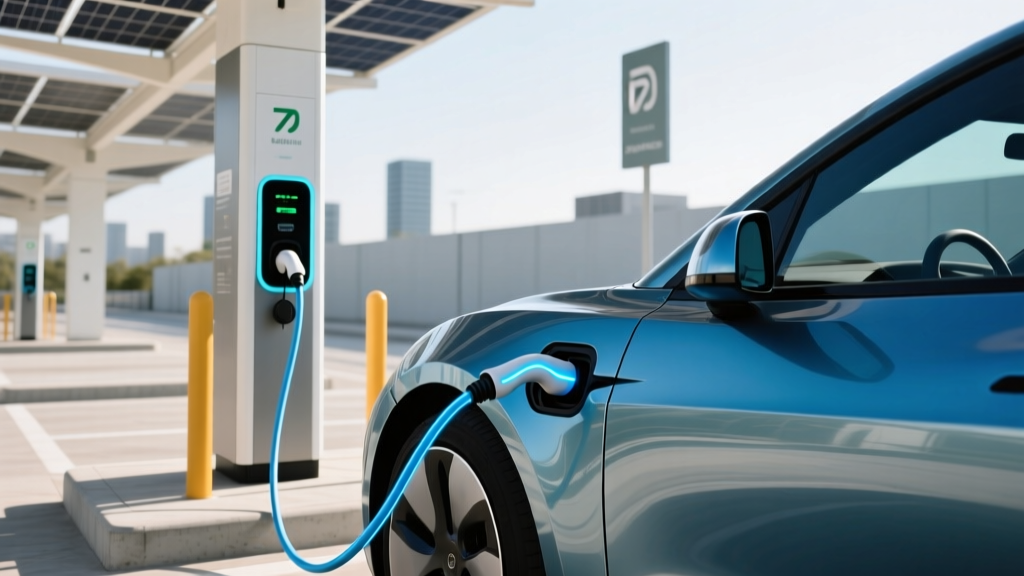
Every EV charging session is governed by a handshake between two systems: the vehicle's onboard charger (for AC) or battery management system (for DC), and the station's maximum power output. The session will never exceed the lower of the two limits. A Tesla Model Y capable of 250 kW DC charging will peak at exactly 150 kW on a 150 kW Electrify America stall. A Ford F-150 Lightning with an 80-amp onboard charger will pull only 48 amps from a 40-amp Level 2 wall connector.
This guide breaks down every charging tier, the real cost of home installation, connector compatibility across the 2026 landscape, and what you actually pay per mile — so you stop leaving range and money on the table.
Charging Levels Explained: kW, Miles Per Hour, and Real-World Times
Before comparing stations, we need to separate kW (kilowatts), the unit of power or flow rate, from kWh (kilowatt-hours), the unit of energy or total capacity. Think of kW as the width of a pipe and kWh as the size of the bucket. A wider pipe (higher kW) fills the bucket faster, but the bucket size (your battery's kWh capacity) determines how much energy you can store.
| Level | Voltage / Amperage | Max Power (kW) | Miles of Range Per Hour | Typical Use Case |
|---|---|---|---|---|
| Level 1 (120V) | 120V / 12A | 1.4 kW | 3–5 mi/hr | Overnight top-up, PHEVs, low-mileage drivers |
| Level 2 (240V) | 240V / 32A–48A | 7.7–11.5 kW | 20–44 mi/hr | Home daily charging, workplace, hotels |
| DC Fast (Level 3) | 400V–800V DC | 50–350 kW | 150–1,200+ mi/hr | Road trips, highway corridors, fleet depots |
Real Charging Time Examples: 10% to 80% State of Charge
Most EV owners charge between 10% and 80% State of Charge (SoC) on DC fast chargers because charging slows dramatically above 80% to protect the battery. Here's what that looks like for common 2026 battery sizes:
- 77 kWh battery (e.g., VW ID.4, Kia EV6 base): On a 350 kW station with a vehicle capable of 240 kW peak — expect 10–80% in roughly 18–22 minutes. On a 50 kW station — that same session takes 75–85 minutes.
- 84 kWh battery (e.g., Ford Mustang Mach-E Extended Range): At 150 kW peak on a matching station — 10–80% in about 28–32 minutes. Capped at a 50 kW station — approximately 90 minutes.
- 100 kWh battery (e.g., Rivian R1T Dual-Motor Max): On a 200 kW-capable station — 10–80% in roughly 35–40 minutes. On a 50 kW CHAdeMO station — over two hours.
The takeaway: the station's kW ceiling is often the dominant variable, not your car's capability. Always check station power output before planning a road-trip stop.
Home Charger Installation: Electrical Requirements and Real Costs
Installing a Level 2 home charger is the single highest-impact upgrade an EV owner can make. But costs vary enormously depending on your electrical panel, the distance from panel to charger location, and local permit requirements.
Electrical Requirements
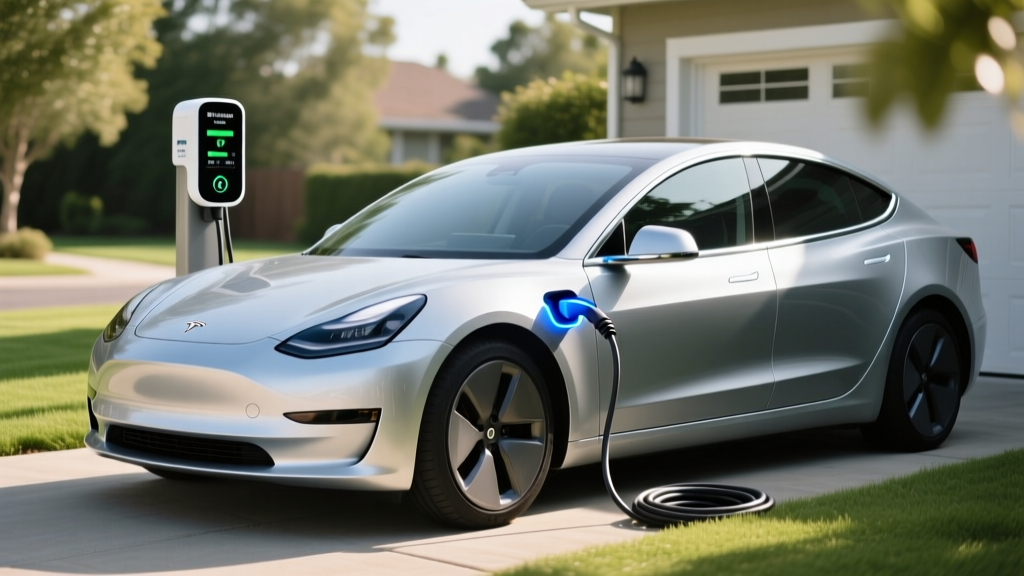
A typical Level 2 home charger runs on a 240-volt dedicated circuit, identical to what a clothes dryer or electric range uses. Common configurations:
- 32-amp circuit (40-amp breaker): Delivers 7.7 kW. Sufficient for most EVs with overnight charging.
- 40-amp circuit (50-amp breaker): Delivers 9.6 kW. The sweet spot for most homes — charges a 77 kWh battery from empty to full in roughly 8–9 hours.
- 48-amp circuit (60-amp breaker): Delivers 11.5 kW. Requires thicker wire (6 AWG copper) and a panel with adequate capacity. Ideal for large-battery EVs like the F-150 Lightning (131 kWh Extended Range).
National Electrical Code (NEC) requires that continuous loads (like EV charging, which runs for 3+ hours) not exceed 80% of the circuit breaker rating. That's why a 40-amp breaker supports only 32 amps of continuous draw.
Panel Upgrade: The Hidden Cost
Homes built before 2000 often have 100-amp or 150-amp main service panels. Adding a 40- or 60-amp EV circuit may push total load beyond the panel's capacity, requiring an upgrade to 200-amp service. This is the single biggest variable in installation cost and one that many online guides undercount.
| Component | Simple Install (Panel Adjacent) | Standard Install (50–100 ft Run) | Complex Install (Panel Upgrade + Long Run) |
|---|---|---|---|
| Level 2 Charger (Equipment) | $350–$700 | $350–$700 | $350–$700 |
| Electrical Permit | $50–$150 | $50–$200 | $50–$200 |
| Electrician Labor (2–4 hrs) | $300–$600 | $600–$1,500 | $1,500–$3,000 |
| Wire, Conduit, Breaker | $50–$150 | $200–$600 | $400–$1,200 |
| Panel Upgrade (if needed) | $0 | $0 | $1,500–$3,500 |
| Total Estimated Cost | $750–$1,600 | $1,200–$3,000 | $3,800–$8,600 |
The IRS §30D tax credit does not cover home charger installation as of 2026 (the §30C Alternative Fuel Infrastructure credit expired for residential use, though commercial installations may still qualify). Some utilities and states offer rebates — check your local provider and the Alternative Fuels Data Center for current incentive databases.
Connector Compatibility: NACS, CCS1, and CHAdeMO in 2026
The North American charging connector landscape has consolidated significantly since 2024, but legacy connectors remain on the road and at older stations. Here's what fits what:
| Connector | Brands Using It (Native) | Adapter Needed? | Network Access |
|---|---|---|---|
| NACS (Tesla / SAE J3400) | Tesla, Ford, GM, Rivian, Volvo, Polestar, Mercedes-Benz (2025+), Honda (2025+), BMW (2025+) | CCS1-to-NACS adapter for older CCS stations | Tesla Superchargers, Electrify America, EVgo, ChargePoint (NACS stalls) |
| CCS1 (Combo) | Hyundai, Kia, VW, Subaru, remaining Stellantis models | NACS-to-CCS1 adapter for Tesla Superchargers | Electrify America, EVgo, ChargePoint, some Tesla Superchargers (with adapter) |
| CHAdeMO | Nissan Leaf (legacy), Mitsubishi Outlander PHEV (legacy) | No practical adapter to NACS/CCS | Declining network — mostly older Electrify America and independent stations |
If you drive a 2026 Ford, GM, or Rivian with a native NACS port, you can access Tesla Superchargers directly — a massive advantage given Tesla's network of 30,000+ stalls globally. If you drive a Hyundai Ioniq 5 or Kia EV6 with CCS1, you'll need a NACS-to-CCS adapter (roughly $200–$250) to use Superchargers. Purchase one from your automaker or a certified third party like Lectron or A2Z.
Cost Per Mile: Home Charging vs. Public DC Fast vs. Gas
The economics of EV charging depend almost entirely on where you charge. The same vehicle can cost 3¢ per mile at home on off-peak rates or 18¢ per mile at a highway DC fast charger.
| Scenario | Rate ($/kWh) | Vehicle Efficiency (kWh/100 mi) | Cost Per Mile | Annual Cost (12,000 mi) |
|---|---|---|---|---|
| Home Level 2 (Off-Peak Utility Rate) | $0.08–$0.14 | 30 kWh/100 mi | $0.024–$0.042 | $288–$504 |
| Home Level 2 (Standard Rate) | $0.14–$0.20 | 30 kWh/100 mi | $0.042–$0.060 | $504–$720 |
| Public Level 2 (Workplace / Retail) | $0.20–$0.35 | 30 kWh/100 mi | $0.060–$0.105 | $720–$1,260 |
| DC Fast Charging (Highway) | $0.35–$0.60 | 30 kWh/100 mi | $0.105–$0.180 | $1,260–$2,160 |
| Gasoline (28 MPG Combined, $3.40/gal) | — | — | $0.121 | $1,457 |
Home charging on an off-peak or time-of-use (TOU) rate plan is the clear economic winner. According to fueleconomy.gov, the average 2026 EV achieves 3.0–3.5 miles per kWh (roughly 29–33 kWh per 100 miles). At $0.12/kWh, that's approximately $0.036 per mile — roughly 70% cheaper than a 28 MPG gas car at $3.40 per gallon.
However, if you rely exclusively on DC fast charging at highway rates ($0.48/kWh is common at Electrify America and Tesla Superchargers in 2026), your per-mile cost can exceed gasoline. This is why home charging access remains the most critical factor in EV ownership economics.
Equipment Picks: 2026 Home Level 2 Chargers Compared
Not all Level 2 chargers are equal. The right unit depends on your car's onboard charger limit, your panel capacity, and whether you want smart scheduling to exploit off-peak rates.
Tesla Wall Connector (Gen 4)
- Power Output: 11.5 kW (48A)
- Connector: NACS (native), CCS1 adapter included
- Cable Length: 24 ft
- Smart Features: Wi-Fi, OTA updates, load sharing (pair two units on one circuit), Powerwall integration
- Price: ~$475
- Best For: Tesla, Ford, GM, Rivian owners with NACS ports
ChargePoint Home Flex (2nd Gen)
- Power Output: Up to 12 kW (50A adjustable)
- Connector: J1772 (CCS1 compatible); NACS adapter available
- Cable Length: 23 ft
- Smart Features: Wi-Fi, Alexa integration, TOU scheduling, energy tracking via app
- Price: ~$599
- Best For: Hyundai, Kia, VW owners who want app-based scheduling
Emporia Vue Smart Charger
- Power Output: Up to 11.5 kW (48A)
- Connector: J1772 (NACS adapter available)
- Cable Length: 24 ft
- Smart Features: Integrates with Emporia Vue energy monitor for whole-home load management, solar-aware charging
- Price: ~$399
- Best For: Budget-conscious buyers, homes with solar panels
Grizzl-E Smart (United Chargers)
- Power Output: Up to 10 kW (40A adjustable)
- Connector: J1772 (NACS adapter sold separately)
- Cable Length: 24 ft
- Smart Features: OCPP-compatible, adjustable amperage via DIP switches, built for extreme cold (-40°F rated)
- Price: ~$549
- Best For: Cold-climate garages, outdoor installations, no-frills reliability
A critical reminder: your car's onboard charger caps AC Level 2 speed regardless of the station's output. The 2026 Chevrolet Equinox EV has an 11.5 kW onboard charger, so it can fully utilize a 48A station. The 2026 Nissan Ariya has a 7.2 kW onboard charger, meaning even a 48A (11.5 kW) station will deliver only 7.2 kW to the battery. Always match the charger to your vehicle's AC acceptance rate to avoid overpaying for capacity you can't use.
Safety, Electrical Code, and Installation Best Practices
EV charging is a high-draw, continuous electrical load — it demands proper installation to avoid fire risk, breaker trips, or insurance complications.
- Dedicated circuit: Your Level 2 charger must have its own dedicated breaker — never share a circuit with other appliances.
- GFCI protection: NEC 2020 and later require Ground Fault Circuit Interrupter (GFCI) protection for all outdoor receptacles and many indoor EV installations. Some chargers (like the ChargePoint Home Flex) have built-in GFCI; if yours doesn't, your electrician must install a GFCI breaker.
- Outdoor rating: If mounting outdoors, confirm the charger carries a NEMA 4 or IP65 weatherproof rating. The Grizzl-E and Tesla Wall Connector are both outdoor-rated.
- Permit and inspection: Most jurisdictions require an electrical permit for a new 240V circuit. Skipping the permit can void your homeowner's insurance coverage for any related electrical fire. Budget $50–$200 for the permit and expect a city/county inspection after installation.
- Load calculation: A licensed electrician should perform a NEC Article 220 load calculation before installation to confirm your panel can handle the new circuit. If your panel is near capacity, a smart load management device (like the Emporia Smart Load Center or Tesla Gateway) can dynamically reduce charger amperage when other appliances are running — avoiding a costly panel upgrade.
Frequently Asked Questions
How much does it cost to install a home EV charger?
A straightforward Level 2 installation (panel within 20 feet, no upgrade needed) typically costs $750–$1,600 including equipment, permit, and electrician labor. A standard install with a 50–100 foot wire run averages $1,200–$3,000. If your home needs a panel upgrade from 100A to 200A service, expect $3,800–$8,600 total. Always get at least two quotes from licensed electricians.
How fast will each charging level add range?
Level 1 (120V) adds 3–5 miles per hour — suitable for PHEVs or drivers covering under 30 miles daily. Level 2 (240V) adds 20–44 miles per hour depending on amperage (32A to 48A) and your vehicle's efficiency. DC fast charging adds 150–1,200+ miles per hour at peak power, but sessions are typically measured in minutes (10–80% in 18–40 minutes depending on station kW and battery size).
Which connector or charger is compatible with my EV?
For 2026 models: Tesla, Ford, GM, Rivian, Volvo, Polestar, Honda, and BMW use the NACS (J3400) connector natively. Hyundai, Kia, VW, and Subaru still use CCS1. The Nissan Leaf uses CHAdeMO (legacy). Check your vehicle's charge port or owner's manual. For home Level 2 charging, all non-Tesla EVs use the J1772 connector (which plugs into the CCS1 or NACS AC inlet). Tesla includes a J1772 adapter with every vehicle.
How much does charging cost per mile vs. gas?
At the 2026 US average residential electricity rate of roughly $0.16/kWh and an EV efficiency of 30 kWh/100 miles, home charging costs about $0.048 per mile — roughly 60% less than a 28 MPG gas vehicle at $3.40/gallon ($0.121/mile). Off-peak utility rates ($0.08–$0.10/kWh) can drop EV cost to $0.024–$0.030 per mile. However, exclusive DC fast charging at $0.48/kWh pushes cost to $0.144/mile — more than gasoline.
What electrical upgrades might I need?
The most common upgrades are: (1) adding a 240V dedicated circuit with a new breaker, which is standard for any Level 2 install; (2) upgrading wire gauge for long runs (over 50 feet may require 6 AWG instead of 8 AWG copper); (3) a full panel upgrade from 100A or 150A to 200A service if your existing panel lacks capacity. Homes with solar panels or heat pumps may also need a smart load management system to avoid simultaneous high-draw conflicts.
Why does my car charge slower than its rated peak kW?
Three factors limit real-world charging speed: (1) the station's maximum output (a 150 kW station caps any vehicle at 150 kW regardless of the car's capability); (2) the charging curve — batteries accept peak power only between roughly 10–50% SoC, then taper significantly above 80% to prevent lithium plating and heat damage; (3) battery temperature — cold batteries (below 50°F) charge much slower until preconditioned. Always precondition your battery via the vehicle's navigation system before arriving at a DC fast charger.