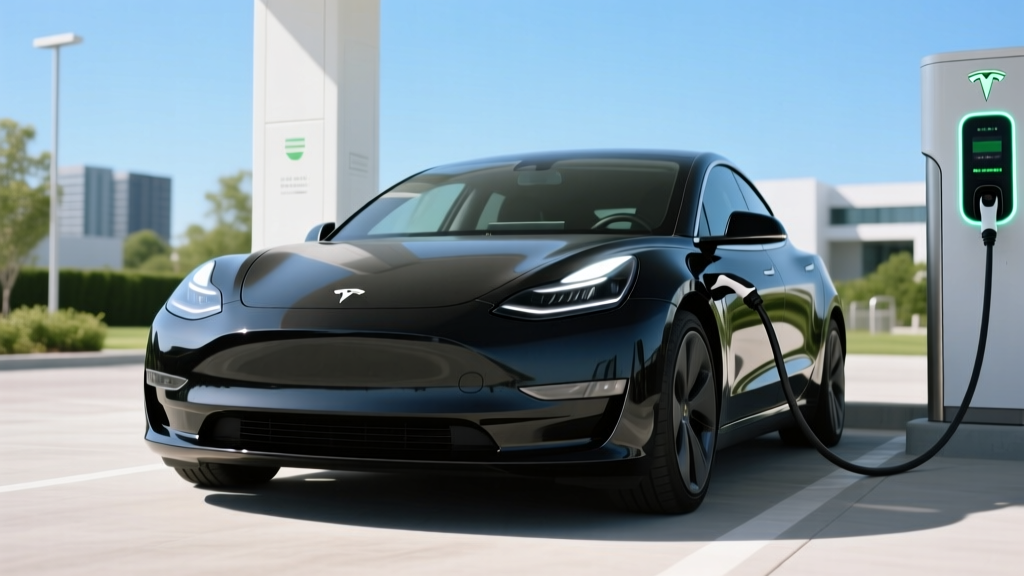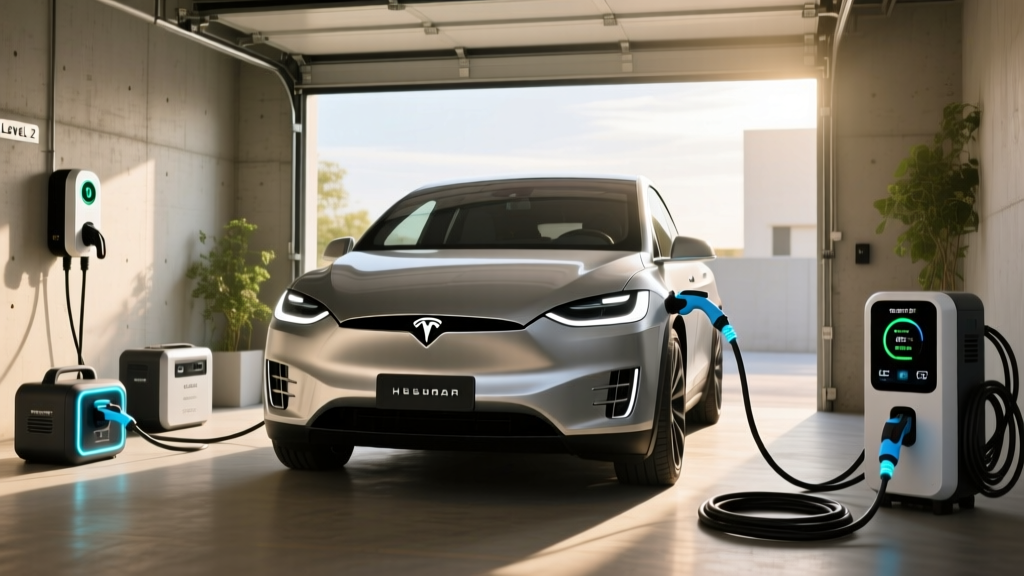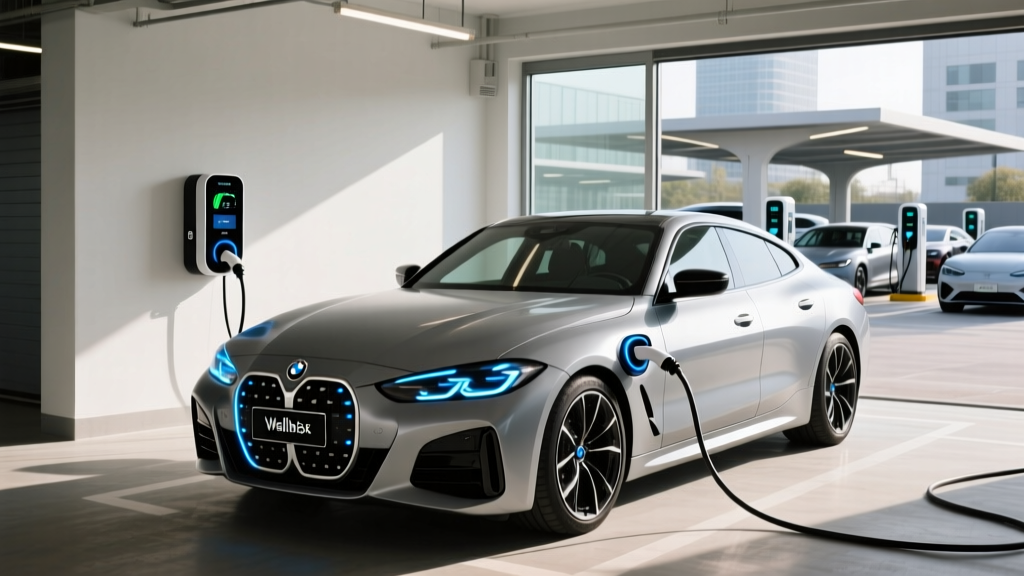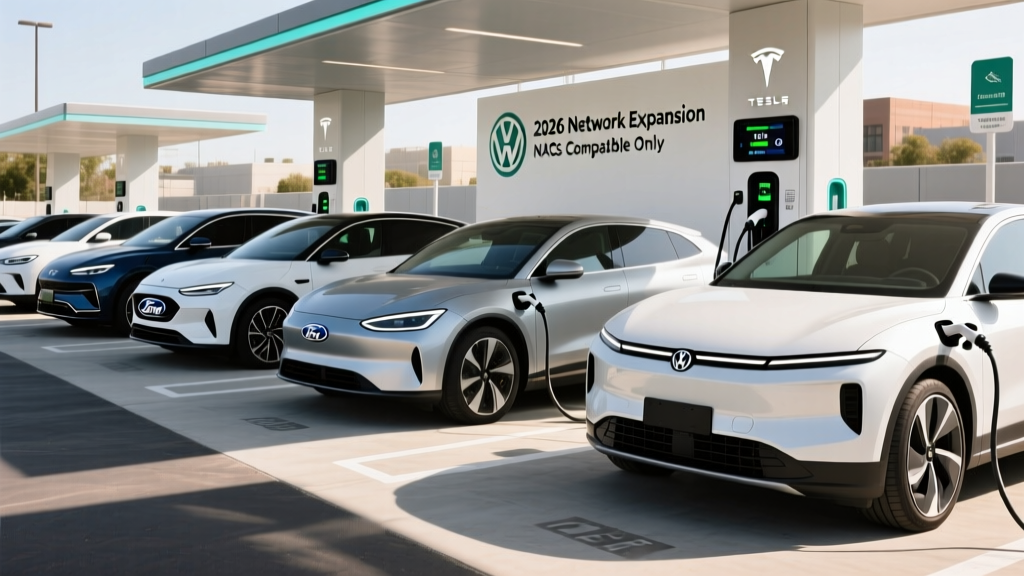
The Tesla Supercharger network — long the gold standard for DC fast charging reliability — is now open to nearly every electric vehicle on the road. If you own a Ford F-150 Lightning, Hyundai Ioniq 5, Chevrolet Equinox EV, or any other non-Tesla EV, you can access thousands of Supercharger stalls across North America. But the logistics of charging non-Tesla EVs at Superchargers involve connector compatibility, adapter requirements, varying charge speeds, and some real-world quirks that the marketing materials gloss over.
This guide breaks down exactly how it works in 2026: which adapters you need, what speeds to expect, what it costs, and how Supercharger access compares to home charging and other public networks.
How Non-Tesla EVs Connect to Superchargers
Tesla uses the North American Charging Standard (NACS) connector on all its vehicles and Superchargers. Until recently, every other automaker used either CCS1 (most brands) or CHAdeMO (Nissan). That changed starting in 2024, when Ford, GM, Rivian, and others began shipping vehicles with native NACS ports. By 2026, NACS is effectively the universal DC fast-charging connector in North America.
Here's where your vehicle falls:
| Vehicle Brand / Model | Native Port | Supercharger Access | Adapter Needed? |
|---|---|---|---|
| Tesla (all models) | NACS | Full network | No |
| Ford (F-150 Lightning, Mustang Mach-E 2025+) | NACS | Full network | No |
| GM (Equinox EV, Blazer EV, Silverado EV, Cadillac Lyriq 2025+) | NACS | Full network | No |
| Rivian (R1T, R1S 2025+) | NACS | Full network | No |
| Hyundai / Kia (Ioniq 5, EV6, EV9 2026 models) | NACS (2026 models); CCS1 (2024-2025) | Full network | Yes (CCS1-to-NACS adapter) for pre-2026 models |
| Volkswagen (ID.4) | CCS1 (transitioning to NACS) | Full network | Yes (CCS1-to-NACS adapter) |
| BMW (i4, iX, i5) | CCS1 | Full network | Yes (CCS1-to-NACS adapter) |
| Nissan (Leaf, Ariya) | CHAdeMO (Leaf) / CCS1 (Ariya) | Limited / adapter-dependent | Yes (CHAdeMO-to-NACS adapter for Leaf) |
| Volvo / Polestar | CCS1 (transitioning NACS) | Full network | Yes for CCS1-equipped models |
Key takeaway: If your EV has a native NACS port (most 2025-2026 models from Ford, GM, Rivian, and newer Hyundai/Kia), you plug directly into any Supercharger stall. If you have a CCS1 port, you need a CCS1-to-NACS adapter. Tesla sells an official adapter, and several automakers provide them complimentary or as dealer accessories.
Tesla's Magic Dock: Adapter-Free Charging at Select Stalls
Before native NACS adoption spread, Tesla deployed its "Magic Dock" — a built-in CCS1 adapter integrated into select Supercharger stalls. These stalls allow CCS1-equipped vehicles to charge without carrying a separate adapter. As of early 2026, Magic Dock stalls exist at roughly 100+ Supercharger stations, primarily in urban areas and along major corridors.
To find Magic Dock-enabled stalls, use the Tesla app or in-car navigation and filter for "Open to Non-Tesla EVs." Stations with Magic Dock will show a CCS1 icon alongside the standard NACS connector.
- Not available at all Supercharger stations — only select urban and corridor locations
- Charge speed may be capped at 150 kW at older Magic Dock stalls, even if your vehicle supports higher rates
- The built-in adapter cable is short (~3 feet), so you may need to park precisely or awkwardly depending on your charge port location
- CCS1 vehicles using Magic Dock cannot access V4 Supercharger stalls at full speed without a personal adapter
Charging Speeds: What to Expect at Supercharger Stalls
Not all Supercharger stalls deliver the same power. Tesla's network spans multiple generations, and your actual charge speed depends on the stall type, your vehicle's peak charge rate, battery temperature, and state of charge (SoC).
| Stall Type | Peak Power (kW) | Miles Added per 15 Min* | Typical 10-80% Time* |
|---|---|---|---|
| V2 Supercharger | 150 kW | ~60-80 mi | 35-45 min |
| V3 Supercharger | 250 kW | ~85-120 mi | 20-30 min |
| V4 Supercharger | 350 kW (cabinet); ~250 kW typical to non-Tesla | ~100-140 mi | 18-28 min |
*Estimates based on a ~75-85 kWh battery (e.g., Ford F-150 Lightning Extended Range, Hyundai Ioniq 5). Actual times vary by vehicle charge acceptance, battery temperature, and SoC taper above 80%.
Real-world nuance: Peak kW is not sustained kW. A Hyundai Ioniq 5 with an 800V architecture can accept up to 240 kW at a V3 stall, but only for a portion of the session. The charge curve tapers significantly above 50-60% SoC, and especially above 80%. Plan to charge to 80% on road trips and move on — the last 20% can take as long as the first 70%.
For context, here's how all three charging levels compare across the broader EV ecosystem:
| Level | Power Source | Typical kW | Miles of Range per Hour | Best For |
|---|---|---|---|---|
| Level 1 | 120V household outlet | 1.0-1.4 kW | 3-5 mi/hr | Overnight top-ups, PHEVs |
| Level 2 | 240V (home or public) | 3.3-19.2 kW | 12-65 mi/hr | Daily home charging, workplace |
| DC Fast (incl. Supercharger) | 480V+ DC | 50-350 kW | 150-1,000+ mi/hr (peak) | Road trips, rapid top-ups |
Cost to Charge: Supercharger Pricing vs. Home vs. Gas
Supercharger pricing varies by station, time of day, and whether you're a Tesla owner. Non-Tesla EV drivers typically pay a slight premium — roughly $0.05-$0.10/kWh more than Tesla owners at the same station. In 2026, typical Supercharger rates for non-Tesla vehicles range from $0.35 to $0.55/kWh depending on location and time-of-use pricing.
| Scenario | Rate | Vehicle Efficiency | Cost per Mile |
|---|---|---|---|
| Home charging (off-peak utility rate) | $0.12/kWh | 3.0 mi/kWh (e.g., Ioniq 5) | $0.04/mi |
| Home charging (peak utility rate) | $0.25/kWh | 3.0 mi/kWh | $0.08/mi |
| Supercharger (average non-Tesla rate) | $0.45/kWh | 3.0 mi/kWh | $0.15/mi |
| Electrify America / EVgo (average) | $0.48/kWh | 3.0 mi/kWh | $0.16/mi |
| Gas vehicle (30 MPG combined) | $3.50/gal | 30 MPG | $0.12/mi |
| Gas vehicle (22 MPG combined, truck/SUV) | $3.50/gal | 22 MPG | $0.16/mi |
The economics are clear: Home charging at off-peak rates is dramatically cheaper than any public option and undercuts gasoline significantly. Supercharger charging at $0.15/mi is competitive with a 23-MPG gas car at current fuel prices, but it's not the bargain that home charging is. If you rely exclusively on public DC fast charging, your per-mile cost can approach or exceed that of an efficient gas vehicle.
For a deeper breakdown of home charger installation and how to maximize off-peak savings, see the home charging section below.
Home Charging Setup: Installation Costs and Equipment
The single biggest advantage of EV ownership is waking up to a full "tank" every morning. But that requires a properly installed Level 2 home charger. Here's what's involved.
Electrical Requirements
A Level 2 home charger requires a 240-volt dedicated circuit, similar to what powers an electric dryer or oven. The most common setup is a NEMA 14-50 outlet on a 50-amp circuit, which supports up to 40 amps of continuous charging (NEC code requires circuits rated at 125% of continuous load, so 40A charging needs a 50A breaker).
For faster home charging, a 60-amp circuit (48A continuous) or even an 80-amp circuit (64A continuous) can be installed if your panel supports it and your vehicle's onboard charger can accept that power. Most EVs max out at 11.5 kW (48A) onboard charging; some, like the Ford F-150 Lightning, can accept up to 19.2 kW (80A).
Panel Upgrade Considerations
Homes with a 100-amp electrical panel (common in pre-1990 construction) may need a panel upgrade to 200 amps before adding a 50-amp EV circuit. This is one of the most significant hidden costs of home charging. A panel upgrade typically runs $1,500 to $4,000 depending on local utility requirements and whether a new service drop is needed.
Homes with an existing 200-amp panel usually have sufficient capacity for a 50-amp EV circuit, especially if you're not simultaneously running multiple high-draw appliances (electric oven, dryer, HVAC). A licensed electrician will perform a load calculation to confirm.
Installation Cost Breakdown
| Component | Cost Range | Notes |
|---|---|---|
| Level 2 charger unit (hardware) | $350 - $750 | Varies by brand, power output, smart features |
| Electrician labor (standard install) | $500 - $1,500 | Assumes panel is nearby, short conduit run |
| Electrician labor (complex install) | $1,500 - $3,500 | Long conduit runs, panel on opposite side of house, trenching |
| Permit fees | $50 - $300 | Varies by municipality; some waive for EV installs |
| Electrical panel upgrade (if needed) | $1,500 - $4,000 | 200A upgrade from 100A service |
| NEMA 14-50 outlet or hardwired connection | $100 - $300 | Hardwired is preferred for outdoor/wet locations |
| Total (typical, no panel upgrade) | $900 - $2,550 | Most homes with 200A panel |
| Total (with panel upgrade) | $2,400 - $6,550 | Older homes with 100A service |
Important: The federal Residential Clean Energy Credit does not cover EV charger equipment for most taxpayers after 2023. However, the Alternative Fuel Vehicle Refueling Property Credit (IRC §30C) offers up to $1,000 for home charger installation if you live in an eligible census tract (typically lower-income or rural areas). Check IRS guidelines and consult a tax professional for eligibility.
Recommended Home Charger Equipment (2026)
ChargePoint Home Flex
- Power output: Up to 12 kW (50A) on a 60A circuit; configurable down to 16A
- Connector: NACS (J3400) native; CCS1 adapter available
- Cable length: 18 ft or 23 ft options
- Smart features: Wi-Fi, Alexa integration, scheduled charging, energy tracking via app
- Price: ~$550-$650
- Best for: Most EV owners wanting reliable smart charging with flexible amperage
Grizzl-E Smart
- Power output: Up to 11.5 kW (48A) on a 60A circuit
- Connector: NACS or J1772 options
- Cable length: 24 ft
- Smart features: Wi-Fi, OCPP compatibility, adjustable amperage, works with utility demand-response programs
- Price: ~$450-$550
- Best for: Budget-conscious buyers, Canadian-made, robust outdoor rating (NEMA 4)
Tesla Wall Connector
- Power output: Up to 11.5 kW (48A) on a 60A circuit
- Connector: NACS native
- Cable length: 24 ft
- Smart features: Wi-Fi, power sharing (multiple units on one circuit), over-the-air updates, integrates with Tesla vehicles
- Price: ~$450
- Best for: Tesla owners or households with NACS-equipped non-Tesla EVs; excellent value
FLO Home X5
- Power output: Up to 12 kW (50A) on a 60A circuit
- Connector: NACS or J1772
- Cable length: 25 ft
- Smart features: Wi-Fi, FLO app scheduling, load management, utility integration
- Price: ~$600-$700
- Best for: Households wanting robust load management and utility demand-response support
Safety and Code Requirements
All Level 2 home charger installations must comply with the National Electrical Code (NEC) Article 625 and local amendments. Key requirements include:
- Dedicated circuit: Your EV charger must be on its own dedicated breaker — no sharing with other appliances
- GFCI protection: Required for outdoor installations and garages per NEC 2020+; hardwired units have internal GFCI
- Outdoor rating: Outdoor chargers must be rated NEMA 3R (rain-resistant) or NEMA 4 (watertight); most recommended units meet NEMA 4
- Permit and inspection: Most jurisdictions require a permit and final inspection for a new 240V circuit
- Conduit: Exposed wiring must be in conduit (EMT, PVC, or flexible) per local code
Always hire a licensed electrician familiar with EV charger installations. The National Fire Protection Association (NFPA) maintains the NEC standards that govern these installations.
How to Start a Supercharger Session in a Non-Tesla EV
Charging at a Supercharger in a non-Tesla vehicle requires a slightly different workflow than Tesla's seamless plug-and-charge experience:
- Download the Tesla app (available on iOS and Android) and create an account with a payment method on file.
- Open the app and navigate to "Charge Your Non-Tesla EV" — this shows nearby Supercharger stations that accept non-Tesla vehicles.
- Arrive at the station and select the specific stall number shown in the app.
- Plug in using your vehicle's native NACS cable or your CCS1-to-NACS adapter.
- Start the session via the Tesla app. Charging begins within seconds.
- Monitor progress in the app or your vehicle's infotainment screen.
- Unplug when finished — the session ends automatically and your payment method is charged.
Idle fees: Tesla charges idle fees of $1.00/minute (or $0.50/min if the station is below 50% capacity) if your vehicle remains plugged in after charging completes. These fees apply to all vehicles, Tesla or not. Move your car promptly.
Real-World Charging Times: Common EVs at Superchargers
Here's what 10-80% charging looks like for popular non-Tesla EVs at V3 Superchargers (250 kW stalls) using appropriate adapters:
| Vehicle | Battery (kWh usable) | Peak Charge Rate (kW) | 10-80% at V3 (est.) |
|---|---|---|---|
| Ford F-150 Lightning (Ext. Range) | 131 kWh (LFP/NMC) | ~170 kW | ~42 min |
| Hyundai Ioniq 5 (2026, NACS) | 84 kWh (NMC) | ~240 kW | ~18 min |
| Chevrolet Equinox EV | 85 kWh (NMC) | ~190 kW | ~25 min |
| Rivian R1T (Dual Motor, Max Pack) | 141 kWh (NMC) | ~220 kW | ~40 min |
| BMW i4 eDrive40 | 81.5 kWh (NMC) | ~205 kW | ~28 min |
| Kia EV6 GT-Line (2026, NACS) | 84 kWh (NMC) | ~240 kW | ~18 min |
| Cadillac Lyriq | 102 kWh (NMC) | ~190 kW | ~33 min |
Why some vehicles charge faster than others despite similar battery sizes: It comes down to charge acceptance rate (how many kW the vehicle's battery management system allows in) and voltage architecture. Hyundai/Kia's 800V platform sustains higher charge rates longer through the curve, resulting in notably faster sessions than vehicles with 400V architectures even when peak kW figures look similar.
Supercharger vs. Electrify America vs. EVgo: Network Comparison
Supercharger access is a major advantage for non-Tesla EV owners, but it's not the only network. Here's how the major DC fast-charging networks compare in 2026:
| Factor | Tesla Supercharger | Electrify America | EVgo |
|---|---|---|---|
| Stall count (US) | ~30,000+ | ~5,000+ | ~4,500+ |
| Max power | 250 kW (V3); 350 kW (V4) | 350 kW | 350 kW (select) |
| Reliability (uptime) | ~97% (industry-leading) | ~85-90% | ~88-92% |
| Avg. non-Tesla pricing | $0.35-$0.55/kWh | $0.40-$0.58/kWh | $0.38-$0.55/kWh |
| Connector availability | NACS (Magic Dock at select) | CCS1 + CHAdeMO (select) | CCS1 + CHAdeMO |
| Plug-and-charge | Yes (Tesla); app-based (non-Tesla) | Yes (supported vehicles) | Yes (supported vehicles) |
Tesla's network reliability remains its strongest advantage. While Electrify America and EVgo have improved uptime significantly, broken stalls, payment failures, and connector issues are still more common on those networks. For road trips, the Supercharger network's density and reliability make it the preferred choice — and now it's accessible to nearly every EV on the road.
Frequently Asked Questions
How much does it cost to charge a non-Tesla EV at a Supercharger?
Non-Tesla vehicles typically pay between $0.35 and $0.55 per kWh at Supercharger stations, depending on location and time of day. For a vehicle with an 80 kWh battery charging from 10-80% (roughly 56 kWh added), that's approximately $20-$31 per session. Some stations offer off-peak discounts.
Do I need a special adapter to charge my CCS1 EV at a Supercharger?
Yes. If your EV has a CCS1 port (common on 2024 and earlier models from Hyundai, Kia, Volkswagen, BMW, and others), you need a CCS1-to-NACS adapter. Tesla sells an official adapter, and some automakers (Ford, for example) provided complimentary adapters to early buyers. Check with your dealer. Vehicles with native NACS ports (most 2025-2026 models from Ford, GM, Rivian) do not need an adapter.
Can I charge my Nissan Leaf at a Supercharger?
The Nissan Leaf uses a CHAdeMO connector, which is not natively compatible with Supercharger stalls. Third-party CHAdeMO-to-NACS adapters exist but are expensive ($400-$600) and not all support the full power of a V3 stall. The Nissan Ariya, which uses CCS1, can charge at Superchargers with a CCS1-to-NACS adapter.
Will charging at a Supercharger damage my non-Tesla EV's battery?
No. DC fast charging at any properly functioning station, including Superchargers, will not damage your battery. Modern battery management systems regulate charge rate, temperature, and voltage to protect the pack. Frequent DC fast charging may slightly accelerate long-term degradation compared to exclusive Level 2 charging, but the effect is modest — most EVs retain 85-90% of battery capacity after 100,000 miles regardless of charging habits.
How fast will a Level 2 home charger add range compared to a Supercharger?
A Level 2 home charger on a 50-amp circuit delivers up to 12 kW, adding roughly 35-45 miles of range per hour for a typical EV. A V3 Supercharger at 250 kW can add 150-200+ miles in 15 minutes. However, Level 2 home charging is cheaper ($0.04-$0.08/mi vs. $0.15/mi at Superchargers), gentler on the battery, and more convenient for daily use.
What electrical upgrades might I need for a home EV charger?
The most common upgrade is a panel capacity increase from 100A to 200A, which costs $1,500-$4,000. You may also need a new 240V dedicated circuit ($500-$1,500 for a standard install), a NEMA 14-50 outlet or hardwired connection, and a municipal permit ($50-$300). Homes built after 2000 with 200A panels usually need no panel upgrade.
Are Supercharger idle fees applied to non-Tesla vehicles?
Yes. Tesla charges idle fees of $0.50-$1.00 per minute for any vehicle that remains plugged in after charging completes. The fee is $1.00/min when the station is more than 50% occupied and $0.50/min when below 50%. You'll receive app notifications as your session nears completion. Unplug promptly to avoid charges.
Which connector is compatible with my EV for Supercharger access?
Check your vehicle's charge port. If it's a NACS (J3400) port — standard on 2025-2026 Ford, GM, Rivian, and newer Hyundai/Kia models — you can plug directly into any Supercharger. If it's a CCS1 port (older Hyundai, Kia, VW, BMW, Volvo, Polestar models), you need a CCS1-to-NACS adapter. CHAdeMO ports (Nissan Leaf) require a specialized adapter that may limit charge speed.
Sources: Tesla Supercharger network information via tesla.com/supercharger; federal tax credit rules via IRS.gov §30C; vehicle efficiency data via fueleconomy.gov.