If you're shopping for the longest range electric car 2026 has to offer — vehicles like the Lucid Air Grand Touring (EPA 512 miles), Chevrolet Silverado EV 4WT (EPA 492 miles), or Tesla Model S Long Range (EPA 402 miles) — you're also signing up for a charging challenge. Batteries in these vehicles range from 112 kWh to over 200 kWh usable capacity. That's enormous energy to replenish, and plugging into a standard 120V outlet simply won't cut it. This guide walks through the home charging setup, public infrastructure, and equipment you need to actually live with a long-range EV in 2026.
Why Long-Range EVs Need Serious Home Charging Infrastructure
Most mainstream EVs in 2026 carry 60-85 kWh batteries. The longest range electric car 2026 buyers are considering pack 100 kWh to 200+ kWh. Here's what that means in practical terms:
- Lucid Air Grand Touring: 112 kWh usable battery, 512 miles EPA (expect ~420-450 miles real-world highway), 19.5 kW onboard AC charger
- Chevrolet Silverado EV 4WT: ~200 kWh battery, 492 miles EPA (expect ~380-410 real-world), 11.5 kW onboard AC charger
- Tesla Model S Long Range: ~100 kWh usable, 402 miles EPA (expect ~340-360 real-world), 11.5 kW onboard AC charger
- Rivian R1T Dual-Motor Max Pack: 149 kWh usable, 410 miles EPA (expect ~340-370 real-world), 11.5 kW onboard AC charger
At a typical Level 2 home charger delivering 7.7 kW (32 amps on a 40-amp circuit), fully replenishing a 200 kWh battery from empty takes roughly 26 hours. That's fine for daily top-ups — most drivers use 20-40 kWh per day — but if you arrive home nearly empty after a road trip, you need either a high-amperage Level 2 setup or patience. Understanding charging levels is the first step.
Charging Levels Explained: Speeds, Power, and Range Added
Before we get into installation, let's clarify the critical distinction: kW (kilowatts) measures charging power — how fast energy flows into your battery. kWh (kilowatt-hours) measures energy capacity — how much your battery holds. Think of kW as the flow rate of a hose and kWh as the size of the bucket.
| Level | Voltage | Max Power (kW) | Miles of Range Added Per Hour | Typical Use Case |
|---|---|---|---|---|
| Level 1 | 120V AC | 1.2–1.9 kW | 3–5 miles/hr | Overnight trickle; PHEVs; emergency backup |
| Level 2 | 240V AC | 3.3–19.2 kW | 12–70 miles/hr | Daily home charging; workplace; destination |
| DC Fast Charge | 400–900V DC | 50–350+ kW | 150–1,000+ miles/hr (peak) | Road trips; rapid replenishment; 10–80% in 15–40 min |
Real-world context for long-range EVs: If you drive a Silverado EV with a 200 kWh battery and use 50 kWh on your daily commute (roughly 125 miles), a 48-amp Level 2 charger (11.5 kW) replenishes that in about 4.5 hours overnight — perfectly practical. A 1.4 kW Level 1 plug would take 36 hours for the same energy. Level 1 is not viable for long-range EVs used daily.
Home Charger Installation: Electrical Requirements and Real Costs
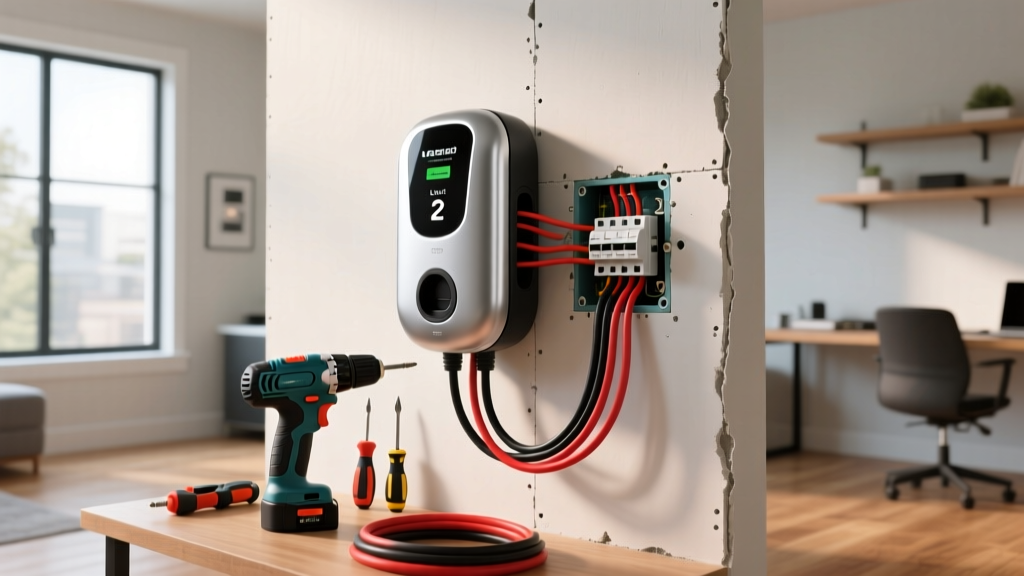
Installing a dedicated Level 2 home charger for a 100+ kWh battery EV means planning for adequate circuit capacity. Here's what most installations require:
Electrical Specifications
- Voltage: 240V (standard for Level 2, same as a dryer or oven circuit)
- Circuit amperage: 40A, 50A, 60A, or 80A dedicated breaker (EVSE rated at 80% continuous load: 40A breaker = 32A charging, 60A breaker = 48A charging)
- Wire gauge: 6 AWG copper for 50A circuits; 4 AWG for 60A; 2 AWG for 80A — your licensed electrician will spec this based on run length
- Panel capacity: Your main electrical panel must have enough spare capacity (in amps) to add a 40–80A circuit without overloading. Most 200A panels in newer homes handle a 50A EV circuit. Older 100A or 150A panels often require an upgrade.
Panel Upgrade: The Hidden Cost
Many homes built before 2000 have 100A or 150A service panels. Adding a 60A EV circuit to a panel already near capacity triggers a utility service upgrade — typically to 200A or 400A. This involves:
- Utility coordination and new meter base
- New panel, breakers, and grounding
- Potential trenching for underground service
- Cost: $2,000–$5,000+ depending on utility requirements and local labor
Some utilities and states offer rebates for panel upgrades tied to EV adoption. Check with your local utility before committing.
| Component | Low End | Typical | High End |
|---|---|---|---|
| Level 2 EVSE (charger hardware) | $350 | $550 | $800 |
| Electrical permit | $50 | $125 | $300 |
| Electrician labor (no panel upgrade) | $500 | $1,000 | $2,000 |
| Wire, conduit, breaker | $100 | $250 | $500 |
| Panel upgrade (if needed) | $2,000 | $3,500 | $5,500 |
| Total (no panel upgrade) | $1,000 | $1,925 | $3,600 |
| Total (with panel upgrade) | $3,000 | $5,425 | $9,100 |
Federal incentive: The Alternative Fuel Vehicle Refueling Property Credit (§30C) offers up to $1,000 (30% of cost, capped) for home charger installation in eligible census tracts. Check IRS.gov for current eligibility rules — census tract qualification is a key requirement many buyers overlook.
Connector Compatibility: NACS, CCS1, and CHAdeMO in 2026
The connector landscape has consolidated significantly since 2024. Here's where things stand for 2026 model-year vehicles:
| Connector | Brands Using It (Native) | Notes |
|---|---|---|
| NACS (North American Charging Standard) | Tesla, Ford, GM, Rivian, Volvo, Polestar, Mercedes-Benz, BMW, Hyundai, Kia, Lucid | Industry standard as of 2025–2026; access to Tesla Supercharger network |
| CCS1 (Combined Charging System) | Legacy VW ID.4 (pre-2026), some Stellantis models, older non-Tesla EVs | Being phased out on new models; adapters available to use NACS stations |
| CHAdeMO | Nissan Leaf (discontinued after 2025), Mitsubishi Outlander PHEV (legacy) | Essentially discontinued for new vehicles; limited DC fast-charge network |
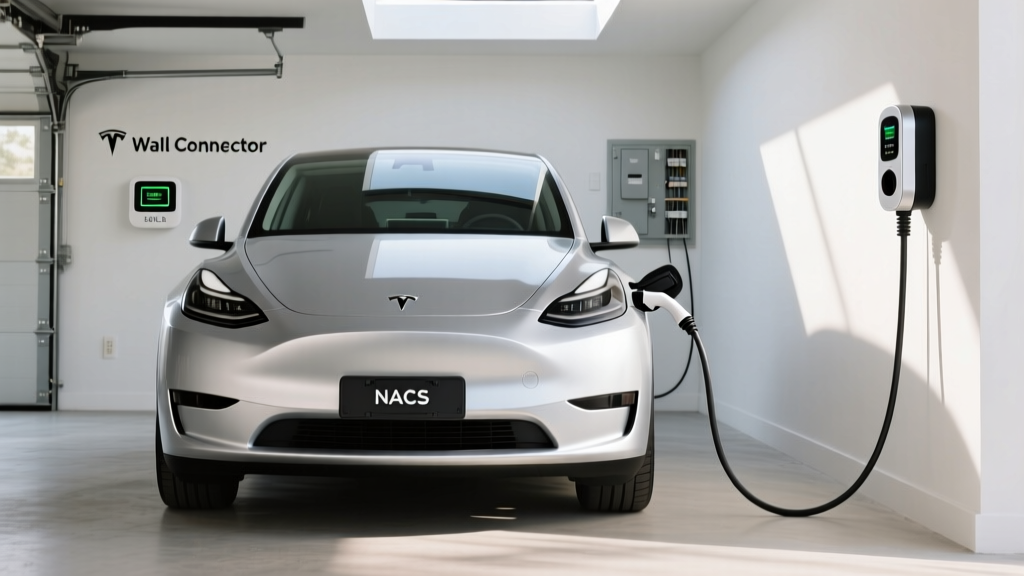
For the longest range electric car 2026 models: The Lucid Air, Silverado EV, Tesla Model S, and Rivian R1T Max Pack all use NACS natively. This means direct access to the 25,000+ stall Tesla Supercharger network plus Electrify America and other networks via NACS-equipped stations. If you own an older CCS1 vehicle, a NACS-to-CCS adapter ($200–$300) enables Supercharger access, though at slightly reduced peak charge rates.
Home charging connector: All Level 2 home chargers sold in 2026 come with NACS (J3400) connectors. If you charge a legacy CCS1 vehicle at home, you'll need a J1772-to-CCS adapter (most CCS1 vehicles shipped with one) or a dual-connector EVSE.
Charging Time: What to Expect with 100–200 kWh Batteries
Long-range EVs have large batteries, which means longer charge sessions. Here's realistic timing for common scenarios:
Level 2 Home Charging (Daily Top-Up)
| Vehicle | Battery (kWh usable) | Onboard Charger | 48A EVSE (11.5 kW): Empty → Full | 48A EVSE: 20–80% (daily use) |
|---|---|---|---|---|
| Tesla Model S LR | ~100 | 11.5 kW | ~9 hours | ~5.2 hours |
| Lucid Air Grand Touring | 112 | 19.2 kW | ~6 hours | ~3.5 hours |
| Rivian R1T Max Pack | 149 | 11.5 kW | ~13 hours | ~7.8 hours |
| Chevy Silverado EV 4WT | ~200 | 11.5 kW | ~17 hours | ~10.4 hours |
Key insight: The Lucid Air's 19.2 kW onboard AC charger is a significant advantage for home charging — it can accept nearly double the AC power of most competitors. If you're buying a long-range EV specifically, check the onboard charger rating. A 48A home charger delivers 11.5 kW, but only the Lucid can actually use all 19.2 kW if you install an 80A circuit (19.2 kW EVSE).
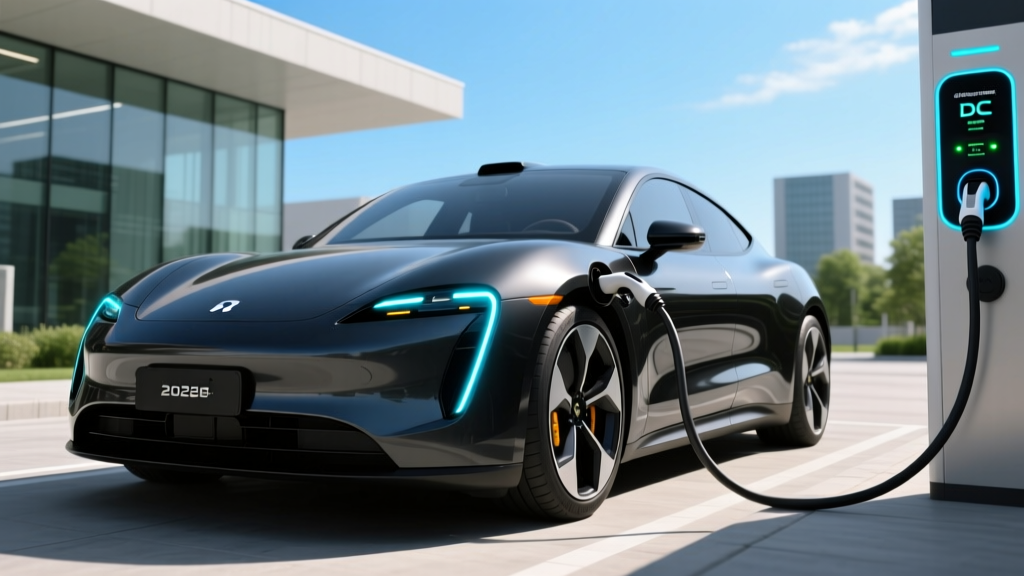
DC Fast Charging (Road Trip)
On the road, DC fast charging is what matters. Here's 10–80% timing at rated peak power:
- Lucid Air Grand Touring: Peak ~300 kW on 900V architecture; 10–80% in ~20 minutes (adds ~300 miles)
- Tesla Model S Long Range: Peak ~250 kW at V3 Superchargers; 10–80% in ~27 minutes
- Rivian R1T Max Pack: Peak ~220 kW; 10–80% in ~35 minutes
- Chevy Silverado EV 4WT: Peak ~350 kW on 800V architecture; 10–80% in ~30 minutes (adds ~300 miles)
Charge curve reality: Peak kW is sustained only between roughly 10–50% state of charge. Above 60%, the rate tapers significantly to protect battery health. At 80%, expect charge speed to drop to 40–60 kW regardless of peak rating. This is why road-trip strategy focuses on 10–80% sessions rather than full charges.
Cost to Charge: Per-Mile Economics vs. Gas
The economic case for long-range EVs depends heavily on where and when you charge. Electricity prices vary dramatically by scenario:
| Scenario | $/kWh | Cost to Add 300 Miles* | Cost Per Mile |
|---|---|---|---|
| Home off-peak (utility time-of-use) | $0.08–$0.12 | $7.20–$10.80 | $0.024–$0.036 |
| Home standard rate | $0.14–$0.18 | $12.60–$16.20 | $0.042–$0.054 |
| Public Level 2 (ChargePoint, etc.) | $0.25–$0.40 | $22.50–$36.00 | $0.075–$0.12 |
| DC Fast (Tesla Supercharger) | $0.28–$0.36 | $25.20–$32.40 | $0.084–$0.108 |
| DC Fast (Electrify America, peak) | $0.40–$0.55 | $36.00–$49.50 | $0.12–$0.165 |
| *Based on 3.0 miles/kWh efficiency (typical for large EVs). Gas comparison: 25 MPG truck at $3.50/gal = $0.14/mile; 30 MPG sedan at $3.50/gal = $0.117/mile. | |||
The bottom line: Home charging at off-peak rates delivers fuel costs at roughly $0.03/mile — about one-quarter the cost of gasoline. Even DC fast charging on the road typically undercuts gas per mile. But relying exclusively on public DC fast charging erodes the cost advantage, especially at premium-rate networks. For long-range EV owners, home charging isn't optional — it's where 80%+ of your energy should come from.
Check your utility's time-of-use (TOU) rates. Many utilities offer EV-specific plans with overnight rates as low as $0.06–$0.09/kWh. The U.S. Department of Energy's EV charging resources include tools to compare local electricity costs.
Equipment Picks: Best Level 2 Chargers for Long-Range EVs
For vehicles with 100+ kWh batteries, you want a high-amperage Level 2 EVSE to minimize overnight charge time. Here are the top picks in 2026:
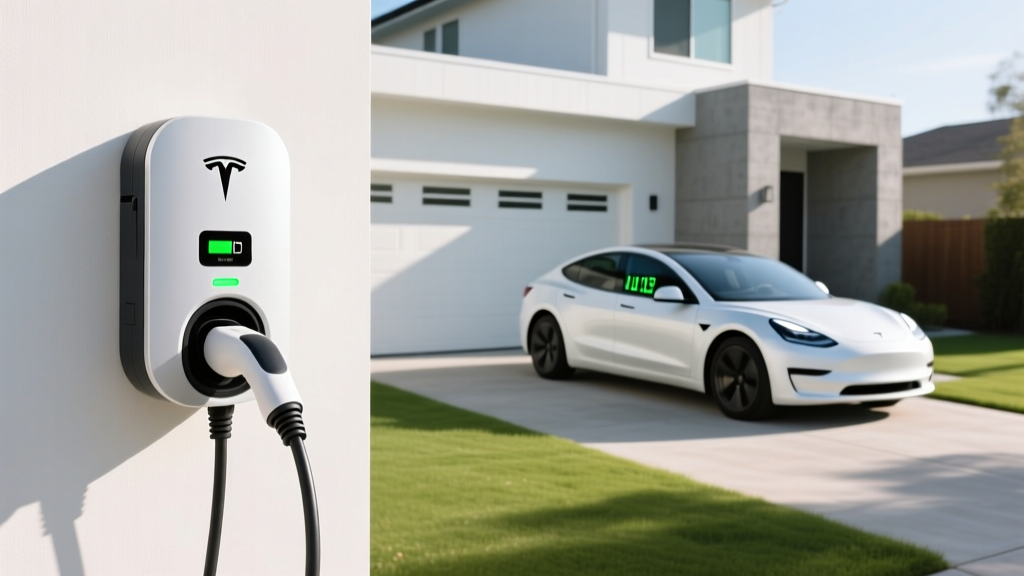
1. Tesla Wall Connector (NACS) — $420
- Power output: Up to 11.5 kW (48A) on a 60A circuit
- Connector: NACS (J3400) native
- Cable length: 24 feet
- Smart features: Wi-Fi, OTA updates, load sharing (up to 6 units on one circuit), Tesla app integration, power sharing with Powerwall
- Best for: Tesla owners and any NACS-equipped EV; excellent value for 48A output
2. ChargePoint Home Flex (NACS) — $600
- Power output: Up to 12 kW (50A) on a 60A circuit; configurable from 16A–50A
- Connector: NACS (2026 model); J1772 adapter included
- Cable length: 24 feet
- Smart features: Wi-Fi, Alexa/Google Home, scheduled charging, detailed energy tracking, ChargePoint network account integration
- Best for: Multi-EV households (mixed NACS/legacy); robust app and scheduling
3. Emporia Vue EV Charger — $400
- Power output: Up to 11.5 kW (48A) on a 60A circuit
- Connector: NACS (2026 model)
- Cable length: 24 feet
- Smart features: Wi-Fi, integrates with Emporia Vue home energy monitor, solar-aware charging (charge only when solar is producing), TOU scheduling
- Best for: Solar-panel owners who want to charge directly from rooftop generation; budget-friendly
4. Enel X JuiceBox 60 (NACS) — $650
- Power output: Up to 14.4 kW (60A) on an 80A circuit — highest output for Lucid Air owners
- Connector: NACS (J3400)
- Cable length: 25 feet
- Smart features: Wi-Fi, JuiceNet app, load management, utility demand-response programs
- Best for: Lucid Air Grand Touring owners who want to utilize the full 19.2 kW onboard charger (requires 80A circuit and the 60A JuiceBox or higher)
Safety, Electrical Code, and Installation Best Practices
EV charging draws sustained high current for hours — unlike a dryer that cycles on and off. This makes proper installation critical. Key requirements per the National Electrical Code (NEC):
- Dedicated circuit: Your EVSE must be on its own dedicated breaker — no sharing with other appliances. A 48A EVSE requires a 60A breaker (EVSE loads are continuous, defined as 3+ hours, so the circuit must be rated at 125% of the load).
- GFCI protection: NEC 2023 and later require GFCI (Ground Fault Circuit Interrupter) protection for all EVSE outlets. Hardwired EVSE units have GFCI built in. If you use a NEMA 14-50 or 6-50 receptacle, the breaker must be GFCI type — these cost $60–$100 more than standard breakers.
- Outdoor rating: If your charger is installed outdoors (garage-less homes, driveways), the EVSE must carry a NEMA 4 or NEMA 4X rating for weather resistance. All major brands listed above meet this standard.
- Permit and inspection: Most jurisdictions require an electrical permit for new 240V circuits. Your electrician pulls the permit; a city/county inspector verifies the installation meets code. Don't skip this — it protects your home insurance coverage in the event of an electrical fire.
- Wire gauge and run length: Longer wire runs from panel to EVSE require thicker gauge wire to prevent voltage drop. A 100-foot run to a detached garage may need 4 AWG instead of 6 AWG for a 50A circuit. Your electrician will calculate this.
Hardwired vs. plug-in: For 48A and above, hardwired installation is generally preferred. NEMA 14-50 receptacles are rated for 50A but can overheat under continuous 40A+ EV charging loads if not installed with commercial-grade receptacles. Hardwired connections eliminate the plug/receptacle failure point and often simplify inspection.
Frequently Asked Questions
How much does it cost to install a home EV charger?
A typical Level 2 home charger installation (48A, hardwired, no panel upgrade) costs $1,500–$3,000 including equipment, electrician labor, wire, breaker, and permit. If your home needs a panel upgrade from 100A/150A to 200A service, add $2,000–$5,500. The federal §30C credit can offset up to $1,000 of installation costs if you're in an eligible census tract.
How fast will each charging level add range?
Level 1 (120V) adds 3–5 miles of range per hour — essentially useless for a 100+ kWh battery EV. Level 2 (240V, 48A) adds roughly 30–40 miles per hour depending on vehicle efficiency. DC fast charging at 250+ kW adds 150–300+ miles in 15–20 minutes at peak rate, though the charge curve tapers significantly above 60% state of charge.
Which connector and charger is compatible with my EV?
Nearly all 2026 EVs — including every long-range model from Tesla, Lucid, GM, Ford, Rivian, Hyundai, and Kia — use the NACS (J3400) connector. Buy a NACS-equipped Level 2 home charger. If you own a pre-2025 CCS1 vehicle, use a CCS-to-NACS adapter for public charging or buy a dual-connector EVSE for home.
How much does charging cost per mile compared to gas?
Home charging at off-peak utility rates ($0.08–$0.12/kWh) costs roughly $0.03–$0.04 per mile for a large EV — about one-quarter the cost of a 25 MPG gas vehicle at $3.50/gallon ($0.14/mile). Public DC fast charging at $0.30–$0.45/kWh costs $0.09–$0.15 per mile, roughly comparable to a fuel-efficient gas car. The cost advantage of EVs depends heavily on consistent home charging access.
What electrical upgrades might I need?
If your home has a 200A electrical panel with available capacity, you likely only need a new 60A breaker and wire run — straightforward. If your panel is 100A or 150A, or already near capacity (common in homes with electric heat, hot tubs, or workshops), you'll need a panel upgrade to 200A or 400A, costing $2,000–$5,500. An electrician can assess your panel's spare capacity during a site visit, often for free or a small fee credited toward installation.