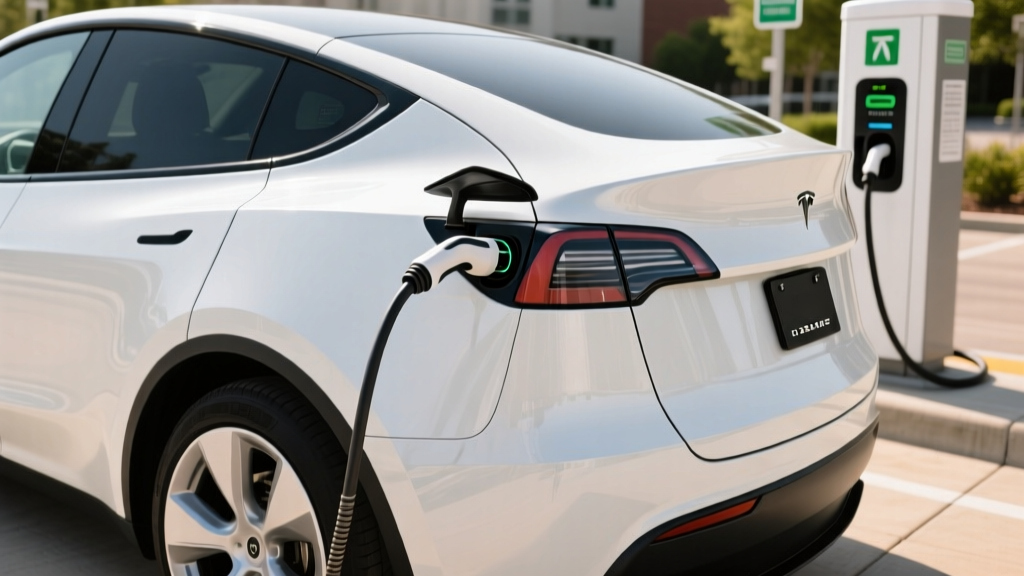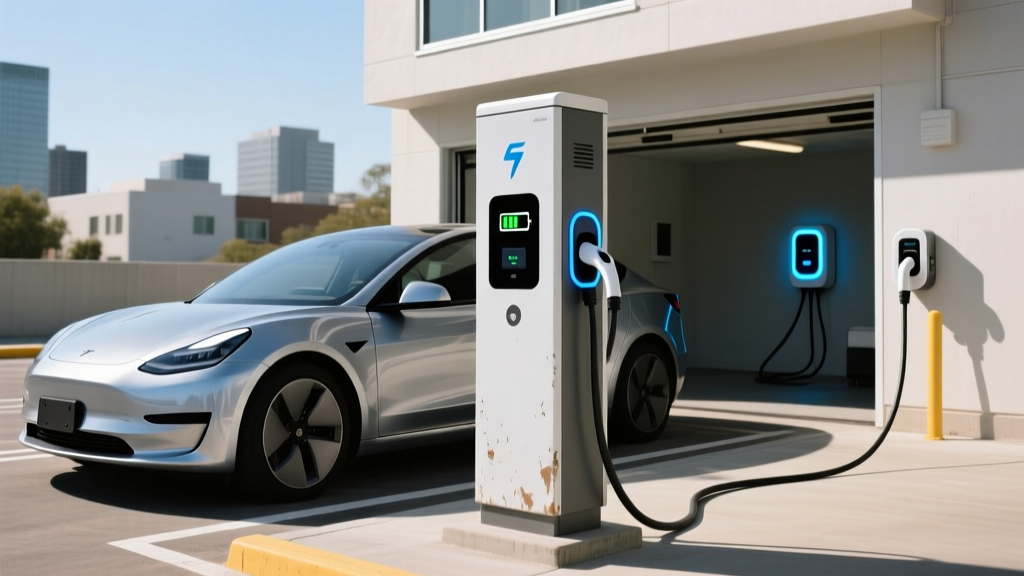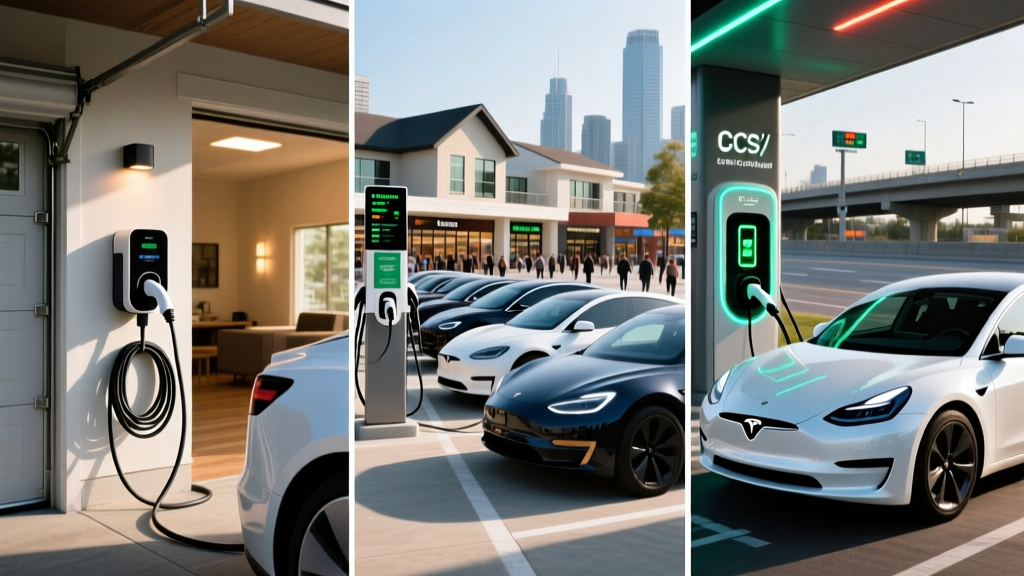
If you're mapping out the charging lanes for electric cars — whether that means plugging in at home overnight, topping up at a grocery-store Level 2, or pulling into a 350 kW DC fast-charging corridor — the landscape has shifted dramatically. The North American Charging Standard (NACS) is now the dominant connector, public networks have expanded past 200,000 ports nationally, and home-charging hardware is cheaper and smarter than ever. But the fundamentals haven't changed: you need to understand the three charging levels, what your home's electrical panel can support, and what you'll actually pay per mile.
This guide breaks down every charging lane available to EV owners in 2026, with exact kW speeds, real installation costs, connector compatibility by brand, and specific equipment recommendations.
The Three Charging Lanes: Level 1, Level 2, and DC Fast Charging
Every EV sold in the U.S. charges through one of three pathways. The critical distinction: kW (kilowatts) measures the rate of power delivery — how fast energy flows into your battery. kWh (kilowatt-hours) measures the total energy stored — your battery's tank size. A 75 kWh battery charged at 11.5 kW takes roughly 6.5 hours from empty; that same battery at 150 kW DC can hit 80% in about 25 minutes.
| Level | Voltage | Power (kW) | Miles of Range Added per Hour | Typical Use Case |
|---|---|---|---|---|
| Level 1 (120V) | 120V AC | 1.0–1.4 kW | 3–5 mi/hr | Overnight trickle; PHEVs; low-mileage drivers |
| Level 2 (240V) | 240V AC | 3.3–19.2 kW | 12–75 mi/hr | Home daily charging; workplace; public destinations |
| DC Fast Charging | 400–800V DC | 50–350 kW | 150–1,200+ mi/hr (peak) | Road trips; highway corridors; quick top-ups |
Real-world note on DC fast charging: Peak kW rates apply only in a narrow State of Charge (SoC) window — typically 10–40%. Above 80%, the battery management system tapers the charge rate significantly to protect cell health. A charger rated at 250 kW might sustain that rate for only 8–12 minutes before dropping to 100 kW, then 50 kW. Always look at 10–80% charge times, not peak kW, to gauge real-world speed.
How Much Does It Cost to Install a Home EV Charger?
Home Level 2 charging is the single most impactful upgrade for EV ownership. Roughly 80% of all EV charging happens at home, according to the U.S. Department of Energy. But installation cost varies enormously based on your electrical panel, the distance from panel to garage, and local permitting.
| Component | Simple Install (Panel Adjacent) | Standard Install (50–80 ft run) | Complex Install (Panel Upgrade + Long Run) |
|---|---|---|---|
| Level 2 Charger (hardware) | $350–$700 | $350–$700 | $350–$700 |
| Electrician labor | $300–$600 | $600–$1,200 | $1,200–$2,500 |
| Electrical permit | $50–$150 | $50–$200 | $100–$300 |
| Panel upgrade (if needed) | — | — | $1,500–$3,500 |
| Conduit, wiring, misc. | $50–$150 | $200–$500 | $400–$800 |
| Total Range | $750–$1,600 | $1,200–$2,600 | $3,550–$7,800 |
Electrical requirements for a typical Level 2 install: A 48-amp charger (the most common high-power home unit) requires a dedicated 60-amp, 240-volt circuit with 6 AWG copper wire. The National Electrical Code (NEC) requires the circuit be rated at 125% of the continuous load — so a 48A charger needs a 60A breaker. For a 40-amp charger, you need a 50-amp circuit with 8 AWG wire.
What Electrical Upgrades Might I Need?
Before hiring an electrician, check your panel's amperage rating (usually printed on the main breaker). Here's what determines whether you'll need an upgrade:
- 200-amp panel: Usually sufficient for a 48A Level 2 charger without upgrade. Most homes built after 2000 have 200A service.
- 150-amp panel: May support a 32A charger (40A circuit) but an electrician should perform a load calculation per NEC Article 220.
- 100-amp panel: Almost certainly requires a panel upgrade to 200A before adding a Level 2 charger. Budget $1,500–$3,500 for this alone.
Some utilities offer make-ready programs that cover the wiring and panel-upgrade costs, leaving you to pay only for the charger itself. Check with your local utility before starting work.
Connector Compatibility: NACS, CCS1, and CHAdeMO in 2026
The connector landscape has consolidated significantly. As of 2026, nearly every new EV sold in North America uses the NACS (North American Charging Standard) port — the connector Tesla pioneered and opened to the industry starting in 2023. Ford, GM, Rivian, Hyundai, Kia, BMW, and most other automakers have switched to NACS for new models. The legacy CCS1 connector persists on models produced before the switchover and remains supported at public stations via adapters.
| Connector | Brands Using It (New Vehicles) | DC Fast Charging Access | Adapter Needed? |
|---|---|---|---|
| NACS (Tesla-style) | Tesla, Ford, GM, Rivian, Hyundai, Kia, BMW, Mercedes, Volvo, Polestar, Nissan (new) | Tesla Superchargers + NACS-equipped public stations | No (native); CCS→NACS adapter for legacy CCS stations (~$150–$250) |
| CCS1 | Legacy models (2024 and earlier from most brands); VW ID.4 (some 2025) | Electrify America, EVgo, ChargePoint, Ionity | NACS→CCS adapter for Supercharger access (~$200–$300) |
| CHAdeMO | Nissan Leaf (discontinued in US); Mitsubishi Outlander PHEV (older) | Limited and declining public infrastructure | No widely available adapter to NACS/CCS |
For home Level 2 charging: All EVs use a J1772 inlet for AC charging — except Tesla, which uses a proprietary AC port that's now part of the NACS standard. If you buy a non-Tesla NACS vehicle, it will still accept a J1772 plug via the adapter included with the car. If you buy a universal Level 2 charger with a J1772 connector, it will work with every EV on the road (Teslas use their included J1772 adapter).
How Much Does Charging Cost Per Mile vs. Gas?
The economics of EV charging depend entirely on where and when you charge. Home charging on an off-peak electricity rate is dramatically cheaper than gasoline; public DC fast charging can approach or even exceed gas costs per mile.
| Scenario | Rate | Cost per kWh | Cost per Mile* | Annual Fuel Cost (12,000 mi) |
|---|---|---|---|---|
| Home Level 2 (off-peak TOU rate) | $0.08–$0.12/kWh | $0.10 avg | $0.030 | $360 |
| Home Level 2 (standard rate) | $0.14–$0.20/kWh | $0.17 avg | $0.051 | $612 |
| Public Level 2 (network pricing) | $0.25–$0.49/kWh | $0.35 avg | $0.105 | $1,260 |
| DC Fast Charging (public) | $0.35–$0.65/kWh | $0.48 avg | $0.144 | $1,728 |
| Gasoline (25 MPG avg, $3.40/gal) | $3.40/gal | — | $0.136 | $1,632 |
*Based on an EV efficiency of 3.3 miles/kWh (roughly the EPA average for a midsize crossover like the Hyundai Ioniq 5 or Tesla Model Y). Actual efficiency varies: the Tesla Model 3 achieves ~4.0 mi/kWh while a Ford F-150 Lightning delivers ~2.3 mi/kWh.
The takeaway: home charging is the economic killer app of EV ownership. At off-peak rates, you'll spend roughly $360/year to drive 12,000 miles — about one-fifth the cost of gasoline. Even at standard residential rates, you save $1,000+ annually. But if you rely exclusively on public DC fast charging, your fuel costs can actually exceed a comparable gas car.
For the latest electricity rate data and EV efficiency figures, the U.S. Department of Energy's fueleconomy.gov remains the authoritative source for comparing specific models.
Real-World Charging Times for Common Battery Sizes
Charging time depends on three factors: battery capacity (kWh), charger power output (kW), and the vehicle's onboard charge acceptance rate. Here are realistic 10–80% charge times for representative battery sizes at each charging level:
| Battery Size | Example Vehicles | Level 1 (1.4 kW) | Level 2 (11.5 kW / 48A) | DC Fast (150 kW peak) | DC Fast (250+ kW peak) |
|---|---|---|---|---|---|
| 60 kWh usable | Chevrolet Equinox EV, Volvo EX30 | ~30 hours | ~3.7 hours | ~25 min | ~18 min |
| 75 kWh usable | Tesla Model Y, Hyundai Ioniq 5 | ~37 hours | ~4.6 hours | ~30 min | ~18 min |
| 90 kWh usable | Ford F-150 Lightning Ext. Range | ~45 hours | ~5.5 hours | ~40 min | ~32 min |
| 100 kWh usable | Tesla Model S, Rivian R1S | ~50 hours | ~6.1 hours | ~45 min | ~35 min |
Charge curve reality check: The times above assume the vehicle can accept the charger's full output. Most EVs taper significantly after 80% SoC. A Tesla Model Y at a 250 kW Supercharger might pull 250 kW at 15% SoC, but drops to ~100 kW by 60% and ~40 kW by 85%. This is why 10–80% is the standard measurement — charging from 80–100% can take as long as the 10–80% session.
Cold-weather impact: Battery temperatures below 50°F reduce charge acceptance. In sub-freezing conditions, expect 10–80% DC fast charging to take 20–40% longer unless your vehicle has active battery preconditioning (Tesla, Hyundai/Kia, and GM Ultium vehicles all precondition the pack when you navigate to a charger).
Best Home EV Chargers for 2026: Equipment Picks
Here are four Level 2 chargers we recommend based on power output, build quality, smart features, and real-world reliability. All are hardwired units (preferred over plug-in for continuous high-amperage use) and carry UL certification.
ChargePoint Home Flex
Power: Up to 12 kW (50A) on a 60A circuit
Connector: J1772 (NACS adapter included for newer kits)
Cable: 23 ft
Smart features: Wi-Fi, scheduling, Alexa, energy tracking
Price: ~$599
Best for: Flexible amperage adjustment (dial from 16A to 50A to match your circuit)
Tesla Wall Connector (Gen 3)
Power: Up to 11.5 kW (48A) on a 60A circuit
Connector: NACS native
Cable: 24 ft
Smart features: Wi-Fi, OTA updates, load sharing (pair two units on one circuit)
Price: ~$475
Best for: Tesla and NACS-native vehicle owners; cleanest aesthetic
Emporia Vue Level 2 Charger
Power: Up to 11.5 kW (48A) on a 60A circuit
Connector: J1772
Cable: 24 ft
Smart features: Wi-Fi, solar integration, time-of-use scheduling, energy monitoring
Price: ~$399
Best for: Budget-conscious buyers; solar panel owners who want to charge on excess production
Grizzl-E Smart
Power: Up to 10 kW (40A) on a 50A circuit
Connector: J1772
Cable: 24 ft
Smart features: Wi-Fi, OCPP-compatible, adjustable amperage
Price: ~$449
Best for: Cold-climate durability (rated to -40°F); Canadian-built, rugged enclosure
Choosing the right amperage: Don't just buy the highest-power unit. Match the charger to your available circuit. A 48A charger requires a 60A circuit; if your panel can only spare a 40A breaker, you need a 32A charger. Your electrician will determine this during the load calculation.
Safety, Electrical Code, and Permitting Essentials
EV charging is a high-draw, continuous electrical load — the NEC classifies it as a continuous load requiring a circuit rated at 125% of the charger's amperage. Here's what code compliance looks like in practice:
- Dedicated circuit: Your Level 2 charger must have its own dedicated breaker — it cannot share a circuit with outlets, lighting, or appliances.
- GFCI protection: The 2020 NEC (and subsequent editions) require GFCI protection for all EV charging outlets. Hardwired installations are exempt from the GFCI breaker requirement because the chargers themselves include ground-fault protection — which is one reason hardwired is preferred.
- Outdoor rating: If your charger is mounted outdoors or in an unsealed garage, it must carry a NEMA 4 (weatherproof) rating. All four chargers recommended above meet this standard.
- Permitting: Nearly all jurisdictions require an electrical permit for a new 240V circuit. Permit fees range from $50 to $300. The inspection ensures proper wire gauge, breaker sizing, grounding, and conduit use. Do not skip this — unpermitted work can void your homeowner's insurance in the event of an electrical fire.
- Utility notification: Some utilities require you to notify them before installing an EV charger, especially if you're on a time-of-use rate plan or if the install adds significant load to a local transformer.
Always hire a licensed electrician familiar with NEC Article 625 (Electric Vehicle Charging Systems). The National Fire Protection Association publishes the NEC standards governing EV charging installations.
Frequently Asked Questions
Can I use a regular 120V outlet to charge my EV?
Yes, but slowly. Level 1 charging at 120V delivers about 1.0–1.4 kW, adding 3–5 miles of range per hour. For a 75 kWh battery, a full charge from empty takes 50+ hours. Level 1 works for plug-in hybrids with small batteries (10–18 kWh) or for EV owners who drive fewer than 30 miles daily and can charge overnight (10–12 hours). For anything beyond that, Level 2 is essential.
Which connector does my EV need for home charging?
For AC home Level 2 charging, all EVs accept a J1772 connector. Tesla vehicles include a J1772-to-NACS adapter in the glovebox. If you buy a NACS-connector charger (like the Tesla Wall Connector), non-Tesla NACS vehicles plug in directly; older CCS1 vehicles will need an adapter. Check your vehicle's charge port before purchasing a charger.
Is it cheaper to charge at home or at public stations?
Home charging is dramatically cheaper. At a residential off-peak rate of $0.10/kWh, you'll pay about $0.03/mile. Public DC fast charging averages $0.35–$0.65/kWh ($0.10–$0.19/mile), making it 3–6× more expensive. Use public DC fast charging for road trips and emergencies; build your daily routine around home Level 2.
Will installing an EV charger require upgrading my electrical panel?
It depends on your panel's amperage. A 200-amp panel typically handles a 48A Level 2 charger without an upgrade. A 100-amp panel almost always needs upgrading to 200A ($1,500–$3,500). A licensed electrician performs a load calculation per NEC Article 220 to determine if your panel has sufficient spare capacity. Some utilities offer rebates or make-ready programs that offset panel upgrade costs.
How long does a Level 2 charger take to fully charge a typical EV?
For a 75 kWh battery (Tesla Model Y, Hyundai Ioniq 5) on an 11.5 kW (48A) Level 2 charger, a full 0–100% charge takes approximately 6.5 hours. Most owners arrive home at 20–30% SoC and need only 4–5 hours to reach 80–90% — easily accomplished overnight. Set your charger's schedule to finish just before departure for optimal battery health.
For the latest IRS guidance on the residential clean vehicle credit (§30D), which can also apply to certain home charging equipment under the Alternative Fuel Vehicle Refueling Property Credit (§30C), consult IRS publications or a tax professional — eligibility depends on income caps, census tract requirements, and equipment specifications.