Why Charging a Hybrid or PHEV Is Different From a Full EV
Plug-in hybrids (PHEVs) occupy a unique middle ground: they carry a smaller battery pack — typically 10 to 25 kWh of usable capacity — paired with a gasoline engine. That smaller battery fundamentally changes the charging equation compared to a battery-electric vehicle (BEV) with a 75–100 kWh pack. You need less energy to fill up, which means Level 1 charging from a standard 120V outlet is often practical for daily use, and a Level 2 home charger can fully replenish most PHEV batteries in under three hours.
But "charging hybrid" ownership still demands smart setup decisions. Plug into the wrong circuit, skip a permit, or buy an underpowered charger and you'll waste money or create a safety hazard. This guide walks through every charging level, real installation costs, connector compatibility, and the per-mile economics that determine whether your PHEV actually saves you money.
Charging Levels Explained: How Fast Will Each Add Range?
Before we discuss equipment, let's nail down the distinction between kW (kilowatts — the rate of power delivery, like water pressure from a hose) and kWh (kilowatt-hours — the total energy stored or delivered, like gallons in a bucket). Your PHEV's battery is measured in kWh; your charger's output is measured in kW. A higher-kW charger fills a kWh-rated battery faster.
| Level | Voltage / Amperage | Power Output | Approx. Miles of Range Added per Hour | Typical Use Case |
|---|---|---|---|---|
| Level 1 (120V) | 120V / 12A | ~1.4 kW | 3–5 miles/hr | Overnight top-up for PHEVs with <20 kWh batteries |
| Level 2 (240V) | 240V / 16–48A | 3.3–11.5 kW | 12–35 miles/hr | Daily home charging; full PHEV refill in 1.5–3 hrs |
| DC Fast Charging | 400–800V DC | 25–150+ kW | 100–300+ miles/hr (BEV); PHEV-limited | Road trips; most PHEVs lack DC fast-charge capability |
Most PHEVs — such as the 2026 Toyota RAV4 Prime (18.1 kWh usable, 42 miles EPA electric range) or the Chrysler Pacifica Hybrid (16 kWh, 32 miles) — accept a maximum Level 2 rate of 3.3 kW or 6.6 kW. That means even a 48-amp Level 2 charger delivering 11.5 kW won't charge these vehicles any faster than their onboard charger allows. A 16-amp, 3.8 kW Level 2 unit is often sufficient for PHEV owners, though buying a higher-amperage unit provides headroom if you later switch to a BEV.
Real-world PHEV charging times (10–100%, not 10–80%): Unlike BEVs, PHEVs are typically charged to 100% since the battery is small and daily cycling is shallow relative to total capacity. A 2026 RAV4 Prime at 3.3 kW takes roughly 5.5 hours from empty to full. At 6.6 kW, that drops to about 2.75 hours. A Jeep Wrangler 4xe (17 kWh usable) at 6.6 kW refills in approximately 2.5 hours.
DC fast charging is rare on PHEVs. The Mitsubishi Outlander PHEV is a notable exception, supporting CHAdeMO DC fast charging at up to 22 kW — which sounds modest by BEV standards but can refill its ~20 kWh battery to 80% in roughly 38 minutes. Most other PHEVs rely exclusively on Level 1 and Level 2 AC charging.
Home Charger Installation: Electrical Requirements and Costs
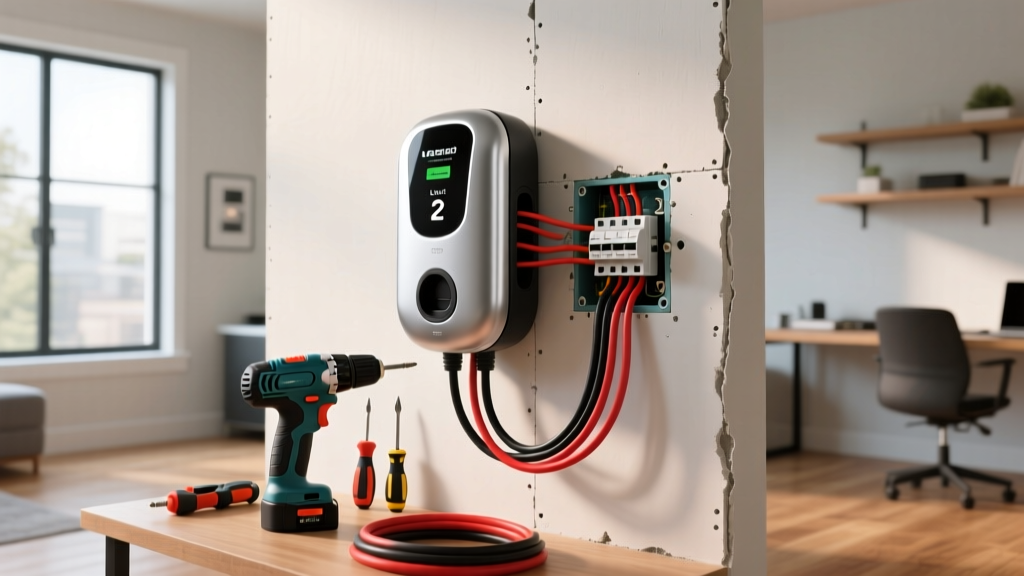
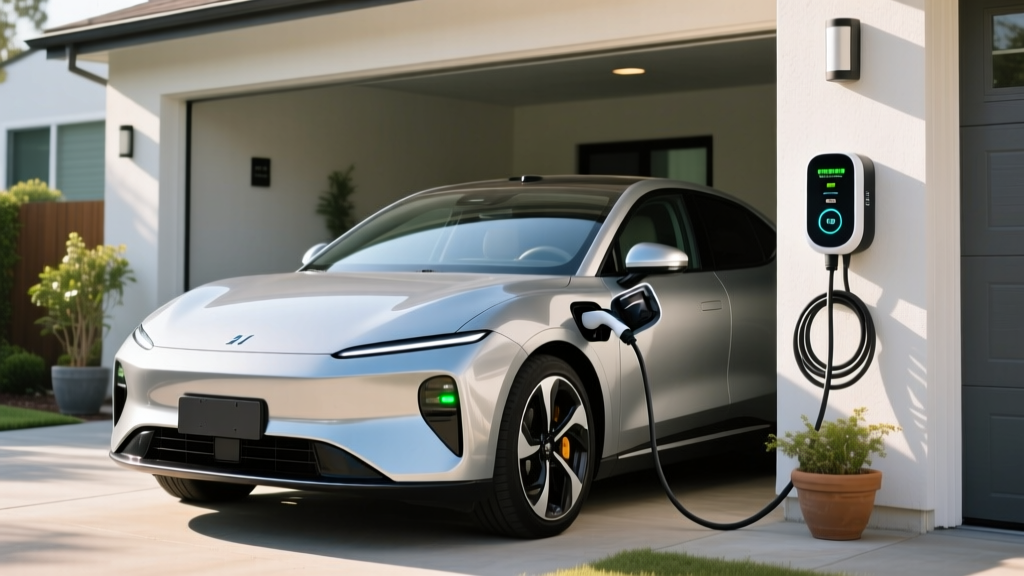
Installing a Level 2 charger at home is the single most impactful upgrade a PHEV owner can make. But the total cost goes well beyond the price of the charging unit itself. You need to account for electrical panel capacity, wiring runs, permits, and licensed labor.
Electrical Requirements
A Level 2 charger requires a dedicated 240V circuit — the same voltage as your electric dryer or oven. Common configurations:
- 16-amp charger: Requires a 20-amp breaker (NEC code requires circuits rated at 125% of continuous load)
- 32-amp charger: Requires a 40-amp breaker
- 40-amp charger: Requires a 50-amp breaker
- 48-amp charger: Requires a 60-amp breaker
Your home's electrical panel must have enough spare capacity to add this circuit. Most modern 200-amp panels can accommodate a 40–50 amp EV circuit without issue. Older homes with 100-amp service may require a panel upgrade to 200 amps, which adds significant cost.
Installation Cost Breakdown
| Component | Low Estimate | High Estimate | Notes |
|---|---|---|---|
| Level 2 charging unit (hardware) | $250 | $700 | 16A–48A, J1772 or NACS connector |
| Electrician labor (standard install) | $400 | $1,200 | Short wire run, accessible panel, no trenching |
| Electrician labor (complex install) | $1,200 | $3,000+ | Long wire runs, conduit, wall penetration, detached garage |
| Electrical permit | $50 | $250 | Varies by municipality; required in most jurisdictions |
| Panel upgrade (if needed) | $1,500 | $4,000 | 100A → 200A service upgrade; older homes only |
| Total (standard, no panel upgrade) | $700 | $2,150 | Most common scenario for modern homes |
| Total (with panel upgrade) | $2,200 | $6,250+ | Older homes with 100A service |
The IRS §30D tax credit does not cover home charging equipment directly under current rules. However, the Alternative Fuel Vehicle Refueling Property Credit (§30C) may provide up to $1,000 for residential charging equipment installation, subject to income limits and census-tract eligibility. Consult a tax professional for your specific situation.
Safety and Code Considerations
- Dedicated circuit: Your Level 2 charger must be on its own dedicated breaker — never shared with other appliances
- GFCI protection: NEC 2023 and later require GFCI protection for EV charging outlets in garages; hardwired chargers with built-in ground-fault protection may satisfy this
- Outdoor rating: If mounting outdoors, ensure the charger carries a NEMA 4 or IP65 rating for weather resistance
- Hardwired vs. plug-in: Hardwired units (no plug) are often preferred for outdoor installs and higher-amperage units (48A+), as they avoid the need for a 240V receptacle rated for continuous high-current use. Plug-in units (NEMA 14-50) offer portability but require a properly rated receptacle installed by an electrician — not a standard dryer outlet
- Permit and inspection: Skipping the permit to save $100 can void homeowner's insurance coverage if an electrical fire occurs. Always pull a permit and pass inspection
Connector Compatibility: Which Plug Fits Your Hybrid?
The connector landscape has shifted significantly. As of 2026, most new EVs sold in North America use the NACS (North American Charging Standard, originally developed by Tesla), while most PHEVs still use the legacy J1772 connector for AC charging. Here's the breakdown:
| Connector Type | Used By (PHEVs) | Notes |
|---|---|---|
| J1772 (AC Level 1 & 2) | Toyota RAV4 Prime, Chrysler Pacifica Hybrid, Jeep Wrangler 4xe, Hyundai Tucson PHEV, most non-Tesla PHEVs | Standard for nearly all current PHEVs; widely available |
| NACS / Tesla (AC & DC) | Ford F-150 Lightning (BEV); upcoming PHEVs may adopt by 2027+ | Tesla Supercharger network access via adapter for CCS/J1772 vehicles |
| CCS1 (DC Fast) | Most BEVs; rare on PHEVs | Combined Charging System; being phased out in favor of NACS for new models |
| CHAdeMO (DC Fast) | Mitsubishi Outlander PHEV (one of few PHEVs with DC fast capability) | Legacy standard; declining infrastructure support |
Adapter needs: If you own a J1772-equipped PHEV and want to use a Tesla Wall Connector at home, you'll need a Tesla-to-J1772 adapter (approximately $150–$250 from brands like Lectron or Taptes). Conversely, if you're installing a J1772 charger and plan to eventually buy a NACS-equipped BEV, consider a charger with a swappable connector or buy a J1772-to-NACS adapter.
Equipment Recommendations: Best Home Chargers for PHEV Owners
Because PHEVs draw less power than BEVs, you don't necessarily need the most powerful charger on the market. But buying a quality unit with smart features pays dividends in convenience and safety.
Emporia Level 2 EV Charger
- Power output: Up to 48 amps (11.5 kW on 240V/60A circuit)
- Connector: J1772 (NACS version available)
- Cable length: 24 feet
- Smart features: Wi-Fi connected, energy monitoring via Emporia app, solar integration, scheduled charging for off-peak rates
- Price: ~$399
- Best for: PHEV owners who want energy monitoring and solar-aware charging on a budget
ChargePoint Home Flex
- Power output: Configurable 16–50 amps (3.8–12 kW)
- Connector: J1772 (NACS adapter available)
- Cable length: 23 feet
- Smart features: Wi-Fi, ChargePoint app scheduling, Alexa integration, amperage adjustable to match your circuit
- Price: ~$549
- Best for: Owners who want to dial the amperage to match their panel capacity; ideal for 20A–50A circuits
Tesla Wall Connector
- Power output: Up to 48 amps (11.5 kW)
- Connector: NACS (J1772 adapter required for most PHEVs)
- Cable length: 24 feet
- Smart features: Wi-Fi, firmware updates, load sharing between two units on one circuit
- Price: ~$475
- Best for: Households with a Tesla BEV and a PHEV; buy the adapter for the PHEV
Grizzl-E Smart
- Power output: Up to 40 amps (9.6 kW)
- Connector: J1772
- Cable length: 24 feet
- Smart features: OCPP-compatible, works with multiple apps, durable aluminum enclosure, NEMA 4 outdoor rated
- Price: ~$449
- Best for: Outdoor installations in harsh climates; built in Canada for extreme cold
Pro tip for PHEV owners: A 32-amp charger (7.7 kW) exceeds the onboard charger capacity of most PHEVs (3.3–6.6 kW). A 16-amp unit (3.8 kW) is often the cost-effective sweet spot — it charges a RAV4 Prime in about 5 hours and costs $100–$200 less. However, if you plan to eventually own a BEV, investing in a 40–48 amp unit now avoids a second installation later.
Cost to Charge: PHEV Electricity vs. Gasoline per Mile
The economic case for a PHEV hinges on how much of your driving falls within electric-only range and what you pay for electricity versus gasoline. Let's break it down with concrete numbers.
| Scenario | Rate / Price | Cost per Mile (PHEV Electric Mode) | Cost per Mile (Gas, 28 MPG Combined) |
|---|---|---|---|
| Home charging (off-peak / time-of-use) | $0.08–$0.14/kWh | $0.025–$0.045 | — |
| Home charging (standard flat rate) | $0.16–$0.22/kWh | $0.05–$0.07 | — |
| Public Level 2 (network charging) | $0.25–$0.49/kWh | $0.08–$0.16 | — |
| Gasoline (national average) | $3.30/gallon | — | $0.118 |
| Gasoline (California / high-cost state) | $4.80/gallon | — | $0.171 |
Key takeaway: Charging at home on off-peak rates, a PHEV costs roughly $0.03–$0.05 per mile in electric mode — about 60–75% cheaper than burning gasoline at $3.30/gallon in a 28 MPG vehicle. Even on a standard residential rate of $0.18/kWh, electric-mode driving undercuts gasoline. However, public Level 2 charging at $0.40/kWh can cost more per mile than gas, which is why home charging access is the make-or-break factor for PHEV economics.
According to fueleconomy.gov, the 2026 Toyota RAV4 Prime achieves 94 MPGe in electric mode and 38 MPG combined in hybrid mode. That 94 MPGe translates to roughly 0.36 kWh per mile — a useful figure for calculating your specific electricity cost.
Public Charging for PHEVs: Is It Worth It?
PHEV owners use public charging differently than BEV owners. With only 25–45 miles of electric range, stopping at a public Level 2 charger to add 15 miles of range rarely makes economic or time sense — especially when public networks charge $0.30–$0.49/kWh plus idle fees.
Exceptions where public charging makes sense for PHEVs:
- Workplace charging: Free or subsidized Level 2 at work can double your daily electric miles at zero cost
- Destination charging: Hotels, shopping centers, or garages offering complimentary Level 2 while you're already parked
- DC fast charging (if supported): Mitsubishi Outlander PHEV owners can use CHAdeMO stations on road trips to maximize electric-mode highway driving, though the 22 kW peak rate means a ~40-minute stop
For daily commuting, home Level 1 or Level 2 is the clear winner. A PHEV that's never plugged in is simply a heavier, less efficient conventional hybrid — you're carrying 300+ pounds of battery and electric motor you never use.
Frequently Asked Questions
Can I charge my PHEV on a regular 120V outlet?
Yes. Most PHEVs come with a Level 1 charging cord that plugs into a standard 120V household outlet (NEMA 5-15). At ~1.4 kW, a PHEV with a 16 kWh battery takes approximately 11–12 hours to fully charge. For PHEV owners who drive less than 30 miles daily and can charge overnight, Level 1 may be sufficient without any electrical upgrade. Ensure the outlet is on a dedicated 15-amp or 20-amp circuit — sharing the circuit with a refrigerator or space heater risks tripping the breaker.
How much does it cost to install a home charger for my plug-in hybrid?
A standard Level 2 installation (charger + electrician + permit, no panel upgrade) typically costs $700–$2,150. If your home has older 100-amp electrical service and needs a panel upgrade to 200 amps, total costs can reach $2,200–$6,250+. Get at least three quotes from licensed electricians and confirm they include permit costs in their estimate.
Do I need a Level 2 charger for a PHEV, or is Level 1 enough?
It depends on your daily mileage and battery size. If your PHEV has 30–42 miles of electric range and your commute is under 25 miles round-trip, Level 1 overnight charging (10–12 hours) can keep the battery topped off. If you drive 40+ miles daily, make multiple trips, or want faster turnaround between drives, Level 2 is strongly recommended — it refills most PHEV batteries in 2–5 hours versus 10–12.
Will a home charger work with both my PHEV and a future BEV?
Most likely, yes — with the right connector. Buy a J1772 charger now and you can charge virtually any current PHEV. When you eventually buy a BEV with a NACS connector, a simple adapter ($150–$250) bridges the gap. Alternatively, if you're buying a charger primarily for a future NACS-equipped BEV, install a Tesla Wall Connector or NACS-native unit now and use a J1772 adapter for your current PHEV.
Is charging a plug-in hybrid cheaper than buying gas?
At home on off-peak electricity rates ($0.08–$0.14/kWh), driving in electric mode costs roughly $0.03–$0.05 per mile versus $0.12–$0.17 per mile on gasoline. The savings are real but depend on charging at home — public charging at $0.35–$0.49/kWh can erase or reverse the cost advantage. Over 12,000 miles of mixed driving with 70% in electric mode, a typical PHEV owner saves $500–$900 per year compared to a 28 MPG gas-only vehicle, according to DOE fuel economy comparisons.
What happens if I never plug in my PHEV?
Your PHEV will still operate as a conventional hybrid using its gasoline engine — similar to a standard Toyota Prius or Honda Accord Hybrid. However, you'll get lower MPG than the hybrid-mode rating suggests because you're hauling the extra weight of a battery and electric motor you're not utilizing. More importantly, you'll miss the entire economic and emissions-reduction benefit that justified the PHEV's higher purchase price. PHEVs are designed to be plugged in; treat them as such.