Buying one of the EVs with long range — say, a Lucid Air Grand Touring with its EPA-estimated 512 miles or a Chevrolet Silverado EV with 440 miles — solves the range-anxiety problem on paper. But a 100+ kWh battery pack introduces a new challenge: how do you actually refill it? Plugging a 118 kWh pack into a standard 120V wall outlet adds roughly 3 miles of range per hour. A full recharge would take over 40 hours.
This guide breaks down exactly what it takes to charge high-capacity, long-range EVs efficiently — at home, in public, and on road trips — with real numbers for cost, speed, and electrical requirements.
Charging Levels Explained: Speeds, kW, and Range Added Per Hour
EV charging falls into three tiers. The critical distinction: kW (kilowatts) measures power — how fast energy flows into the battery. kWh (kilowatt-hours) measures energy — the total capacity of the battery. Think of kW as the flow rate of a hose and kWh as the size of the tank.
| Level | Voltage | Typical Power (kW) | Miles of Range Added Per Hour | Best For |
|---|---|---|---|---|
| Level 1 | 120V AC | 1.0–1.4 kW | 3–5 mi/hr | Overnight top-ups, PHEVs, emergency use |
| Level 2 | 240V AC | 7.2–19.2 kW | 25–70 mi/hr | Daily home charging, workplace charging |
| DC Fast Charging | 400–800V DC | 50–350 kW | 150–1,200+ mi/hr (peak) | Road trips, rapid top-ups |
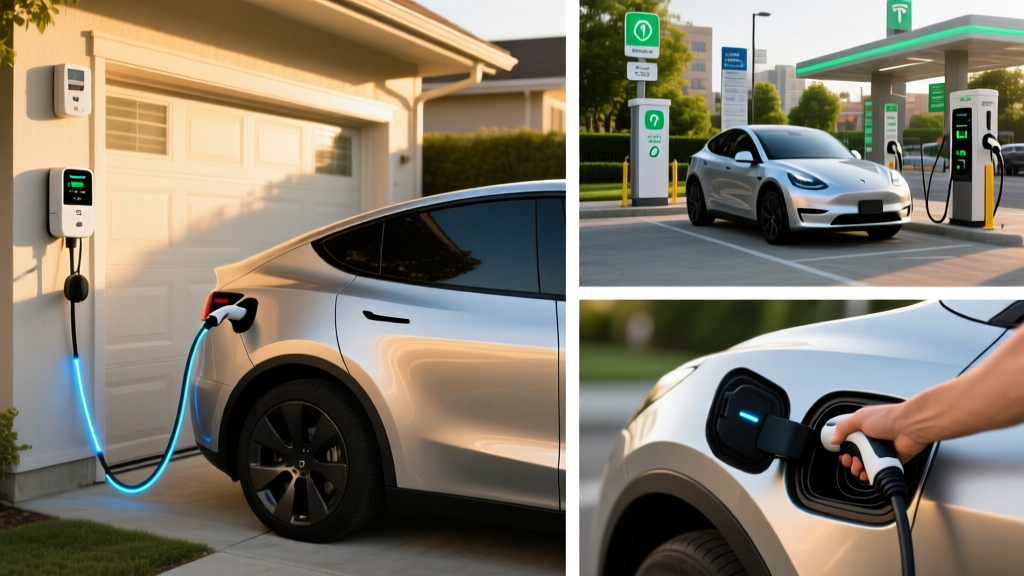
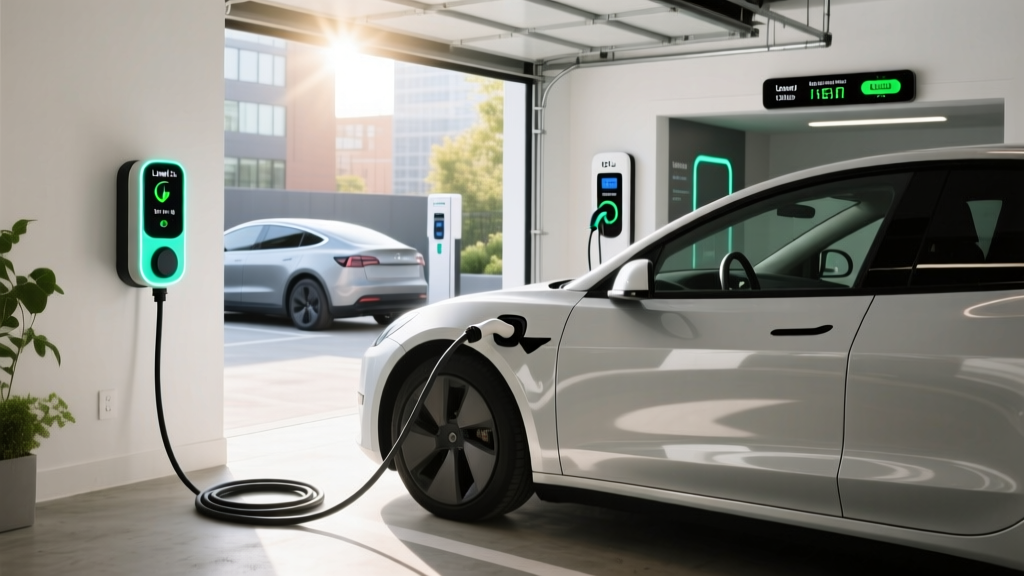
For EVs with long range (batteries of 85 kWh or larger), Level 2 home charging is the practical baseline. A 9.6 kW Level 2 station can refill a 100 kWh battery from 10% to 80% in roughly 7.5 hours — ideal for overnight. DC fast charging is reserved for road trips, where a 250 kW-capable vehicle like the Hyundai Ioniq 5 (10–80% in approximately 18 minutes) or the Tesla Model S (10–80% in roughly 25 minutes at a V3 Supercharger) can add hundreds of miles during a short stop.
How Much Does It Cost to Install a Home EV Charger?
Home Level 2 installation costs vary enormously depending on your electrical panel's capacity, the distance from the panel to the charging location, and local permit fees. Here is a realistic breakdown for a 240V / 48A (11.5 kW) hardwired Level 2 station — a common setup for long-range EVs:
| Component | Low Estimate | High Estimate | Notes |
|---|---|---|---|
| Level 2 charging equipment | $400 | $750 | Smart Wi-Fi chargers (ChargePoint, Emporia, Wallbox) |
| Electrician labor | $500 | $2,000 | Depends on run length, wall type, conduit needs |
| Electrical permit | $50 | $250 | Varies by municipality |
| Panel upgrade (if needed) | $1,500 | $4,000+ | Required if existing panel is 100A or lacks spare breaker slots |
| Total (no panel upgrade) | $950 | $3,000 | Typical for newer homes with 200A service |
| Total (with panel upgrade) | $2,450 | $7,000 | Common for older homes or those with high existing loads |
What Electrical Upgrades Might I Need?
A 48A continuous-load charger requires a 60A dedicated circuit on a 240V line (NEMA 14-60 outlet or hardwired). Your electrical panel must have at least 60A of spare capacity after accounting for existing loads (HVAC, dryer, oven, water heater). Homes with 100A service almost always need an upgrade to 200A before adding a high-power EV charger.
Some homeowners opt for a 40A circuit / 32A charger (7.7 kW) to avoid a panel upgrade. This still adds roughly 28 miles of range per hour — enough to refill most long-range EVs overnight, just more slowly than an 11.5 kW setup.
Connector Compatibility: NACS, CCS, and CHAdeMO
The North American charging landscape has largely standardized around the NACS (North American Charging Standard) connector, originally developed by Tesla. As of the 2025–2026 model years, most major automakers — Ford, GM, Rivian, Volvo, Polestar, Hyundai, Kia, and others — have adopted NACS ports on new vehicles. However, hundreds of thousands of CCS1-equipped EVs remain on the road.
| Connector | Brands Using It (New Vehicles) | Adapter Needed? |
|---|---|---|
| NACS (Tesla-style) | Tesla, Ford, GM, Rivian, Volvo, Polestar, Hyundai, Kia, BMW, Mercedes-Benz, Lucid, Subaru | CCS-to-NACS adapter for legacy CCS public chargers (~$200–$300) |
| CCS1 | VW ID.4 (prior model years), older Bolt EV/EUV, older Hyundai/Kia models | NACS-to-CCS adapter for Tesla Supercharger access (~$200–$250) |
| CHAdeMO | Nissan Leaf (legacy only — discontinued for new US sales) | No widely available adapter; network shrinking |
For buyers choosing among EVs with long range in 2026, NACS is the default connector for nearly every new model. If you are purchasing a used CCS-equipped EV, budget for a NACS adapter to access Tesla's Supercharger network — the largest DC fast-charging network in North America with over 25,000 stalls.
Cost to Charge: Home vs. Public vs. Gas Comparison
The economic case for long-range EVs depends heavily on where you charge. Home charging on off-peak rates delivers the lowest per-mile cost. Public DC fast charging narrows the gap with gasoline but still usually saves money.
| Scenario | Rate | Cost to Add 300 Miles* | Cost Per Mile |
|---|---|---|---|
| Home Level 2 (off-peak utility rate) | $0.09/kWh | $9.45 | $0.032 |
| Home Level 2 (national avg. residential) | $0.16/kWh | $16.80 | $0.056 |
| Public Level 2 (network pricing) | $0.25/kWh | $26.25 | $0.088 |
| DC Fast Charging ( Electrify America / EVgo) | $0.40/kWh | $42.00 | $0.14 |
| Gasoline vehicle (25 MPG combined, $3.40/gal) | $3.40/gallon | $40.80 | $0.136 |
*Based on a vehicle efficiency of 3.15 miles/kWh (approximately 110 MPGe combined), typical for efficient long-range sedans like the Tesla Model 3 Long Range or Hyundai Ioniq 6. Less efficient EVs like large trucks will cost more per mile.
Home charging at off-peak rates delivers fuel costs roughly 75% lower than an equivalent 25 MPG gasoline car. Even at the national average residential electricity rate of $0.16/kWh (per EIA data), EVs with long range cost about half as much per mile to "refuel." The savings shrink on road trips using DC fast chargers, where pricing can approach or briefly exceed gasoline costs — but most daily driving happens at home.
Charging Time Examples for Long-Range EVs
Here is what charging actually looks like for popular long-range models across different scenarios. All times assume starting from 10% State of Charge (SoC):
| Vehicle | Battery (kWh usable) | EPA Range | Level 2 at 11.5 kW (10–80%) | DC Fast 10–80% |
|---|---|---|---|---|
| Tesla Model 3 Long Range (2026) | 79 kWh | 363 mi | ~5.3 hours | ~22 min (250 kW peak) |
| Hyundai Ioniq 5 Long Range AWD (2026) | 84 kWh | 320 mi | ~5.5 hours | ~18 min (800V, 250 kW peak) |
| Chevrolet Silverado EV 4WT (2026) | 200 kWh | 440 mi | ~13.5 hours | ~38 min (350 kW peak) |
| Lucid Air Grand Touring (2026) | 118 kWh | 512 mi | ~7.8 hours | ~25 min (300 kW peak) |
| Ford F-150 Lightning Extended Range (2026) | 131 kWh | 320 mi | ~8.8 hours | ~41 min (150 kW peak) |
Best Home Chargers for Long-Range EVs in 2026
Long-range EVs demand higher-power Level 2 chargers to make overnight refilling practical. Here are top-performing units with exact specifications:
Emporia Vue Level 2 Smart Charger
- Power output: 48A / 11.5 kW (hardwired) or 40A / 9.6 kW (NEMA 14-50 plug)
- Connector: NACS (J3400) native; CCS adapter included
- Cable length: 24 ft
- Smart features: Wi-Fi, solar integration, energy monitoring via Emporia app, scheduled charging
- Price: ~$399 (hardwired)
- Best for: Budget-conscious buyers wanting maximum power and energy tracking
ChargePoint Home Flex (2nd Gen)
- Power output: Up to 50A / 12 kW (hardwired); adjustable 16–50A via DIP switch
- Connector: NACS native (2025+ models)
- Cable length: 23 ft
- Smart features: Wi-Fi, Alexa integration, ChargePoint app scheduling, load-sharing with second unit
- Price: ~$549
- Best for: Dual-EV households (load-sharing allows two chargers on one 60A circuit)
Tesla Wall Connector (Gen 4)
- Power output: 48A / 11.5 kW (hardwired)
- Connector: NACS native
- Cable length: 24 ft
- Smart features: Wi-Fi, over-the-air updates, power-sharing with additional Wall Connectors, Tesla app integration
- Price: ~$475
- Best for: Tesla owners wanting seamless ecosystem integration
All three chargers are UL-listed and compatible with outdoor installation when properly mounted in a weatherproof enclosure or under cover. Hardwired installations (no plug) allow the full 48A output; plug-in units using a NEMA 14-50 outlet are limited to 40A continuous per the National Electrical Code (NEC).
Safety, Code, and Permit Considerations
EV charger installation is governed by the National Electrical Code (NEC Article 625) and local amendments. Key requirements:
- Dedicated circuit: Your EV charger must have its own breaker — no sharing with other appliances. A 48A charger requires a 60A breaker (NEC requires circuits to be rated at 125% of continuous load).
- GFCI protection: The 2023 NEC update requires GFCI (Ground Fault Circuit Interrupter) protection for all EV charging outlets. Hardwired installations with built-in ground-fault protection in the charger may satisfy this requirement — confirm with your local inspector.
- Outdoor rating: If installing outdoors, the charger must carry a NEMA 4 or IP65 weather-resistance rating. All three chargers recommended above meet this standard.
- Permit required: Virtually all jurisdictions require an electrical permit for EV charger installation. The permit ensures a post-installation inspection verifies code compliance. Skipping the permit risks insurance claim denial in the event of an electrical fire.
- Wire gauge: A 60A circuit requires minimum 6 AWG copper wire (THHN in conduit) or 4 AWG for longer runs to limit voltage drop. Your electrician will calculate this based on run distance.
Frequently Asked Questions
How fast will each charging level add range to a long-range EV?
Level 1 (120V) adds roughly 3–5 miles per hour — essentially useless for a 100+ kWh battery. Level 2 (240V, 48A) adds approximately 35–45 miles per hour, enough to fully replenish most long-range EVs overnight. DC fast charging at 250 kW can add 200+ miles in 15–20 minutes, but only during the 10–50% SoC window before the charge curve tapers.
Which connector and charger is compatible with my EV?
Check your vehicle's charge port. For 2026 model-year vehicles, NACS is the dominant standard. If your EV has a CCS1 port (common on 2022–2024 models), you will need a CCS-to-NACS adapter (~$200) to access Tesla Superchargers. CHAdeMO (Nissan Leaf) is effectively a legacy standard with a shrinking public network.
How much does charging cost per mile compared to gas?
At the US average residential electricity rate of ~$0.16/kWh, a typical efficient long-range EV costs about $0.05–$0.06 per mile to charge at home — roughly half the per-mile fuel cost of a 25 MPG gasoline vehicle at $3.40/gallon. Public DC fast charging at $0.40/kWh brings the cost to approximately $0.14/mile, comparable to gasoline.
Do I need to upgrade my electrical panel?
If your home has a 200A panel with available breaker slots and capacity headroom, probably not. If you have a 100A panel — common in homes built before 2000 — a panel upgrade to 200A is almost always required for a 48A EV charger. Budget $1,500–$4,000+ for this upgrade depending on your utility connection and local labor rates.
Can I charge a long-range EV with just a standard wall outlet?
Technically yes, but practically no. Level 1 charging at 1.4 kW adds about 4 miles per hour. Replenishing 300 miles of range would take approximately 75 hours of continuous charging. For daily driving of 30–40 miles, Level 1 can suffice if you charge every night — but for road-trip recovery or multi-driver households, Level 2 is essential.
Are there tax credits or rebates for home charger installation?
The federal Residential Clean Energy Credit (IRS Form 5695) previously covered 30% of home EV charger equipment and installation costs up to $1,000 through 2023, but this specific provision has expired. Some states and utilities still offer rebates — check your local utility's EV program page and AFDC's state incentive database for current offers. Eligibility and amounts vary significantly by jurisdiction.