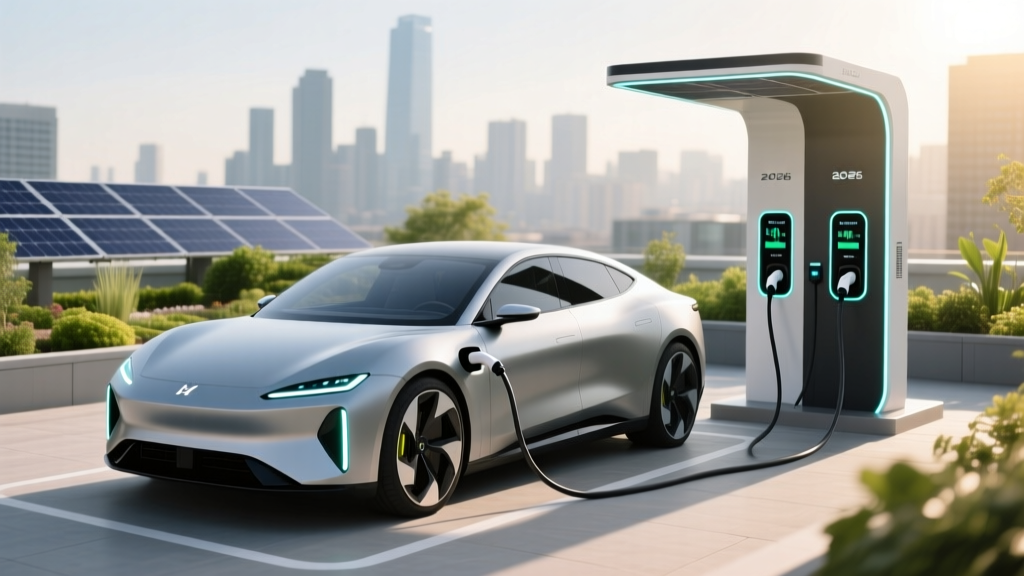
Buying the EV with the most range—whether that's the Lucid Air Grand Touring at 516 miles EPA or the Chevrolet Silverado EV 4WT at 460 miles—only solves half the ownership equation. A 118 kWh or 200+ kWh battery pack becomes a liability if you're limited to a standard 120V wall outlet, where a full recharge could take well over 100 hours. The other half is building a charging ecosystem that matches your vehicle's capacity, both at home and on the road.
This guide maps out exactly what it takes to charge today's longest-range EVs efficiently: the electrical infrastructure, the real costs, the hardware, and the math that determines whether your electric miles actually save you money in 2026.
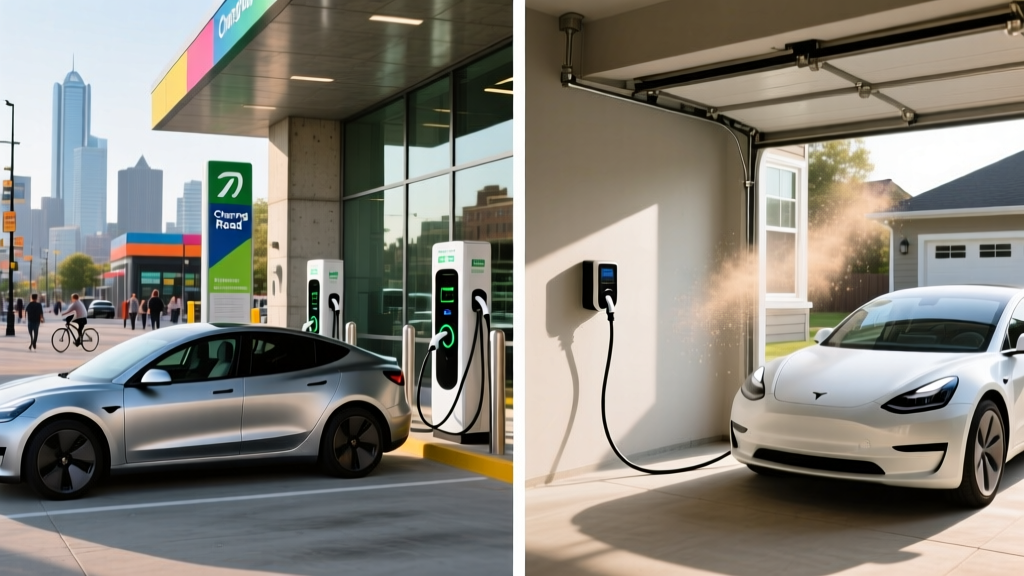
The Three Charging Levels: Speeds, Power, and Real-World Expectations
Before selecting equipment or calling an electrician, it's essential to understand the three charging tiers and what each delivers. The distinction between kW (kilowatts, a measure of power or charge rate) and kWh (kilowatt-hours, a measure of energy or battery capacity) is non-negotiable in EV ownership. Your charger's kW rating determines how fast energy flows; your battery's kWh rating determines how much it holds.
| Level | Voltage / Amperage | Power Output | Miles of Range Added Per Hour | Typical Use Case |
|---|---|---|---|---|
| Level 1 | 120V / 12-16A | 1.4–1.9 kW | 3–5 miles | Overnight trickle, PHEVs, emergency backup |
| Level 2 | 240V / 32-48A | 7.7–11.5 kW | 25–44 miles | Daily home charging, workplace, destination |
| DC Fast Charge | 400V–900V DC | 50–350 kW | 150–1,200+ miles/hr (peak) | Road trips, highway corridors, commercial fleets |
Home Level 2 Installation: Electrical Requirements and Cost Breakdown
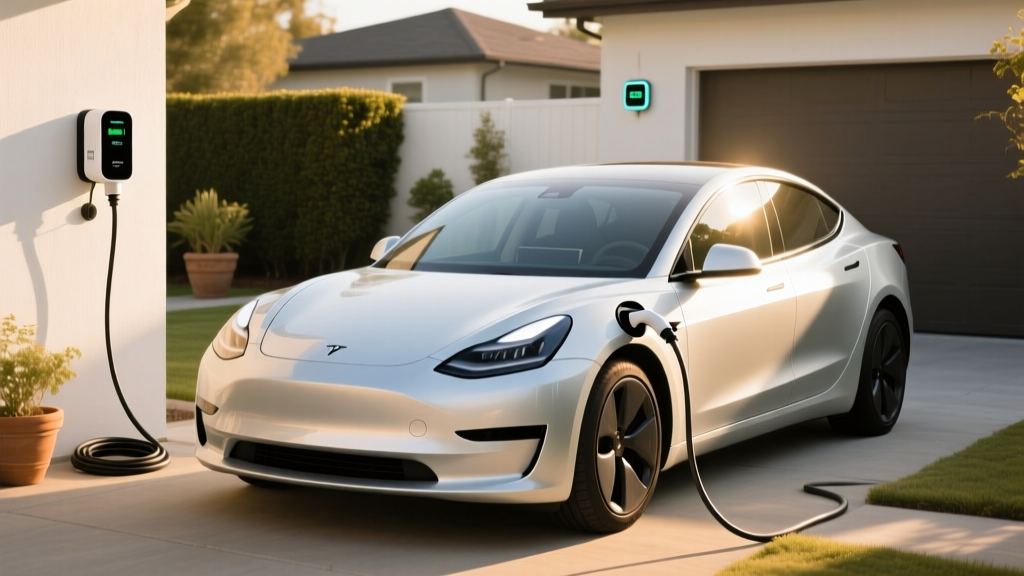
Installing a Level 2 home charger is the single most impactful upgrade for any long-range EV owner. Here's what the electrical work actually involves and what it costs in 2026.
Electrical Requirements
A Level 2 charger requires a dedicated 240V circuit, similar to what powers an electric dryer or oven. The most common configurations:
- 40-amp circuit (NEMA 14-50 outlet or hardwired): Delivers up to 32A continuous / 7.7 kW. Sufficient for most overnight charging needs.
- 50-amp circuit (NEMA 14-50 or hardwired): Delivers up to 40A continuous / 9.6 kW. The sweet spot for high-capacity batteries.
- 60-amp circuit (hardwired only): Delivers up to 48A continuous / 11.5 kW. Ideal for 200+ kWh battery packs that need faster replenishment.
The National Electrical Code (NEC) requires that continuous loads (like EV charging) not exceed 80% of the circuit's rated amperage. So a 50A breaker supports 40A continuous draw.
Panel Upgrade Considerations
Many homes built before 2000 have 100-amp or 150-amp electrical panels. Adding a 50A or 60A EV circuit may require a panel upgrade to 200A, especially if you already run electric heat, a dryer, and an oven simultaneously. A licensed electrician will perform a load calculation to determine if your existing panel can support the additional circuit.
| Component | Typical Cost Range | Notes |
|---|---|---|
| Level 2 Charging Equipment (hardwired or plug-in) | $400–$750 | Smart Wi-Fi chargers at 40A–48A |
| Electrical Permit | $50–$250 | Varies by municipality |
| Electrician Labor (standard install, panel nearby) | $500–$1,500 | Run 240V line, mount charger, ~30-50 ft wire |
| Electrician Labor (complex run, long distance) | $1,500–$3,500 | Conduit, trenching, or attic routing over 60+ ft |
| Electrical Panel Upgrade (if needed) | $2,000–$5,000 | 100A to 200A service upgrade |
| Utility Rebate / Incentive | -$250 to -$1,000 | Many utilities offer charger or install rebates |
| Total (standard install, no panel upgrade) | $950–$2,500 | Most common scenario |
| Total (with panel upgrade) | $3,000–$7,000 | Older homes with 100A service |
Always hire a licensed electrician familiar with NEC Article 625 (EV charging system requirements). The National Electrical Contractors Association maintains a directory of qualified installers. Never skip the permit—unpermitted work can void homeowner's insurance claims related to electrical fire.
Connector Compatibility: NACS, CCS1, CHAdeMO, and Adapters
The North American charging connector landscape has consolidated significantly since Tesla opened its Supercharger network and the North American Charging Standard (NACS) emerged as the dominant plug. By 2026, nearly every major automaker has adopted NACS on new vehicles, but millions of CCS1-equipped EVs remain on the road.
| Connector Type | Brands Using It (New Vehicles) | Home Charger Availability | Public DC Network Access |
|---|---|---|---|
| NACS (Tesla / J3400) | Tesla, Ford, GM, Rivian, Volvo, Polestar, Mercedes, BMW, Hyundai, Kia (newer models) | Tesla Wall Connector, ChargePoint Home Flex (NACS), Emporia Vue | Tesla Supercharger (17,000+ stalls), growing Electrify America / EVgo NACS stalls |
| CCS1 (Combo) | VW ID.4 (older), legacy Hyundai/Kia, BMW i4 (older), Stellantis | ChargePoint Home Flex, Grizzl-E, Emporia Vue (CCS versions) | Electrify America, EVgo, ChargePoint public DC |
| CHAdeMO | Nissan Leaf (discontinued), Mitsubishi Outlander PHEV | Rare for home; mostly public | Limited and declining; some Electrify America stalls |
Charging Costs: Home vs. Public vs. Gas Per-Mile Comparison
The economic case for a long-range EV hinges on how and where you charge. A Lucid Air or Tesla Model S with a 100+ kWh battery can cost anywhere from $8 to $40+ to "fill up," depending on your electricity source.
| Charging Scenario | Cost per kWh | Cost to Add 300 Miles* | Cost Per Mile |
|---|---|---|---|
| Home (off-peak utility rate) | $0.09–$0.14 | $9.00–$14.00 | $0.030–$0.047 |
| Home (standard residential rate) | $0.14–$0.20 | $14.00–$20.00 | $0.047–$0.067 |
| Public Level 2 (network pricing) | $0.25–$0.49 | $25.00–$49.00 | $0.083–$0.163 |
| DC Fast Charge (Electrify America / EVgo) | $0.35–$0.56 | $35.00–$56.00 | $0.117–$0.187 |
| Tesla Supercharger (average) | $0.25–$0.40 | $25.00–$40.00 | $0.083–$0.133 |
| Gasoline vehicle (30 MPG, $3.40/gal) | — | $34.00 | $0.113 |
*Based on an EV averaging 3.0 miles per kWh (typical for a Lucid Air or Tesla Model S); efficiency varies by model. Source: fueleconomy.gov and EIA electricity/gas price data.
The takeaway: home charging on off-peak rates delivers roughly a 60–75% per-mile savings versus gasoline. But exclusive reliance on DC fast charging can push EV costs above gas, particularly in states with high utility demand charges passed through to public networks. The EV with the most range gives you a critical advantage here—its large battery means fewer charging stops and the flexibility to charge at home more often, where costs are lowest.
Charging Times for High-Capacity EV Batteries
Long-range EVs carry large batteries, and large batteries take longer to charge at any given power level. Here's what to expect across common scenarios for 2026's highest-capacity packs:
| Battery Size (usable) | Example Vehicles | Level 2 at 11.5 kW (48A) | DC Fast (peak rate) | DC Fast 10–80% Time |
|---|---|---|---|---|
| 75 kWh | Tesla Model 3 Long Range | ~5.2 hours | 250 kW peak | ~25–28 min |
| 100 kWh | Tesla Model S, BMW iX xDrive50 | ~7 hours | 250 kW peak | ~28–33 min |
| 118 kWh | Lucid Air Grand Touring | ~8.2 hours | 300 kW peak (900V architecture) | ~20–25 min |
| 131 kWh | Ford F-150 Lightning Extended Range | ~9.1 hours | 150 kW peak (limited by pack) | ~45–55 min |
| ~200 kWh | Chevrolet Silverado EV 4WT Max Range | ~14 hours | 350 kW peak (Ultium) | ~35–42 min |
Recommended Level 2 Home Chargers for Long-Range EVs
For EVs with 100+ kWh batteries, you want a charger that can deliver at least 11.5 kW (48A) to make overnight replenishment practical. Here are top-rated options available in 2026:
Tesla Wall Connector (Gen 4)
- Power: 11.5 kW (48A) on 60A circuit
- Connector: NACS native; J1772 adapter available
- Cable length: 24 ft
- Smart features: Wi-Fi, OTA updates, power sharing between two units, access control
- Price: ~$475
- Best for: Tesla and NACS-equipped owners; cleanest ecosystem integration
ChargePoint Home Flex (Gen 2)
- Power: Up to 12 kW (50A) on 60A circuit; adjustable down to 16A
- Connector: J1772 native (NACS adapter included with many new EVs)
- Cable length: 23 ft
- Smart features: Wi-Fi, Alexa, ChargePoint app scheduling, utility demand-response compatible
- Price: ~$599
- Best for: CCS and J1772 vehicles; flexible amperage for older panels
Emporia Vue Smart Charger
- Power: 11.5 kW (48A) on 60A circuit
- Connector: J1772 native; NACS adapter available
- Cable length: 24 ft
- Smart features: Integrates with Emporia Vue energy monitor, solar-aware charging, time-of-use scheduling
- Price: ~$399
- Best for: Solar-panel owners and budget-conscious buyers wanting smart features
Grizzl-E Smart
- Power: 10 kW (40A) on 50A circuit
- Connector: J1772 native
- Cable length: 24 ft
- Smart features: Wi-Fi, OCPP-compatible, extreme cold rated (-40°F)
- Price: ~$449
- Best for: Cold-climate owners and those wanting a rugged, Canadian-built unit
Safety, Code, and Best Practices
EV charging draws sustained high current for hours—far longer than most household appliances. Safety isn't optional.
- Dedicated circuit: Your Level 2 charger must be on its own dedicated breaker. Never share the circuit with other high-draw appliances.
- GFCI protection: NEC 2023 (and the 2026 adoption cycle in most states) requires GFCI protection for all EV charging outlets. Hardwired installations may have different requirements—your electrician will confirm.
- Outdoor rating: If your charger is installed outdoors (garage-adjacent or driveway), ensure it carries a NEMA 4 (weatherproof) rating. All chargers listed above meet this standard.
- Cable management: Use a holster or cable retractor to prevent tripping hazards and protect the connector from ground moisture and road salt.
- Utility notification: Many utilities require or incentivize notification when you install an EV charger. Some offer time-of-use (TOU) rates that dramatically reduce overnight charging costs—often $0.06–$0.09/kWh versus $0.18+ during peak hours.
For detailed code requirements, consult the National Fire Protection Association's NEC resources or your local building department.
Frequently Asked Questions
How much does it cost to install a home EV charger?
A standard Level 2 installation (50A circuit, charger within 30–50 feet of the panel, no panel upgrade) typically runs $950–$2,500 all-in, including the charger unit ($400–$750), permit ($50–$250), and electrician labor ($500–$1,500). If your home needs an electrical panel upgrade from 100A to 200A service, add $2,000–$5,000. Many utilities offer rebates of $250–$1,000 that offset equipment or labor costs.
How fast will each charging level add range?
Level 1 (120V) adds 3–5 miles per hour—impractical for large batteries. Level 2 (240V, 48A) adds 30–44 miles per hour depending on your vehicle's efficiency, replenishing most EVs overnight. DC fast charging adds 150–1,200+ miles per hour at peak rates, though the charge curve tapers significantly above 80% state of charge.
Which connector/charger is compatible with my EV?
If you bought a new EV in 2025 or 2026, it almost certainly uses the NACS connector (Tesla, Ford, GM, Rivian, Hyundai, Kia, BMW, Mercedes, Volvo, Polestar). Older CCS1 vehicles (2022–2024 model years from VW, Hyundai, Kia) can use a CCS-to-NACS adapter for Supercharger access. CHAdeMO is limited to the Nissan Leaf and older Mitsubishi models. For home charging, any J1772 Level 2 charger works universally with the included adapter on NACS vehicles.
How much does charging cost per mile vs. gas?
Home charging on off-peak rates costs roughly $0.03–$0.05 per mile, compared to $0.11+ per mile for a 30 MPG gasoline vehicle at $3.40/gallon. Public DC fast charging is more expensive at $0.12–$0.19 per mile—sometimes exceeding gas costs. The financial advantage of an EV is maximized when 80%+ of charging happens at home.
What electrical upgrades might I need?
The most common upgrade is a panel capacity increase from 100A or 150A to 200A, costing $2,000–$5,000. Homes with existing 200A panels usually accommodate a 50A or 60A EV circuit without an upgrade, provided the load calculation shows sufficient headroom. Older homes with knob-and-tube wiring, aluminum branch circuits, or Federal Pacific/Zinsco panels may need partial rewiring or full panel replacement—your electrician's load calculation will reveal this before work begins.
Can I charge a 200 kWh battery pack at home practically?
Yes, but plan for longer sessions. A ~200 kWh pack (like the Silverado EV Max Range) takes roughly 14 hours at 11.5 kW for a 10–80% charge. For daily driving of 50–80 miles, you're only replenishing 17–27 kWh overnight—easily handled in 2–3 hours. Reserve full recharge sessions for weekends or before long road trips.
For the latest federal tax credit rules that may offset EV purchase costs (not charger installation—see IRS §30D clean vehicle credits), consult a tax professional. Some utilities and states offer separate charger-installation incentives; check your local utility's EV program page for current offers.