What 300 Miles of Range Actually Means at the Charger
If you own or are shopping for an EV with 300 mile range — vehicles like the Tesla Model 3 Long Range (EPA 341 mi), Hyundai Ioniq 6 SE Long Range (EPA 342 mi), or the Chevrolet Equinox EV (EPA 319 mi) — you're likely sitting on a usable battery in the 72–84 kWh range. That capacity defines everything about your charging life: how long a Level 2 top-up takes overnight, whether a DC fast stop is a 16-minute coffee break or a 38-minute lunch, and what your monthly electricity bill will look like.
This guide translates "300-mile EV" into exact charging numbers: kW speeds, minutes from 10–80%, dollars per mile, and the real cost of wiring your garage for daily driving. No marketing fluff, just the figures you need to spec a charger and budget an install.
Real-world range note: An EPA-rated 300-mile EV typically delivers 240–270 miles at sustained 70-mph highway speeds, and 200–230 miles in sub-30°F winter conditions. Plan charging stops around ~220 miles of usable range to preserve a safety buffer and stay in the battery's fastest charge-curve window (10–80% SoC).
Charging Levels Explained: kW Speeds and Miles Per Hour
The single most important distinction in EV charging is between kW (kilowatts), the rate of power flow, and kWh (kilowatt-hours), the amount of energy stored in your battery. A 9.6 kW Level 2 charger fills a 77 kWh battery in roughly 8 hours — the math only works when you keep these units straight.
| Level | Voltage / Amps | Max kW | Miles of Range Added Per Hour | 10–80% Time (77 kWh pack) |
|---|---|---|---|---|
| Level 1 (120V) | 120V / 12A | 1.4 kW | ~4–5 mi/hr | ~38 hours (not practical) |
| Level 2 (240V) | 240V / 32A | 7.7 kW | ~25–28 mi/hr | ~7.5 hours |
| Level 2 (240V, 48A) | 240V / 48A | 11.5 kW | ~37–40 mi/hr | ~5.5 hours |
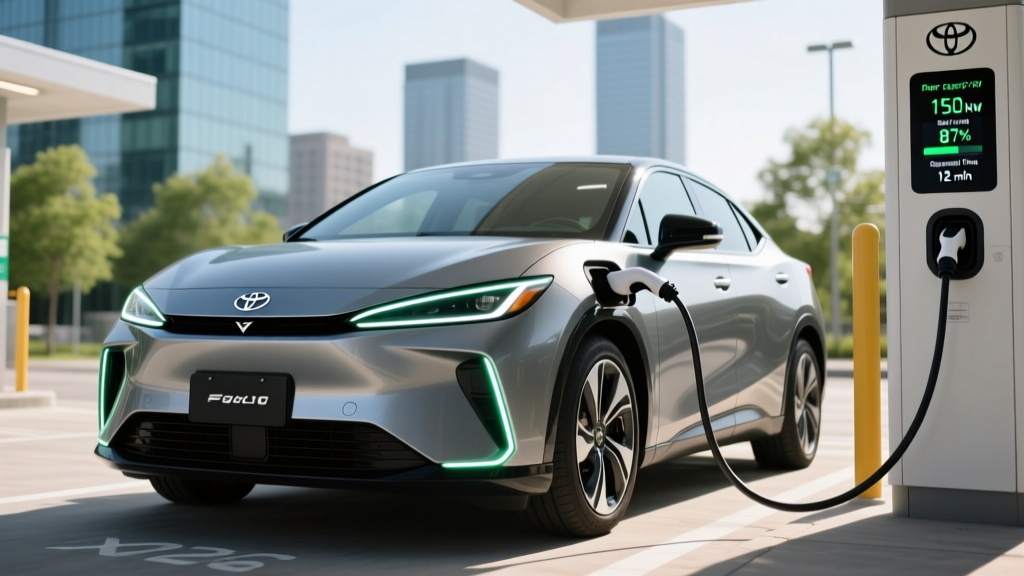
| DC Fast (150 kW) | 400V architecture | 150 kW | ~500+ mi/hr (peak) | ~28–32 min |
| DC Fast (250 kW) | 400V / 800V | 250 kW | ~800+ mi/hr (peak) | ~18–22 min |
DC fast-charging times assume you arrive at ~10% SoC with a preconditioned battery. Charging slows dramatically above 80% to protect cell health — the "charge curve taper" is why 10–80% is the standard benchmark rather than 0–100%. On a 300-mile EV, that last 20% can add another 15–25 minutes at a fast charger.
Home Charger Installation: Electrical Requirements and Real Costs
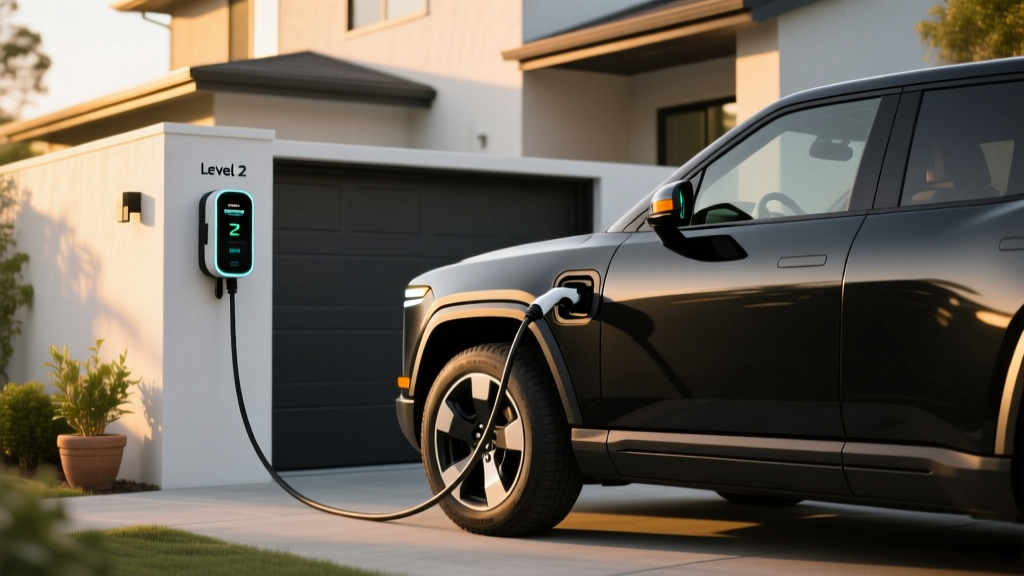
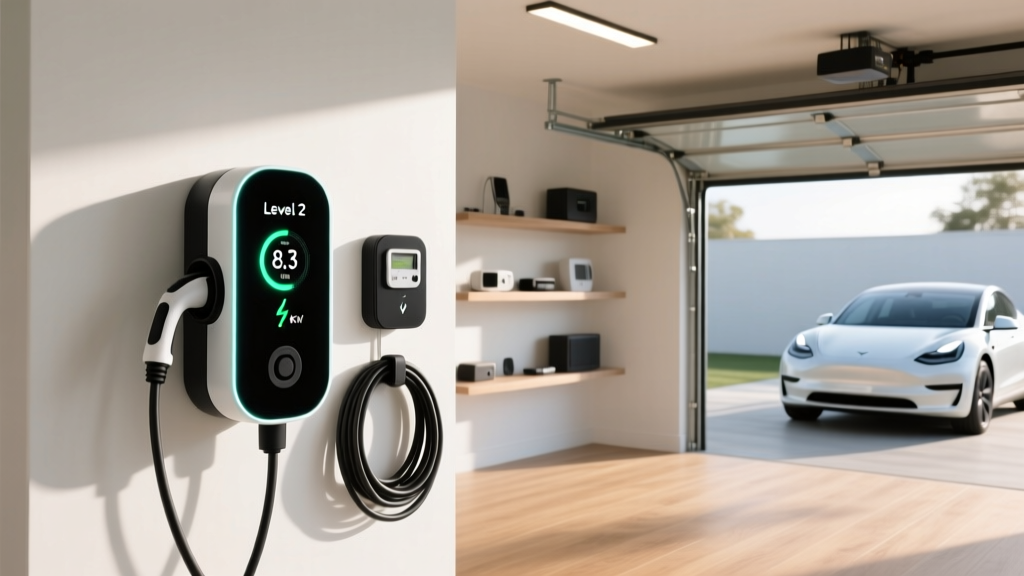
Most 300-mile EV owners charge at home 85–95% of the time. The typical setup is a 240V Level 2 station on a dedicated 50-amp circuit (delivering 40 amps continuous to the car, or 9.6 kW). Higher-output 60-amp circuits (48A continuous, 11.5 kW) are increasingly common for larger packs.
What the electrician looks at:
- Panel capacity: Your main service panel needs enough spare amperage to add a 50A or 60A double-pole breaker. Many older 100A panels require an upgrade to 200A service — the single biggest cost driver.
- Wire gauge: 50A circuits typically require 6 AWG copper; 60A circuits need 4 AWG. Longer runs from panel to garage increase wire cost significantly.
- Permit and inspection: Nearly all jurisdictions require an electrical permit for EV charger installs. The inspector verifies wire gauge, breaker rating, grounding, and GFCI protection.
- NEMA 14-50 vs. hardwired: A NEMA 14-50 receptacle lets you unplug and take your charger when you move, but NEC 2020+ requires GFCI protection on receptacles, which can cause nuisance tripping with some EVSEs. Hardwired units skip the GFCI requirement and are generally preferred for permanent installs.
| Component | Budget Install | Standard Install | Complex Install |
|---|---|---|---|
| Level 2 EVSE (charger unit) | $350–$500 | $500–$700 | $600–$900 |
| Electrician labor (2–6 hrs) | $400–$700 | $600–$1,200 | $1,200–$2,000 |
| Materials (wire, conduit, breaker) | $150–$300 | $250–$500 | $400–$800 |
| Permit and inspection | $50–$150 | $100–$250 | $150–$350 |
| Panel upgrade (if needed) | $0 | $0 | $1,500–$3,500 |
| Total | $950–$1,650 | $1,450–$2,650 | $3,850–$7,550 |
The "complex" scenario applies when your panel is maxed out, the run from panel to garage exceeds 60 feet, or you need trenching for a detached garage. Get three quotes and ask each electrician to itemize panel load calculations — a reputable contractor will show you the math per NEC Article 220.
Connector Compatibility: NACS, CCS1, and CHAdeMO in 2026
The North American connector landscape has consolidated heavily since 2023, when Ford, GM, Rivian, and most major automakers committed to the North American Charging Standard (NACS), originally developed by Tesla. Here's where things stand for 2026 model-year vehicles:
| Connector | Brands Using It (2026 Models) | Adapter Needed? |
|---|---|---|
| NACS (native) | Tesla (all), Ford (F-150 Lightning, Mustang Mach-E), GM (Ultium-based), Rivian, Hyundai/Kia (new platforms), Volvo, Polestar | None at Superchargers; CCS adapter for legacy stations |
| CCS1 | Remaining Stellantis models, some VW ID.4 (2024–2025 carryover), older Hyundai/Kia (2023 and prior) | NACS-to-CCS adapter for Tesla Superchargers (~$200–$250) |
| CHAdeMO | Nissan Leaf (legacy only — discontinued for new sales) | Limited network; plan around CCS/NACS stations |
For home Level 2 charging, all EVs use the same J1772 connector (or NACS, which supports Level 2 via the same pins). If you buy a NACS-connector home charger, you'll need a NACS-to-J1772 adapter for any non-NACS vehicle visiting your home — and vice versa.
Public DC fast charging increasingly favors NACS, with Tesla opening its Supercharger network to NACS-equipped Ford, GM, Rivian, and Hyundai/Kia vehicles. Electrify America and EVgo have added NACS cables alongside CCS at new stations.
Cost Per Mile: Charging an EV With 300-Mile Range vs. Gas
The economics of charging depend heavily on where and when you plug in. Here's a realistic cost breakdown for a 300-mile EV with a 77 kWh battery and a comparable 28-MPG gas sedan using $3.30/gallon regular unleaded (2026 national average).
| Scenario | $/kWh | Cost for Full 77 kWh Fill | Cost Per Mile (300 mi) | Gas Equivalent (28 MPG, $3.30/gal) |
|---|---|---|---|---|
| Home off-peak (utility TOU rate) | $0.08–$0.12 | $6.16–$9.24 | $0.02–$0.03 | $0.12/mi |
| Home standard rate | $0.14–$0.18 | $10.78–$13.86 | $0.04–$0.05 | $0.12/mi |
| Public Level 2 (ChargePoint, etc.) | $0.25–$0.40 | $19.25–$30.80 | $0.06–$0.10 | $0.12/mi |
| DC fast charging (EA, EVgo, Tesla) | $0.35–$0.55 | $26.95–$42.35 | $0.09–$0.14 | $0.12/mi |
The takeaway: home charging on an off-peak rate is roughly 4–6× cheaper per mile than gasoline. Exclusive reliance on DC fast charging narrows the gap considerably — and in high-cost states like California, peak DC rates can approach or exceed gas cost per mile. This is why home Level 2 access is the single biggest financial factor in EV ownership.
For a driver covering 12,000 miles/year with 80% home charging at $0.12/kWh and 20% DC fast charging at $0.45/kWh, annual fuel cost lands around $660 — versus $1,414 for the gas equivalent. That's roughly $750 in annual savings before any tax incentives.
Best Home Chargers for 300-Mile EVs: 2026 Equipment Picks
For a 77–84 kWh battery, you want a Level 2 charger that delivers at least 40 amps (9.6 kW) to fully replenish overnight in ~7–8 hours. Here are three proven units at different price points:
ChargePoint Home Flex — Best Overall
- Output: Up to 12 kW (50A) on a 60A circuit; configurable down to 16A
- Connector: J1772 (NACS adapter available) or native NACS (2025+ models)
- Cable length: 23 feet
- Smart features: Wi-Fi, app scheduling, utility TOU integration, Alexa
- Price: $649–$749 (unit only)
- Outdoor rated: Yes (NEMA 4)
Tesla Wall Connector — Best for NACS Vehicles
- Output: Up to 11.5 kW (48A) on a 60A circuit
- Connector: Native NACS; includes J1772 adapter in box (2026 revision)
- Cable length: 24 feet
- Smart features: Wi-Fi, OTA updates, Power Share (load balancing between two units)
- Price: $475 (unit only)
- Outdoor rated: Yes (NEMA 3R)
Emporia Level 2 EV Charger — Best Budget Smart Charger
- Output: Up to 11.5 kW (48A) on a 60A circuit
- Connector: J1772 (NACS adapter sold separately)
- Cable length: 24 feet
- Smart features: Wi-Fi, app with real-time energy monitoring, solar integration
- Price: $399 (unit only)
- Outdoor rated: Yes (NEMA 4)
All three units qualify for the federal 30% Residential Clean Energy Credit (up to $1,000) when installed at a primary residence in a qualifying census tract. Check your eligibility at IRS.gov before purchasing — the credit applies to both equipment and installation labor.
Safety, Code, and Inspection: What You Must Get Right
EV chargers draw sustained high current for hours — this is not the same as plugging in a dryer. Key safety and code requirements per the 2023 NEC (adopted by most jurisdictions by 2026):
- Dedicated circuit: Your EVSE must be on its own breaker, not shared with other appliances.
- Continuous-load derating: NEC requires circuits to be rated at 125% of continuous load. A 40A charger requires a 50A breaker; a 48A charger requires a 60A breaker.
- GFCI protection: Required for all receptacle-based installs (NEMA 14-50). Hardwired units are exempt from this requirement, which is one reason many electricians prefer hardwiring.
- Outdoor rating: If your charger is outside, it must carry at minimum a NEMA 3R rating (rain protection). NEMA 4 is preferred for hose-down and ice resistance.
- Cable management: Keep the charging cable off the ground to prevent abrasion and trip hazards. Wall-mounted holsters or retractors are strongly recommended.
Always pull a permit. Unpermitted work can void your homeowner's insurance in the event of an electrical fire and will flag during a home inspection if you sell.
Frequently Asked Questions
How much does it cost to install a home EV charger?
A straightforward Level 2 install with adequate panel capacity typically costs $1,450–$2,650 including equipment, electrician labor, materials, and permit. If your home needs a 200A panel upgrade, add $1,500–$3,500. The federal 30% Residential Clean Energy Credit (up to $1,000) can offset a meaningful portion — verify eligibility on IRS.gov.
How fast will each charging level add range to my 300-mile EV?
Level 1 (120V) adds roughly 4–5 miles per hour — fine for plug-in hybrids with small batteries, but inadequate for a 77+ kWh EV. Level 2 at 9.6 kW (40A) adds 25–28 miles per hour, fully replenishing a 300-mile EV overnight in about 7.5 hours. DC fast charging at 150 kW can add 150+ miles in 15 minutes, though sustained rates depend on battery temperature and state of charge.
Which connector and charger is compatible with my EV?
For 2026 models, most new EVs from Tesla, Ford, GM, Rivian, Hyundai, Kia, and Volvo use the NACS connector. Remaining Stellantis and legacy models use CCS1. All Level 2 home chargers work with any EV via J1772 or NACS (with an adapter if needed). Check your vehicle's charge port or the manufacturer's spec page before ordering a charger.
How much does charging cost per mile compared to gas?
Home charging on a standard rate ($0.14–$0.18/kWh) costs $0.04–$0.05 per mile for a 300-mile EV — roughly one-third the cost of a 28-MPG gas car at $3.30/gallon ($0.12/mi). Off-peak utility rates drop EV cost to $0.02–$0.03/mile. Exclusive DC fast charging at $0.45–$0.55/kWh brings EV cost to $0.09–$0.14/mile, close to gas parity.
What electrical upgrades might I need for a home charger?
The most common upgrade is a panel capacity increase from 100A to 200A service, needed when your existing panel lacks spare capacity for a 50–60A EV circuit. Other potential needs: replacing a Federal Pacific or Zinsco panel (known safety hazards), upgrading the meter base, or running new service wire from the utility. A licensed electrician will perform a load calculation per NEC Article 220 to determine exactly what your home requires. See the NFPA NEC guidelines for the code framework.
Do I need a Tesla Wall Connector if I own a NACS-equipped non-Tesla EV?
No. The Tesla Wall Connector works with any NACS-equipped vehicle, but so do ChargePoint, Emporia, and other NACS-connector EVSEs. The Tesla unit is competitively priced at $475 and offers excellent build quality, but the ChargePoint Home Flex gives you more granular amperage configuration and broader app ecosystem support. Either is a strong choice.
Can I use a dryer outlet (NEMA 14-30) for Level 2 charging?
A NEMA 14-30 outlet delivers 240V at 30A (24A continuous = 5.8 kW). That's enough to add ~18–20 miles per hour — workable for overnight charging if your daily commute is under 60 miles. However, sharing a dryer outlet is a code violation; you need a dedicated circuit. A portable EVSE with a 14-30 plug (like the Lectron V-BOX Pro or Tesla Mobile Connector with 14-30 adapter) is the simplest path if your dryer circuit is in the garage.