Yes, You Can Charge Your EV in the Rain — Here's the Engineering Behind It
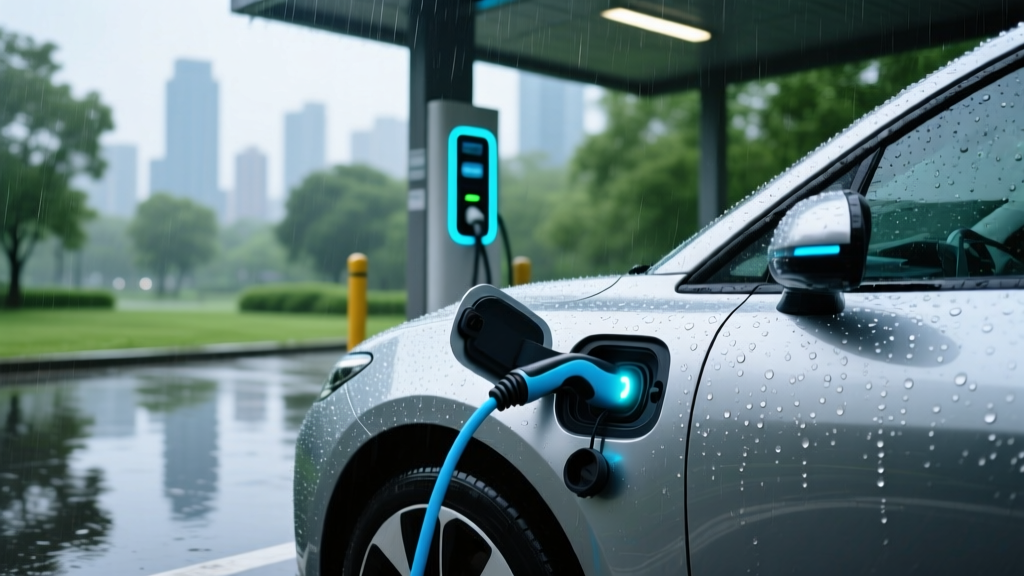
Every EV owner eventually faces it: you pull up to a charger, it's pouring, and you wonder whether plugging in is actually safe. The short answer is yes. Every EV charging connector and inlet sold in the United States is engineered and tested to operate safely in rain, snow, and humidity. But understanding why it's safe — and what precautions still matter — separates informed owners from anxious ones.
EV charging connectors carry no live current until a secure, sealed connection is confirmed between the plug and the vehicle's inlet. This handshake protocol (defined under SAE J1772 for Level 1/2 and CCS/NACS for DC fast charging) ensures electricity flows only after the system verifies a proper mechanical and electrical bond. Water can't bridge that gap. The connectors themselves carry ingress protection ratings — typically IP67 for the mated pair — meaning they're sealed against temporary immersion, let alone rainfall.
How Charging Levels Work — and How Fast Each Adds Range
Before selecting equipment or worrying about weather exposure, you need to understand the three charging tiers available to EV owners. Power is measured in kilowatts (kW) — that's the rate of energy delivery. Energy stored in your battery is measured in kilowatt-hours (kWh). Think of kW as how fast water flows from a hose, and kWh as the size of the bucket you're filling.
| Level | Voltage / Amperage | Power (kW) | Miles of Range Added per Hour | Typical Use |
|---|---|---|---|---|
| Level 1 | 120V / 12–16A | 1.4–1.9 kW | 3–5 mi/hr | Overnight trickle; emergency |
| Level 2 | 240V / 32–48A | 7.7–11.5 kW | 25–44 mi/hr | Daily home & workplace charging |
| DC Fast Charge | 400–800V DC | 50–350 kW | 150–1,200+ mi/hr (peak) | Road trips; rapid top-ups |
For context, a 2025 Tesla Model 3 Long Range with its 75 kWh (usable) battery and roughly 4 mi/kWh efficiency would take approximately 10 hours on a 7.7 kW Level 2 charger for a full charge, but only about 25 minutes (10–80% SoC) at a 250 kW Supercharger — though the charge curve tapers significantly above 80%, which is why we use the 10–80% benchmark rather than 0–100%.
Wet-Weather Charging Safety: What the Ratings Actually Mean
The safety of charging an electric vehicle in rain comes down to ingress protection (IP) ratings and National Electrical Code (NEC) requirements. Here's the breakdown:
- Connector mated pair (plug + inlet): IP67-rated when connected. This means protected against dust ingress and temporary submersion in up to 1 meter of water for 30 minutes. Rainfall is well within this margin.
- Outdoor-rated charger enclosures: NEMA 4 (or IP65) rating protects against splashing water, windblown rain, and hose-directed water. Any wallbox mounted outdoors must carry this rating.
- GFCI protection: The NEC (Article 625) requires all EV charging circuits to have Ground Fault Circuit Interrupter protection. If any current leaks — to water, a person, or ground — the GFCI trips in milliseconds, cutting power before harm occurs.
- No live pins until handshake: The J1772/CCS/NACS control pilot protocol means the connector pins carry zero voltage until the vehicle confirms a sealed connection. You could touch the pins of an unplugged connector in a downpour and feel nothing (don't test this — but the engineering backs it up).
Home Charger Installation: Electrical Requirements, Permits, and Real Costs
Installing a Level 2 home charger is the single biggest upgrade most EV owners make. It's also where costs vary the most, depending on your home's electrical panel capacity, the distance from panel to charger location, and local permit requirements. Here's what you need to know before calling an electrician.
Electrical requirements for a standard Level 2 install:
- Voltage: 240V (same as your dryer or oven circuit)
- Amperage: 40A circuit for a 32A charger (NEC requires circuits rated at 125% of continuous load); 60A circuit for a 48A charger
- Dedicated circuit: EV chargers must have their own dedicated breaker — no sharing with other appliances
- GFCI breaker: Required by NEC Article 625 for all EV supply equipment
- Permit: Required in nearly all US jurisdictions; typically $50–$200 depending on municipality
| Component | Simple Install (Panel Nearby) | Complex Install (Long Run / Panel Upgrade) |
|---|---|---|
| Level 2 charger (hardware) | $350–$700 | $350–$700 |
| Electrician labor (2–4 hrs simple / 6–12 hrs complex) | $250–$600 | $800–$2,000 |
| Conduit, wiring, breaker | $50–$150 | $200–$600 |
| Permit & inspection | $50–$150 | $100–$250 |
| Electrical panel upgrade (100A → 200A, if needed) | N/A | $1,500–$3,500 |
| Total estimated range | $700–$1,600 | $2,950–$7,050 |
The panel upgrade is the variable that shocks most homeowners. Homes built before 2000 often have 100-amp or 150-amp service panels that are already near capacity with existing loads (HVAC, electric range, dryer). Adding a 40A or 60A EV circuit may push total demand beyond the panel's rating, requiring a service upgrade to 200A. According to data from the U.S. Department of Energy, roughly 20–30% of older homes need some form of panel work for a Level 2 install.
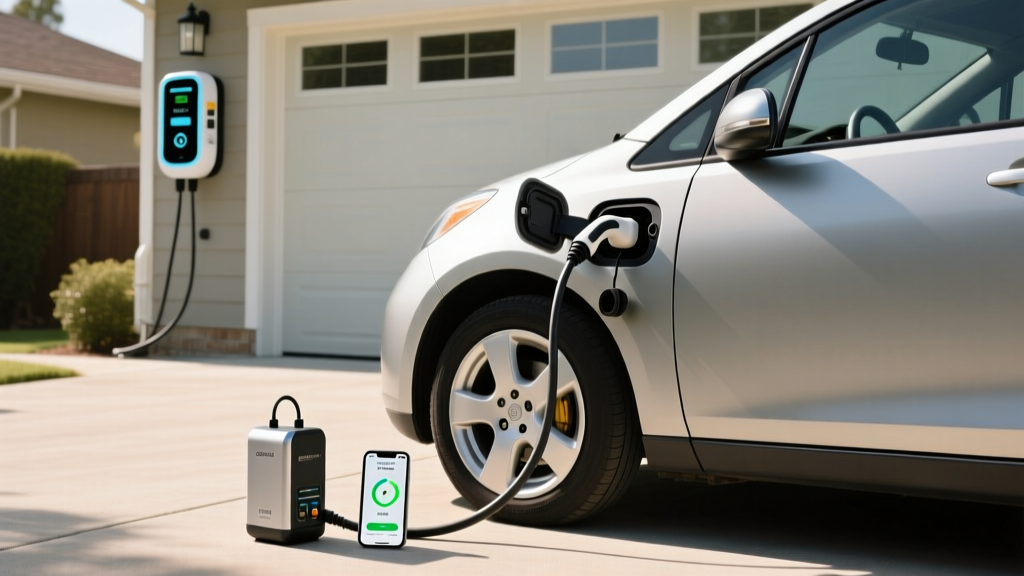
Alternatives to a panel upgrade: Consider a smart load-management device (like the Emporia V2 with load balancing) that monitors your panel's real-time draw and throttles the charger when other loads spike. This can avoid a panel upgrade entirely in many cases, saving $1,500–$3,500. A qualified electrician can assess whether this applies to your home.
Connector Compatibility: NACS, CCS1, and CHAdeMO Explained
The North American charging landscape has consolidated heavily around the North American Charging Standard (NACS), originally developed by Tesla and now adopted by nearly every major automaker for 2025–2026 models. Here's what fits what:
| Connector | Native Vehicles | Adapter Needed For |
|---|---|---|
| NACS (Tesla-style) | Tesla (all), Ford (2025+), GM (2025+), Rivian (2025+), Hyundai/Kia (2026+), BMW, Mercedes | Older CCS vehicles need NACS→CCS adapter (~$200–$300) |
| CCS1 (Combo) | VW ID.4 (pre-2026), older Ford/GM/Hyundai/Kia EVs, BMW i4 (pre-2026) | CCS→NACS adapter for Tesla Superchargers; widely available |
| CHAdeMO | Nissan Leaf (legacy); Mitsubishi Outlander PHEV | No practical adapter to NACS/CCS; declining network |
For home Level 2 charging, all non-Tesla EVs use the J1772 connector. Tesla vehicles include a J1772-to-NACS adapter in the glovebox, so any Level 2 home charger with a J1772 plug works with every EV on the road. For DC fast charging, NACS now dominates — Tesla's Supercharger network (20,000+ stalls in North America) is open to NACS-equipped Ford, GM, Rivian, and other vehicles natively, while CCS vehicles can access it via adapter.
Charging Cost Per Mile: Home vs. Public vs. Gas
One of the strongest ownership arguments for an EV is fuel-cost savings — but the actual number depends heavily on where you charge. Here's a realistic cost comparison using a 2026 Hyundai Ioniq 5 (averaging 3.5 mi/kWh combined efficiency) versus a comparable 28 MPG gas crossover at $3.40/gallon:
| Scenario | Rate ($/kWh) | Cost Per Mile | Annual Cost (12,000 mi) |
|---|---|---|---|
| Home off-peak (utility TOU rate) | $0.08–$0.12 | $0.023–$0.034 | $275–$410 |
| Home standard rate | $0.14–$0.18 | $0.040–$0.051 | $480–$615 |
| Public Level 2 (ChargePoint, etc.) | $0.20–$0.35 | $0.057–$0.100 | $685–$1,200 |
| DC fast charging (Electrify America, EVgo) | $0.35–$0.55 | $0.100–$0.157 | $1,200–$1,885 |
| Gas vehicle (28 MPG, $3.40/gal) | — | $0.121 | $1,457 |
The takeaway: home charging at off-peak rates is roughly 75–80% cheaper per mile than gasoline. Even standard-rate home charging saves 50–65%. But exclusive reliance on DC fast charging can actually exceed gas costs — a critical reason why home Level 2 access is so important for EV economics. According to fueleconomy.gov, most EV owners who charge primarily at home spend between $400–$650 annually on electricity for driving.
Top Home EV Chargers for 2026: Equipment Picks for Wet and Dry Installations
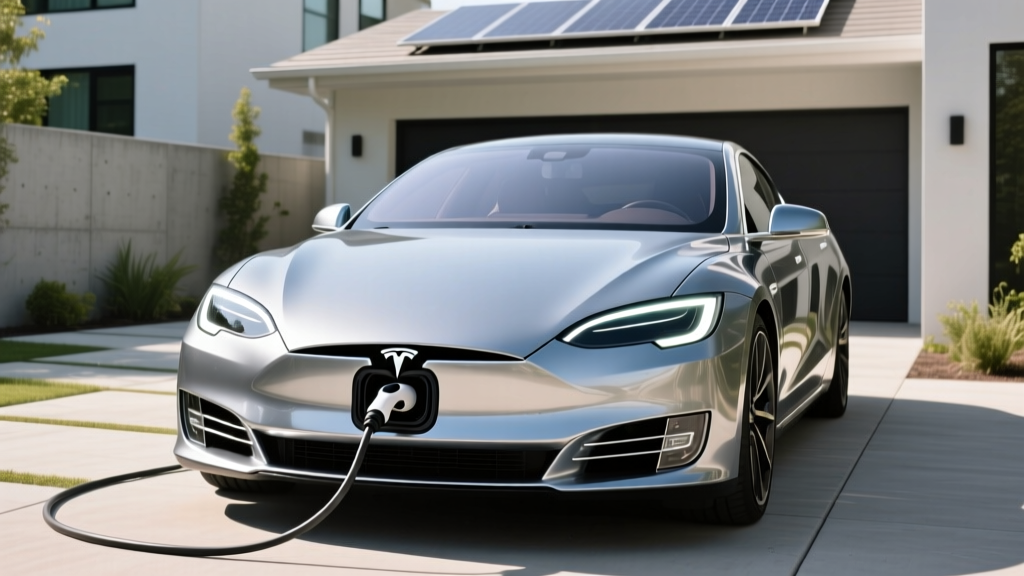
If your charger will be mounted outdoors — on a garage exterior wall, carport post, or driveway pedestal — you need a unit rated NEMA 4 (weatherproof). Here are three proven options across price tiers, all suitable for outdoor installation and rain exposure:
Emporia Level 2 EV Charger — Best Value
- Power output: 48A / 11.5 kW (on a 60A circuit) or configurable down to 32A / 7.7 kW
- Connector: J1772 (works with all EVs; Tesla owners use included adapter)
- Cable length: 24 feet
- Smart features: Wi-Fi connected, app scheduling, energy monitoring, load balancing with Emporia Vue panel monitor
- Outdoor rating: NEMA 4 — fully rated for rain and weather exposure
- Price: ~$399 (charger only)
ChargePoint Home Flex — Best Smart Features
- Power output: Up to 50A / 12 kW (on a 60A circuit); adjustable via DIP switch
- Connector: J1772
- Cable length: 23 feet
- Smart features: Wi-Fi, Alexa/Google integration, scheduled charging, charge history, utility demand-response programs
- Outdoor rating: NEMA 4
- Price: ~$549
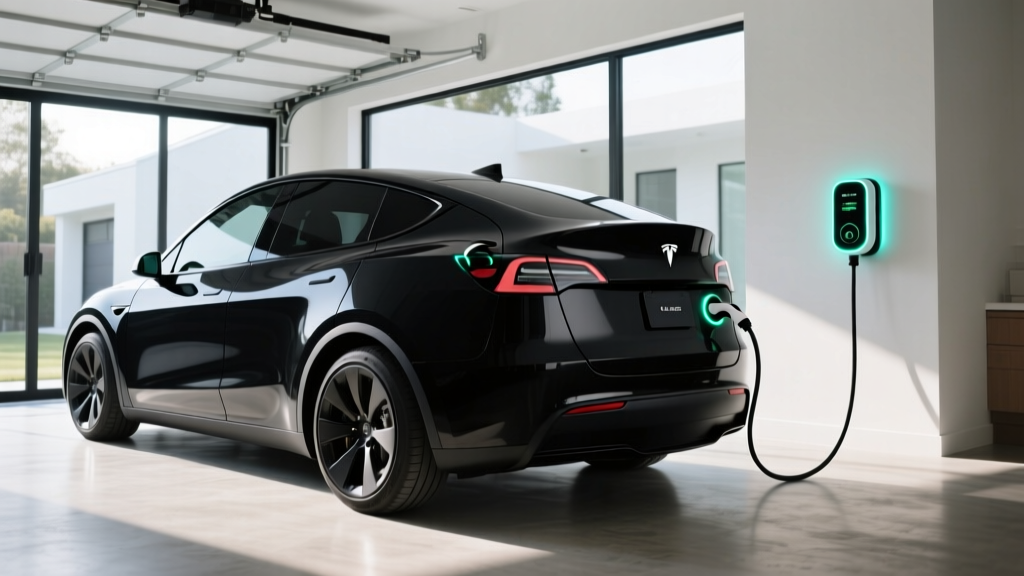
Tesla Wall Connector — Best for NACS-Native Households
- Power output: 48A / 11.5 kW (on a 60A circuit)
- Connector: NACS native (J1772 adapter available separately for non-Tesla vehicles)
- Cable length: 24 feet
- Smart features: Wi-Fi, over-the-air updates, Power-Share (two units on one circuit), integrated cable management
- Outdoor rating: NEMA 4 (indoor/outdoor rated)
- Price: ~$450
For homes in heavy-rain or coastal regions, all three units above are fully sealed and suitable for direct rain exposure on the unit housing. The connector holster (if included) should be mounted in a position that allows the plug to seat downward, preventing water pooling inside the connector head.
Charging Time Examples: 10–80% for Common Battery Sizes
Battery size and charger power determine how long you're waiting. Here are real-world charging times for popular 2025–2026 EVs across the three charging levels. Note that DC fast charging times reflect the 10–80% state of charge (SoC) window, as charging speed tapers significantly above 80% to protect battery longevity:
- Tesla Model 3 Long Range (75 kWh usable, NMC): Level 1: ~62 hrs (10–80%) · Level 2 at 11.5 kW: ~5 hrs · DC fast at 250 kW peak: ~22 min
- Hyundai Ioniq 5 (77.4 kWh usable, NMC): Level 1: ~64 hrs · Level 2 at 11.5 kW: ~5 hrs · DC fast at 235 kW peak (800V architecture): ~18 min
- Ford F-150 Lightning Extended Range (131 kWh usable, NMC): Level 1: ~109 hrs · Level 2 at 11.5 kW: ~8.5 hrs · DC fast at 150 kW peak: ~52 min
- Chevrolet Equinox EV (85 kWh usable, NMC): Level 1: ~71 hrs · Level 2 at 11.5 kW: ~5.5 hrs · DC fast at 150 kW peak: ~34 min
For daily driving, Level 2 at home is the practical standard. A 40-mile daily commute consumes roughly 11–14 kWh, which a 7.7 kW Level 2 charger replenishes in under 2 hours — easily handled overnight, even in the worst weather.
Frequently Asked Questions
How much does it cost to install a home EV charger?
A straightforward Level 2 installation (panel within 20–30 feet of the charger location, adequate panel capacity) typically costs $700–$1,600 all-in: charger hardware ($350–$700), electrician labor ($250–$600), wiring and breaker ($50–$150), and permit ($50–$150). Complex installs requiring long conduit runs or a panel upgrade from 100A to 200A can reach $2,950–$7,050. Always get at least two quotes from licensed electricians and confirm they have EV charger installation experience.
How fast will each charging level add range?
Level 1 (120V) adds 3–5 miles of range per hour. Level 2 (240V, 32–48A) adds 25–44 miles per hour depending on amperage and vehicle efficiency. DC fast charging can add 150–1,200+ miles per hour at peak power, but sessions are typically measured in 10–80% time (18–52 minutes for most 2025–2026 EVs) because the charge curve tapers steeply above 80% SoC.
Which connector and charger is compatible with my EV?
For home Level 2 charging, all EVs use J1772 — Tesla includes a J1772-to-NACS adapter. Any J1772 Level 2 charger works with every EV sold in North America. For DC fast charging, 2025–2026 models from Tesla, Ford, GM, Rivian, Hyundai, Kia, and BMW use NACS. Older CCS1 vehicles can access NACS networks (including Tesla Superchargers) with a CCS-to-NACS adapter. CHAdeMO is limited to the Nissan Leaf and is being phased out.
How much does charging cost per mile compared to gas?
Home charging at off-peak utility rates ($0.08–$0.12/kWh) costs roughly $0.023–$0.034 per mile for an efficient EV — about 75% less than a 28 MPG gas car at $3.40/gallon ($0.121/mile). Standard home rates ($0.14–$0.18/kWh) still save 50–65%. Public DC fast charging at $0.35–$0.55/kWh can approach or exceed gas costs, which is why home charging access is essential for EV economics.
What electrical upgrades might I need for a home charger?
The most common upgrade is a panel capacity increase from 100A or 150A to 200A, costing $1,500–$3,500. This is needed when your existing loads (HVAC, electric range, dryer, water heater) already consume most of your panel's capacity. Alternatives include smart load-management systems (Emporia, Span panel) that dynamically throttle the charger to avoid overloading the panel. A licensed electrician should perform a load calculation per NEC Article 220 before recommending a panel upgrade.
Is it safe to charge an electric vehicle in rain or snow?
Yes. EV charging connectors are IP67-rated when mated, the charging system delivers no current until a sealed connection is confirmed, and NEC code requires GFCI protection on all EV circuits. Use only outdoor-rated (NEMA 4) charger enclosures for exterior installations, inspect connectors for damage before use, and avoid charging during active lightning or if equipment is submerged in floodwater.