If you own or are shopping for an EV, the charging cable you plug in every night is arguably the most important accessory you will buy. Yet most buyers focus on the car and treat the cable as an afterthought — until they realize the included cord adds only 3 miles of range per hour, or that their garage outlet cannot support a faster unit. This guide breaks down exactly what each charging cable type delivers, what your home electrical system needs to support it, and which specific models earn a spot on our 2026 recommendation list.
Charging Levels Explained: How Fast Will Each Cable Add Range?
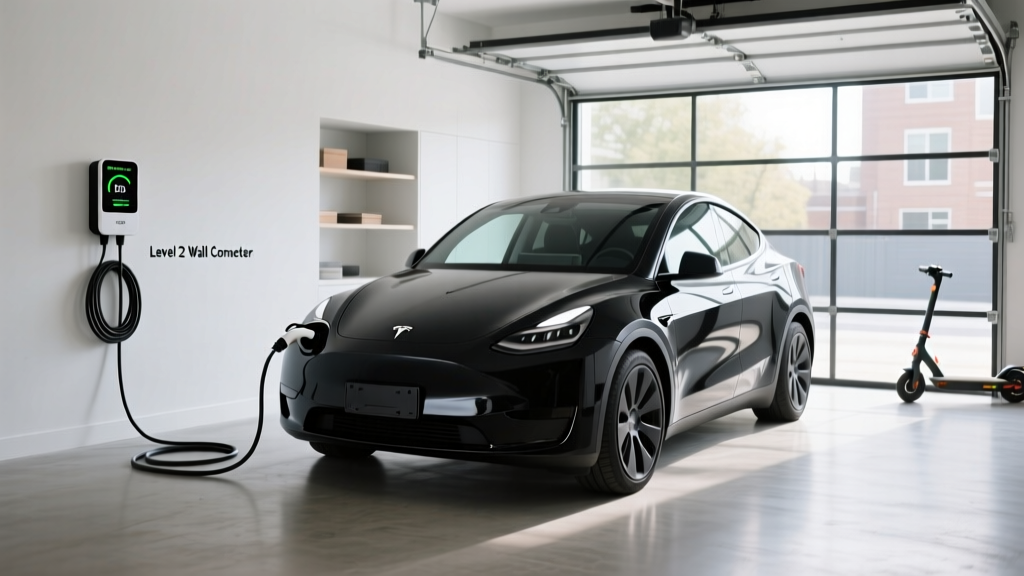
The single most common point of confusion for new EV owners is the difference between kW (kilowatts — the rate of power flow, like water pressure from a hose) and kWh (kilowatt-hours — the total energy stored in your battery, like gallons in a tank). A charging cable rated at 11.5 kW delivers energy faster than one rated at 1.4 kW, but both fill the same kWh battery. According to fueleconomy.gov, the three charging levels available to consumer EVs break down as follows:
| Level | Voltage | Typical kW | Miles of Range Added per Hour | Best Use Case |
|---|---|---|---|---|
| Level 1 (Standard Outlet) | 120V AC | 1.2 – 1.9 kW | 3 – 5 mi/hr | Overnight top-ups, PHEVs, low-mileage drivers |
| Level 2 (Home/Public AC) | 240V AC | 3.3 – 19.2 kW | 12 – 60+ mi/hr | Daily home charging, workplace, destinations |
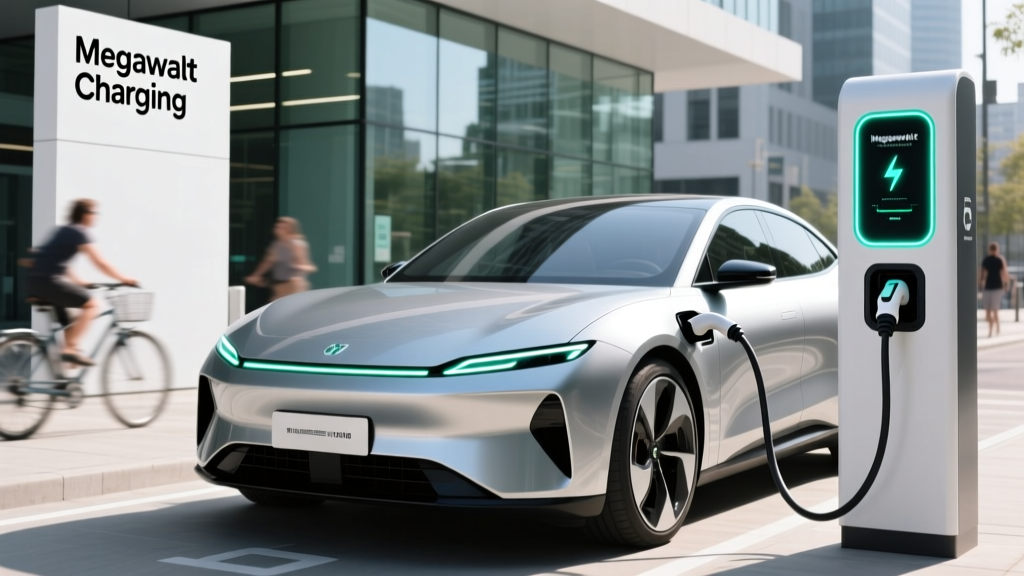
| DC Fast Charging (Level 3) | 400–800V DC | 50 – 350 kW | 150 – 300+ mi in 20 min | Road trips, highway corridors, commercial fleets |
A few real-world nuances: Level 2 speeds depend on both the cable's output and your car's onboard charger. A 19.2 kW cable connected to a vehicle with an 11.5 kW onboard charger will only deliver 11.5 kW. DC fast charging speeds also taper significantly above 80% state of charge (SoC) to protect battery health — a cable rated at 250 kW peak may sustain only 40–60 kW in the final 20% of the session. Plan your road-trip stops around the 10–80% window for the fastest sessions.
Home Charger Installation: Electrical Requirements, Costs, and Panel Upgrades
The total cost of installing a home Level 2 charging cable varies enormously depending on your home's electrical panel, the distance from the panel to your garage or driveway, and local permitting requirements. Here is a realistic 2026 cost breakdown based on national averages from licensed electricians:
| Component | Low Estimate | High Estimate | Notes |
|---|---|---|---|
| Level 2 Charging Cable (Equipment) | $350 | $750 | 32A–48A smart chargers, 18–25 ft cable |
| Electrician Labor | $400 | $1,800 | Depends on run length, wall type, conduit |
| Permit & Inspection | $50 | $300 | Required by most jurisdictions; varies by municipality |
| Electrical Panel Upgrade (if needed) | $1,500 | $4,000+ | Older 100A panels may need upgrade to 200A |
| Total (No Panel Upgrade) | $800 | $2,850 | Most homes with 200A service fall here |
| Total (With Panel Upgrade) | $2,300 | $6,850+ | Common in pre-1990 homes |
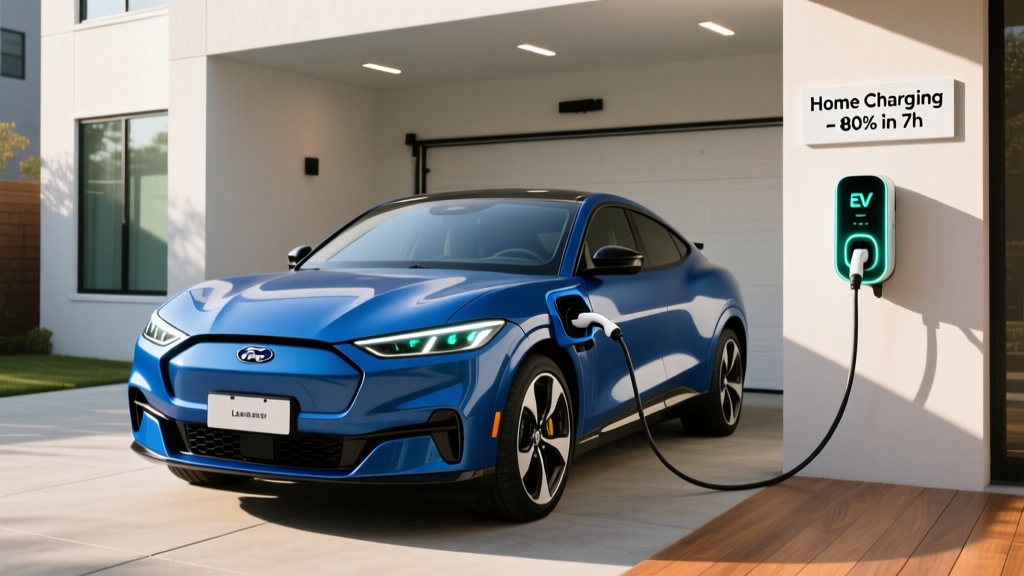
Electrical requirements for a typical 48A Level 2 cable: You will need a dedicated 240V circuit with a 60-amp breaker (the National Electrical Code requires circuits to be rated at 125% of the continuous load, so a 48A charger requires a 60A breaker). A 32A charger needs a 40A breaker. If your panel has open slots and sufficient capacity (most modern 200A panels do), the electrician will run 6 AWG copper wire (or 4 AWG aluminum) from the panel to a NEMA 14-60 outlet or hardwire the unit directly. Hardwiring is preferred by many installers because it eliminates the outlet as a potential failure point and often avoids the GFCI breaker requirement that NEC 2020+ imposes on receptacle-based EV charging.
Connector Compatibility: NACS, CCS1, CHAdeMO, and Adapters
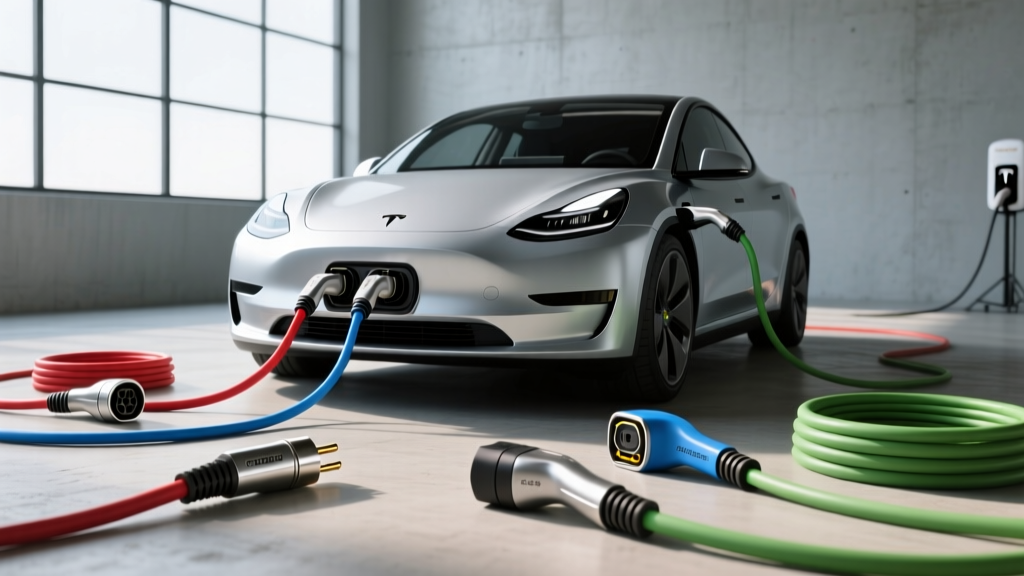
The charging cable you buy must match your vehicle's charge port. As of the 2026 model year, the North American market has largely consolidated around NACS (North American Charging Standard, originally developed by Tesla), but millions of CCS1-equipped EVs remain on the road and new CCS1 models are still sold.
| Connector | Brands Using It (2026 Models) | Level 2 Cable Availability | DC Fast Charging Access |
|---|---|---|---|
| NACS (Tesla) | Tesla (all), Ford, GM, Rivian, Volvo, Polestar, Mercedes-Benz, BMW, Hyundai, Kia, Nissan | Widely available; native cables from Tesla, Emporia, ChargePoint | Tesla Supercharger network (17,000+ stalls in North America); growing open access |
| CCS1 (Combo) | VW, Audi, Porsche (some), older Ford/GM/Hyundai/Kia models (pre-NACS switch) | Widely available from all major brands | Electrify America, EVgo, ChargePoint, Ionity (EU) |
| CHAdeMO | Nissan Leaf (legacy), Mitsubishi Outlander PHEV (legacy) | Limited new options; mostly legacy stock | Declining network support; being phased out |
Adapter options: If you own a CCS1-equipped EV, Tesla now sells a CCS-to-NACS adapter (~$250) that grants access to Superchargers. Ford and GM include NACS adapters with qualifying vehicles. Conversely, NACS-equipped vehicles can use a NACS-to-CCS adapter to access Electrify America and other CCS networks. When buying a charging cable, match the connector to your car's native port to avoid an extra adapter in the chain — each adapter adds a connection point that can introduce resistance, heat, or communication errors.
Cost to Charge: Home vs. Public vs. Gas — the Per-Mile Math
The economic case for home charging is overwhelming. Here is how the cost per mile breaks down across common scenarios, using a 2026 average EV efficiency of 3.0 miles/kWh and a comparable gas vehicle at 28 MPG combined:
| Charging/Fueling Scenario | Rate | Cost per Mile | Annual Cost (12,000 mi) |
|---|---|---|---|
| Home Level 2 — Off-Peak Utility Rate | $0.09/kWh | $0.030 | $360 |
| Home Level 2 — Standard Rate (National Avg) | $0.16/kWh | $0.053 | $640 |
| Home Level 2 — Peak/Time-of-Use High | $0.28/kWh | $0.093 | $1,120 |
| Public Level 2 (Workplace/Destination) | $0.25/kWh avg | $0.083 | $1,000 |
| DC Fast Charging (Public, 150–350 kW) | $0.40–$0.55/kWh | $0.133–$0.183 | $1,600–$2,200 |
| Gasoline Vehicle (28 MPG, $3.40/gal) | $3.40/gallon | $0.121 | $1,457 |
The takeaway is stark: home off-peak charging costs roughly one-quarter of gasoline per mile. But if you rely exclusively on DC fast charging at public rates, your per-mile cost can actually exceed gasoline. This is why home Level 2 installation pays for itself — typically within 12–24 months of ownership for a driver covering 12,000 miles per year.
Charging Time Examples: What to Expect with Common Battery Sizes
Charge times depend on battery capacity (kWh), the cable's power output (kW), and the vehicle's onboard charger limit. Below are estimated 10–80% charge times for popular battery sizes at various Level 2 cable outputs. Note that charging above 80% slows dramatically — the final 20% can take as long as the first 70%.
| Battery Size | Example Vehicles | 32A / 7.7 kW Cable | 40A / 9.6 kW Cable | 48A / 11.5 kW Cable |
|---|---|---|---|---|
| 60 kWh usable | Chevrolet Equinox EV, base Tesla Model 3 | ~5.5 hrs | ~4.4 hrs | ~3.6 hrs |
| 77 kWh usable | Ford Mustang Mach-E Extended, Hyundai Ioniq 5 | ~7.0 hrs | ~5.6 hrs | ~4.7 hrs |
| 100 kWh usable | Tesla Model S, Rivian R1S, GMC Sierra EV | ~9.1 hrs | ~7.3 hrs | ~6.1 hrs |
For DC fast charging on road trips, a 250 kW-capable vehicle like the Hyundai Ioniq 5 or Tesla Model 3 can charge from 10–80% in approximately 18–22 minutes at a compatible station. Vehicles on 800V architectures (Hyundai Ioniq 5/6, Kia EV6/EV9, Porsche Taycan, Genesis GV60) sustain higher charge rates longer, typically completing 10–80% in 16–18 minutes at a 350 kW stall. Vehicles on 400V platforms (most others) peak at 150–200 kW and taper sooner, taking 25–35 minutes for the same window.
2026 Equipment Recommendations: Top Charging Cables for Home Use
These are the Level 2 home charging cables we recommend based on power output, build quality, smart features, cable length, and price. All are UL-listed or ETL-listed for safety compliance.
Tesla Wall Connector (Gen 4)
- Power Output: Up to 11.5 kW (48A)
- Connector: NACS native
- Cable Length: 24 ft
- Smart Features: Wi-Fi, OTA updates, load sharing with a second unit, power-sharing across multiple Wall Connectors on one circuit
- Price: ~$475
- Best For: Tesla owners and NACS-equipped Ford/GM/Rivian drivers wanting the cleanest native setup
ChargePoint Home Flex (2nd Gen)
- Power Output: Up to 12 kW (50A) — configurable via dip switches for 16A–50A
- Connector: NACS or CCS1 (choose at purchase)
- Cable Length: 23 ft
- Smart Features: Wi-Fi, Alexa/Google Home integration, scheduling, energy tracking, flexible amperage lets you match your circuit without buying a different unit
- Price: ~$600–$650
- Best For: Homes with non-standard circuit sizes; CCS1 vehicle owners
Emporia Vue Level 2 Charger
- Power Output: Up to 11.5 kW (48A)
- Connector: NACS or J1772 (with adapter for CCS)
- Cable Length: 24 ft
- Smart Features: Wi-Fi, solar integration (pairs with Emporia Vue energy monitor), scheduled charging, real-time cost tracking
- Price: ~$400
- Best For: Solar-equipped homes and budget-conscious buyers who want smart features
Grizzl-E Smart (United Chargers)
- Power Output: Up to 10 kW (40A)
- Connector: J1772 (NACS adapter included with newer versions)
- Cable Length: 24 ft
- Smart Features: Wi-Fi, OCPP-compatible (future utility demand-response ready), adjustable amperage
- Price: ~$450
- Best For: Cold-climate owners — rated to -40°F, built in Canada with a rugged aluminum case
Safety, Code, and Installation Best Practices
EV charging draws sustained high current for hours — a load profile unlike anything else in your home. Cutting corners on safety is not an option. Here are the critical considerations:
- Dedicated circuit: Your Level 2 charger must be on its own dedicated breaker. Sharing a circuit with other appliances risks tripping and fire hazard.
- GFCI protection: NEC 2020 and later requires GFCI protection for receptacle-based EV charging (NEMA 14-60 outlets). Hardwired installations are exempt from this specific requirement in most jurisdictions and are generally preferred by electricians for this reason. A GFCI breaker for a 60A circuit costs $80–$150 more than a standard breaker.
- Outdoor rating: If your charger is installed outside, it must carry a NEMA 4 (weatherproof) rating. All four units recommended above carry outdoor ratings, but cable management matters — UV exposure degrades cable jackets over time. Use a holster or cable organizer to keep the cord off the ground.
- Wire gauge: For a 48A charger on a 60A breaker, most installations require 6 AWG copper or 4 AWG aluminum wire. Runs longer than 100 feet may require upsizing to 4 AWG copper to limit voltage drop. Your electrician will calculate this based on your specific layout.
- Permit and inspection: Skipping the permit saves $50–$300 upfront but can void your homeowner's insurance if an electrical fire is traced to unpermitted work. It also becomes a disclosure issue when selling your home.
Frequently Asked Questions
How much does it cost to install a home EV charger?
For most homes with a 200A electrical panel and the charger located within 50 feet of the panel, expect $800–$2,850 total (equipment + electrician + permit). If your home has an older 100A panel that needs upgrading to 200A, add $1,500–$4,000. Always get a load calculation from a licensed electrician before purchasing equipment.
How fast will each charging level add range?
Level 1 (120V) adds roughly 3–5 miles of range per hour — sufficient for PHEVs with small batteries or drivers covering under 30 miles daily. Level 2 (240V) at 48A adds approximately 35–45 miles per hour for a typical midsize EV, fully replenishing most batteries overnight. DC fast charging adds 150–300+ miles in 15–25 minutes at a compatible public station, making it practical for road trips.
Which connector and charger is compatible with my EV?
Check your vehicle's charge port. For 2025–2026 model-year vehicles from Tesla, Ford, GM, Rivian, Hyundai, Kia, and most other major brands, the connector is NACS. Older CCS1-equipped vehicles (typically pre-2025 model year from VW, Audi, and legacy Ford/GM/Hyundai models) require CCS1 cables. CHAdeMO is limited to the legacy Nissan Leaf and Mitsubishi Outlander PHEV. When in doubt, match the charging cable's connector to your car's native port and use adapters only when accessing incompatible public networks.
How much does charging cost per mile compared to gas?
Home charging at the national average electricity rate of $0.16/kWh costs roughly $0.05 per mile in a typical EV — about 60% less than gasoline at $3.40/gallon in a 28 MPG vehicle ($0.12/mile). Off-peak utility rates as low as $0.09/kWh bring that down to $0.03/mile. However, public DC fast charging at $0.40–$0.55/kWh can cost $0.13–$0.18 per mile, which equals or exceeds gasoline. Home charging is where the savings live.
What electrical upgrades might I need?
If your home has a 200A panel with available breaker slots and your existing loads leave sufficient headroom (your electrician will perform a NEC Article 220 load calculation), no upgrade is needed. If you have a 100A panel — common in homes built before 1990 — or your panel is already near capacity with existing appliances, you will likely need a panel upgrade to 200A ($1,500–$4,000). Some homeowners opt for a smart load-management device like the Emporia Smart Load Center or the Tesla Wall Connector's built-in load sharing, which dynamically reduces charging amperage when other household loads spike, potentially avoiding a panel upgrade.
Is a smart charger worth the extra cost over a dumb charger?
For most owners, yes — but not for the reasons marketing emphasizes. The practical value of a smart charger (Wi-Fi connected) is in scheduled charging to hit off-peak utility rates, energy monitoring to track your actual cost per kWh, and remote diagnostics if something goes wrong. The "start/stop from your phone" feature is rarely used. If your utility offers time-of-use rates with a significant off-peak discount, a smart charger that auto-schedules to the cheapest window will pay for its price premium within months.
Sources: U.S. Department of Energy / fueleconomy.gov — EV charging technology overview; IRS.gov — Clean vehicle credit rules (note: the §30D credit applies to vehicle purchase, not charger equipment; the separate §30C alternative fuel infrastructure credit of up to $1,000 for home charger installation is subject to census-tract eligibility and has its own requirements). Consult a tax professional for your specific situation.